
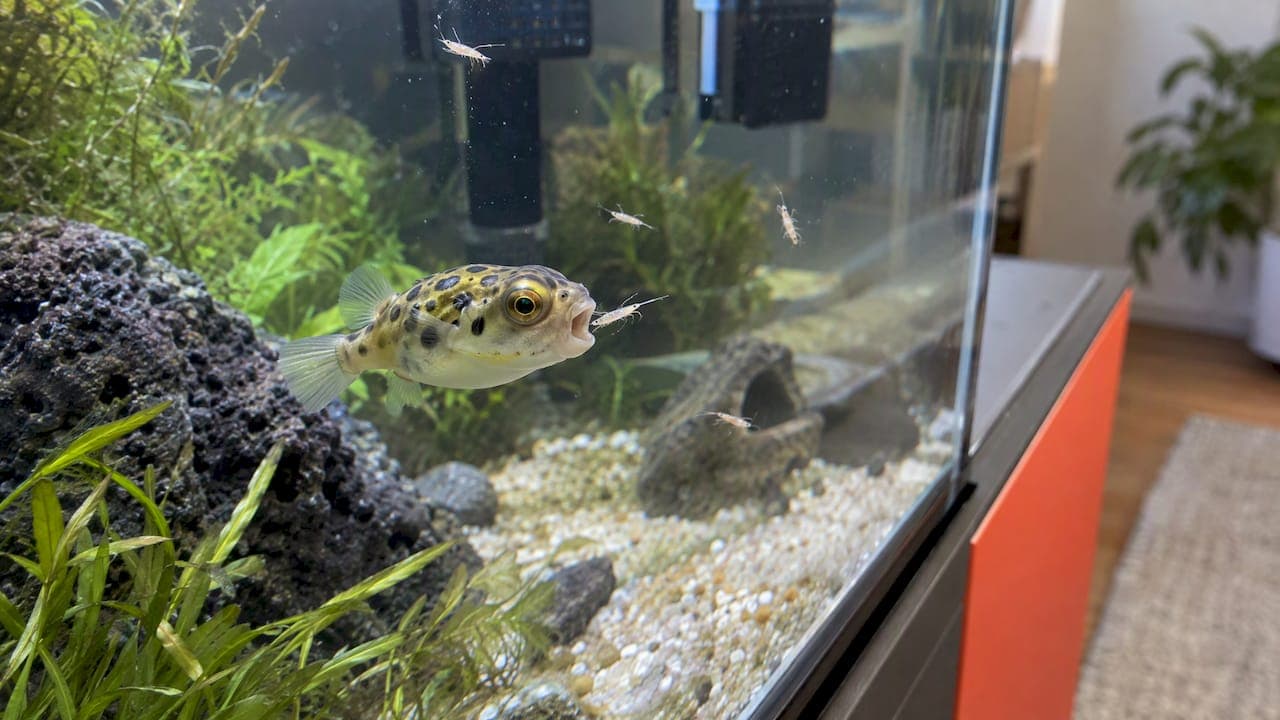
Yes, pufferfish eat brine shrimp, and most species take them eagerly. Dwarf (pea) puffers accept newly hatched and adult brine shrimp, and larger puffers will take them too. The catch is how you use them. Brine shrimp work best as one part of a varied, meaty diet, not as the only thing in the bowl. This guide covers which puffers do well on them, which life stage to offer, how often, how to enrich them, and what to watch for.
TL;DR
- Most puffers readily eat brine shrimp. Dwarf puffers take baby brine shrimp as fry food and adult brine shrimp as a treat.
- Brine shrimp alone are an incomplete diet. Use them as a supplement alongside snails, worms and other meaty foods.
- A common range is one to three brine shrimp feedings a week, only as much as the fish eats in a few minutes.
- Live brine shrimp trigger a natural hunting response. Gut-loading or enriching them makes each shrimp worth more nutritionally.
- Pufferfish teeth never stop growing, so shelled foods belong in the rotation too.
Table of Contents
- Do pufferfish eat brine shrimp?
- Why brine shrimp cannot be the whole diet
- How often to feed brine shrimp
- Live, frozen or freeze-dried: choosing the form
- Baby brine shrimp for puffer fry
- Enriching brine shrimp before you feed
- Handling and storing live shrimp
- Problems to watch for
- Our perspective on feeding puffers brine shrimp
- Get live brine shrimp for your puffer
- Brine shrimp for other fish
- FAQ
- Sources
Do pufferfish eat brine shrimp?
They do. Puffers are carnivores and ambush hunters, and a small moving shrimp is exactly what their instincts look for. Dwarf puffers in particular will eat newly hatched and adult brine shrimp, and will also nibble finely ground frozen or freeze-dried brine shrimp. Reports on other species say most puffers readily accept brine shrimp as a palatable extra that gets them feeding.
Size matters more than species when you choose the form:
| Puffer | Brine shrimp that fit | Role in the diet |
|---|---|---|
| Dwarf / pea puffer fry | Newly hatched nauplii | Early live food, fed alongside other tiny live foods |
| Adult dwarf puffer | Nauplii, adult brine shrimp, frozen | Treat and variety |
| Larger freshwater puffers | Adult brine shrimp | Occasional extra; staple is shelled, meaty food |
| Marine puffers and boxfish | Adult brine shrimp, enriched | Supplement; follow species-specific advice |
Smaller freshwater species may eat brine shrimp, while larger species need foods such as cockles, mussels and shrimp. If you keep a bigger puffer, think of brine shrimp as an enrichment item, closer to a snack than a meal.
Why brine shrimp cannot be the whole diet
A puffer that will happily eat brine shrimp every day is not a puffer that should. Brine shrimp alone are incomplete and may lack vitamins and minerals, including calcium, that a puffer needs over the long term. That is why keepers describe them as a treat or supplement and not a staple.
There is also a physical reason. Freshwater puffers need shellfish in their shells to grind down their continuously growing teeth. A diet of soft shrimp can let the beak overgrow, which makes eating harder. Snails, and for bigger species cockles and mussels in the shell, do the grinding that brine shrimp never will.
A healthy rotation for a small freshwater puffer usually looks like this:
- Hard-shelled foods such as small snails, for dental wear.
- Worm-type live or frozen foods for bulk protein.
- Brine shrimp for variety, enrichment and for picky or newly acquired fish.
- Occasional frozen mixes to fill in gaps.
We go deeper on the whole picture in our guide to what to feed puffer fish and how.
How often to feed brine shrimp
The usual advice is to offer brine shrimp as a treat one to three times per week, depending on species and the rest of the diet, and only as much as the puffer can finish in a few minutes. Husbandry guidance from the UK ornamental fish trade body says the same about portion size: pufferfish and boxfish should generally be fed only what they can eat within a few minutes, and that species-specific advice is worth seeking.

Puffers beg. They follow you across the room and look hungry all day, and that is how overfeeding happens. Uneaten food breaks down and releases toxic waste into the water, which matters even more in small tanks where pea puffers usually live.
A practical weekly plan for an adult dwarf puffer:
- Two or three days: snails or worm-type foods as the base.
- One or two days: a small pinch of live or thawed brine shrimp.
- One day: a light or fasting day if the fish looks round.
Species differ. Some puffers are fed every other day, and for one species, overfeeding or feeding red meat or chicken is linked to fatty liver disease, which is usually fatal. If you keep an uncommon species, check its specific care sheet or ask an experienced fish vet before settling on a schedule.
Live, frozen or freeze-dried: choosing the form
Each form has a place, and the right one depends on what you want the shrimp to do.
Live brine shrimp trigger the hunting instinct, which is why wary or newly arrived puffers often start eating with live food first. Live shrimp also stay active in the water, so a puffer can graze on what it did not finish in the first minutes. They can be hatched from cysts or bought already grown. Our comparison of live and frozen brine shrimp lays out the trade-offs in more detail.
Frozen brine shrimp are convenient to store, and they are generally considered safer because freezing kills most common parasites and pathogens. Thaw a small portion in tank water and feed it right away, ideally with tweezers or a pipette so it lands where the puffer is looking.
Freeze-dried brine shrimp are the least appealing to a puffer, but dwarf puffers will take them finely ground. Treat them as a backup for travel or an emergency, not as the main course.

If you want a broader map of options, our guide to live fish food types compares what each live food offers.
Baby brine shrimp for puffer fry
Newly hatched brine shrimp (nauplii) are a standard first food for many small fish, and they are suitable for dwarf puffer fry. Puffer fry are tiny hunters, and moving nauplii give them something to chase.
Tips for feeding fry:
- Offer small amounts several times a day, since fry have tiny stomachs.
- Siphon out uneaten shrimp after a feeding window so freshwater nauplii do not die and foul the water. Nauplii raised in saltwater only live a limited time in a freshwater tank.
- Add other tiny live foods as the fry grow, so they do not get used to one item.
- Move to larger prey as the fish grows, including chopped worms and small snails.
This is also the stage where nutrition matters most. A newly hatched nauplius carries a yolk reserve that depletes within hours, so feed soon after harvesting or enrich them first.
Enriching brine shrimp before you feed
Plain brine shrimp are often low in the fats that growing fish need. Academic aquaculture work describes how Artemia nauplii can be enriched with lipid-rich media for fish larvae, with the manual reporting 12- and 24-hour enrichment periods. That is the logic behind gut-loading: the shrimp are what they ate, and your puffer eats whatever the shrimp carry.
For a home setup:
- Hatch or buy the shrimp and rinse them in clean salt water.
- Hold them in a small container with gentle aeration.
- Give them an enrichment feed, such as a microalgae product or a commercial fatty-acid enrichment.
- Feed them to your puffer within the enrichment window you are following.
Microalgae are a natural fit here, since algae are what brine shrimp filter-feed on in the wild. If you are curious about how far this goes, our page on algal products explains how we think about algae as a nutrition input.
Handling and storing live shrimp
Live shrimp are only as good as their condition on the day you feed them. A shrimp that has been starving in a cramped container has less to offer your fish than one that has been cool, aerated and fed. If you buy live shrimp, the basics are:
- Keep them cold and aerated so they stay active and use less energy. Our guide to storing live brine shrimp for 48 to 72 hours walks through the setup.
- Plan for freshness. Our notes on how long live brine shrimp stay fresh explain what to expect.
- Scoop with a fine net, rinse if you need to, and feed in portions rather than dumping a cup into the tank.
Watch the water too. Brine shrimp are saltwater animals. In a freshwater puffer tank they will die within hours, and dead shrimp feed bacteria. In a brackish or marine tank they can live longer and keep grazing on algae, but you still should not add more than the fish will finish.
Problems to watch for
Talk to an experienced fish vet or a species specialist if you see any of these:
- A swollen belly or a puffer that refuses food for several days. Overfeeding and poor diet are common causes, but so are parasites and infection.
- Overgrown front teeth. The fix is shelled food, and a severe case needs a trained vet to trim the beak.
- Sunken stomach with active hunting. The fish is not getting enough, or the food is too small to bother with.
- Cloudy water after feedings. Reduce portions and siphon leftovers.
Never make a medical decision based on a forum thread alone. Puffers are sensitive to water quality and some medications, so ask a vet who treats fish before dosing the tank.
Our perspective on feeding puffers brine shrimp
We raise brine shrimp for a living, so here is where we land. A puffer is a predator, and a predator wants something that moves. Live brine shrimp give a small puffer that experience, and they do it without the risks of wild-caught prey. They are not a complete food, and we would never tell you they are. They are a tool: for starting a new fish, for fry, for variety, and for carrying extra nutrition when the shrimp have been well fed.
That last part is why we feed our shrimp only the microalgae Dunaliella on land-based, organic systems. Our formula is designed to deliver at least 40% protein with consistent quality, avoiding the seasonal swings and starvation conditions that can affect wild-harvested shrimp. Whatever goes into the shrimp goes into your fish. For a puffer that is eating small amounts a few times a week, quality per shrimp matters more than quantity.
So we suggest this: build the diet around shelled and meaty foods, use live brine shrimp for enrichment and hunting, and choose shrimp that were fed well before they reached you.
— Demeter
Get live brine shrimp for your puffer
If you want fresh shrimp for your puffer's treat days, our live brine shrimp ship directly to your door, with prices from the shop running $17-$35 per order. Read about how we raise them before you order.
For regular feedings, our monthly membership is $25 per month and delivers live brine shrimp on a recurring basis. Keeping a reef or brackish tank too? Our live phytoplankton is $20 and works as a feed for corals and as an enrichment food for shrimp. A gift card ($10-$50) is a simple present for a fellow puffer keeper. If you run a fish store and want a recurring supply, see our bulk store order.
Brine shrimp for other fish
The same principles of treat, variety and enrichment apply to other fish, and we have written practical guides for several: clownfish, bettas, cardinalfish and cuttlefish. Each has its own timing and portion rules.
FAQ
Can pufferfish eat brine shrimp every day?
It is better not to. Brine shrimp alone are incomplete and may lack calcium and other nutrients, so keepers offer them as a treat about one to three times a week. Fill the other days with snails, worms and other meaty foods suited to your species.
Can dwarf puffer fry eat baby brine shrimp?
Yes. Newly hatched brine shrimp are suitable for dwarf puffer fry. Feed small amounts and remove leftovers so dead nauplii do not foul the water, and add other small live foods as the fry grow.
Are frozen brine shrimp safe for puffers?
Frozen brine shrimp are generally considered safer than live wild-caught food because freezing kills most common parasites and pathogens. Thaw a small portion and feed it promptly. Some puffers prefer live food, so you may need to offer both.
How much brine shrimp should I feed my puffer?
Only what the fish can eat in a few minutes. The OATA guidance for freshwater puffers says to feed no more than they can finish quickly, because leftover food pollutes the water. For a dwarf puffer, that is a small pinch, not a spoonful.
Do puffers need hard foods as well as brine shrimp?
Yes, for freshwater puffers. Their teeth grow continuously, and shellfish in their shells help wear them down. Small snails suit dwarf puffers, while larger species need cockles and mussels.
Sources
- The Dwarf Puffer: A Pleasant Little Surprise, TFH Magazine
- Will Puffers Eat Brine Shrimp?
- Brackish Fish: How to care for freshwater pufferfish, OATA
- How to look after freshwater puffer fish, OATA
- How to look after puffers and boxfish, OATA
- Pao suvattii
- Enrichment of Artemia for use in freshwater ornamental fish, CTSA