
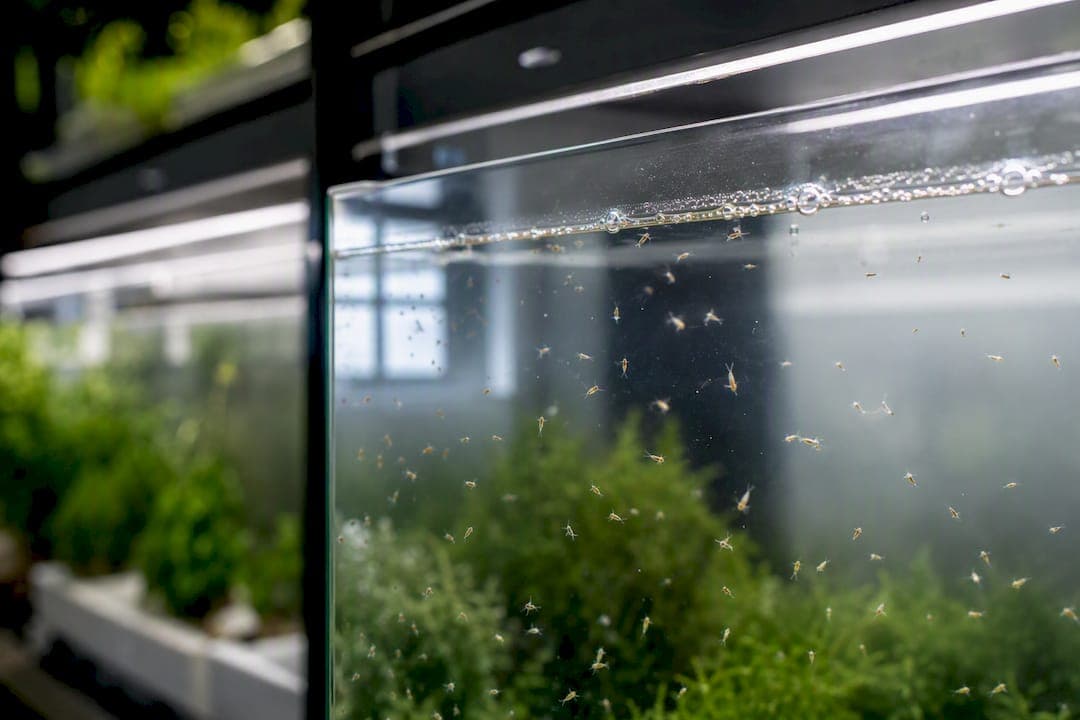
Dry brine shrimp cysts can sit in a jar for years and still hatch on demand. Freshly hatched nauplii and live adults are a different story: they stay reliably usable for only about 2 to 3 days, and only if you refrigerate them correctly. The single biggest lever you control is temperature. Chilling live shrimp to roughly 39°F slows their metabolism, preserves the fat they carry, and buys you time before quality collapses.
TL;DR:
- Refrigerated live brine shrimp nauplii typically last only 2 to 3 days if kept near 39°F, while cysts can remain viable for years long-term.
- Proper storage requires shallow containers, gentle aeration, and stable salinity levels with marine-grade salt to prevent hypoxia and stress-related death.
- Contaminated salt, sudden salinity swings, or poor oxygen levels are the main causes of shrimp die-offs in storage, which can be prevented with careful water management.
- Farmed, algae-fed brine shrimp from controlled sources like Dunaliella offer more consistent nutrition and reliable shelf life compared to wild-harvested batches.
- Hatching cysts remains the most dependable long-term method, but for routine feeding, refrigeration of fresh nauplii is effective if done within the proper conditions and timeframe.
Table of Contents
- Live brine shrimp shelf life: cysts vs. nauplii vs. adults
- How do you store live brine shrimp for maximum freshness?
- Why do brine shrimp die in storage, and how do you fix it?
- Step-by-step: holding and feeding brine shrimp safely
- Why farmed, microalgae-fed brine shrimp hold up better
- What I've learned from years of hatching and holding shrimp
- Get consistent live brine shrimp without the guesswork
- Sources
Live brine shrimp shelf life: cysts vs. nauplii vs. adults
The three life stages behave nothing alike once they leave the bag, and mixing up their timelines is the most common mistake hobbyists make.
Cysts are the outlier. A dormant brine shrimp egg is essentially a suspended organism, a state biologists call cryptobiosis. It has shut down its metabolism so completely that it can survive freezing, near total dehydration, and years of dry storage without dying. Utah's Learn Genetics program notes cysts have stayed viable for at least two years under normal storage, and lab tests have shown they survive exposure to liquid air. That is why hatching on demand remains the most dependable long term strategy: you are not fighting a clock, you are just adding saltwater when you need food.
Nauplii and adults are the opposite. Once a cyst hatches, the clock starts immediately.
- At room temperature, nauplii lose a significant portion of their dry weight and total lipids within 24 hours, according to University of Florida IFAS data.
- At 39°F, the shrimp lose only a minimal amount of dry weight in the same 24 hour period.
- Adult brine shrimp typically survive for a limited time in a shipping or holding container when density and oxygen are managed well, per Carolina Biological Supply.
That lipid loss matters more than most people realize. Fry and juvenile fish depend on those fats, so a batch of nauplii that "looks" fine after a warm afternoon may already be nutritionally hollow.
How do you store live brine shrimp for maximum freshness?
Refrigeration is the backbone of every reliable holding method, but three other variables decide whether it actually works: container shape, density, and water chemistry.
- Chill to about 39°F. This single step is responsible for most of the shelf life gain. Cold storage suppresses molting, so nauplii stay in their nutrient-rich Instar I stage rather than burning through reserves to reach Instar II, based on cold-storage observations from Diana Walstad's brine shrimp guide.
- Use shallow, wide containers instead of tall, narrow ones. Surface area drives oxygen exchange far more than water volume does. A flat plastic tub outperforms a tall jar every time.
- Watch your density. Carolina Biological Supply's holding guidance suggests a properly aerated one-gallon system can support 500 to 1,000 adults, but that number drops fast without aeration or if the container is deep rather than flat.
- Add gentle aeration when density climbs. A small airstone on the lowest setting is usually enough; you are not trying to churn the water, just keep it moving.
- Use marine-grade salt, never iodized table salt. Iodine and trace heavy metals like zinc can interfere with hatching and stress the shrimp you are trying to preserve.
Pro Tip: Providing food to your culture a few hours before chilling it can improve nauplii survival during cold storage.
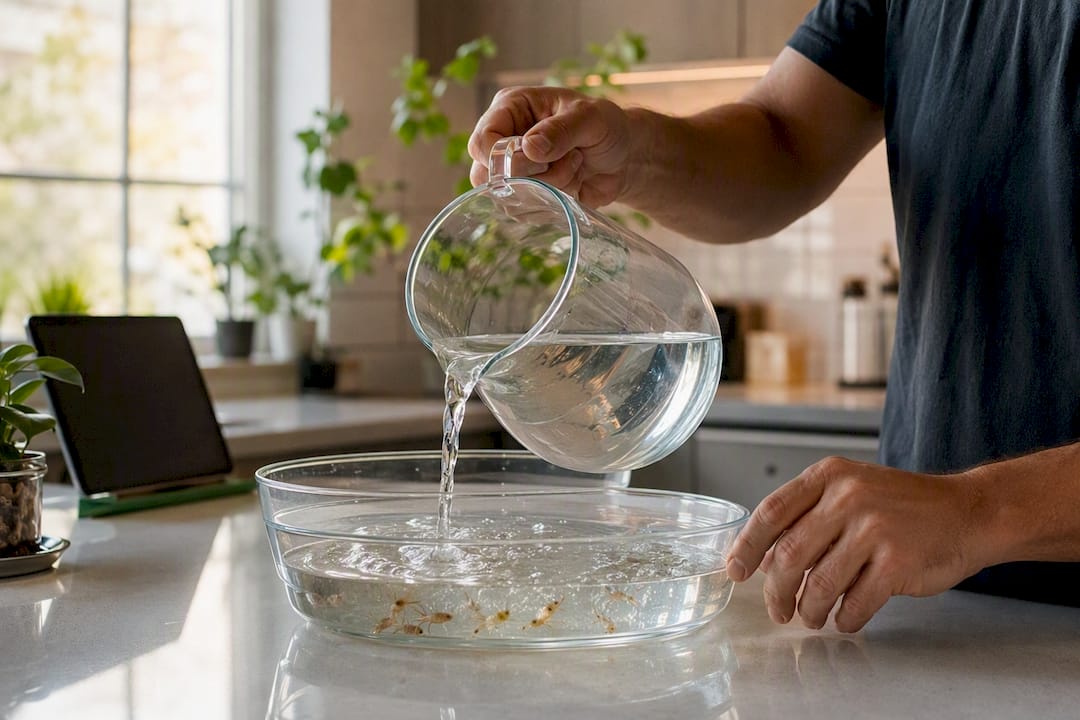
Avoid sudden salinity swings when you transfer shrimp between containers. A slow mix of old and new water over several minutes beats a fast dump every time.
Why do brine shrimp die in storage, and how do you fix it?
Most failed holding attempts trace back to one of four preventable problems.
- Hypoxia shows up as shrimp gasping at the surface or clustering near the top of the water. The fix is almost always more surface area first, then aeration.
- Overcrowding compounds hypoxia. If you see lethargy across a dense batch, split it into two shallower containers rather than adding one airstone and hoping.
- Salinity or pH swings stress nauplii more than adults. A pinch of sodium bicarbonate keeps pH near 8.0 to 8.5 during hatching, according to technical culture research from Utah State University, and prevents the crashes that kill off a batch overnight.
- Contaminated salt is a sneaky killer. That same research found trace zinc levels as low as 0.07 ppm can block hatching entirely, which is why sourcing a clean marine mix matters more than most hobbyists assume.
Know when to cut your losses. A strong ammonia smell, cloudy water, or a mass die-off means the batch is done. Dump it rather than trying to salvage a few survivors.
Step-by-step: holding and feeding brine shrimp safely
- Harvest at the right time. Collect nauplii once they've cleared the shell debris, usually 18 to 36 hours after hatching, and concentrate them gently with a fine mesh or light-attraction technique.
- Rinse and check conditions. Rinse off hatching brine, confirm the water you're moving them into matches temperature and salinity closely enough to avoid shock, then load your shallow holding container.
- Refrigerate and time it. Hold at roughly 39°F for no more than 2 to 3 days. Before feeding, let the container warm slightly and give the shrimp a quick rinse to clear out any residue.
- Feed in small batches. Offer only what your fish will finish in 15 to 20 minutes, then remove anything left over so it doesn't foul the tank.
| Stage | Ideal Condition | Usable Window |
|---|---|---|
| Cysts | Cool, dry, sealed storage | Years |
| Nauplii | Refrigerated near 39°F | 2 to 3 days |
| Adults | Aerated, shallow container | 1 to 2 days |
Why farmed, microalgae-fed brine shrimp hold up better
Wild-harvested brine shrimp swing in quality depending on the season, the lake, and how starved the local population happens to be. That variability is exactly what makes short-term holding unpredictable: you never know whether the batch you're chilling was already nutrient-poor before it reached your tank.
Demeterbioscience raises its live brine shrimp exclusively on the algae Dunaliella in a controlled, land-based system, targeting at least 40% protein content batch after batch. That consistency changes the holding equation.
- Fewer failed hatches, because the source stock isn't already stressed or nutrient-depleted.
- More predictable lipid and protein levels going into refrigeration, so the 2 to 3 day window actually delivers the nutrition your fish expect.
- A supply chain built around live shipments rather than one-off wild harvests.
When your starting shrimp are already nutritionally consistent, refrigeration has less work to do. You're preserving quality that was reliable to begin with, not trying to rescue a batch that was already running on empty.
Readers who want the mechanics of longer-term storage can check Demeterbioscience's cold-storage freezing protocol and rinsing guide for the feeding step.
What I've learned from years of hatching and holding shrimp
Cysts are cheap insurance. Live shrimp are convenience you pay for. If you're feeding a handful of tanks on a predictable schedule, hatching your own cysts is more cost-effective and the shelf life problem barely exists. If you're running a fry-heavy setup or don't have time to hatch daily, a chilled live shipment solves a real logistics problem.
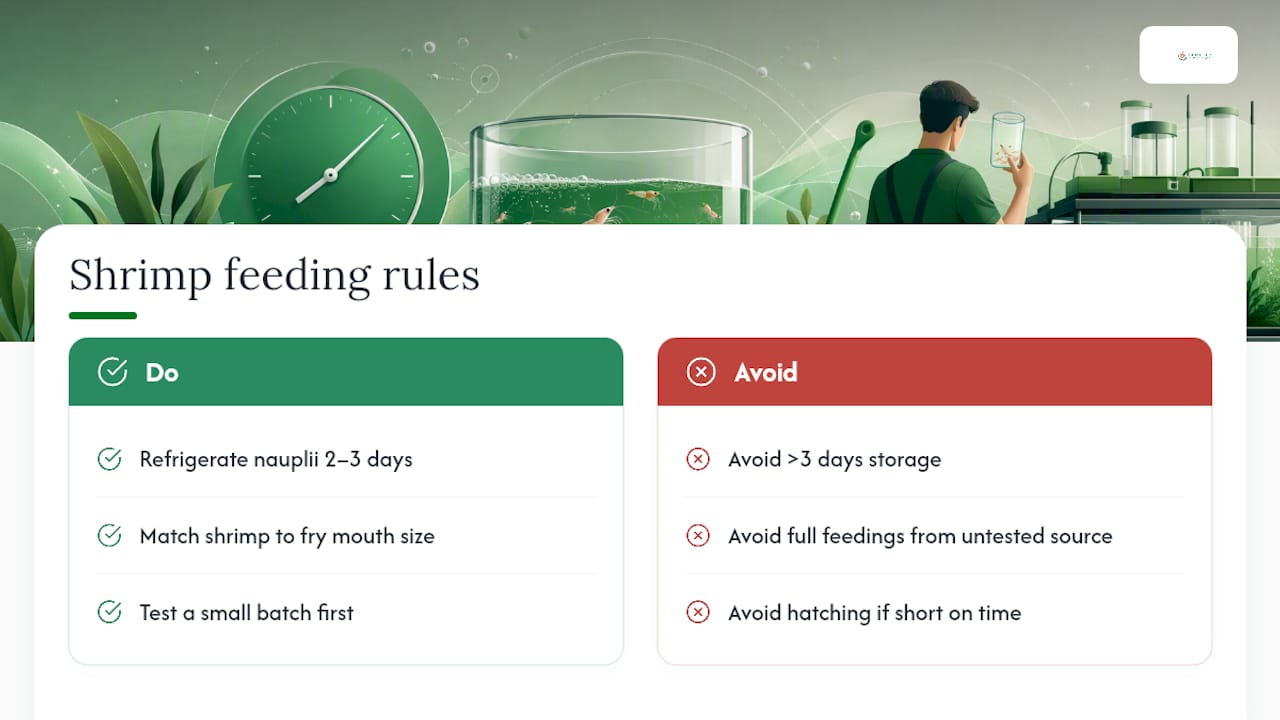
My rule of thumb: refrigerate harvested nauplii for no more than 2 to 3 days, match shrimp size to fry mouth size, and always test a small batch before committing a full feeding schedule to a new source.
— Demeter
Get consistent live brine shrimp without the guesswork
Demeterbioscience is the alternative to hatching unpredictable wild cysts on a hatchery deadline: our brine shrimp are farmed on Dunaliella algae under controlled conditions, so every shipment arrives with the same protein density instead of the seasonal swings wild harvests bring.
That consistency is what makes the 2 to 3 day refrigeration window actually reliable. You're not guessing whether this batch was starved before it reached you. Home aquarists can order live brine shrimp for direct shipment or set up a recurring subscription so holding never becomes a scramble. Local fish stores, museums, and hatcheries running larger volumes can place a bulk order sized to their tank count. If you're not sure which option fits your setup, contact our team and we'll help you figure out the right order size and shipping cadence for your feeding schedule.
Sources
- IFAS publication: brine shrimp refrigeration data
- Diana Walstad — Hatching and growing brine shrimp
- Carolina Biological Supply: Care guide — holding and aeration
- Utah Learn Genetics: Artemia (brine shrimp) cyst viability and cryptobiosis