
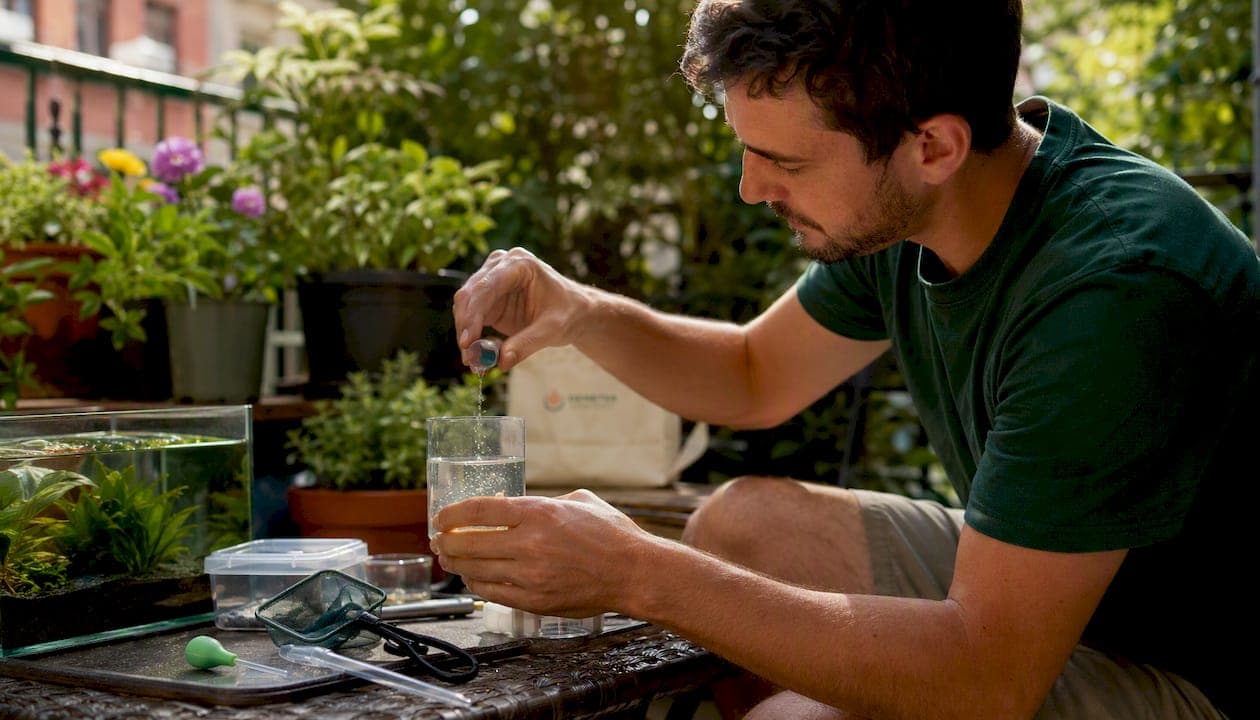
The fastest path to usable live brine shrimp is ordering hatch-in-transit nauplii or a ready-to-ship farmed live shipment. Both arrive within days and skip the 24–48 hour hatch wait entirely. If you're raising fry or feeding picky marine fish, timing matters more than most hobbyists realize: nauplii are most nutritious within the first 12–24 hours after hatching, when yolk-derived lipids and proteins are still intact. Demeterbioscience ships farmed live brine shrimp fed exclusively on Dunaliella microalgae, guaranteeing at least 40% protein content. For breeders who need consistent, traceable nutrition on a schedule, that's the option worth starting with. Global demand for brine shrimp cysts runs roughly 800 tonnes per year, which tells you something about how central this animal is to aquaculture worldwide.
Table of Contents
- What are the three ways to get live brine shrimp?
- How do you keep live brine shrimp alive until feeding time?
- How do you hatch brine shrimp cysts at home in 24–48 hours?
- What should you look for when buying live brine shrimp?
- Why Demeterbioscience is a strong choice for farmed live brine shrimp
- Key Takeaways
- Why farmed brine shrimp nutrition is worth caring about
- Order live brine shrimp from Demeterbioscience
- Useful sources and further reading
What are the three ways to get live brine shrimp?
You have three practical paths, and they differ significantly in time-to-feed, cost, and how much control you want over the process.
Buy live adults. These arrive ready to feed. Adult brine shrimp (Artemia franciscana) can survive 1–2 days in their shipping container, but they need aerated, prepared saltwater on arrival. Nutritionally, adults are leaner than freshly hatched nauplii. They work well for larger fish that need a bigger meal, but they're not ideal for fry or larvae that require the yolk-rich nutrition of early-stage nauplii.
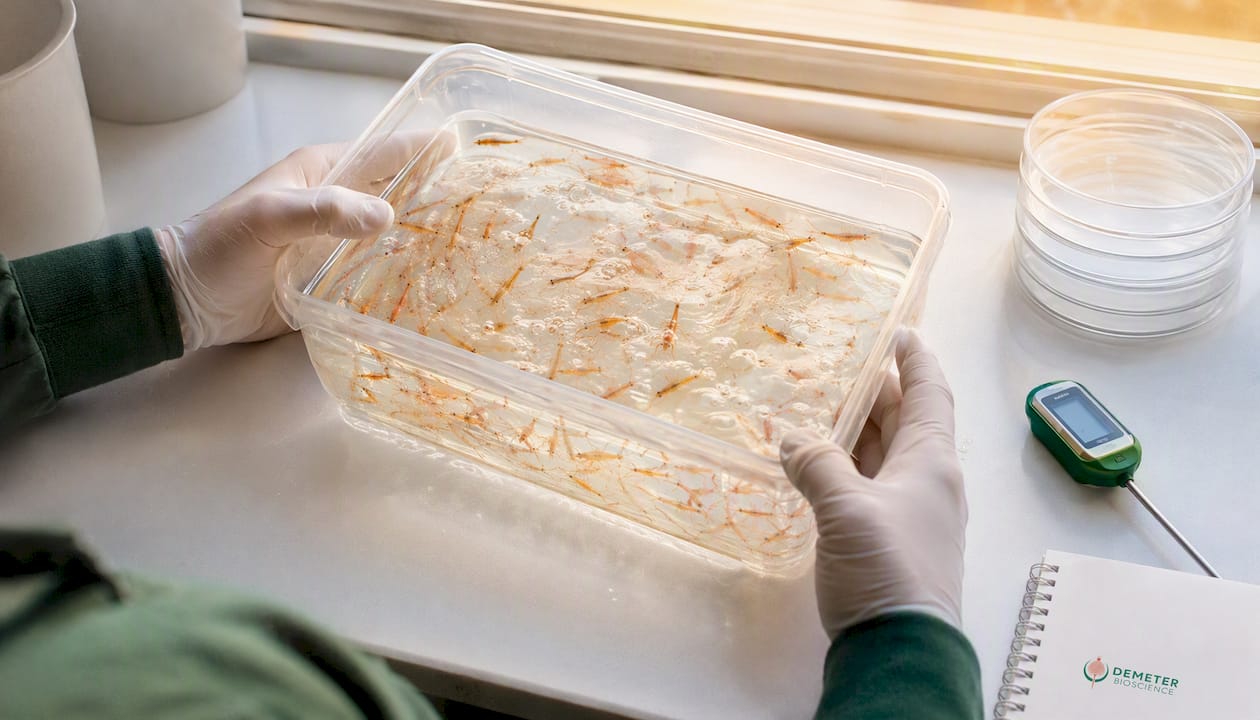
Buy hatch-in-transit nauplii. Eggs are packaged to hatch during shipping, so the shrimp arrive at peak nutritional stage, typically 24–48 hours post-hatch. Some sellers decapsulate the eggs before packaging, which means even unhatched eggs are a usable, waste-free food source. This is the fastest path to high-value live feed without any home setup.
Hatch cysts at home. You buy dry cysts, set up a simple hatchery, and get nauplii in roughly 24–48 hours at 26–28°C. Premium strains can guarantee yields of at least 245,000 nauplii per gram of cysts. The upfront cost is low, and you control the timing, but you need equipment and a reliable routine.

| Path | Time to feed | Peak nutrition window | Storage options | Typical lead time |
|---|---|---|---|---|
| Live adults | Immediate | Short (hours) | Aerated saltwater, 1–2 days | 1–3 day shipping |
| Hatch-in-transit nauplii | Immediate on arrival | 12–24 hrs post-hatch | Refrigerate up to 24 hrs | 1–3 day shipping |
| Home-hatched cysts | 24–48 hrs | 12–24 hrs post-hatch | Refrigerate up to 24 hrs | Days to weeks (cyst shelf life) |
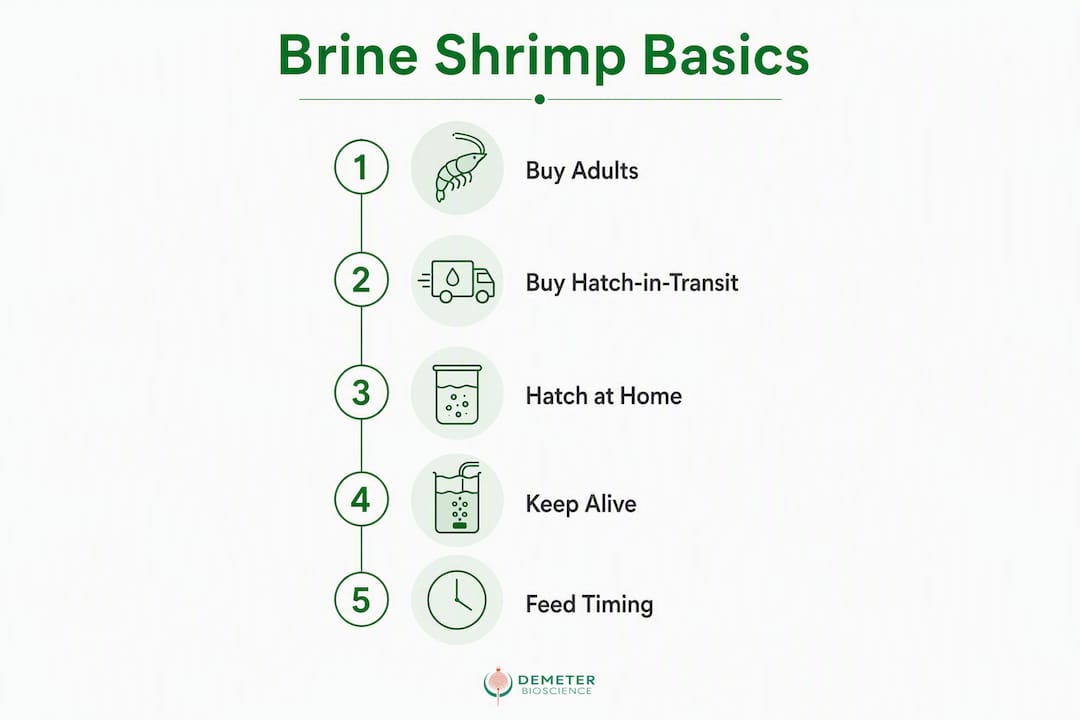
Casual hobbyists who feed occasionally do well with hatch-in-transit vials. Breeders raising fry need a steady, predictable supply, which points toward a subscription or bulk live shipment. Stores and retailers stocking tanks benefit most from bulk farmed product with consistent specs.
How do you keep live brine shrimp alive until feeding time?
Temperature, salinity, aeration, and light are the four variables that determine whether your shrimp survive the gap between arrival and the tank. Get these right and you can hold live brine shrimp safely for hours without significant loss.
Core parameters:
- Temperature: 60–72°F (15–22°C) for holding; cooler slows metabolism and extends survival
- Salinity: 25–35 ppt (parts per thousand); match the shipping water as closely as possible on arrival
- Aeration: continuous, gentle bubbling; avoid fine-mist airstones that can clog the filter-feeding appendages of young nauplii
- Light: dim or indirect; bright light stresses shrimp and accelerates oxygen consumption
Short-term storage steps after arrival:
- Open the container and check for movement immediately.
- Transfer to a shallow, aerated holding vessel with prepared saltwater at matching salinity.
- If you have excess nauplii you won't feed within a few hours, refrigerate them to slow metabolism for up to 12–24 hours. Do not freeze.
- Feed only what your fish can consume in a few minutes. Live brine shrimp introduced to a freshwater aquarium survive only tens of minutes to a few hours before expiring and fouling the water, so portion carefully.
- Remove any dead shrimp promptly to prevent ammonia spikes.
Dos and don'ts:
- Do: aerate continuously, keep density low, change water if it clouds
- Don't: overcrowd the holding container, add food to the holding water, or leave shrimp in stagnant water
Pro Tip: If your live shipment arrives and the shrimp look sluggish, do a quick partial water exchange with fresh, temperature-matched saltwater before transferring to the tank. It takes two minutes and noticeably improves activity.
The clearest signal that your holding water is fouling is persistent cloudiness. Cloudy water after a feeding means uneaten particles are decomposing and oxygen is dropping. At that point, stop adding food and do a water change.
How do you hatch brine shrimp cysts at home in 24–48 hours?
You can get usable nauplii in about 24 hours at 26–28°C with a basic setup. Here's the protocol:
- Fill a clean, cone-shaped or cylindrical container with saltwater at 25–35 ppt salinity and a pH of 8.0–8.5.
- Add cysts at no more than 1–2 grams per liter. Overcrowding the hatchery depletes oxygen and drops hatch rates significantly.
- Attach an airstone to keep cysts suspended and oxygenated throughout the vessel.
- Position a light source (a simple desk lamp works) 6–12 inches from the container. Light accelerates hatching.
- Maintain temperature at 26–28°C (79–82°F). A small aquarium heater handles this easily.
- After 24 hours, turn off the aeration. Shells float, nauplii sink. Siphon nauplii from the bottom through a fine mesh net, rinse with clean saltwater, and feed immediately.
| Temperature | Expected hatch window | Notes |
|---|---|---|
| 24°C | 24–48 hours | Slower but still reliable |
| 26–28°C (79–82°F) | 24–48 hours | Optimal range for most strains |
| — | 12–24 hours | Faster hatch, monitor oxygen closely |
A note on decapsulation: Decapsulating cysts with a dilute bleach solution removes the outer shell before hatching. Nauplii emerge faster and without shell fragments that can irritate fish digestive tracts. It's worth doing if you hatch regularly, but handle the bleach solution carefully and rinse cysts thoroughly before use.
Troubleshooting low or no hatch:
- Salinity too high or too low: recheck with a refractometer
- Temperature out of range: verify with a thermometer, not just the heater dial
- Too many cysts per liter: reduce density by half and retry
- Old or improperly stored cysts: test a small batch before committing a full hatch
What should you look for when buying live brine shrimp?
Not every seller is equal, and the gap between a good shipment and a dead one often comes down to a few specific details on the product listing.
Purchase checklist:
- Guaranteed hatch rate or viability claim: Look for a stated minimum, such as a guaranteed hatch percentage or a live-arrival policy. Sellers who don't publish this are worth questioning.
- Species and origin: Artemia franciscana is the most widely used commercial strain. Know whether the product is farmed or wild-harvested. Farmed shrimp from controlled systems offer more consistent nutrition than wild-caught, which varies by season and harvest conditions.
- Nutrition specs: Freshly hatched nauplii contain roughly 50–60% protein and 15–25% fat by dry weight when used within hours of hatching. Adults are lower in both. If a seller can't provide a protein percentage, that's a gap worth noting.
- Return and live-arrival policy: A reputable seller will replace or refund a dead-on-arrival shipment. Read the policy before you order, not after.
Shipping red flags:
- No mention of how the product is packaged for transit (insulated box, oxygen injection, heat/cold packs)
- Shipping windows that exceed 2–3 days without a live-arrival guarantee
- Hatch-in-transit products shipped on Thursdays or Fridays, which risk weekend delays
Formats and pricing: Live brine shrimp typically ship in vials (small, single-use), jars (16–64 oz), or bulk containers for stores and institutions. Price alone doesn't signal quality, but unusually cheap cysts with no hatch-rate claim usually reflect lower-grade eggs. A subscription model from a consistent supplier often costs less per shipment than repeated one-off orders.
Before placing a first order with a new seller, ask two questions: What is your live-arrival guarantee, and how do you package for summer/winter transit? The answers tell you a lot about how seriously they take the cold chain.
Why Demeterbioscience is a strong choice for farmed live brine shrimp
Demeterbioscience produces farmed live brine shrimp in land-based, controlled systems where the shrimp are fed exclusively on Dunaliella microalgae. That feeding protocol is what drives the protein guarantee: at least 40% protein content, consistently, regardless of season. Wild-harvested brine shrimp don't offer that predictability. Seasonal variation in natural ecosystems means wild shrimp can arrive nutritionally depleted, especially during low-productivity periods.
Purchase formats available:
- Direct live shipments: Single orders for hobbyists who want fresh product on demand. Ideal for occasional breeders or anyone testing the product before committing to a plan.
- Monthly subscription plans: Regular shipments on a set cadence, suited to breeders and hobbyists with ongoing feeding schedules who want to avoid reordering manually.
- Bulk retail packages: Designed for local fish stores, museums, and research institutions that need consistent, larger-volume supply with predictable specs.
The Dunaliella feed matters specifically for breeders raising fry. Nauplii fed on microalgae carry improved lipid profiles compared to those raised on lower-quality diets, and that difference shows up in fry survival and growth rates. For adult fish feeders, the 40% protein floor still outperforms most wild-caught alternatives. Demeterbioscience also offers fish meal products for buyers who want a complementary feed format alongside live shipments.
For shipping policy details, live-arrival assurances, and custom order questions, the contact page is the direct path to their customer support team.
Key Takeaways
Farmed, microalgae-fed live brine shrimp from a consistent supplier give hobbyists and breeders the most reliable nutrition window, especially when nauplii are used within 12–24 hours of hatching.
| Point | Details |
|---|---|
| Fastest path to usable feed | Order hatch-in-transit nauplii or a ready-to-ship live shipment to skip the home hatch wait. |
| Nauplii nutrition window | Feed nauplii within 12–24 hours of hatching, when protein and fat content are at their peak. |
| Short-term storage rule | Refrigerate excess nauplii (do not freeze) to slow metabolism for up to 12–24 hours. |
| Home hatch timing | At 26–28°C, most quality cyst strains produce usable nauplii in 24–48 hours. |
| Demeterbioscience option | Farmed live shipments fed on Dunaliella algae, with at least 40% protein, available as single orders, subscriptions, or bulk packages. |
Why farmed brine shrimp nutrition is worth caring about
The aquarium hobby has a habit of treating brine shrimp as a generic commodity. Buy a bag of cysts, hatch them, feed them. The nutritional quality of what you're actually putting in your tank rarely comes up. That's a mistake, especially for breeders.
Wild-harvested brine shrimp are subject to conditions you can't control: starvation periods in natural lakes, seasonal population crashes, and inconsistent lipid profiles that vary by harvest batch. When you're raising marine fish larvae or conditioning breeding pairs, that variability has real consequences. Fry fed on nutritionally depleted nauplii show slower growth and higher mortality. It's not dramatic, but it compounds over weeks.
The case for farmed, microalgae-fed product isn't just marketing. Controlled feeding with Dunaliella produces nauplii with consistent lipid and protein levels, which is what actually matters for larval development. The nutritional value of brine shrimp at the nauplii stage is heavily influenced by what the parent culture was fed, and that's the variable most hobbyists never think to ask about.
The other underrated point: freshness at the point of feeding matters as much as the source. A premium farmed nauplius fed to a fry 48 hours after hatching is nutritionally inferior to a mid-grade nauplius fed within the first few hours. Both sourcing and timing have to be right. Getting one without the other is only half the answer.
Order live brine shrimp from Demeterbioscience
Demeterbioscience offers something most live feed suppliers don't: a fully traceable, farmed product with a stated protein floor and no dependence on wild harvest variability. If you're feeding fry, conditioning breeders, or stocking a retail tank that needs consistent live feed, that traceability is worth paying attention to.
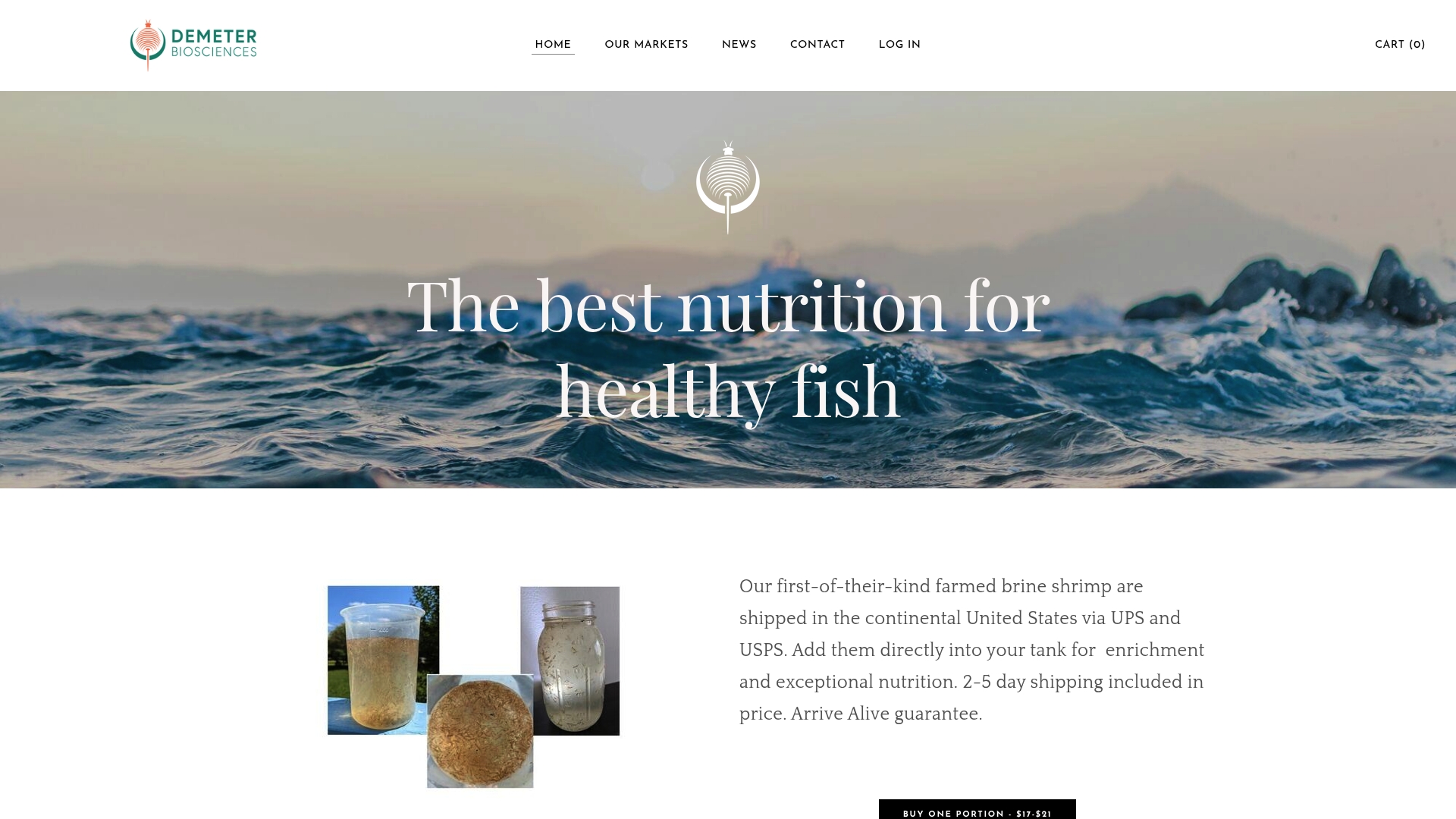
Order live brine shrimp directly from Demeterbioscience as a one-time shipment, set up a monthly subscription for automatic restocking, or request a bulk package for your store or institution. Shipments are packed for live arrival, and the customer support team can walk you through packaging, transit timelines, and live-arrival assurances before you commit. Reach out through the contact page with any questions about order size, shipping windows, or custom arrangements.
Useful sources and further reading
- Food and Agriculture Organization (FAO) — global demand figures for brine shrimp cysts and live feed guidance for aquaculture
- Wikipedia: Aquaculture of brine shrimp — detailed overview of brine shrimp biology, hatch conditions, and nutritional composition
- Carolina Biological Supply: Brine Shrimp Care Guide — practical care and holding instructions for live adult brine shrimp
- Reefphyto: How to Hatch Brine Shrimp at Home — step-by-step hatch protocol including decapsulation and refrigeration guidance
- Reed Mariculture — hatch-yield benchmarks and premium cyst strain specifications
- CABI aquaculture guidance — water clarity indicators and feeding best practices for brine shrimp cultures
- The Environmental Literacy Council — feeding frequency and portioning rules to prevent culture crashes
- The Spruce Pets: Growing Out Brine Shrimp — grow-out systems and maintenance for hobbyists raising nauplii to adults
- Demeterbioscience: Brine Shrimp Nutritional Value Explained — nauplii vs adult nutritional profiles and why feeding stage matters
- Demeterbioscience: Brine Shrimp Feeding Schedule Checklist — practical feeding schedule for recurring hatch and live shipment workflows
- Demeterbioscience: Brine Shrimp Nutrition for Commercial Larval Fish — why nauplii are the primary feed for larval fish and how nutrition specs affect outcomes