
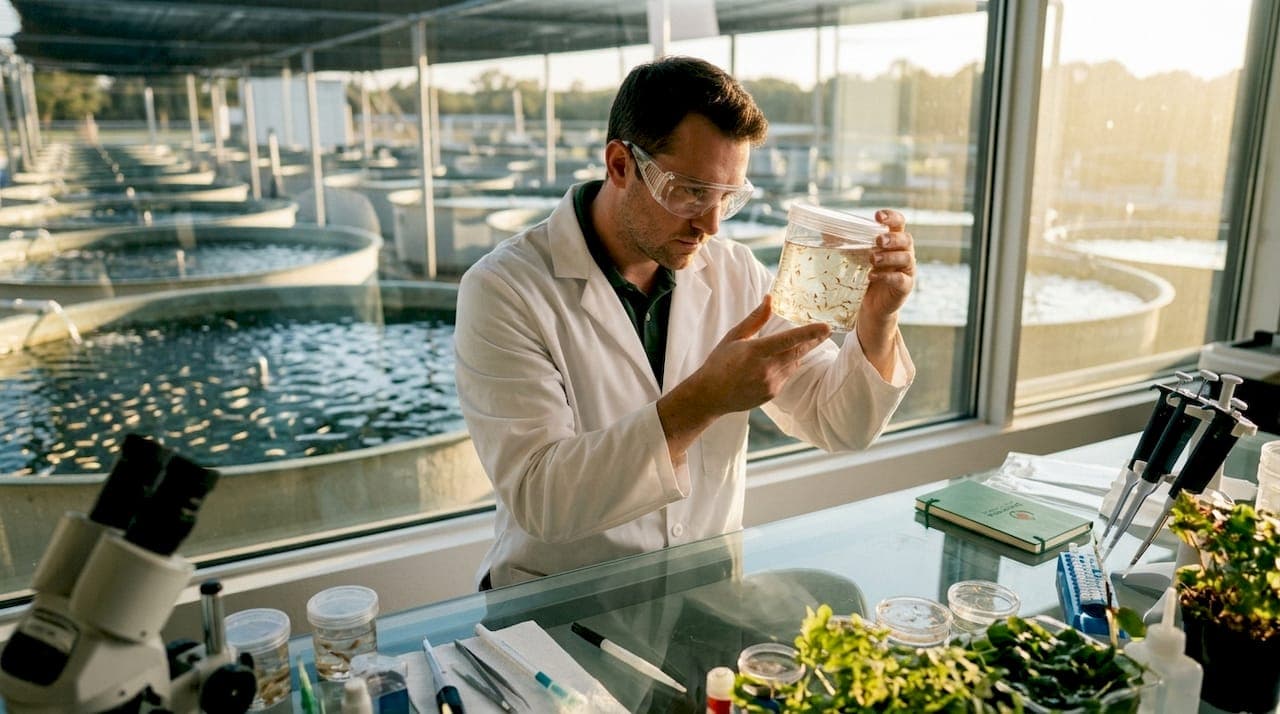
Brine shrimp nutrition is the single most critical live feed variable in commercial larval fish culture, delivering the protein, essential fatty acids, and micronutrients that determine whether larvae survive the first weeks of exogenous feeding. Known formally as Artemia nauplii, brine shrimp serve as the industry standard first feed across marine and freshwater hatcheries worldwide, from Atlantic cod to red snapper to ornamental cichlids. The challenge is not whether to use them. The challenge is how to source, enrich, and feed them to extract maximum nutritional value at every stage of the larval fish feeding regime.
1. Brine shrimp nutrition in commercial larval fish feeding: the core profile
Dried brine shrimp nauplii contain 37 to 71% protein, 12 to 30% lipid, 11 to 23% carbohydrate, and 4 to 21% ash by dry weight. That range is not a rounding error. It reflects the enormous variability between strains, culture conditions, and product forms, which means two hatcheries using "brine shrimp" can be delivering nutritionally incomparable feeds to their larvae.
The protein fraction is the primary driver of larval growth. High-quality Artemia protein contains a favorable amino acid profile, including lysine and methionine, that supports rapid tissue synthesis in early larval stages. The lipid fraction matters equally, because it carries the essential fatty acids eicosapentaenoic acid (EPA) and docosahexaenoic acid (DHA) that larval fish cannot synthesize in sufficient quantities on their own.
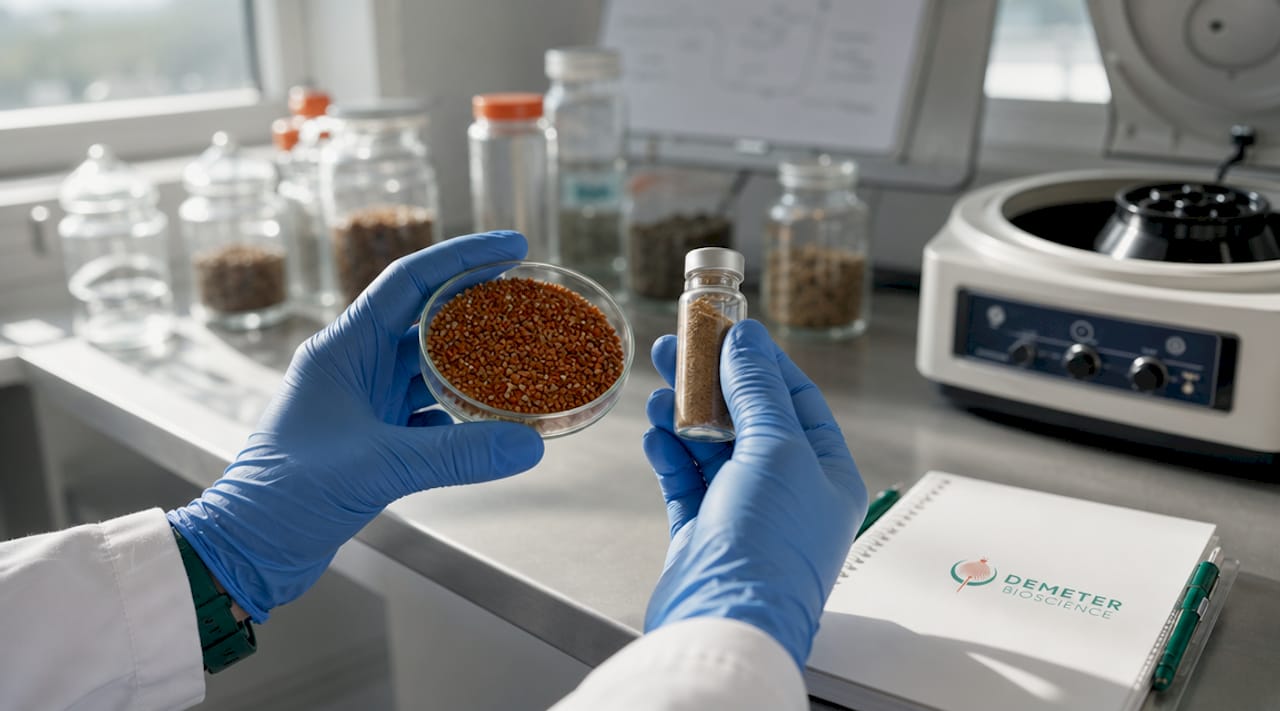
Pro Tip: When comparing brine shrimp products, always request a proximate analysis certificate from the supplier. A product labeled "high protein" without documentation could fall anywhere in the 37 to 71% range.
| Nutrient | Range (% dry weight) | Significance for larval fish |
|---|---|---|
| Protein | 37–71% | Drives tissue growth and enzyme production |
| Lipid | 12–30% | Carries EPA and DHA for neural and visual development |
| Carbohydrate | 11–23% | Provides metabolic energy during active swimming |
| Ash | 4–21% | Supplies calcium, phosphorus, and trace minerals |
2. Why enrichment is non-negotiable for commercial hatcheries
Commercial Artemia strains are deficient in EPA and DHA. This is not a minor gap. These long-chain polyunsaturated fatty acids govern neural development, eye formation, and osmoregulatory capacity in marine larvae. Without enrichment, even a protein-rich nauplius delivers an incomplete nutritional package.
Standard enrichment practice involves incubating instar II nauplii in marine oil emulsions for 12 to 24 hours before feeding. The timing is precise by design. Instar I nauplii have not yet opened their digestive tracts and cannot absorb enrichment compounds. Instar II nauplii have functional digestive systems and actively accumulate lipid droplets from the enrichment medium, making this the only stage where enrichment produces measurable results.
Enrichment products vary in EPA and DHA concentration. Marine oil emulsions derived from fish oil or algal oil are the most widely used formats in commercial hatcheries. Algal oil sources offer a cleaner biosecurity profile because they carry no fish pathogen risk.
- Enrich only at instar II stage, never instar I
- Use emulsified oils with documented EPA and DHA concentrations
- Maintain enrichment temperature between 25 and 28°C for optimal absorption
- Limit enrichment duration to 24 hours to prevent nauplii from metabolizing stored lipids
- Rinse nauplii thoroughly before feeding to remove excess oil from the water column
Pro Tip: Algal oil enrichment products reduce the risk of introducing marine pathogens into your hatchery water. For biosecurity-sensitive operations culturing species like European sea bass or turbot, this substitution is worth the added cost.
3. Key nutritional components that vary by strain and source
Strain genotype and environmental origin strongly influence Artemia nutritional composition, and these differences persist regardless of culture conditions. A Great Salt Lake strain and a Lake Urmia strain fed identical diets will still produce nauplii with different lipid profiles. This is the single most underappreciated variable in commercial fish hatchery nutrition.
Major cyst supply regions include Great Salt Lake in Utah, San Francisco Bay in California, Lake Urmia in Iran, and production sites in Kazakhstan and China. Great Salt Lake remains the dominant commercial supplier by volume, but supply constraints and seasonal harvest variability have pushed hatcheries toward diversifying their cyst sources. Each regional strain carries distinct fatty acid ratios, hatching rates, and nauplii size profiles that affect suitability for specific larval fish species.
Strain selection criteria for hatchery optimization should include nauplii size relative to larval mouth gape, lipid content before enrichment, hatching efficiency under your facility's water chemistry, and documented performance data from comparable species. Smaller nauplii from San Francisco Bay strains suit first-feeding marine larvae with narrow mouth gapes, while larger Great Salt Lake nauplii work better for freshwater species with wider gapes.
Decapsulated cysts increase nutrient delivery by 30 to 40% and reduce bacterial load compared to non-decapsulated cysts. Removing the chorion shell eliminates a physical barrier to digestion and strips away the primary site of bacterial colonization on the cyst surface. For hatcheries managing Vibrio pressure, decapsulation is not optional. It is a baseline biosecurity measure.
4. PNSB supplementation: the enrichment innovation changing hatchery outcomes
Purple Non-Sulfur Bacteria (PNSB) represent the most significant nutritional innovation in Artemia culture in the past decade. Supplementing Artemia with PNSB strain AZR1 improves crude protein content to approximately 53%, enhances lipid profiles, increases carotenoid levels, and triggers immune gene upregulation in larval fish fed the enriched nauplii.
The mechanism is dual. PNSB function both as a nutritional supplement to the Artemia and as a probiotic in the culture water. They produce bacteriocins and compete with pathogenic bacteria for resources, reducing Vibrio populations in the rearing system. This means a single PNSB addition addresses two of the most persistent challenges in commercial hatcheries simultaneously: nutritional quality and biosecurity.
PNSB also produce carotenoids, including lycopene and beta-carotene, that accumulate in Artemia tissue and transfer to larval fish. These pigments support immune function and reduce oxidative stress during the physiologically demanding first-feeding period. For species like red snapper or grouper, where larval mortality during first feeding can exceed 50%, this immune support is operationally significant.
- PNSB strain AZR1 raises Artemia crude protein to approximately 53%
- Carotenoid accumulation in nauplii transfers directly to larval fish tissue
- PNSB reduce Vibrio and other harmful bacteria in culture water
- Immune gene upregulation in larvae fed PNSB-enriched nauplii improves disease resistance
- PNSB can be integrated into existing enrichment protocols without major infrastructure changes
5. Live versus frozen versus dried: what the data actually shows
Live freshly hatched nauplii produce stronger feeding responses and superior larval growth compared to frozen or dried alternatives. The movement stimulus from live prey triggers the predatory strike behavior that larval fish rely on during early development. Frozen and dried formats eliminate this behavioral trigger entirely.
The nutritional gap between live and processed formats is real but manageable. Frozen nauplii retain most of their protein content but lose a significant portion of their fatty acid integrity during the freeze-thaw cycle. Dried nauplii show the widest nutritional variability, as processing temperature and duration directly affect protein denaturation and lipid oxidation. The nutritional value of brine shrimp in dried form depends heavily on the drying method used by the manufacturer.
Frozen and dried formats serve a legitimate role as supplements during weaning transitions, when larvae are being shifted from live prey to formulated diets. Using them as primary feeds during the critical first-feeding window, however, consistently produces lower survival and growth rates across species. The data on this point is consistent enough that live nauplii should be treated as the default, with processed formats reserved for specific protocol stages.
Pro Tip: If you must use frozen nauplii during a live feed shortage, thaw them in enrichment emulsion rather than plain water. This partially restores the fatty acid content lost during freezing and improves their nutritional value before feeding.
6. Operational feeding practices for larval fish rearing protocols
Feeding frequency and nauplii concentration in the rearing tank are the two variables hatchery managers most often miscalibrate. Overfeeding creates water quality problems and bacterial blooms. Underfeeding produces nutritional stress and cannibalism in species with aggressive larval behavior.
- Feed live instar II nauplii at a density of 1 to 5 nauplii per milliliter of rearing water, adjusted for species and larval age
- Feed three to six times daily during peak larval growth phases to maintain continuous prey availability
- Separate nauplii from cyst shells using light-attraction or centrifugation before feeding to prevent gut impaction
- Integrate formulated microdiets alongside live nauplii starting at day 10 to 15 to begin weaning
- Monitor nauplii gut fullness under a microscope before feeding to confirm enrichment absorption
- Maintain nauplii holding density below 200 per milliliter during pre-feeding enrichment to prevent oxygen depletion
- Replace rearing water at 20 to 30% daily to control bacterial load from nauplii decomposition
Optimized feeding protocols reduce total cyst consumption without compromising larval performance, which directly improves hatchery economics. Cyst costs represent one of the largest variable expenses in marine larval rearing. Feeding more precisely, rather than more generously, is the most underutilized cost-reduction strategy in the industry.
Pro Tip: Track nauplii consumption per larva per day rather than total tank volume fed. This metric reveals overfeeding patterns that inflate cyst costs and degrade water quality simultaneously.
7. Biosecurity and probiotic strategies to protect larval fish health
Pathogenic bacteria including Vibrio are present in commercial cyst lots and represent a direct mortality risk in larval rearing tanks. Cysts harvested from open saline lakes carry environmental bacterial communities that include opportunistic pathogens. Introducing these into a closed larval rearing system without mitigation is a documented cause of mass mortality events.
Probiotics and decapsulation are the two foundational biosecurity tools for commercial hatcheries using Artemia. Decapsulation removes the chorion where most surface bacteria reside. Probiotics, particularly PNSB strains, compete with pathogens in the water column and on nauplii surfaces. Using both in combination produces better outcomes than either alone.
The role of brine shrimp in larval fish rearing extends beyond nutrition into water quality management. Nauplii that die uneaten decompose rapidly and generate ammonia spikes. Feeding precisely, removing uneaten nauplii within two hours, and maintaining probiotic populations in the rearing water are all components of a functional biosecurity protocol.
Key takeaways
Brine shrimp nutrition in commercial larval fish culture requires strain selection, enrichment at instar II, and biosecurity integration to deliver consistent, high-quality results.
| Point | Details |
|---|---|
| Protein and lipid range | Artemia nauplii contain 37 to 71% protein and 12 to 30% lipid; source and strain determine where your product falls. |
| Enrichment timing | Enrich only at instar II stage when the digestive tract is functional and fatty acid absorption is possible. |
| Strain selection matters | Great Salt Lake, Lake Urmia, and San Francisco Bay strains carry distinct lipid profiles that affect larval fish outcomes. |
| PNSB supplementation | PNSB strain AZR1 raises crude protein to 53% and reduces Vibrio pressure in rearing water simultaneously. |
| Live feed remains the standard | Live nauplii outperform frozen and dried formats for first-feeding larvae due to movement stimulus and superior nutrient availability. |
What I've learned from years of watching hatcheries get this wrong
The most common mistake I see in commercial hatcheries is treating Artemia as a commodity. Operators select the cheapest available cyst lot, hatch it without enrichment, and feed it at whatever density feels adequate. Then they attribute poor larval survival to genetics or water quality when the actual cause is nutritional deficiency in the first feed.
Enrichment compliance is the single biggest lever available to most hatcheries right now. The gap between unenriched and properly enriched nauplii in terms of EPA and DHA delivery is large enough to explain most of the survival variance I see between facilities using nominally identical protocols. The tools exist. The knowledge exists. The gap is in execution.
PNSB supplementation is where I expect the next major shift in commercial practice. The data from AZR1 trials is compelling enough that any hatchery managing chronic Vibrio pressure should be running a trial now rather than waiting for the practice to become standard. The dual benefit of improved Artemia nutrition and reduced pathogen load in the water column addresses two cost centers simultaneously.
The future of this field runs through controlled, land-based Artemia production fed on defined algal diets. Wild cyst harvests from Great Salt Lake and Lake Urmia face increasing pressure from climate variability and regulatory constraints. Hatcheries that build supply chain relationships with controlled-production suppliers now will have a significant advantage when wild cyst availability tightens further.
— Demeter
Demeter Biosciences brine shrimp for commercial hatcheries
Demeterbioscience produces live brine shrimp in land-based, controlled systems fed exclusively on Dunaliella algae, guaranteeing a minimum of 40% protein content and eliminating the nutritional variability that plagues wild-harvested cyst lots. For commercial hatcheries where consistent larval fish nutrition determines production outcomes, this controlled cultivation model removes the guesswork from your live feed supply chain.
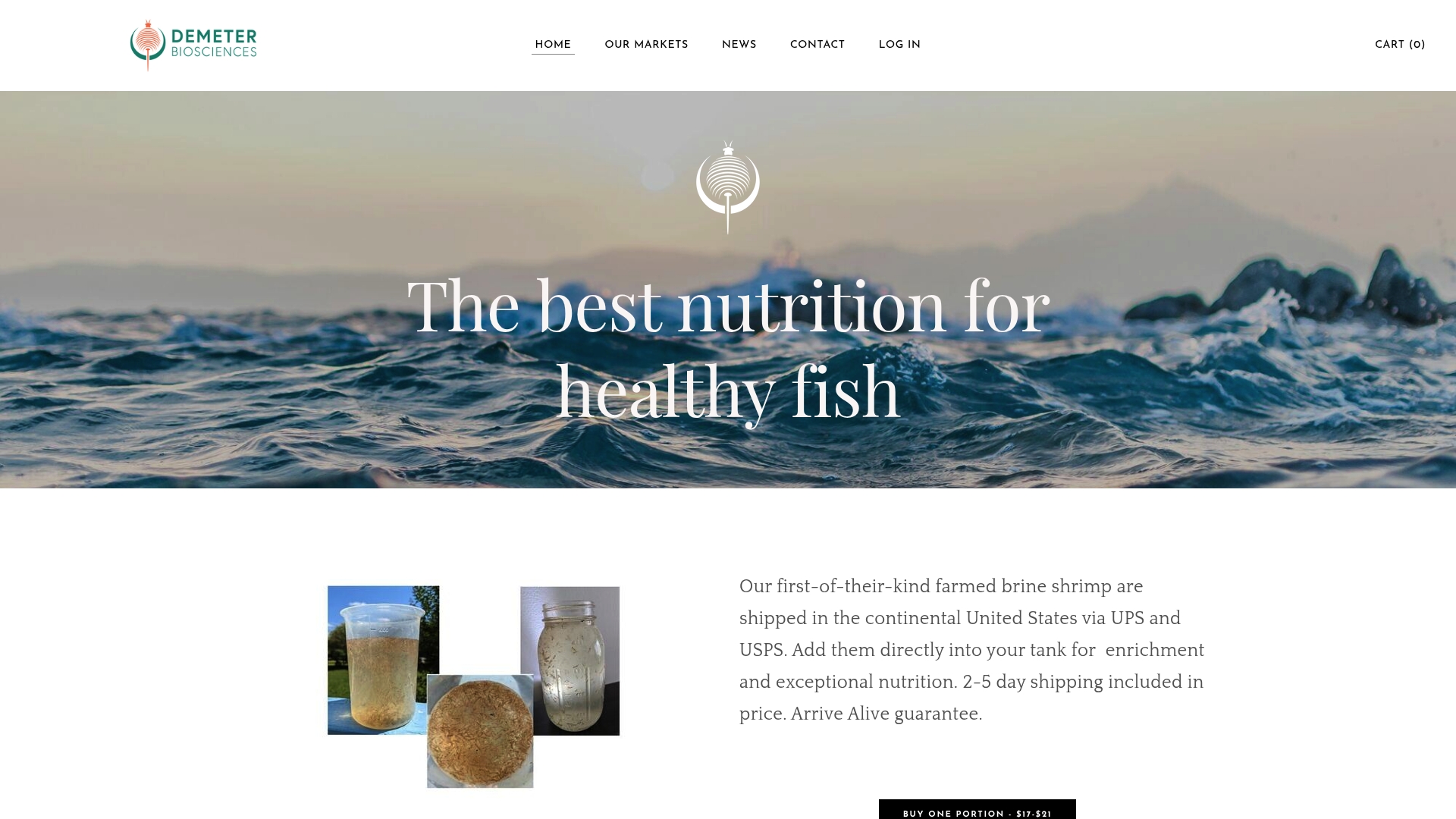
Demeterbioscience offers bulk supply options suited to hatchery-scale operations, with subscription plans that maintain uninterrupted live feed availability across production cycles. Their Dunaliella-fed nauplii arrive with a documented nutritional profile, giving your team the data needed to calibrate enrichment protocols precisely. Explore the full range of hatchery-grade brine shrimp or contact Demeterbioscience directly to discuss volume requirements and delivery logistics.
FAQ
What protein content should commercial brine shrimp have for larval fish?
Dried Artemia nauplii range from 37 to 71% protein by dry weight depending on strain and product form. For commercial larval fish feeding, target products at the higher end of this range and verify with a proximate analysis certificate.
When should brine shrimp be enriched with EPA and DHA?
Enrichment must occur at the instar II stage, when nauplii have functional digestive tracts capable of absorbing fatty acids. Instar I nauplii do not feed and cannot accumulate enrichment compounds.
Are live brine shrimp better than frozen for larval fish?
Live freshly hatched nauplii produce stronger feeding responses and superior growth in larval fish compared to frozen alternatives. Frozen and dried formats are appropriate as supplements during weaning but should not replace live nauplii during the first-feeding window.
What is PNSB and how does it improve brine shrimp nutrition?
Purple Non-Sulfur Bacteria, specifically strain AZR1, raise Artemia crude protein to approximately 53%, improve lipid profiles, and reduce Vibrio populations in rearing water. This dual nutritional and biosecurity benefit makes PNSB supplementation one of the most practical innovations available to commercial hatcheries.
Why does brine shrimp strain selection matter for hatchery nutrition?
Strain genotype determines lipid profile and nauplii size regardless of culture conditions. Great Salt Lake, San Francisco Bay, and Lake Urmia strains each carry distinct fatty acid ratios that directly affect larval fish growth and survival outcomes.