
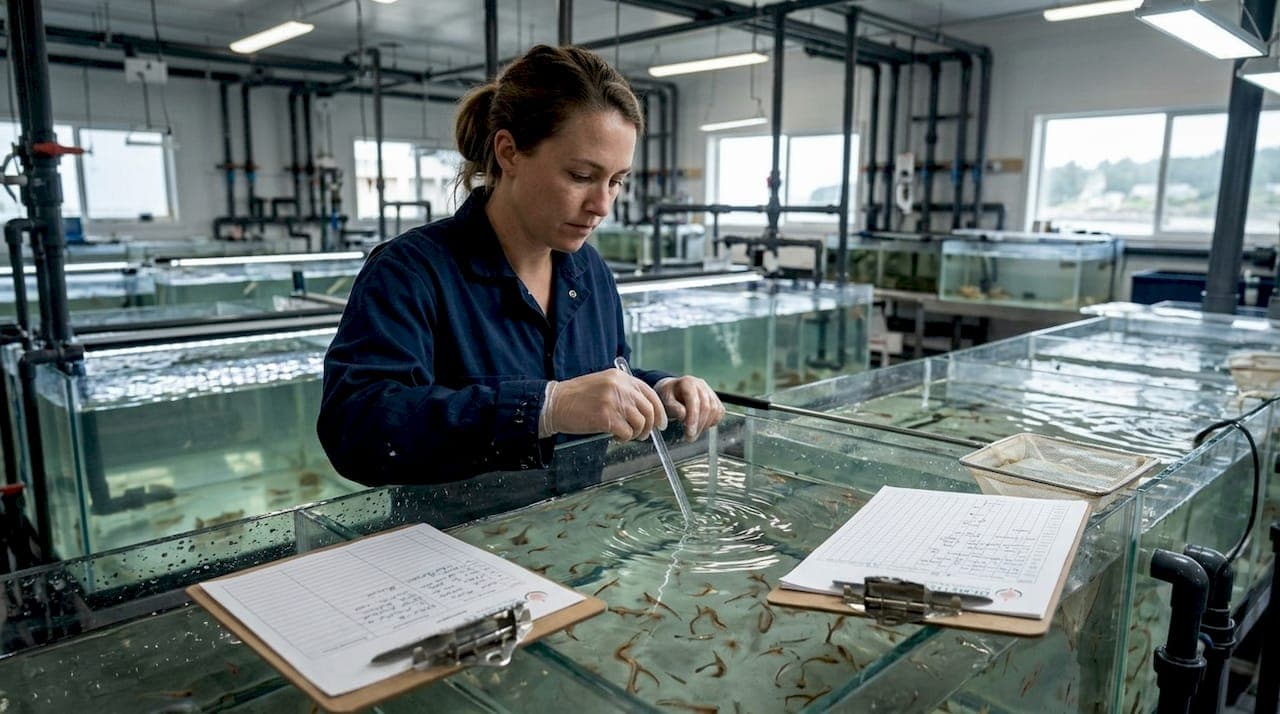
Artificial diets have improved dramatically over the past two decades, yet the role of brine shrimp in larval fish rearing remains irreplaceable across marine and freshwater hatcheries worldwide. The reason is not sentiment. It is biology. Larval fish operate on instinct before they operate on learned behavior, and brine shrimp satisfy those instincts in ways that no inert feed has fully replicated. If you are working to optimize survival rates in early rearing stages, understanding exactly what Artemia brings to the larval diet, where it falls short, and how to manage it precisely will change your outcomes more than almost any other single decision.
Table of Contents
- Key takeaways
- The role of brine shrimp in larval fish rearing: biological fit
- Nutrition profile and enrichment strategies
- Hatchery management and feeding protocols
- Brine shrimp versus alternative live feeds
- Economic and sustainability considerations
- My take on what actually separates good Artemia programs from mediocre ones
- How Demeterbioscience supports your larval rearing program
- FAQ
Key takeaways
| Point | Details |
|---|---|
| Brine shrimp are near-universal | Over 85% of aquaculture species depend on Artemia nauplii during larval stages due to protein and lipid content. |
| Enrichment is not optional | Freshly hatched nauplii carry minimal nutrition until their gut develops; enrichment with HUFAs and vitamins drives larval growth and pigmentation. |
| Hatchery protocol determines outcomes | Staggered hatching, proper rinsing, and precise dosing separate high-performing hatcheries from struggling ones. |
| Live movement is a functional trigger | Brine shrimp's jerky swimming motion stimulates predatory feeding responses that inert artificial feeds cannot replicate. |
| Supply concentration is a real risk | Approximately 90% of commercial cysts come from a single source, making supply chain awareness critical for any serious hatchery operation. |
The role of brine shrimp in larval fish rearing: biological fit
No live feed has achieved the adoption rate of Artemia nauplii, and the reasons are rooted in biology rather than convenience. Understanding what makes brine shrimp physically and behaviorally suited to larval fish explains why switching to artificial alternatives has proven harder than the aquaculture industry once expected.
The size match is the first factor. Freshly hatched nauplii measure between 400 and 500 micrometers, placing them squarely within the gape size of most marine and freshwater fish larvae at first feeding. This fit matters because larvae that cannot physically capture prey starve within days, regardless of what else is available in the tank.
Beyond size, Artemia display the following life stage characteristics that directly shape feeding strategy:
- Instar I nauplii hatch within 24 to 48 hours and carry a residual yolk sac. They are swimming but not yet feeding, which means their nutritional value is limited to what was packed into the cyst.
- Instar II nauplii develop a functional digestive tract and begin filter feeding themselves. This is the stage when enrichment becomes both possible and necessary.
- Adult Artemia are used in later larval stages and juvenile weaning protocols, offering greater lipid volume but requiring larger gape widths.
- Cyst storage allows hatcheries to maintain dried cysts for months under appropriate conditions, enabling on-demand hatching and precise supply scheduling. This characteristic is unique among live feeds.
The behavioral dimension is equally important. Artemia swim with a jerky, irregular motion that triggers predatory instincts in fish larvae that have not yet learned to associate food with any particular cue. This is a hard-wired response. Larvae that ignore freeze-dried pellets will pursue live nauplii aggressively, which is why brine shrimp function not just as nutrition delivery but as a behavioral catalyst for first feeding success.
Nutrition profile and enrichment strategies
The nutritional reputation of brine shrimp is partly deserved and partly conditional. Dried brine shrimp contain between 37% and 71% protein and 12% to 30% lipid, making them nutrient-dense by most standards. But freshly hatched nauplii tell a more complicated story.
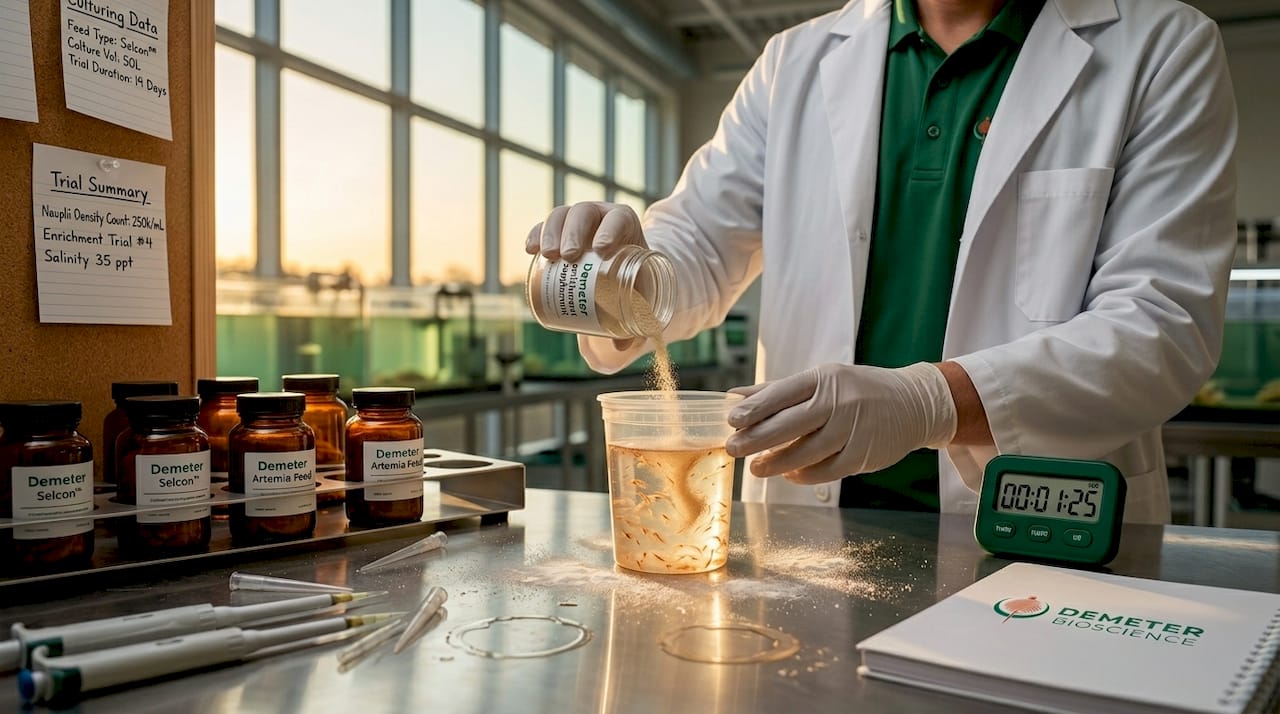
At hatch, Instar I nauplii are functionally empty gut organisms. Their protein is present, but the fatty acid profile that larval marine fish require, particularly DHA, EPA, and arachidonic acid, is absent or marginal unless the parent cyst strain was produced under conditions that favor lipid accumulation. This is where enrichment is essential rather than optional.
Effective enrichment protocols rely on several consistent practices:
- Timing enrichment to Instar II. Enrichment applied 6 to 12 hours post-hatch, once the digestive tract is functional, allows nauplii to absorb fatty acid emulsions. Applying enrichment products to Instar I nauplii wastes product and yields no uptake.
- HUFA emulsions. Commercial HUFA products can increase omega-3 content by up to 400%, directly improving larval growth rates, skeletal development, and coloration in ornamental species.
- Vitamin supplementation. Vitamins C and E added during enrichment reduce oxidative stress in larvae and support immune development during a developmental window when mortality risk is highest.
- Probiotic loading. Some hatcheries now load nauplii with beneficial bacterial strains before feeding. Research supports improved gut microbiome establishment in larvae fed probiotic-enriched Artemia.
Pro Tip: If you are seeing inconsistent pigmentation or skeletal deformities in cohorts fed Artemia, the issue is almost never the brine shrimp itself. It is almost always insufficient DHA delivery. Audit your enrichment product and timing before attributing failures to other variables.
The source of your cysts also matters more than most practitioners acknowledge. Cysts harvested from wild populations at the Great Salt Lake or Urmia Lake vary in lipid composition by season and harvest year. Controlled cultivation systems, like those used by Demeterbioscience, produce brine shrimp on a defined algae diet and report minimum protein content of 40%, reducing the nutritional variability that wild-sourced cysts introduce into feeding programs.
Hatchery management and feeding protocols
Getting the biology right is half the battle. Operationalizing that biology inside a working hatchery requires discipline around environmental parameters, separation hygiene, and feeding regimens.
Optimal hatching conditions for Artemia cysts follow well-established parameters:
- Salinity: 25 to 35 ppt produces reliable hatch rates. Distilled water with artificial sea salt performs consistently when natural seawater is unavailable.
- Temperature: 25 to 28°C accelerates hatch to approximately 18 to 24 hours and maximizes nauplii energy reserves.
- Aeration: Vigorous aeration prevents cyst settling and maintains suspended oxygen above 6 mg/L throughout the hatch cycle.
- Lighting: Continuous illumination of approximately 2,000 lux during the first hours of hydration accelerates hatching.
- pH: Maintain between 8.0 and 8.5. Acidic conditions delay hatching and reduce nauplii vigor.
After hatching, nauplii separation is a non-negotiable step. Rinsing nauplii for at least 10 seconds in freshwater removes bacteria, empty shells, and metabolic waste before they enter the larval rearing tank. Skipping this step introduces organic load that degrades water quality and elevates the bacterial burden larvae are exposed to at their most vulnerable stage.
| Parameter | Recommended value | Risk if not met |
|---|---|---|
| Salinity at hatch | 25 to 35 ppt | Low hatch rate, poor nauplii vigor |
| Water temperature | 25 to 28°C | Delayed hatch, reduced energy reserves |
| Feeding dose | 50 to 100 nauplii per mL, 3x daily | Starvation or water quality degradation |
| Enrichment timing | 6 to 12 hours post-hatch | No fatty acid uptake by nauplii |
| Rinse duration | 10 seconds minimum | Bacterial contamination in rearing tanks |
Feeding regimens for marine larvae like clownfish and grouper commonly use 50 to 100 enriched nauplii per mL delivered three times daily, with survival rates in optimized systems reaching 95%. Overfeeding above these thresholds does not increase survival. It degrades water quality, which suppresses feeding behavior and drives mortality.
Pro Tip: Stagger two hatching vessels 12 hours apart so you always have a fresh batch ready. Continuous supply systems prevent the nutritional quality decline that occurs when nauplii age past 24 hours before being fed.
Brine shrimp versus alternative live feeds
Aquaculture professionals regularly evaluate whether brine shrimp can be replaced or significantly reduced in larval diet programs. The short answer is that no single alternative replicates what Artemia provides across the full first-feeding window.
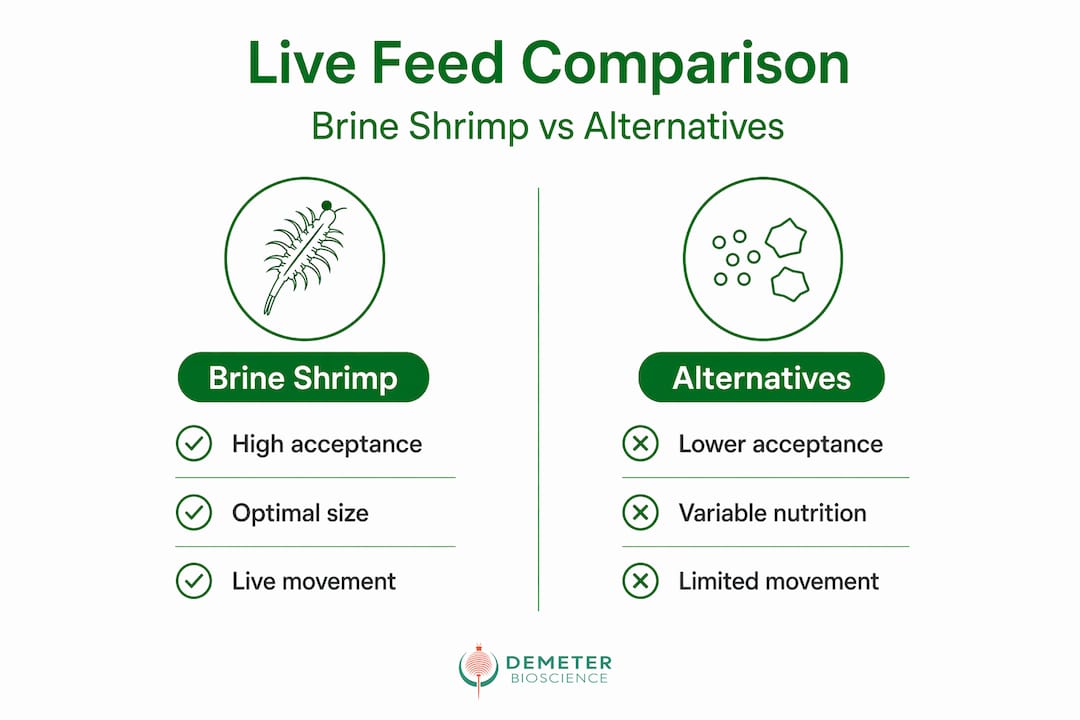
| Feed type | Size range | HUFA content | Larval acceptance | Practical limitation |
|---|---|---|---|---|
| Artemia nauplii | 400 to 500 µm | Enrichable to high levels | Very high | Requires enrichment post-hatch |
| Rotifers | 100 to 340 µm | Low without enrichment | High for small-mouthed larvae | Limited nutritional density |
| Copepods | 100 to 400 µm | Naturally high in DHA | Moderate to high | Difficult to mass produce reliably |
| Microparticulate feeds | Variable | Formulated | Low in early larvae | Poor behavioral trigger |
Rotifers serve as a first-feeding organism for species with small gape widths before they can accept nauplii. They do not replace brine shrimp. They precede them. Copepods carry a naturally superior fatty acid profile but present real supply chain and production challenges for most commercial hatcheries. Microparticulate and formulated feeds have advanced considerably in terms of nutritional composition, but the inability of inert particles to trigger predatory feeding responses remains an unsolved problem for many species in the first two weeks of life.
The live movement of Artemia is not a secondary benefit. It is what initiates voluntary feeding in larvae that have no learned food recognition. Combining brine shrimp with formulated diets as co-feeding strategies during weaning is common and effective. Replacing brine shrimp entirely in early larval stages remains a step too far for most species in 2026.
Economic and sustainability considerations
The role of brine shrimp in aquatic research and global food production carries supply chain implications that practitioners need to track actively. Approximately 90% of commercial Artemia cysts originate from the Great Salt Lake in Utah. That concentration of supply in a single geographic and ecological system creates real vulnerability for global aquaculture.
Key considerations for anyone managing hatchery procurement:
- Great Salt Lake water levels have dropped significantly over the past decade due to drought and water diversion, directly affecting cyst harvest volumes and pricing.
- Import logistics add weeks to delivery timelines when cyst inventories run low, disrupting hatchery feeding schedules in ways that are difficult to recover from mid-cycle.
- Controlled cultivation offers a genuine alternative path. Supplementary feeding of Artemia culture with agricultural by-products like soybean meal and rice bran can improve biomass and cyst output by over 100%, pointing toward domesticated production as a supply resilience strategy.
- Sustainability certification is increasingly requested by retail and institutional buyers, making provenance documentation for Artemia sourcing part of the commercial conversation.
For hatcheries operating at scale, the practical move is to diversify sourcing and maintain a minimum two-month cyst inventory. Producers using verified cultivation systems with defined inputs, rather than seasonally harvested wild cysts, are better positioned to deliver consistent quality regardless of environmental conditions at the harvest site.
My take on what actually separates good Artemia programs from mediocre ones
I've spent considerable time examining larval rearing operations across different production scales, and the pattern I keep seeing is the same. Hatcheries that struggle with Artemia are not failing at the obvious things. They know to hatch cysts, separate nauplii, and feed on schedule. Where they lose control is in the details that don't show up until the larvae do.
The most common mistake I observe is enrichment applied at the wrong stage. Practitioners assume that adding an enrichment product to a hatching batch covers the nutritional gap. It doesn't, because Instar I nauplii cannot absorb anything. The window is 6 to 12 hours post-hatch, and hitting that window consistently requires planning, not improvisation.
The second thing I've found is that people underestimate how much variation exists between cyst batches. Wild-harvested cysts reflect environmental conditions at the harvest site. A batch collected during a drought year from an increasingly saline lake is not the same product as one harvested under normal conditions. When I see unexplained drops in larval performance with no obvious cause, the first place I look now is the cyst source and recent production conditions.
What excites me about where this field is going is the movement toward controlled-environment Artemia cultivation. The ability to define the diet, the rearing conditions, and therefore the nutritional output of nauplii is a qualitative change in what brine shrimp can deliver. That is the direction I would be investing attention and resources in right now.
— Demeter
How Demeterbioscience supports your larval rearing program
For aquaculture professionals who need nutritional consistency across every hatch, sourcing matters as much as protocol. Demeterbioscience produces live brine shrimp in a land-based, controlled system where nauplii are fed exclusively on Dunaliella algae, delivering a guaranteed minimum of 40% protein per batch with none of the seasonal variability that complicates wild-sourced cyst programs.
Whether you are running a commercial marine hatchery, a research facility, or a specialized ornamental breeding program, Demeterbioscience offers live brine shrimp products calibrated for larval nutrition rather than general use. The company also supplies fish meal products for operations building out multi-stage feeding programs. For bulk supply, subscription plans, or technical questions about integrating their Artemia into your existing protocol, reach out directly through their contact page.
FAQ
What makes brine shrimp irreplaceable for larval fish?
Brine shrimp combine appropriate size, high protein content, and live movement that triggers predatory feeding instincts in larvae. No current artificial feed fully replicates this behavioral trigger in early larval stages.
When should enrichment be applied to Artemia nauplii?
Enrichment should be applied 6 to 12 hours after hatching, once nauplii reach Instar II and develop a functional digestive tract. Applying enrichment to Instar I nauplii produces no nutritional uptake.
What feeding dose works for marine fish larvae?
Research on species like clownfish supports 50 to 100 enriched nauplii per mL delivered three times daily, with optimized protocols achieving survival rates up to 95%.
Why is Artemia cyst supply a concern for hatcheries?
Approximately 90% of global commercial cyst production originates from the Great Salt Lake, meaning drought conditions or regulatory changes in Utah directly affect availability and pricing for hatcheries worldwide.
Can brine shrimp be replaced by copepods or formulated feeds?
Copepods carry a superior natural fatty acid profile but are difficult to produce at commercial scale. Formulated feeds lack the live movement that initiates voluntary feeding in early larvae. Brine shrimp remain the most practical option for most species through the first two weeks of rearing.