
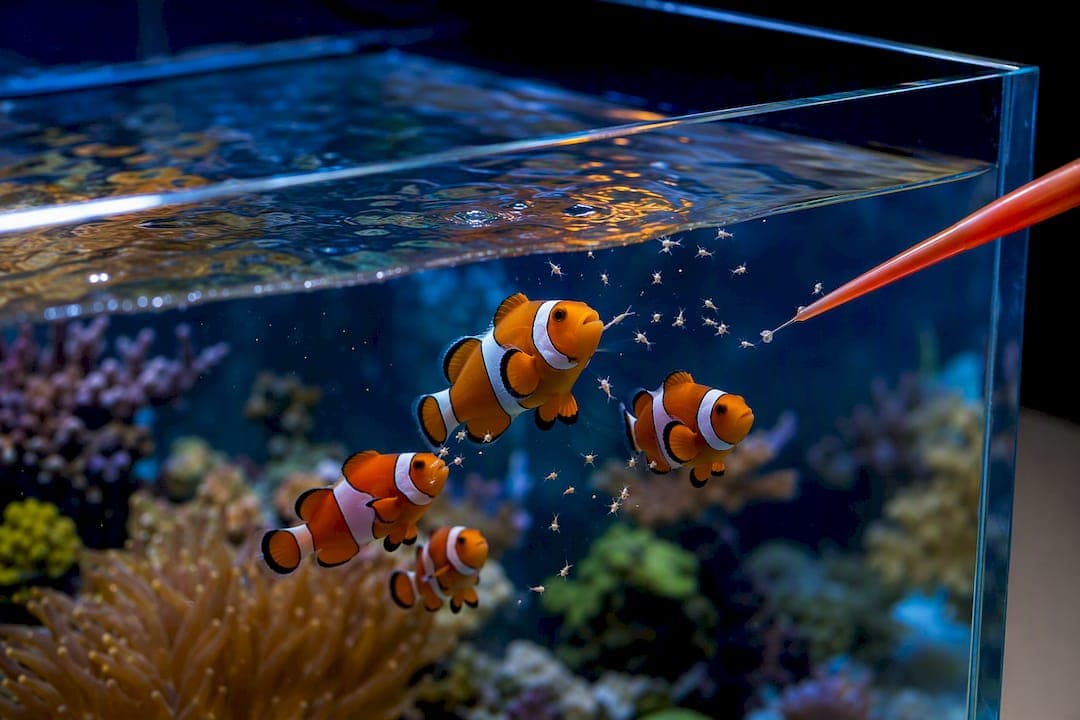
Yes, brine shrimp belong in a clownfish diet, but only when used the right way. Live nauplii work best for fry, while enriched or frozen brine shrimp should supplement, not replace, high-quality pellets and mysis for adults. Plain, un-enriched brine shrimp fall short on long-chain fatty acids, so enrichment after the 12 to 24 hour hatch window matters more than most hobbyists realize. Cultivated options like Demeterbioscience's microalgae-fed Artemia solve some of the consistency problems that come with wild-harvested shrimp.
TL;DR:
- Live nauplii are essential for feeding fry because their movement triggers a feeding response, but they require precise timing for enrichment to maximize nutrition.
- Frozen brine shrimp provide convenience and shelf stability but generally lack long-chain fatty acids unless pre-enriched with HUFA or spirulina.
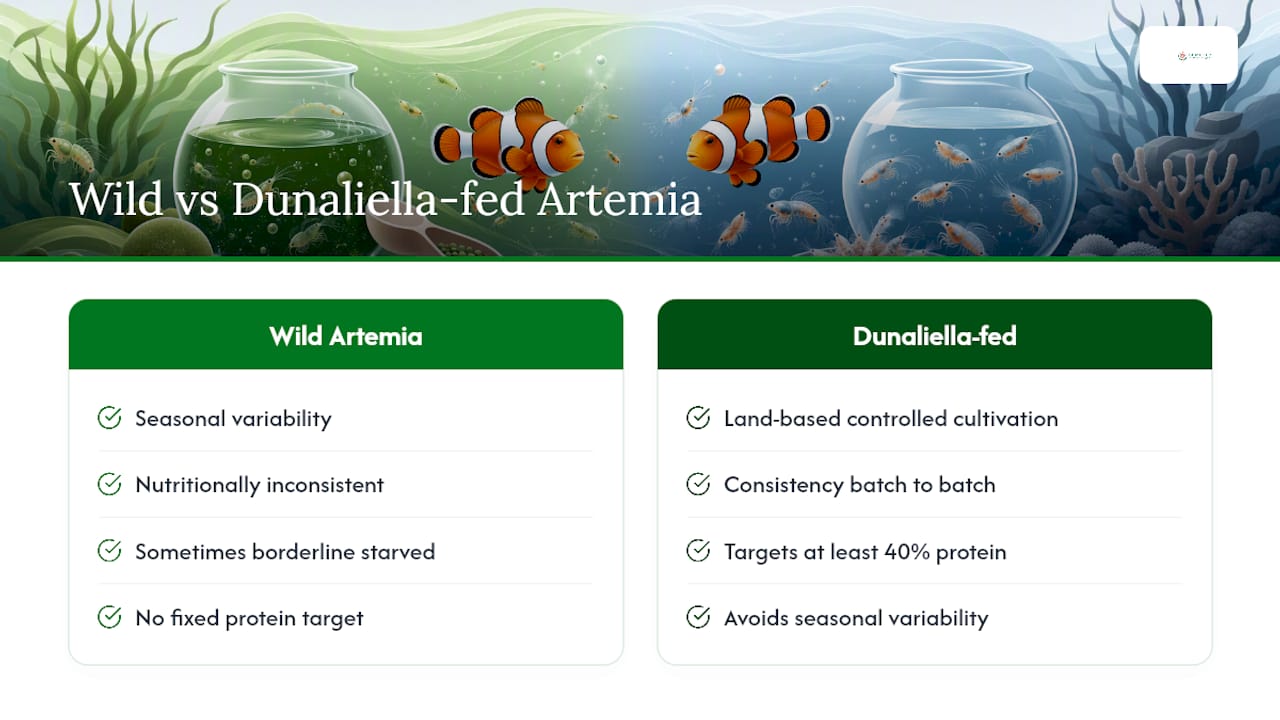
- Cultivating Artemia on microalgae like Dunaliella ensures consistent nutritional quality, reducing seasonal variability common in wild-harvested shrimp.
- Proper hatchery conditions, such as correct salinity, temperature, and avoiding metal contamination, are crucial to prevent hatch failure.
- Enrichment should be done 12 to 24 hours after hatch to avoid wasted effort, with timing directly affecting long-term health and coloration of clownfish.
Table of Contents
- Live vs Frozen Clownfish Brine Shrimp: What Actually Works
- Why Plain Brine Shrimp Falls Short Without Enrichment
- How to Hatch and Enrich Brine Shrimp for Clownfish
- Clownfish Feeding Schedule by Life Stage
- Biosecurity: Avoiding Disease and Hatch Failure
- Why Microalgae-Fed Brine Shrimp Changes the Equation
- A Note From Demeter on Feeding Clownfish Well
- Get Consistent Live Brine Shrimp Without the Hatching Guesswork
- Sources
Live vs Frozen Clownfish Brine Shrimp: What Actually Works
The form you choose depends entirely on what you're trying to accomplish. Fry rearing calls for live nauplii almost every time. Their wriggling motion triggers a feeding response in larvae that still struggle to recognize stationary food, and that movement is the whole reason live feed remains a nursery staple even with all the mess it creates.
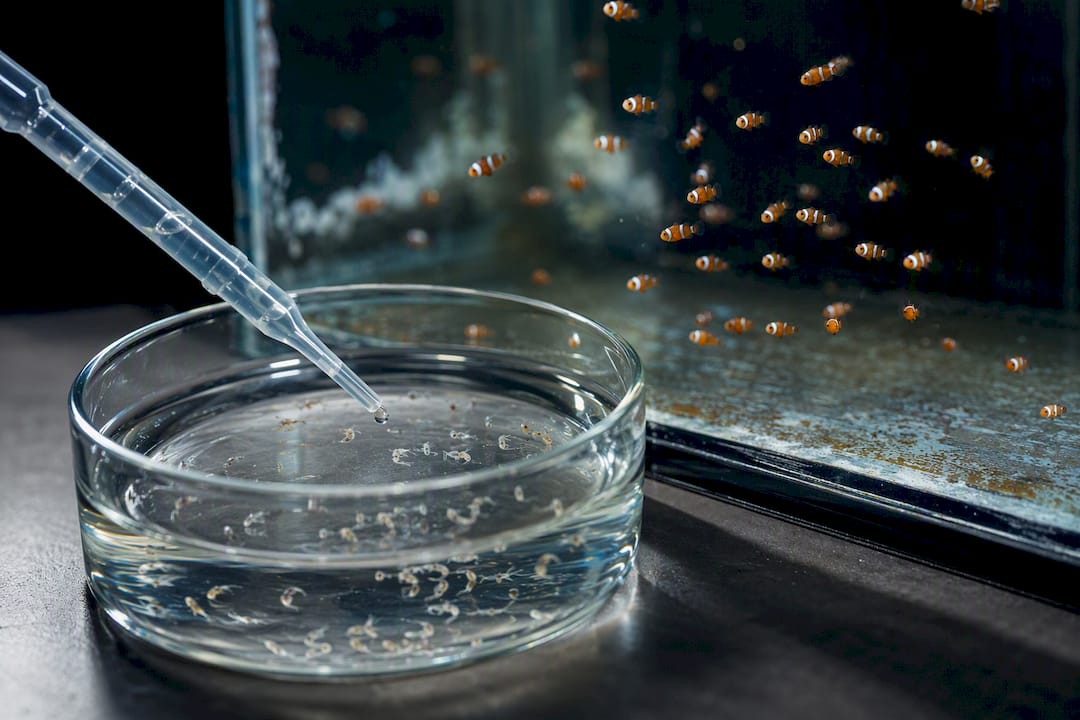
Frozen brine shrimp solve a different problem: convenience. There's no hatching setup, no daily harvest, and almost no biosecurity risk compared with live shipments of unknown origin. The tradeoff is nutrition. Unless the product is labeled enriched, frozen brine shrimp typically carries less of the long-chain fatty acid content that supports color and reproductive health in adult clownfish.
Here's how the two compare on the factors that matter for feeding clownfish:
- Live nauplii: highest acceptance rate for fry and picky eaters, but requires same-day hatching and careful handling before it degrades in the tank.
- Frozen (plain): shelf-stable and mess-free, but nutritionally thinner unless pre-enriched with HUFA or spirulina.
- Frozen (enriched): a solid middle ground for weekly rotation, combining convenience with better fatty acid content.
- Hatch-on-demand: cheapest per feeding if you already run a hatchery, but it costs time and adds a daily task to your routine.
For routine feeding of adult clownfish, frozen enriched brine shrimp handles most needs. Reserve live hatching for fry, conditioning pairs before spawning, or situations where a stubborn fish won't touch anything else. Most captive-bred clownfish readily accept high-quality pellets as a staple anyway, which means brine shrimp in either form is functioning as a supplement, not the backbone of the diet.
Why Plain Brine Shrimp Falls Short Without Enrichment
Brine shrimp nauplii carry decent protein, but they're not a nutritional powerhouse straight out of the shell. Freshly hatched Artemia run low in the long-chain omega-3 fatty acids, particularly EPA and DHA, that clownfish need for coloration, immune function, and reproductive success. This is the gap enrichment exists to close.
Three enrichment approaches dominate hobbyist practice:
- Selcon and similar HUFA emulsions: soaked into live nauplii or added to frozen product, these boost omega-3 content directly.
- Microalgae like Dunaliella: a natural food source for Artemia that also raises the shrimp's own nutritional density when used during cultivation.
- Spirulina-based additives: these lean more toward carotenoid enrichment, which supports the orange and white pigmentation hobbyists want to see.
Statistic Callout: Newly hatched nauplii can't be gut-loaded at all during their first life stage. They lack a functional mouth until they molt from Instar I to Instar II, a transition that takes roughly 12 hours after hatching. Add enrichment solution before that molt and it's wasted effort. Nothing gets absorbed.
This timing detail trips up a lot of first-time hatchers. They add Selcon straight after hatching, assume it worked, and never realize the shrimp couldn't process it yet. For color and long-term health, enriched brine shrimp closes some of the gap with mysis, but mysis still edges ahead on raw protein and fatty acid density. Save mysis for conditioning and breeding pairs where that extra nutritional load pays off. Our guide to brine shrimp enrichment timing walks through the full protocol if you want more detail than fits here.
How to Hatch and Enrich Brine Shrimp for Clownfish
Getting this right is mostly about timing and water parameters, not equipment. Here's the process from cyst to feeding.
- Set up the hatcher. Use a conical or cylindrical container with strong aeration from the bottom, a light source nearby, and aquarium-grade salt mixed to 25 to 35 ppt salinity. Keep the temperature between 77°F and 82°F for a reliable hatch rate.
- Add cysts at the right density. Overcrowding is the most common rookie mistake. A heavy cyst load competes for oxygen and tanks your hatch rate. Stick to a light dusting rather than dumping in a spoonful.
- Wait for the hatch window. Most cysts typically hatch within a day under ideal conditions. Turn off aeration briefly once hatched. Shells float, nauplii concentrate near the light source, which makes harvesting far easier.
- Respect the 12 to 24 hour rule before enriching. Nauplii need to molt from Instar I to Instar II before their digestive system can process food. Enrich too early and the shrimp gain nothing.
- Enrich in a separate container. Transfer harvested nauplii into clean saltwater with your enrichment product, whether that's a HUFA emulsion, Dunaliella paste, or a spirulina blend. Most enrichers need two to twelve hours of contact time, so check the product's own guidance for the exact window.
- Rinse before feeding. Run the enriched nauplii through a fine mesh net under saltwater to remove leftover enrichment residue that could cloud the tank.
- Dose conservatively. Add only what your clownfish can consume in 30 seconds. Excess nauplii that go uneaten will die, decompose, and spike ammonia faster than almost any other feed you'll use.
Pro Tip: Run two hatch cycles staggered a day apart if you're feeding fry multiple times daily. That way you always have a batch mid-enrichment and a fresh batch ready to harvest, instead of scrambling to catch up on a single schedule.
Clownfish Feeding Schedule by Life Stage
Portion control matters more than most people think. The standard rule: feed only what your clownfish clear in about 30 seconds. Anything left after that is wasted food breaking down in your water column.
- Juveniles: three to four small feedings daily, mixing live or enriched nauplii with crushed pellets to support rapid growth.
- Adults: two feedings per day works for most tanks, rotating between quality pellets, frozen mysis, and enriched brine shrimp two or three times a week.
- Breeding or conditioning pairs: three feedings daily in the weeks leading up to spawning, weighted heavily toward mysis and enriched frozen brine shrimp for the fatty acid boost that supports egg quality.
Reserve one or two days a week specifically for live or freshly enriched brine shrimp rather than feeding it daily. This keeps your hatching workload manageable and still delivers the nutritional benefit when it counts. Hobbyist feeding protocols consistently point to this frequency pattern across juveniles, adults, and conditioning pairs.
Watch for overfeeding signs: cloudy water within hours of feeding, visible leftover food on the substrate, or a noticeable ammonia bump on your test kit. If your clownfish start ignoring food or spitting it back out, that's often a water quality issue rather than a diet problem, so check parameters before you change what you're feeding. Our feeding schedule checklist breaks this down by tank size if you want a printable reference.
Biosecurity: Avoiding Disease and Hatch Failure
Live feed carries real risk if you skip basic precautions. Quarantine new live shipments when possible, and buy only from suppliers with a track record, since parasite and bacterial contamination is far more common in poorly sourced live shrimp than in frozen product.
DIY hatching brings its own failure points, and most of them trace back to a handful of causes:
- Trace metal toxicity, often from copper leaching out of old tools or non-aquarium-grade salt, is a frequent and under-diagnosed cause of failed hatches.
- Overcrowded cyst density starves the batch of oxygen and crashes your hatch rate.
- Wrong salinity or temperature slows hatching dramatically or stops it outright.
- Metal contact surfaces in the hatcher itself can poison an entire batch without any obvious warning sign.
Sanitize your hatcher between batches, use only aquarium-grade salt, and keep metal tools out of any equipment that touches the water. After feeding live or freshly hatched nauplii, siphon uneaten shrimp promptly and consider running a protein skimmer or bumping up circulation temporarily. That extra step keeps ammonia in check on days when you're feeding heavier than usual.
Why Microalgae-Fed Brine Shrimp Changes the Equation
Wild-harvested Artemia varies with the season. Salt lake conditions shift, food availability fluctuates, and the shrimp themselves often arrive nutritionally inconsistent or borderline starved. Cultivating Artemia on Dunaliella microalgae in a controlled, land-based system avoids that variability entirely.
Demeterbioscience raises its brine shrimp exclusively on Dunaliella, targeting at least 40% protein content with consistency batch to batch. That consistency matters most for hobbyists running weekly fry rearing or conditioning breeding pairs, where an unpredictable nutrient profile can stall growth or delay spawning cycles. Our breakdown of microalgae-fed nutrition covers the protein numbers in more detail.
A Note From Demeter on Feeding Clownfish Well
Enrichment timing is the detail most guides skip, and it's the one that separates a wasted feeding from a genuinely useful one. Understanding the 12 to 24 hour molt window changes how you plan a hatch cycle entirely. If you're ready to skip the guesswork on sourcing consistent live shrimp, the ordering options below cover what fits your setup.
— Demeter
Get Consistent Live Brine Shrimp Without the Hatching Guesswork
Some producers offer farmed Artemia raised on Dunaliella microalgae in controlled systems, providing a nutritional baseline that avoids seasonal variation.
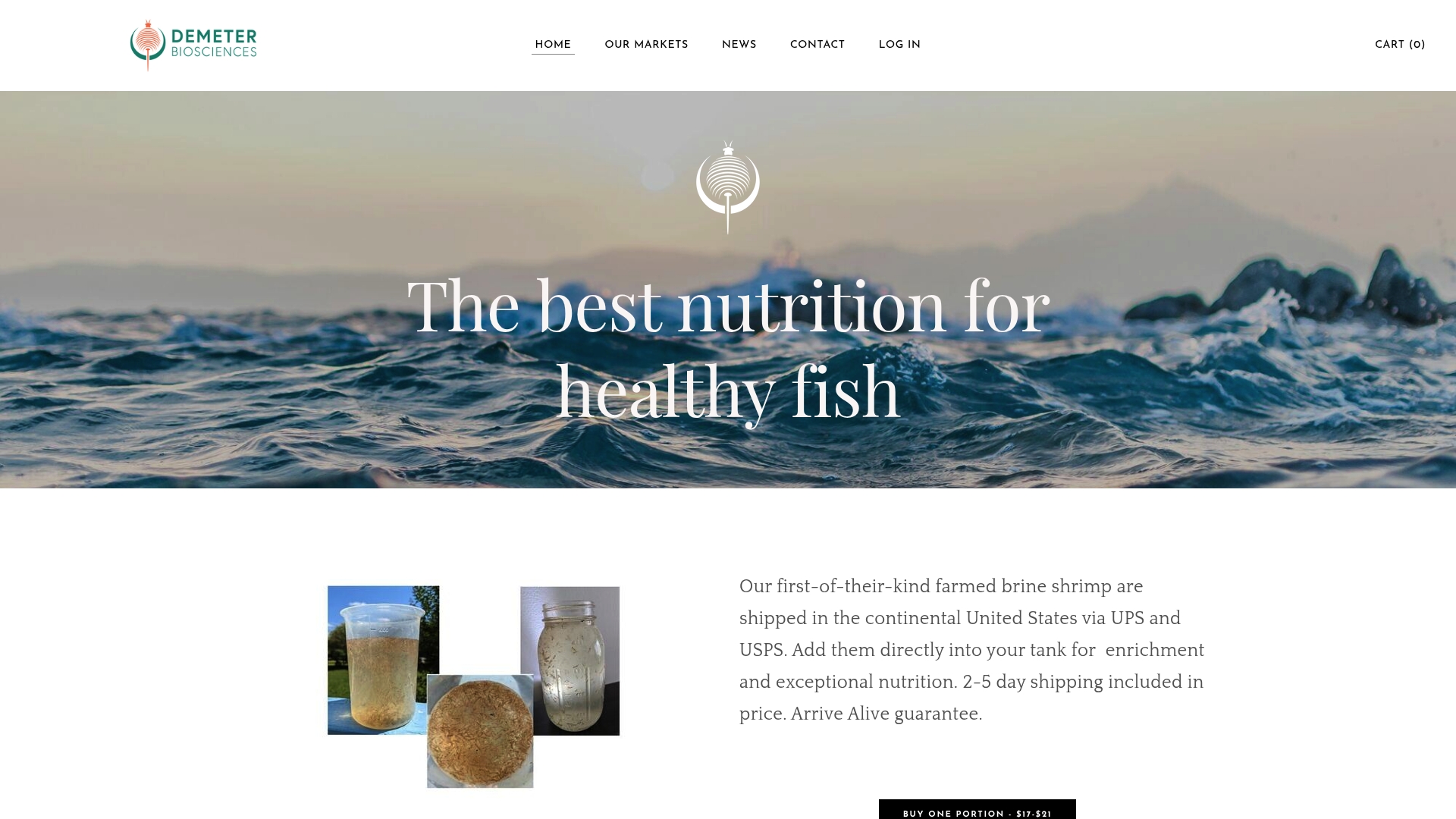
For most home aquarists raising fry or conditioning a pair, a monthly subscription shipment solves the supply problem outright. One recurring delivery replaces the need to run a hatchery on a schedule you might not always be able to keep. If you just need a single batch to test the difference, a one-off live shipment covers that. Local fish stores and museums with higher volume needs should look at bulk ordering instead.
Live shipments arrive packed for transit and should go into a hatch-safe holding container or your display tank within hours of arrival for the best condition. Check your order and place your first shipment through the live brine shrimp product page to see current availability.
Sources
For hands-on protocols, see our guides on enrichment timing and live vs frozen differences.
- Common clownfish — the complete care guide to Amphiprion ocellaris
- The Ultimate Clownfish Care Guide (2026): 30 Species, Tank Setup, Breeding, Anemones | Fast Aquatics