
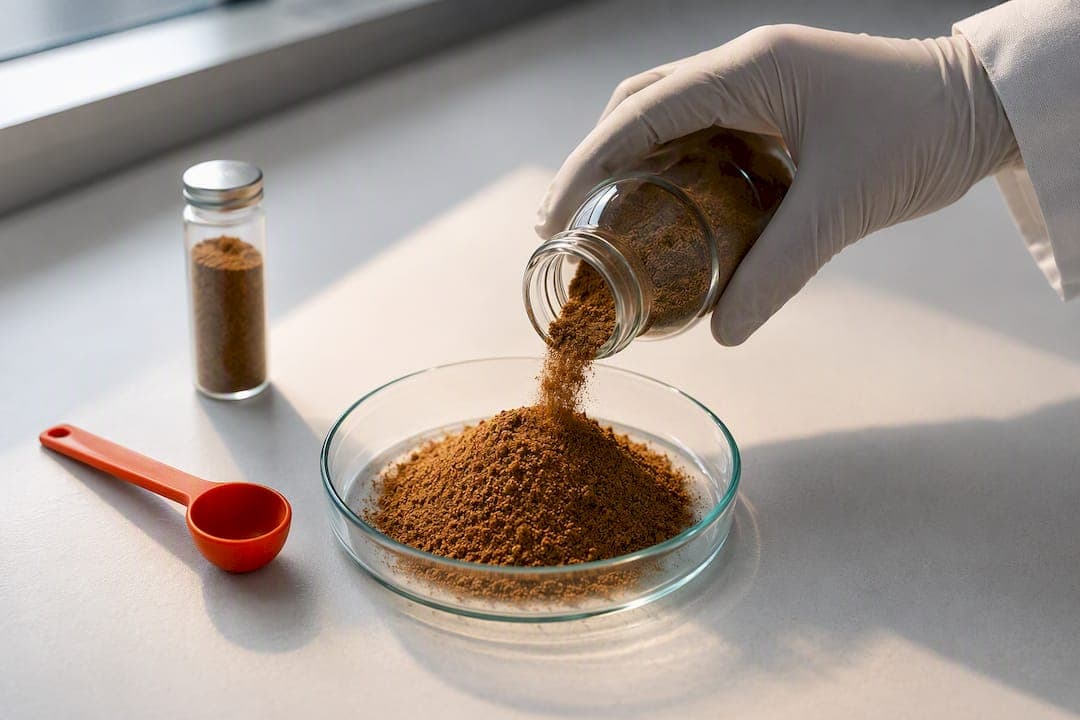
Brine shrimp meal delivers reliably high protein, typically in the 37% to 71% range on a dry basis, but its fatty-acid content, especially DHA and EPA, swings widely depending on how the Artemia was raised and processed. That inconsistency is the one thing every aquarist and hatchery manager needs to plan around. For species that depend on those omega-3 fats early in life. Enrichment or source-controlled, microalgae-fed production closes the gap that raw meal alone leaves open.
TL;DR:
- Un-enriched brine shrimp meal provides high protein levels but offers inconsistent DHA and EPA content that depend heavily on harvest season and culture conditions.
- Enrichment with microalgae or lipid emulsions can significantly boost omega-3 fatty acids within a few hours, but timing and product documentation are critical.
- Freshly hatched nauplii have lower protein and fat stability, while ongrown Artemia from controlled tanks consistently offers higher amino acids and more stable nutrients.
- Source-controlled, algae-fed Artemia from land-based systems ensures more reproducible nutritional profiles, reducing variability caused by wild-harvested batch fluctuations.
- Proper handling, timely feeding, and choosing the correct product format maximize brine shrimp meal’s nutritional benefits, especially during larval and fry stages.
Table of Contents
- What Is Brine Shrimp Meal, and How Does Life Stage Change Its Value?
- What Does the Data Say About Protein, Fat, and HUFA Content?
- Why Nutritional Variability Happens, and How Enrichment Fixes It
- Feeding Guidance: Dosing, Frequency, and Meal vs Live Nauplii
- When Brine Shrimp Meal Is the Right Call, and When It Isn't
- What Source-Controlled, Microalgae-Fed Artemia Changes About the Nutrition Math
- A Publisher's View on Consistency and Sustainability
- Choosing the Right Demeter Format for Your Setup
- Sources
What Is Brine Shrimp Meal, and How Does Life Stage Change Its Value?
Brine shrimp meal is dried or processed Artemia biomass, ground or flaked for storage and feeding, distinct from live or frozen nauplii that still carry moisture and, in the case of live shrimp, active metabolism. Hobbyists buy it as flake or micro-pellet; commercial hatcheries often get it as a coarser meal blended into starter feeds or pastes.
Life stage changes almost everything about the product. Freshly hatched nauplii carry a yolk-derived lipid reserve that starts depleting within hours, which is why timing of harvest and feeding matters more for nauplii than for any other stage. Instar II and later stages have already begun filter-feeding, so their composition reflects whatever algae or formulated diet they consumed in culture. Ongrown Artemia raised in tank systems reach higher, more stable protein and amino-acid levels than nauplii, though their lipid profile still tracks the feed they were given.
Processing method matters just as much as growth stage:
- Freeze-drying preserves fatty acids and pigments best but costs more and is less common in bulk commercial meal.
- Heat-drying is cheaper and faster but risks oxidizing lipids, particularly the more fragile HUFA fractions.
- Milling and particle sizing affect how easily fry and small ornamental fish can ingest the meal, and overly coarse particles simply get rejected.
None of these steps ruin a good batch by themselves, but stacked poorly, drying heat plus long storage plus coarse milling, they compound into meal that looks fine on the label and underperforms in the tank.
What Does the Data Say About Protein, Fat, and HUFA Content?
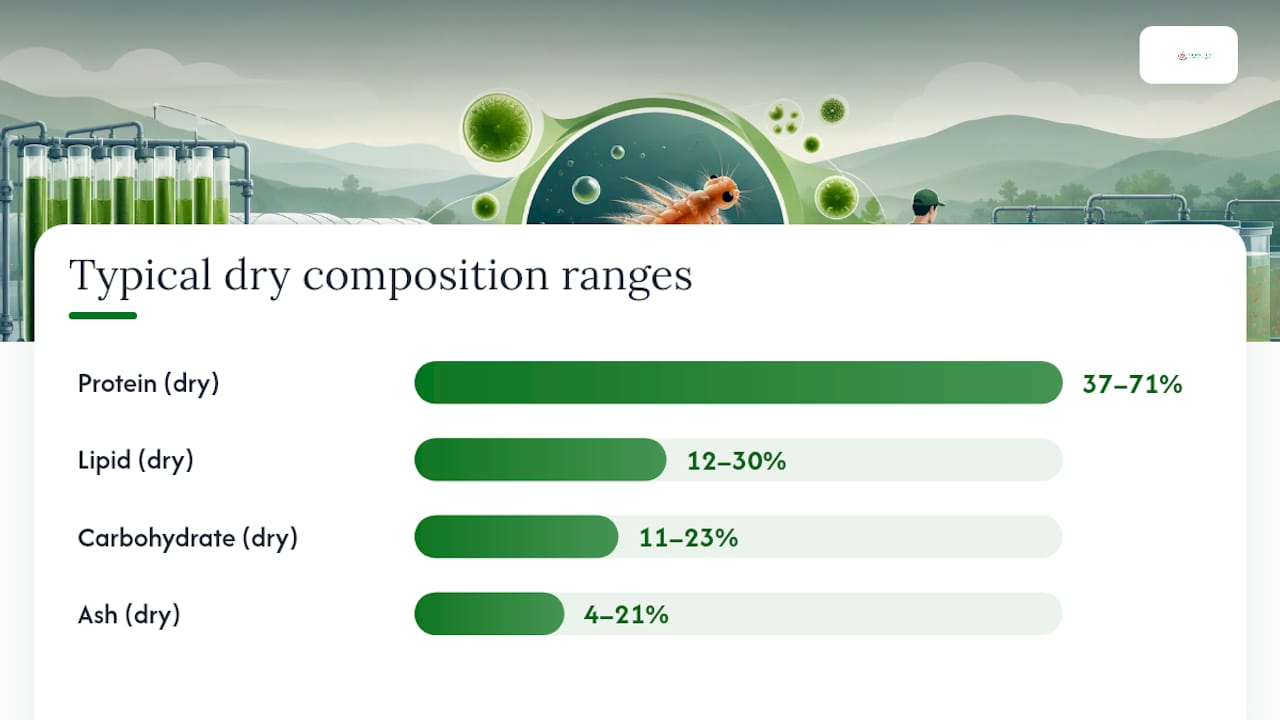
Dried brine shrimp nauplii run 37% to 71% protein and 12% to 30% lipid on a dry-weight basis, with carbohydrate typically 11% to 23% and ash 4% to 21%. That's a wide band, and it's wide for a reason: Artemia is essentially a biological reflection of whatever it ate before harvest. Ongrown Artemia from controlled tank systems tends to land at the higher end of both protein and essential amino-acid content, since a managed diet and stable water chemistry give the animal more time to build stable tissue rather than surviving on reserves.
The essential amino-acid profile is where Artemia genuinely earns its reputation. It's rich in lysine, leucine, and arginine, three amino acids that many plant-based fish feed ingredients supply poorly, which is part of why it remains a gold-standard live feed for larval fish and shrimp decades after aquaculture first adopted it.
Fat is the more complicated story. Total lipid can hit 30%, which sounds impressive until you ask what kind of fat it is. Un-enriched Artemia frequently comes up short on eicosapentaenoic acid (EPA) and docosahexaenoic acid (DHA), the long-chain omega-3 HUFAs that marine fish larvae, in particular, cannot synthesize efficiently on their own. Freshwater species tolerate this gap better than marine ones, but neither benefits from a diet that's technically high-fat and functionally low-value.
Here's roughly what to expect across common product forms:
| Product form | Protein (dry basis) | Lipid (dry basis) | HUFA (EPA/DHA) status |
|---|---|---|---|
| Dried nauplii, un-enriched | 37% | 12% | Low, highly variable |
| Ongrown Artemia, tank-raised | 71% | 15% | Depends on culture diet |
| Enriched (post-harvest, 2–24 h) | Similar to base stock | Similar to base stock | Substantially elevated |
| Microalgae-fed throughout culture | 71%+ | 15% | More consistent baseline |
The good news: this gap closes fast. Enrichment protocols using microalgae or lipid emulsions can raise n-3 HUFA content within a 2 to 6 hour window, and some feeding trials document meaningful HUFA gains even with enrichment windows stretched to 24 hours.
The bottom line for buyers: un-enriched meal from unknown or wild-harvest origin gives you strong protein and a coin-flip on fat quality. Enriched or microalgae-fed product gives you both, provided the seller can actually document what the Artemia ate.
Why Nutritional Variability Happens, and How Enrichment Fixes It
Variability in brine shrimp meal traces back to a short list of production decisions, not random chance. Wild-harvested Artemia from natural salt lakes eats whatever algae bloom is available that season, which means a batch harvested in June can differ nutritionally from the same species harvested from the same lake in October. Tank-raised stock removes that seasonal lottery, but only if the operator controls the feed. Storage conditions and processing heat add a second layer of variability on top of whatever the animal started with, since lipids oxidize steadily once the shrimp is dried and exposed to air or light.
Enrichment is the standard fix, and it works through three main routes:
- Oil emulsions suspend concentrated fish or algal oil in water so Artemia filter-feeds it directly, typically over a 2 to 6 hour window, delivering a fast but sometimes less stable HUFA boost.
- Microalgae feeding (commonly Nannochloropsis or Isochrysis) builds HUFA more gradually but tends to produce a cleaner fatty-acid profile with fewer off-flavors, and it layers in carotenoids and other micronutrients that support pigmentation and immune response, according to the Reviews in Aquaculture 2025 enrichment analysis.
- Soy lecithin and probiotic-based enrichments target phospholipid content and gut health rather than raw HUFA levels, useful as a secondary treatment rather than a standalone strategy.
Timing matters more than most buyers realize. One study on enrichment duration in adult Artemia found lipid accumulation peaked around 12 hours and then declined by 24 hours, meaning longer isn't automatically better. Enrichment is a window, not a switch you leave on.
Before trusting any "enriched" label, run through this checklist:
- Does the seller specify the enrichment method (oil emulsion, microalgae, or both)?
- Is there a stated enrichment duration, not just the word "enriched"?
- Does the product disclose or imply the culture diet used before enrichment, not just after?
- Is there any indication of testing (proximate composition, HUFA levels) rather than marketing language alone?
Pro Tip: If you're enriching in-house, harvest and feed within 6 to 12 hours of the enrichment start. Waiting past 24 hours risks losing the very fats you just added, and it costs you a feeding cycle for no nutritional gain.
Feeding Guidance: Dosing, Frequency, and Meal vs Live Nauplii
Matching feed to mouth size is the first rule, and it's the one most new fishkeepers skip. Fry under two weeks old generally need particles under 250 microns, which rules out coarse meal and points toward freshly hatched nauplii or finely milled micro-diets. Juveniles handle standard meal flake without issue, and adult fish, particularly larger cichlids and marine species, do fine with whole dried shrimp or coarser meal.
Frequency depends on life stage more than species. Larval fish and fry often need three to five small feedings a day since their guts can't process a large single meal. Juveniles and adults do well on one to two feedings daily, with brine shrimp meal used as a protein-dense component rather than the entire diet. Watch for cloudy water and uneaten particles settling on the substrate; both signal overfeeding faster than fish behavior does.
Preparing dry meal properly matters more than most labels admit:
- Rehydrate meal briefly in tank water before feeding fry, since dry particles can absorb water in the gut and cause bloating.
- Mix meal into a paste with a binder (gelatin or a commercial binder) for species that feed better on wet diets, such as marine angelfish or certain cichlids.
- Store meal sealed, cool, and dark. Light and heat oxidize the lipid fraction fast, and once HUFA content degrades, no amount of feeding volume brings it back.
- Use meal within the shelf window stated on the package. Older stock isn't dangerous, but it's nutritionally hollowed out compared to fresh product.
Treat brine shrimp meal as a high-value supplement layered onto a formulated base diet for most community and ongrown fish, and as a primary feed only during the specific life stages, larval rearing, fry grow-out, where its amino-acid profile and palatability genuinely outperform pellet alternatives. A feeding schedule built around life stage keeps dosing consistent instead of guessed.
When Brine Shrimp Meal Is the Right Call, and When It Isn't
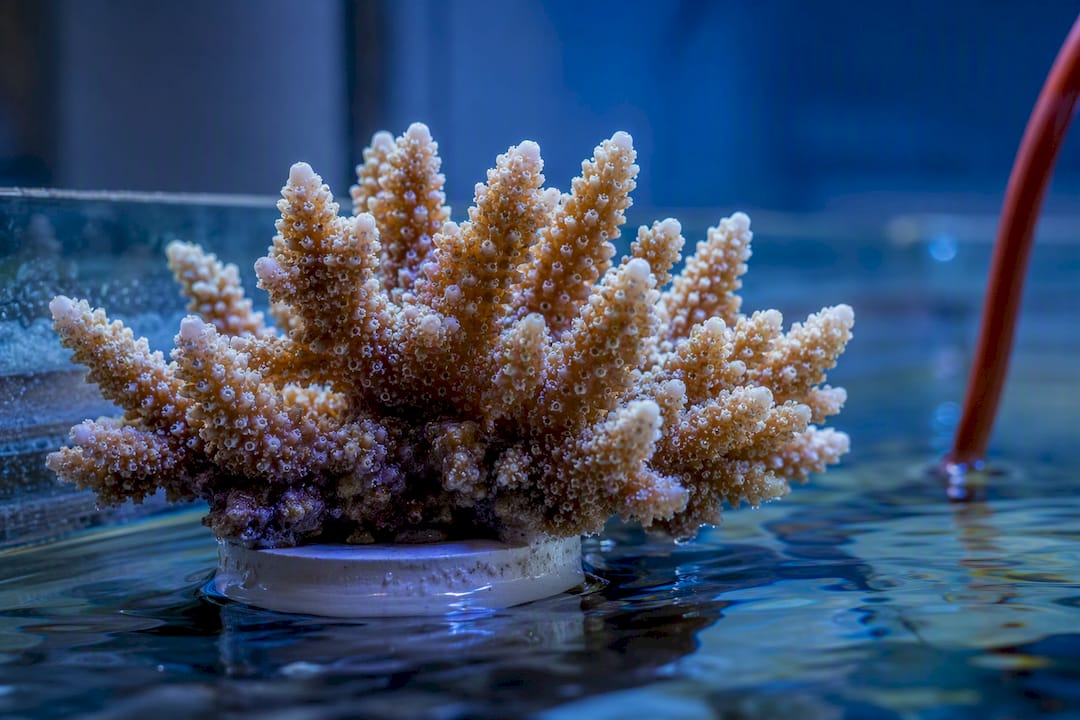
Brine shrimp meal earns its place in a few specific scenarios: larval fish rehousing, fry grow-out, and short-term conditioning boosts before breeding or shows. It's also documented as a useful heterotrophic supplement in coral culture. A 60-day feeding trial on juvenile Pocillopora damicornis found brine shrimp feeding increased polyp growth, calcified skeleton weight, and symbiont density, a result worth noting for anyone running a coral nursery or restoration program.
It falls short, though, for marine larvae with strict DHA and EPA requirements unless the product is enriched or microalgae-fed from the start. Species like many marine ornamentals and commercial larval fish need that HUFA floor met consistently, not occasionally.
Before buying meal in bulk, check for:
- A stated protein percentage backed by lab testing, not just a marketing range.
- Disclosed culture diet or enrichment method.
- Packaging date and recommended shelf life.
- Consistent sourcing (same facility, same protocol) batch to batch, since consistency is often worth more than a slightly higher peak nutrient number.
What Source-Controlled, Microalgae-Fed Artemia Changes About the Nutrition Math
Demeter Biosciences raises Artemia in land-based systems on a single, controlled diet: the microalga Dunaliella, with a baseline protein content held at 40% or higher. That's a deliberate departure from wild harvest, where protein and fat content shift with the season, the lake's algae bloom, and how long the Artemia went hungry before collection.
Wild-harvested Artemia can experience starvation stress in natural salt lakes during bloom crashes, a condition that quietly strips nutritional value before the shrimp ever reaches a net. Controlled, algae-fed culture removes that variable entirely by keeping the food supply constant year-round.
That consistency matters most for buyers who can't run their own enrichment protocol, smaller fish stores, hobbyists, and museum aquariums, since a Dunaliella-fed baseline reduces how much post-harvest enrichment is strictly necessary for many freshwater and reef-tolerant species. For DHA/EPA-sensitive marine larvae, source-controlled Artemia still pairs well with a short microalgae enrichment step, but the starting point is considerably stronger than an unknown wild-harvest lot.
A Publisher's View on Consistency and Sustainability
We built our production around one belief: nutrition shouldn't be a gamble tied to lake conditions a continent away. Land-based, algae-fed culture gives us a repeatable baseline batch after batch, and that repeatability is what actually protects fish health over months, not one impressive lab result on a single shipment. If you're weighing whether source-controlled Artemia fits your setup, request a sample batch or reach out about bulk terms. Reproducibility is easier to judge in your own tank than in a spec sheet.
— Demeter
Choosing the Right Demeter Format for Your Setup
Hatcheries running larval rearing cycles get the most out of live brine shrimp shipments, timed to arrive fresh for immediate feeding rather than sitting in storage losing lipid quality. Fish stores, museums, and larger hobbyist operations running multiple tanks tend to do better with a bulk order, which cuts per-unit cost and reduces how often you're placing orders. Individual aquarists managing a handful of tanks generally do best starting with a smaller live shipment before committing to bulk volume, since it lets you confirm feeding response before scaling up.
Lead times vary by shipment size and season, so first-time buyers should order a week or so ahead of when they actually need to feed, giving a buffer in case of shipping delays. If you're still comparing formats, the full product overview breaks down protein specs and production details by format, or you can reach out directly for institutional or custom-volume questions.
Sources
- FAO — Tank production and use of ongrown Artemia
- Aquaculture of brine shrimp (Wikipedia)
- PMC — Study on brine shrimp feeding effects on coral polyps
- Artemia enrichment review (Reviews in Aquaculture 2025)