
Algae are the primary natural food source for brine shrimp (Artemia spp.), supplying the proteins, lipids, and fatty acids that determine whether these crustaceans thrive or starve. The role of algae in brine shrimp diet is not incidental. It is the biological foundation of every nutritional outcome that matters to aquarists and marine biology students: growth rate, survival, reproductive success, and the nutritional value brine shrimp pass up the food chain to fish larvae and reef invertebrates. Dried brine shrimp nauplii contain 37%–71% protein, and that range reflects exactly how much algae access varies between individuals. Understanding this connection is the first step toward feeding brine shrimp with real precision.
What nutritional components do algae provide to brine shrimp?
Algae deliver every major macronutrient class brine shrimp need to develop from nauplius to adult. Nauplii contain 56%–60% protein and 17%–23% lipids at hatch, drawing on their yolk sac. Once that sac is consumed within the first 12 hours, algae become the only source of continued nutrition. Without it, protein and lipid levels drop fast.
The most nutritionally significant components algae supply include:
- Protein: Microalgae species like Dunaliella and Nannochloropsis deliver complete amino acid profiles. Protein content in fed nauplii reaches the upper end of the 37%–71% range documented in aquaculture studies.
- Highly unsaturated fatty acids (HUFAs): Eicosapentaenoic acid (EPA) and docosahexaenoic acid (DHA) are the two fatty acids most critical for larval fish brain and eye development. Brine shrimp do not synthesize these independently.
- Lipids: Total lipid content in well-fed nauplii runs 12%–30%, with the quality of that lipid fraction determined entirely by what the shrimp ate.
- Carbohydrates: Nauplii carry 11%–23% carbohydrate, providing fast energy for swimming and early organ development.
- Carotenoids: Algae like Dunaliella salina are rich in beta-carotene, which transfers directly into shrimp tissue and then into fish that consume them, supporting immune function and coloration.
The fatty acid composition of brine shrimp is environmentally determined, not genetically fixed. That single fact explains why wild-harvested shrimp from nutrient-poor lakes often lack EPA and DHA entirely. It also explains why controlled algae feeding produces a consistently superior product.
Pro Tip: Check the species of algae used in any brine shrimp culture before purchasing. Dunaliella and Nannochloropsis both deliver strong HUFA profiles, but Dunaliella also adds carotenoid pigmentation that benefits reef fish coloration.
How is algae used to enrich brine shrimp in aquaculture and aquarium settings?
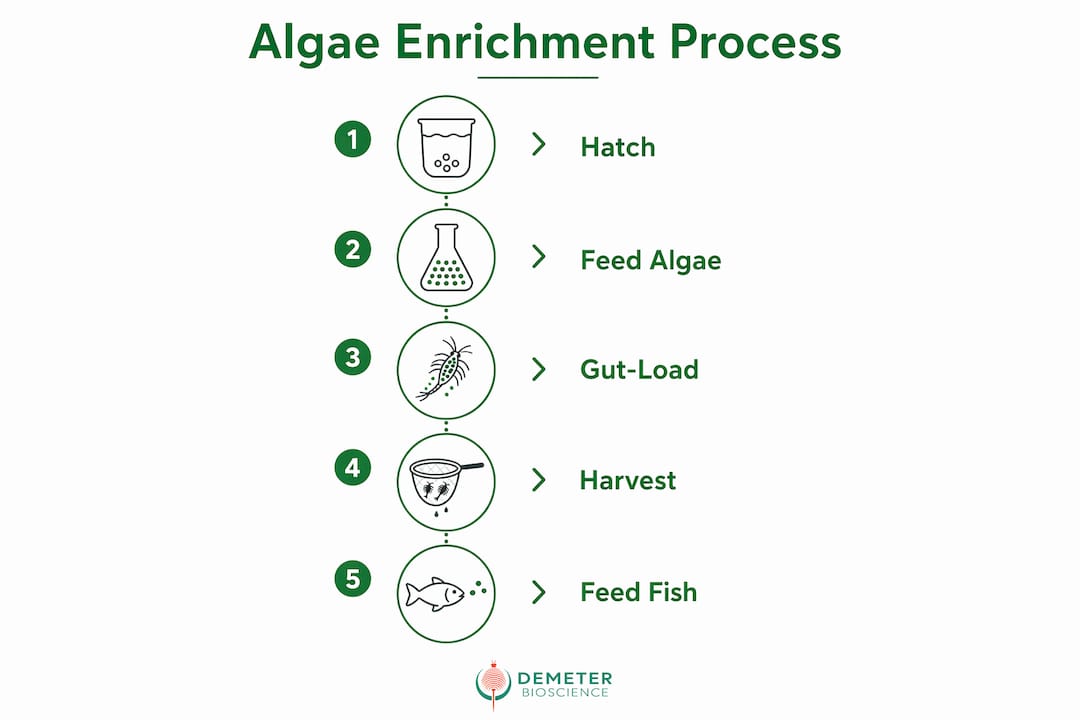
Enrichment, also called gut-loading, is the process of feeding brine shrimp a concentrated algae source before offering them to fish or invertebrates. The goal is to pack the shrimp's digestive tract with nutrients that transfer directly to the predator. This is standard practice in commercial hatcheries and increasingly common among serious hobbyists.
The standard gut-loading protocol follows these steps:
- Hatch nauplii and wait 24 hours. Newly hatched nauplii still carry their yolk sac. Gut-loading before the sac is consumed wastes enrichment media.
- Transfer to clean saltwater. Move nauplii to a fresh container with clean, aerated saltwater at the correct salinity for your target species.
- Add enrichment medium. Add 5–10 drops of enrichment medium per liter, using a live phytoplankton culture, concentrated algae paste, or a commercial emulsion rich in EPA and DHA.
- Aerate continuously for 12–24 hours. Continuous aeration keeps nauplii and algae particles suspended together, maximizing ingestion. It also prevents oxygen depletion that would stress or kill the shrimp before feeding.
- Rinse and feed immediately. Rinse nauplii through a fine mesh to remove excess enrichment media, then feed within minutes. Delay reduces nutritional value.
The timing window matters more than most aquarists realize. Nutritional value peaks within the first 12 hours post-hatching while the yolk sac remains intact. After that window, gut-loading with algae is the only way to restore and maintain high nutritional density.
Probiotics combined with algae produce results that algae alone cannot match. Probiotic-supplemented shrimp show lifespan extension up to 73 days and reproductive output 3.5 times higher than controls, alongside increased digestive enzyme activity and better pathogen resistance. For aquarists running long-term brine shrimp cultures, adding a probiotic to an algae-based diet is one of the highest-return changes available.
Pro Tip: Live phytoplankton cultures give you the freshest possible enrichment medium, but concentrated algae paste stored at 4°C is a practical alternative for hobbyists who cannot maintain live cultures. Both outperform dry powder enrichment in HUFA transfer efficiency.
How does algae feeding compare to alternative brine shrimp diets?
Brine shrimp are filter feeders. They consume particles in a size range of roughly 1–50 microns, which means they can ingest yeast, bacteria, and fine organic matter in addition to algae. Aquaculture operations have tested a range of dry diet formulations using agricultural by-products as partial or full replacements for live algae.
| Feed type | Protein delivery | HUFA content | Growth impact | Practical notes |
|---|---|---|---|---|
| Live microalgae | High, species-dependent | High (EPA, DHA present) | Strongest growth and survival | Requires culture infrastructure |
| Algae paste or concentrate | High | Moderate to high | Strong, close to live algae | Refrigerated shelf life; convenient |
| Dry diet with 10% microalgae | Moderate to high | Moderate | 15.8% longer growth, 12.5% better survival vs. no algae | Scalable for commercial operations |
| Dry diet without algae | Moderate | Low to absent | Baseline; no HUFA benefit | Low cost; nutritionally incomplete |
| Yeast-based diet | Low to moderate | Absent | Poor for larval fish nutrition | Shrimp survive; fish larvae do not thrive |
The data are clear: any algae inclusion outperforms algae-free diets on every metric that matters for aquaculture. The 15.8% growth improvement from just 10% microalgae inclusion in a dry diet is a meaningful result. It shows that even partial algae supplementation shifts outcomes significantly. Full live-algae diets remain the gold standard, but hybrid approaches work well for operations where live culture is not feasible.
Wild-harvested brine shrimp represent the weakest nutritional option. Wild or poorly fed shrimp frequently lack EPA and DHA because their fatty acid profile depends entirely on what algae were available in their native lake. Seasonal variation and drought conditions can strip wild populations of nutritional value entirely, with no way to verify quality before purchase.
What practical implications does algae feeding have for aquatic ecosystems?
Algae-fed brine shrimp sit at a critical junction in aquatic food webs. They convert microscopic phytoplankton into biomass that fish larvae, seahorses, jellyfish, corals, and reef invertebrates can consume. Phytoplankton feeds brine shrimp, rotifers, and corals alike, making algae the base layer that supports every trophic level above it.
For aquarists, the practical implications include:
- Reef tank feeding: Algae-enriched brine shrimp deliver carotenoids and HUFAs directly to corals and anemones, supporting tissue health and coloration in ways that frozen, unenriched shrimp cannot.
- Larval fish rearing: Fish larvae require DHA for neurological development. Gut-loaded brine shrimp are the most reliable delivery vehicle for that fatty acid in a home or commercial hatchery setting. Learn more about larval fish feeding strategies for aquaculture applications.
- Breeding programs: Broodstock fish fed algae-enriched brine shrimp consistently produce higher-quality eggs. The carotenoids and lipids transfer from shrimp to fish tissue and then into egg yolk.
- Sustainability: Brine shrimp culture using microalgae can reduce aquaculture waste treatment needs by converting nutrient-rich wastewater into live feed biomass. This is bioremediation and food production in one system.
Culturing your own algae closes the loop completely. A small Nannochloropsis or Dunaliella culture requires minimal equipment: a clear container, a grow light, and a CO2 source or regular agitation. The algae you grow feeds your brine shrimp, which feeds your fish, with no nutritional gaps in the chain.
Pro Tip: Keep your algae culture and brine shrimp culture in the same temperature range. A mismatch slows algae growth and reduces the volume available for gut-loading, creating a bottleneck that shows up as poor fish growth weeks later.
The nutritional value of algae-fed brine shrimp is not just a product specification. It is an ecological outcome that reflects the health of the entire system you are running.
Key Takeaways
Algae are the non-negotiable foundation of brine shrimp nutrition, and every measurable health outcome for shrimp and the fish they feed traces directly back to algae quality and feeding timing.
| Point | Details |
|---|---|
| Algae drive protein content | Well-fed nauplii reach up to 71% protein; unfed nauplii drop to 37% or below. |
| HUFA content is not fixed | EPA and DHA levels depend entirely on algae access; wild shrimp often carry none. |
| Gut-load within 24 hours | Enrich nauplii after the yolk sac is consumed for maximum nutrient transfer to fish. |
| Probiotics amplify algae benefits | Combining probiotics with algae extends shrimp lifespan to 73 days and triples reproductive output. |
| Algae inclusion beats algae-free diets | Even 10% microalgae in a dry diet improves growth by 15.8% and survival by 12.5%. |
Why I think most aquarists underestimate algae species selection
Most aquarists focus on whether to enrich brine shrimp at all. Far fewer think carefully about which algae species they use. That distinction matters more than the enrichment schedule.
Dunaliella salina and Nannochloropsis gaditana are not interchangeable. Dunaliella is exceptional for carotenoid loading and works well for reef fish that need pigmentation support. Nannochloropsis delivers a stronger EPA profile and is the better choice for larval fish rearing where neurological development is the priority. Using a single species for every application is a common mistake that leaves real nutritional value on the table.
The other overlooked factor is culture density. Overconcentrated algae cultures can actually reduce HUFA content per cell as the algae shift their metabolism under light limitation. Thin, actively growing cultures in log-phase growth deliver more nutritional value per milliliter than dense, aging ones. This is the kind of detail that separates consistent results from frustrating variability.
At Demeterbioscience, we culture brine shrimp exclusively on Dunaliella, which guarantees at least 40% protein content and consistent carotenoid levels across every batch. That consistency is what wild-harvested shrimp cannot offer, regardless of how carefully you enrich them after the fact.
— Demeter
Demeterbioscience: algae-fed brine shrimp for serious aquarists
Demeterbioscience produces live brine shrimp fed exclusively on Dunaliella microalgae in a controlled, land-based system. Every batch guarantees at least 40% protein content, consistent HUFA levels, and zero seasonal variability. That is the direct result of removing the nutritional uncertainty that defines wild-harvested shrimp.
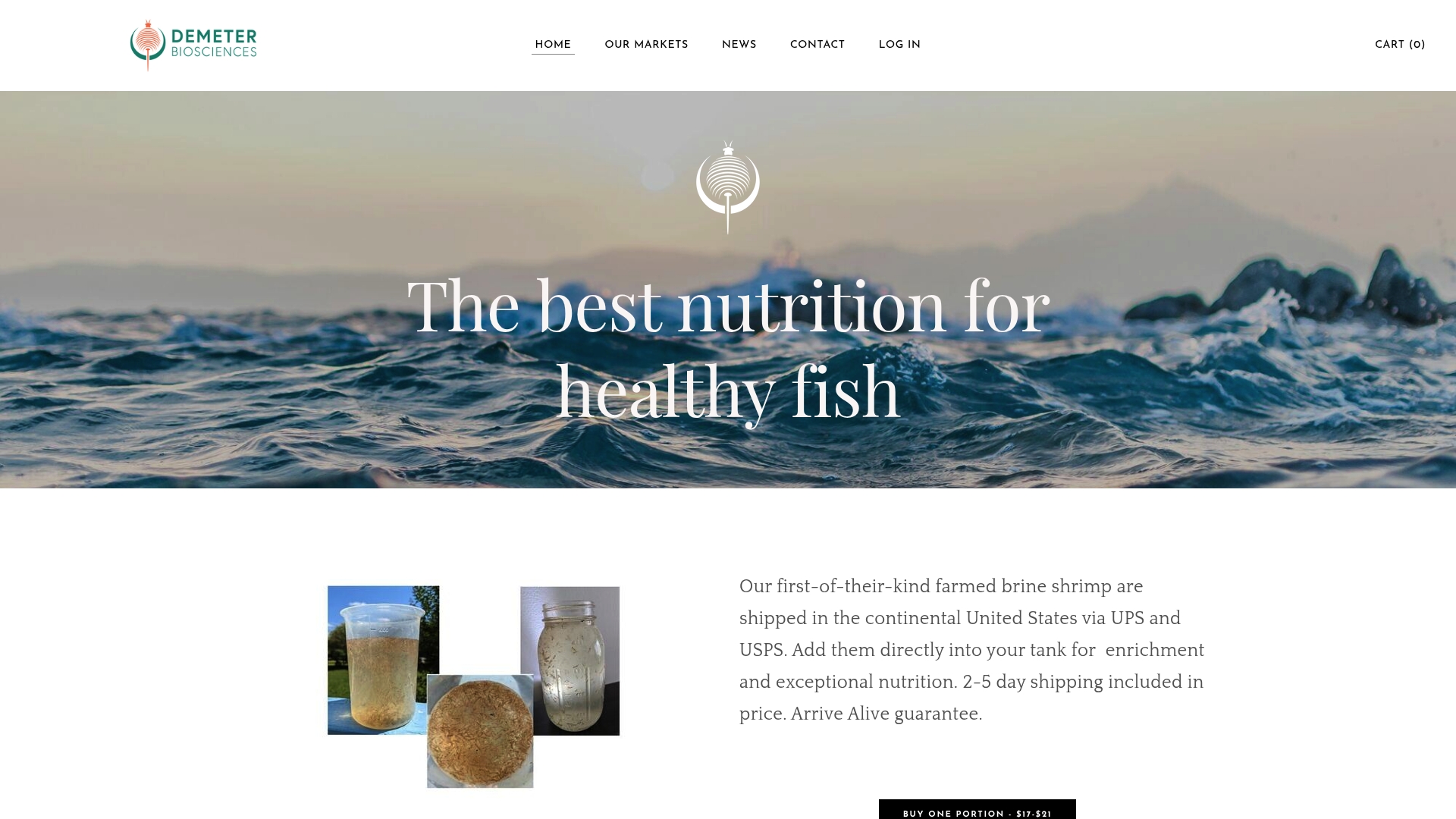
Aquarists and commercial operations can order direct-to-consumer shipments, set up monthly subscription plans, or place bulk orders for museums, local fish stores, and hatcheries. If you are feeding larval fish, breeding reef species, or running a research program that requires nutritional consistency, Demeterbioscience's algae-enriched shrimp remove the guesswork from your live feed supply.
FAQ
What do brine shrimp eat in the wild?
Brine shrimp are filter feeders that consume microscopic planktonic algae, bacteria, and organic particles in the 1–50 micron size range. Algae are their primary and most nutritionally complete food source in natural ecosystems.
Why are algae essential in the brine shrimp diet?
Algae supply the proteins, lipids, and highly unsaturated fatty acids (EPA and DHA) that brine shrimp cannot synthesize on their own. Without algae, shrimp survive but carry none of the fatty acids that larval fish and reef invertebrates require for healthy development.
How long should I gut-load brine shrimp with algae before feeding?
Standard gut-loading requires 12–24 hours of continuous aeration with an algae-based enrichment medium. Gut-loading should begin after the nauplii's yolk sac is consumed, typically 24 hours post-hatching, to maximize nutrient uptake.
Does the species of algae affect brine shrimp nutritional quality?
Yes. Different algae species deliver different fatty acid and carotenoid profiles. Nannochloropsis is high in EPA, while Dunaliella provides strong carotenoid content alongside protein. Matching the algae species to your target fish species produces better outcomes than using a single species for all applications.
Can brine shrimp be raised on dry diets instead of live algae?
Dry diets with at least 10% microalgae inclusion produce measurable improvements in growth and survival compared to algae-free dry feeds. However, live or concentrated algae diets remain the standard for maximum HUFA transfer, particularly in larval fish rearing where DHA delivery is critical.