

Most retailers still think shrimp feed is a back-end cost decision. It isn't. The role of algae-fed shrimp in retail appeal has become one of the most consequential shifts in the sustainable seafood market, touching nutrition labels, supply chain reliability, and the values-driven purchasing decisions that now drive premium seafood sales. Consumers are reading ingredient stories more carefully than ever, and what goes into a shrimp before it reaches the counter determines what a retailer can credibly say about it. This guide breaks down exactly why algae-fed shrimp are changing the conversation.
Table of Contents
- Key takeaways
- How algae feeding changes shrimp nutrition
- Sustainability and supply chain advantages
- Consumer preferences and retail marketing advantages
- Algae-fed vs. conventional shrimp: a direct comparison
- How to source and verify algae-fed shrimp
- My take on what algae-fed shrimp actually mean for retail
- Algae-fed shrimp from a source you can verify
- FAQ
Key takeaways
| Point | Details |
|---|---|
| Algae feed upgrades nutrition | Shrimp raised on algae-based diets deliver up to 80% more omega-3s in muscle tissue, a measurable health advantage for consumers. |
| Disease resilience stabilizes supply | Algae-fed shrimp show up to 23% lower mortality under disease challenge, giving retailers more consistent product availability. |
| Flavor stays the same | Algae feed does not change shrimp taste or texture, so retailers can market health benefits without risking consumer rejection. |
| Certification gaps require due diligence | No universal "algae-fed" label standard exists yet, making supplier documentation the only reliable verification tool. |
| Sustainability claims hold up to scrutiny | Algae-based feed reduces carbon footprint per harvest unit by up to 15%, supporting credible eco-friendly positioning at retail. |
How algae feeding changes shrimp nutrition
The nutritional gap between conventionally farmed shrimp and algae-fed shrimp is not subtle. When shrimp diets include algae-derived EPA and DHA at 1% of feed composition, omega-3 content in muscle increases from roughly 100 mg per 100 grams to approximately 180 mg per 100 grams. That is an 80% increase in the nutrient that most consumers associate with heart health, brain function, and inflammation reduction.
For retailers, that number belongs on the label. Consumers already believe seafood is good for them. In fact, over 90% of seafood consumers believe seafood benefits their health, which means the market is primed for products that deliver measurable proof of that belief. Algae-fed shrimp give retailers a specific, verifiable claim rather than a vague "healthy protein" message.
The immune benefits are equally significant. Shrimp raised on higher EPA and DHA diets show 26 to 54% increases in total hemocyte counts and 29 to 51% increases in granulocytes. These are the cellular markers of a functioning immune system in crustaceans. Healthier shrimp at the farm level means fewer losses, less antibiotic intervention, and a cleaner product story for the retail buyer.
One concern retailers often raise is whether the nutritional upgrade comes at the cost of eating quality. The answer is no. Algae feed does not adversely affect shrimp flavor or texture, which means the consumer experience stays exactly what they expect while the nutritional profile improves significantly.
Pro Tip: When sourcing algae-fed shrimp, ask suppliers for third-party lab reports confirming omega-3 levels in the final product. A supplier confident in their feed program will have this data ready.
What this means for the nutrition label
The shift from fish oil to algae-derived omega-3 in shrimp feed allows producers to make specific, data-backed nutrient claims. A product positioned around verified omega-3 content stands apart in a seafood case where most products look identical. Retailers who understand this can work with suppliers to develop label language that converts browsers into buyers.
Sustainability and supply chain advantages
The environmental argument for algae-fed shrimp is stronger than most retailers realize. Traditional shrimp aquaculture relies heavily on fishmeal and fish oil derived from wild-caught forage fish, a resource under increasing pressure globally. Algae-based omega-3 sources bypass that dependency entirely, removing a volatile and ecologically costly input from the supply chain.
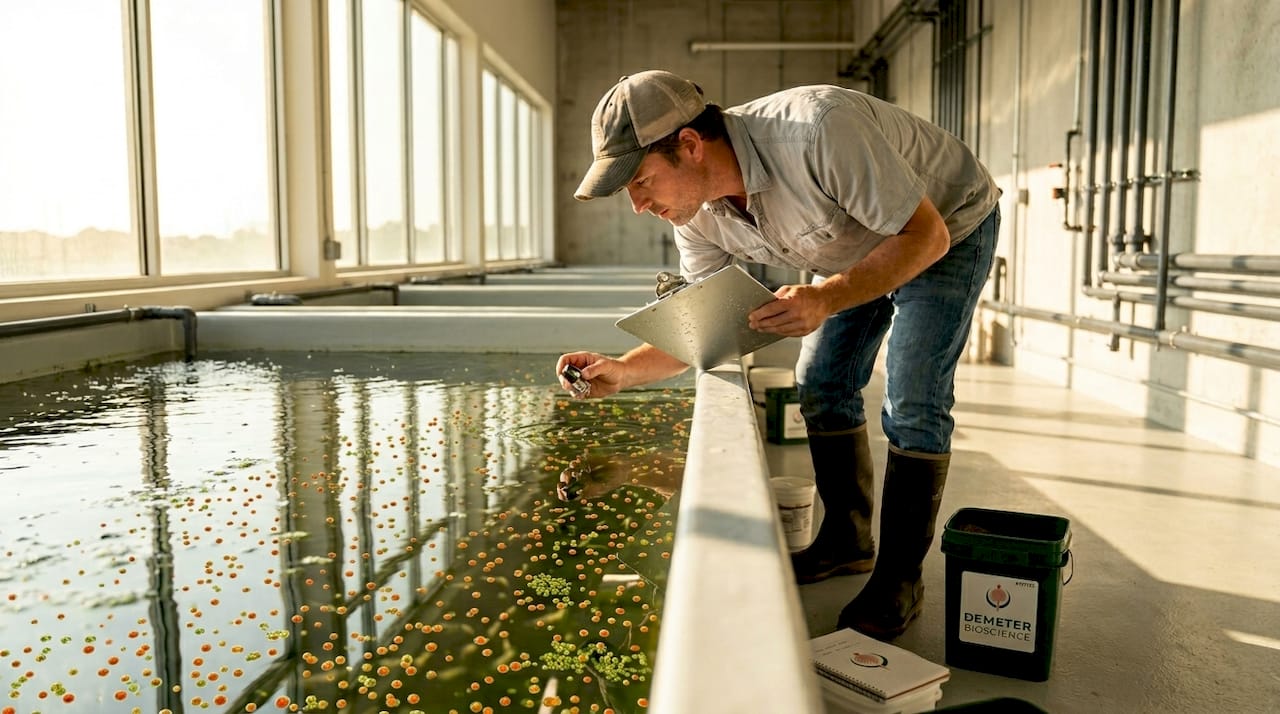
The carbon impact is measurable. Algae-based feed reduces carbon footprint by 5.3% to 15% per harvest unit, with the larger reductions occurring when disease challenge conditions are factored in. For a retailer building a sustainability program, that is a number you can report and defend.
Here is what algae-fed shrimp deliver on the supply chain side:
- Lower mortality rates. Shrimp fed 1% EPA and DHA from algae show up to 23% lower cumulative mortality in AHPND disease challenges, one of the most destructive bacterial diseases in shrimp farming.
- Stress resilience. Algae-based omega-3 improves shrimp resilience to acute salinity changes and environmental stress, contributing to more predictable yields across harvest cycles.
- Reduced antibiotic dependence. Stronger immune function means less need for chemical intervention, which matters to consumers and import regulators alike.
- Feed source independence. Algae can be cultivated on land without competing with food crops or depleting ocean stocks, making the supply chain fundamentally more stable.
These factors combine to give retailers something genuinely useful: a product that arrives more consistently, with a cleaner production story, and a lower risk of supply disruption tied to wild fish stock volatility.
Stat to know: A 23% reduction in shrimp mortality under disease conditions does not just benefit the farmer. It translates directly to more consistent retail availability and less price volatility for buyers.
Understanding how microalgae mitigate pollution from aquatic animal production adds another layer to the sustainability case, particularly for retailers whose customers ask hard questions about farm runoff and water quality.
Consumer preferences and retail marketing advantages
The eco-friendly seafood segment is no longer a niche. Consumer preferences around shrimp have shifted toward health, transparency, and environmental responsibility, and that shift is accelerating. Retailers who position algae-fed shrimp correctly are not chasing a trend. They are meeting a documented demand.
The marketing challenge is real, though. There is no standardized certification for "algae-fed" shrimp, which means retailers cannot simply point to a logo and call the story told. This creates both a risk and an opportunity. The risk is that vague claims invite skepticism. The opportunity is that retailers who invest in telling the story clearly and specifically will stand out from competitors who do not.
Here are four retail strategies that work for algae-fed shrimp positioning:
- Lead with the omega-3 number. "80% more omega-3s than conventionally farmed shrimp" is a concrete claim that resonates with health-conscious shoppers. Pair it with a QR code linking to the supplier's lab data.
- Use the sustainability angle as a secondary hook. Shoppers who care about health often care about the environment too. A brief "fed on algae, not fish oil" callout on the label or shelf tag reinforces both values simultaneously.
- Train your seafood counter staff. The best label in the world loses to a knowledgeable staff member who can explain the difference in 30 seconds. Staff who understand algae shrimp benefits sell more of them.
- Bundle with complementary health-forward products. Placing algae-fed shrimp near omega-3 supplements, wild salmon, or other nutrient-dense seafood creates a health destination in the seafood case rather than an isolated product.
Pro Tip: Retailers in the premium seafood segment should consider a dedicated "sustainably fed" shelf section rather than mixing algae-fed products with conventional options. Separation signals differentiation and justifies a price premium.
Algae-fed vs. conventional shrimp: a direct comparison
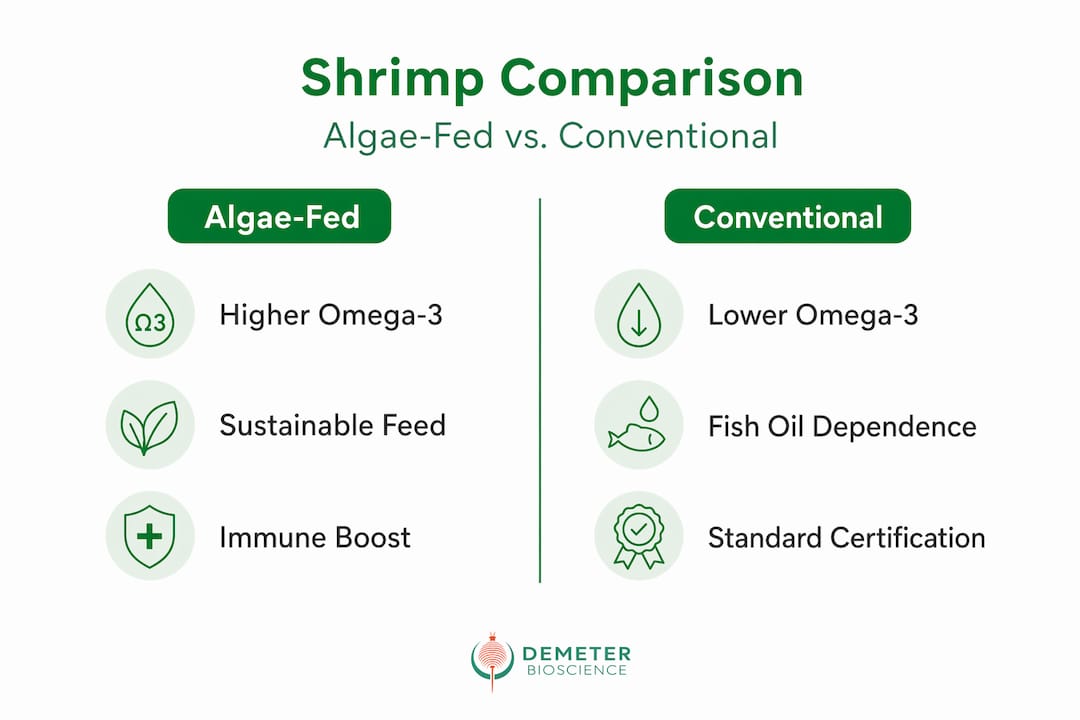
Retailers evaluating whether to carry algae-fed shrimp need a clear side-by-side picture. Here is how the two categories compare across the factors that matter most at retail.
| Factor | Algae-fed shrimp | Conventional shrimp |
|---|---|---|
| Omega-3 content (per 100g) | ~180 mg (EPA + DHA) | ~100 mg (EPA + DHA) |
| Feed source sustainability | Algae (land-cultivated, renewable) | Fishmeal and fish oil (wild-caught) |
| Disease mortality risk | Up to 23% lower under AHPND challenge | Standard mortality rates apply |
| Carbon footprint per harvest | Up to 15% lower | Baseline |
| Flavor and texture | Identical to conventional | Standard |
| Retail label differentiation | High (specific nutrient claims possible) | Low (commodity positioning) |
| Certification availability | No universal standard yet | Established certifications available |
The one area where conventional shrimp currently holds an advantage is certification. Programs like ASC and BAP are well-recognized by consumers, while "algae-fed" has no equivalent label standard. That gap is closing as the market matures, but for now, retailers need to fill it with supplier documentation and their own storytelling.
The taste parity is worth emphasizing again. Contrary to common misconceptions, algae-fed shrimp maintain the flavor and texture consumers expect. This removes the single biggest adoption barrier retailers typically face when introducing nutritionally differentiated seafood products.
How to source and verify algae-fed shrimp
Sourcing algae-fed shrimp responsibly requires more than taking a supplier's word for it. Since no universal "algae-fed" certification exists, the verification burden falls on the retailer. Here is how to do it without getting burned:
- Request feed invoices or feed composition documentation from the farm showing algae-based omega-3 inputs at specified inclusion rates.
- Ask for third-party lab analysis of omega-3 content in the harvested shrimp muscle. A reputable supplier will have this data from an independent testing facility.
- Verify the algae source. Not all algae are equal. Microalgae species like Dunaliella and Schizochytrium are established EPA and DHA producers. Ask specifically what species is used and at what inclusion rate.
- Look for supply chain transparency tools. Some producers now offer batch-level traceability, allowing retailers to connect a specific harvest to its feed program.
- Evaluate supplier consistency. A supplier running a controlled, land-based cultivation system will have far more consistent nutritional data than one relying on seasonal wild inputs.
For consumers, the practical guidance is simpler. Ask your fishmonger whether the shrimp are algae-fed and whether the store can show documentation. If the answer is vague, that tells you something. Retailers who carry verified algae-fed shrimp will be proud to say so.
Exploring premium seafood retail strategies can also help retailers understand how algae-fed positioning fits within a broader product mix that commands higher margins and stronger customer loyalty.
My take on what algae-fed shrimp actually mean for retail
I've watched the sustainable seafood market long enough to recognize the difference between a trend and a structural shift. Algae-fed shrimp are the latter. The reason is simple: the benefits stack in every direction that matters. Better nutrition, lower disease risk, reduced environmental footprint, and no compromise on eating quality. That combination does not come along often.
What I've learned from working in this space is that the certification gap is the biggest short-term obstacle, and it is also the biggest opportunity for retailers willing to do the work. The brands that invest in supplier verification now, before a universal standard exists, will own the credibility story when that standard arrives. Everyone else will be scrambling to catch up.
I'm also cautious about the cost conversation. Algae-based feed inputs do carry a marginally higher price than conventional fishmeal. That cost gets passed through the supply chain. But in my experience, consumers in the health-forward and eco-conscious segments are not the ones walking away from a product because it costs $2 more per pound. They are the ones who come back every week because they trust what they are buying.
The future of algae-fed shrimp in retail is not about replacing conventional shrimp overnight. It is about building a premium tier that earns its price point through transparency and measurable quality. That is a market worth owning.
— Demeter
Algae-fed shrimp from a source you can verify
If you are a retailer or aquatic market buyer looking for algae-fed shrimp products backed by documented nutritional standards, Demeterbioscience offers exactly that. Their land-based cultivation systems raise brine shrimp exclusively on Dunaliella algae, delivering a minimum 40% protein content with consistent, measurable nutritional quality across every batch.
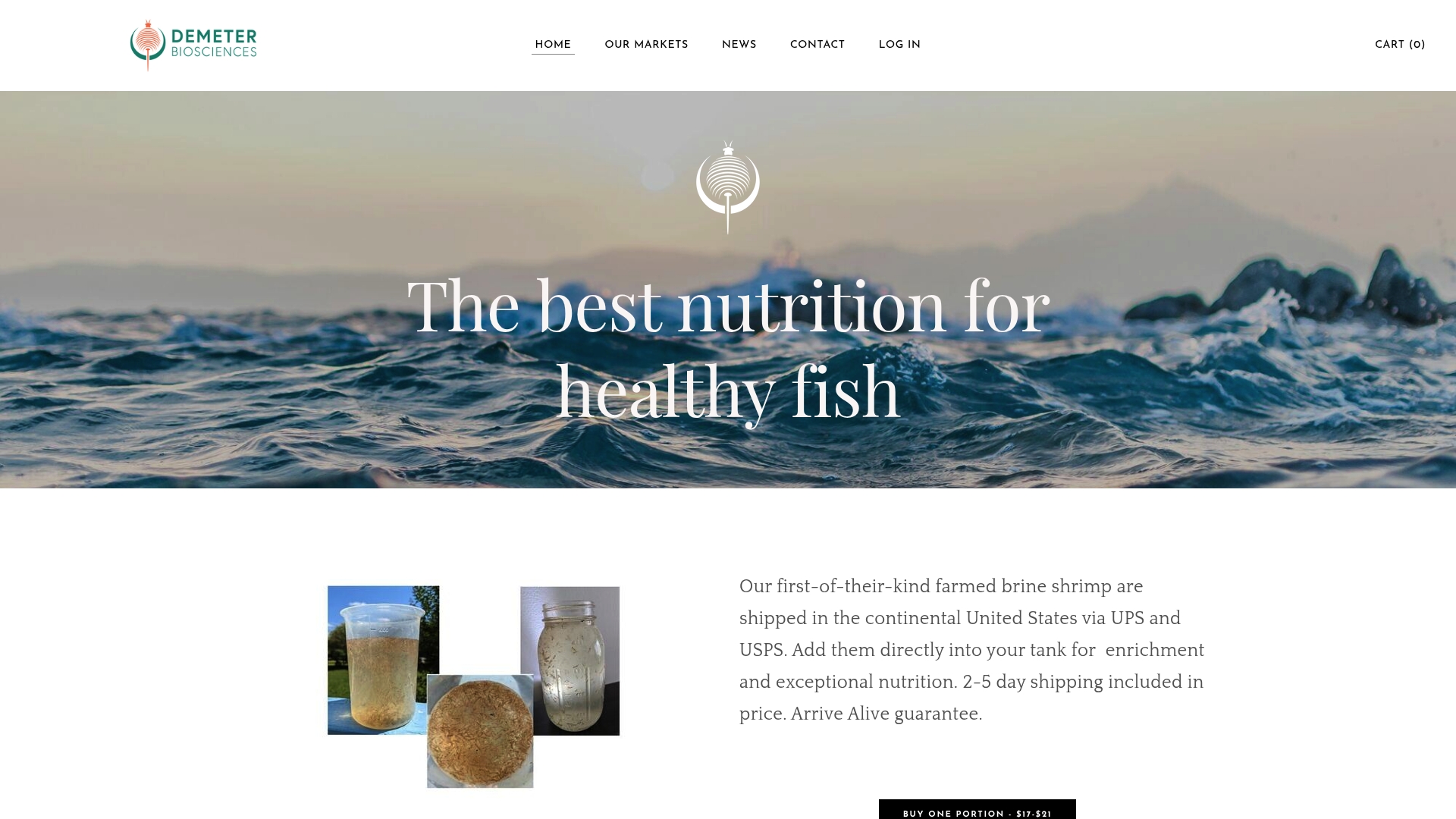
Demeterbioscience offers bulk retail packages designed for fish stores, museums, and aquatic markets, along with subscription options that remove the sourcing uncertainty that plagues conventional shrimp supply chains. Their algae-fed brine shrimp products are produced in controlled environments that eliminate the seasonal variability and nutritional inconsistency common in wild-harvested alternatives. For sourcing inquiries or to discuss bulk retail options, visit their contact page directly.
FAQ
What makes algae-fed shrimp better for consumers?
Algae-fed shrimp contain up to 80% more EPA and DHA omega-3 fatty acids than conventionally farmed shrimp, offering measurable cardiovascular and anti-inflammatory health benefits without any change in flavor or texture.
How do algae-fed shrimp support sustainable shrimp farming?
By replacing fish oil with land-cultivated algae, producers remove dependence on wild-caught forage fish, reduce carbon footprint per harvest by up to 15%, and improve shrimp survival rates under disease conditions.
Can retailers make specific health claims about algae-fed shrimp?
Yes, provided the claims are backed by third-party lab data confirming omega-3 levels. Since no universal "algae-fed" certification exists yet, supplier documentation is the foundation for any credible retail claim.
Do algae-fed shrimp taste different from conventional shrimp?
No. Research confirms that algae-based feed does not adversely affect shrimp flavor or texture, meaning retailers can market the nutritional upgrade without any concern about consumer rejection at the point of eating.
How do retailers verify algae-fed shrimp claims from suppliers?
Request feed composition records showing algae-based omega-3 inclusion rates, ask for independent lab analysis of omega-3 content in harvested muscle tissue, and confirm the specific algae species used in the feed program.