

Walk into any fish store or scroll through an online retailer and you will find dozens of products all claiming to be "premium." The problem is that the word means almost nothing without context. For aquarium enthusiasts, local fish stores, and aquaculture professionals trying to navigate premium fish food product categories retail shelves, the gap between marketing language and actual nutritional value is wide enough to cost your fish their health. This guide cuts through that noise. You will learn how to read labels like an expert, understand the real differences between product types, and make choices that genuinely support fish health and water quality.
Table of Contents
- Key criteria for identifying premium fish food products
- Premium fish food categories: flakes, pellets, and frozen treats
- Comparison of flakes, pellets, and frozen foods: benefits and water quality impacts
- Specialized premium products and sustainable ingredient choices
- Summary comparison table: premium fish food categories and features
- Our take: the premium label problem is a retailer responsibility
- Explore premium live nutrition from Demeter Biosciences
- Frequently asked questions
Key Takeaways
| Point | Details |
|---|---|
| Ingredient transparency | Look for named fish species and avoid vague 'fish meal' and fillers for true premium quality. |
| Feed form matters | Pellets offer better nutrient retention and water clarity than flakes, suited to feeding depths. |
| Nutrient analysis | Check guaranteed protein and fat percentages to compare premium product tiers effectively. |
| Sustainability signals | Choose products with premium omega-3 oils and carotenoids for health and color benefits. |
| Feeding match | Pellet size and feeding frequency are crucial to ensure proper nutrition uptake. |
Key criteria for identifying premium fish food products
The single most reliable indicator of quality in any fish food is what appears first on the ingredient list. Named animal-protein sources like salmon meal, herring meal, or whole krill tell you exactly what your fish are eating. Vague terms like "fish meal" or "marine protein" are legal but reveal nothing about the actual ingredient quality, freshness, or protein digestibility. As ingredient transparency for koi foods shows, named fish species in the top ingredients are a reliable signal of quality, while high filler content is a red flag.
Fillers are the other side of that coin. Wheat, corn gluten, and grain middlings (the low-grade byproducts of grain processing) bulk up a formula without contributing meaningful nutrition for carnivorous or omnivorous fish. Some plant matter is fine, but when these ingredients appear in the top three or four slots, you are paying premium prices for budget nutrition.
Here is what to look for on any label before you buy:
- Named protein sources: salmon meal, herring meal, krill, whole shrimp listed before any grain
- Balanced crude protein: around 40 to 45% for most high-performance formulas
- Fat content: 7 to 10% is a healthy range; too low means poor energy density, too high risks rancidity
- Shelf-life and lot dating: premium brands document this clearly
- Manufacturer contact information and technical documentation: transparency here signals accountability
In the koi food market, where consumers are particularly educated, premium products routinely price between $40 and $60 per 10 lb bag. That price reflects ingredient sourcing, not just packaging. The same logic applies to tropical and marine fish foods at smaller volumes.
Pro Tip: If a fish food lists "fish meal" without naming the species, treat it the same way you would treat "meat" on a human food label. It is technically accurate but tells you nothing useful.
Premium fish food categories: flakes, pellets, and frozen treats
Understanding the main premium fish food product types helps you match format to fish behavior, not just price. Each format has a different nutritional profile, feeding mechanic, and water quality impact.
-
Flakes: The most common format for freshwater community tanks. Flakes float at the surface and dissolve relatively quickly, making them ideal for surface feeders like tetras, guppies, and danios. They work well as transition foods for picky eaters. The downside is that they lose nutrients faster once wet, and uneaten flakes cloud water quickly.
-
Pellets: Available in micro, small, medium, and large sizes, and in floating, slow-sinking, or fast-sinking varieties. Pellets are the workhorse of serious aquarium nutrition. Their compressed structure holds nutrients longer in water, and the variety of sink rates lets you target specific feeding zones. Mid-water feeders like cichlids and bottom dwellers like corydoras each have pellet options designed for their natural feeding behavior.
-
Frozen treats: Bloodworms, brine shrimp, daphnia, and mysis shrimp fall into this category. They offer very high protein content and closely mimic natural prey items, which triggers strong feeding responses. Premium frozen treats like live or frozen brine shrimp are especially valuable for conditioning fish before breeding or recovering underweight specimens.
-
Freeze-dried options: A middle ground between frozen and dry. Freeze-drying preserves much of the nutritional value of live foods without the water quality risk, though some moisture-sensitive nutrients are reduced.
-
Specialty formulas: Color-enhancing, growth-focused, or lifecycle-specific formulas (fry food, breeding food, medicated food) represent the top tier of product specialization.
For comparison purposes, New Life Spectrum's nutrient guarantees show flakes at 40% protein and pellets at 36% protein, which illustrates how format affects nutrient concentration and helps consumers make meaningful comparisons within a brand.
Comparison of flakes, pellets, and frozen foods: benefits and water quality impacts
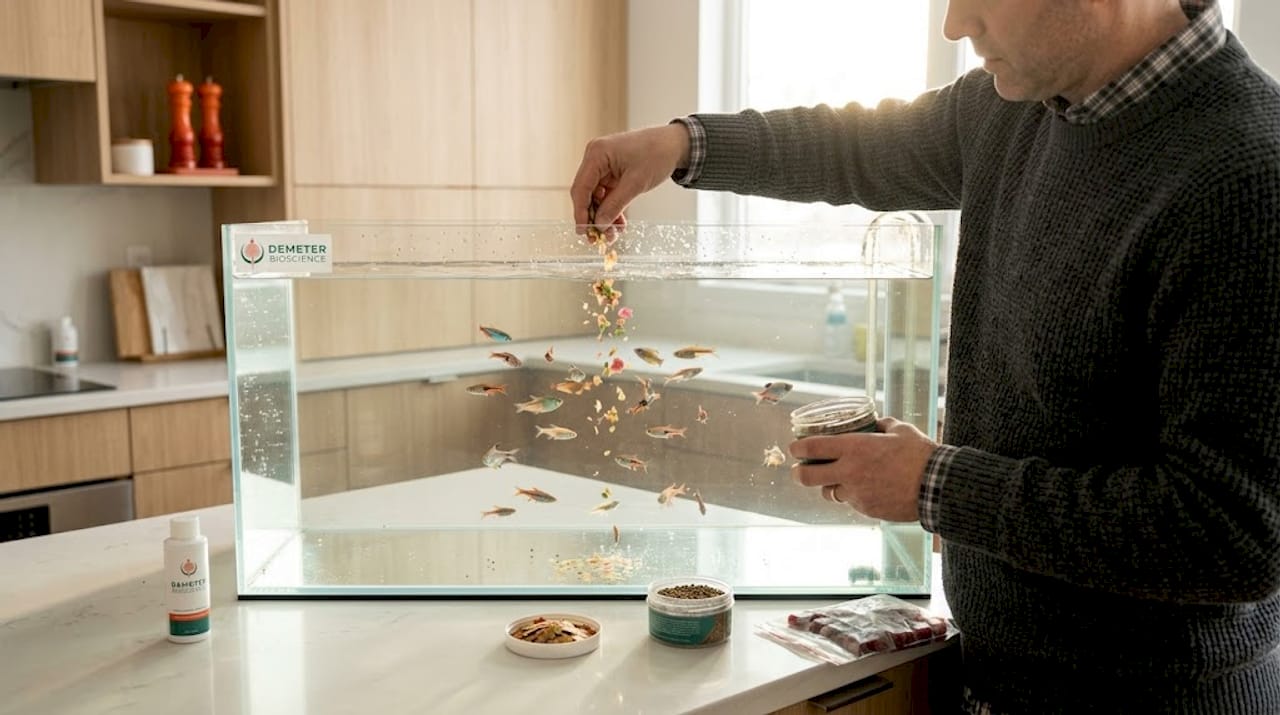
Water quality is where the rubber meets the road for any fish food. A product can have excellent ingredients on paper but still wreck a tank if it dissolves too fast or gets overfed. Understanding how each format behaves in water is as important as reading the ingredient list.
Flakes float and begin dissolving within seconds of hitting the water. For surface feeders, this is perfect. For anyone else, it is a problem. Uneaten flakes sink, decompose, and spike ammonia levels. In a heavily stocked tank, even a small overfeeding event with flakes can push water parameters in the wrong direction within hours.
Pellets hold their shape significantly longer, which gives fish more time to locate and consume them before nutrients leach out. As pellets vs flakes research confirms, pellets reduce nutrient leakage and promote cleaner water compared to flakes, while frozen treats carry real risk for water quality if overfed. Slow-sinking pellets are particularly effective for mid-water species because they pass through the feeding zone at a natural pace.
Frozen treats are high protein and highly palatable, but they carry the most water quality risk. Bloodworms and similar items release organic compounds quickly when thawed, and any uneaten portion begins degrading almost immediately. The rule most experienced hobbyists follow: feed frozen treats in amounts your fish will consume in under two minutes, and remove any remainder.
"The best fish food for your tank is the one your fish will eat completely, at the right depth, without leaving anything to decompose."
Here is a quick breakdown of factors in fish food water impact:
- Flakes: fast dissolution, surface only, high fouling risk if overfed
- Floating pellets: slow dissolution, surface to mid-water, low fouling risk
- Sinking pellets: targeted bottom feeding, very low surface fouling
- Frozen treats: high palatability, fast decomposition, requires careful portioning
Pellet size is also a water quality factor that often gets overlooked. A fish that cannot fit a pellet in its mouth will mouth it repeatedly, breaking it apart and releasing nutrients into the water. Matching pellet size to fish mouth size is not just a feeding comfort issue; it directly affects how clean your tank stays.
Specialized premium products and sustainable ingredient choices
Beyond the standard formats, the most interesting developments in high quality fish food are happening at the ingredient level. Omega-3 fatty acid sourcing is where premium really separates from mid-tier. Fish oil, krill oil, and herring oil provide the EPA and DHA (essential fatty acids) that support immune function, coloration, and reproductive health. Vegetable oils like canola or soy oil can contribute calories but do not deliver the same fatty acid profile. Premium omega-3 sourcing from krill oil and fish oil links directly to improved fish health and color enhancement, and this distinction is visible on the label.
Color enhancement is another specialized category worth understanding. Astaxanthin, a carotenoid pigment found naturally in krill and shrimp meal, is the gold standard for enhancing the reds, oranges, and pinks in fish coloration. Synthetic astaxanthin is also used and is effective, but sourcing it from whole shrimp or krill meal provides additional nutritional co-factors. When a product claims color enhancement, check whether it lists astaxanthin, shrimp meal, or krill as an actual ingredient rather than relying on vague "color enhancing formula" language.
For retailers, these distinctions are a genuine sales and education opportunity. Customers who understand why premium fish meal products cost more are far more likely to make confident purchasing decisions and return for repeat business.
Pro Tip: Sustainable sourcing certifications like MSC (Marine Stewardship Council) on fish meal or ASC (Aquaculture Stewardship Council) on farmed ingredients are meaningful signals for retailers who want to align their inventory with customer values around environmental responsibility.
Summary comparison table: premium fish food categories and features
Use this table as a reference when evaluating products on retail shelves or building out your store's inventory. Premium price anchors in the koi food sector, where $40 to $60 per 10 lb is standard for quality products, give useful context for understanding value across all categories.
| Category | Protein range | Fat range | Feeding zone | Water quality risk | Price tier | Best for |
|---|---|---|---|---|---|---|
| Flakes | 38 to 42% | 5 to 8% | Surface | High if overfed | Low to mid | Small community fish |
| Floating pellets | 36 to 45% | 7 to 10% | Surface to mid | Low | Mid to premium | Cichlids, goldfish, koi |
| Sinking pellets | 36 to 45% | 7 to 10% | Bottom | Very low | Mid to premium | Catfish, loaches, bottom feeders |
| Frozen treats | 50 to 65% | 5 to 12% | All zones | High if misused | Mid | Conditioning, breeding, treats |
| Freeze-dried | 45 to 60% | 4 to 8% | Surface to mid | Moderate | Mid to premium | Occasional protein boost |
| Specialty formulas | Varies | Varies | Varies | Low to moderate | Premium | Species-specific, lifecycle needs |
For premium brine shrimp products specifically, the protein content and palatability place them firmly in the frozen treat and specialty category, with the added advantage of consistent nutritional quality that wild-caught options rarely deliver.
Our take: the premium label problem is a retailer responsibility
Here is something the fish food industry does not say loudly enough: most consumers cannot evaluate premium claims on their own. The label complexity, the technical jargon, and the sheer number of products make it almost impossible for a casual hobbyist to know whether they are buying a genuinely superior product or a beautifully packaged one.
That makes the retailer, whether a local fish store owner or an online seller with a curated catalog, the actual quality filter. When a store stocks a product, it is implicitly endorsing it. Most customers will not read the guaranteed analysis panel. They will trust the shelf.
This is why we think the conversation about premium fish food should start with ingredient sourcing, not price points. A $15 bag of flakes with herring meal as the first ingredient beats a $25 bag with "fish meal" and corn gluten in the top three. Price is a proxy for quality only when the manufacturer has earned it through transparency. The brands that publish full nutrient analyses, name their protein sources, and document their sourcing are the ones worth stocking and recommending.
For aquaculture professionals, the stakes are even higher. Feed conversion ratios, growth rates, and fish health outcomes all trace back to ingredient quality. Choosing feed based on marketing language rather than documented nutritional performance is a risk that shows up in your results, not just your conscience.
Explore premium live nutrition from Demeter Biosciences
If you have spent time evaluating ingredient lists and questioning what "premium" really means, you already understand why live brine shrimp occupy a category of their own.
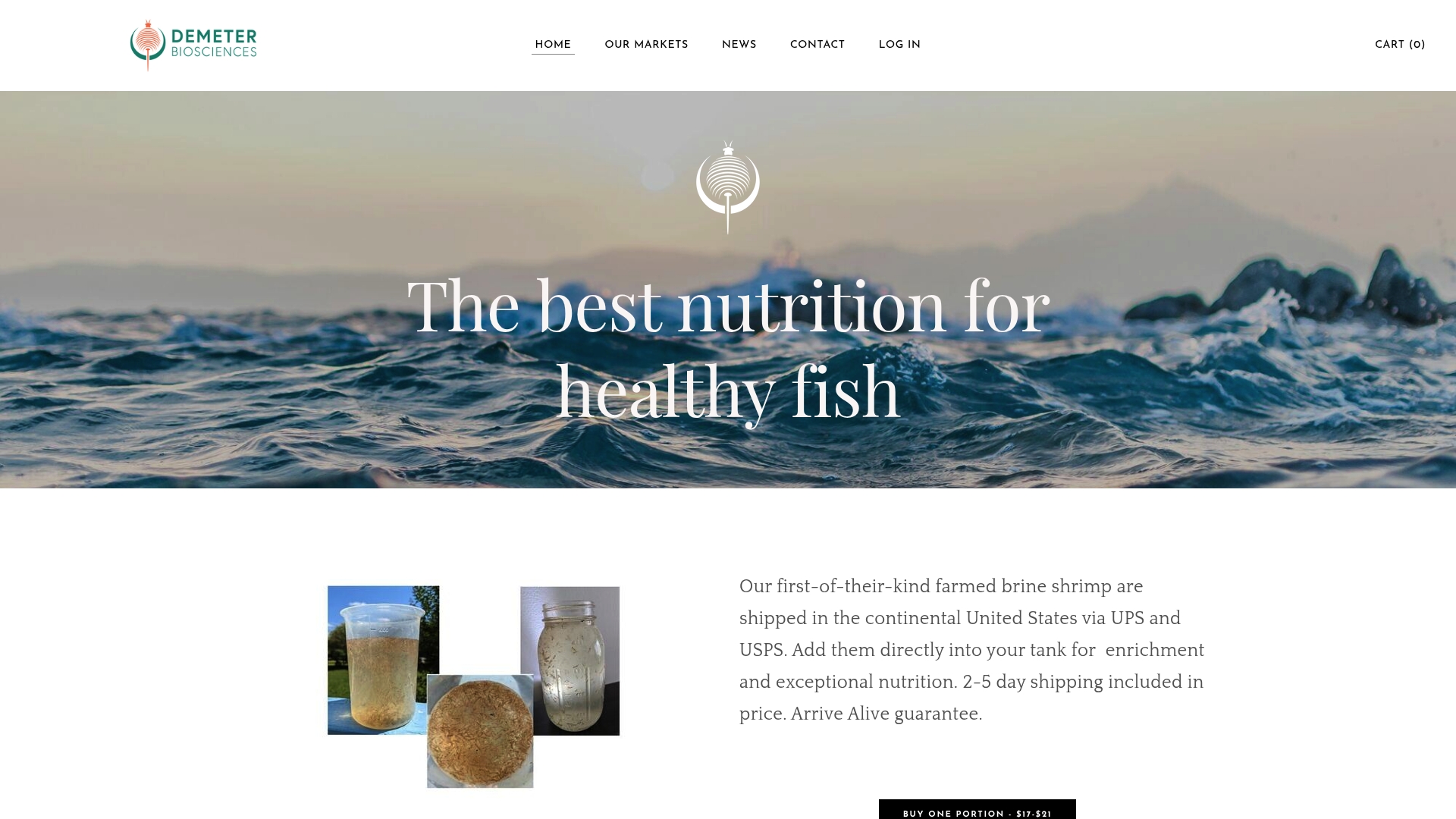
At Demeter Biosciences, we farm brine shrimp in land-based, controlled systems and feed them exclusively on Dunaliella microalgae, delivering a minimum of 40% protein with none of the nutritional variability that plagues wild-harvested alternatives. Whether you are a hobbyist looking for a monthly subscription of live shrimp, a local fish store interested in bulk retail packages, or an aquaculture operation that needs consistent, documentable feed quality, our products are built around the transparency this article has been advocating for. Real ingredients. Real nutrition. No guesswork.
Frequently asked questions
What does 'named fish species' on ingredient lists mean for premium fish food?
It means the product specifies exact fish types like salmon or herring meal, indicating higher ingredient quality and transparency. Named species in top ingredients are a reliable quality signal, unlike vague "fish meal" terms that reveal nothing about source or quality.
How do pellets differ from flakes regarding water quality?
Pellets hold their shape longer and sink or float steadily, reducing nutrient leakage and water clouding compared to quickly dissolving flakes. As pellets vs flakes comparisons show, this structural stability makes pellets the better choice for maintaining water clarity in most tank setups.
Why is pellet size important in premium fish foods?
Correct pellet size ensures fish can ingest the feed properly, preventing underfeeding and ensuring nutrient uptake matches fish species and size. Pellet size mismatches cause feeding problems that are often mistaken for nutritional deficiencies.
Are premium omega-3 sources like krill oil worth the cost?
Yes. They provide superior fatty acid profiles and natural color enhancement that vegetable oil alternatives simply cannot match. Krill oil and fish oil are premium omega-3 sources that support both fish health and visible coloration improvements.
How can local fish stores use premium fish food categories to guide customers?
By understanding ingredient transparency, nutrient content, and feeding mechanics, stores can recommend feeds suited to species, feeding habits, and sustainability preferences. This positions the store as a trusted advisor rather than just a product shelf, which drives repeat business and customer confidence.