
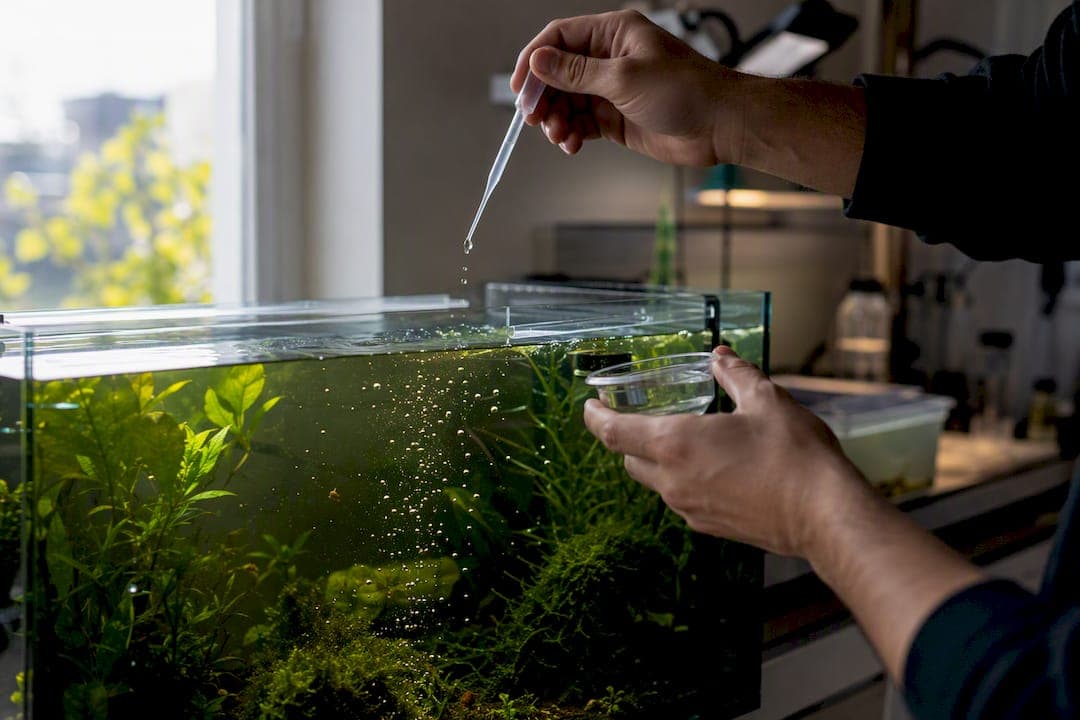
The most reliable way to keep brine shrimp nutritionally consistent is controlled, microalgae-based feeding paired with tight harvest timing. Feed nauplii a standardized diet, pull them at their nutritional peak around 22 to 30 hours post-hatch, and use short, timed enrichment rather than open-ended soaking. If you can't run that pipeline yourself, sourcing farmed, microalgae-fed Artemia from a controlled producer gets you the same result without the guesswork.
TL;DR:
- Consistent brine shrimp nutrition requires locking in a single fixed feed source and recording hatch conditions for each batch.
- Wild harvests introduce large nutritional variability because of seasonal and environmental differences, unlike cultured populations on a controlled diet.
- Oil emulsions provide rapid HUFA loading but must be used within a narrow 12-hour window to avoid nutrient breakdown.
- Harvest nauplii precisely between 22 and 30 hours post-hatch to maximize nutritional value and reduce yolk reserve depletion.
- Using controlled, microalgae-fed Artemia from a reputable supplier minimizes labor and variability, supporting reliable nutrition for sensitive applications.
Table of Contents
- Immediate Checklist: 6 Steps To Stabilize Brine Shrimp Nutrition Today
- What Causes Nutritional Variability In Brine Shrimp?
- Enrichment Options And Their Limits
- Feed Recipes And Schedules For Consistent Protein And HUFA
- When To Harvest Brine Shrimp For Peak Nutrition
- How To Verify Nutritional Consistency On-Farm
- Fixing Common Brine Shrimp Nutrition Problems
- Why Controlled, Microalgae-Fed Artemia Solves The Consistency Problem
- How Water Quality Shapes Nutrition Beyond The Basics
- Sourcing And Storing Cysts For Consistent Hatch Quality
- Author Perspective: What Actually Matters When Consistency Is Non-Negotiable
- Order Consistent, Microalgae-Fed Brine Shrimp
- Sources
Immediate Checklist: 6 Steps To Stabilize Brine Shrimp Nutrition Today
Consistency problems almost always trace back to variables nobody's tracking. Fix that first.
- Lock in one feed input. Pick a single microalgae species or formulated feed and log it. Switching between whatever's cheap that week is the single biggest source of batch-to-batch variation.
- Set and record hatch parameters. Temperature, salinity, and dissolved oxygen all shift hatch rate and nutrient timing, so write them down per batch.
- Harvest inside the window. Don't let nauplii sit past their nutritional peak waiting on your schedule.
- Time enrichment tightly. Two to six hours is the sweet spot for most oil-emulsion protocols; longer isn't better.
- Run basic batch checks. Swim vigor and appearance take thirty seconds and catch problems before they hit your tanks.
- Buy standardized if you can't standardize. If your operation doesn't have the bandwidth for controlled culture, a farmed supply line solves the variability problem outright.
Pro Tip: Keep a simple logbook, even a spreadsheet, with hatch temperature, feed source, and harvest time for every batch. Six months in, you'll spot the pattern behind your good and bad growth cycles instantly.
What Causes Nutritional Variability In Brine Shrimp?
Artemia nutrition swings for reasons that have nothing to do with bad luck. Developmental stage is the biggest one: nauplii hatch carrying a finite yolk reserve, and that reserve depletes fast. Once it's gone, the shrimp's nutritional value depends entirely on what it's been fed, not what it started with.
Environmental conditions compound the problem. Temperature, salinity, oxygen levels, light exposure, and even cyst strain all shift proximate composition measurably. Wild-harvested Artemia make this worse: shrimp pulled from a salt lake in July carry a different fatty-acid profile than the same population in October, because wild populations face seasonal food scarcity and shifting water chemistry that farmed systems simply don't have.
The scale of the variability is the real headline here. Published figures for dried Artemia nauplii show protein ranging from 37% to 71%, lipid from 12% to 30%, and ash from 4% to 21% depending on the source and feeding history. That's not a small margin of error. It means two "brine shrimp" products can differ in protein content by nearly double, with nothing on the label to warn you.
- Yolk depletion accelerates nutrient loss within the first day of life
- Temperature and salinity shift growth rate and biochemical composition
- Wild harvests inherit whatever the local food supply looked like that season
- Cultured populations on a fixed diet remove most of that unpredictability
Enrichment Options And Their Limits
Enrichment is how you push HUFA content up before a batch goes into your tanks, but every method has a ceiling.
Oil emulsions remain the fastest way to load EPA and DHA into Artemia tissue. They work by suspending fatty acids in an emulsifier that nauplii filter-feed on directly. The catch is timing: lipid incorporation often peaks around 12 hours, then actually decreases by 24 hours as the shrimp start metabolizing what they've absorbed. Longer soaking isn't a safety margin, it's a way to undo your own enrichment.
Microalgae-based enrichment tends to be more stable. Species like Chaetoceros and Isochrysis deliver fatty acids alongside amino acids and micronutrients in a form closer to what Artemia evolved eating, and trials feeding Chaetoceros specifically showed higher EPA, DHA, and improved survival and fecundity compared with other algal diets.
Soy lecithin adds phospholipids that improve fatty-acid absorption downstream, though dosing has to be tuned. And review-level guidance consistently points to short exposure windows, commonly 2 to 6 hours, to avoid the same catabolism problem that undermines longer soaks.
- Oil emulsions: fast HUFA loading, narrow effective window, quality-dependent
- Microalgae (Chaetoceros, Isochrysis, Dunaliella): steadier nutrient profile, slower but more complete
- Soy lecithin: boosts phospholipid absorption, needs dose calibration
- Combined microalgae-plus-emulsion protocols: the closest thing to a balanced, repeatable standard
Pro Tip: Watch water quality during enrichment as closely as the enrichment itself. A dense oil emulsion in a poorly aerated container fouls fast, and stressed nauplii burn through nutrients instead of storing them.
Feed Recipes And Schedules For Consistent Protein And HUFA
A reproducible protocol beats a clever one. Here's a baseline that scales from a hobby tank to a small hatchery.
- Baseline culture: Feed continuously on Dunaliella or a mixed microalgae blend. This alone stabilizes protein in the 40 to 45% range without any enrichment step.
- HUFA pulse: Roughly 2 to 6 hours before harvest, introduce an oil-emulsion or concentrated microalgae dose to load EPA and DHA.
- Daily hatchery flow: Set up cysts, hatch under controlled temperature and salinity, run the enrichment pulse, harvest at the target window, rinse thoroughly, then feed out immediately.
- Scaling: Small tanks can run this on a single bucket cycle. Small commercial batches need proportionally larger aeration and enrichment volume, but the timing windows don't change, only the quantities do.
The enrichment window matters more than the exact species mix in most setups. Get the timing wrong and even a premium algae blend underperforms.
When To Harvest Brine Shrimp For Peak Nutrition
Hatch conditions set the clock. Warmer water speeds hatching but compresses your harvest window; cooler water slows both. Most operators calibrate hours-to-hatch against their tank temperature, then plan harvest timing from there rather than using a fixed clock for every batch.
The 22 to 30 hour post-hatch window exists for a biological reason: nauplii hatch carrying a yolk reserve, and that's their peak nutritional value. Nutrient reserves drop 30 to 50% between 24 and 48 hours post-hatch%20Jun.%202025/10%20JTAS-3271-2024.pdf), so waiting even half a day past the window can cut the nutritional payoff nearly in half.
- Separate nauplii from unhatched cysts and shells promptly using a light source and gentle siphoning
- Rinse thoroughly in fresh saltwater to remove hatch debris before feeding out
- Minimize holding time; every extra hour trims stored nutrition
- Avoid refrigeration unless you've validated it doesn't degrade lipid content for your specific protocol
How To Verify Nutritional Consistency On-Farm
You can't manage what you don't measure, and Artemia QA doesn't need a full lab to catch most problems.
Sample every batch, not just the ones that look off. A representative pull means scooping from multiple points in the culture, not just skimming the surface. Visual checks (swim vigor, color, uniform size) catch obvious failures in seconds. Wet-weight comparisons against a known-good batch flag density issues fast. For anything going into high-value broodstock or research feeding, periodic lab proximate analysis and FAME/GC testing for EPA and DHA content are worth the cost, since visual checks can't tell you fatty-acid composition.
| Check type | Frequency | What it catches |
|---|---|---|
| Visual/swim vigor | Every batch | Weak or stressed nauplii, obvious culture failure |
| Wet weight sampling | Every batch | Density and yield inconsistency |
| Proximate analysis (protein/lipid) | Monthly or per new feed source | Baseline nutritional drift |
| FAME/GC for EPA/DHA | Quarterly or before major feed changes | Fatty-acid profile confirmation |
Set action thresholds ahead of time. If protein drops below your baseline by a meaningful margin two batches running, that's a rework trigger, not a "wait and see."
Fixing Common Brine Shrimp Nutrition Problems
Most nutrition failures trace back to one of four things.
- Low protein: Check what you actually fed the last few batches. Inconsistent or wild-sourced feed is the usual culprit, so switching to a controlled cultured diet fixes it fast.
- Poor enrichment uptake: Verify emulsion quality, confirm you're within the 2 to 6 hour window, and check algal concentration and water turnover during the soak.
- Water quality crashing during enrichment: Cut the enrichment load, add aeration, or run a partial water exchange immediately.
- Nauplii too chitinous for small fry: Shorten the hatch-to-harvest interval and use younger instars, since hardening exoskeletons reduce digestibility for the smallest larvae.
Pro Tip: If a problem shows up across multiple unrelated batches at once, stop suspecting the shrimp and start suspecting your feed supplier or water source. Systemic issues are rarely biological.
Why Controlled, Microalgae-Fed Artemia Solves The Consistency Problem
Everything above describes what it takes to standardize Artemia nutrition yourself: fixed feed inputs, logged parameters, tight timing, and ongoing QA. That's real work, and moving from passive harvesting to active, feed-controlled cultivation is the step that actually standardizes outcomes.
Demeter Biosciences runs that pipeline as a land-based, organic system where Artemia are fed exclusively on Dunaliella, producing a baseline of at least 40% protein batch after batch. Buying from a controlled producer shifts the QA burden off your shoulders and onto a system built to stay consistent.
- Direct-to-consumer live shipments for individual tanks and breeders
- Monthly subscription plans for recurring, predictable supply
- Bulk retail packages for museums, research institutions, and local fish stores
| Approach | Consistency effort required | Best fit |
|---|---|---|
| Full in-house culture and enrichment | High (daily logging, enrichment timing, lab checks) | Larger hatcheries with dedicated staff |
| Controlled, microalgae-fed supplier | Low (order and feed) | Hobbyists, small stores, institutions |
How Water Quality Shapes Nutrition Beyond The Basics
Temperature and salinity get most of the attention, but water quality management during the culture cycle affects nutrient retention in ways that are easy to miss. Dissolved oxygen isn't just a survival threshold, it's a metabolic lever. Nauplii under low-oxygen stress burn through stored nutrients faster just staying alive, which means a batch can hatch with a full yolk reserve and still arrive at feeding time nutritionally depleted if the culture water was undersaturated the whole time.
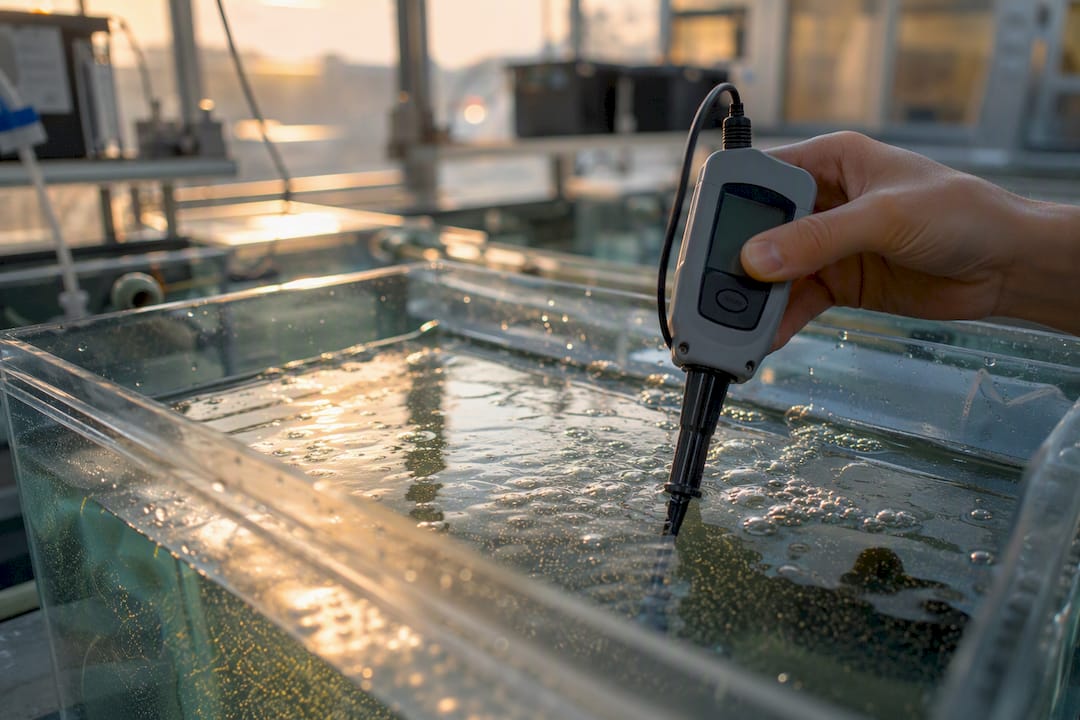
Ammonia and nitrite buildup work the same way. Sublethal levels don't kill your batch, but they push shrimp into a low-grade stress response that redirects energy away from growth and fatty-acid storage. That's a nutrition problem hiding as a water-quality problem, and it's why two batches raised on identical feed can still test differently if one culture tank had better turnover.
pH stability matters more during enrichment than during baseline culture, because oil emulsions and dense algae doses both push biological oxygen demand up fast. A tank that's stable at rest can swing several tenths of a pH unit within hours once you add a concentrated enrichment dose, and that swing stresses nauplii right when you're trying to load them with nutrients.
The practical fix isn't complicated: monitor water quality parameters during enrichment specifically, not just during baseline culture, and treat a stable enrichment environment as part of the nutrition protocol rather than a separate housekeeping task. Aeration during the enrichment pulse deserves the same attention as the enrichment recipe itself.
Sourcing And Storing Cysts For Consistent Hatch Quality
Nutritional consistency starts before the cysts even hit water. Cyst quality varies by harvest lake, harvest year, and how the cysts were processed and dried, and that variability shows up downstream as inconsistent hatch rates and, indirectly, inconsistent nutrition.
Buy from suppliers who can tell you the harvest source and batch number, not generic bulk cysts with no traceability. Hatch rate percentage should be listed on the packaging or available on request; anything unlabeled is a guess. Cysts from a single, consistent harvest lot hatch more uniformly, which matters because a batch with mixed hatch timing gives you nauplii at different developmental stages simultaneously, defeating the whole point of a tight harvest window.
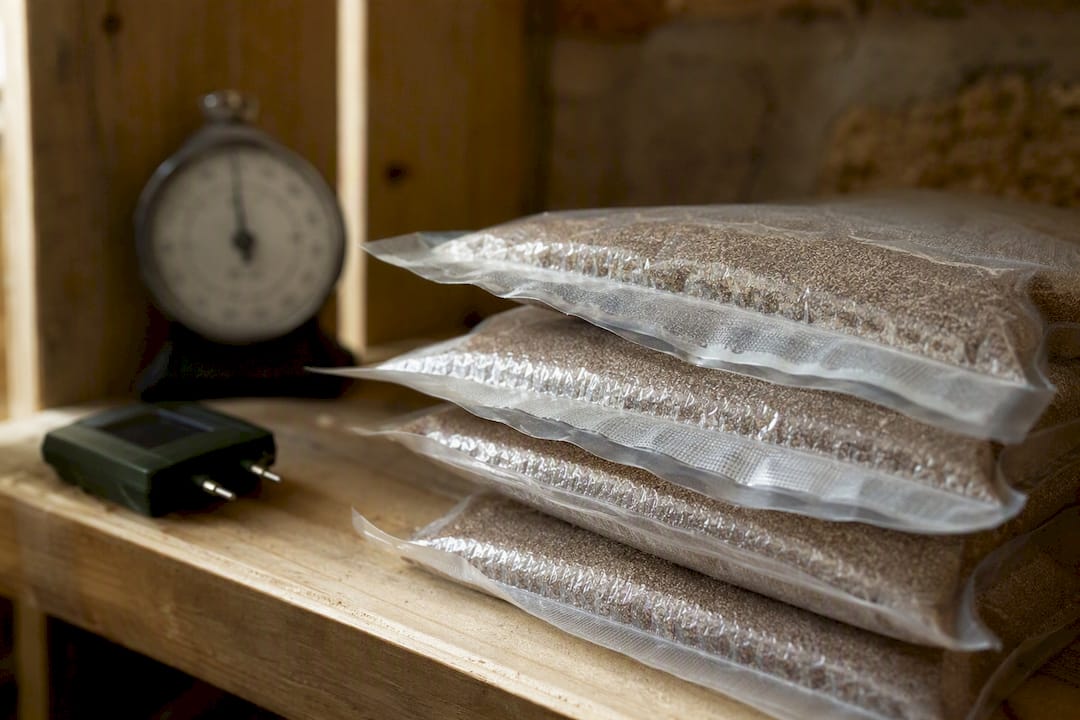
Storage conditions determine how well that quality holds. Cysts need a cool, dry, dark environment, ideally refrigerated and sealed against moisture. Humidity is the main enemy: cysts that absorb ambient moisture during storage lose viability and hatch unevenly, even if they were high quality at purchase. Vacuum-sealed or nitrogen-flushed packaging extends shelf life meaningfully compared with a loose bag in a cabinet.
Rotate stock on a first-in, first-out basis and don't assume a can of cysts sitting for two years hatches the same way it did on day one. If you're running enrichment protocols timed to the hour, an inconsistent hatch rate from degraded cysts throws off every downstream calculation, from harvest timing to enrichment concentration. Treat cyst storage as part of your nutrition protocol, not a separate inventory task.
Author Perspective: What Actually Matters When Consistency Is Non-Negotiable
If fry survival or reproducible research results depend on your Artemia, prioritize feed-input control and harvest timing over clever enrichment tricks. A perfect oil emulsion can't fix shrimp raised on whatever algae was cheapest that month.
For most small operations, outsourcing to a consistent supplier costs less than building real QA infrastructure. The payoff shows up as lower mortality, predictable growth curves, and one less variable to troubleshoot at 11pm.
— Demeter
Order Consistent, Microalgae-Fed Brine Shrimp
Everything in this guide describes what it takes to build a reproducible Artemia pipeline yourself: standardized feed, logged hatch parameters, timed enrichment, and ongoing testing. Demeterbioscience runs that entire pipeline for you.
That means no logbooks, no lab samples, no wondering whether this week's batch matches last week's. Whether you're stocking a home aquarium, running a local fish store, or supplying a research institution, you get the same nutritional baseline every time. Order live brine shrimp for a one-time shipment, set up a recurring subscription for predictable feeding cycles, or check bulk ordering options if you're buying for a store or institution. If you need help matching a supply plan to your setup, reach out to our team directly.
Sources
- Can commercial aquafeeds improve the nutritional value of brine shrimp? Proximal composition and lipid profile of alternative enhancers | Boletim do Instituto de Pesca
- Artemia Enrichment Strategies: A Comprehensive Review of Nutritional Enhancements With Emphasis on Fatty Acid Profiles in Aquatic Species