
Artemia nauplii are the newly hatched, free-swimming larvae of Artemia, the brine shrimp. At hatch, they measure roughly 0.4 mm — small enough to fit through a sewing needle's eye — and represent the earliest larval stage (instar I) before molting into juveniles and adults. Their primary role in aquaculture is as a starter live feed for fish and shrimp larvae, and the global trade in Artemia cysts that produce them exceeds 2,000 metric tons of dry cysts per year, reflecting how central these tiny animals are to commercial hatcheries worldwide.
Three things to know right away:
- Size at hatch: approximately 0.4 mm, varying by strain
- Life stage: instar I nauplius, the first larval form after the cyst hatches
- Primary use: starter live feed in larviculture, plus toxicity testing and ornamental aquariums
Table of Contents
- What do Artemia nauplii look like?
- Dormant cysts and the hatch-on-demand advantage
- Practical hatch checklist: getting the parameters right
- What nauplii actually provide nutritionally, and where they fall short
- Key Takeaways
- The part most guides skip over
- Reliable, microalgae-fed live Artemia from Demeterbioscience
- Useful sources and further reading
What do Artemia nauplii look like?
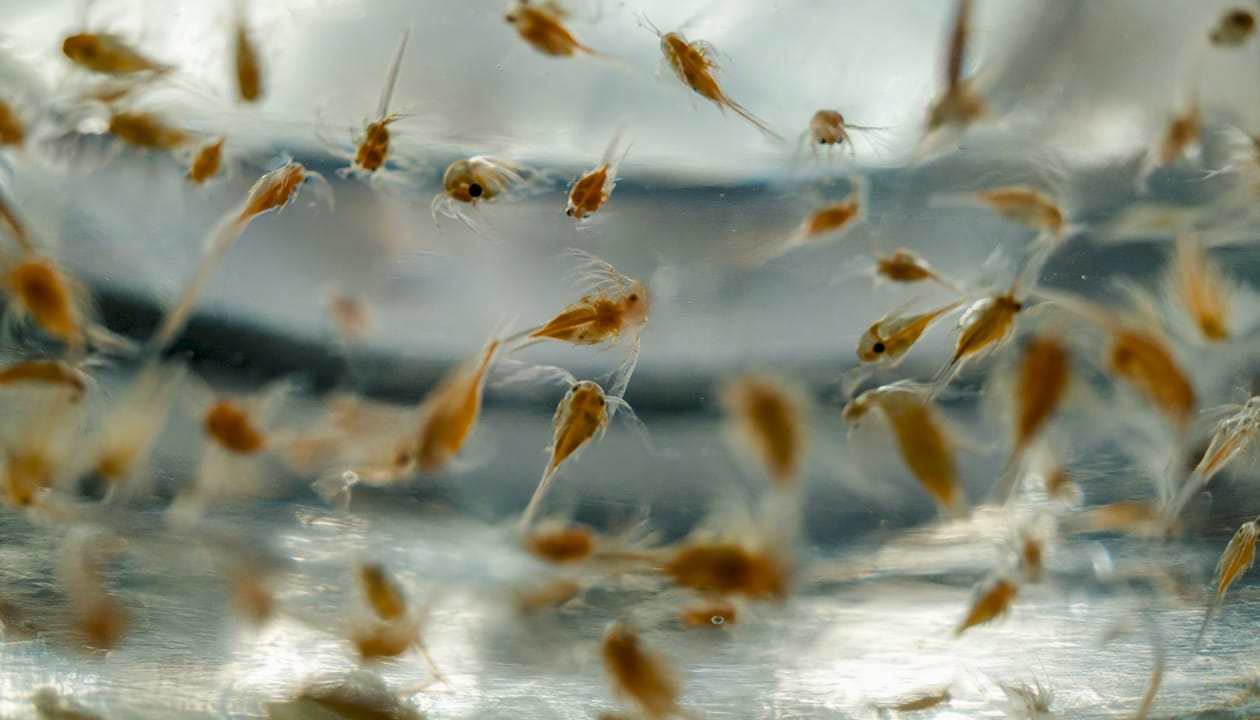
A freshly hatched nauplius is easy to miss with the naked eye. Under a hand lens or low-power microscope, you see a pear-shaped body, transparent to brownish-orange in color, with a single dark naupliar eye at the anterior end. Three pairs of appendages are visible: the first antennae (sensory), second antennae (locomotion), and mandibles. That's it. No mouth opening yet, no digestive tract — instar I nauplii live entirely on internal yolk reserves.
Strain matters for size. Documented naupliar lengths range from roughly 422 µm to 517 µm depending on the Artemia population, and that spread is not trivial. A 90 µm difference in body length can determine whether a first-feeding marine larva can physically capture and swallow the prey. The brownish-orange pigmentation comes from carotenoids in the yolk, which also function as antioxidants — one reason freshly hatched nauplii are more nutritious than ones that have been sitting in a harvest bucket for six hours.
Their movement is equally important. Nauplii swim in a characteristic helical, tumbling pattern that triggers the predatory strike response in many fish larvae. Frozen or dead prey simply don't produce the same feeding stimulation, which is why live nauplii remain the default starter feed even in hatcheries with access to formulated microdiets.
Dormant cysts and the hatch-on-demand advantage
A cyst is not a fertilized egg in the conventional sense. It is a gastrula-stage embryo encased in a tough, multi-layered chorion that resists desiccation, UV radiation, and even brief exposure to organic solvents. When placed in saltwater, the chorion hydrates, the embryo resumes metabolism, and a nauplius hatches — typically within 10–24 hours depending on temperature and salinity.
That on-demand hatching is what makes Artemia so operationally useful. You store dry cysts at room temperature (or refrigerated for longer shelf life), hatch exactly the volume you need, and have live feed ready within a day. No continuous culture, no crash risk overnight. The FAO/UGent Artemia production manual describes this as one of the primary reasons Artemia displaced other live feeds in commercial hatcheries during the latter half of the 20th century.
The global cyst trade exceeding 2,000 metric tons annually reflects that convenience. The Great Salt Lake in Utah was historically one of the world's dominant cyst-harvesting sites, producing a significant share of commercially available cysts. Seasonal variability, drought, and salinity fluctuations at natural harvest sites have pushed hatcheries toward diversified sourcing and, increasingly, farmed alternatives.
Practical hatch checklist: getting the parameters right
Hatching Artemia cysts is straightforward when you control the key variables. Drift outside the optimal ranges and hatch rate drops fast.
| Parameter | Optimal Range | Notes |
|---|---|---|
| Salinity | 25–30 ppt | Freshwater or hypersaline conditions reduce hatch rate |
| Temperature | 25–28°C | Below 20°C slows hatch significantly |
| Dissolved oxygen | >4 mg·L⁻¹ | Vigorous aeration required; passive diffusion fails at density |
| Cyst density | ≤2 g·L⁻¹ | Overcrowding reduces hatch rate and naupliar quality |
| Light | Continuous low light | Stimulates hatching; 2,000 lux sufficient |
| Hatch time | 18–24 h at 28°C | Harvest early for maximum yolk energy |
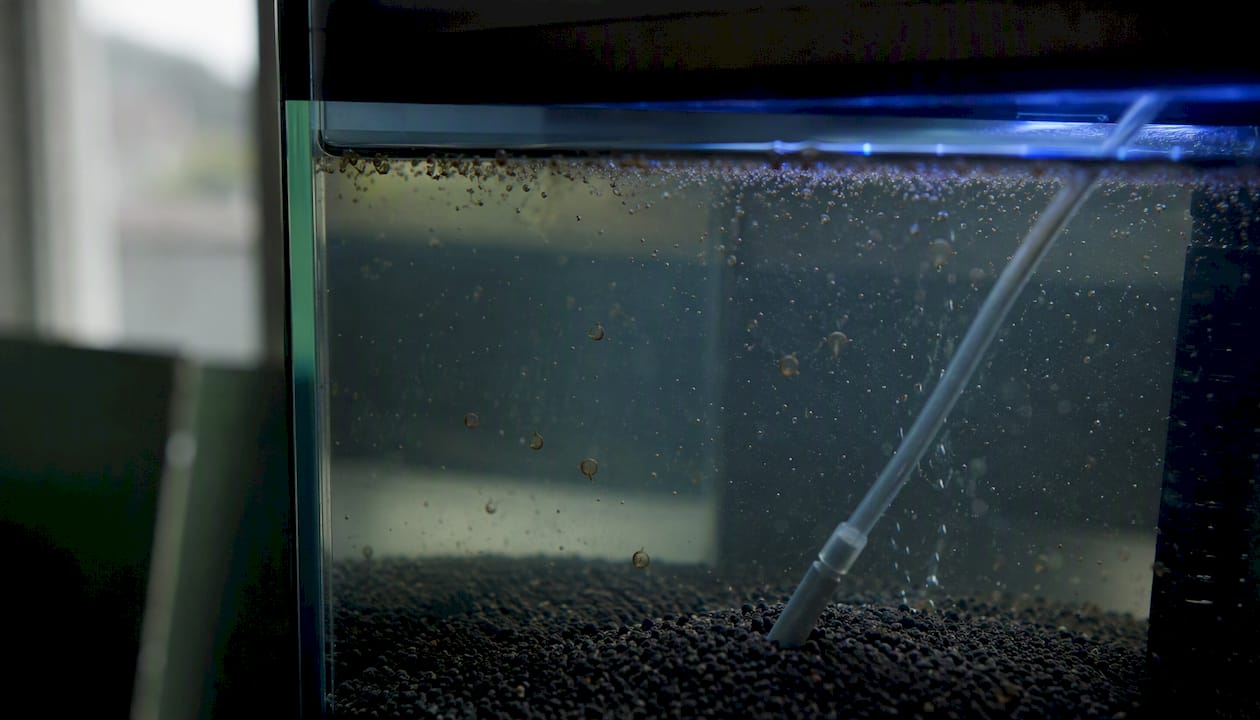
Harvesting cleanly matters. After hatching, you have a mix of nauplii, empty shells, and unhatched cysts. Turn off aeration and let the vessel settle for 5–10 minutes. Nauplii are phototactic — they concentrate near a light source. Drain from the bottom (shells float, unhatched cysts sink) and collect nauplii from the illuminated mid-zone. Rinse with clean saltwater before feeding.
Pro Tip: Harvest at 12–18 hours post-hatch, not 24. FAO data shows nauplii lose roughly 25–30% of their energy reserves within 24 hours — harvesting early keeps that yolk energy in your larvae, not burned off by the nauplii themselves.
Common pitfalls: poor aeration (the single most frequent cause of low hatch rates and naupliar die-off), stocking cysts too densely, and harvesting too late. For enrichment tanks specifically, dissolved oxygen must stay above 4 mg·L⁻¹ — vigorous mechanical aeration, not passive diffusion, is the standard.
What nauplii actually provide nutritionally, and where they fall short
Fresh instar I nauplii are protein-rich (roughly 50–60% dry weight), contain free amino acids that act as feeding attractants, and deliver carotenoids and some lipids from the yolk. For many freshwater species, that profile is adequate without modification.
For marine larvae, the picture is more complicated. Many Artemia strains are naturally low in DHA (docosahexaenoic acid) and EPA (eicosapentaenoic acid), the long-chain omega-3 fatty acids critical for neural and eye development in marine fish. Feeding unenriched nauplii to marine larvae often produces poor survival and deformities even when the larvae appear to be eating well. That's the gap enrichment fills.
Enrichment works by exploiting the open digestive tract of instar II nauplii. You add a HUFA emulsion (commercial products like SELCO or equivalent lipid emulsions are standard) to the enrichment vessel, and the nauplii filter-feed on the emulsion particles, loading their gut with the supplement. After 12–24 hours of enrichment, the nauplii are essentially living capsules of whatever you put in the water. Research published in Aquaculture confirms that this bioencapsulation approach can deliver HUFAs, vitamins, probiotics, and even therapeutics directly to larval fish through the nauplii as a vector.
Pro Tip: Start enrichment at instar II, not instar I. Instar I has no open gut — the enrichment product just passes through the water unused. Wait until the mouth is open (roughly 12 h post-hatch at 28°C), then add your enrichment product and maintain DO above 4 mg·L⁻¹ with vigorous aeration.
For a detailed breakdown of enrichment protocols and their outcomes in commercial settings, the brine shrimp nutrition guide for commercial larval fish covers the practical steps.
Key Takeaways
Artemia nauplii are instar I brine shrimp larvae measuring roughly 0.4 mm at hatch, and their nutritional value peaks within the first 12–18 hours before yolk reserves significantly deplete.
| Point | Details |
|---|---|
| Harvest window is narrow | Collect nauplii at 12–18 h post-hatch to capture peak yolk energy before reserves deplete. |
| Enrichment requires instar II | Only nauplii with an open digestive tract (instar II onward) can bioencapsulate HUFAs and supplements. |
| Strain size affects larval survival | Match naupliar size (422–517 µm range by strain) to the predator's gape for first-feeding success. |
| Wild cysts carry variability | Seasonal and source-lake variation affects hatch rate, naupliar size, and lipid profile batch to batch. |
| Demeterbioscience offers farmed consistency | Microalgae-fed live brine shrimp from Demeterbioscience deliver predictable nutrition without seasonal variability. |
The part most guides skip over
The aquaculture literature treats Artemia as a solved problem — hatch cysts, feed nauplii, done. What that framing misses is how much performance variation hides inside "standard practice."
Two hatcheries following the same hatching protocol can get dramatically different larval survival rates, and the difference often traces back to three things: harvest timing, enrichment aeration, and cyst source. The 25–30% yolk depletion within 24 hours is not a theoretical concern — it's the difference between nauplii that fuel rapid larval growth and nauplii that are essentially empty calories by the time they hit the tank. Most hobbyists and even some small hatcheries harvest too late because they're waiting for a "full hatch" rather than an optimal hatch.
The enrichment aeration point is equally underappreciated. Dense enrichment batches in a small vessel with inadequate aeration don't just enrich poorly — they crash. The nauplii die, the enrichment product fouls the water, and you lose the batch entirely. Vigorous mechanical aeration is not optional; it's the variable that separates a successful enrichment run from a wasted one.
On the farmed-versus-wild question: wild cysts are not inferior by definition, but they are variable by nature. For a hobbyist hatching nauplii for a community tank, that variability rarely matters. For a marine hatchery running a sensitive species at commercial scale, it matters enormously. The honest answer is that the right choice depends on what you're feeding and how much batch-to-batch consistency your operation actually requires.
Reliable, microalgae-fed live Artemia from Demeterbioscience
The nutritional variability in wild-harvested cysts is a real operational problem, and enrichment protocols only partially compensate for it. Demeterbioscience takes a different approach: land-based, controlled production where Artemia are fed exclusively on Dunaliella microalgae, delivering at least 40% protein content and consistent lipid profiles across shipments.
That consistency means less time troubleshooting variable hatch results and more predictable outcomes for your larvae or display animals. Demeterbioscience ships live brine shrimp direct to hobbyists and offers bulk orders for hatcheries, research institutions, and local fish stores that need reliable volume. Monthly subscription plans are also available for operations that want a steady supply without reordering manually. Visit the store to place an order or contact the team to discuss bulk pricing and institutional supply options.
Useful sources and further reading
The sources below back the claims in this article and are worth bookmarking if you work with Artemia regularly.
- [[4.1. Introduction, biology and ecology of Artemia] (FAO)](https://www.fao.org/4/w3732e/w3732e0m.htm)
- Use of nauplii and meta‑nauplii (FAO)
- Manual on Artemia production and use (FAO/UGent compilation)
- Elsevier article on Artemia as nutrient delivery platform
- VLIZ publication on Artemia size variation
- Artemia life cycle (Learn Genetics, University of Utah)
- Virginia Tech extension publication (enrichment DO guidance)
- Live brine shrimp (Demeter Biosciences product page)