
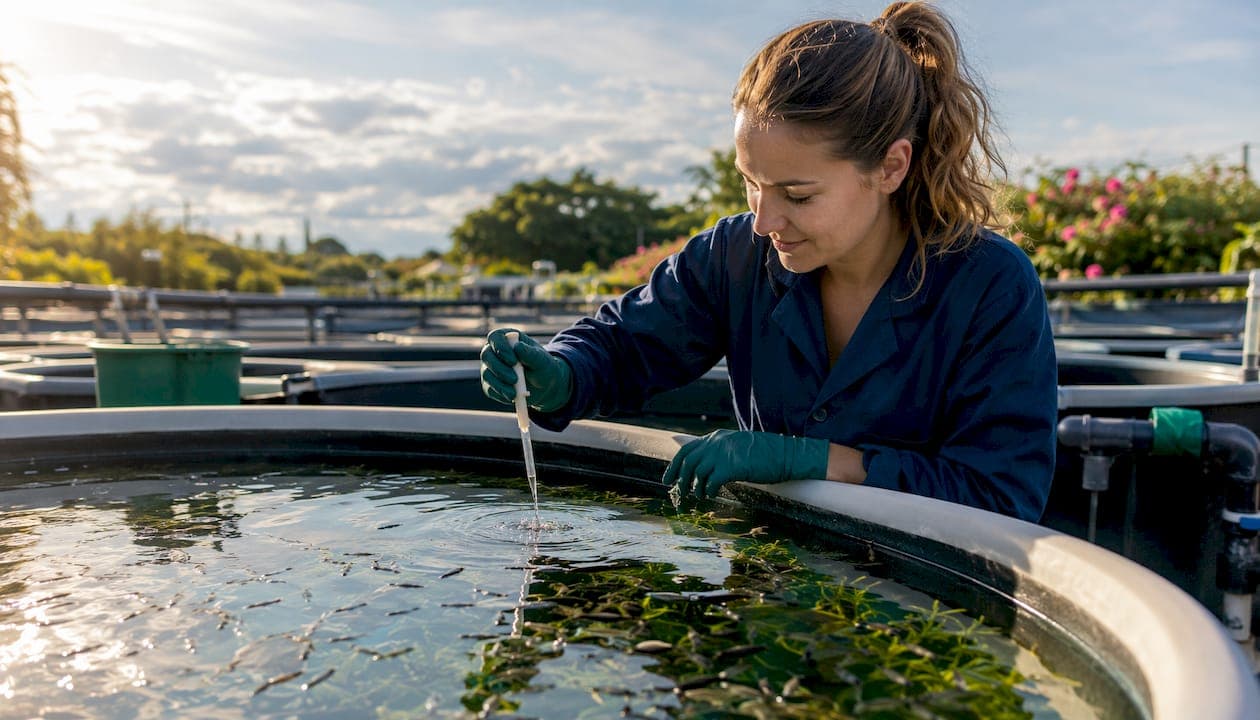
Live food is the primary driver of early survival and digestive maturation in most fish species. Its movement triggers feeding behavior, its particle size matches larval mouth gape, and its bioavailable polar lipids deliver DHA and EPA in forms that formulated feeds cannot reliably replicate. For breeders and researchers, this is not a preference — it is a biological requirement during the first days of exogenous feeding.
The core mechanisms are worth stating plainly before diving into protocols:
- Movement cues activate hunting and foraging instincts, reducing captivity stress and increasing capture rates in newly hatched larvae
- Particle size (typically 50–150 µm for rotifers and Artemia nauplii) matches the mouth gape of most early-stage larvae, making ingestion physically possible
- Polar lipid delivery of DHA and EPA reaches larval tissues more efficiently than the triacylglycerol forms found in most enrichment emulsions
- Enrichment corrects native deficiencies in rotifers and Artemia, which are naturally low in n-3 HUFAs and cannot meet larval needs without supplementation
The practical implication: plan your live-feed protocol and enrichment steps before larvae reach first-feeding stage. Waiting until survival drops is too late. Breeders who build measurable enrichment checkpoints into their rearing calendar — and who sequence live feeds by larval stage — consistently outperform those treating live food as an afterthought.
Table of Contents
- How live food shapes larval biology from day one
- Which live feed organisms should you use and when?
- What live food actually delivers nutritionally
- Enrichment protocols that actually move the needle
- Culture, handling, and feeding schedules at hatchery scale
- Managing pathogen risk without sacrificing live-feed benefits
- Matching live food to your target species and larval stage
- Quality checks and KPIs for live-feed performance
- What recent research and Demeterbioscience's experience confirm
- Key Takeaways
- A producer's perspective on what actually works in the hatchery
- Demeterbioscience's farmed Artemia for your breeding program
- Useful sources
How live food shapes larval biology from day one
The role of live food in fish breeding goes well beyond calories. Live prey interact with larval physiology at the behavioral, digestive, and neurological levels simultaneously, and understanding each mechanism helps you design protocols that actually work.
Feeding behavior and prey capture. Fish at early life stages instinctively respond to moving prey — the locomotion of rotifers, Artemia nauplii, and copepods activates natural hunting and foraging impulses that static particles simply do not trigger. This matters operationally: larvae that fail to initiate feeding within the first few days of exogenous feeding rarely recover. The movement signal is the trigger, and without it, even nutritionally adequate particles go ignored.
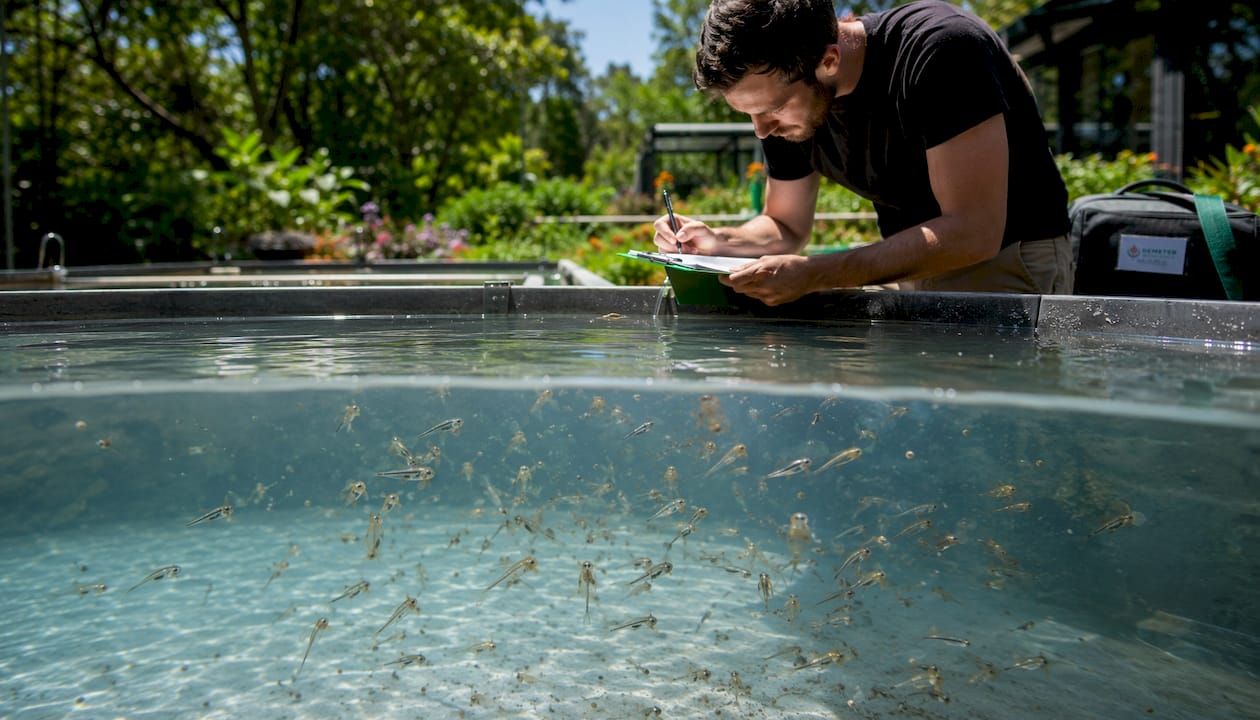
Digestive system maturation. Live prey stimulate enzyme production — aminopeptidase, chymotrypsin, and lipase — at a stage when the larval gut is anatomically and functionally immature. Formulated diets typically carry 60–90% dry matter and lower soluble protein, which creates a mismatch with the larvae's limited proteolytic capacity. Live feeds contain roughly 10% dry matter, which makes them far easier to process. Some evidence suggests live prey also carry hormones or neurotransmitter factors that directly stimulate digestive enzyme secretion, giving larvae a head start on assimilating inert food later.
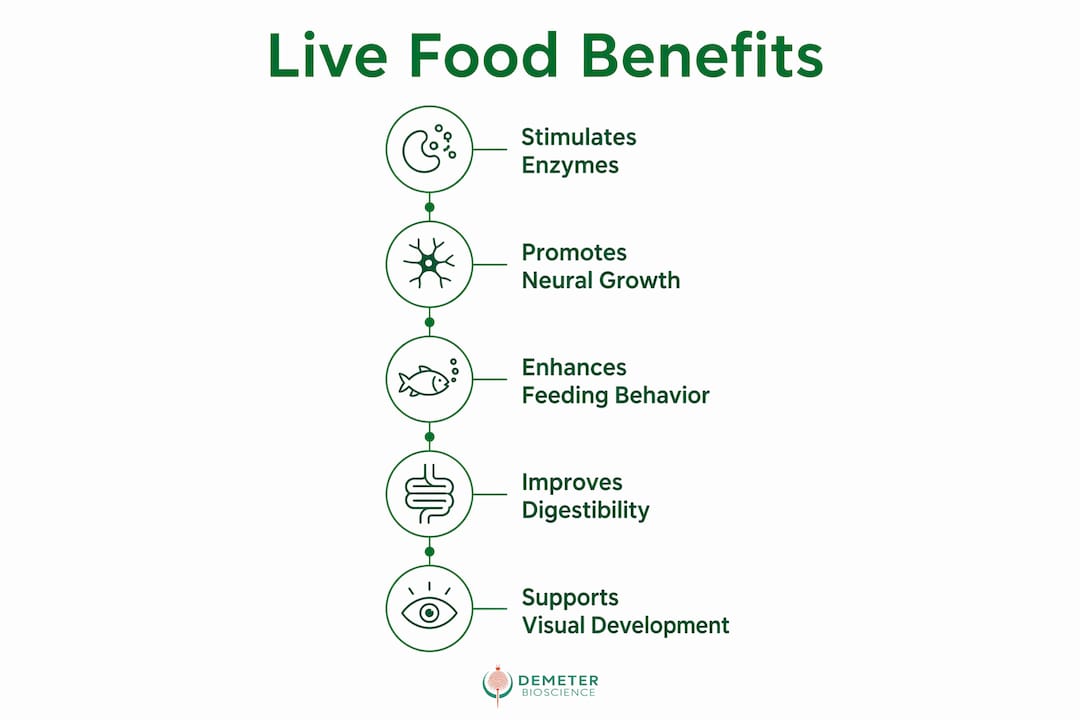
Neural and visual development. DHA and EPA, delivered through the phospholipid fraction of live prey, support membrane fluidity in neural and retinal tissue. Larvae reared without adequate HUFA supply show higher rates of skeletal deformities and impaired visual acuity, both of which reduce survival in grow-out. The phospholipid delivery route matters here: HUFAs packaged in polar lipids are absorbed more efficiently than those in triacylglycerol form, which is why copepods — where up to 90% of total fatty acids are in phospholipid form — outperform enriched Artemia on a gram-for-gram basis for many marine species.
Operational implications for timing and weaning. These mechanisms set the sequencing logic for any live-feed program. First feed should be introduced at mouth-opening, not after. Enrichment should be completed before larvae enter the tank, not during feeding. And weaning to formulated diets should begin only after digestive enzyme activity is established — which cofeeding strategies can accelerate, as discussed in Section 6.
Which live feed organisms should you use and when?
The direct answer: choose the feed that matches your species' mouth gape, prey-capture behavior, and HUFA requirements at each developmental stage. No single organism covers all three criteria across all stages.
Size-matching reference
| Organism | Size range | Typical larval stage | Primary application |
|---|---|---|---|
| Ciliates (Paramecium spp.) | 50–150 µm | First feeding, very small-mouthed larvae | Freshwater ornamentals, pikeperch |
| Rotifers (Brachionus spp.) | 100–250 µm | First feeding, 3–10 dph | Marine and freshwater larvae broadly |
| Artemia nauplii (instar I–II) | — | Intermediate stage, after rotifers | Most hatchery species |
| Copepod nauplii | — | First feeding through intermediate | Marine larvae, premium protocols |
| Moina / Daphnia | — | Intermediate, freshwater species | Freshwater ornamentals, tilapia |
| Insect larvae (e.g., microworms) | — | Intermediate to juvenile | Freshwater species, hobbyist systems |
Pros, cons, and practical notes by feed class
Rotifers (Brachionus spp.) are the workhorse of marine larviculture. Their slow, predictable swimming pattern and size spectrum (100–250 µm) make them ideal for first feeding of sea bream, sea bass, and many freshwater species. They culture readily at high densities and tolerate environmental variation well. The catch: rotifers cannot synthesize long-chain HUFAs and must be enriched before every feeding. Without enrichment, they deliver inadequate DHA and EPA, and the larvae fed on them show it.
Artemia (brine shrimp) are the most widely used live feed globally, valued for the long shelf life of their dormant cysts and the predictability of hatching. Instar I nauplii (non-feeding stage) cannot be enriched; instar II and later stages can be, though brine shrimp have a known tendency to catabolize DHA back to EPA, which limits how far you can push the DHA:EPA ratio. Still, with proper enrichment protocols, Artemia remain indispensable for intermediate-stage feeding across most hatchery systems.
Copepods are the nutritional benchmark. They synthesize HUFAs without enrichment, maintain appropriate DHA:EPA and EPA:ARA ratios naturally, and deliver up to 90% of their fatty acids as phospholipids. Their intermittent, jerky swimming pattern also elicits strong predatory responses in marine larvae. The barrier is scale: copepods are technically challenging to culture at high densities, and most hatcheries use them selectively for premium or sensitive species rather than as a primary feed.
Ciliates (Paramecium spp.) serve a specific niche: very small-mouthed larvae that cannot yet capture rotifers. Pikeperch trials show that Brachionus spp. and Paramecium together support high early survival in freshwater species. Water quality management is critical with ciliate cultures — oxygen and ammonium can spike quickly if culture density is not controlled.
Moina, Daphnia, and insect larvae fill the intermediate-to-juvenile gap in freshwater systems. Moina in particular cultures well on biofloc and fermented substrates, keeping production costs low for tilapia, catfish, and ornamental species like Betta and freshwater angelfish.
Staged feeding sequences follow logically from the size table: start with ciliates or small rotifers, transition to larger rotifers or copepod nauplii, then introduce Artemia nauplii as mouth gape increases. Skipping stages or introducing Artemia too early — before larvae can physically capture them — wastes feed and stresses the culture.
What live food actually delivers nutritionally
Live prey deliver bioavailable lipids and micronutrients in forms larvae assimilate far more readily than most formulated feeds at first feeding. The distinction between nutrient form and nutrient presence is what most breeders miss.
Key nutrients and their larval functions
| Nutrient | Primary larval function | Bioavailability note |
|---|---|---|
| DHA (n-3 HUFA) | Neural development, retinal function, membrane fluidity | Phospholipid form absorbed more efficiently than triacylglycerol |
| EPA (20:5n-3) | Anti-inflammatory signaling, membrane integrity | Copepods deliver naturally; rotifers/Artemia require enrichment |
| ARA (20:4n-6) | Immune function, eicosanoid synthesis | Often limiting in cultured live feeds |
| Phospholipids | HUFA carrier, gut membrane development | Critical for efficient lipid absorption in early larvae |
| Proteins / amino acids | Structural growth, enzyme synthesis | Live prey proteins are more digestible at first feeding than fishmeal-based dry feeds |
| Vitamins (A, C, E) | Antioxidant defense, skeletal development | Enrichable; rotifers and Artemia carry low baseline levels |
Protein quality and digestibility. Live prey proteins are more digestible at first feeding than the fishmeal and soybean proteins in most formulated diets, largely because larvae lack the proteolytic enzyme activity to break down high-dry-matter particles. The amino acid profiles of rotifers and Artemia are generally adequate for growth, but the delivery form — suspended in a high-moisture, low-dry-matter matrix — is what makes the difference in early assimilation.
The phospholipid-DHA gap. Breeders who focus only on crude protein miss the greater importance of PL-DHA and PL-EPA for larval membrane function. Most commercial enrichment emulsions use triacylglycerols because they are easier to encapsulate and leach less, but HUFAs delivered through phospholipids are more easily absorbed by fish larvae. This is the structural advantage copepods hold over enriched rotifers and Artemia — not just the quantity of DHA, but its packaging.
Common deficiencies in standard live feeds. Rotifers and Artemia are both naturally low in n-3 HUFAs. Without proactive enrichment, they cannot meet the complex nutritional demands of most marine larvae and many freshwater species. The result is poor growth, elevated deformity rates, and reduced disease tolerance. Enrichment and bioencapsulation with microalgae or commercial emulsions raise essential fatty acids, vitamins, and micronutrients and measurably improve larval outcomes — but only when done correctly and with adequate timing.
Enrichment protocols that actually move the needle
Enrichment is not optional for most rotifer and Artemia programs. Without it, these feeds cannot meet larval HUFA needs, and the timing and dosing of enrichment determine whether you get meaningful DHA incorporation or just the appearance of a protocol.
Artemia enrichment protocol
- Hatch Artemia cysts at 28°C in 28–35 g/L saline water; collect instar II nauplii at 24–36 hours post-hydration.
- Transfer to enrichment vessel at a density appropriate for your system; maintain aeration and temperature at 25–28°C.
- Add enrichment product at 2 g Multigain per million Artemia (or equivalent commercial DHA/EPA emulsion such as Super Selco or DHA Selco). Studies recommend ≥18 hours of enrichment to maximize DHA incorporation into polar lipids.
- Monitor during enrichment: check motility (should remain high), dissolved oxygen (keep above 6 mg/L), and total suspended solids. Over-enrichment degrades water quality and reduces Artemia vitality.
- Rinse before feeding: harvest enriched Artemia through a fine mesh, rinse with clean saline, and feed immediately or hold at 10°C to slow metabolism and reduce HUFA loss.
- Verify enrichment: where lab capacity allows, check DHA incorporation into polar lipids. Practical proxies: orange-gold coloration from carotenoid uptake, sustained motility, and oil globule retention visible under a dissecting scope.
Rotifer enrichment protocol
- Maintain rotifer culture at target density (see culture table in Section 6); harvest a working batch 2–4 hours before feeding.
- Add enrichment at 0.2 g Multigain per million rotifers (or equivalent emulsion). Enrich for 2–4 hours at culture temperature.
- Check motility and color before feeding; rotifers should remain active and show visible lipid droplets.
- Feed immediately after enrichment; rotifers metabolize acquired HUFAs quickly once placed in a warm larval tank, so delay between enrichment and feeding directly reduces nutritional value delivered.
- Adjust dose based on culture density and observed larval condition over 3–5 days; if deformity rates or survival are below target, revisit enrichment timing before changing feed type.
Pro Tip: Monitor dissolved oxygen and ammonium throughout enrichment, not just at harvest. Oxygen crashes during enrichment are the most common cause of poor Artemia vitality at feeding time, and they are easy to miss without continuous monitoring.
Commercial enrichment products like Super Selco and DHA Selco are well-documented in the literature and widely available. Microalgae-based enrichment (Nannochloropsis, Isochrysis) is an alternative that delivers phospholipid-packaged HUFAs more directly, though it requires maintaining live algae cultures alongside your zooplankton systems.
Culture, handling, and feeding schedules at hatchery scale
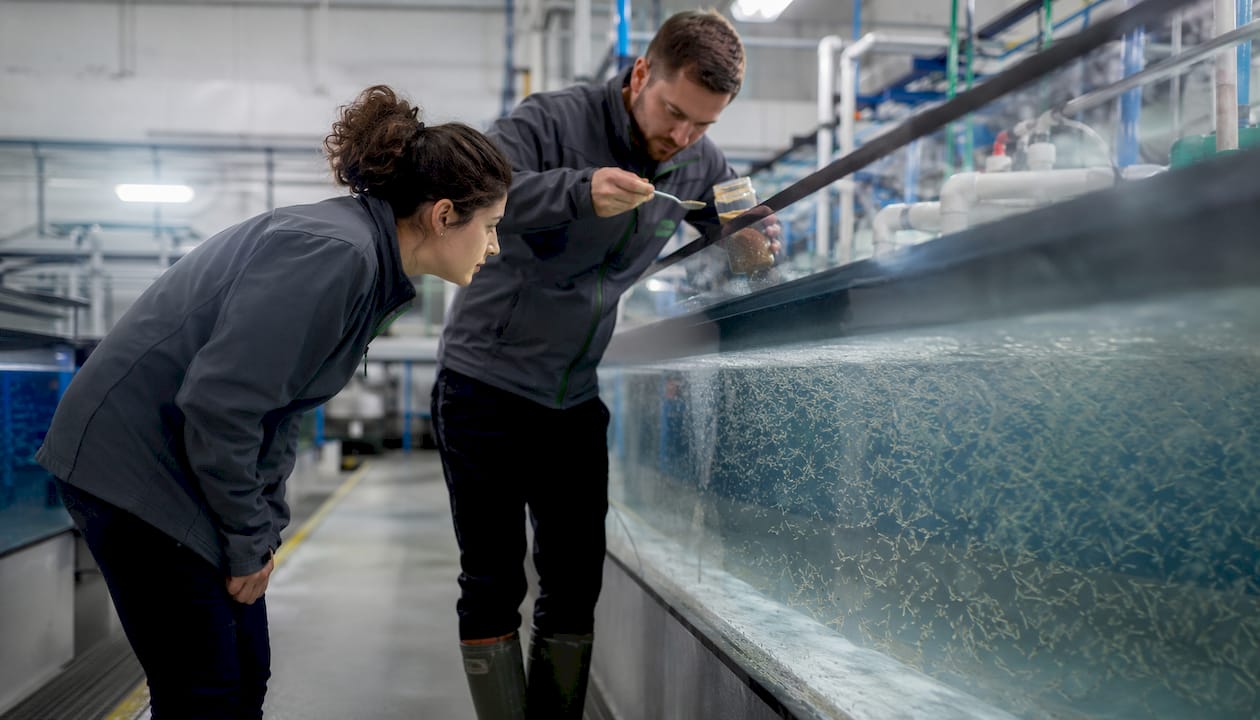
Consistent culture parameters and harvest timing are the operational backbone of reliable live-feed delivery. Variability in culture conditions translates directly to variability in larval nutrition, and that variability is one of the hardest problems to diagnose after the fact.
Culture parameter reference
| Organism | Temperature (°C) | Salinity (g/L) | Target culture density | Harvest timing | Key notes |
|---|---|---|---|---|---|
| Rotifers (Brachionus spp.) | 20–28 | — | — | 4–7 days post-inoculation (batch peak) | Partial harvest + water exchange; monitor ammonium |
| Artemia nauplii | 25–28 | 28–35 | Hatch at ~5 g cysts/L | 24–36 h post-hydration | Instar II for enrichment; rinse before feeding |
| Copepods (calanoid) | 18–25 | 28–35 | 10–50 ind./mL | Continuous harvest or batch at nauplii peak | Technically demanding; monitor algae food supply |
| Paramecium / ciliates | 20–25 | Freshwater | — | Continuous or daily | Oxygen and organics management critical |
| Moina / Daphnia | — | Freshwater | 50–150 ind./mL | Every 2–3 days | Biofloc or algae feeding; low-cost option |
Feeding schedules and delivery. For first-feeding larvae, offer live feed 3–4 times daily at densities that keep prey visible but avoid fouling the tank. A practical starting point for rotifers is 5–10 ind./mL in the larval tank; adjust based on gut fullness checks (larvae with full, colored guts indicate adequate prey density). Artemia nauplii are typically introduced at 0.5–2 ind./mL once larvae are large enough to capture them.
Scaling from hobby to commercial. Hobby breeders can manage rotifer and Artemia cultures in 10–20 L vessels with simple aeration. Commercial hatcheries running continuous production need dedicated culture rooms with temperature control, semi-continuous harvest systems, and enrichment staging areas. The principles are identical; the record-keeping requirements differ. At minimum, log batch ID, enrichment product and dose, enrichment duration, water quality at harvest (temperature, oxygen, ammonium), and larval survival at 7 days post-hatch (dph) for each batch.
Handling best practices. Concentrate harvested live feed through a fine-mesh sieve (53 µm for rotifers, 125 µm for Artemia nauplii), rinse with clean water to remove culture medium, and dilute into the larval tank gradually to avoid organic spikes. Never dump a concentrated culture bolus directly into a larval tank. For transitioning larvae to formulated diets, begin cofeeding with a quality microdiet at 3 dph alongside enriched live feed — this accelerates enzyme development and shortens the live-feed phase without the survival penalty of abrupt weaning.
Managing pathogen risk without sacrificing live-feed benefits
Disease risk from live feeds is real, but it is manageable. Farm-produced, standardized live prey and quarantine practices greatly reduce pathogen introduction compared to wild-harvested sources, and the operational steps to implement them are straightforward.
Wild harvest vs. farmed cultures. Wild zooplankton carry bacterial, viral, and parasitic pathogens that can cause mass mortality in larval tanks. Artemia cyst availability from wild sources is also affected by cyclical weather patterns like El Niño, creating supply unpredictability that compounds the disease risk. Controlled, farmed live-feed cultures reduce both problems: consistent supply and a known, monitored production environment.
Biosecurity checklist for live-feed programs:
- Source verification: obtain live feeds from suppliers with documented production protocols and pathogen-screening records; request certificates of analysis for each batch
- Quarantine new batches: hold new live-feed cultures in isolation for 48–72 hours before introducing them to larval systems; observe for unusual mortality or behavior
- UV treatment: pass incoming water and live-feed culture water through UV sterilization (minimum 30 mJ/cm²) to reduce bacterial and viral load
- Ozone option: low-dose ozone treatment of culture water reduces pathogens but requires careful monitoring to avoid residual ozone reaching larval tanks
- Heated baths: brief exposure to elevated temperature (e.g., 40°C for 30 seconds) can reduce surface pathogens on Artemia cysts before hatching
- Probiotic enrichment: some evidence supports adding beneficial bacterial strains during enrichment to competitively exclude pathogens; use only strains with published aquaculture safety data
- Routine monitoring: test incoming batches for common bacterial pathogens (Vibrio spp., Aeromonas spp.) and run pilot transfers before scaling to full production
Simple screening before a new batch enters larval tanks. Run a 24-hour bioassay: place a sample of the new live-feed batch in a small vessel with 5–10 larvae from your system and observe for abnormal behavior, mortality, or feed refusal. This catches gross contamination events before they propagate through your entire larval cohort.
Pro Tip: Prefer farmed, microalgae-fed cultures over wild-harvested sources whenever possible, and always run a small pilot transfer before scaling. A 48-hour pilot with 50–100 larvae costs almost nothing and can prevent a catastrophic batch loss.
For stocking decisions that balance pathogen risk and nutritional benefits, the general rule holds: the more controlled the production environment, the lower the biosecurity burden on your hatchery.
Matching live food to your target species and larval stage
Always start with mouth gape and prey-capture behavior, then overlay nutrient needs and culture practicality. A feed that is nutritionally perfect but physically uncapturable is useless.
Species decision matrix
| Species type | Recommended live feed class | Typical live-food phase | Enrichment priority |
|---|---|---|---|
| Marine pelagic (sea bass, sea bream, grouper) | Small rotifers → copepod nauplii or enriched Artemia | — | High (DHA/EPA critical) |
| Marine demersal (flounder, halibut) | Rotifers → Artemia nauplii | 20–40 dph | High |
| Freshwater carnivore (pikeperch, perch) | Paramecium / ciliates → Brachionus spp. → Artemia | — | Moderate |
| Freshwater omnivore (tilapia, catfish) | Rotifers or Moina → Artemia or Daphnia | 7–14 dph | Low to moderate |
| Freshwater ornamental (Betta, angelfish) | Infusoria → Moina → Artemia nauplii | — | Moderate |
| Marine ornamental (clownfish, dottyback) | Small rotifers → copepods or Artemia | 10–20 dph | High |
Comparative trials confirm that species selection matters: pikeperch larvae fed Brachionus spp. and Paramecium showed high early survival, while copepods as a follow-up feed outperformed Artemia in survival outcomes. There is no universal sequence — test your target species before committing to a production protocol.
Freshwater-to-saltwater feed switches. When freshwater larvae are fed Artemia nauplii (a saltwater organism), the osmotic and physiological mismatch can reduce survival if the switch is abrupt. Gradual introduction, starting with low densities of rinsed Artemia alongside familiar freshwater prey, reduces this effect. The same logic applies in reverse for marine larvae being transitioned to freshwater-cultured organisms.
Mouth gape as the hard constraint. For stage-by-stage live food selection, measure mouth gape directly at first feeding if you are working with a new species. A practical rule: prey width should be no more than 50% of larval mouth gape at first feeding, increasing as the larvae grow. Offering prey that are too large results in failed capture attempts, energy expenditure without caloric return, and elevated stress.
Quality checks and KPIs for live-feed performance
Track a short set of KPIs to catch nutritional or culture problems early. Waiting for survival data at 14 dph to diagnose a bad enrichment batch means you have already lost two weeks of production.
Quick checks before feeding:
- Motility: >90% of rotifers and Artemia should be actively swimming at feeding time; sluggish or sinking organisms indicate oxygen stress or over-enrichment
- Size range: verify organism size matches the target larval stage using a calibrated eyepiece or image analysis; size drift in rotifer cultures signals strain contamination
- Color and condition: enriched Artemia should show orange-gold coloration from carotenoid uptake; pale or translucent nauplii suggest inadequate enrichment
- Oil globule retention: under a dissecting scope, enriched Artemia nauplii should show visible lipid droplets; absence indicates enrichment failure or excessive holding time
- Water quality proxies: ammonium below 1 mg/L and dissolved oxygen above 6 mg/L in the culture vessel at harvest
Suggested KPIs for trials and production
| KPI | Target range / direction | Measurement point |
|---|---|---|
| Survival to 7 dph | — | Daily count or volumetric estimate |
| Survival to first feeding stages | >50% (marine); >60% (freshwater) | End of live-feed phase |
| Deformity rate | <5% at first feeding stages | Visual screen at weaning |
| Growth rate (SL increase) | Positive daily increment | Measure 10–20 larvae every 3–5 days |
| Enrichment retention proxy | Orange coloration + motility >90% | At harvest, before feeding |
| Gut fullness score | High percentage larvae with colored guts | 2 hours post-feeding |
Trial design notes. For internal hatchery R&D, replicate each treatment at least three times with a minimum of 50 larvae per replicate. Record batch ID, enrichment product and dose, enrichment duration, feeding density, water temperature, and photoperiod. Without replication, you cannot distinguish a real treatment effect from tank-to-tank variation, which is the most common source of misleading hatchery data.
What recent research and Demeterbioscience's experience confirm
The evidence on enrichment timing and microalgae-fed Artemia has sharpened considerably in recent years, and the practical implications are specific enough to act on.
The core finding: prolonged Artemia enrichment (≥18 hours at 2 g Multigain per million Artemia) and early cofeeding with a quality microdiet starting at 3 dph measurably improve aminopeptidase N and chymotrypsin activity and reduce deformity rates compared to shorter enrichment windows or later weaning protocols. These are not marginal improvements — they represent a meaningful shift in larval quality that carries through to grow-out performance.
Research on hatchery live-feed protocols confirms that no artificial diet fully replaces high-quality enriched live food for early-stage larvae. The same work documents that early cofeeding — introducing a microdiet like ProStart alongside enriched live feed from as early as 3 dph — accelerates digestive enzyme development and reduces the deformity rates associated with nutritional gaps during the critical first week. The mechanism is partly nutritional and partly mechanical: the presence of inert particles alongside live prey conditions the gut to process both food types simultaneously.
Demeterbioscience's microalgae-fed, farmed Artemia address one of the most persistent operational problems in live-feed programs: supply variability. Wild Artemia cyst availability fluctuates with El Niño cycles and seasonal lake conditions, which means hatcheries relying on wild-harvest sources face both price volatility and inconsistent hatching rates. Farmed Artemia raised on Dunaliella microalgae provide a consistent nutritional baseline — at least 40% protein content — and reduce the enrichment burden because the animals arrive with better baseline lipid profiles than starved wild-caught nauplii.
For a practical 1–2 week weaning plan: run enriched live feed as the primary diet through day 7, introduce a quality microdiet at 3 dph in cofeeding mode, and begin reducing live-feed density from day 10 onward while monitoring gut fullness scores and survival daily. If survival drops below target at any point, extend the live-feed phase rather than accelerating weaning. The brine shrimp nutrition details that inform this approach are well-documented and worth reviewing before designing your first enrichment trial.
Key Takeaways
Live food drives early larval survival through movement-triggered feeding behavior, digestive enzyme stimulation, and bioavailable HUFA delivery that formulated feeds cannot yet reliably match.
| Point | Details |
|---|---|
| Enrich before feeding | Artemia enrichment with sufficient duration and appropriate dosing maximizes DHA incorporation into polar lipids. |
| Match feed to mouth gape | Prey width should be appropriately smaller than larval mouth gape; use ciliates or small rotifers before introducing larger prey like Artemia. |
| Start cofeeding early | Introducing a quality microdiet at 3 dph alongside live feed accelerates enzyme development and shortens the live-feed phase. |
| Prioritize farmed sources | Farmed, microalgae-fed cultures reduce pathogen risk and supply variability compared to wild-harvested zooplankton. |
| Demeterbioscience Artemia | Demeterbioscience's Dunaliella-fed, farmed Artemia deliver consistent at least 40% protein and a stable nutritional baseline for enrichment programs. |
A producer's perspective on what actually works in the hatchery
The research on enrichment timing is solid, but the gap between a published protocol and a working hatchery protocol is wider than most papers acknowledge. The single most reliable operational adjustment is not the enrichment product you choose — it is the discipline of completing enrichment before larvae need the feed, not during the feeding window. Hatcheries that rush enrichment to 8–10 hours because of scheduling pressure consistently see worse outcomes than those that build the 18-hour window into their production calendar as a non-negotiable step.
The second thing that gets underestimated is water quality during enrichment. Enrichment vessels are high-biomass, high-oxygen-demand environments. A dissolved oxygen crash at hour 12 of an 18-hour enrichment run does not just stress the Artemia — it degrades the lipid profile you spent 12 hours building. Continuous aeration monitoring, not just a check at harvest, is the difference between a protocol that works on paper and one that works in production.
Demeterbioscience integrates enrichment QA into its production workflow by using Dunaliella-fed Artemia as the baseline, which means the animals arrive with better lipid profiles than starved wild-caught nauplii and respond more consistently to supplemental enrichment. For customers running their first enrichment program, the troubleshooting tip that saves the most time is this: if your enriched Artemia look pale and sluggish at harvest, check oxygen first, enrichment dose second, and enrichment duration third — in that order. Most failures trace back to oxygen, not product choice.
Demeterbioscience's farmed Artemia for your breeding program
Demeterbioscience's microalgae-fed, farmed Artemia give breeders a practical starting point that removes two of the biggest variables in live-feed programs: supply unpredictability and inconsistent baseline nutrition.
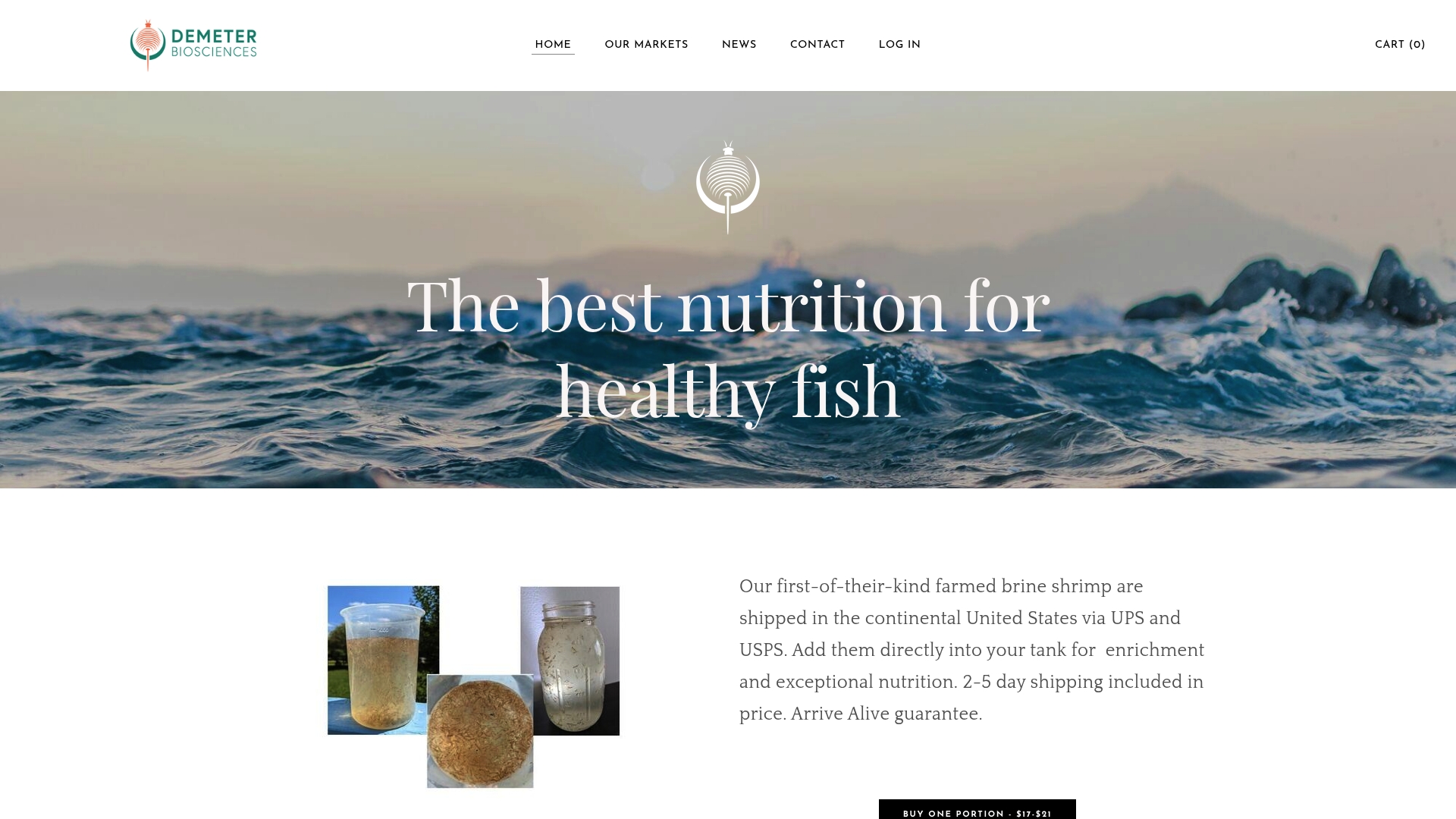
The Artemia are raised on Dunaliella microalgae in land-based, controlled systems, delivering at least 40% protein content and a consistent lipid profile that responds predictably to supplemental enrichment. That consistency matters most during weaning trials, where a variable baseline makes it impossible to isolate the effect of your enrichment protocol from batch-to-batch nutritional noise. The product suits starter-feed supplementation, cofeeding during the weaning window, and bulk institutional supply for research facilities and hatcheries running continuous production.
For a pilot trial, order a single batch of live brine shrimp, run a 7-day survival and growth trial alongside your current live-feed source, and record survival to 7 dph, gut fullness scores at 2 hours post-feeding, and deformity rate at weaning. That data set is enough to make a production decision. Research institutions and hatcheries needing larger volumes can place a bulk order or reach out directly to discuss trial quantities and shipping logistics.
Useful sources
- Utilization of live feeds in fish larviculture: A review — Comprehensive review of live-feed organisms, behavioral mechanisms, enrichment rationale, and the role of cofeeding in commercial larviculture.
- Boosting hatchery success: effective live feed and microdiet protocols for larval rearing efficiency — Documents specific enrichment dosing (2 g Multigain/million Artemia; ≥18 h duration) and early cofeeding effects on enzyme activity and deformity rates.
- Enhancement of Live Food Nutritional Status with Essential Nutrients for Improving Aquatic Animal Health: A Review — Reviews enrichment products (Super Selco, DHA Selco), bioencapsulation methods, and comparative HUFA profiles across live-feed organisms.
- FA167: Choosing an Appropriate Live Feed for Larviculture of Marine Fish (UF/IFAS) — Practical extension guide covering rotifers, brine shrimp, and copepods with size, nutrition, and culture protocol comparisons for marine hatcheries.
- Suitability of Different Live Feed for First Feeding of Freshwater Fish Larvae — Species-specific trial data including pikeperch results comparing Brachionus spp., Paramecium, and Artemia for freshwater first feeding.
- Recent Trends in Live Feeds for Marine Larviculture: A Mini Review (Frontiers in Marine Science) — Covers emerging live-feed organisms (ciliates, cladocerans, bivalve trochophores), production innovations, and superintensive rotifer culture systems.
- Manual on the Production and Use of Live Food for Aquaculture (FAO) — FAO reference manual covering microalgae, rotifers, Artemia, copepods, and natural zooplankton production techniques and feeding applications.
- Demeterbioscience — Live Brine Shrimp Product — Product overview describing Dunaliella-fed, farmed Artemia production approach, protein content, and ordering options.