
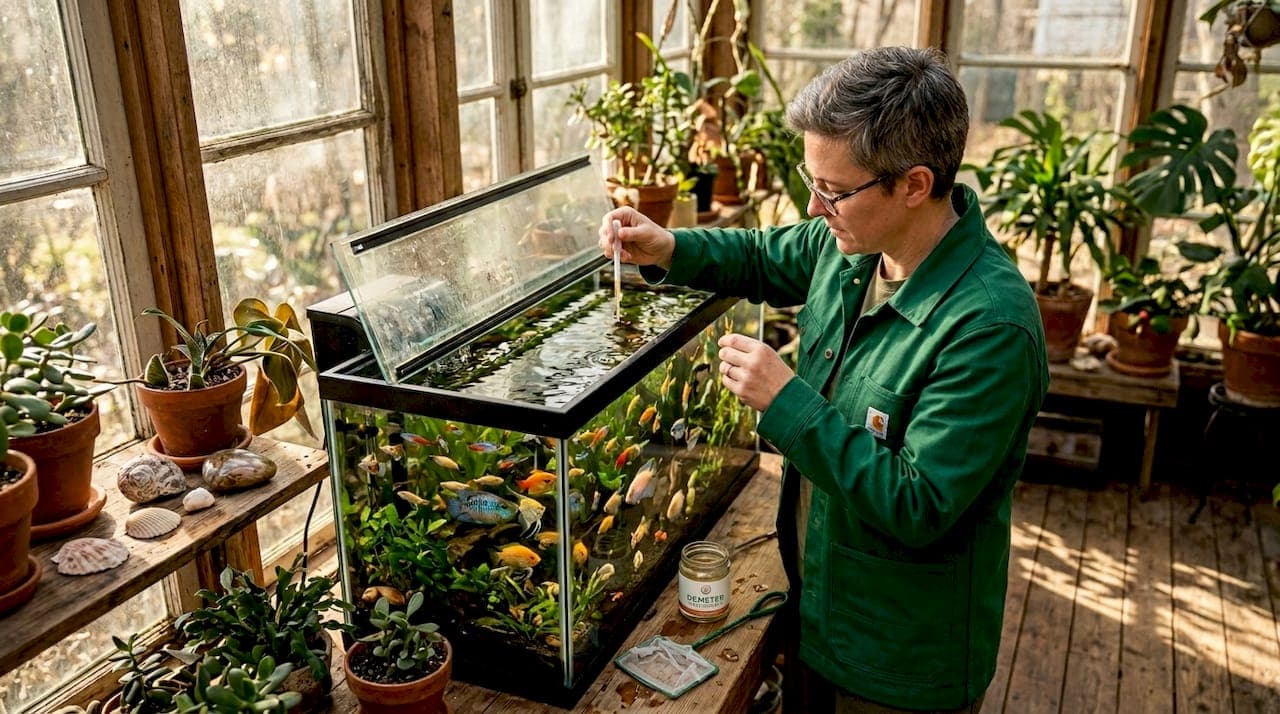
Most aquarium hobbyists hear "live fish food" and think one of two things: it's for serious breeders only, or it's a disease waiting to happen. Neither is accurate. Understanding why stock live fish food products matters gives you a real edge in fish health, natural behavior, and breeding success. The reality is that live foods sit at the intersection of superior nutrition, species-appropriate feeding, and aquarium enrichment. When managed properly, they are one of the most powerful tools in a hobbyist's feeding program.
Table of Contents
- Key Takeaways
- Why stock live fish food products: the nutritional case
- Risks of stocking live food and how to handle them
- Choosing and stocking live food: practical guidance
- Live food for breeding and fry development
- My honest take on live fish food
- Healthier fish start with Demeterbioscience
- FAQ
Key Takeaways
| Point | Details |
|---|---|
| Live food boosts nutrition | Live foods deliver high protein, natural enzymes, and essential nutrients that dry feeds often cannot replicate. |
| Disease risk is manageable | Proper sourcing, quarantine, and reputable suppliers dramatically reduce the biosecurity risks of live food. |
| Breeding results improve | Protein-rich live diets condition fish for spawning and support fry survival rates significantly. |
| Diet rotation prevents deficiency | Feeding only one live food type, especially thiaminase-heavy species, creates nutritional imbalances over time. |
| Backup sourcing matters | Reliable supply planning prevents feeding gaps during critical periods like fry rearing. |
Why stock live fish food products: the nutritional case
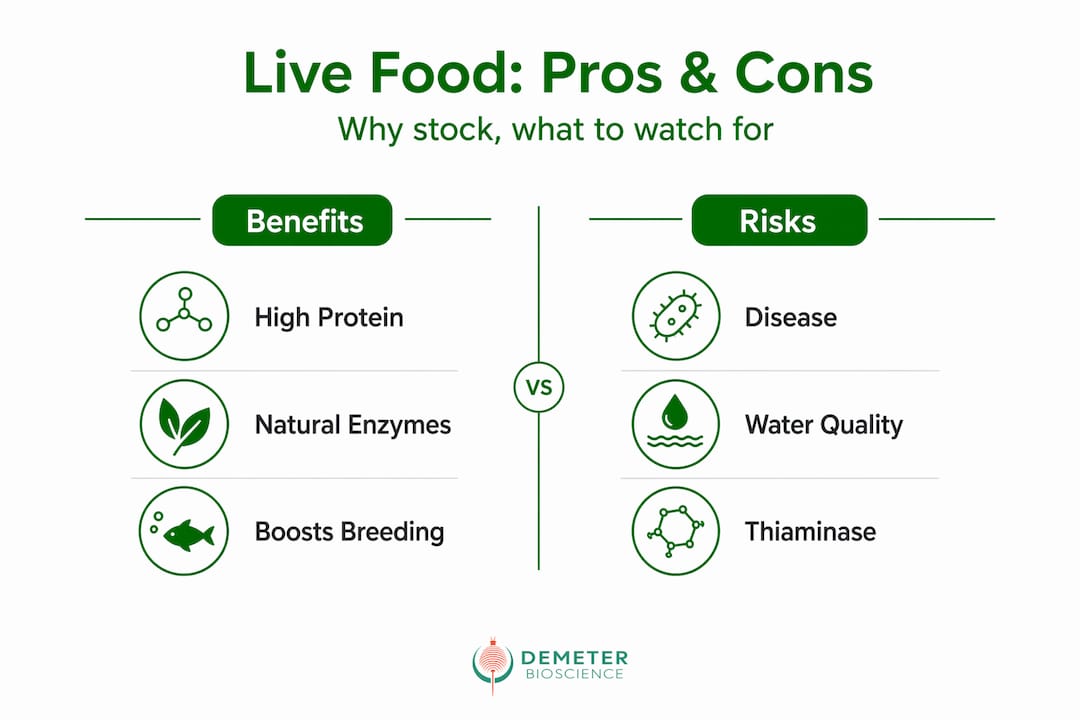
The nutritional gap between a quality flake food and a live organism is not subtle. Live foods carry intact proteins, digestive enzymes, fatty acids, and micronutrients in forms that fish can absorb far more efficiently than processed pellets. Brine shrimp, for example, provide complete amino acid profiles. Daphnia act almost as a digestive aid, containing cellulose that helps clear the gut. Bloodworms deliver iron-rich protein that many predatory species thrive on.
What is live fish food at its core? It is whole-organism nutrition, where the prey item's own biochemistry becomes the fish's nutritional intake. Nothing is denatured by heat processing. Nothing is lost to extended shelf storage.
The live food for aquarium fish that gets the most attention from experienced keepers is brine shrimp (Artemia salina). These small crustaceans are high in protein and, when gut-loaded with quality microalgae like Dunaliella, become nutritional powerhouses. Protein-rich live diets are used specifically for breeding conditioning and fry feeding because of the dramatic difference in growth rates and survival they produce.
Beyond raw nutrition, the behavioral dimension is significant. Live prey triggers hunting behavior that dry food simply cannot replicate. Fish become more active, more alert, and often display intensified coloration after consistent live feeding. Stress drops. Immune response improves. The aquarium looks more alive because the fish are more alive.
A few practical notes on live food for aquarium fish:
- Brine shrimp (Artemia): High protein, highly digestible, excellent for fry and small-mouthed species.
- Daphnia: Low calorie, great for digestive health; ideal for overweight fish or those prone to bloat.
- Bloodworms (Chironomid larvae): Dense protein, beloved by bettas, cichlids, and many predatory species.
- Microworms: Microscopic size makes them perfect first foods for very small fry.
- Vinegar eels: Excellent starter live food for nano species and early-stage fry.
Pro Tip: Never feed live food as an exclusive diet. Rotate it with a quality formulated staple to prevent nutritional gaps that single-source feeding creates over time.
Risks of stocking live food and how to handle them
The concerns around live fish food are real. Dismissing them would be irresponsible. But they are also well-understood and manageable with consistent practice.
The biggest concern is disease introduction. Live foods can spread bacteria, fungi, and parasites into your aquarium system, and once a pathogen establishes itself in a closed tank, it can be difficult to eradicate. Wild-caught or bait shop feeder fish carry particularly high pathogen loads and should be avoided outright.
A less-discussed but serious risk involves thiaminase. Feeder goldfish contain thiaminase, an enzyme that destroys vitamin B1 (thiamine) in the fish eating them. Long-term thiaminase exposure causes neurological symptoms and, in severe cases, death. Any keeper feeding predatory species like large cichlids or pufferfish exclusively on feeder goldfish is creating a slow nutritional emergency.
Then there is water quality. Uneaten live food decays quickly. A single overfeeding session can spike ammonia within hours. Bloodworms in particular break down fast and can foul a tank if portions are not controlled.
| Risk | Level | Mitigation |
|---|---|---|
| Disease and parasite introduction | High | Source from reputable vendors; quarantine feeder fish |
| Thiaminase toxicity | Medium-High | Rotate live food types; avoid exclusive feeder goldfish diets |
| Water quality degradation | Medium | Feed controlled portions; remove uneaten food within minutes |
| Supply chain disruption | Low-Medium | Maintain backup cultures or frozen food reserves |
| Nutritional imbalance | Medium | Combine with formulated staple diets consistently |
The comparison with frozen food is worth making directly. Frozen food kills most aquarium parasites through flash-freezing and is a genuinely safer option for beginners or those managing heavily stocked tanks. Frozen brine shrimp, frozen bloodworms, and frozen Daphnia deliver much of the nutritional benefit of live food without the biosecurity exposure. Many experienced hobbyists use a mix: live food for targeted enrichment and breeding conditioning, frozen food as the primary supplement to staple diets.
Pro Tip: When starting with live food, try farmed live brine shrimp over wild-caught or bait shop feeders. Controlled cultivation environments dramatically reduce pathogen exposure and deliver consistent nutrition.
Choosing and stocking live food: practical guidance
Picking the right live food starts with knowing your fish. A 3-inch betta does not need the same food as a 10-inch predatory cichlid. Match the prey size to the fish's mouth, and match the nutritional profile to the species' natural diet.
Here is a practical decision process for selecting live food:
- Research your species' natural diet. Carnivores need high-protein live prey. Omnivores benefit from variety. Herbivorous fish often do poorly on protein-heavy live feeding.
- Match prey size to fish size. A fish should be able to consume the live food in one to three bites. Too large causes stress; too small is inefficient.
- Start with low-risk options. Brine shrimp and Daphnia carry lower disease risk than feeder fish and are appropriate starting points for most hobbyists.
- Build in rotation. Alternate brine shrimp, Daphnia, bloodworms, and microworms on a weekly or bi-weekly cycle to prevent nutritional deficiencies and keep fish engaged.
- Plan your supply chain. Experienced keepers treat live food sourcing as a supply chain issue and build in backup options before they need them.
For feeding frequency and portions, the goal is simple: offer what the fish consumes in two to three minutes and remove anything left over. Overfeeding live food is one of the fastest ways to crash water quality in a smaller tank.
The advantages of stocking live food are most fully realized when you combine them strategically:
- Use live food two to three times per week as a supplement, not a daily staple.
- Maintain a small home culture of brine shrimp or Daphnia so you are never dependent on a single external source.
- Keep quality frozen food as a reliable backup when live cultures are not available.
- Understand your fish's live food for freshwater fish needs specifically, since requirements vary widely between species and life stages.
Live food for breeding and fry development
If there is one area where the importance of live fish feed becomes undeniable, it is breeding. Hobbyist breeders who struggle with conditioning their fish for spawning often see immediate improvement when they introduce a high-protein live food regimen two to three weeks before attempting a spawn.
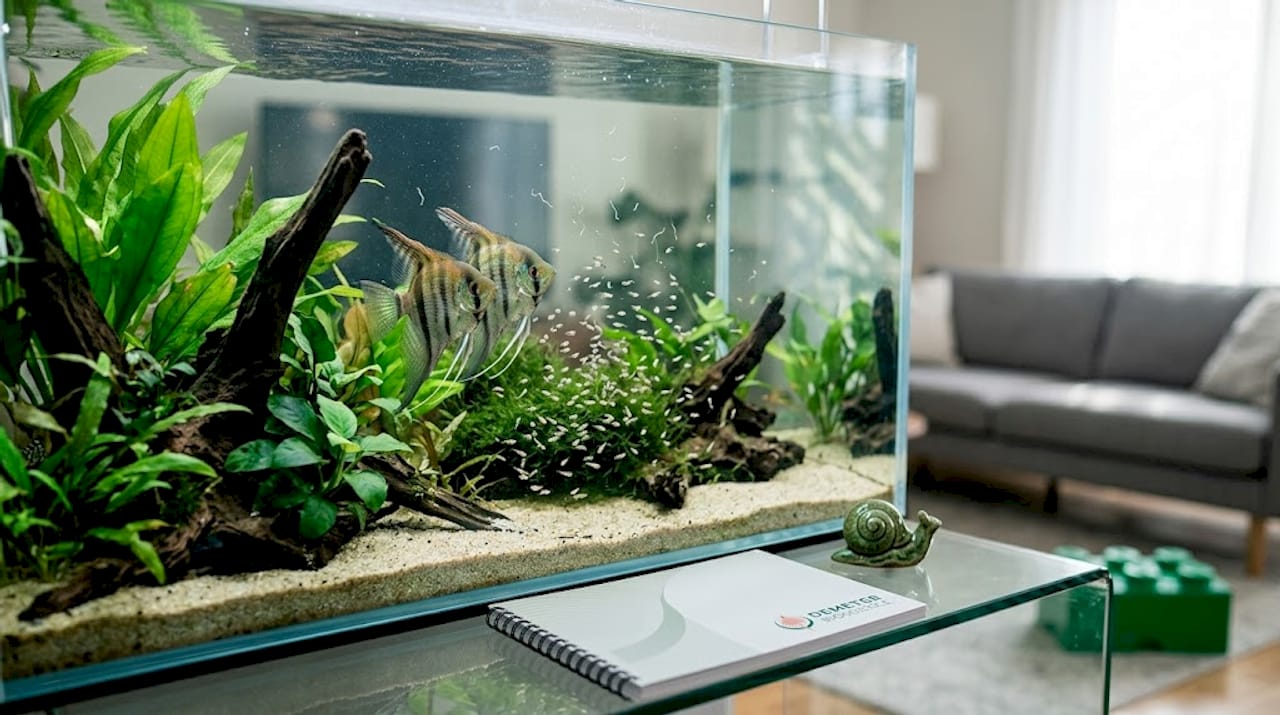
The science behind this is straightforward. Live foods support optimal breeding condition because they are protein-dense and trigger metabolic responses tied to seasonal abundance in the wild. When a fish's nervous system detects live, moving prey in abundance, it registers environmental conditions as favorable for reproduction.
The benefits of live fish food for breeding and fry development are well-documented among serious hobbyists:
- Conditioning adults: Two weeks of twice-daily live feeding visibly improves body condition, color saturation, and spawning readiness in most species.
- Triggering spawning behavior: Live prey movement cues natural reproductive responses in many cichlids, killifish, and bettas.
- Fry first foods: Newly hatched brine shrimp (nauplii) and microworms are perfectly sized for most fry and deliver the protein density needed for rapid early growth.
- Supporting fry immune development: Whole-organism nutrition from live foods contributes to stronger immune responses during the most vulnerable life stage.
- Reducing fry mortality: Fry raised on live food alongside quality formulated micro-diets consistently show better survival rates than those raised on dry food alone.
The key is not to rely on live food exclusively even during breeding programs. Live foods should supplement, not replace, staple diets to maintain the nutritional completeness that supports sustained health through the breeding cycle.
My honest take on live fish food
I've watched hobbyists avoid live food for years out of fear, and I've also watched keepers overcorrect and feed nothing but feeder fish, convinced they were doing something impressive. Both approaches miss the point.
What I've found actually works is treating live food as a precision tool, not a dietary philosophy. When I see a fish showing dull color, low activity, or repeated failure to spawn, live food is one of the first things I introduce. The response is often visible within a week. That kind of feedback is hard to argue with.
The lesson I keep coming back to on sourcing is this: where your live food comes from matters more than which type you choose. A brine shrimp raised in a controlled, algae-fed system with consistent protein content is worth ten times what you pull from a bait shop bin. The premium fish food category exists because quality input produces visible output in your fish.
My advice for anyone starting out is to run one controlled experiment. Pick a species you know well, introduce quality live brine shrimp twice a week for a month, and keep notes. You will have your own answer to why stock live fish food products before the month is out.
— Demeter
Healthier fish start with Demeterbioscience
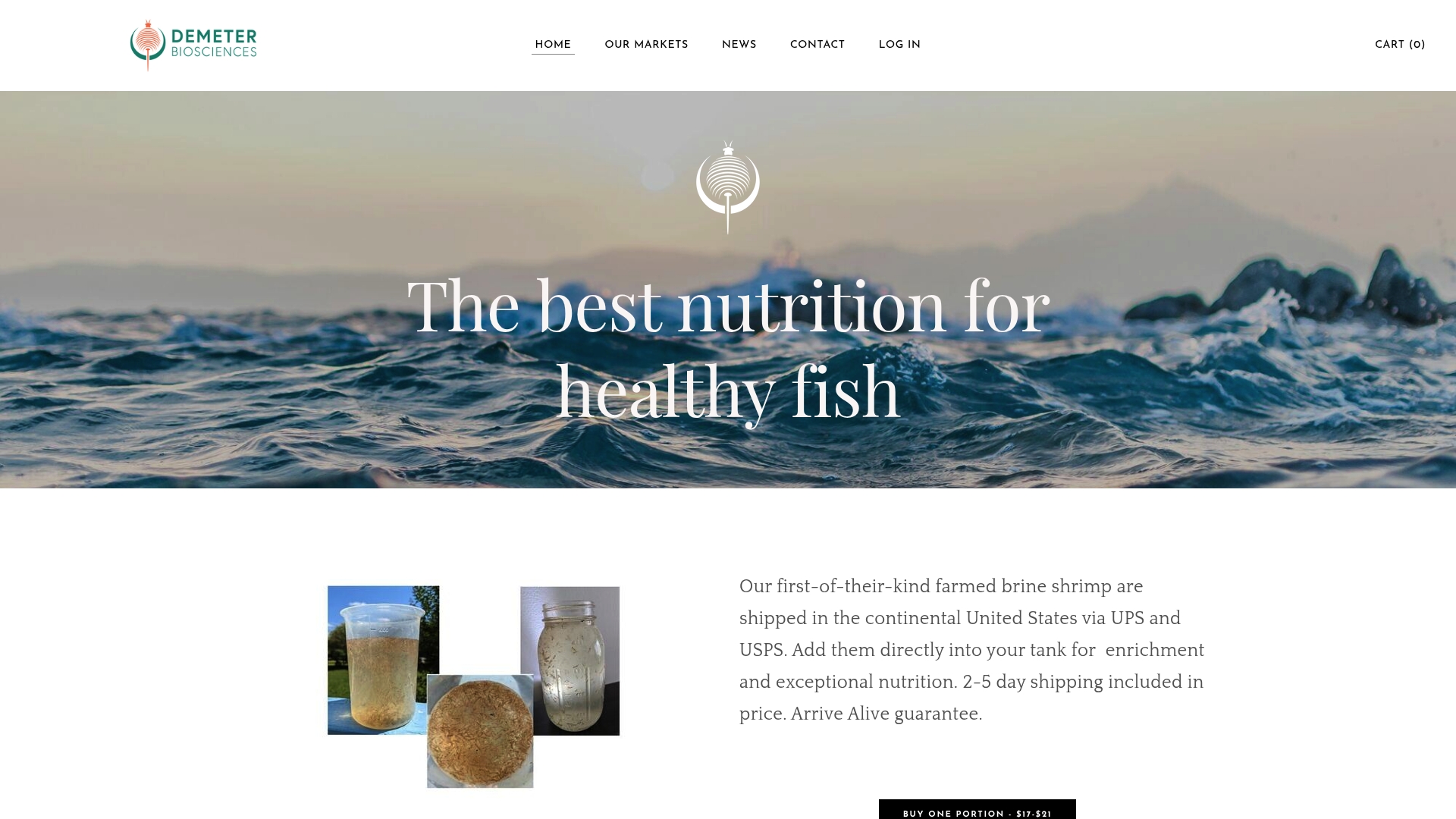
At Demeterbioscience, we produce farmed live brine shrimp fed exclusively on Dunaliella microalgae, delivering a minimum of 40% protein content with none of the variability or pathogen exposure that comes from wild-harvested sources. Our controlled, land-based cultivation system means you get consistent nutrition in every shipment, whether you order direct-to-consumer, through a monthly subscription, or as a bulk retail package for your local fish store. If you're serious about the live fish food advantages we've covered here, explore our live brine shrimp products or reach out directly to find the right fit for your aquarium or breeding program.
FAQ
What is live fish food?
Live fish food refers to living organisms fed to aquarium fish as part of their diet, including brine shrimp, Daphnia, bloodworms, and microworms. These foods provide whole-organism nutrition with intact proteins, enzymes, and fatty acids.
Why choose live fish food over dry pellets?
Live food stimulates natural hunting behavior, delivers higher bioavailability of nutrients, and supports breeding conditioning more effectively than dry pellets alone. It works best as a supplement to a quality staple diet, not a replacement.
What are the main risks of live fish food?
The primary risks are disease and parasite introduction, thiaminase toxicity from certain feeder species, and water quality degradation from uneaten food. Sourcing from reputable vendors and removing uneaten food promptly addresses most of these concerns.
How often should I feed live food to my fish?
Two to three times per week is a practical frequency for most hobbyists, with portion sizes kept to what fish consume in two to three minutes. This balance supports health without compromising water quality.
Is live food necessary for breeding aquarium fish?
Live food is not strictly necessary, but it significantly improves breeding outcomes. Protein-rich live diets condition adults for spawning and support fry survival, making them a strong tool for anyone pursuing breeding programs.