
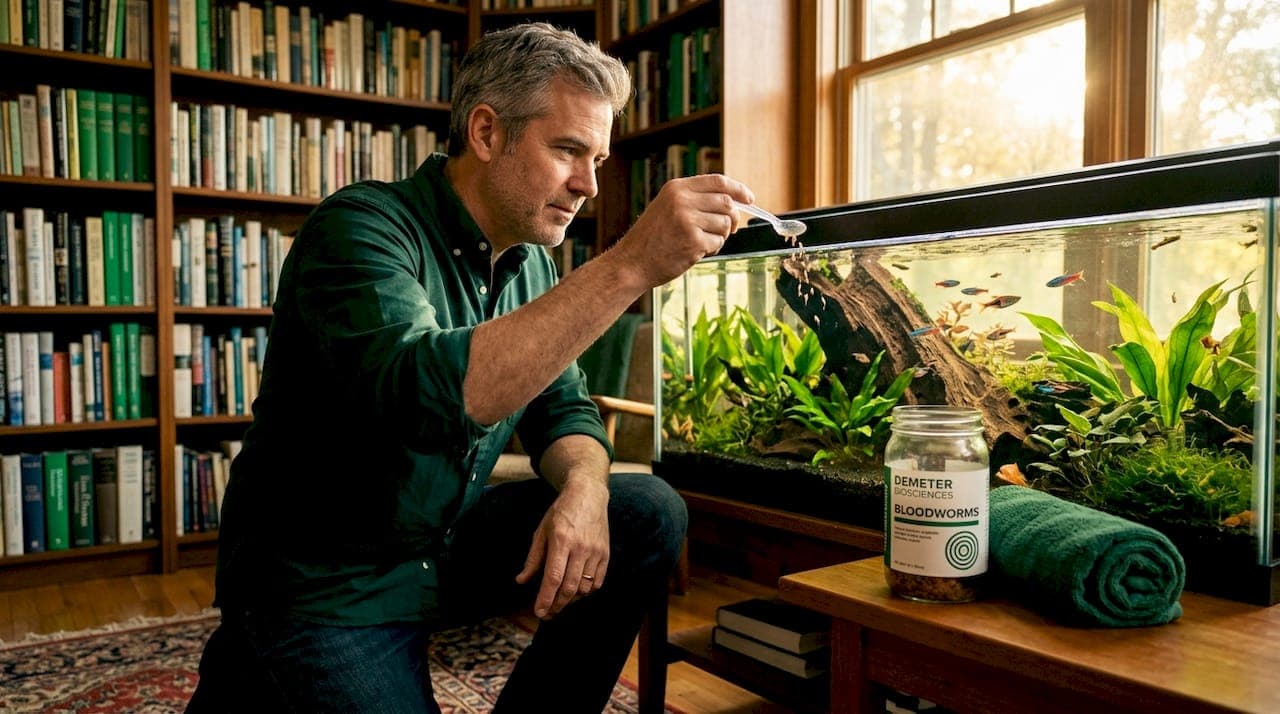
Finding sustainable, nutritious live food for freshwater fish is one of the more underrated challenges in the hobby. Most guides tell you what to feed but not how to choose live food freshwater fish actually thrive on across different life stages, species, and tank setups. Whether you're conditioning breeders, raising fry, or simply trying to bring out the best in your community tank, the right live food makes a measurable difference. This guide covers the top live food types, how to culture them at home, and how to feed them safely and effectively.
Table of Contents
- Understanding the nutritional needs of freshwater fish
- Common live food types for freshwater fish and their uses
- Culturing live foods for freshwater fish: equipment and methods
- Maintaining hygiene and avoiding common live food culture problems
- Integrating live food into your freshwater fish feeding routine
- Perspective: why sustainable live food culture beats commercial feeds
- Get started with quality live food products from Demeter Biosciences
- Frequently asked questions
Key Takeaways
| Point | Details |
|---|---|
| Protein matters | Choose live foods providing high protein suited to your fish's growth stage for optimal health. |
| Culture basics | Culturing brine shrimp, microworms, and daphnia at home offers fresh nutrition and sustainability. |
| Hygiene first | Maintain cultures carefully and quarantine live foods to avoid pathogens in your aquarium. |
| Feed smart | Use live foods as supplements, rotate types, and feed appropriate amounts for vitality and water quality. |
| Sustainable benefits | Cultured live foods enhance fish behavior, nutrition, and your aquarium’s ecological balance effectively. |
Understanding the nutritional needs of freshwater fish
Before you can choose live food freshwater fish will genuinely benefit from, you need to understand what they're actually asking for nutritionally. Freshwater fish are not a monolith. A betta conditioning for spawning needs something very different from a goldfish managing digestive sluggishness, and both need something different from a tank of newly hatched cichlid fry.
Protein is the foundation. Most freshwater fish require diets ranging from 30% to 55% protein depending on species and life stage. Fry and breeding fish sit at the high end of that range. Adult fish in maintenance mode can tolerate less, but live food still delivers protein in a more bioavailable form than most processed alternatives.
Key nutritional considerations when selecting live foods:
- Protein content: Drives growth, tissue repair, and reproductive success
- Fat content: Supports energy and egg development in breeding fish
- Fiber: Aids gut motility, especially in herbivorous or omnivorous species like goldfish
- Carotenoids: Natural pigments in foods like brine shrimp that enhance coloration
- Enzyme activity: Live foods contain active digestive enzymes that processed feeds lose during manufacturing
Here's how the top live foods stack up nutritionally, based on protein and use profiles for 2026:
| Live food | Protein content | Key benefit | Best for |
|---|---|---|---|
| Bloodworms | 55% | High protein, easy to digest | Adult growth and conditioning |
| Brine shrimp | 60% | Carotenoids, ideal protein ratio | Fry and breeding fish |
| Daphnia | 42% | High fiber, stimulates hunting | Goldfish, cichlids, picky eaters |
| Microworms | 45% | Small size, easy to culture | Tiny fry, bridge feeding |
| Tubifex worms | 50%+ | Rich conditioning food | Breeders (with caution) |
The takeaway: no single food covers every nutritional base. Rotating protein-rich live feeds across your feeding schedule is how you build genuinely healthy fish rather than fish that just survive.
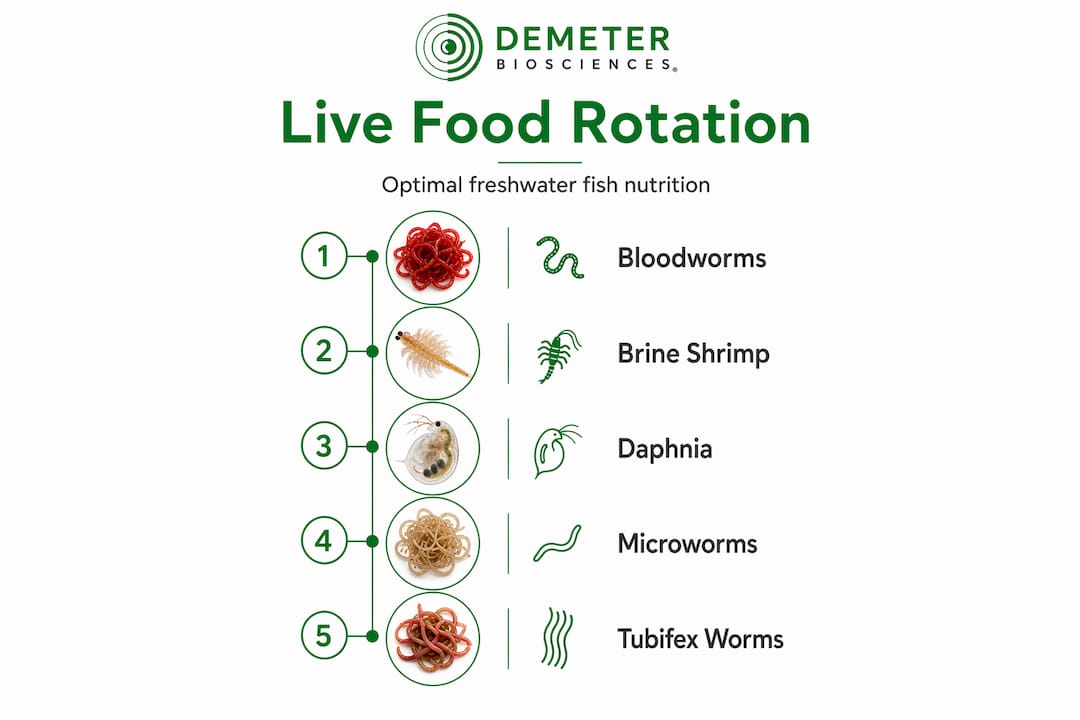
Now that you understand fish nutritional needs, let's explore the top live food types available and their specific benefits.
Common live food types for freshwater fish and their uses
Bloodworms, brine shrimp, and daphnia are the three most widely used live foods in 2026, each with distinct strengths. But the full freshwater fish live food options picture includes several more worth knowing.
Bloodworms are the workhorse of the hobby. At 55% protein, they're easy to digest, accepted by almost every carnivorous and omnivorous freshwater species, and excellent for conditioning adult fish before spawning. Feed them 2 to 3 times weekly as a supplement.
Brine shrimp are arguably the most versatile live food in the hobby. At 60% protein, they're ideal for hatching brine shrimp for fry because the nauplii (newly hatched larvae) are tiny enough for most fry to consume within hours of hatching. The natural carotenoids also intensify color in breeding fish.
Daphnia punch above their weight for digestive health. Their fibrous exoskeleton acts as a natural laxative, making them perfect for goldfish prone to constipation or cichlids that tend to overeat. They also trigger hunting instincts in picky fish that ignore flake food.
Microworms are the unsung hero for fry keepers. Microworms contain approximately 45% protein and can be cultured in 3 to 5 days at 68 to 78°F using oatmeal and yeast, producing harvestable worms within one week. They're small enough for fish fry that can't yet take brine shrimp nauplii.
Tubifex worms are highly effective for conditioning breeders but carry real disease risks when sourced from the wild. Frozen or cultured tubifex is a safer path for most hobbyists.
| Live food | Protein | Feeding frequency | Best life stage | Risk level |
|---|---|---|---|---|
| Bloodworms | 55% | 2-3x weekly | Adults | Low |
| Brine shrimp | 60% | Daily (fry), 3x weekly (adults) | All stages | Low |
| Daphnia | 42% | 2-3x weekly | Adults, picky eaters | Low |
| Microworms | 45% | Daily | Fry | Very low |
| Tubifex | 50%+ | 1-2x weekly | Breeders | Moderate to high |
Pro Tip: Never rely on a single live food source for more than two consecutive weeks. Rotating your freshwater fish diet choices prevents nutritional gaps and keeps fish from becoming fixated on one food type, which makes future diet changes harder.
With live foods identified, next we cover how to prepare and culture these options sustainably at home.
Culturing live foods for freshwater fish: equipment and methods
Home culturing is where this hobby gets genuinely interesting. You stop being a consumer and start being a producer. The upfront investment is minimal; the payoff is a continuous, fresh supply of live food on your own schedule.
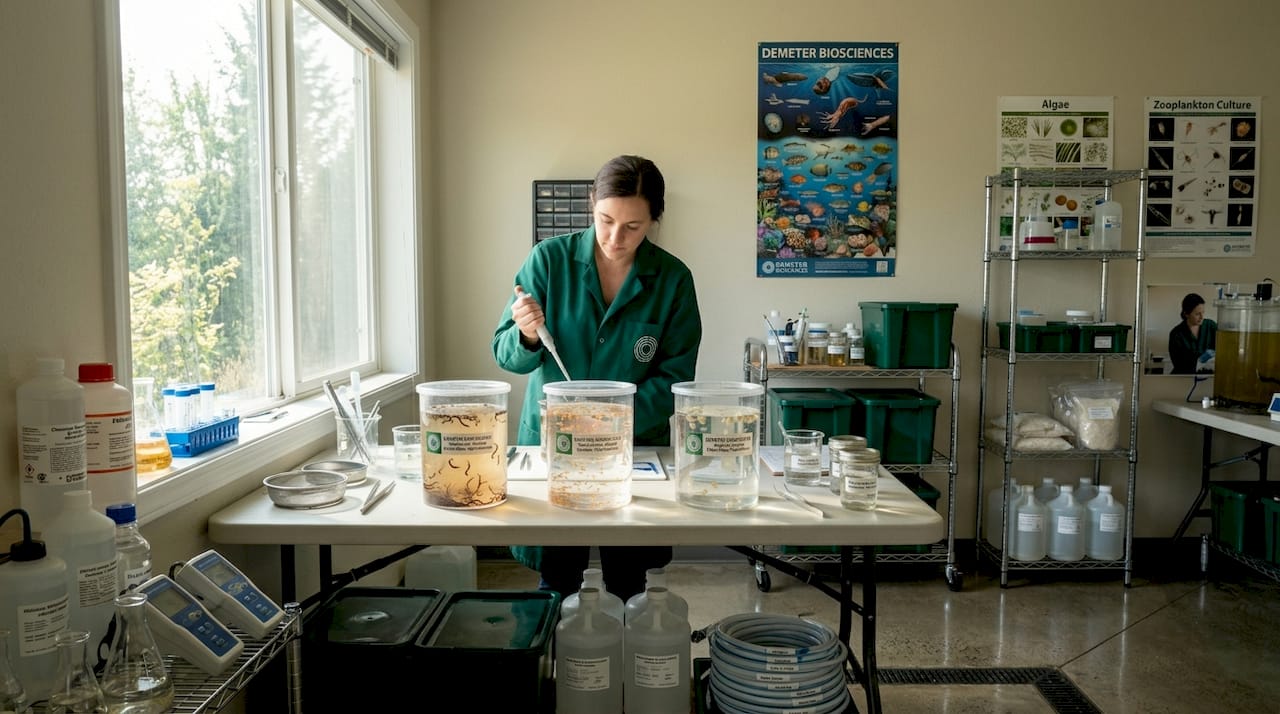
Brine shrimp: Brine shrimp hatching achieves nauplii emergence in 18 to 36 hours at 78 to 82°F in 1.020 to 1.030 salinity water with constant aeration. You need a conical hatchery vessel, an air pump, a light source, and quality cysts. Harvest nauplii by turning off the air, letting shells float, and siphoning the live shrimp from the bottom.
Microworms: Culture microworms in a shallow container with a thin layer of cooked oatmeal inoculated with a starter culture and a pinch of dry yeast. Keep at 68 to 78°F. Within 3 to 5 days, worms will climb the container walls for easy harvesting with a damp finger or brush.
Daphnia: Daphnia cultures require dechlorinated water, temperatures of 65 to 72°F, gentle aeration, and regular feeding with microalgae or yeast. A 5 to 10 gallon container works well. Harvest every 2 to 3 days with a fine mesh net.
| Culture type | Temperature | Setup time | Harvest frequency | Key feed |
|---|---|---|---|---|
| Brine shrimp | 78-82°F | 18-36 hours | Daily | Saltwater + cysts |
| Microworms | 68-78°F | 3-5 days | Every 1-2 days | Oatmeal + yeast |
| Daphnia | 65-72°F | 1-2 weeks | Every 2-3 days | Microalgae or yeast |
Step-by-step setup for a beginner brine shrimp hatchery:
- Fill a conical vessel with dechlorinated water and dissolve marine salt to achieve 1.025 salinity
- Add brine shrimp cysts at roughly 1 teaspoon per liter
- Attach an air stone connected to a pump to keep cysts suspended
- Position a lamp 6 to 8 inches away to maintain temperature and stimulate hatching
- After 24 hours, turn off the air and wait 10 minutes for shells to separate
- Siphon live nauplii from the bottom through a fine mesh into a rinse cup
- Rinse thoroughly with fresh water before feeding
Pro Tip: Keep two or three staggered microworm cultures running at different stages. When one culture starts declining (usually after 2 to 3 weeks), you always have a fresh one ready. This prevents the dreaded "culture crash" that leaves fry without food at a critical growth window.
For daphnia, feeding with microalgae rather than yeast produces healthier, more nutritious daphnia. Yeast works in a pinch but can foul water quickly if overfed.
With culture basics covered, we'll now focus on common issues and best practices to keep live food cultures healthy and fish safe.
Maintaining hygiene and avoiding common live food culture problems
Live cultures are living systems. They can crash, get contaminated, and introduce pathogens into your tank if you're not careful. This is the part most feeding guides gloss over.
Key hygiene practices for safe live food cultures:
- Source responsibly: Wild-sourced tubifex worms carry diseases; cultured or frozen options are safer, and quarantine before feeding is always worth the extra step
- Rinse before feeding: Always rinse brine shrimp nauplii thoroughly to remove unhatched cyst shells, which can irritate fish digestive tracts
- Replace culture media regularly: Microworm containers should be refreshed every 2 to 3 weeks to prevent bacterial or fungal overgrowth
- Watch for warning signs: Foul odor, slimy textures, or dramatically slowed reproduction all signal contamination
- Quarantine new cultures: Before introducing any new live food source to a breeder tank, hold it separately for 48 to 72 hours and observe
- Freeze tubifex as a default: For beginners, frozen tubifex eliminates pathogen risk while preserving most nutritional value
"Live foods require consistent hygiene to control pathogen risk, even with their clear nutritional advantages over processed feeds."
The most common culture failure is overfeeding the culture itself, not the fish. Excess food in a daphnia or brine shrimp culture fouls the water, crashes oxygen levels, and wipes out your population overnight. Feed cultures lightly and frequently rather than heavily and rarely.
Pro Tip: If you suspect a culture is contaminated, don't try to save it. Start fresh. The cost of a new starter culture is trivial compared to the cost of treating a tank full of sick fish. For expert advice on live food safety, reaching out to a specialist before a problem escalates is always the smarter move.
After ensuring healthy cultures, let's explore how to integrate live foods effectively into your fish feeding routine and monitor results.
Integrating live food into your freshwater fish feeding routine
Live food works best as part of a structured feeding routine, not as an occasional treat. The difference between hobbyists who see dramatic improvements and those who don't usually comes down to consistency and rotation.
For adult fish, feed live foods 2 to 4 times per week depending on species; fry require daily feedings for optimal growth. Adult fish should still receive a quality base diet of pellets or flakes on non-live-food days.
For fry:
- Feed newly hatched brine shrimp or microworms twice daily in small portions
- Increase portion size gradually as fry grow and begin accepting larger prey
- Transition to daphnia or chopped bloodworms at 3 to 4 weeks depending on species size
- Introduce dry food slowly at 4 to 6 weeks to build dietary flexibility
For adult fish:
- Monday and Thursday: bloodworms or tubifex (conditioning and protein)
- Wednesday: daphnia (digestive reset and hunting stimulation)
- Saturday: brine shrimp (color enhancement and variety)
- Remaining days: quality pellet or flake base diet
Pro Tip: Watch your fish for 5 minutes after introducing a new live food. Increased activity, brighter color, and immediate pursuit of prey are signs the food is working. Disinterest after 3 to 4 minutes usually means the food is too large, moving too slowly, or simply not suited to that species.
Live food also plays a real role in the applications of live foods in aquaculture beyond the home tank. Commercial breeders use structured live food rotations to hit specific growth benchmarks that dry food alone cannot achieve.
Perspective: why sustainable live food culture beats commercial feeds
Here's the uncomfortable truth most hobbyists don't want to hear: commercial fish food, even premium brands, is a compromise. It's convenient, it's shelf-stable, and it's consistent. But it's also processed, which means enzymes are denatured, carotenoids are degraded, and the natural behavioral triggers that live food provides are completely absent.
Sustainable live foods optimize fish health more than processed feeds because intact enzymes and carotenoids trigger natural behaviors that processed diets simply cannot replicate. This isn't a minor difference. Fish fed exclusively on dry food often show suppressed immune function, reduced reproductive success, and duller coloration compared to fish on a mixed live food diet.
The ecological argument is equally compelling. Home culturing reduces your dependency on commercially harvested wild live foods, which face the same sustainability pressures as any wild-caught resource. Plankton dynamics from natural fertilization boost fish growth, showing why cultured daphnia and copepods genuinely improve freshwater system health in ways that go beyond simple calorie delivery.
There's also a skill argument. Hobbyists who culture their own live food develop a deeper understanding of aquatic ecosystems. You start noticing water quality, temperature sensitivity, and biological cycles in your cultures before you notice them in your display tank. That knowledge transfers directly to better fishkeeping overall.
The cost argument is real too. A starter microworm culture costs almost nothing. A daphnia culture setup runs under $30. Compare that to monthly spending on premium frozen or live food from retail sources, and home culturing pays for itself within weeks. The benefits of live food cultures extend well beyond what ends up in your fish's stomach.
Get started with quality live food products from Demeter Biosciences
If you're ready to take your freshwater fish feeding seriously, the quality of your starting materials matters as much as your technique. Demeter Biosciences produces farmed live brine shrimp fed exclusively on Dunaliella microalgae in controlled, land-based systems, delivering consistent protein content of at least 40% without the seasonal variability or nutritional gaps common in wild-harvested brine shrimp.
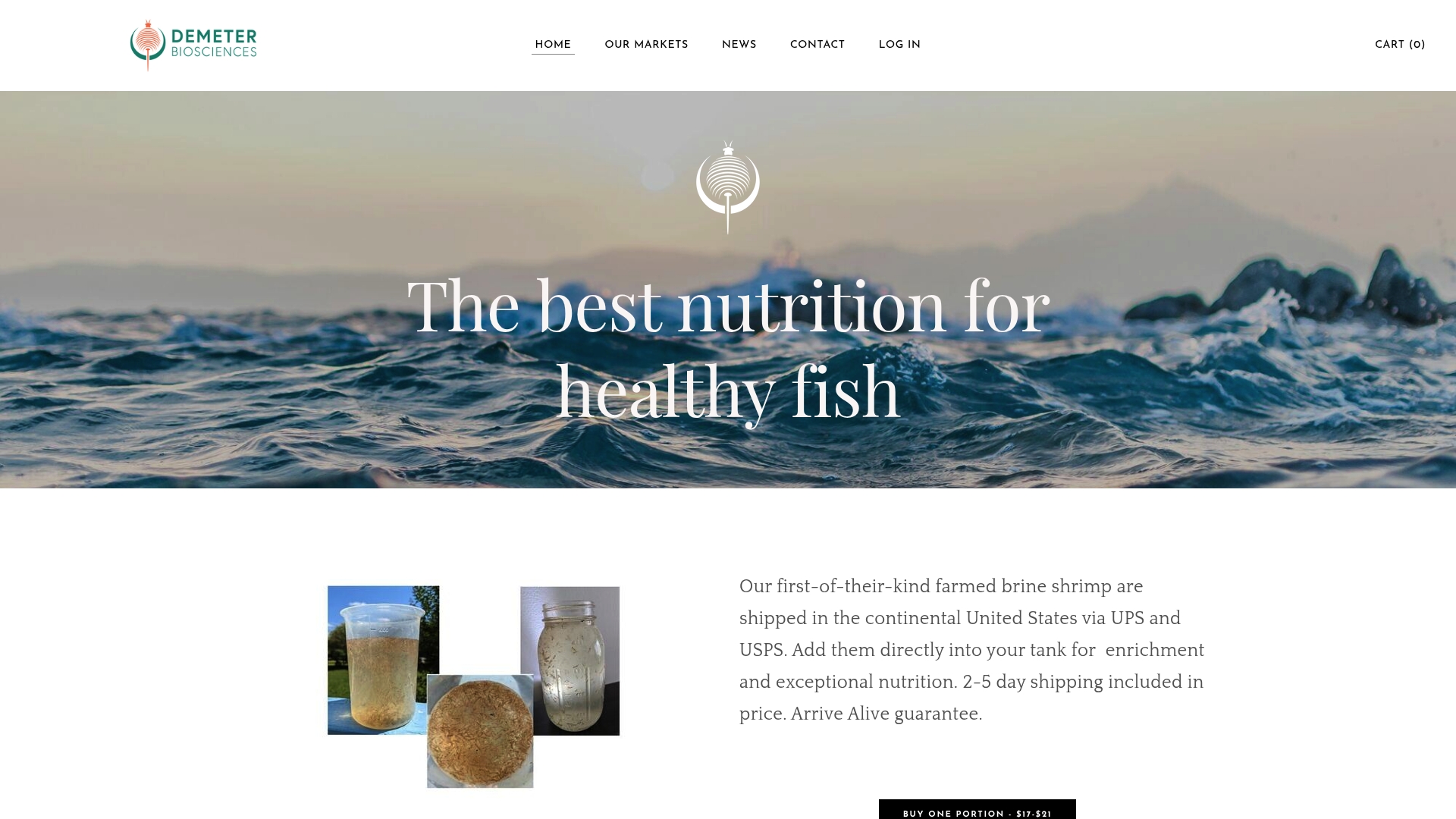
Whether you're setting up your first brine shrimp hatchery or scaling up a breeding operation, their premium brine shrimp product is designed for exactly the kind of results this guide describes. Explore their full range of brine shrimp cultivation supplies for everything from direct-to-consumer shipments to monthly subscription plans. If you have questions about which product fits your setup, their team offers expert live food support to help you get it right from the start.
Frequently asked questions
What live food is best for newly hatched freshwater fish fry?
Microworms and newly hatched brine shrimp are the best first foods for fry because their small size, high protein content, and easy digestibility directly support early growth. Microworms contain approximately 45% protein and can be cultured in 3 to 5 days, making them one of the most accessible fry foods available.
How often should I feed live food to my adult freshwater fish?
Feed live foods 2 to 4 times per week depending on species, using dry food on the remaining days to maintain dietary balance. This frequency supports health and coloration without overloading water quality.
Can I culture daphnia at home for my aquarium?
Yes. Daphnia require microalgae or yeast feeding, dechlorinated water at 65 to 72°F, and gentle aeration to maintain a productive culture at home. A basic 5 to 10 gallon container is enough to get started.
Are wild-sourced live foods safe for aquarium fish?
Not without precautions. Wild-sourced tubifex worms carry diseases, and most wild-caught live foods carry some pathogen risk. Cultured or frozen alternatives are safer, and quarantining any new live food source before introducing it to a breeder tank is always the right call.