
The best live foods for baby fish fry are stage-appropriate, moving prey that trigger feeding instincts and fit fry mouths from day one. In aquaculture and ornamental fishkeeping, this feeding approach is called fry nutrition staging. The top live food choices include baby brine shrimp, microworms, vinegar eels, infusoria, and greenwater. Each food serves a specific developmental window. Get the sequence right and your fry grow fast. Get it wrong and they starve, even with food in the tank.
1. What are the best live foods for baby fish fry?
The best live foods for baby fish fry depend entirely on fry size and developmental stage. A food that works perfectly at day 7 may be too large for day 1 fry to eat. The American Killifish Association lists baby brine shrimp, microworms, vinegar eels, infusoria, and greenwater as the core live food options for fry. Choosing among them requires knowing where your fry are in their development.
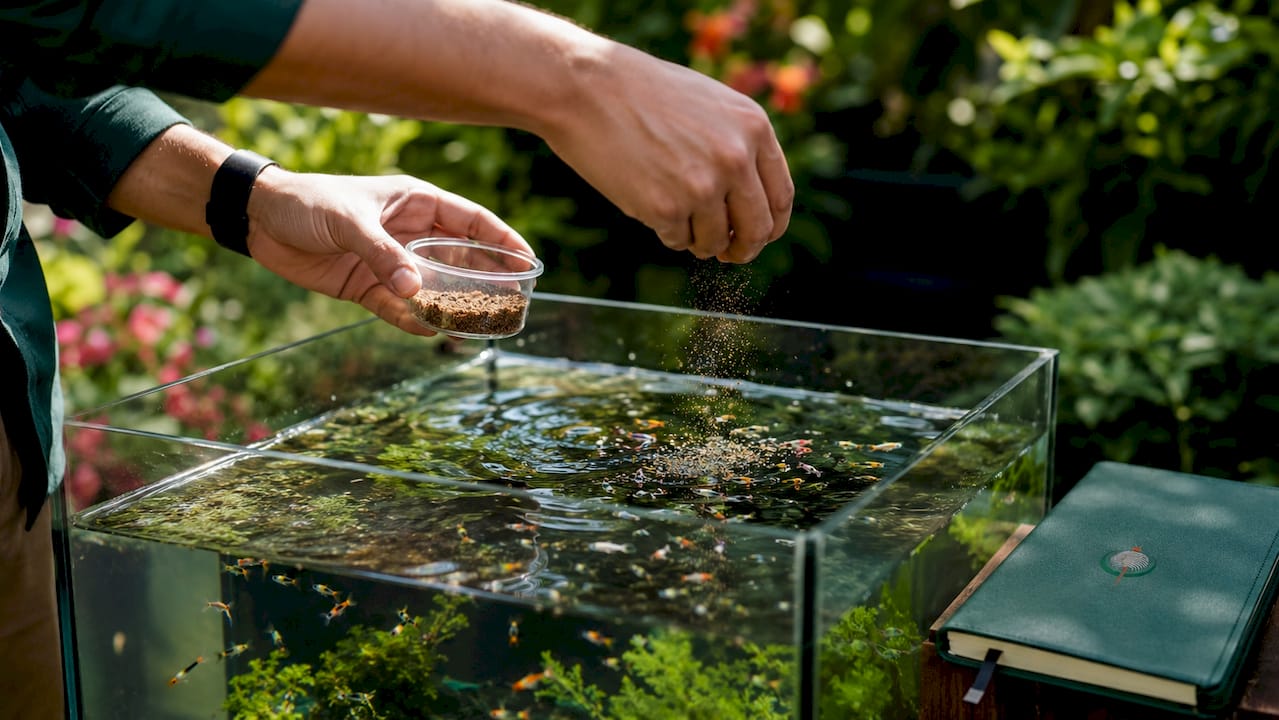
The key principle is simple: fry respond to movement. Static or powdered foods are often ignored by newly free-swimming fry because they do not trigger the predatory instinct. Live foods move, and that movement is what gets fry to eat. This is why moving prey consistently outperforms dry alternatives in the earliest feeding stages.
For a broader overview of what live foods work across all aquarium fish, the live fish food guide from Demeterbioscience covers the full range of options.
2. First foods for the tiniest fry: infusoria, greenwater, and vinegar eels
Some fry hatch so small that even microworms are too large to swallow. For these species, the first nutritional foods for baby fish must be microscopic. Three options cover this window well.
Infusoria is a collective term for single-celled organisms and tiny invertebrates that grow naturally in aquarium water. You can culture infusoria by placing a piece of lettuce or boiled spinach in a jar of tank water and leaving it in indirect sunlight for several days. The resulting cloudy water is teeming with food-sized organisms for the smallest fry.
Greenwater is a culture of free-floating microalgae, primarily Chlorella or similar species. It works as both a direct food source and a way to keep infusoria populations fed. Greenwater is especially useful for egglayer fry that hatch at very small sizes, such as killifish or certain tetras.
Vinegar eels (Turbatrix aceti) are tiny nematodes that survive up to 24 hours in aquarium water. That extended survival time means they stay available to fry longer than many other live foods, reducing the risk of uneaten food fouling the tank quickly.
- Infusoria: best for fry under 150 microns mouth gape; requires 5–7 days to culture
- Greenwater: doubles as an infusoria food source; easy to maintain on a windowsill
- Vinegar eels: longer tank survival than microworms; good for overnight feeding windows
Pro Tip: Start your infusoria culture at least one week before your eggs are expected to hatch. Timing the culture to your fry's emergence is the single biggest factor in early survival.
The main limitation of infusoria and greenwater is that even tiny live foods may not provide enough nutrition on their own for very small fry. Combining greenwater with infusoria gives better coverage than either alone.
3. Why microworms are the ideal first moving food for newly free-swimming fry
Microworms (Panagrellus redivivus) are the most practical live food for fry that have just absorbed their yolk sac and begun free swimming. They measure roughly 1–2 millimeters, which fits the mouth gape of most common aquarium fry at days 1–7. Microworms are ideal for this first feeding stage precisely because their wriggling motion triggers the feeding response in fragile, newly mobile fry.
Culturing microworms at home is straightforward. You need a shallow container, a base of cooked oatmeal or cornmeal, a starter culture, and a lid with small air holes. The worms climb the sides of the container within 24–48 hours and can be harvested with a finger or cotton swab. A single culture produces food for days with minimal maintenance.
Key advantages of microworms for feeding baby fish fry:
- Size fits most fry mouths without modification
- Movement triggers feeding instincts reliably
- Culture is inexpensive and fast to establish
- No hatching equipment required, unlike brine shrimp
- Cultures stay productive for 2–3 weeks before needing refresh
One thing to watch: microworms sink and can accumulate on the tank bottom. Feed small amounts multiple times per day rather than one large dose. This keeps uneaten worms from decomposing and spiking ammonia in small fry tanks.
Pro Tip: Set up two microworm cultures one week apart. When the first culture crashes, the second is at peak production. You will never run out of food during the critical first week of fry development.
Microworms serve as the bridge food between microscopic infusoria and the larger baby brine shrimp. They cover the window where fry are too big for greenwater but not yet large enough for nauplii.
4. How baby brine shrimp support rapid fry growth and when to introduce them
Baby brine shrimp (BBS), specifically the freshly hatched nauplii of Artemia salina, are the gold standard live food for fry growth. They are nutritionally dense, highly attractive to fry, and easy to hatch in volume at home. Most aquarists introduce BBS around days 5–7, once fry are large enough to consume them, and continue through day 21 or beyond.
The critical detail with BBS is timing. Newly hatched nauplii are most nutritious within the first 12 hours after hatching because they still carry their yolk sac. After that window, they begin metabolizing their own reserves and their nutritional value drops. Feed BBS within 12 hours of hatching for maximum benefit.
Enriching BBS before feeding pushes their nutritional value even higher. Enrichment products, typically HUFA-rich emulsions or microalgae like Dunaliella, are added to the hatching water for 12–24 hours before feeding. Demeterbioscience's brine shrimp are cultured on Dunaliella algae and carry at least 40% protein, which reflects exactly this principle of algae-fed enrichment at the production level.
| Feeding stage | Live food | Approximate fry age | Key benefit |
|---|---|---|---|
| Earliest | Infusoria / greenwater | Days 1–4 | Microscopic size for tiniest fry |
| Early | Microworms | Days 1–7 | Movement triggers feeding |
| Growth | Baby brine shrimp | Days 5–21+ | High protein, rapid growth |
| Advanced | Larger live prey | Day 21+ | Sustained growth and conditioning |
Water quality is a real concern when feeding BBS. Uneaten nauplii die quickly in freshwater and decompose fast. Feed small amounts every few hours rather than one large dose per day.
Pro Tip: Rinse harvested BBS through a fine brine shrimp net before adding them to the fry tank. This removes the salt water from the hatchery, which reduces salinity stress on freshwater fry.
For more detail on BBS nutrition and feeding schedules, the brine shrimp nutrition guide from Demeterbioscience covers the science behind nauplii quality in depth.
5. Comparing the top live foods for baby fish fry
Choosing the right food is easier when you can see the trade-offs side by side. The table below compares the four core live food options across the criteria that matter most to aquarists.
| Live food | Typical size | Culturing difficulty | Ideal feeding window | Key nutrient strength |
|---|---|---|---|---|
| Infusoria | Under 150 microns | Moderate | Days 1–5 | Microorganisms, varied |
| Greenwater | Under 10 microns | Easy | Days 1–7 | Microalgae, vitamins |
| Vinegar eels | 1–2 mm | Easy | Days 1–10 | Protein, movement |
| Microworms | 1–2 mm | Easy | Days 1–7 | Protein, fat |
| Baby brine shrimp | 400–500 microns | Moderate | Days 5–21+ | Protein, HUFAs, yolk |
The staged feeding system that combines microworms and baby brine shrimp produces the best survival and growth outcomes. These two foods are not competitors. They cover different windows and work best together.
The most common mistake aquarists make is jumping straight to BBS without having a smaller food ready for the first few days. Fry that cannot yet fit BBS in their mouths will starve even with nauplii swimming around them. Always match food size to fry mouth gape before feeding.
For help choosing the right live food for your specific freshwater species, the freshwater fish food guide from Demeterbioscience breaks down options by fish type.
6. Practical feeding tips for healthy fry development
Feed fry multiple small meals per day rather than one large feeding. A multi-feed daily schedule prevents starvation between meals and avoids the ammonia spikes that come from decomposing uneaten food in small tanks. Three to five feedings per day is a reasonable target for most species in the first two weeks.
Culture timing is the factor most aquarists underestimate. Culturing live foods before fry hatch means food is ready the moment fry start feeding externally. A culture started the same day fry hatch will not be productive in time. Start microworm cultures at least five days before expected hatch. Start infusoria cultures seven to ten days out.
Practical feeding management tips:
- Feed only what fry consume within 30 minutes per meal
- Siphon uneaten food from the tank bottom after each feeding session
- Run a sponge filter, not a power filter, to avoid sucking up fry
- Observe fry belly color after feeding. Full bellies appear slightly rounded and pale
- Rotate between microworms and BBS once fry are large enough to accept both
Diversifying live food options gives fry a broader nutritional profile. No single live food covers every amino acid and fatty acid fry need for optimal development. Rotating between microworms, BBS, and vinegar eels across the first three weeks produces more resilient fry than relying on one food alone.
Pro Tip: Use a small pipette or turkey baster to target-feed fry in the first week. This puts food directly in front of fry that are not yet strong swimmers, reducing the energy they spend chasing prey.
Key Takeaways
The best baby fish diet is a staged sequence of live foods matched to fry mouth size and developmental age, starting with microscopic options and progressing to baby brine shrimp as fry grow.
| Point | Details |
|---|---|
| Stage your live foods | Match food size to fry mouth gape at each developmental stage for best survival. |
| Start cultures early | Begin microworm and infusoria cultures before fry hatch to have food ready on day one. |
| Feed BBS within 12 hours | Newly hatched brine shrimp nauplii are most nutritious in the first 12 hours after hatching. |
| Feed small meals often | Multiple small feedings daily prevent starvation and protect water quality in fry tanks. |
| Combine foods for best results | Rotating microworms, vinegar eels, and BBS gives fry a broader nutritional profile than any single food. |
What I have learned raising fry on live foods
The biggest mistake I see aquarists make is treating live food selection as a single decision rather than a progression. You pick baby brine shrimp because you have heard they are the best, and then your day-2 fry ignore every nauplius in the tank. The food is not wrong. The timing is.
What actually works is thinking about fry feeding the way a pediatrician thinks about infant nutrition. You do not start a newborn on solid food. You match the food to the developmental stage, then advance when the animal is ready. Infusoria and greenwater for the first few days, microworms as the first moving food, BBS once fry are large enough to handle them. That sequence is not complicated, but it requires planning ahead.
The other thing I have found is that observation matters more than any schedule. Watch your fry after every feeding. Full bellies, active swimming, and fry actively chasing food are the signals that tell you the feeding plan is working. Hollow bellies and lethargic fry tell you to adjust. No article or guide replaces what you see in your own tank.
Patience and preparation are the two skills that separate aquarists who raise healthy fry from those who lose them. Start your cultures early. Feed small amounts often. Watch what happens. Adjust.
— Demeter
Premium live brine shrimp for your fry feeding program
Raising healthy fry depends on the quality of the live food you put in the tank, not just the type.
Demeterbioscience produces live brine shrimp cultured on Dunaliella algae in a controlled, land-based system. Every batch carries at least 40% protein and consistent nutritional quality, without the seasonal variability that affects wild-harvested brine shrimp. Whether you need a one-time shipment or a monthly subscription, Demeterbioscience offers live brine shrimp products sized for home aquarists and bulk buyers alike. For aquarists who want to give their fry the best possible start, consistent nutrition from a reliable source makes a measurable difference in growth and survival. Explore the full range of brine shrimp options to find the right fit for your setup.
FAQ
What is the best first food for baby fish fry?
Microworms or infusoria are the best first foods, depending on fry size. Fry too small for microworms need infusoria or greenwater in the first few days.
When should I introduce baby brine shrimp to fry?
Introduce baby brine shrimp around days 5–7, once fry are large enough to fit nauplii in their mouths. Feed BBS within 12 hours of hatching for peak nutrition.
How often should I feed baby fish fry?
Feed fry three to five small meals per day. Frequent small feedings prevent starvation and reduce ammonia buildup from uneaten food in small tanks.
Do fry need live food or can they eat dry food?
Fry strongly prefer moving prey and often ignore static dry foods in the earliest stages. Live foods trigger the feeding instinct that dry foods cannot replicate for newly free-swimming fry.
How do I culture microworms at home?
Mix cooked oatmeal in a shallow container, add a starter culture, cover with a vented lid, and harvest worms from the container sides within 24–48 hours. Two staggered cultures prevent supply gaps.