
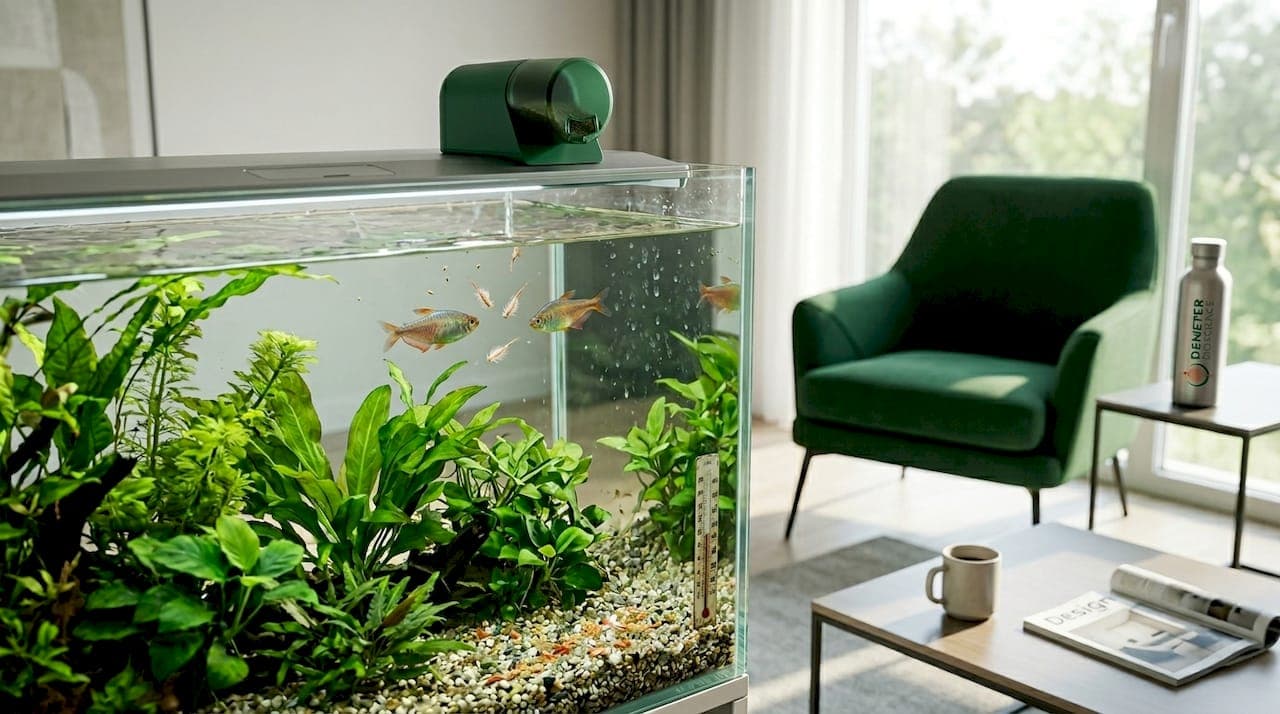
Most aquarium keepers assume a quality pellet or flake covers their fish's nutritional needs. That assumption leaves a lot on the table. Understanding why fish prefer live food goes far deeper than nutrition labels. It involves hard-wired sensory systems, behavioral programming shaped by millions of years of evolution, and real differences in how nutrients reach fish tissue. Whether you keep bettas, discus, or reef inhabitants, knowing how live prey interacts with your fish's biology changes how you feed and what results you can expect.
Table of Contents
- Key takeaways
- Why fish prefer live food: the biology of instinct
- Nutritional advantages of live food vs. processed diets
- Ecological and practical effects in your aquarium
- Choosing the right live food and feeding it well
- Putting it all together
- My honest take on live feeding
- Feed your fish the way evolution intended
- FAQ
Key takeaways
| Point | Details |
|---|---|
| Movement drives preference | Live prey triggers innate sensory and hunting responses that prepared food physically cannot replicate. |
| Nutrition quality differs | Live foods deliver bioavailable proteins and fats, especially when prey animals are gut-loaded before feeding. |
| Sourcing quality matters most | Disease risk from live food depends on how the prey was raised and handled, not just whether it moves. |
| Gut-loading amplifies benefit | Feeding nutritious diets to live prey before offering them to fish transfers those nutrients directly. |
| Balance beats exclusivity | A mixed diet combining live food with quality prepared options supports long-term aquarium health. |
Why fish prefer live food: the biology of instinct
The formal term for a fish's feeding behavior triggered by moving prey is the predatory motor sequence, and live food activates every stage of it. Smell, lateral line vibrations, and visual motion all fire at once when a living organism enters the water column. A pellet sinking in a straight line does not produce the same signal.
Fish sensory systems are calibrated for prey that moves unpredictably. The lateral line, a row of mechanoreceptive cells running along a fish's body, detects micro-pressure waves from swimming organisms. Live prey generates exactly those waves. Frozen or processed food does not, which is why some fish ignore perfectly nutritious pellets while hunting a live brine shrimp with full intensity.
This matters beyond just getting fish to eat. Live food feeding triggers the full feeding response in fish, engaging them mentally and physiologically, leading to reduced stress and better vitality. Reef fish that hunt live prey consistently show healthier behavioral states than pellet-only counterparts. That is not coincidence. It reflects the difference between a system fully engaged and one idling.
There is another layer worth knowing. Active prey movement shapes how fish make feeding decisions at a very specific level, with prey defenses and escape patterns influencing handling costs for the predator. Fish are not passive recipients of food. They are solving a real-time problem when hunting, and that cognitive and physical engagement has measurable health benefits.
Here is what live prey stimulates that processed food typically cannot:
- Visual tracking of erratic, three-dimensional movement
- Lateral line response to pressure waves from swimming organisms
- Olfactory stimulation from live metabolites released into water
- Full activation of the strike-and-swallow motor sequence
- Post-feeding satisfaction signals tied to successful predation
Pro Tip: If a fish in your tank is refusing pellets, try introducing a small amount of live food first. The sensory activation from live prey often "primes" the feeding response, making the fish far more receptive to other food types immediately afterward.
Nutritional advantages of live food vs. processed diets
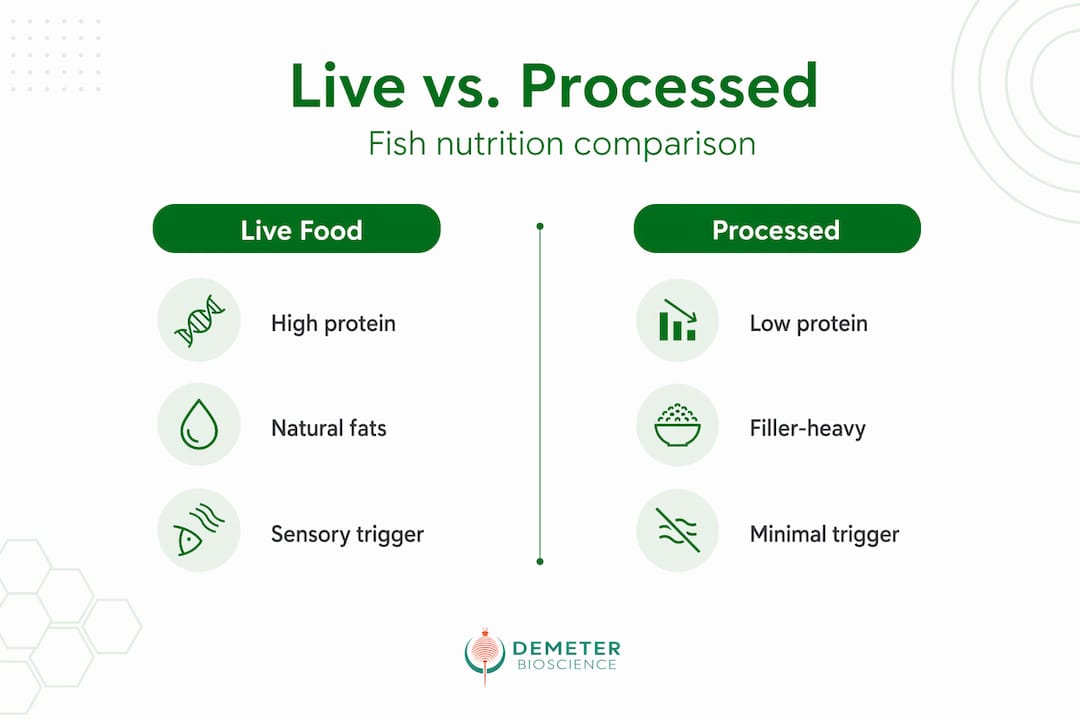
The gap between live food and processed fish food is not just about movement. It is about how nutrients exist inside each type. Live organisms carry proteins, lipids, and amino acids in their natural cellular structure. When a fish consumes live prey, those nutrients are surrounded by cell membranes, co-factors, and enzymes that support digestion and absorption. Processing breaks that structure down, and nutrient bioavailability often drops with it.
Live foods like brine shrimp and daphnia provide vital proteins and essential fats well beyond what most filler-heavy commercial diets deliver. Brine shrimp in particular carry lipids critical for larval fish development. Daphnia acts almost like a digestive supplement, with chitinous exoskeleton material improving gut motility.
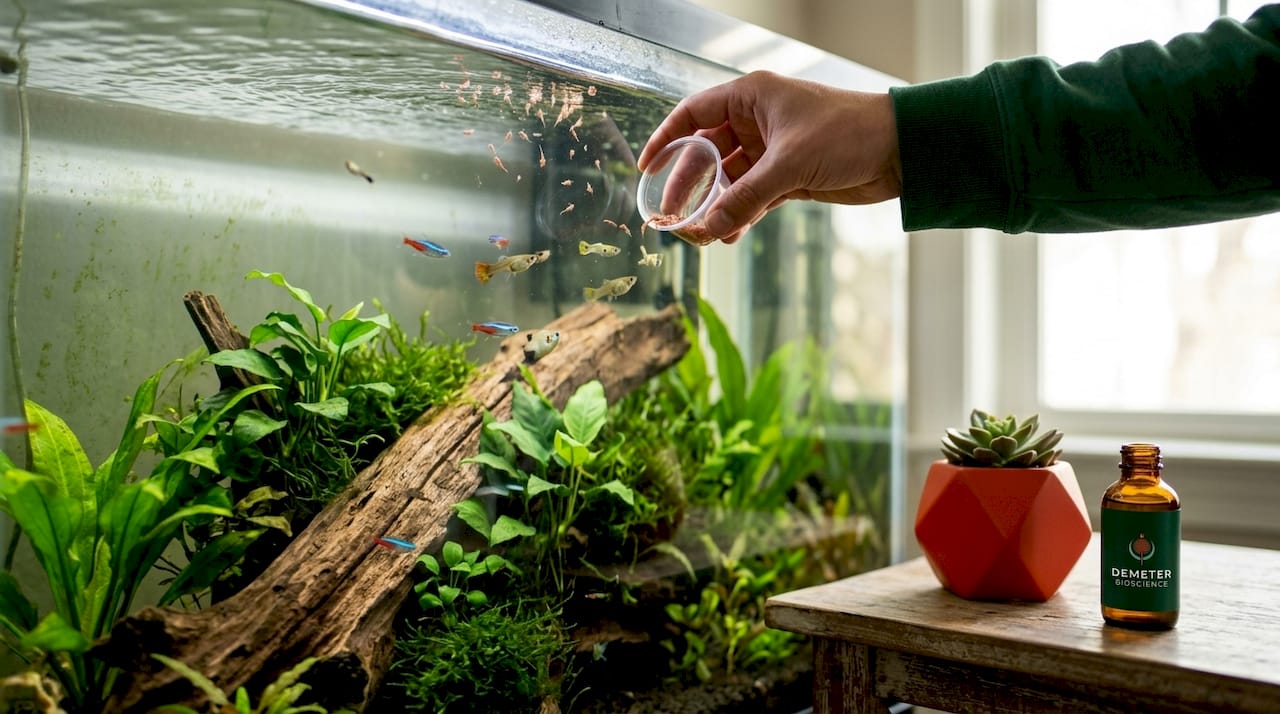
The concept of gut-loading pushes this further. Gut-loading live prey before offering it to fish transfers those dietary benefits directly. At Demeterbioscience, brine shrimp are cultivated on Dunaliella microalgae, which drives protein content to at least 40%. When your fish consume those shrimp, they are not eating a depleted organism pulled from a salt flat. They are eating a fully loaded nutritional delivery system.
Compare these realities side by side:
| Factor | Live food | Prepared food |
|---|---|---|
| Protein bioavailability | High, in native cellular form | Variable, often degraded by heat processing |
| Essential fatty acids | Present in natural lipid structure | Can be added but oxidize over time |
| Gut-loading potential | Yes, prey can be enriched pre-feed | Not applicable |
| Feeding response triggered | Full predatory motor sequence | Partial or absent |
| Disease/contamination risk | Present if poorly sourced | Generally low |
The most important caveat: live food as a sole diet creates nutritional gaps over time. Feeder fish like goldfish carry thiaminase, an enzyme that destroys vitamin B1 with prolonged use. Varied diets remain the safest path to long-term fish health.
Pro Tip: Before feeding live brine shrimp, let them spend 24 hours in clean, well-oxygenated water with a quality microalgae suspension. That window is enough to significantly improve their gut content and the nutrition your fish actually receive.
Ecological and practical effects in your aquarium
Introducing live food into a tank does not just affect the fish. It affects the entire aquatic environment. That is worth thinking through before you commit to a live feeding routine.
On the positive side, live prey adds genuine behavioral enrichment. Fish that hunt, chase, and capture live organisms exhibit natural predatory behaviors and reduced behavioral indicators of stress. That engagement translates into stronger coloration, activity, and breeding success compared to inert food alone.
The risks are real and worth managing systematically. Here is what to account for:
- Disease introduction. Live food can carry bacteria, fungus, and parasites. Pathogens are not always visible even when prey animals look healthy, which makes sourcing and quarantine non-negotiable steps.
- Water quality degradation. Uneaten live prey decompose in the tank, raising ammonia levels and stressing fish more than the feeding helped them. Feed only what fish consume within a few minutes.
- Aggression triggers. Live prey chasing can activate territorial or predatory responses in community tanks. Watch closely when introducing live food among mixed species.
- Tubifex worm handling. These worms are nutritionally dense but can harbor harmful bacteria. Cleaned or frozen alternatives reduce the pathogen load significantly if you choose to use them.
The key insight from experienced aquarists: treat live food like any other variable in tank management. It is an input, and like water chemistry or lighting, it needs to be introduced thoughtfully and monitored consistently.
One practical note on quantity: small, frequent doses of live food mimic natural prey availability and produce better outcomes than large infrequent feedings. Some keepers use a drip method for organisms like rotifers or small nauplii, maintaining a constant low-level presence in the water column for passive feeding fish.
Choosing the right live food and feeding it well
Matching live food type and size to your specific fish makes a bigger difference than most hobbyists realize. A 2-inch betta and a 12-inch oscar may both prefer live prey, but the prey size, movement style, and nutrient profile that works for each differs significantly. The right live food choice for freshwater fish depends on species, tank size, and what stage of the fish's life you are feeding for.
Common live food options and what they do best:
- Brine shrimp (Artemia). Excellent starter live food for small to medium fish. Highly versatile, easy to culture, and nutritionally strong when gut-loaded. Nauplii work for fry; adult shrimp suit larger fish.
- Daphnia. Called "water fleas," these small crustaceans are ideal for bettas, small tetras, and gouramis. Their chitin content supports digestion, and they are easy to culture at home.
- Rotifers. The go-to live food for marine fish larvae and small reef inhabitants. Their tiny size and continuous movement make them ideal for fish that filter-feed or target micro-prey.
- Tubifex worms. High protein content makes them attractive, but handle with caution. Use only from verified, clean sources or opt for frozen equivalents.
Pro Tip: Learn about live food delivery logistics before ordering live organisms online. Temperature control during shipping directly affects whether your brine shrimp arrive alive and nutritionally intact.
Feeding schedules matter too. Most fish do better with small amounts offered twice daily than one large feeding. Remove uneaten organisms after 10 to 15 minutes to protect water quality.
Putting it all together
Fish preference for live food is not a quirk or a preference you can train away. It is rooted simultaneously in biological wiring, nutritional reality, and ecological need. The movement of prey activates sensory systems that pellets cannot reach. The nutritional structure of live organisms delivers bioavailable nutrients in ways processing cannot fully replicate. And the behavioral engagement of hunting live prey produces measurable improvements in health, coloration, and stress levels.
The practical takeaway: integrate live food as a regular part of your feeding rotation, source it carefully, match prey size to fish size, and use gut-loading to amplify nutritional delivery. That combination covers the biology, the nutrition, and the enrichment side simultaneously. It does not have to be complicated, but it does have to be intentional.
My honest take on live feeding
I've heard the argument countless times: "My fish are doing fine on pellets, so why bother?" And honestly, "fine" is the problem. Fine is not thriving. I've seen fish that look acceptable on pellet-only diets suddenly show dramatically richer color, stronger spawning behavior, and noticeably higher activity within weeks of incorporating quality live food.
What I've also learned is that "live" is not automatically better. A poorly sourced, malnourished feeder fish pulled from a crowded pet store tank is not a nutritional upgrade. It can be a disease vector. The live food conversation is really a quality conversation. Source matters more than the category itself.
My practical rule: use live food from verified, controlled cultivation environments where prey animals were themselves fed well. That standard eliminates most of the disease risk while keeping all the nutritional and behavioral benefits. Experiment with types and see how your specific fish respond. Some species go visibly crazy for daphnia. Others fixate on brine shrimp nauplii. Observation is your best tool here.
— Demeter
Feed your fish the way evolution intended
At Demeterbioscience, we grow live brine shrimp in land-based, organic systems where every shrimp is fed exclusively on Dunaliella microalgae, delivering a guaranteed minimum of 40% protein per batch. No seasonal variability. No starvation-depleted prey. Just consistently nutritious, live brine shrimp grown with aquarium fish health as the single priority. We offer direct-to-consumer shipments, monthly subscription plans, and bulk options for fish stores and museums. If you want to understand how consistent live nutrition affects your aquarium over time, start with a product you can actually trust. Browse our brine shrimp products and find the plan that fits your tank.
FAQ
Why do fish eat live food instead of pellets?
Fish respond to the movement, pressure waves, and scent of live prey through sensory systems that processed food cannot activate. This full feeding response supports stronger health and behavior than pellet-only diets typically produce.
What are the benefits of live food for fish?
Live food provides bioavailable proteins and fats in their natural cellular structure, triggers complete predatory behavior, supports better coloration and breeding success, and can be gut-loaded to further boost nutritional value.
How do you feed fish live food safely?
Source live food from clean, verified suppliers, quarantine new organisms before introducing them to your main tank, and feed only what fish consume in 10 to 15 minutes to prevent water quality issues from decomposing prey.
Is live food better than frozen or freeze-dried options?
Live food activates more sensory pathways and delivers nutrients in a less processed form, but high-quality frozen options from well-fed organisms are a useful supplement when live prey is unavailable, provided they are sourced carefully.
How often should I feed live food to aquarium fish?
Small amounts offered twice daily mimic natural prey availability better than single large feedings. Frequency depends on species, but most ornamental fish benefit from live food two to three times per week as part of a mixed diet.