

Aquatic specimens don't thrive on occasional good meals. They need reliable, predictable nutrition delivered at the right frequency, in the right amounts, with the right nutritional profile. The benefits of consistent nutrition for aquatic specimens go far beyond simple growth. They touch water chemistry, behavior, gut health, immune function, and even your bottom line as an aquaculturist or hobbyist. Whether you're managing a recirculating aquaculture system or a home reef tank, what you feed your fish, and how consistently you feed them, determines more about their long-term health than almost any other variable you control.
Table of Contents
- Key takeaways
- 1. Improved growth rates and feed efficiency
- 2. Enhanced water quality through predictable feeding
- 3. Reduced stress and improved behavior in aquatic species
- 4. Long-term health through nutritional programming
- 5. Better gut health through regulated feeding schedules
- 6. Economic benefits for aquaculture operations
- My take on consistent feeding after years in aquatic nutrition
- Feed smarter with Demeterbioscience
- FAQ
Key takeaways
| Point | Details |
|---|---|
| Growth improves with feeding frequency | Increasing feedings to four times daily can significantly improve feed conversion and growth rates. |
| Consistent feeding stabilizes water chemistry | Predictable feed input keeps ammonia, nitrite, and solids production steady and manageable. |
| Routine reduces fish stress | Fish anticipate regular feeding times, which lowers chronic anxiety and supports natural behavior. |
| Nutritional programming shapes long-term health | Early dietary consistency can epigenetically influence metabolism and immune response for life. |
| Economic savings follow feeding discipline | Controlled feeding reduces waste, lowers maintenance costs, and improves operational predictability. |
1. Improved growth rates and feed efficiency
Growth in fish is not just about how much you feed. It's about how often and how precisely. Research shows that feeding four times daily improves feed conversion ratio from 1.73 to 1.55 compared to two feedings per day under restricted ration conditions. That's a meaningful efficiency gain with no increase in total feed volume.
The mechanism is straightforward. Smaller, more frequent meals keep digestive enzymes active and nutrient absorption high. Fish at full satiation from two large daily meals often stop absorbing nutrients efficiently well before digestion is complete. Splitting those meals across four feedings keeps the gut working at capacity without overloading it.
Here's what affects feed efficiency most in consistent feeding programs:
- Feeding frequency (more frequent feedings at restricted rations outperform fewer large meals)
- Portion calibration to current biomass (fish need updated ration sizes as they grow)
- Feed quality consistency (the same nutritional profile delivered every time prevents metabolic guessing)
- Timing regularity (feeding at the same hours daily reinforces digestive readiness)
Pro Tip: Weigh your fish population monthly and recalculate ration size based on current biomass. A ration set three months ago is almost certainly underfeeding a growing population.
2. Enhanced water quality through predictable feeding
Feeding is the primary driver of system load in any aquaculture setup. Every kilogram of feed introduces ammonia, CO2, and suspended solids into your system. Those outputs fuel your biofilter and mechanical filtration, but only if they arrive at a predictable rate.
When feeding is erratic, ammonia spikes follow. Your biofilter colony, which is sized for a certain daily ammonia load, gets hit with irregular surges it wasn't designed to handle. The result is incomplete nitrification, elevated nitrite, and fish under chemical stress. Consistent feeding turns this dynamic around.
| Feed behavior | Effect on water parameters |
|---|---|
| Consistent daily feeding | Stable ammonia and nitrite; biofilter performs as designed |
| Irregular large feedings | Ammonia spikes; biofilter overwhelmed; nitrite rises |
| Overfeeding uneaten food | Organic waste accumulates; nitrate and phosphate climb |
| Predictable portion control | Solids load remains manageable; mechanical filtration stays effective |
The standard recommendation of feeding once or twice daily and removing uneaten food within two to three minutes exists precisely to protect water quality. Uneaten feed decays rapidly and releases ammonia well before your filtration can process it.
Pro Tip: In a recirculating aquaculture system, design your daily feed input schedule before you design your filtration. The biofilter capacity should be calculated from expected daily feed load, not tank volume alone.
3. Reduced stress and improved behavior in aquatic species
Fish are more aware of their environment than most hobbyists realize. Inconsistent feeding induces chronic anxiety in aquatic species, expressed through erratic swimming, aggression, persistent begging behavior, and reduced foraging. Routine fixes this.
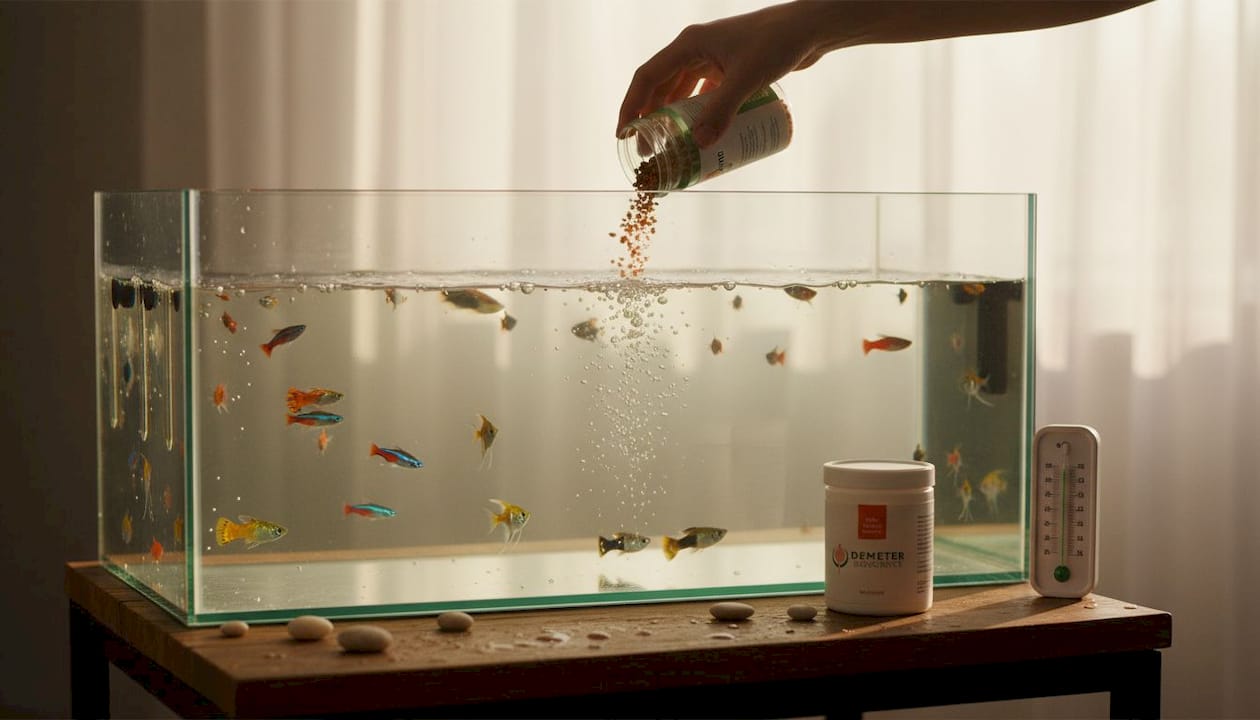
When fish learn that food arrives at predictable intervals, they stop spending energy on food-seeking stress behaviors. They become calmer. Aggression between tank mates often drops noticeably within a few weeks of establishing a consistent schedule. Fish that once chased each other for scraps begin sharing space without conflict.
Behavioral changes you can expect after establishing a consistent feeding routine include:
- Decreased surface begging and frantic swimming before mealtimes
- Reduced inter-species aggression in community tanks
- More natural mid-column swimming behavior between feedings
- Improved response to environmental enrichment and tank activity
- Greater willingness to accept new food types or presentations
This matters for aquaculturists as much as hobbyists. Chronic stress in fish suppresses immune function, reduces feed intake, and increases mortality risk. A predictable feeding routine is one of the lowest-cost welfare improvements you can implement. The relationship between feeding predictability and aquatic pet well-being is recognized across both the hobbyist and professional aquatic retail communities.
4. Long-term health through nutritional programming
This is where consistent nutrition moves beyond husbandry and into biology. Nutritional programming refers to the idea that early-life dietary interventions can epigenetically modify metabolism and immune response, improving long-term resilience throughout a fish's life.
The practical implication is significant. Fish fed consistent, nutritionally complete diets from early life stages show improved digestive enzyme activity, stronger immune responses to pathogens, and better stress tolerance as adults. This isn't simply about avoiding deficiency. It's about actively shaping biological outcomes through dietary consistency.
Functional feed additives are one tool in this space. Compounds found in sources like Lemna minor and optimized amino acid profiles have shown measurable effects on gut morphology and immune marker expression. Consistent delivery of these nutrients matters as much as their presence in the feed.
| Condition | Metabolic outcome | Immune function | Stress tolerance |
|---|---|---|---|
| Consistent nutrition from early life | Optimized enzyme activity | Strong baseline immunity | High resilience |
| Irregular nutrition, early life | Variable enzyme expression | Weak immune response | Poor stress recovery |
| Consistent nutrition, adult stage only | Moderate improvement | Partial immune benefit | Moderate resilience |
The takeaway for aquaculturists is that what you feed juveniles and broodstock sets the biological ceiling for what those animals can achieve as adults.
5. Better gut health through regulated feeding schedules
Fish digest food over 12 to 24 hours. Feeding before the previous meal clears the digestive tract doesn't just reduce absorption. It creates a backlog that leads to real health problems: bloating, swim bladder disorder, and chronic constipation are all linked to overlapping feeding cycles.
The gut microbiome, which plays a major role in nutrient absorption and immune defense, needs predictable substrate delivery to remain stable. Erratic feeding disrupts microbial populations and compromises the intestinal lining over time.
Feeding schedule problems that damage gut health include:
- Multiple large feedings delivered close together before digestion clears
- Skipping days followed by compensatory overfeeding
- Feeding high-fat or high-protein diets without accounting for slower digestion times
- Ignoring appetite decline as a signal of digestive overload
Planned fasting days, typically one day per week for most species, are one of the most underused tools in aquarium health management. They give the gut time to fully clear, reset microbial balance, and reduce fat accumulation in the liver. Most hobbyists avoid fasting because it feels like neglect. In practice, it's one of the most protective things you can do.
Pro Tip: If a fish refuses food that it normally eats eagerly, don't increase the portion the next day. Skip a feeding entirely and observe. Appetite decline is often the first visible sign of digestive overload.
6. Economic benefits for aquaculture operations
Consistent feeding doesn't just improve fish health. It improves your financial model. Proper feeding practices directly reduce feed waste, lower water maintenance costs, and make production outcomes more predictable, which matters when you're planning harvest cycles or managing inventory.
The connection runs through waste. Uneaten feed is pure operating cost that generates no return and actively degrades your system. A facility that overfeeds by even 10% relative to daily biomass requirements generates significant excess organic load that drives up filtration maintenance, water exchange frequency, and energy consumption.
Economic advantages of disciplined, consistent feeding include:
- Lower feed cost per kilogram of growth due to improved feed conversion ratios
- Reduced water exchange frequency because predictable feed load means predictable waste output
- Longer intervals between filter media replacement or system cleaning
- More accurate harvest projections because growth curves become predictable
- Lower mortality rates, which reduces restocking costs over a production cycle
For hobbyists, the math is simpler but still real. Overfeeding is the most common cause of water quality failure in home aquariums, and water quality failure drives equipment upgrades, medication costs, and fish replacement. Feeding discipline pays for itself faster than any piece of hardware you can buy. Learning the fundamentals of aquatic nutrition is one of the highest-return investments you can make in your system.
My take on consistent feeding after years in aquatic nutrition
I've watched hobbyists and commercial operators alike spend thousands on equipment, filtration technology, and water treatment while treating feeding as an afterthought. The single most impactful correction I've seen come from simply scheduling feedings and measuring portions. Nothing else delivers results that fast.
The contrarian view I'll offer is this: timing matters less than consistency. I've seen systems thrive on morning-only feeding and others that perform equally well on evening schedules. What tanks can't handle is unpredictability. Fish don't care whether they eat at 7am or 7pm. They care whether it happens reliably.
What I've also learned is that building trust with your fish through routine creates a feedback loop that makes problems visible early. Fish that are comfortable in their routine show you when something is wrong. A fish that's always in anxiety mode gives you nothing useful to read. Consistent feeding is diagnostic as much as it is nutritional.
The two-sided feeding approach, which combines biomass-based ration calculation with real-time behavior observation, is the most practical framework I've seen work across species and system types. Start with the math, then watch the fish, and let the two inform each other.
— Demeter
Feed smarter with Demeterbioscience
If consistent nutrition is the strategy, feed quality is what makes it work. Demeterbioscience produces live brine shrimp cultivated in land-based, controlled systems fed exclusively on Dunaliella microalgae, guaranteeing at least 40% protein content in every batch. Unlike wild-harvested brine shrimp, which carry seasonal nutritional variability and often arrive in a starved state, Demeterbioscience's farmed shrimp deliver a consistent nutritional profile you can actually build a feeding program around.
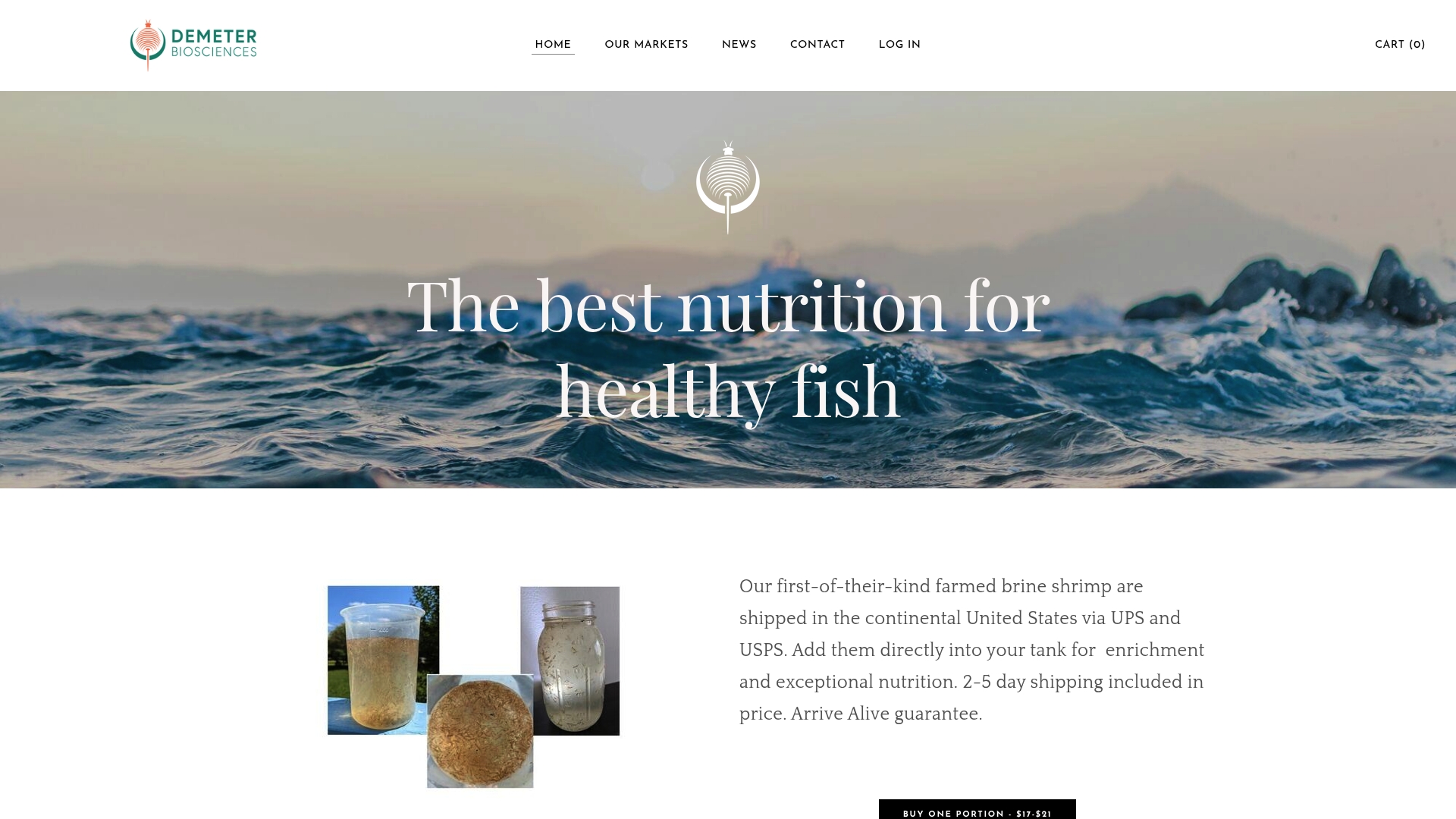
That consistency is what makes the difference between feeding your fish and actually nourishing them. Demeterbioscience also offers microalgae-based feed options and high-quality fish meal products designed for aquaculturists who take nutrition seriously. Whether you're managing a commercial RAS facility or a home aquarium, the right feed delivered consistently is what unlocks everything this article covers.
FAQ
What are the main benefits of consistent nutrition for aquatic specimens?
Consistent nutrition improves growth rates, stabilizes water chemistry, reduces behavioral stress, supports gut health, and builds long-term immune resilience. These benefits compound over time and are significantly stronger than any single high-quality meal delivered irregularly.
How often should aquatic specimens be fed for optimal health?
Most species benefit from one to four feedings per day depending on life stage and species type, with uneaten food removed within two to three minutes to prevent ammonia spikes. Feeding frequency should be calibrated to biomass and adjusted as fish grow.
Does feeding consistency really affect water quality?
Yes. Feed input is the primary driver of ammonia, CO2, and solids production in any aquatic system. Predictable feed loads allow biofilters to process waste efficiently. Erratic feeding creates ammonia spikes that overwhelm filtration and stress fish.
What is nutritional programming in fish?
Nutritional programming refers to early-life dietary interventions that epigenetically influence metabolism, digestive enzyme activity, and immune function throughout a fish's life. Consistent nutrition during juvenile stages sets the biological foundation for adult health outcomes.
Can inconsistent feeding cause behavioral problems in fish?
Yes. Fish that experience irregular feeding develop chronic stress responses including surface begging, aggression toward tank mates, and reduced natural foraging behavior. Routine feeding schedules help fish anticipate meals and remain behaviorally stable.