
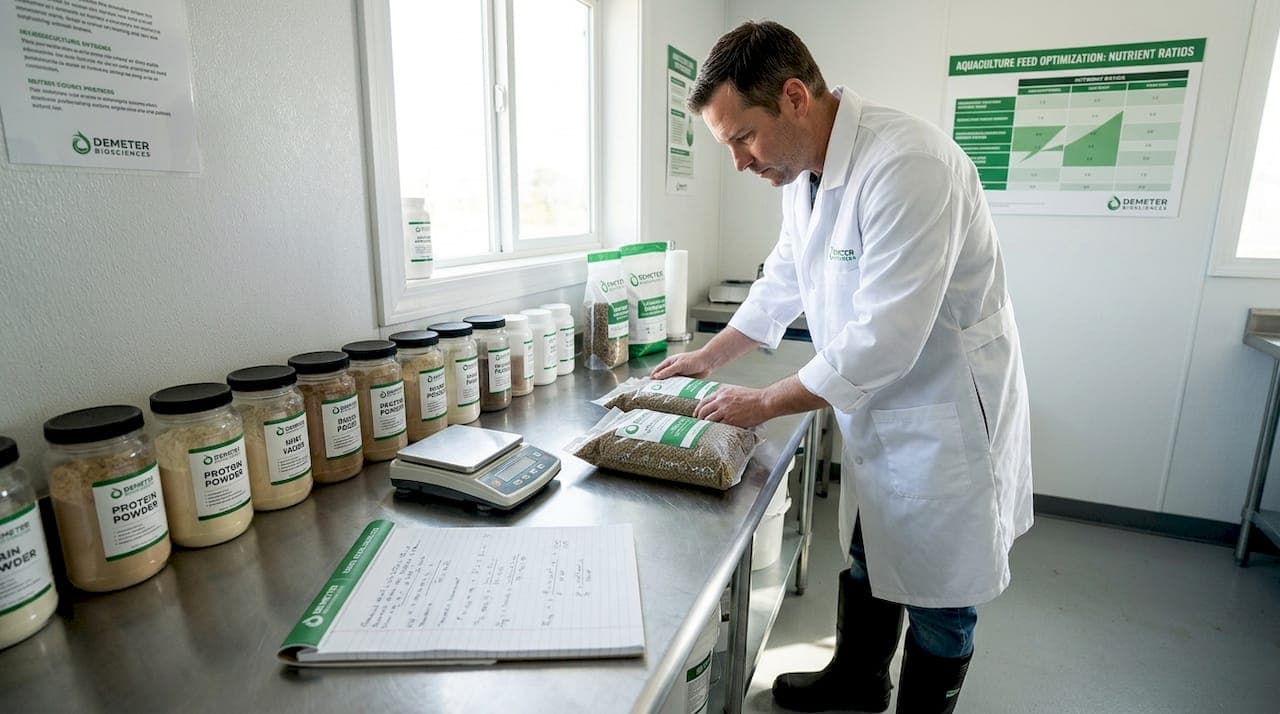
Most aquaculture operations assume more protein in the feed means faster fish growth. That assumption costs money, degrades water quality, and often produces worse results than a precision nutrition approach. What is intensive fish farming nutrition, really? It is the science and practice of delivering exactly the right nutrients, at the right concentrations, at the right life stage, within systems running at maximum stocking density. Feed is typically the single largest production expense in intensive systems, and the margin between profit and loss often lives inside your feed conversion ratio. This guide breaks down what actually drives performance.
Table of Contents
- Understanding protein and lipid requirements in intensive fish farming
- The role of biofloc and natural nutrition in intensive systems
- Optimizing feed management to reduce costs and environmental impact
- Species-specific nutritional considerations and common pitfalls
- Practical steps for applying intensive fish farming nutrition principles
- Why conventional feeding wisdom in intensive fish farming is incomplete
- Enhance your intensive fish farming nutrition with Demeter Biosciences
- Frequently asked questions
Key Takeaways
| Point | Details |
|---|---|
| Protein optimization | Adjust dietary protein to species and growth stage to maximize growth while minimizing waste. |
| Biofloc benefits | Biofloc systems provide valuable supplemental nutrition reducing reliance on formulated feed. |
| Feed management | Moderate feed restriction improves biomass yield and reduces production costs and environmental impact. |
| Species nuances | High digestibility protein and balanced amino acids are critical to avoid negative effects on fish and biofilters. |
Understanding protein and lipid requirements in intensive fish farming
Protein is the most expensive and most debated nutrient in intensive aquaculture. Get it wrong in either direction and you pay for it, either through slow growth or through excess nitrogen fouling your system. The general benchmark sits between 30% and 45% crude protein depending on species, but that range conceals enormous variation based on life stage, water temperature, and feeding method.
Lipids are the underappreciated partner in this equation. When dietary fat levels are adequate, fish use protein for tissue synthesis rather than burning it for energy. That protein-sparing effect is one of the most cost-effective levers available to any feed formulator. A diet that looks expensive because of its fat content can actually reduce total feed costs by making protein work harder.
Here is how protein and lipid benchmarks compare across commonly farmed species:
| Species | Crude protein (%) | Lipid (%) | Notes |
|---|---|---|---|
| Penaeus vannamei (shrimp) | ~40% | 6-8% | Biofloc systems require C:N ratio of 14:1 |
| Striped catfish | 30% | 6-8% | Optimizes nutrient retention and flesh quality |
| Channel catfish | 25-55% | 5-6% | Varies widely by life stage |
| Tilapia | 28-35% | 5-8% | Lower requirements than carnivores |
| Atlantic salmon | 40-45% | 28-32% | High lipid diet reduces protein catabolism |
Key takeaways for feed formulation:
- Juvenile fish generally need higher protein than adults because they are building body mass, not maintaining it.
- Lipid quality matters as much as quantity. Omega-3 fatty acids (EPA and DHA) support immune function and stress tolerance, not just growth.
- Amino acid balance is not optional. Lysine and methionine are typically the first limiting amino acids in plant-based diets. Supplementing them individually is more cost-effective than simply adding more total protein.
- Water temperature shifts protein requirements. Fish in cooler water have lower metabolic rates and require less dietary energy, which changes the optimal protein-to-energy ratio.
For species like Penaeus vannamei in biofloc culture, research confirms that approximately 40% crude protein at a carbon-to-nitrogen ratio of 14:1 produces the best growth outcomes. For striped catfish, 30% protein with 6-8% lipid delivers measurably better nutrient retention and flesh quality compared to higher protein diets that simply increase nitrogen waste.
Pro Tip: When sourcing protein ingredients, prioritize digestibility over raw protein percentage. A fish meal product with 90% digestibility outperforms a plant-based ingredient at 70% digestibility even if the latter has a higher crude protein label. The fish only benefits from what it can actually absorb.
The role of biofloc and natural nutrition in intensive systems
Biofloc technology has shifted how serious aquaculture producers think about feed. Rather than treating the water column as a waste sink, biofloc systems cultivate a dense community of bacteria, microalgae, and protozoa that continuously recycle nutrients back into edible microbial biomass. That biomass is not a bonus. It is a measurable nutritional contribution.
Biofloc reduces dependence on formulated feed by providing microbial protein that fish and shrimp actively consume. The practical implication is that your feed budget can shrink without your growth rate following it down. In well-managed biofloc shrimp systems, microbial protein contributes approximately 30-40% of total dietary nitrogen. That is not a rounding error. It is a structural shift in how you think about feed rations.
"Biofloc is not a substitute for good feed formulation. It is a multiplier. When your base diet is right and your C:N ratio is managed, the microbial community amplifies every gram of feed you put in."
Managing biofloc nutrition requires attention to a few non-negotiable variables:
- Carbon-to-nitrogen ratio (C:N) around 14:1 is the sweet spot for healthy floc formation. Too low and you get ammonia spikes. Too high and you get excessive bacterial biomass that reduces dissolved oxygen.
- Aeration is nutritional infrastructure. Biofloc communities die without adequate mixing and oxygen. Dead floc becomes a pollution source rather than a food source.
- Floc density (measured as total suspended solids) should be monitored daily. Optimal ranges vary by species, but most shrimp systems perform best between 200-500 mg/L TSS.
- Partial water exchanges can crash biofloc. Design your water management protocol around preserving the microbial community, not just diluting waste.
The microalgae component of biofloc is particularly valuable because it contributes carotenoids, essential fatty acids, and vitamins that bacteria alone cannot provide. Systems that support microalgal growth within the biofloc matrix consistently outperform purely bacterial systems on flesh quality metrics. The environmental benefits extend beyond the farm as well, since microalgae fix carbon dioxide and reduce the nitrogen load reaching surrounding waterways.
Optimizing feed management to reduce costs and environmental impact
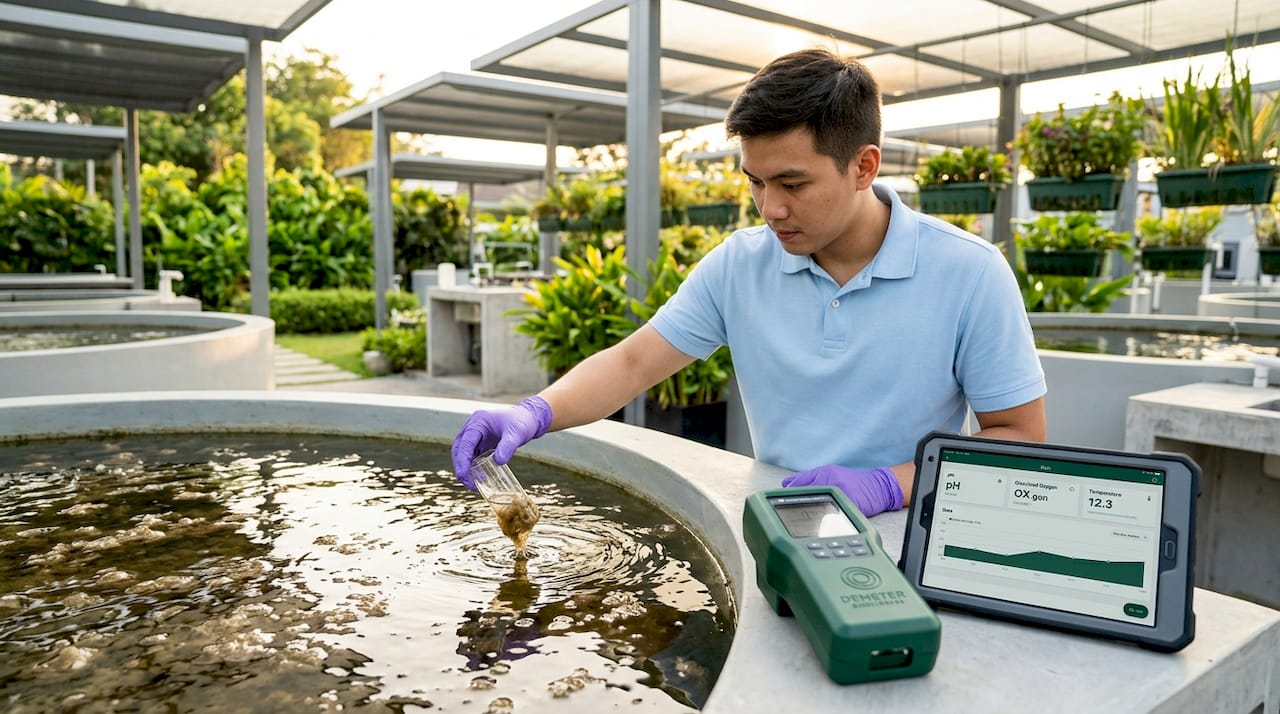
Feed is not just a biological input. It is a financial pressure point. Feed accounts for 40-60% of total production costs in intensive aquaculture. That single statistic explains why feed conversion ratio (FCR) is the number every serious producer tracks obsessively. An FCR of 1.2 versus 1.8 on a 10-ton production cycle can represent tens of thousands of dollars in feed savings.
The counterintuitive finding that has changed how many producers operate: moderate feed restriction often improves results. Feeding at 70% of the nominal ration in biofloc shrimp systems produces 20-40% better biomass outcomes compared to unrestricted feeding, without compromising survival rates. The mechanism is partly metabolic (fish are not wasting energy processing excess feed) and partly environmental (less uneaten feed means better water quality, which means less stress, which means better feed utilization).
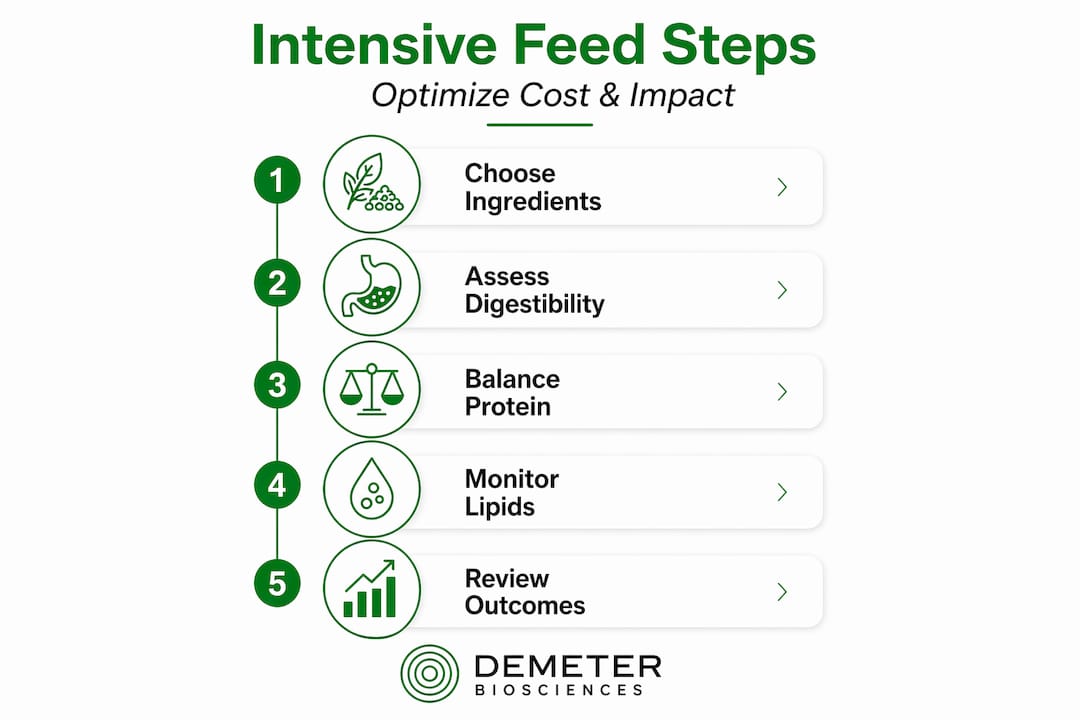
Here is a practical feed management sequence for intensive systems:
- Establish a baseline FCR for your species and system before making any changes. You cannot improve what you have not measured.
- Calibrate feeding rate to biomass, not to appetite. Demand feeders work well for some species, but they can mask water quality problems that suppress appetite and skew your data.
- Reduce rations by 20-30% and monitor water quality and growth for two weeks. Most producers are surprised to find growth rates hold steady while ammonia levels drop.
- Adjust protein levels by growth stage. Juvenile fish need peak protein. Sub-adults can often perform well on 5-10% less crude protein, which meaningfully reduces feed costs.
- Track uneaten feed. Settling tubes or feeding trays placed in the tank for 30 minutes after feeding reveal exactly how much is going to waste.
- Reassess every two weeks. Fish biomass changes fast in intensive systems, and a feeding protocol that was right at stocking can be badly wrong six weeks later.
Key principles to keep in mind:
- Overfeeding is the most common and most expensive mistake in intensive aquaculture.
- Nitrogenous waste from excess protein degrades biofilter performance and increases disease pressure.
- Connecting with expert aquaculture feed advice early in system design saves significantly more than it costs.
- The best feed ingredients are wasted if feeding frequency, timing, and ration size are not matched to species behavior.
Species-specific nutritional considerations and common pitfalls
Every species has a different digestive physiology, and that physiology determines which feed ingredients actually work. Tilapia are omnivores with a long intestinal tract suited to plant-based diets. Salmon are carnivores whose digestive systems are optimized for high-fat animal protein. Feeding them identically is like running diesel in a gasoline engine.
Protein digestibility is the variable most often ignored in feed purchasing decisions. Protein sources need digestibility above 85% to avoid excess nitrogen excretion that damages biofilters, particularly in tilapia intensive farming. A cheaper ingredient with 75% digestibility does not just underperform. It actively harms your system by flooding the water with ammonia that your biofilter was not designed to handle.
Channel catfish illustrate the life stage problem clearly. Protein requirements range from 25% to 55% depending on age and feeding level. Feeding a fingerling ration to a market-size fish wastes protein and money. Feeding a market-size ration to fingerlings can actually impair growth by creating metabolic inefficiency.
Common pitfalls to avoid:
- Antinutritional factors (ANFs) in plant-based ingredients such as trypsin inhibitors in soybean meal reduce protein digestion. Heat treatment neutralizes most of them, but not all. Always verify processing methods with your supplier.
- Excess dietary protein leads to catabolism, where the fish burns protein for energy instead of using it for growth. This is metabolically wasteful and environmentally damaging.
- Ignoring amino acid profiles when switching protein sources creates deficiencies that total protein percentage will not reveal. Always check lysine and methionine levels specifically.
- Assuming one feed formula works across all densities. At very high stocking densities, stress physiology changes nutrient partitioning. Fish under chronic crowding stress use more energy for cortisol production and less for growth, which means your protein requirements effectively increase.
Pro Tip: When evaluating alternative protein ingredients like microalgae or insect meal, run a digestibility trial before committing to a full batch. A two-week feeding trial with 50 fish gives you enough data to make a confident formulation decision without risking an entire production cycle.
Practical steps for applying intensive fish farming nutrition principles
Knowing the science is not the same as running a well-fed farm. These steps translate the research into daily operational practice.
- Map your species' nutritional requirements by life stage before you design your feed program. Use published data as a starting point, then refine based on your system's actual performance.
- Source protein ingredients by digestibility first, price second. The cheapest ingredient per kilogram is rarely the cheapest per unit of absorbed protein.
- Implement a feeding log. Record ration size, feeding frequency, water temperature, and observed appetite daily. Patterns in that data predict problems before they become crises.
- Use feed restriction strategically in biofloc systems. Stable isotope analysis combined with feeding metrics confirms that biofloc contributes meaningfully to nitrogen assimilation, which means you can safely reduce formulated feed rations without starving your fish.
- Incorporate live feeds at critical life stages. Larvae and juveniles of many species have digestive systems that cannot yet process dry pellets efficiently. Live brine shrimp provide highly digestible protein and essential fatty acids in a form that triggers natural feeding behavior.
- Monitor ammonia, nitrite, and dissolved oxygen daily. These parameters are direct indicators of whether your feed management is working. Rising ammonia means you are overfeeding or your protein digestibility is too low.
- Review and adjust your feeding protocol every two weeks. Fish grow fast in intensive systems. A protocol that fits week one is often wrong by week four.
Pro Tip: Pair your microalgae-based nutrition inputs with water quality monitoring rather than treating them as separate management tasks. Microalgae growth in your system is both a feed source and a real-time indicator of nutrient balance.
Why conventional feeding wisdom in intensive fish farming is incomplete
Here is the uncomfortable reality most feed salespeople will not tell you: more feed does not equal more fish. The instinct to push feed rates higher when growth slows is almost always wrong. Slow growth in intensive systems is usually a water quality problem or a stress response, not a caloric deficit. Adding more feed to a stressed system accelerates the problem.
The deeper issue is that conventional feed thinking treats nutrition as a one-way input. You put feed in, fish grow, done. Biofloc systems expose that model as incomplete. When you manage the microbial community correctly, you are running a closed-loop nutrient cycle where fish waste becomes microbial biomass that becomes fish food again. That loop changes the economics of intensive aquaculture fundamentally.
The producers who consistently outperform their peers are not the ones buying the most expensive feed. They are the ones who understand that feed management, water quality management, and biological community management are the same job. Rethinking fish meal's role in your system, from primary input to one component of a broader nutritional strategy, is where that shift begins.
Precision nutrition is not a luxury for large operations. It is the baseline competency that separates farms that survive margin pressure from those that do not.
Enhance your intensive fish farming nutrition with Demeter Biosciences
If the principles above have you rethinking your feed program, the next step is sourcing ingredients that actually deliver on the nutritional promises on the label. Demeter Biosciences produces live brine shrimp fed exclusively on Dunaliella microalgae, guaranteeing at least 40% protein content and consistent fatty acid profiles that wild-harvested brine shrimp simply cannot match.
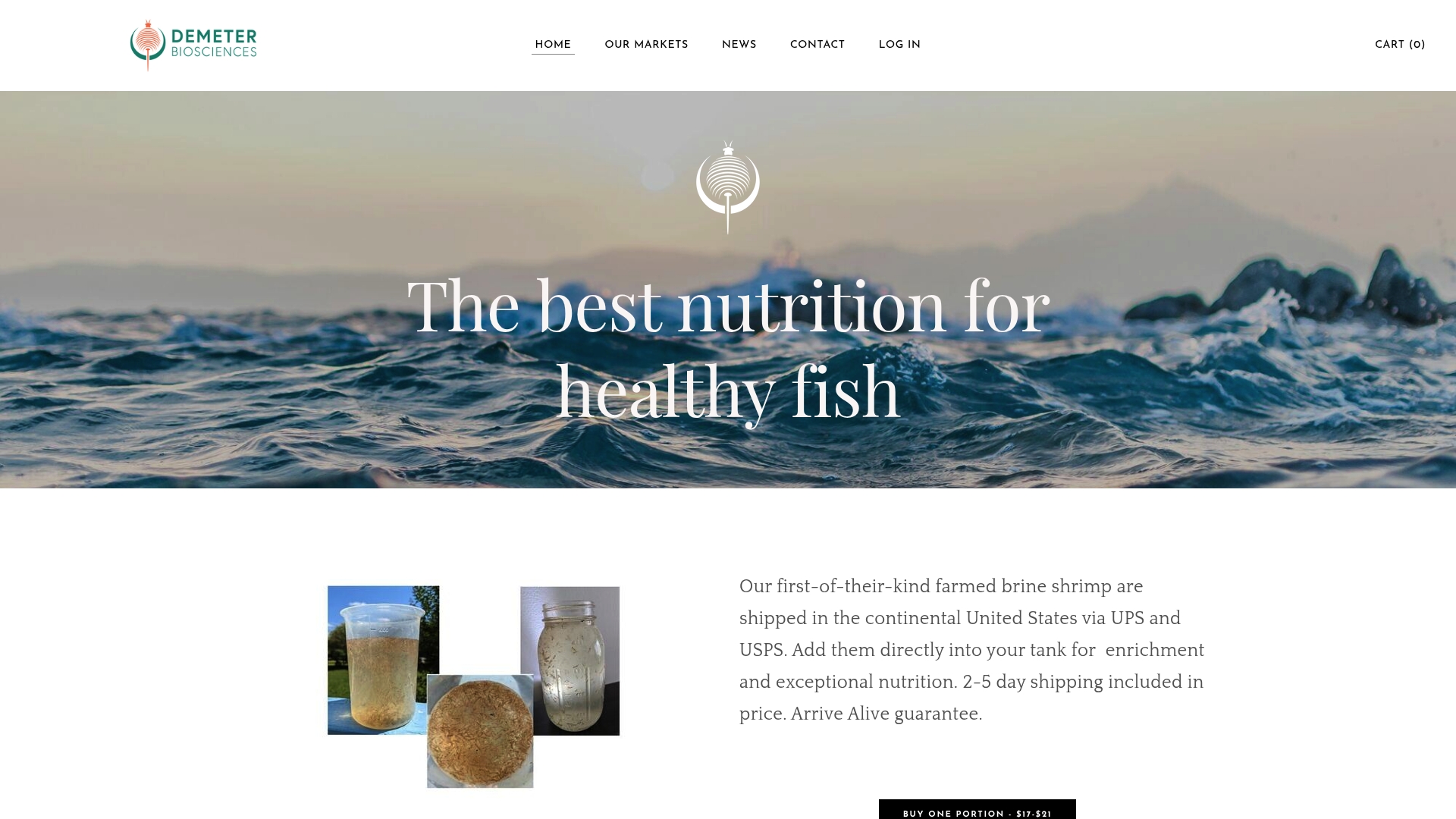
Their brine shrimp products are particularly valuable for larval and juvenile feeding stages where digestibility and nutritional density are non-negotiable. The fish meal products are formulated with digestibility as the primary quality metric, not just crude protein percentage. And the microalgae fish feed options integrate directly into biofloc-based systems, supporting both the microbial community and direct fish nutrition. Subscription plans, bulk retail packages, and direct-to-consumer shipments make it practical for operations of any scale.
Frequently asked questions
What protein levels are optimal for intensive fish farming species?
Protein requirements vary by species and life stage: shrimp juveniles need approximately 38-40% crude protein in biofloc systems, channel catfish range from 25-55% depending on age, and striped catfish perform best at 30% protein with balanced lipids around 6-8%.
How does biofloc technology affect feed needs in intensive systems?
Biofloc provides 30-40% of dietary nitrogen through microbial protein, which allows producers to reduce formulated feed rations without compromising growth or survival rates in well-managed intensive systems.
Why is feed restriction beneficial in intensive aquaculture?
Feeding at 70% of the nominal ration in biofloc shrimp systems produces 20-40% better biomass compared to unrestricted feeding, while simultaneously reducing feed costs and lowering nitrogenous waste that stresses biofilters.
What common mistakes should be avoided in intensive fish feed management?
Using low-digestibility protein sources increases nitrogen excretion by 15-20%, which damages biofilters in systems like tilapia farming. Overfeeding and ignoring species-specific amino acid requirements are the other two mistakes that most consistently undermine production performance.