
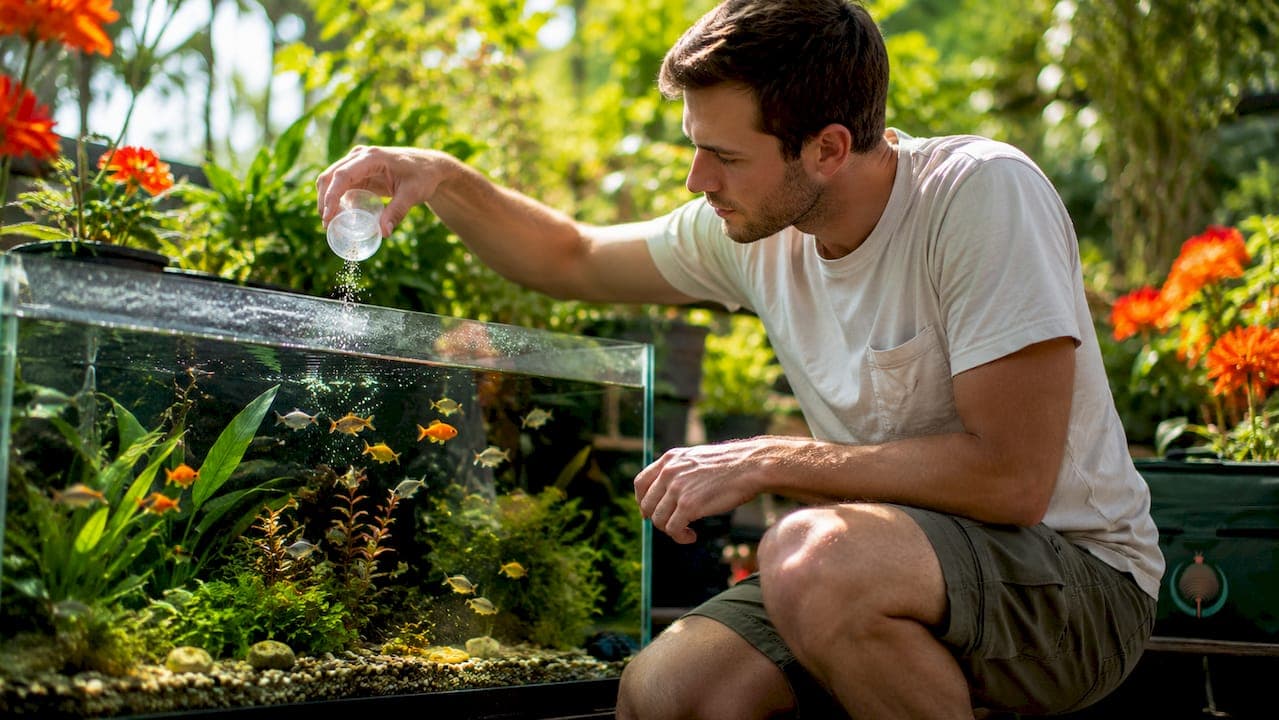
Live fish food is defined as living organisms fed directly to aquarium fish to supply superior nutrition and trigger natural feeding behaviors. The types of live fish food aquarium hobbyists use most often include brine shrimp, bloodworms, daphnia, tubifex worms, microworms, and vinegar eels. Each option carries a distinct nutritional profile, culturing requirement, and ideal use case. Protein content ranges from 42% to 60% across these foods, and that gap matters enormously when you are feeding fry, conditioning breeders, or pushing adult fish into peak color. Choosing the right live food is not about picking the most popular option. It is about matching the food to your fish's life stage, species, and tank setup.
1. Brine shrimp: the gold standard for fry and color enhancement
Brine shrimp (Artemia salina) deliver the highest protein content of any common aquarium live food, at approximately 60% protein. That level of protein makes them the first choice for raising fry and conditioning adult fish for spawning. Their small size at the nauplius stage also makes them physically accessible to larvae that cannot yet take larger prey.
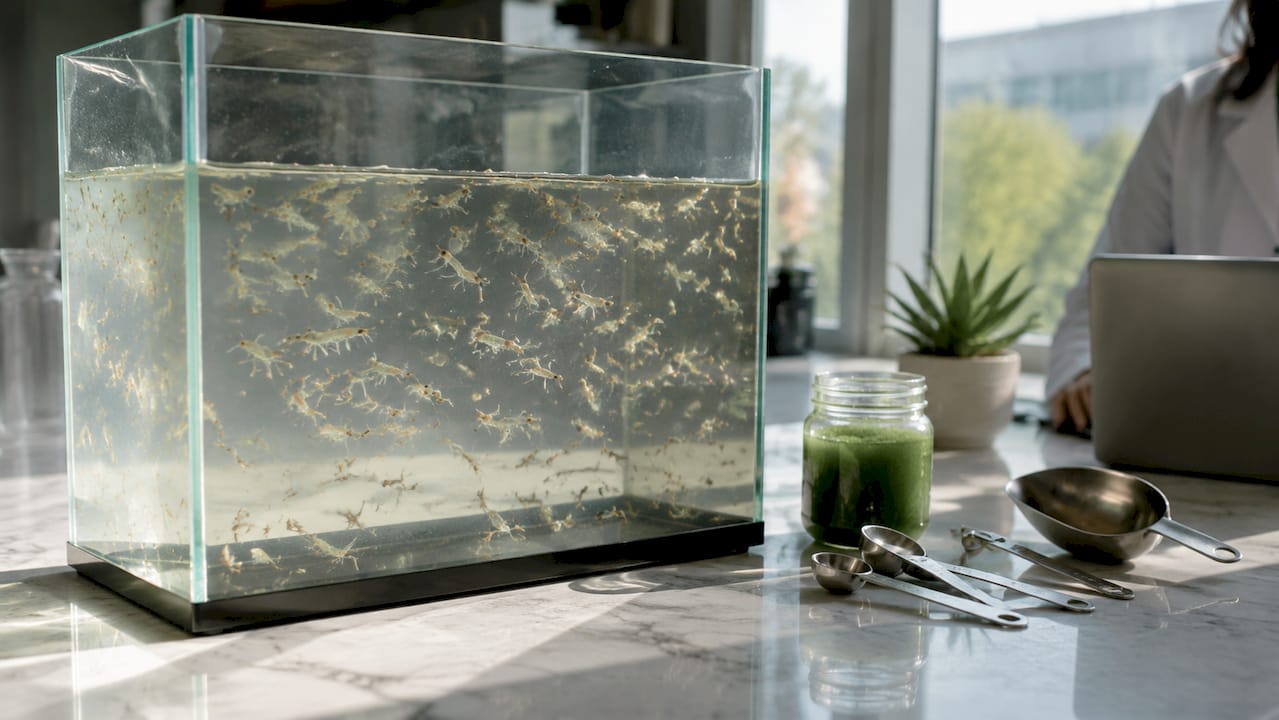
Brine shrimp carry natural carotenoid pigments that pass directly into fish tissue. This is why fish fed live brine shrimp regularly show noticeably richer reds, oranges, and yellows compared to fish on pellet diets alone. The effect is especially visible in cichlids, discus, and livebearers.
Culturing brine shrimp at home is straightforward. You hatch eggs in a saltwater solution under aeration and light, harvest nauplii within 24–48 hours, and rinse before feeding. For a more consistent supply without the hatch cycle, Demeterbioscience farms brine shrimp fed exclusively on Dunaliella algae in controlled land-based systems, guaranteeing at least 40% protein and eliminating the nutritional variability common in wild-harvested shrimp.
- Feed brine shrimp nauplii to fry from day one after yolk sac absorption
- Use adult brine shrimp for conditioning breeding pairs
- Rinse harvested shrimp in fresh water before adding to the tank
- Combine with other live foods for nutritional variety
Pro Tip: Enrich newly hatched brine shrimp nauplii by soaking them in a high-quality algae suspension for 24 hours before feeding. This "gut-loading" technique passes extra nutrients directly to your fish, especially useful for larval fish nutrition.
2. Bloodworms and tubifex worms: high-protein options with precautions
Bloodworms are the larvae of Chironomus midges and carry roughly 55% protein. Most carnivorous and omnivorous aquarium fish accept them eagerly. Their red color comes from hemoglobin, which also makes them highly visible in the water column and easy for fish to track.
Tubifex worms are a traditional conditioning food, especially for breeding cichlids and bettas. They are calorie-dense and stimulate strong feeding responses. The problem is sourcing. Tubifex worms can carry parasites and bacteria, and wild-collected worms from polluted waterways are particularly risky. Cultured tubifex worms or those from verified suppliers are the only safe option.
| Feature | Bloodworms | Tubifex worms |
|---|---|---|
| Protein content | ~55% | Moderate, calorie-dense |
| Disease risk | Low to moderate | High if wild-sourced |
| Best use | General feeding, carnivores | Breeding conditioning |
| Culture difficulty | Moderate | Moderate with care |
| Water quality impact | Moderate | High if overfed |
- Limit bloodworm feedings to 2–3 times per week to avoid excess organic load
- Never use tubifex worms collected from wild, polluted water sources
- Clear culture water is the key indicator that tubifex worms are safe to feed
- Rinse both worm types thoroughly before adding to the tank
Pro Tip: When buying live bloodworms from a store, check that the water in the bag is clear and odor-free. Cloudy or foul-smelling water signals bacterial contamination that can crash your tank.
3. Daphnia and small worms: digestion aids and starter foods for fry
Daphnia, often called water fleas, provide around 42% protein along with dietary fiber from their exoskeleton. That fiber acts as a natural laxative for fish, making daphnia the go-to remedy for constipation caused by overfeeding dry foods. They are not the highest-protein option, but their digestive benefit sets them apart from every other live food on this list.
Microworms (Panagrellus redivivus) and vinegar eels (Turbatrix aceti) are the best first foods for fry too small to take brine shrimp nauplii. Both are tiny, free-swimming, and survive in fresh water long enough for fry to find them. Their erratic movement in the water column triggers hunting instincts in fish that would otherwise ignore stationary food.
Culturing microworms at home requires only oatmeal, yeast, and a shallow container. Vinegar eels need apple cider vinegar and a slice of apple. Both cultures last weeks with minimal maintenance, making them among the easiest live foods to produce continuously.
- Start fry on microworms or vinegar eels before transitioning to brine shrimp nauplii
- Use daphnia once or twice a week as a digestive supplement for adult fish
- Harvest microworms by wiping the culture surface with a damp cloth
- Rinse vinegar eels through a fine mesh before feeding to remove acetic acid
Pro Tip: Keep two microworm cultures running on a two-week stagger. When one culture crashes, the second is at peak production. You never run out of fry food at the worst possible moment.
4. Worm varieties: whiteworms, blackworms, and grindal worms
Whiteworms (Enchytraeus albidus) are a high-fat, high-protein live food best suited for conditioning fish before spawning. They are rich enough that overuse causes fatty liver in fish. Feed them sparingly, no more than twice a week, and only to adult fish in active breeding programs.
Blackworms (Lumbriculus variegatus) are a leaner alternative that most freshwater fish accept readily. They survive in the aquarium substrate for hours, which means uneaten worms do not immediately foul the water. This makes blackworms one of the more forgiving live foods for water quality management. Many hobbyists keep a small blackworm culture in a shallow tray of cool, flowing water.
Grindal worms (Enchytraeus buchholzi) sit between whiteworms and microworms in size, making them ideal for medium-sized fry and small adult fish like nano species and dwarf cichlids. They culture easily in a plastic container with coconut fiber substrate and dry dog food as a feed source.
- Use whiteworms only for breeding conditioning, not as a staple
- Blackworms suit most freshwater carnivores and omnivores as a regular feed
- Grindal worms bridge the gap between microworms and adult live foods
- Harvest grindal worms by placing food on a glass plate on the culture surface
5. Marine live foods: copepods and rotifers for reef tanks
Copepods and rotifers are the foundational live foods for marine aquariums and reef tanks. Rotifers are the only starter food suitable for many marine larvae due to their microscopic size. Copepods feed a wide range of reef fish, including mandarins and seahorses that refuse prepared foods entirely.
Copepod cultures thrive in refugiums connected to the main display tank. A healthy refugium releases copepods continuously into the display, creating a self-sustaining live food supply. This is the closest a home aquarium gets to replicating a natural reef feeding environment.
Rotifers require phytoplankton to culture successfully. Products like Nannochloropsis algae paste work well as a rotifer feed. The learning curve is steeper than freshwater live foods, but marine breeders consider rotifers non-negotiable for raising clownfish, dottybacks, and gobies from larvae.
6. Scuds: the underrated all-around freshwater live food
Scuds (Gammarus species) are freshwater crustaceans that combine high protein, self-renewal, affordability, and strong hunting stimulation better than almost any other live food. They reproduce quickly in a planted tank or separate culture and require minimal feeding. Most freshwater fish species pursue them aggressively.
The unique advantage of scuds is their dual function. Scuds consume leftover detritus and biofilm, acting as a biological cleanup crew when fish do not eat them immediately. No other common live food offers that benefit. A scud colony in a planted tank essentially maintains itself while providing continuous live prey.
Scuds are less commonly stocked in pet stores than brine shrimp or bloodworms, but online aquarium communities and specialty vendors sell starter cultures. Once established, a scud culture can supply a small tank indefinitely with almost no intervention.
7. How to choose the right live food for your aquarium
Choosing among the best live food for aquariums comes down to three factors: your fish's life stage, its species diet type, and how much time you can invest in culturing.
| Live food | Protein | Best for | Culture difficulty | Disease risk |
|---|---|---|---|---|
| Brine shrimp | ~60% | Fry, all species | Easy | Low |
| Bloodworms | ~55% | Carnivores, omnivores | Moderate | Low to moderate |
| Daphnia | ~42% | Digestive aid, all species | Easy | Low |
| Tubifex worms | Moderate | Breeding conditioning | Moderate | High if wild |
| Microworms | Moderate | Tiny fry | Very easy | Very low |
| Scuds | High | Freshwater, all sizes | Easy | Very low |
| Whiteworms | High fat | Breeding adults | Easy | Low |
Feed live food only what fish consume within 2–3 minutes, and limit live food sessions to 2–4 times per week. Overfeeding any live food raises organic load and degrades water quality faster than most hobbyists expect.
Quarantine live foods for at least one week from uncertain sources before introducing them to your display tank. This single step eliminates most pathogen risk. Home-cultured live foods skip this requirement entirely, which is one of the strongest arguments for learning to culture your own.
- Fry: start with microworms or rotifers, then transition to brine shrimp nauplii
- Small adult fish: grindal worms, daphnia, and adult brine shrimp
- Carnivorous adults: bloodworms, blackworms, and scuds
- Breeding conditioning: whiteworms and tubifex worms (cultured only)
- Reef fish: copepods and rotifers from a refugium
Combining live and prepared foods delivers both nutritional completeness and behavioral enrichment. Live food alone rarely covers every micronutrient a fish needs. A rotation of live, frozen, and quality pellets gives fish the full spectrum.
Key takeaways
Live fish food delivers nutritional and behavioral benefits that prepared foods cannot replicate, and choosing the right type depends on fish species, life stage, and your willingness to culture.
| Point | Details |
|---|---|
| Protein varies widely | Brine shrimp lead at 60% protein, daphnia provide 42%, with bloodworms at 55% in between. |
| Culturing beats buying | Home-cultured live foods eliminate disease risk and provide a consistent, cost-effective supply. |
| Feed with limits | Offer live food 2–4 times per week and only what fish consume in 2–3 minutes. |
| Quarantine wild sources | Hold live foods from unknown sources for one week before adding them to your display tank. |
| Match food to fish stage | Fry need microworms or nauplii first; adults need variety across worms, crustaceans, and shrimp. |
Why live food changed how I think about fish keeping
Most hobbyists treat live food as an occasional treat. I think that framing sells it short. Live prey triggers instincts that prepared food simply cannot activate. Fish that hunt regularly show less aggression toward tankmates, display stronger coloration, and recover from stress faster. That is not anecdotal. It shows up consistently in tanks where live food is part of a regular rotation.
The part most guides skip is the sourcing discipline. Home cultivation is not just cheaper. It is genuinely safer. Wild-collected tubifex worms and bloodworms from unknown suppliers carry real pathogen risk. I have seen tanks crash from a single batch of poorly sourced live food. The fix is simple: culture what you can, quarantine what you buy, and never skip the rinse.
The best approach I have found is a rotation of three or four live food types on a weekly schedule. Brine shrimp twice a week, daphnia once, and blackworms or scuds once. That rotation covers protein, digestive support, and behavioral stimulation without overloading any single food's risks. You can learn more about why fish prefer live food and how to build that rotation intentionally.
Live food is not complicated. It rewards the hobbyists who take it seriously with fish that look, behave, and breed the way they were designed to.
— Demeter
Upgrade your tank with Demeterbioscience brine shrimp
Demeterbioscience farms brine shrimp in controlled, land-based systems fed exclusively on Dunaliella algae. Every batch guarantees at least 40% protein and arrives free from the seasonal variability that makes wild-harvested shrimp unreliable. Whether you are raising fry, conditioning breeders, or simply want fish with richer color and stronger feeding responses, the quality difference is immediate.
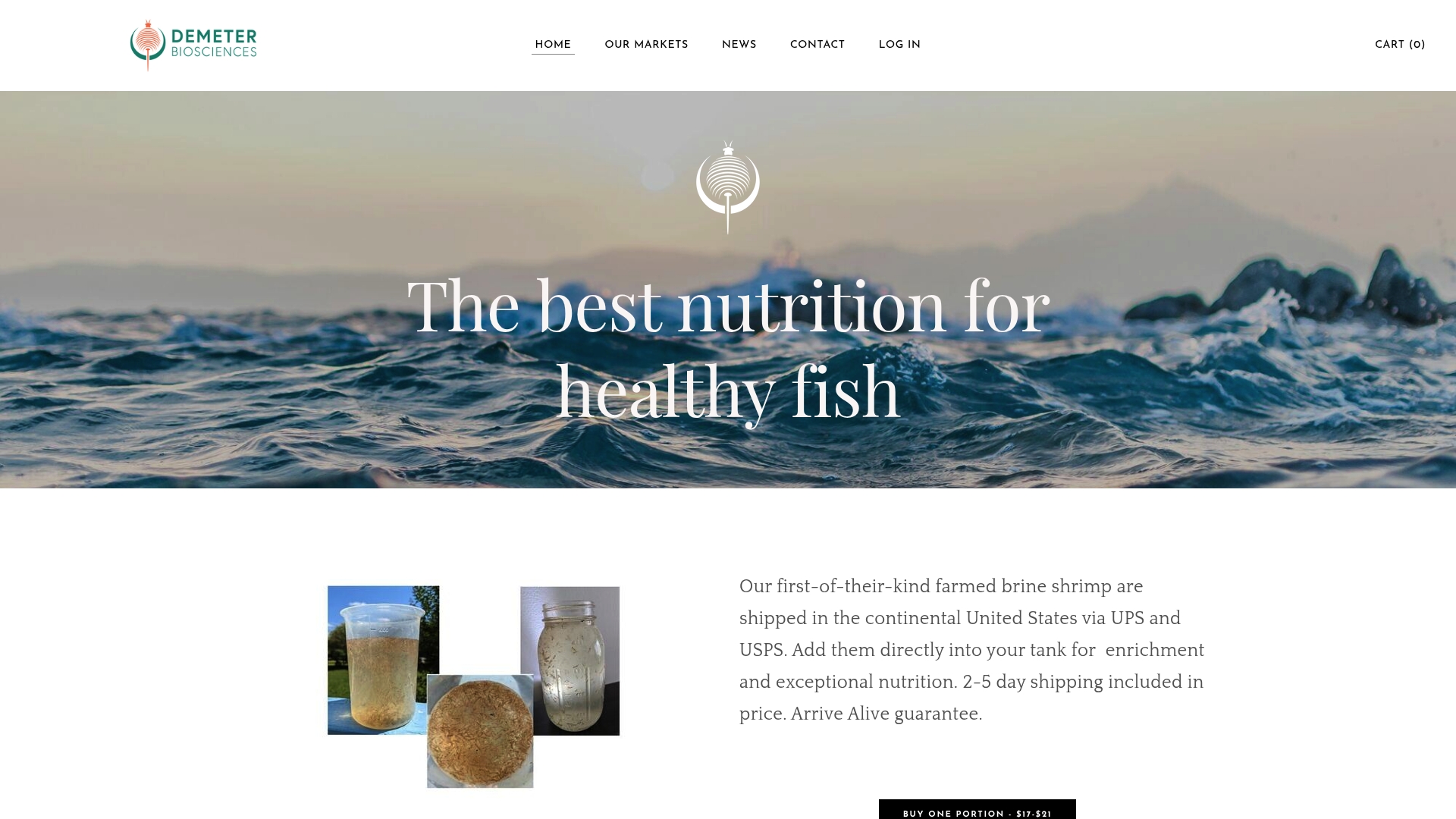
Demeterbioscience ships live brine shrimp direct to your door with subscription options for hobbyists who want a consistent monthly supply. Bulk packages are also available for local fish stores and aquarium facilities. If you want to explore the full range of products, visit the brine shrimp products page to find the right fit for your tank size and feeding schedule.
FAQ
What are the most nutritious types of live fish food?
Brine shrimp lead with approximately 60% protein, followed by bloodworms at 55% and daphnia at 42%. The best choice depends on your fish species and life stage.
How often should I feed live food to aquarium fish?
Feed live food 2–4 times per week, offering only what fish consume within 2–3 minutes per session to protect water quality.
Is it safe to feed wild-caught live food to aquarium fish?
Wild-caught live foods carry a risk of introducing parasites and bacteria. Quarantine them for at least one week before use, or choose home-cultured or verified supplier options instead.
What live food is best for raising fry?
Microworms and vinegar eels suit the smallest fry, followed by brine shrimp nauplii as fry grow. Marine larvae typically require rotifers as their first food.
Can I culture live fish food at home?
Yes. Brine shrimp, microworms, daphnia, grindal worms, and scuds are all practical to culture at home with minimal equipment and low ongoing cost.