
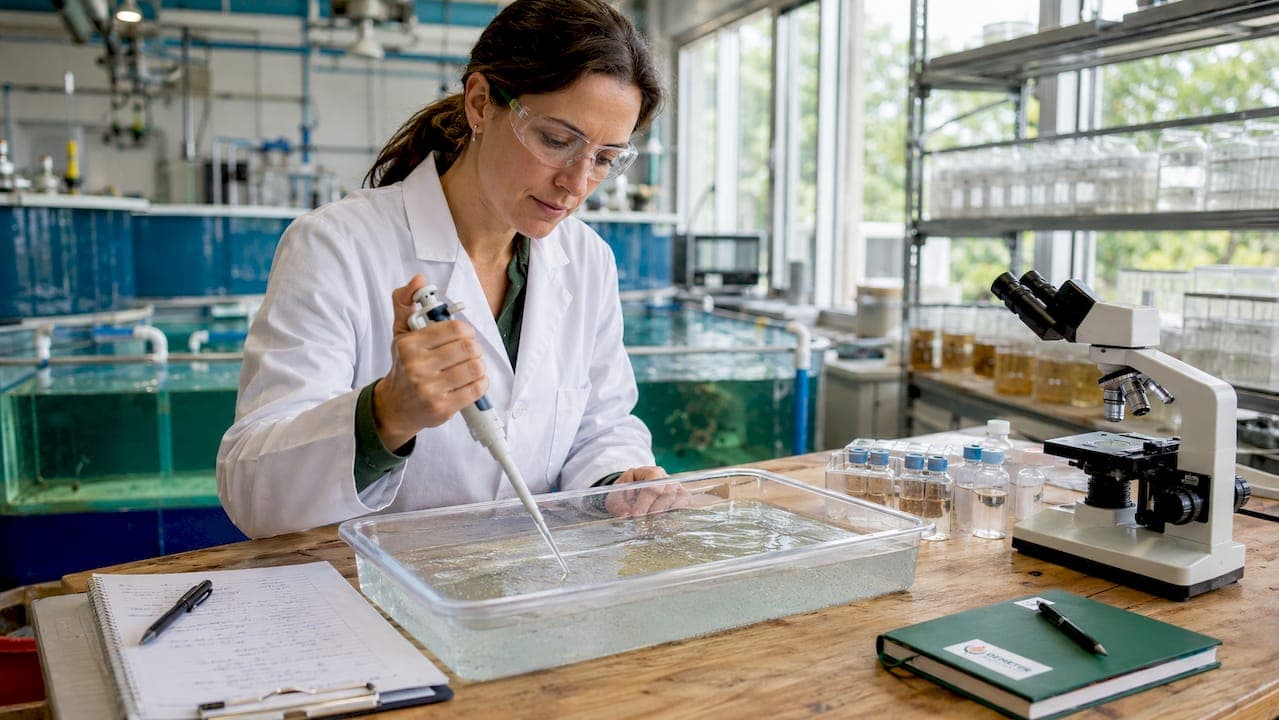
Source controlled-diet brine shrimp cultivation is the practice of managing Artemia diet and environment to maximize nutritional output for aquatic species research and aquaculture. In the industry, this approach is formally called dietary enrichment and gut-loading of Artemia, and source controlled-diet brine shrimp research is the experimental framework built around it. Brine shrimp are indispensable live feeds because their bioavailability and movement stimulus cannot yet be replicated by artificial diets. That makes controlling what they eat, and when, the single most powerful lever available to aquaculture nutritionists. This guide covers every stage: environmental prerequisites, gut-loading protocols, harvesting windows, and the emerging role of biofloc systems in scaling production sustainably.
What does source controlled-diet brine shrimp research require?
Effective controlled-diet cultivation starts with two non-negotiable inputs: high-quality cysts and a precisely managed hatching environment. Hatching quality depends on controlling light, temperature, salinity, oxygen, pH, and cyst density, and the optimal values vary by Artemia strain. Getting these parameters wrong before enrichment even begins wastes both cysts and feed.
The table below summarizes the key parameters for 2026 industry-standard hatching conditions:
| Parameter | Recommended Range | Effect of Deviation |
|---|---|---|
| Temperature | 28°C | Slows hatch rate; reduces synchrony |
| Salinity | 5–35 g/L | Affects osmotic stress and hatch efficiency |
| Dissolved oxygen | >6 mg/L | Below threshold causes nauplii mortality |
| pH | 8.0–8.5 | Low pH reduces hatching efficiency |
| Light intensity | 1,000–2,000 lux | Darkness inhibits hatching trigger |
| Cyst density | <5 g/L | Overcrowding reduces oxygen and hatch rate |
Cyst quality is equally critical. Decapsulated cysts from verified suppliers reduce shell contamination and improve nauplii separation downstream. Strain selection also matters: Artemia franciscana from the Great Salt Lake and San Francisco Bay are the most widely used in commercial hatcheries because their nauplii size and fatty acid profiles are well characterized.
Pro Tip: Source cysts with a documented hatching efficiency above 80% and verify the lot number against the supplier's quality certificate before scaling up any enrichment trial.
The timing of the first feeding opportunity is where most protocols fail. Newly hatched nauplii retain a nutrient-dense yolk sac for 0–12 hours post-hatch, containing 56–60% protein and 17–23% lipids on a dry weight basis. After 24 hours, internal energy reserves deplete and nutritional value drops sharply. This means the window between hatch and the start of gut-loading is not a scheduling preference. It is a hard biological constraint.
How do gut-loading and enrichment maximize artemia nutritional content?
Gut-loading is the process of feeding nauplii a nutrient-rich diet for 12–24 hours before harvest so that target species ingest those nutrients directly. The key insight from dietary enrichment research is that Artemia's fatty acid profile is almost entirely defined by the enrichment feed rather than by strain genetics. You are not selecting a nutritious organism. You are building one.
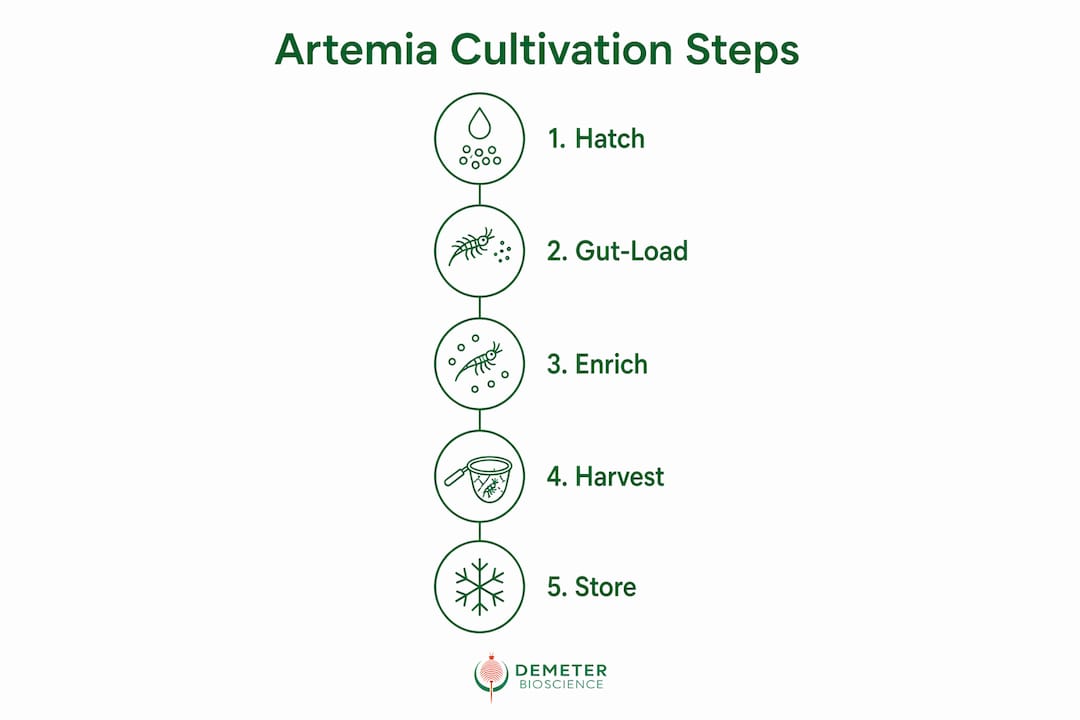
The standard enrichment procedure follows these steps:
- Transfer freshly hatched nauplii (within 6 hours of hatch) into a clean enrichment vessel at a density of 100–300 individuals per milliliter.
- Maintain continuous aeration at a rate sufficient to keep nauplii in suspension without mechanical damage.
- Add enrichment product at the manufacturer's recommended dose. Common options include INVE's Selco products, Nannochloropsis paste, and Schizochytrium sp. concentrate.
- Hold at 25–28°C for 12–24 hours. Do not exceed 24 hours, as water quality degrades and nauplii begin to metabolize stored lipids.
- Harvest, rinse, and feed immediately or store at 4°C for no more than 2 hours.
The choice of enrichment product determines the final lipid profile. Schizochytrium sp. is the preferred DHA source because it delivers high concentrations of docosahexaenoic acid without the eicosapentaenoic acid imbalance common in fish oil emulsions. Research confirms that enriching with Schizochytrium sp. and taurine for 12 days improves lipid metabolism and immune gene expression in Pacific white shrimp larvae, with whole-body DHA levels increasing markedly. That result translates directly to improved larval survival and stress resistance in hatchery conditions.
The comparison below shows how common enrichment products differ in application:
| Enrichment Product | Primary Nutrient Delivered | Enrichment Duration | Key Limitation |
|---|---|---|---|
| INVE Selco (DHA Protein Selco) | DHA, EPA, protein | 12–18 hours | Cost per unit volume |
| Nannochloropsis paste | EPA, carotenoids | 18–24 hours | Lower DHA than Schizochytrium |
| Schizochytrium sp. concentrate | DHA, taurine precursors | 12–16 hours | Requires precise dosing |
| Dunaliella salina live culture | Carotenoids, protein | 24 hours | Lower lipid density |
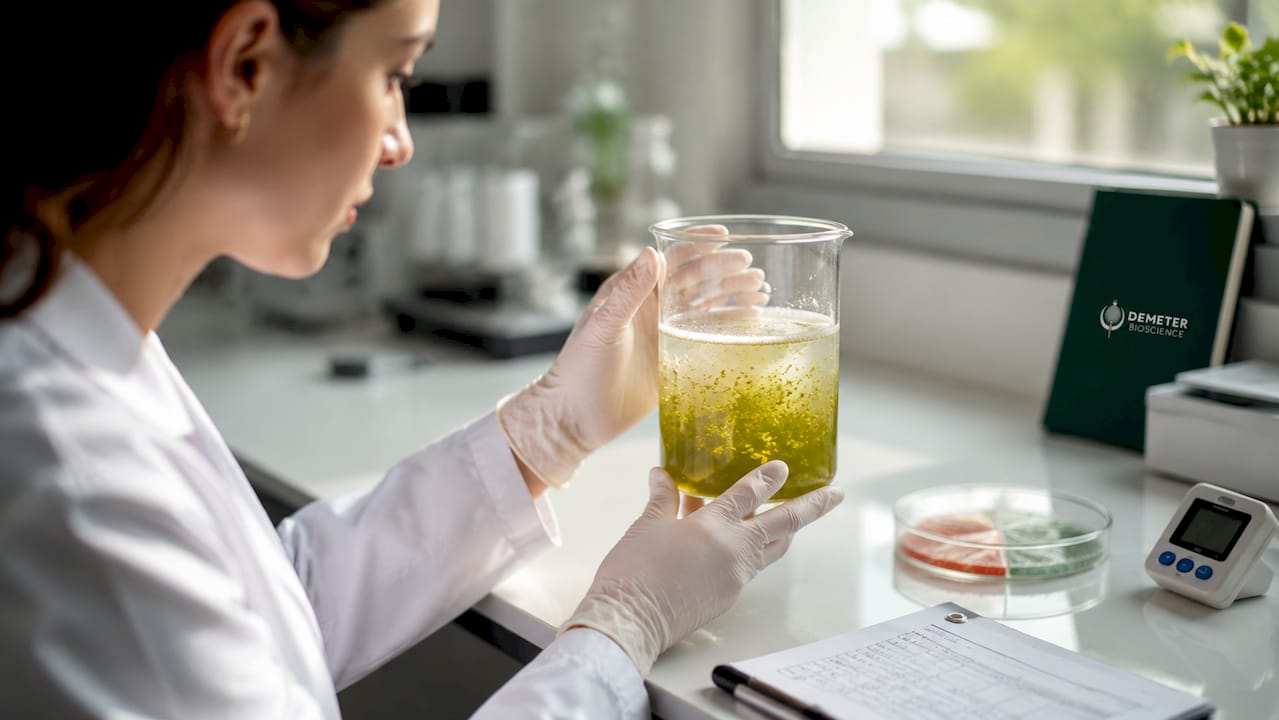
Pro Tip: A gut-loading period of 12–24 hours with continuous aeration is the minimum for effective lipid retention. Cutting enrichment to 8 hours to meet a feeding schedule is the most common and most costly mistake in hatchery operations.
How should you harvest and store enriched brine shrimp?
Post-enrichment handling determines whether the nutritional gains from gut-loading survive to the target species. The peak metabolic window of 12–18 hours post-hatch means that delays in feeding or improper storage directly reduce essential fatty acids available to larvae. Speed and cleanliness are the two variables you control at this stage.
Follow this sequence to minimize nutritional loss:
- Drain the enrichment vessel through a 125-micron sieve to separate nauplii from enrichment media and cyst debris.
- Rinse nauplii thoroughly with clean, aerated seawater at the same salinity as the target culture to prevent osmotic shock.
- Transfer to a holding vessel with gentle aeration. Do not allow nauplii to settle or form dense aggregations, which deplete oxygen locally.
- Feed within 30 minutes of harvest for maximum nutritional delivery. If immediate feeding is not possible, store at 4°C in aerated seawater for no more than 2 hours.
- Never reuse enrichment water. Bacterial loads in spent enrichment media can introduce pathogens to larval tanks.
The table below summarizes the critical checkpoints for post-enrichment handling:
| Stage | Action Required | Time Limit |
|---|---|---|
| Separation | Sieve at 125 microns | Within 10 minutes of harvest |
| Rinsing | Two passes with clean seawater | Immediately after sieving |
| Holding | Aerated vessel at 4°C | Maximum 2 hours |
| Feeding | Deliver to larval tanks | Within 30 minutes preferred |
Pro Tip: For brine shrimp used in scientific research applications where nutritional consistency is critical, document harvest time on every batch. Variance in feeding time is a hidden confounding variable in many dietary impact studies.
Can biofloc systems use sugar beet raffinate to scale artemia production?
Industrial-scale Artemia cultivation faces a cost ceiling: high-quality microalgae are expensive to produce and difficult to supply consistently. Biofloc technology addresses this by cultivating a microbial community within the culture vessel that serves as a supplemental feed source, reducing reliance on external algae inputs. The carbon-to-nitrogen ratio in the system controls whether the biofloc community is nutritionally useful or simply a waste accumulation problem.
Recent research on Artemia franciscana shows that sugar beet raffinate as a carbon source in biofloc systems maintains total organic carbon below 150 mg/L while sustaining healthy Artemia performance. At a C/N ratio of 9.5–10.5, feeds replacing 60–80% of algae with raffinate yield 20–30% higher growth and a 73% reduction in feed costs. That is a result with direct implications for commercial hatcheries operating at scale.
Key operational points for biofloc integration include:
- Monitor total organic carbon continuously. TOC must stay below 150 mg/L to prevent culture collapse from oxygen depletion and toxic metabolite accumulation.
- Maintain C/N ratio between 9.5 and 10.5 by adjusting raffinate addition relative to nitrogen inputs from feed and waste.
- Combine raffinate-based biofloc with a baseline algae supply. Complete algae removal degrades the fatty acid profile of nauplii even when growth metrics remain acceptable.
- Use Artemia franciscana strains with documented tolerance to elevated suspended solids, as biofloc systems carry higher turbidity than conventional clear-water cultures.
The trade-off is real. Biofloc systems reduce cost and improve growth, but they require more intensive water quality monitoring than algae-only systems. For research applications where nutritional consistency is the primary variable, clear-water enrichment protocols remain the standard. For commercial production where cost per kilogram of nauplii is the primary metric, raffinate-based biofloc is a credible and well-supported alternative. Demeterbioscience's approach of feeding Artemia exclusively on Dunaliella algae in land-based systems represents a different point on this trade-off curve, prioritizing nutritional consistency and organic certification over cost minimization.
Key takeaways
Controlled-diet Artemia cultivation requires precise timing, verified enrichment protocols, and rigorous post-harvest handling to deliver consistent nutritional value to target aquatic species.
| Point | Details |
|---|---|
| Nutritional window is fixed | Nauplii peak at 0–12 hours post-hatch; harvest and enrich within this window without exception. |
| Fatty acid profile is feed-dependent | Artemia's DHA and EPA content reflects enrichment diet, not strain genetics. |
| Enrichment duration matters | A full 12–24 hour aerated gut-loading period is required for effective lipid retention. |
| Biofloc reduces cost at scale | Sugar beet raffinate at C/N 9.5–10.5 cuts feed costs by 73% while maintaining Artemia performance. |
| Post-harvest handling is critical | Feed within 30 minutes of harvest or store at 4°C for no more than 2 hours to preserve fatty acids. |
What controlled-diet cultivation has taught us at Demeterbioscience
The most underestimated variable in Artemia nutrition work is not the enrichment product. It is the gap between hatch and the start of enrichment. Researchers often optimize the gut-loading protocol in detail while allowing 4 to 6 hours of drift between hatch confirmation and the transfer to enrichment vessels. By that point, the nauplii have already consumed a meaningful fraction of their yolk reserves. The enrichment data looks clean, but the baseline was already compromised.
The second pattern we see consistently is over-reliance on enrichment product labels. Dosing instructions are written for average conditions. Water temperature, nauplii density, and aeration rate all affect actual nutrient uptake. A protocol that works at 100 nauplii per milliliter may under-deliver at 250 per milliliter even with identical product dosing.
The future of this field points toward hybrid systems: live Artemia enriched with defined microalgae profiles for hatchery-critical stages, with formulated diets filling in where live feed logistics create gaps. Artificial feeds cannot yet fully substitute for live Artemia because movement stimulus and bioavailability remain unmatched. That gap will narrow, but it will not close in the near term. The practical implication is that brine shrimp nutrition for larval fish will remain a precision discipline, not a commodity input, for the foreseeable future.
— Demeter
Demeterbioscience's controlled-diet artemia for research and aquaculture
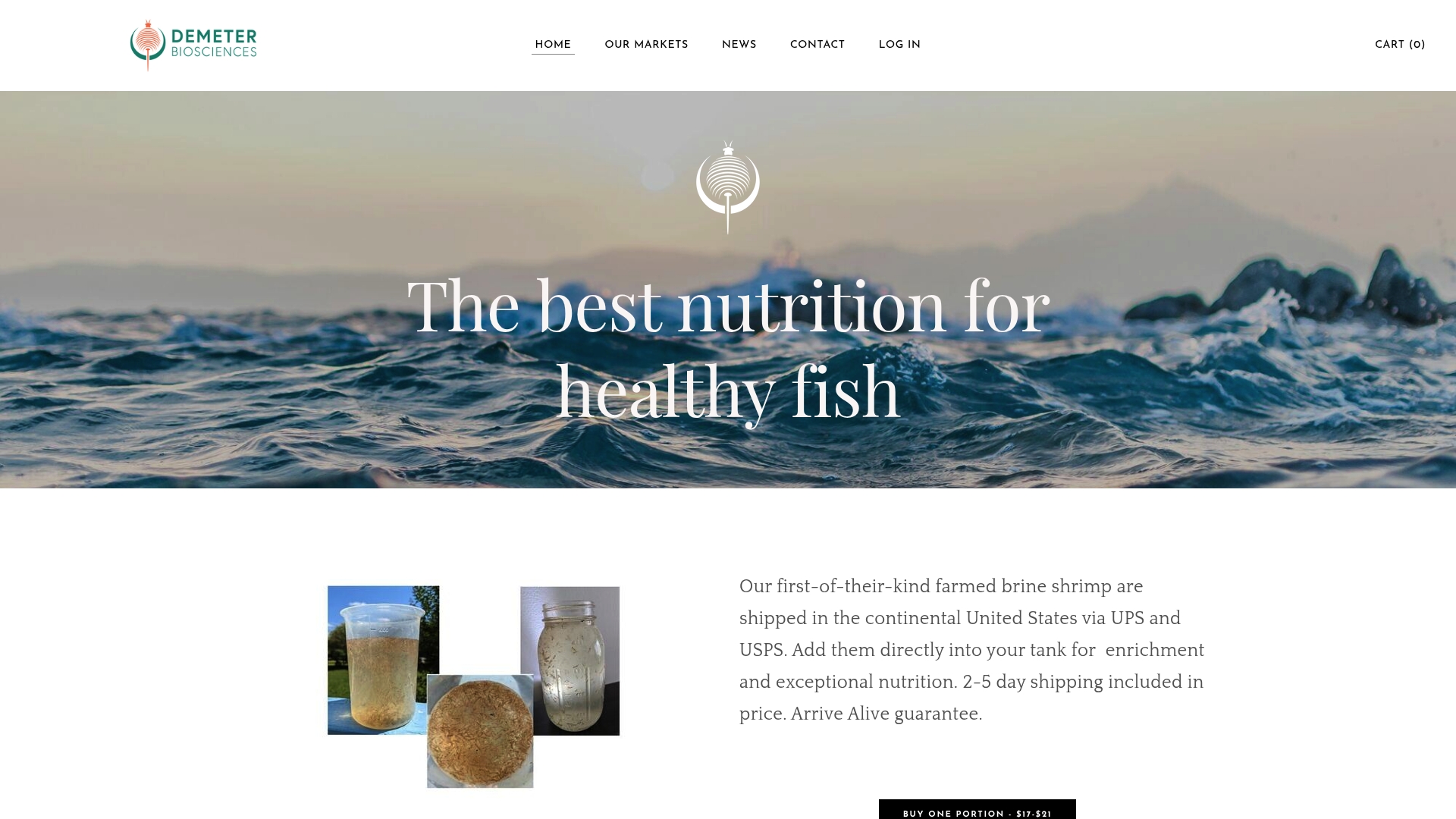
Demeterbioscience produces live brine shrimp fed exclusively on Dunaliella algae in land-based, controlled systems, delivering a minimum of 40% protein content with consistent nutritional profiles across every batch. For researchers and aquaculture professionals who need a verified dietary baseline, that consistency removes a major source of experimental variance. Demeterbioscience ships live Artemia directly, with subscription plans for ongoing research programs and bulk options for commercial hatcheries. If you are sourcing for a study where diet-controlled Artemia are the independent variable, the quality of your source organism is not a detail. Explore the full product range at Demeterbioscience's brine shrimp products or contact the team to discuss research-specific supply requirements.
FAQ
What is source controlled-diet brine shrimp research?
Source controlled-diet brine shrimp research is the study of how managing Artemia diet and environmental inputs affects their nutritional composition and performance as live feeds in aquaculture. The formal industry term for the core method is dietary enrichment and gut-loading of Artemia.
How long should brine shrimp be gut-loaded before feeding?
A minimum of 12–24 hours of aerated enrichment is required for effective lipid retention. Shorter periods under-deliver DHA and EPA regardless of the enrichment product used.
What enrichment feed delivers the highest DHA in artemia?
Schizochytrium sp. concentrate delivers the highest DHA concentrations among common enrichment feeds. Research confirms it improves whole-body DHA levels and immune gene expression in Pacific white shrimp larvae when combined with taurine.
Can biofloc systems replace microalgae in artemia cultivation?
Biofloc systems using sugar beet raffinate can replace 60–80% of algae inputs while maintaining growth performance, but complete replacement degrades the fatty acid profile of nauplii. A baseline algae supply remains necessary for nutritional quality.
Why does harvest timing affect artemia nutritional value?
Nauplii retain their yolk sac nutrients for only 12–18 hours post-hatch. After that window, internal energy reserves deplete and key essential fatty acids decline, reducing the feed value delivered to larval fish and shrimp.