

Brine shrimp (Artemia spp.) and bloodworms (Chironomidae larvae) are the two most widely used live feeds in aquarium and aquaculture nutrition, each delivering distinct macronutrient and micronutrient profiles that directly affect fish growth, coloration, and survival. The proximate composition comparison between these feeds, known formally as live feed nutritional analysis, reveals that neither source is universally superior. Protein content, lipid quality, digestibility, and enrichment status all shift the equation depending on fish species, life stage, and production goals. Understanding these differences is what separates a functional feeding program from an optimized one.
What are the core nutritional profiles of brine shrimp vs bloodworms?
Brine shrimp and bloodworms both qualify as high-protein live feeds, but their macronutrient ranges differ in ways that matter operationally. Dried brine shrimp nauplii contain protein between 37% and 71% dry weight, lipids from 12% to 30%, carbohydrates from 11% to 23%, and ash from 4% to 21%. That range is not a data error. It reflects genuine biological and processing variability across strains, instar stages, and enrichment protocols.
Bloodworms carry protein contents around 50% to 60% dry weight, with lipids roughly 13% to 15%. Those figures are narrower, but the data behind them is less rigorous. Most bloodworm nutritional data originates from hobby and fish-keeping sources rather than peer-reviewed studies, which means treating these numbers as typical reported ranges is the scientifically prudent approach.
| Nutrient | Brine shrimp (dry weight) | Bloodworms (dry weight) |
|---|---|---|
| Protein | 37%–71% | ~50%–60% |
| Lipids | 12%–30% | ~13%–15% |
| Carbohydrates | 11%–23% | Not well documented |
| Ash/minerals | 4%–21% | Not well documented |
One critical detail that hobbyists frequently overlook: these percentages are expressed on a dry-weight basis. When comparing the two feeds in practice, moisture content normalization is required for valid nutritional insight. A frozen bloodworm and a live brine shrimp nauplius are not directly comparable without accounting for water content, which can exceed 80% in live forms.
Bloodworms carry a notable advantage in micronutrient density. They contain significant iron content that supports fish coloration and blood oxygen transport. This is why discus, bettas, and cichlid keepers often reach for bloodworms when targeting color enhancement. Brine shrimp, by contrast, deliver carotenoids when fed on pigment-rich algae like Dunaliella, which also drives coloration through a different biochemical pathway.
Pro Tip: When evaluating any nutritional data for live feeds, always check whether the figures are reported on a dry-weight or wet-weight basis. Mixing the two without conversion produces meaningless comparisons.
How do enrichment and processing methods affect nutritional value?
The form in which you deliver brine shrimp or bloodworms to your fish matters as much as the raw nutritional profile. Processing and enrichment can either preserve or degrade the nutritional quality that makes these feeds valuable in the first place.
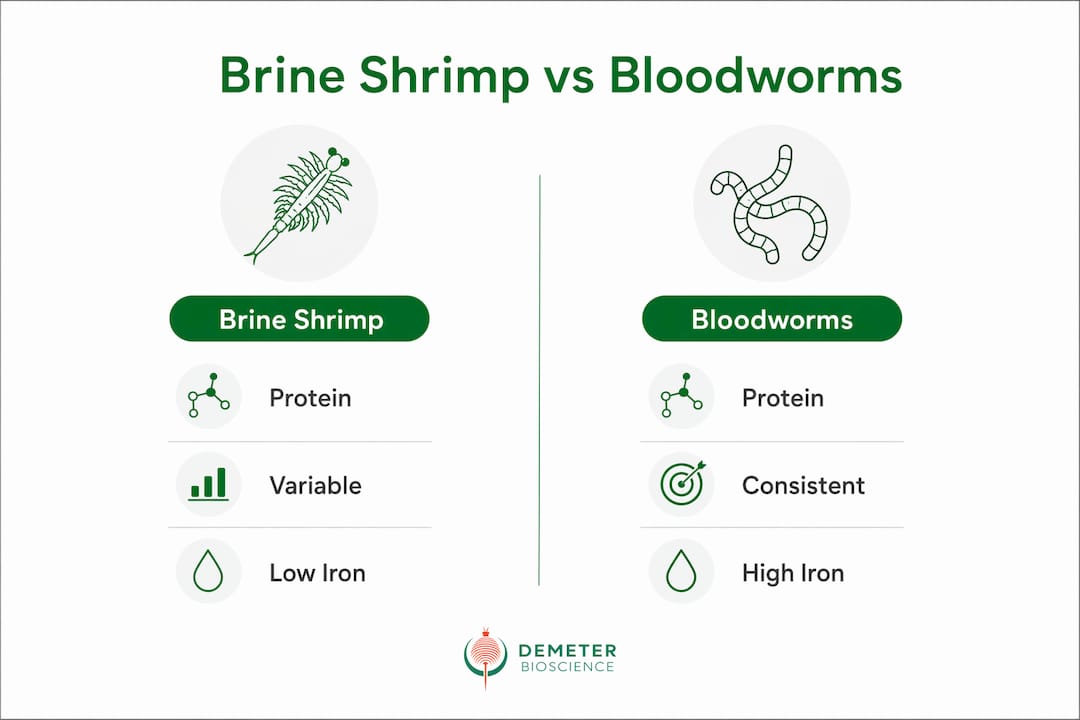
For brine shrimp, the most important variable is fatty acid content. Brine shrimp strains often lack sufficient EPA and DHA, making enrichment with marine oils a non-negotiable step in serious larval rearing programs. Adding marine oils rich in EPA and DHA during enrichment substantially increases essential fatty acid content, improving larval fish development outcomes. Unenriched nauplii fed to marine fish larvae produce measurably worse survival and growth rates compared to enriched equivalents.
Here is how the main feed forms compare in practice:
- Freshly hatched nauplii (live): Highest lipid and unsaturated fatty acid content. The preferred first food for many fish species due to nutrient profile and size. Requires active hatchery management but delivers maximum nutritional value.
- Enriched live nauplii: Superior to unenriched nauplii for marine species. EPA and DHA levels rise significantly after 12 to 24 hours of enrichment in marine oil emulsions.
- Frozen brine shrimp: Convenient and shelf-stable, but lipid oxidation during freezing and storage reduces fatty acid quality. Acceptable for adult fish maintenance, not ideal for fry.
- Freeze-dried brine shrimp: Lowest nutritional value of all forms. Useful as a supplement or training food, not as a primary protein source.
For bloodworms, the processing hierarchy follows a similar pattern. Live bloodworms deliver the highest palatability and nutrient availability. Frozen bloodworms retain most of their protein and iron content and represent the most practical option for most hobbyists. Freeze-dried bloodworms lose moisture-sensitive nutrients and are best used as a convenience supplement rather than a nutritional cornerstone.
Pro Tip: If you use frozen bloodworms, thaw them in tank water rather than tap water. Tap water chlorine can degrade surface proteins and reduce palatability.
What digestibility and feeding suitability differences matter by fish type?
Nutritional composition tells only part of the story. How efficiently a fish can extract nutrients from a given feed depends on digestibility, particle size, and feeding behavior stimulation.
Brine shrimp nauplii are small, typically 400 to 500 micrometers at instar I, making them the standard first food for marine and freshwater fish larvae that cannot yet handle larger prey. Their movement in the water column triggers predatory responses in fry that would ignore inert food particles entirely. The exoskeleton hardness of brine shrimp, however, may reduce digestibility for some fish compared to bloodworms' soft bodies. This is particularly relevant for species with less acidic digestive environments or slower gut transit times.
Bloodworms offer a softer body structure that larger fish and carnivorous species digest more efficiently. Their size, typically 10 to 30 millimeters, makes them unsuitable for fry but highly effective for juvenile and adult fish. Species like oscars, arowana, and large cichlids respond strongly to bloodworms' movement and texture.
Key feeding suitability considerations by fish type:
- Marine fish larvae and freshwater fry: Live enriched brine shrimp nauplii are the standard choice. Size and movement are critical at this stage.
- Juvenile freshwater fish (tetras, rasboras, small cichlids): Both feeds work. Brine shrimp provide variety and coloration support; bloodworms deliver higher iron and protein density.
- Adult carnivorous fish (discus, bettas, large cichlids): Bloodworms are preferred for protein density and palatability. Brine shrimp serve as a complementary feed.
- Aquaculture hatcheries: Brine shrimp hatched on demand from cysts offer operational advantages over stored frozen bloodworms, explaining their dominance in commercial larval rearing despite the need for enrichment.
The live food benefits for fish health extend beyond raw nutrition. The behavioral stimulation from live prey activates natural feeding instincts, which improves gut motility and nutrient absorption compared to passive consumption of frozen or dried feeds.
How to optimize feeding strategies by combining both live feeds
The most effective feeding programs for aquarium fish and aquaculture operations treat brine shrimp and bloodworms as complementary tools rather than competing options. Each covers nutritional gaps the other leaves open.
A practical combined feeding protocol looks like this:
- Fry stage (0 to 3 weeks): Feed live enriched brine shrimp nauplii exclusively. Their size, movement, and fatty acid profile are matched to larval nutritional requirements. Offer 3 to 5 feedings per day in small quantities to prevent fouling.
- Juvenile stage (3 weeks to 3 months): Introduce frozen bloodworms two to three times per week alongside brine shrimp. This increases protein density and iron intake as fish grow and their digestive capacity expands.
- Adult maintenance: Rotate bloodworms, brine shrimp, and a quality prepared diet on a weekly schedule. Feeding bloodworms and brine shrimp alone is insufficient for balanced nutrition. Supplementation with plant matter and vitamins is necessary for long-term health.
- Pre-breeding conditioning: Increase bloodworm frequency for protein loading. Add live brine shrimp for carotenoid intake to support egg quality and spawning behavior.
- Health monitoring: Track body condition, coloration, and waste output weekly. Pale coloration despite bloodworm feeding often signals a need for carotenoid-rich feeds. Bloating or loose waste may indicate overfeeding or digestive incompatibility.
Pro Tip: Brine shrimp nutrition is highly variable depending on hatchling developmental stage, enrichment practices, and processing status. Sourcing from a controlled cultivation environment, rather than wild-harvested cysts, removes the guesswork from your feeding program.
The role of brine shrimp in larval fish rearing is well established in commercial aquaculture, but hobbyists often underutilize them at the juvenile stage where carotenoid and fatty acid loading still drives long-term health outcomes.
Key takeaways
Brine shrimp and bloodworms serve different nutritional functions, and combining them strategically produces better outcomes than relying on either feed alone.
| Point | Details |
|---|---|
| Protein ranges differ significantly | Brine shrimp protein spans 37%–71% dry weight; bloodworms deliver a narrower 50%–60% range. |
| Enrichment is non-negotiable for brine shrimp | Unenriched nauplii lack sufficient EPA and DHA for marine larvae; enrichment with marine oils corrects this. |
| Bloodworms provide unique micronutrients | High iron content supports fish coloration and blood oxygen transport in ways brine shrimp cannot replicate. |
| Feed form determines nutritional delivery | Live and enriched forms outperform frozen and freeze-dried versions for both feeds across all metrics. |
| Neither feed alone is sufficient | A varied diet including plant matter and vitamins is required alongside live feeds for optimal fish health. |
What experience with both feeds actually teaches you
Most hobbyists enter the live food conversation focused on protein percentages. That focus is understandable but incomplete. After working closely with controlled brine shrimp cultivation systems, the variable that matters most is not the headline protein number. It is consistency.
Wild-harvested brine shrimp cysts produce nauplii with nutritional profiles that shift with the season, the harvest location, and storage conditions. A batch of nauplii hatched from Great Salt Lake cysts in March will not have the same fatty acid profile as a batch from the same source in September. That variability is invisible to the hobbyist but measurable in fish health outcomes over weeks and months.
Bloodworms carry a different problem. The nutritional data most hobbyists rely on comes from sources that have not been rigorously validated. The 50% to 60% protein figure circulates widely, but the peer-reviewed literature on Chironomidae larval composition is thin compared to the Artemia research base. That does not make bloodworms a poor feed choice. It means you should treat them as a high-value protein and iron source rather than a precisely characterized nutritional tool.
The practical lesson from both feeds is the same: source quality determines nutritional outcome more than species identity. A farmed brine shrimp fed on Dunaliella algae in a controlled environment delivers a predictably superior nutritional profile compared to wild-harvested equivalents. A fresh live bloodworm from a reputable supplier outperforms a freeze-dried product from an unknown source every time. The numbers on the package matter less than the conditions that produced what is inside it.
— Demeter
Elevate your feeding program with Demeterbioscience
Demeterbioscience produces live brine shrimp in land-based, controlled cultivation systems fed exclusively on Dunaliella algae, guaranteeing a minimum of 40% protein content and consistent fatty acid profiles across every shipment. That consistency is what separates their product from wild-harvested alternatives where nutritional quality fluctuates with environmental conditions. Whether you are running a commercial hatchery or maintaining a high-end display tank, the enriched brine shrimp products from Demeterbioscience remove the variability that undermines feeding programs built on wild-caught feeds. Monthly subscription plans, bulk retail packages, and direct-to-consumer shipments are available through their full product range.
FAQ
What is the protein content of brine shrimp vs bloodworms?
Dried brine shrimp nauplii contain 37% to 71% protein on a dry-weight basis, depending on strain, instar stage, and enrichment. Bloodworms carry approximately 50% to 60% protein dry weight, though peer-reviewed data for bloodworms is less comprehensive than for brine shrimp.
Are brine shrimp healthy for fish fry?
Live enriched brine shrimp nauplii are the standard first food for most fish larvae because their size, movement, and unsaturated fatty acid content match larval nutritional requirements precisely. Unenriched nauplii are less effective for marine species that require EPA and DHA for development.
Do bloodworms provide better nutrition than brine shrimp?
Neither feed is universally superior. Bloodworms deliver higher iron content and a softer texture suited to larger fish, while brine shrimp offer carotenoids and size-appropriate nutrition for fry. Optimal fish health requires both feeds as part of a varied diet that includes plant matter and vitamins.
How does enrichment affect brine shrimp nutritional value?
Enrichment with marine oil emulsions containing EPA and DHA substantially increases the essential fatty acid content of brine shrimp nauplii. Without enrichment, most brine shrimp strains lack sufficient omega-3 fatty acids for marine larval development, making enrichment a required step in professional hatchery programs.
Can I feed my fish only bloodworms or only brine shrimp?
Feeding either food as the sole diet produces nutritional imbalances over time. Both live feeds must be supplemented with plant matter, vitamins, and a quality prepared diet to meet the full nutritional requirements of aquarium fish across all life stages.