
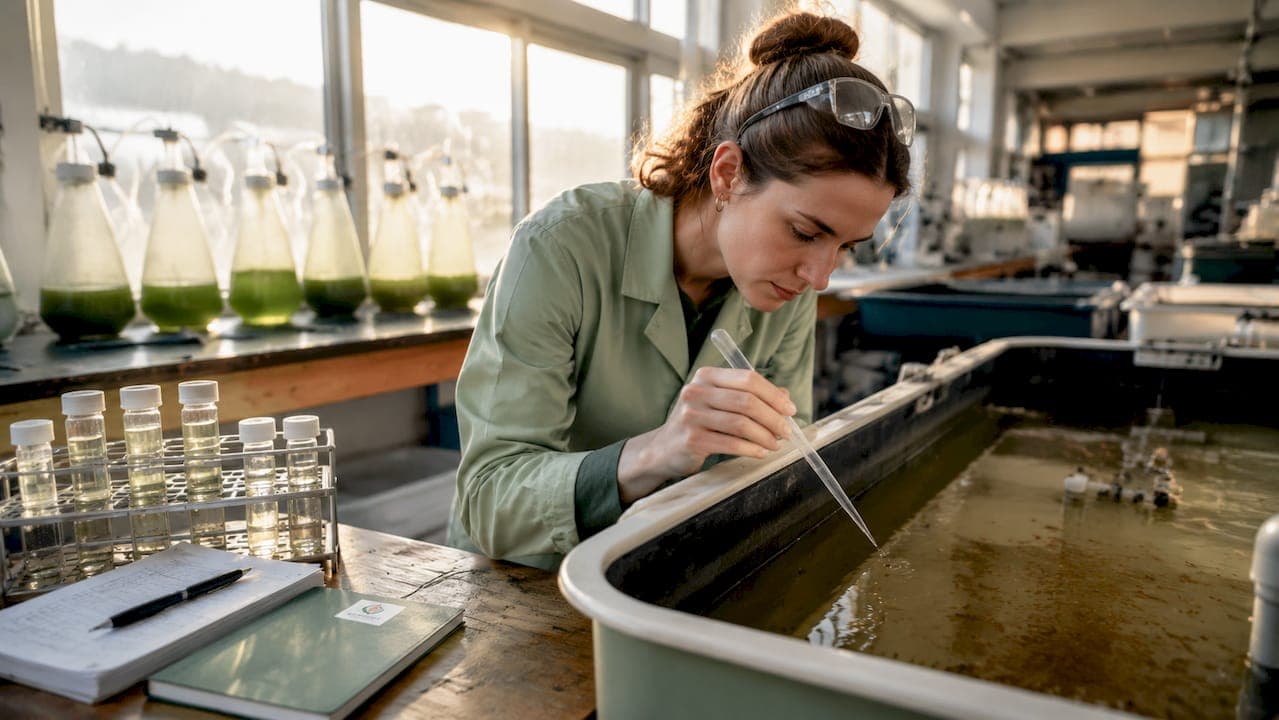
Microalgae fed to brine shrimp (Artemia species) determine the nutritional value of every shrimp you put in a tank. Dunaliella veridis is a soft, nutrient-dense microalga recognized as highly beneficial for both wild and cultured brine shrimp. Nannochloropsis and Spirulina round out the core species used in professional aquaculture. The algae types fed to brine shrimp are not interchangeable. Each species delivers a different mix of protein, essential fatty acids, and pigments, and choosing the right one directly shapes shrimp growth, survival, and the nutritional value they pass on to fish.
1. Top algae types fed to brine shrimp and their nutritional profiles
The microalgae species you choose sets the ceiling for brine shrimp nutrition. No enrichment step can fully compensate for a poor base diet.
Key species and what they deliver:
- Dunaliella veridis. This green microalga is plentiful in early spring and prized for its soft cell wall, which makes it easy for brine shrimp to digest. It delivers carotenoids, protein, and glycerol, and it is the exclusive feed used by Demeterbioscience in their land-based cultivation systems to guarantee at least 40% protein content in every batch.
- Nannochloropsis species. These marine microalgae are the primary source of eicosapentaenoic acid (EPA), a highly unsaturated fatty acid (HUFA) critical for larval fish development. Nannochloropsis is the most widely used species for gut-loading brine shrimp in commercial hatcheries.
- Spirulina. A cyanobacterium rather than a true alga, Spirulina delivers protein content of approximately 55% when incorporated into brine shrimp feed, along with phycocyanin pigments that enhance fish coloration. Feeding frozen brine shrimp mixed with spirulina provides measurable pigment and health benefits.
- Chlorella. This freshwater green alga is high in chlorophyll and protein. It supports immune function and is commonly used in hobbyist setups because dried Chlorella powder is widely available and easy to dose.
- Isochrysis galbana. A marine haptophyte rich in docosahexaenoic acid (DHA), Isochrysis is used in marine hatcheries where DHA levels are a priority for sensitive larval species.
The practical takeaway: brine shrimp adapt their nutritional profile based on diet. A shrimp fed Dunaliella and Nannochloropsis carries a fundamentally different lipid and pigment profile than one fed yeast alone.
2. Why algae choice matters more than most researchers expect
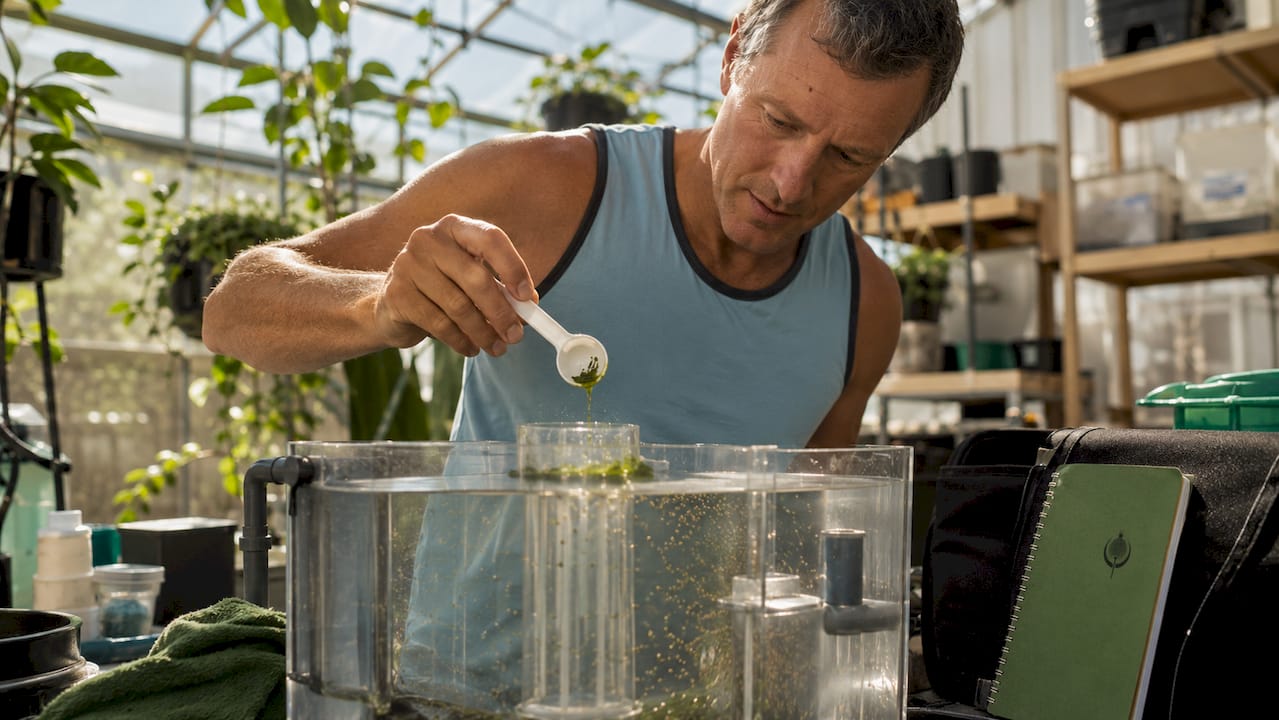
Brine shrimp are filter feeders. They accumulate whatever is in the water column, which makes them a direct vector for nutrients to fish larvae. Feeding brine shrimp solely on standard algae or yeast lacks the HUFAs that marine larvae require. This is not a minor gap. EPA and DHA deficiencies in larval fish cause skeletal deformities, poor swim bladder inflation, and high mortality. The algae you choose determines whether brine shrimp close that gap or widen it.
Brine shrimp are also high in protein but lack a balanced lipid and mineral profile for many marine species. Algae feeding and probiotic supplementation are the two tools that fill those gaps. Neither is optional in a serious aquaculture program.
3. How different algae types affect growth, survival, and reproduction
Research published in Aquaculture Reports (2025) shows that optimized diets with 10% microalgae and 1.25% probiotics increase brine shrimp body length by 15.8% and survival rates by 12.5%. Those numbers reflect what happens when algae quality and probiotic support work together, not in isolation.
The same study found that probiotic supplementation produced 3.5 times higher offspring output and a 21% increase in alkaline protease activity. Higher protease activity means better protein digestion, which compounds the nutritional benefit of feeding high-protein algae like Spirulina or Dunaliella.
| Algae type | Key nutrient | Growth/survival effect |
|---|---|---|
| Dunaliella veridis | Carotenoids, protein | Strong baseline growth, high digestibility |
| Nannochloropsis | EPA (HUFA) | Improved larval fish survival when used for gut-loading |
| Spirulina | Protein (~55%), phycocyanin | Enhanced color, immune support |
| Chlorella | Chlorophyll, protein | Immune function, accessible for hobbyists |
| Isochrysis galbana | DHA (HUFA) | Critical for sensitive marine larvae |
Disease resistance is another measurable outcome. Probiotic-supplemented Artemia survive a Vibrio anguillarum pathogen challenge at a 92.24% rate versus 41.99% for unsupplemented controls. That gap is large enough to change the economics of a commercial hatchery operation.
Pro Tip: Combine Nannochloropsis with a probiotic strain during gut-loading to stack the EPA benefit with the immune-boosting effect. The two work synergistically, not additively.
4. Culturing and enriching algae for brine shrimp feed: practical methods
Timing is the single most important variable in brine shrimp feeding. Nauplii should be fed within 0–8 hours post-hatch while the yolk sac is still present. After 24 hours without food, nutritional value drops sharply. This window is non-negotiable in larval fish production.
Standard gut-loading protocol:
- Harvest nauplii at the 0–8 hour window and transfer to a clean enrichment vessel.
- Add 5–10 drops of enrichment additive per liter of water with continuous aeration for 12–24 hours.
- Use Nannochloropsis concentrate or a commercial HUFA emulsion as the enrichment source.
- Maintain water temperature at 25–28°C and keep salinity at 30–35 ppt during enrichment.
- Harvest enriched shrimp, rinse with clean saltwater, and feed immediately.
For hobbyists culturing their own algae, Nannochloropsis grows well under fluorescent or LED lighting at 2,000–5,000 lux with a 16:8 light-dark cycle. Spirulina is easier still: dried powder dissolves readily and can be dosed directly into the enrichment vessel. Dunaliella requires slightly higher salinity (around 70–100 ppt) and tolerates a wide temperature range, making it practical for home culture with basic equipment.
Pro Tip: Feed only what brine shrimp consume within 2–3 minutes to prevent tank fouling. Excess algae decomposes quickly, drops dissolved oxygen, and can crash a culture overnight.
5. Comparing algae varieties: best use cases for aquaculture and hobbyists
Not every algae species suits every setup. The right choice depends on your goals, your budget, and how much culture infrastructure you can maintain.
| Algae | Nutrient priority | Culture difficulty | Cost | Best use case |
|---|---|---|---|---|
| Dunaliella veridis | Carotenoids, protein | Moderate | Medium | Controlled commercial systems, Demeterbioscience model |
| Nannochloropsis | EPA (HUFA) | Moderate | Medium | Marine hatchery gut-loading |
| Spirulina | Protein, pigment | Low (powder) | Low | Hobbyist enrichment, color enhancement |
| Chlorella | Protein, chlorophyll | Low (powder) | Low | General hobbyist use, immune support |
| Isochrysis galbana | DHA (HUFA) | High | High | Sensitive marine larvae, research settings |
A few practical points on format: fresh live algae delivers the highest bioavailability but requires culture infrastructure. Dried or powdered forms (Spirulina, Chlorella) are far easier to manage and still deliver meaningful nutritional benefits. The tradeoff is that powders lack the live cell structure that brine shrimp filter most efficiently.
Combining species is the most effective approach for nutritional completeness. A Nannochloropsis and Spirulina combination covers both EPA and protein-pigment needs. Adding Dunaliella brings carotenoid depth. No single species covers every nutritional base, and algae species differ markedly in ease of culture, nutrient output, and cost.
Situational recommendations:
- Fast larval growth: Prioritize Nannochloropsis for EPA content, combined with a probiotic strain.
- Color enhancement: Use Spirulina or Dunaliella for carotenoid and phycocyanin loading.
- Immune support: Chlorella plus probiotics improves antioxidant enzyme activity.
- Research or sensitive marine species: Isochrysis galbana for DHA, despite the higher culture cost.
- Consistent commercial production: Demeterbioscience's Dunaliella-only system demonstrates that a single well-managed species can deliver consistent results at scale.
Key takeaways
The most effective approach to feeding brine shrimp is combining EPA-rich microalgae like Nannochloropsis with high-protein species like Spirulina, timed within the 0–8 hour post-hatch window and supported by probiotic supplementation.
| Point | Details |
|---|---|
| Dunaliella veridis is a top choice | Soft cell walls and carotenoid content make it highly digestible and nutritious for brine shrimp. |
| Timing the feed window matters | Feeding within 0–8 hours post-hatch captures peak nutritional uptake before yolk sac reserves deplete. |
| Combine algae species | No single species covers all HUFA, protein, and pigment needs; blending Nannochloropsis and Spirulina fills the gaps. |
| Probiotics multiply the algae benefit | Adding probiotics to an algae diet raises survival rates and offspring production significantly beyond algae alone. |
| Avoid overfeeding | Feed only what shrimp consume in 2–3 minutes to prevent oxygen depletion and culture crashes. |
What years of algae-fed brine shrimp production actually teach you
The most persistent misconception in this field is that brine shrimp are a complete food. They are not. They are a delivery vehicle. What you put into them is exactly what your fish get out. I have seen hobbyists spend serious money on rare fish only to feed them freshly hatched nauplii with no enrichment, then wonder why growth stalls and coloration fades.
The second misconception is that any algae will do. Yeast-fed shrimp and Dunaliella-fed shrimp look identical in a tank. The difference shows up in your fish three weeks later. EPA and DHA deficiencies are invisible until they are not. By the time you see skeletal issues or poor swim bladder inflation in larvae, you have already lost the batch.
What actually works in practice is simpler than most guides suggest. Pick one HUFA-rich species (Nannochloropsis is the most accessible), add a probiotic, and respect the 0–8 hour feeding window. That combination covers the majority of nutritional gaps for most species. For researchers working with sensitive marine larvae, Isochrysis galbana adds DHA depth that Nannochloropsis alone cannot match.
The Demeterbioscience approach of feeding exclusively on Dunaliella in a controlled, land-based system is worth studying regardless of your setup. It demonstrates that consistency of algae source matters as much as species choice. Wild-harvested brine shrimp come from environments where algae availability is seasonal and unpredictable. That variability shows up directly in the shrimp's nutritional profile. Controlled algae feeding eliminates that variable entirely.
Managing algae cultures in a hobbyist setting is genuinely feasible with Spirulina powder and Chlorella. The learning curve is low. The payoff in fish health is real and measurable within a few weeks of switching from unenriched to enriched shrimp.
— Demeter
Demeterbioscience's algae-fed brine shrimp for aquaculture and hobbyists
Demeterbioscience produces live brine shrimp fed exclusively on Dunaliella microalgae in a controlled, land-based system. Every batch delivers at least 40% protein content with consistent carotenoid levels, removing the nutritional variability that comes with wild-harvested shrimp.
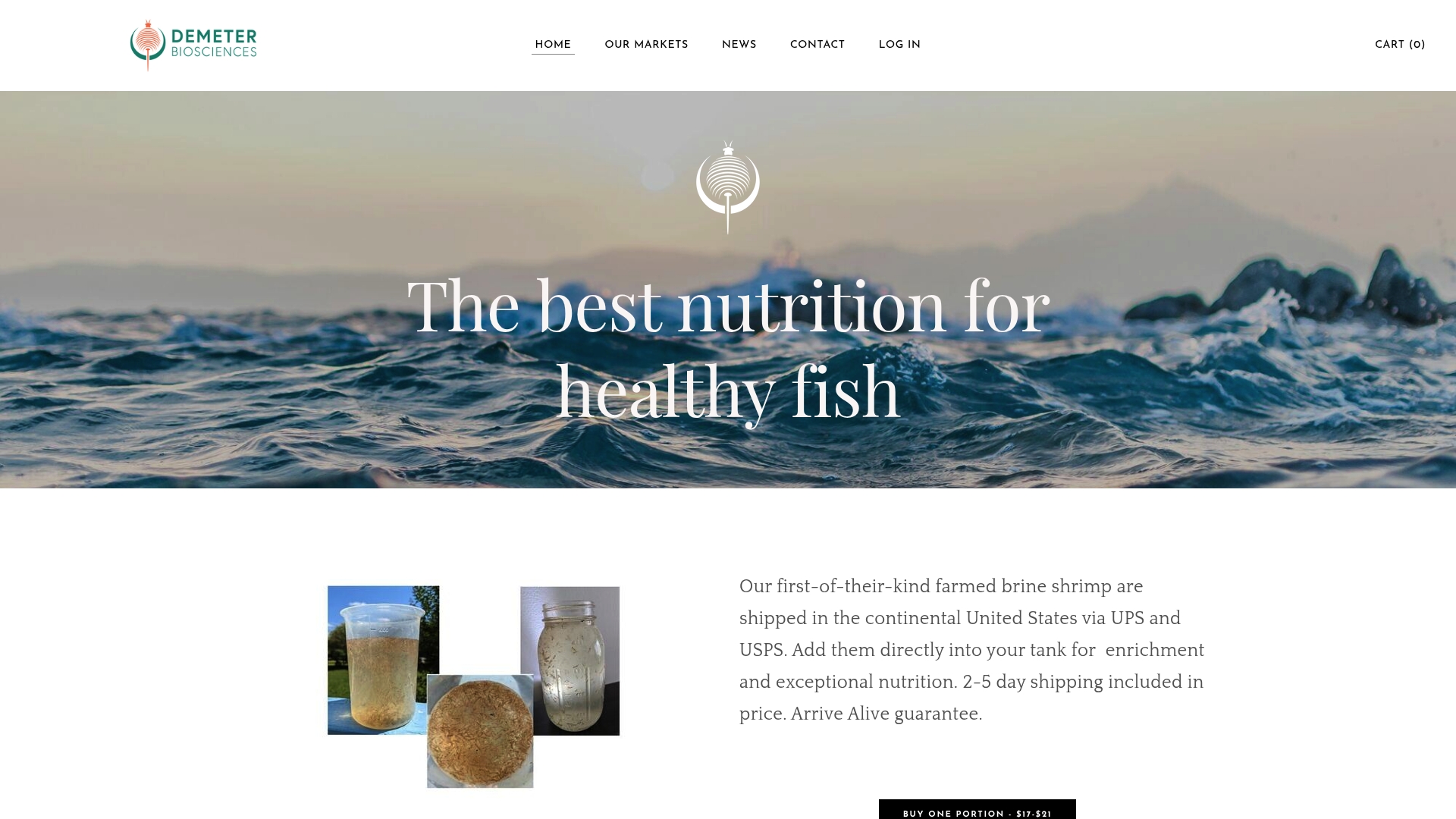
Their live brine shrimp product is available for direct-to-consumer shipment, monthly subscription, and bulk retail for aquariums, museums, and local fish stores. For researchers and hobbyists who want a reliable, algae-fed live feed without building their own culture system, Demeterbioscience offers a practical solution. You can also browse their full brine shrimp product range or reach out directly with questions about bulk orders or research applications.
FAQ
What is the best algae to feed brine shrimp?
Nannochloropsis is the top choice for gut-loading because of its high EPA content. Dunaliella veridis is the preferred species for sustained culture due to its digestibility and carotenoid profile.
How soon after hatching should brine shrimp be fed algae?
Brine shrimp nauplii should receive algae within 0–8 hours post-hatch while the yolk sac is still present. After 24 hours without food, their nutritional value drops significantly.
Can Spirulina replace Nannochloropsis for brine shrimp enrichment?
Spirulina delivers high protein and pigment benefits but does not match Nannochloropsis for EPA content. Use both together for full nutritional coverage.
Do probiotics improve algae-fed brine shrimp nutrition?
Yes. Research shows that combining 10% microalgae with 1.25% probiotics increases body length by 15.8% and survival by 12.5%, with a 3.5 times increase in offspring production.
How do I avoid fouling my tank when feeding algae to brine shrimp?
Feed only what brine shrimp consume within 2–3 minutes. Excess algae decomposes rapidly, depletes dissolved oxygen, and can crash a culture.