
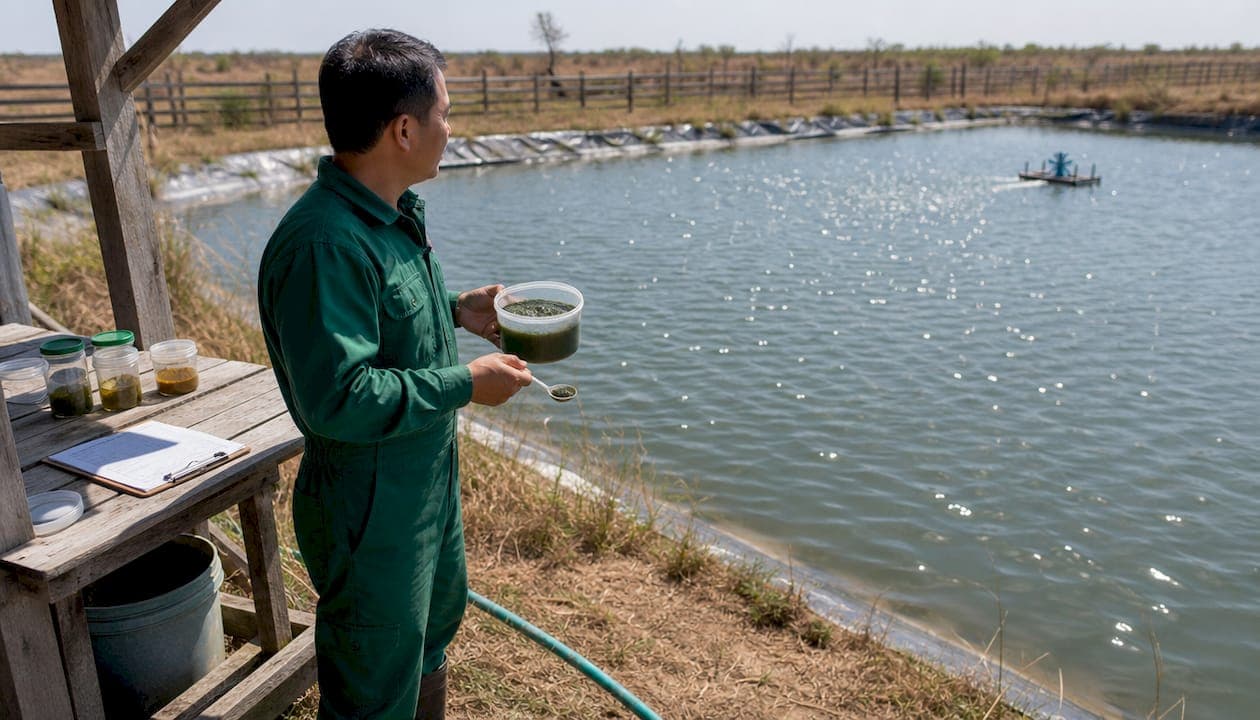
Algae-fed nutrition is the most effective dietary strategy for accelerating shrimp growth in commercial aquaculture. Recent trials show that biofloc-derived algal supplements can boost shrimp growth rates by nearly 50% while improving feed conversion ratios. The core mechanism is nutritional density: microalgae and macroalgae deliver polyunsaturated fatty acids (PUFAs), amino acids, antioxidant pigments, and functional compounds that standard formulated feeds cannot replicate. When you boost growth rates with algae-fed shrimp programs, you gain both faster biomass accumulation and measurably healthier animals. This guide covers the algae types that work, how to integrate them into your system, and the dosing protocols that current research supports.
What types of algae most effectively boost shrimp growth rates?
The two main categories are microalgae and macroalgae, and each serves a different function in the diet.
Microalgae such as Picochlorum spp. and Dunaliella deliver dense concentrations of PUFAs, carotenoids, and bioavailable amino acids. They work best in suspended culture systems where shrimp can graze directly or consume them through biofloc aggregates. Macroalgae such as Ascophyllum nodosum (Norwegian kelp) supply polysaccharides, iodine, and immune-modulating compounds that support enzyme activity and disease resistance. A third category, algal meal, is a dried, processed form of microalgae that you can add directly to pelleted feed at controlled inclusion rates.
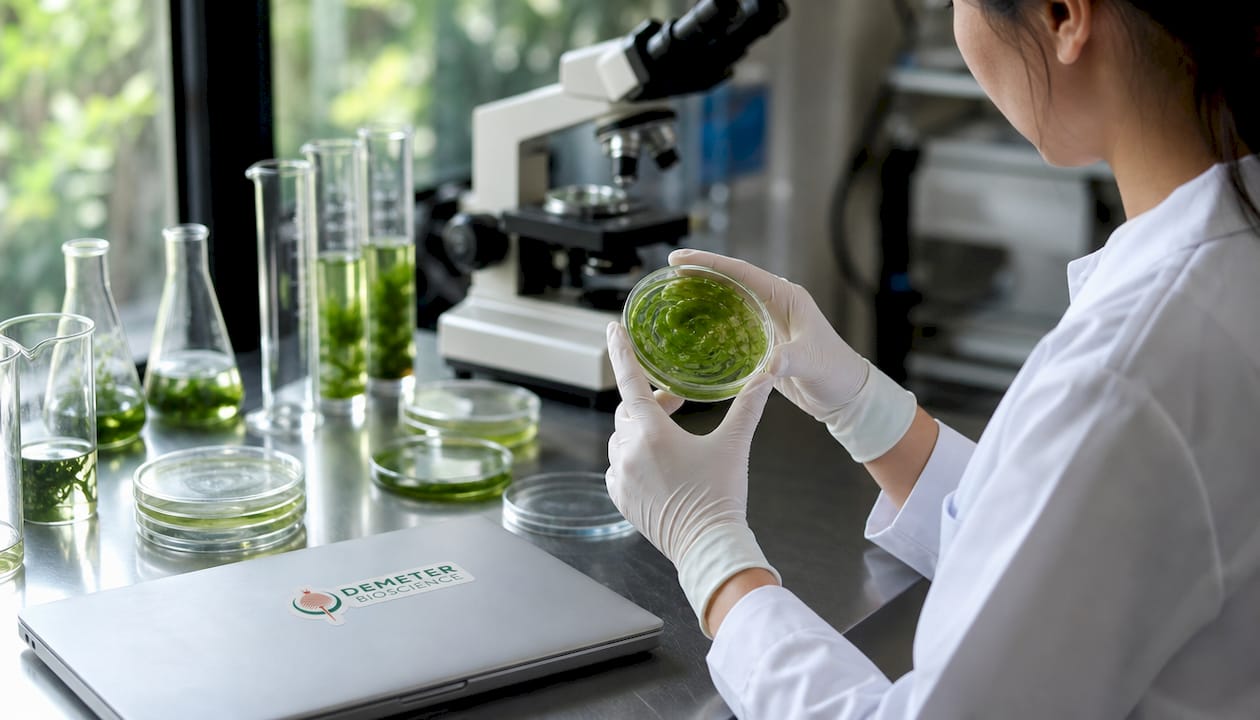
Nutritional matching matters as much as species selection. Different algae species suit specific culture conditions: planktonic microalgae perform better in suspended water-column systems, while benthic species integrate more effectively into biofilm-based tanks. Choosing the wrong species for your system type reduces nutrient recovery and wastes input costs.
The key nutritional contributions by category are:
- Microalgae (e.g., Picochlorum, Dunaliella): High PUFAs, carotenoids, and digestible protein; support pigmentation and antioxidant defense
- Brown macroalgae (e.g., Ascophyllum nodosum): Polysaccharides, alginates, and minerals; improve immune enzyme activity and gut health
- Algal meal (dried microalgae): Concentrated protein and lipid source; easy to dose and blend into commercial pellets
- Alginate oligosaccharides (AOS): Bioactive compounds derived from algae; activate amino acid and fatty acid metabolism and improve immune pathways at 0.5–1.0% inclusion
The 2026 nutrition guide on algae types for brine shrimp diets provides a detailed breakdown of species-specific nutritional profiles worth reviewing before you finalize your feed formulation.
Pro Tip: Start with a single algae type matched to your culture system before combining species. Stacking multiple algae inputs without baseline data makes it impossible to identify which variable is driving growth improvement.
How to integrate algae feeding into shrimp aquaculture systems
The method of delivery matters as much as the algae itself. Three integration approaches dominate current practice: algal meal supplementation in pelleted feed, live microalgae addition to culture water, and biofloc systems augmented with microalgae.
Algal meal vs. live algae: which works better?
| Approach | Best for | Key advantage | Main limitation |
|---|---|---|---|
| Algal meal in pellets | Large-scale, intensive systems | Consistent dosing, stable shelf life | Nutrient degradation during pelleting |
| Live microalgae in water | Nursery and larval stages | High bioavailability, water quality benefit | Requires on-site cultivation infrastructure |
| Biofloc with microalgae | Recirculating and zero-exchange systems | Dual function: nutrition and water treatment | Requires careful monitoring of floc density |
Biofloc technology augmented with microalgae is the most productive integration for intensive systems. Biofloc with integrated microalgae improves water quality and produces high-protein live feed simultaneously, reducing reliance on external formulations and preventing growth stunting from poor water conditions. That dual function is why biofloc-algae systems consistently outperform single-input approaches in controlled trials.
On-site microalgae cultivation using shrimp waste nutrients creates a circular system that cuts input costs. Cultivating algae on-site reduces operational costs and supplies a continuous stream of high-protein feed without depending on external suppliers. The circular bioeconomy model also lowers the environmental footprint of the operation, which matters increasingly for export certification and sustainability labeling.
For farmers who cannot build on-site cultivation infrastructure immediately, algal meal supplementation is the practical entry point. It requires no additional equipment and integrates directly into existing feed programs. The trade-off is that heat during pelleting can degrade some heat-sensitive PUFAs, which is why vacuum coating has emerged as the preferred preparation method for algae-enriched pellets.
Pro Tip: If you run a recirculating aquaculture system (RAS), test microalgae addition in a single tank before scaling. Algae can shift dissolved oxygen dynamics quickly, and you want baseline data before committing your full system.
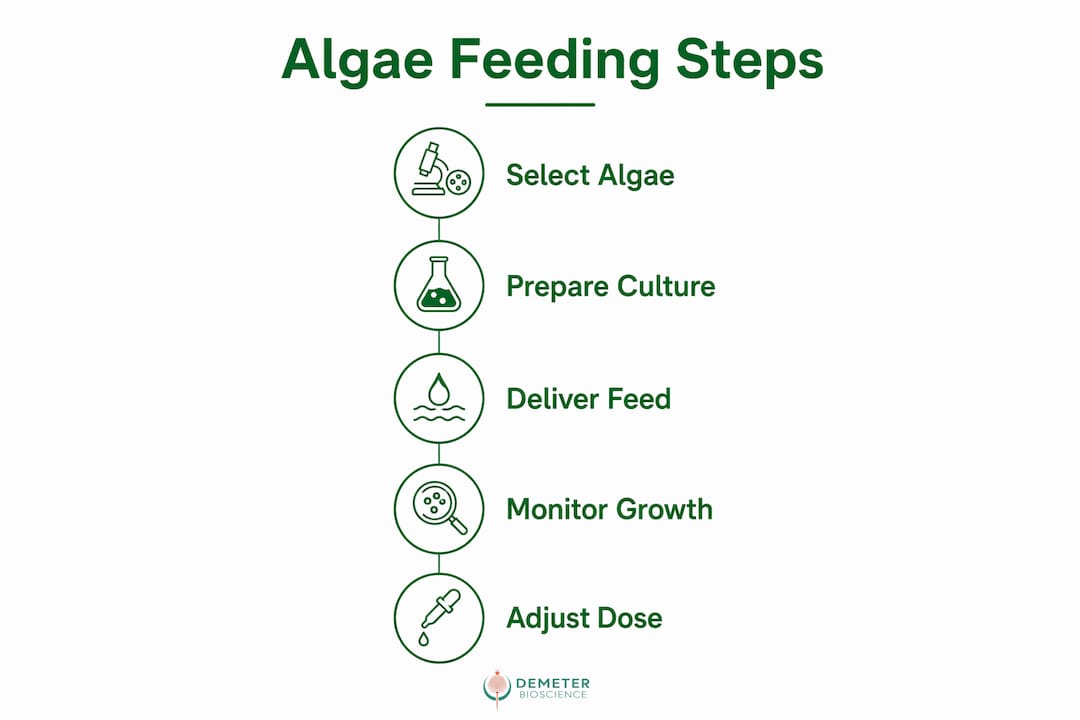
Step-by-step feeding protocol for maximum shrimp growth
A structured feeding protocol prevents both underperformance and waste. The following sequence reflects current research on dosing, preparation, and monitoring.
-
Set your baseline. Measure current specific growth rate (SGR), feed conversion ratio (FCR), and survival rate before introducing any algae supplement. You cannot evaluate improvement without a clean starting point.
-
Select your algae form and dose. For algal meal, include 0.5%–1.0% in the diet over a minimum 60-day trial. For Ascophyllum nodosum, use 30–40 g/kg of feed over 10 weeks. Do not exceed these ranges in the first trial.
-
Prepare feed using vacuum coating. Vacuum coating algae meal with probiotics onto pellets improves nutrient stability and bioavailability. The T5-AMP diet formulation, which uses this method, produced the highest weight gain and FCR improvements in published shrimp trials.
-
Feed at consistent intervals. Distribute daily rations across 3–4 feeding events. Algae-supplemented diets show better growth outcomes when shrimp have frequent, smaller meals rather than two large feedings.
-
Monitor weekly. Track the following metrics:
- Weight gain and SGR against your baseline
- FCR: target improvement of at least 10% by week 4
- Water quality parameters: dissolved oxygen, ammonia, and nitrite
- Behavioral signs: feeding aggression, molting frequency, and coloration
-
Adjust at the 30-day mark. If SGR has not improved by week 4, check species-system compatibility before increasing dose. Intermediate inclusion levels outperform higher doses for both growth and immune markers. More algae is not always better.
-
Evaluate immune markers at trial end. Algae modulate intestinal microbiota and elevate antioxidant enzymes such as catalase and superoxide dismutase (SOD). Reduced mortality during the trial period is a reliable proxy for immune improvement even without laboratory assays.
Common challenges when using algae-fed shrimp diets
Most failures in algae-fed aquaculture trace back to three root causes: species mismatch, over-supplementation, and water quality neglect.
"Tailored dosing and species selection are essential. Growers should trial algae inclusion rates and species appropriate to their system design and shrimp density for maximum benefit." — Practitioner Strategies for Algae Use in Shrimp Farming
The most common pitfalls and their corrections:
- Wrong species for the system. Planktonic microalgae added to a biofilm-based tank will not integrate effectively. Match species to system type before purchasing inputs.
- Exceeding optimal dose. Dosing above 1% algal meal or above 40 g/kg Ascophyllum nodosum produces diminishing returns and can suppress feed intake. Run incremental trials, not maximum doses.
- Ignoring water quality shifts. Live algae addition changes dissolved oxygen and pH dynamics. Monitor both parameters daily during the first two weeks of any new algae integration.
- Inconsistent feed preparation. Algae meal added to pellets without vacuum coating loses heat-sensitive nutrients during extrusion. If you cannot use vacuum coating, add algae meal as a top-coat slurry post-pelleting.
- No control group. Running algae trials without a control tank makes it impossible to separate algae effects from seasonal or density-related growth variation. Always maintain at least one reference tank under identical conditions.
The benefits of algae in shrimp diets are well-documented, but they require disciplined implementation to materialize consistently.
Key Takeaways
Algae-fed diets deliver measurable shrimp growth improvements when the right species, dose, and delivery method are matched to the production system.
| Point | Details |
|---|---|
| Species-system matching | Select planktonic microalgae for suspended systems and benthic species for biofilm-based tanks. |
| Optimal dosing ranges | Use 0.5%–1.0% algal meal or 30–40 g/kg Ascophyllum nodosum for best growth results. |
| Biofloc integration | Combining biofloc with microalgae improves both water quality and protein supply simultaneously. |
| Vacuum coating | Applying algae meal via vacuum coating preserves heat-sensitive nutrients lost during standard pelleting. |
| Avoid over-supplementation | Intermediate inclusion levels outperform high doses; always run a 30-day check before adjusting upward. |
What I've learned from watching algae-fed systems succeed and fail
The research on algae-fed aquaculture is compelling, but the gap between a published trial and a working farm system is real. What I've seen consistently is that farmers who treat algae as a plug-and-play additive get inconsistent results. Farmers who treat it as a system design decision get the growth numbers the studies promise.
The single most underrated factor is on-site cultivation. Buying dried algal meal is a reasonable starting point, but growing microalgae on-site using your own waste nutrients changes the economics entirely. You close a nutrient loop, cut feed costs, and gain a live feed source that no dried product can fully replicate. The circular approach is not just environmentally sound. It is financially smarter at scale.
The immune benefits also deserve more attention than they typically get. Algae that boost antioxidant enzymes like catalase and SOD are doing something that growth rate data alone does not capture: they are reducing the mortality risk during disease events. A shrimp that grows 40% faster but dies in a Vibrio outbreak is not a win. The health and growth benefits of algae-fed diets work together, and you should measure both.
My honest recommendation: run a 60-day trial with a single algae type at the conservative end of the dosing range. Measure everything. Then adjust. The farmers who skip the trial phase and go straight to full-system implementation are the ones who call algae "overhyped." The ones who trial properly are the ones who scale.
— Demeter
Quality algae-fed brine shrimp for your aquaculture program
Demeterbioscience produces live brine shrimp fed exclusively on Dunaliella microalgae in land-based, controlled cultivation systems. Every batch delivers at least 40% protein content with none of the seasonal variability that affects wild-harvested shrimp.
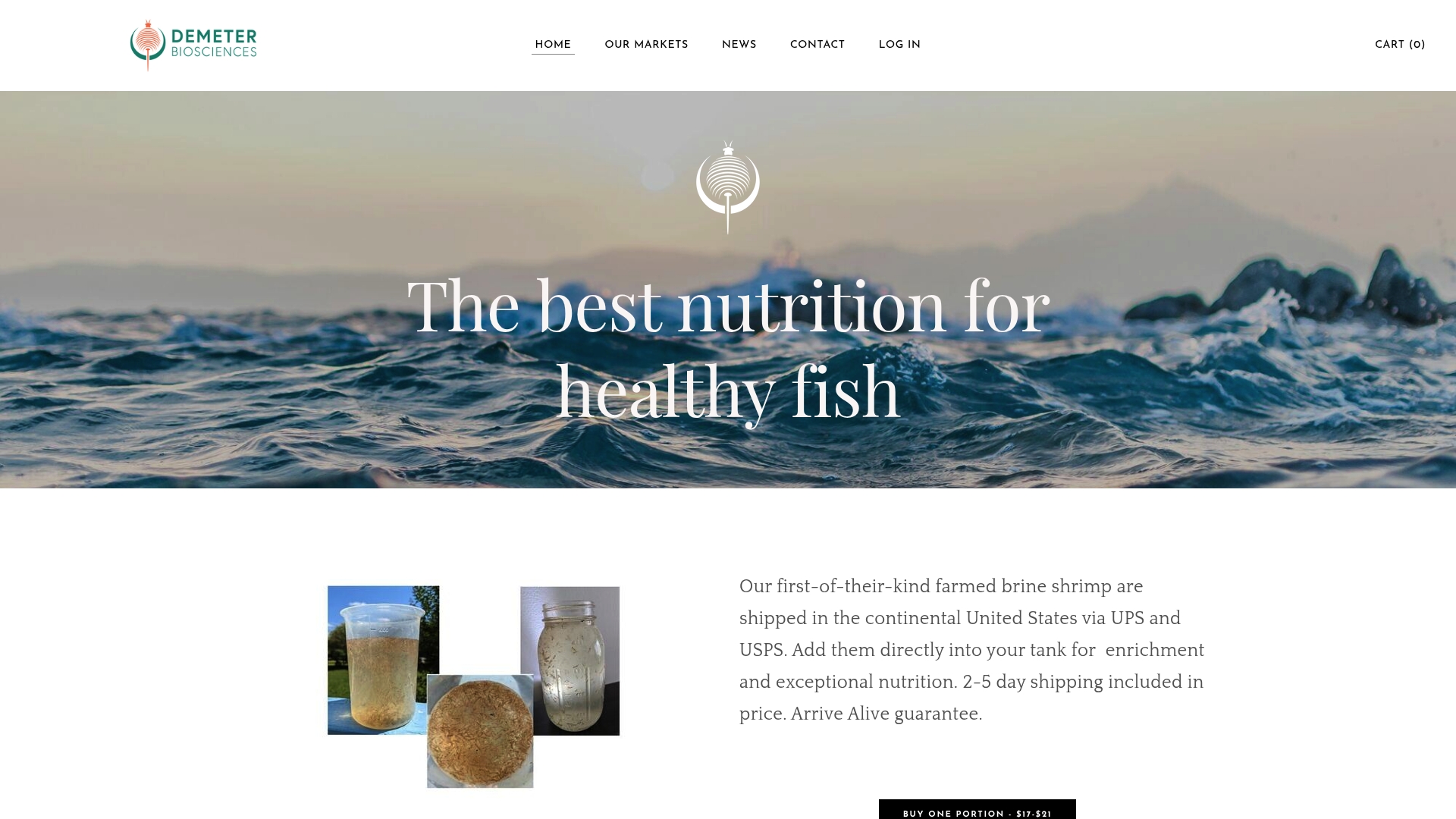
For farmers and researchers who want a reliable, nutritionally consistent live feed source, Demeterbioscience offers live brine shrimp for direct-to-consumer shipment, monthly subscription plans, and bulk orders for large-scale operations. The algae-fed cultivation model means you get a product that reflects exactly the nutritional principles this article covers. You can also review the full range of algal products available for feed supplementation directly on the Demeterbioscience site.
FAQ
How much can algae improve shrimp growth rates?
Biofloc-derived algal supplements can increase shrimp growth rates by nearly 50% while improving feed conversion ratios. Results depend on algae type, inclusion rate, and system design.
What is the correct dose of algal meal for shrimp feed?
The recommended inclusion rate is 0.5%–1.0% algal meal over a 60-day trial period. Exceeding 1% produces diminishing returns and may reduce feed intake.
Which algae species works best for shrimp aquaculture?
Species selection depends on your system. Planktonic microalgae suit suspended water-column systems, while Ascophyllum nodosum at 30–40 g/kg feed suits pelleted diet supplementation in intensive grow-out tanks.
Does algae feeding improve shrimp immunity as well as growth?
Algae elevate antioxidant enzymes including catalase and SOD, and they modulate intestinal microbiota. Both effects reduce mortality during disease outbreaks, making immune improvement a reliable secondary benefit of algae-fed diets.
Can I grow algae on-site to reduce feed costs?
On-site microalgae cultivation using shrimp waste nutrients creates a circular feed system that cuts operational costs and provides a continuous high-protein feed source without external suppliers.