
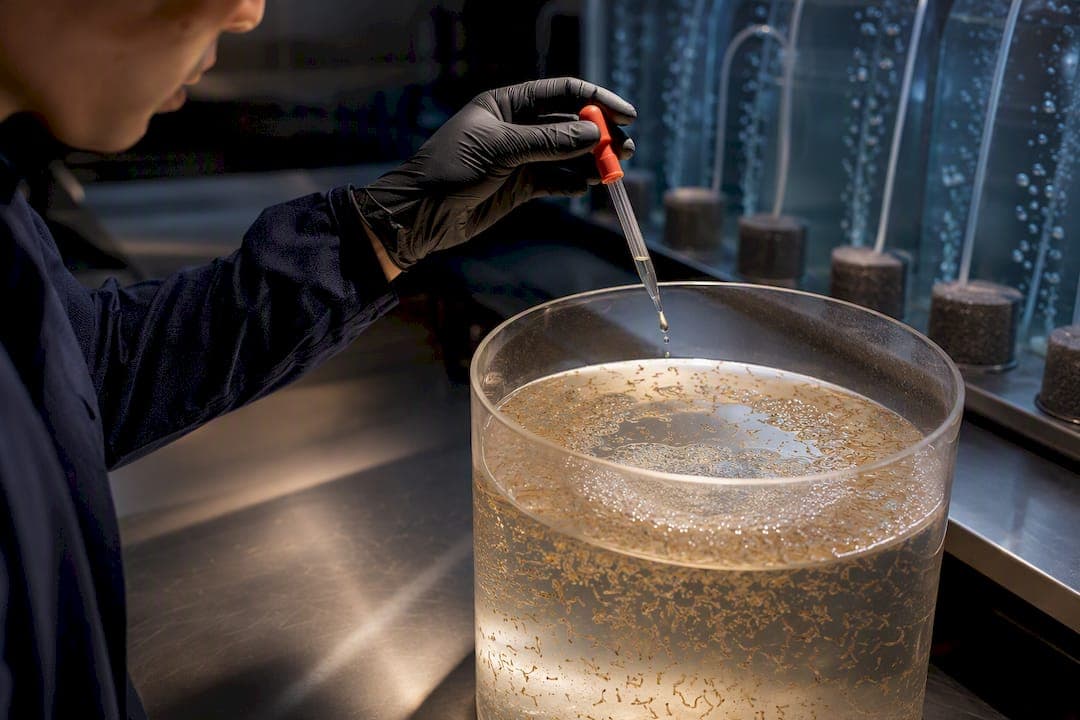
Yes, enrich your brine shrimp. Wait until the nauplii reach Instar II, roughly 12 to 24 hours after hatching, then move them into a separate aerated container and feed them a HUFA emulsion or microalgae blend for 6 to 24 hours. Rinse before feeding. Skip this step and you're feeding fry a near-empty calorie shell; do it right and you measurably raise their EPA and DHA content, with fouled water as the main thing standing between you and success.
TL;DR:
- Enrich brine shrimp at Instar II stage for 6 to 24 hours using HUFA emulsions or microalgae blends to significantly boost EPA and DHA content.
- Oil emulsions and algae products deliver concentrated HUFA, with algae providing a broader fatty acid profile and spirulina mainly supporting coloration and immune health.
- Keep enrichment runs short, isolate them in separate containers, and monitor water quality to prevent spoilage, foul odors, and rising mortality.
- A split dosing approach, starting with a quarter gram per liter and adding a second dose after six hours, yields higher lipid and PUFA levels than single doses.
- Use farmed Artemia raised on Dunaliella microalgae for consistency in high-volume or time-sensitive larval rearing, reducing variability and ensuring reliable nutrition.
Table of Contents
- Why bother enriching brine shrimp at all?
- What do oil emulsions, algae, and lecithin each add?
- How do you run a brine shrimp enrichment protocol step by step?
- How do you avoid spoiled batches and confirm enrichment worked?
- How does farmed, Dunaliella-fed Artemia fit into an enrichment routine?
- A note from Demeterbioscience on doing this right
- Where this article's protocols and data come from
- Sources
Why bother enriching brine shrimp at all?
Freshly hatched Artemia are almost nutritionally hollow. A newly hatched nauplius carries a low level of total fatty acids per dry weight and no detectable DHA at all, according to the CTSA enrichment manual. That's a problem, because DHA and EPA drive nervous system development, stress tolerance, and survival in larval marine fish. The nauplius hatches with a yolk sac full of stored energy, but that energy profile doesn't match what a growing fry actually needs.
Enrichment changes that picture fast. After 12 hours of feeding with an appropriate enricher, total fatty acids increase significantly, and both DHA and EPA become measurable, per the same CTSA data. Extending to 24 hours pushes levels higher still. The same manual links enriched Artemia diets to better growth, improved survival, and fewer skeletal anomalies across several species.
The trade-off is timing:
- Shorter windows (6 to 12 hours) give a fast, reliable nutrient bump with lower risk of water fouling.
- Longer windows (up to 24 hours) can push nutrient deposition further but raise nauplii metabolic load and the odds of a spoiled batch.
What do oil emulsions, algae, and lecithin each add?
Not every enricher does the same job, and picking the wrong one wastes money without fixing the actual nutrient gap you're trying to close. The Reviews in Aquaculture survey of enrichment strategies breaks the landscape into a few clear categories, and matching the enricher to your species is the whole game.
- Oil emulsions (products like Selco and S.presso) deliver concentrated HUFA, particularly EPA and DHA, along with carotenoids for pigmentation. These are commonly used for marine larvae with DHA requirements.
- Microalgae such as Isochrysis and Nannochloropsis supply EPA and DHA in a natural lipid matrix. Blended microalgae products broaden the fatty-acid profile beyond single-source emulsions.
- Spirulina and yeasts provide protein, carotenoids, and immune-supporting compounds rather than raw HUFA, useful for coloration or conditioning.
- Soy lecithin supplies phospholipids that aid fry in absorbing PUFA from other enrichers without adding significant fat.
- Probiotics may support gut health in a species-specific manner but are not primary for fatty acid supplementation.
Pro Tip: Don't default to whatever emulsion is cheapest on the shelf. If you're raising a DHA-hungry marine species, an oil emulsion or algae blend outperforms spirulina every time; save the spirulina for coloration runs on hardier freshwater fish.
Algamac-2000, a widely used oil-based product in the ornamental and marine trade, follows the same emulsion logic: concentrated HUFA delivered fast, dosed carefully to avoid overloading the water column.
How do you run a brine shrimp enrichment protocol step by step?
This is the protocol most hatchery manuals and hobbyist guides converge on, scaled for anything from a 5 gallon bucket to a small production tank.
- Hatch and wait. Let nauplii develop to Instar II, about 12 to 24 hours post-hatch. Instar I nauplii still rely on yolk reserves and won't feed on enrichment media the same way. Our nauplii biology guide covers the hatching timeline in more detail.
- Move to a dedicated enrichment container. Use a separate vessel from your hatching tank. This isn't optional housekeeping; a low organic load keeps oxygen demand manageable and buys you a longer safe enrichment window, an approach echoed in most hobbyist and hatchery guides.
- Aerate continuously. Gentle, steady bubbling keeps particles suspended so nauplii can actually filter-feed on the enricher instead of letting it settle and rot.
- Set your density. Keep nauplii concentrated enough to make the batch worthwhile but not so dense that oxygen crashes overnight. Overcrowding is the fastest route to a fouled, dead batch.
- Dose according to the label first. For unlabeled bulk products, a rough hobbyist starting point is a few grams per 10 liters, but always defer to manufacturer dosing when it's available.
- Consider a split dose. Research on S.presso found that dosing 0.25 g/L at the start and another 0.25 g/L at the 6 hour mark produced higher total lipids and better PUFA deposition than one 0.5 g/L dose delivered all at once, per the 2018 dosing study. A single large dose showed weaker gains and a higher mortality risk.
- Hold for 6 to 24 hours. Shorter runs are safer; longer runs deposit more nutrients but demand tighter water-quality monitoring.
- Harvest, rinse, feed immediately. Sieve or siphon the nauplii out, rinse briefly in clean water matched to your target tank's salinity, and feed right away. Enriched nutrition doesn't hold; it degrades in storage.
Pro Tip: Set a timer the moment you start enrichment. The single biggest mistake hobbyists make is losing track of hours and coming back to a stinking, oxygen-starved container instead of a fresh batch.
How do you avoid spoiled batches and confirm enrichment worked?
Enrichment media are essentially fertilizer for bacteria if you mishandle them, and a fouled batch can wipe out mortality faster than starvation would. Keep enrichment runs short, isolate them in their own container, don't overload the water with more enricher than the label calls for, and siphon out waste periodically rather than letting it accumulate.
Watch for these warning signs during any run:
- Off odor or a color shift in the water signals autoxidation of the emulsion; oil-based enrichers degrade faster than most people expect, especially past 12 hours.
- Rising nauplii mortality, sticky water, or clumped particles point to overdosing, not underdosing.
- Lipid content itself doesn't just climb forever. One 2024 study on alternative enhancers found lipid levels often peak around the 12 hour mark and can decline by 24 hours depending on the product used, which argues for a tighter harvest window rather than always pushing the maximum duration.
Without a lab, you can still verify results. Gut coloration from carotenoid-rich enrichers is visible under a hand lens, and a simple feeding response test, watching fry actively hunt and consume the enriched nauplii, tells you whether the batch is appetizing and nutritionally active. Feed promptly; enriched shrimp lose their nutritional edge the longer they sit.
How does farmed, Dunaliella-fed Artemia fit into an enrichment routine?
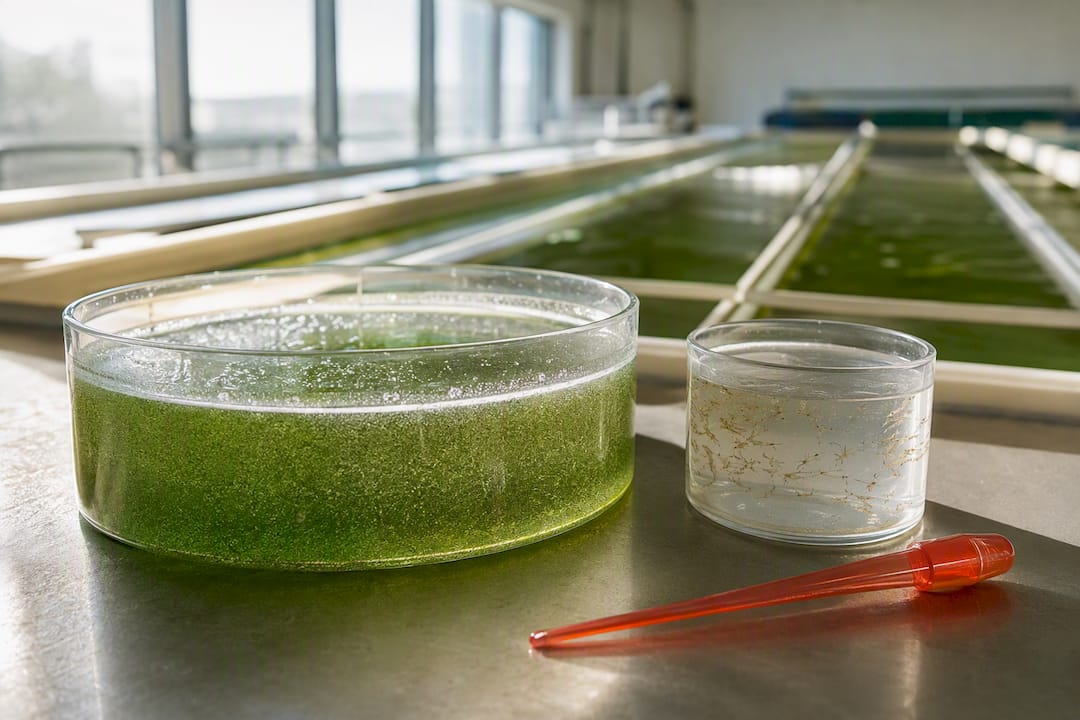
Home enrichment gets you real gains, but it also introduces variability: every batch depends on your dosing precision, your water quality that day, and how closely you watched the clock. Demeterbioscience raises Artemia on a controlled diet of the microalga Dunaliella, which produces a consistent protein baseline of at least 40% before any enrichment step even begins.
That consistency changes the calculus for a few use cases:
- High-volume larval runs where batch-to-batch nutrient variation would otherwise complicate growth tracking.
- Time-sensitive spawns, where you don't have 24 hours to spare for an enrichment cycle before fry need feeding.
- Institutional or bulk buyers, museums, fish stores, and research facilities, who need predictable nutrition without running their own enrichment line.
A bulk order of farmed Artemia doesn't replace enrichment science; it just shifts some of the variability out of your hands before the shrimp reach your tank.
A note from Demeterbioscience on doing this right
We enrich in-house when a batch needs a specific HUFA target that our Dunaliella-fed baseline doesn't already cover, and we ship live Artemia directly when consistency matters more than customization. Either path works, but live shipments need quick handling: unpack promptly and keep the shrimp cool during transfer, since even a few warm hours can undo the nutritional edge you paid for. If you're running frequent cycles or scaling toward institutional volume, reach out about a subscription so your feeding schedule and our shipments actually line up.
— Demeter
Where this article's protocols and data come from
- Enrichment of Artemia for use in freshwater ornamental fish production (CTSA manual)
- Artemia Enrichment Strategies: A Comprehensive Review (Reviews in Aquaculture, 2025)
- Impact of a polyunsaturated fatty acid supplement on enriching brine shrimp nauplii (2018)
- Can commercial aquafeeds improve the nutritional value of brine shrimp? (2024)
Sources
- Enrichment of Artemia for use in freshwater ornamental fish production (CTSA manual)
- Artemia Enrichment Strategies: A Comprehensive Review (Reviews in Aquaculture, 2025)
- Impact of a polyunsaturated fatty acid supplement on enriching the nutritional value of brine shrimp nauplii, Artemia sp. (2018)
- Can commercial aquafeeds improve the nutritional value of brine shrimp? Proximal composition and lipid profile of alternative enhancers (2024)