
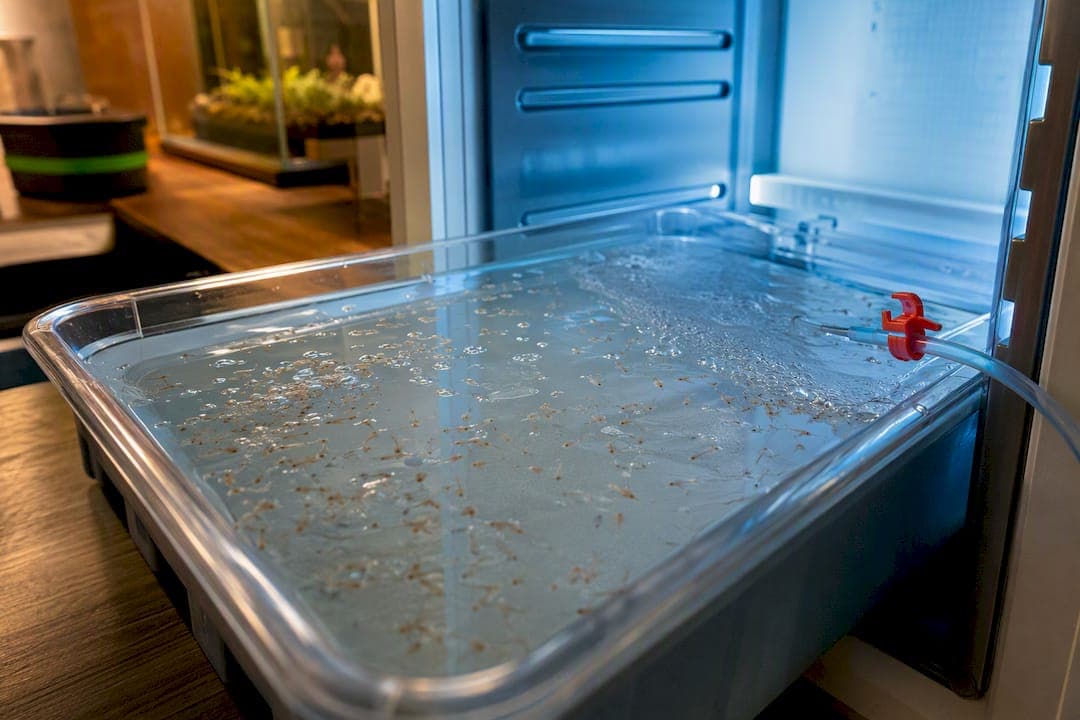
The best way to store live brine shrimp for hobbyist feeding is a shallow container of clean saltwater held in the refrigerator around cool refrigerator temperature. That single step reliably keeps adults alive for multiple days while preserving most of their fat content. Rinse them briefly before feeding, let them warm up gradually, and if you plan to feed within a day, an aerated room-temperature container works just as well and needs less babysitting.
TL;DR:
- Using shallow, wide containers with gentle aeration and maintaining salinity at seawater levels significantly improves brine shrimp survival during cold storage.
- Proper preparation, including rinsing in saltwater and feeding lightly before refrigeration, prevents water cloudiness and extends the shrimp’s lifespan.
- Daily monitoring is essential to prevent oxygen depletion, salinity drift, and bacterial blooms that cause rapid shrimp death.
- Rinsing shrimp in fresh water and gradually warming them before feeding reduces stress and enhances their health, especially after storage.
- Starting with nutrient-rich, farm-raised shrimp fed on controlled diets yields better shelf life and nutritional quality for feeding.
Table of Contents
- How Do You Prepare Live Brine Shrimp for Storage?
- What Temperature and Salinity Keep Brine Shrimp Alive Longest?
- How Do You Maintain a Live Brine Shrimp Container Day to Day?
- How Do You Rinse and Feed Stored Brine Shrimp Safely?
- Why Are My Stored Brine Shrimp Dying Fast?
- Why Feeding Quality Starts Before Storage Even Begins
- Why Most Storage Advice Skips the Part That Actually Matters
- Where to Buy Live Brine Shrimp for Reliable Storage Results
- Sources
How Do You Prepare Live Brine Shrimp for Storage?
Getting shrimp ready for storage matters as much as the storage itself. Sloppy prep, meaning debris, dead shrimp, or leftover eggshells left in the mix, is what turns a clean two-day hold into a cloudy mess by hour twelve.
- Harvest gently. Use a fine brine shrimp net or a siphon to pull live shrimp away from unhatched eggs and shell debris at the bottom of the hatchery. Avoid crushing them against mesh or glass.
- Rinse in saltwater, not fresh. Give the harvest a quick saltwater rinse to clear away hatching byproducts before it goes into the storage container. Save the freshwater rinse for right before feeding.
- Portion by container size. Split large harvests into smaller batches rather than cramming everything into one jar. Smaller portions are easier to aerate evenly and easier to check on daily.
- Feed lightly before the cold. A light dose of phytoplankton or spirulina powder a few hours before refrigeration gives the shrimp something in their gut, which seems to improve survival through the cold hold.
Skipping step four is common, and it is the reason some batches look fine on day one and collapse by day two.
What Temperature and Salinity Keep Brine Shrimp Alive Longest?
Refrigeration is the core of any short-term brine shrimp holding maintenance routine. Cold, around cool refrigerator temperature (roughly 2–4°C), slows the shrimp's metabolism dramatically. That's not just a survival trick, it's also a nutrition trick: refrigerated nauplii hold onto their lipid reserves far better than shrimp left at room temperature, where they burn through fat reserves developing and molting.
Salinity is non-negotiable. Brine shrimp are saltwater animals, full stop. Fresh water gives them roughly 30 minutes before they start dying, so it is never a storage medium, only a brief rinse step right before feeding. Keep storage water at a salinity typical of seawater, so it is suitably salty for the shrimp.
Container shape matters more than most hobbyists realize:
- Shallow, wide, rectangular containers beat deep jars because more surface area means more passive oxygen exchange with the air.
- A 1-gallon shallow system with gentle aeration can comfortably hold 500 to 1,000 adult brine shrimp.
- Baby brine shrimp (nauplii) tolerate much higher densities in research settings, but hobbyists without dedicated aeration should stay well below those numbers.
- Once you're packing a container tighter than a light, easy-to-see cloud of shrimp, it's time to either split the batch or add an air stone.
Statistic to remember: a single aerated gallon of saltwater can carry up to a thousand adult brine shrimp, but that number assumes gentle aeration, not a violent bubble curtain that knocks shrimp around and interferes with their own feeding behavior.
How Do You Maintain a Live Brine Shrimp Container Day to Day?
A stored batch isn't a "set it and forget it" situation. Check it daily, morning and night if you can.
- Do small partial water changes with premixed marine salt water, never straight tap water.
- Never top off an evaporated container with fresh water. If salt is still concentrated in the remaining liquid, adding fresh water spikes the salinity and can shock or kill the shrimp instead of diluting it safely.
- Pull out dead shrimp with a turkey baster or fine net as soon as you spot them. Cloudy water or a sour smell means bacteria are building and you're behind schedule.
- Feed sparingly. A pinch of phytoplankton or spirulina every couple of days is plenty. Overfeeding fouls the water faster than the shrimp can clean it up.
Pro Tip: If shrimp start clustering near the surface or against the container walls, that's oxygen stress, not curiosity. Move them to a shallower container or add a gentle air stone immediately.
How Do You Rinse and Feed Stored Brine Shrimp Safely?
Pulling shrimp straight from the fridge into a warm tank is a shortcut to shocking or killing them. Follow a simple sequence instead.
- Scoop out the portion you need with a net, leaving the storage water behind.
- Rinse briefly under fresh, dechlorinated water or tank water to strip off excess salt and waste products before feeding.
- Let the portion sit in a small cup of tank water for 10 to 15 minutes so temperature and salinity equalize gradually, swirling occasionally.
- Feed a small amount matched to fish size. Fry and small fish need a light dusting; adult fish can handle a fuller pinch.
- Rinse your net and cup after use. Cross-contaminating tank water with storage water is an easy way to introduce unwanted bacteria.
Why Are My Stored Brine Shrimp Dying Fast?
Most storage failures trace back to one of three culprits, and each has a fix.
- Oxygen depletion. Shrimp gasping at the surface or piling up in a corner means the container is undersized or under-aerated. Split the batch or add gentle airflow right away.
- Salinity drift. Cloudy edges of salt crust or shrimp going limp usually mean the water evaporated and concentrated. Test with a hydrometer and dilute carefully with premixed saltwater, never plain fresh water.
- Bacterial bloom. A sour smell, milky water, or a sudden mass die-off after a day or two of looking fine points to bacteria outpacing the shrimp. At that point, discard the batch rather than trying to save it.
- Prevention habit. Smaller, staggered batches, meaning hatching or storing in smaller lots rather than one giant tub, limit how much you lose when something does go wrong.
Why Feeding Quality Starts Before Storage Even Begins
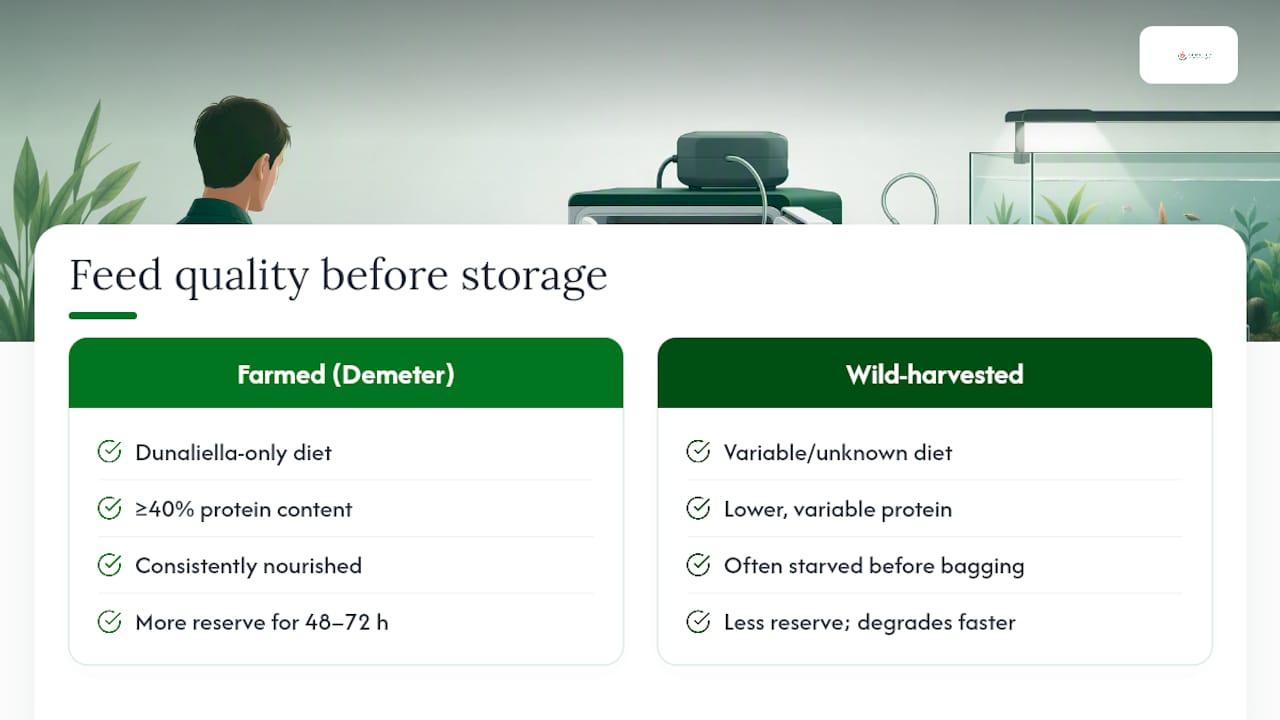
Storage technique only protects what's already in the shrimp. Demeter Biosciences raises its live brine shrimp on a diet exclusively of Dunaliella algae in controlled, land-based systems, which keeps protein content at 40% or higher and avoids the starvation stretches wild-harvested shrimp often go through before they reach a bag. A shrimp that starts out well-fed and consistently nourished has more nutritional reserve to lose during a cold hold, which is a real practical advantage when your storage window stretches toward 48 or 72 hours.
On the ordering side, plan around your feeding schedule rather than convenience. Smaller, more frequent orders sized to what you'll use within a few days beat one giant shipment sitting in the fridge for a week, degrading a little more each day.
Why Most Storage Advice Skips the Part That Actually Matters
Most brine shrimp storage tips fixate on temperature and stop there, as if cold alone is the whole answer. It isn't. Refrigeration buys you time, but oxygen and salinity are what decide whether that time gets used well or wasted on a slow decline. The overlooked lever is container shape. Hobbyists reach for whatever jar is on hand, when a shallow tray sitting in the same fridge space would keep the batch alive noticeably longer, simply from surface area.
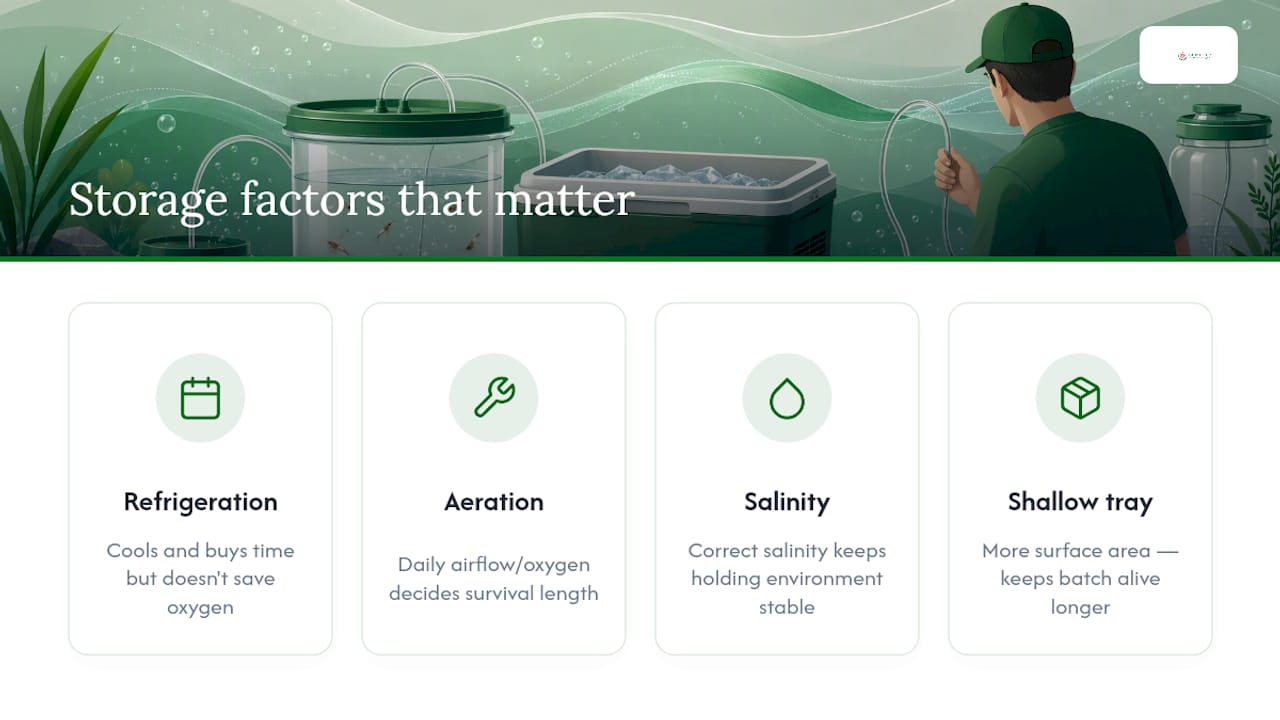
The other blind spot is treating storage as passive. A stored batch is still a living system that needs daily eyes on it, not a jar you check when you remember. Skipping the twice-daily glance is how a "successful" three-day hold quietly turns into a two-day hold with a die-off you didn't catch until feeding time.
If there's one thing to prioritize above the rest, it's this: get the container geometry and salinity right before you worry about anything else. Temperature control is easy. Getting the water chemistry and airflow right is where most home setups actually fail.
— Demeter
Where to Buy Live Brine Shrimp for Reliable Storage Results
Storage only works as well as what goes into the container, which is why the shrimp you start with matters as much as the fridge settings. Demeterbioscience's live brine shrimp ships direct to hobbyists already raised on a consistent Dunaliella diet, so you're not gambling on nutrient content the way you can with wild-harvested batches.

For most home aquariums, order in amounts you can realistically use within three to four days rather than stockpiling. If you're feeding multiple tanks, stocking a local fish store, or supplying a small research setup, the bulk order option covers higher volume without sacrificing the same feeding quality. Check current availability and place an order sized to your actual feeding schedule, not your storage capacity.
Sources
- Care Guide: Brine Shrimp | Carolina Biological Supply
- HATCHING and GROWING BRINE SHRIMP (Artemia) — Diana Walstad
- How to Keep Brine Shrimp Alive: A Complete Guide for Aquarium Hobbyists