
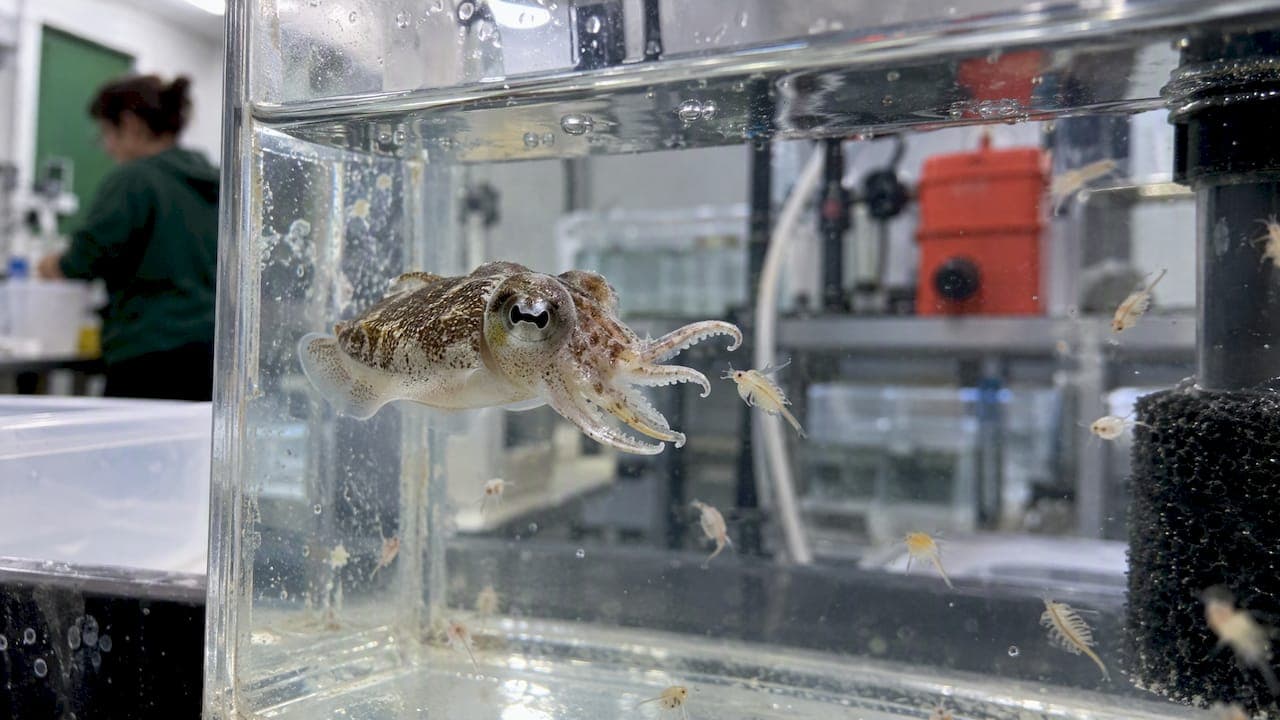
Brine shrimp can start a cuttlefish hatchling on live food, but they cannot finish the job. Published work on Pharaoh cuttlefish shows a strong preference for Artemia nauplii over other early prey, and the same research warns that a brine-shrimp-only diet leaves gaps over time. Plain, unenriched nauplii are the weak point. Fed well, enriched, and sized to the animal, brine shrimp are a useful part of a cuttlefish program. Used alone, they are not.
Below is what the studies measured, what hobbyists report, and how to build a feeding plan around live brine shrimp without overpromising.
TL;DR
- Newly hatched cuttlefish of some species readily take Artemia nauplii. In one study of Sepia pharaonis, the preference held across early hatchling ages.
- Unenriched Artemia are low in the fatty acids EPA and DHA that marine predators need, so enrichment or algae gut-loading is standard practice.
- Brine shrimp should be a bridge, not the whole diet. Plan to add mysids or other enriched crustaceans as the cuttlefish grow.
- Many aquarium keepers of small species such as dwarf cuttlefish report that hatchlings accept only live mysids. Check your species before you buy anything.
- Our farmed live brine shrimp are raised on the microalga Dunaliella, so they arrive already algae-fed rather than starved.
Table of Contents
- Why cuttlefish keepers ask about brine shrimp
- What the research says about cuttlefish hatchlings and Artemia
- The honest keeper's view: species matter
- Why enrichment and freshness decide the result
- A cuttlefish feeding plan built around brine shrimp
- Farmed, algae-fed brine shrimp as a supplement
- Our perspective
- Getting live brine shrimp for your setup
- Other places brine shrimp fit
- FAQ
- Sources
Why cuttlefish keepers ask about brine shrimp
Cuttlefish hatch as miniature, fully formed hunters. They need live, moving prey from the first days, and they need a lot of it. A cuttlefish keeper's biggest problem is rarely the tank. It is the food supply for the first few weeks.
Brine shrimp (Artemia) are the obvious candidate. They are small crustaceans that hatch from dormant cysts and can reach adulthood in as little as 8 days under ideal conditions. The cysts can stay viable for years when stored dry, which is why they became the backbone of larval aquaculture. Nauplii, the newly hatched larvae, swim in open water, which is exactly what triggers a cuttlefish's strike.
The catch is that convenience and completeness are different things. A food that is easy to get is not automatically a food that lets the animal thrive.
What the research says about cuttlefish hatchlings and Artemia
Most of the hard data comes from aquaculture studies on Pharaoh cuttlefish (Sepia pharaonis), a species grown for fisheries, not a typical home aquarium animal. Treat the findings as a guide, not a guarantee for every species.
Hatchlings prefer Artemia early on
In a feeding-response study, S. pharaonis hatchlings showed an age-independent preference for Artemia nauplii over mysids and fish fry during the earliest stages. The researchers suggested a density of about 15 Artemia per 100 mL for early hatchlings to maximize capture and consumption. That is a useful starting point for a small rearing container, though you should watch your own animals and adjust.
Enrichment changes outcomes
A 2020 study in the Iranian Journal of Fisheries Sciences fed juvenile Pharaoh cuttlefish Artemia enriched with cod liver oil and vitamins C and E. Those animals grew faster and handled temperature and salinity stress better than the control group fed non-enriched Artemia.

An earlier study on the European cuttlefish (Sepia officinalis) points the same way: an enriched natural diet affected survival and growth of juveniles. Natural Artemia nauplii are low in highly unsaturated fatty acids such as EPA and DHA, and practitioners treat enrichment or algae gut-loading as a required step, not an extra.
One prey item is not enough
The same feeding-response work notes that while Artemia is a preferred starting food, moving to more nutritionally robust prey such as mysids matters for sustained growth beyond the larval phase. Cuttlefish raised solely on Artemia tend to show deficiencies over time.
The honest keeper's view: species matter
Lab results and hobby experience do not always agree, and you should know both.
Keepers of dwarf cuttlefish (Sepia bandensis) commonly describe live mysid shrimp as the ideal first food, and note that babies eat large amounts of food that must be the right size. One forum guide for a first-time breeder goes further and says hatchlings will eat only live mysids. That is one hobbyist's account, not a study, and it conflicts with the Pharaoh cuttlefish data. Both can be true: species, hatchling size, and how the nauplii are presented all change what a baby accepts.
Our practical reading:
- If you keep a species with large hatchlings, brine shrimp may be accepted from day one.
- If you keep a small species, have live mysids lined up first, and treat brine shrimp as an experiment on the side.
- In either case, never plan a program around a single food.
Why enrichment and freshness decide the result
A brine shrimp is only as good as what it ate. Aquaculture researchers describe Artemia as a nutrient delivery vehicle: its own nutrient profile varies by strain and batch, so producers load it with what the predator needs.
Timing matters too. Hatchery guidance says freshly hatched, first-stage nauplii give the best initial nutrition because they still carry their yolk reserves. Once they molt into older metanauplii, they have started burning those reserves, and enrichment becomes mandatory. We cover the biology in our guide to brine shrimp life stages and the feed window.
Hatching at home
If you hatch your own cysts, the basics are simple but unforgiving:
- Aerate heavily. Cysts must stay in suspension or they settle and go anaerobic.
- Use a cone-shaped vessel if you can. It circulates better and makes it easy to separate empty shells from the nauplii, and shells are a hazard if swallowed by sensitive larvae.
- Harvest by light. Nauplii are drawn to it, so you can siphon them from the bottom of the cone.
- Keep cysts dry and sealed until use. Our Artemia nauplii hatching and feeding guide walks through the setup step by step.
Enriching what you hatched
Home hatchers usually enrich by holding nauplii for several hours in water with an enrichment product or algae. The catch is the clock: every hour of enrichment is an hour the nauplii spend using up their yolk. That tension is the main reason many keepers prefer to start from animals that were already fed well.
A cuttlefish feeding plan built around brine shrimp
This is a framework, not a prescription. Species, water temperature, and hatchling size will change the details.
| Stage | Main food | Role of brine shrimp |
|---|---|---|
| First days after hatching | Species-appropriate small live prey | Offer enriched or freshly hatched nauplii as a trial, at roughly 15 per 100 mL if you follow the S. pharaonis work |
| First weeks | Live mysids or other small crustaceans | Supplement, never the only food |
| Juvenile | Larger live crustaceans | Occasional, mostly as a gut-loaded carrier |
| Adult | Live shrimp and crabs | Not a practical food at this size |
Two habits help at every stage:
- Watch the strike. If a hatchling ignores nauplii for several days while mysids get taken, the species is telling you something. Do not starve the animal while you wait.
- Keep the water clean. Heavy live feeding fouls small containers fast. Remove uneaten prey and dead shrimp.
Farmed, algae-fed brine shrimp as a supplement
The nutritional weakness of plain Artemia comes from what they eat, or fail to eat. Wild-harvested and stored brine shrimp can be starved by the time they reach you, with nutrient content that swings by season and source.
We raise our brine shrimp on land, in controlled systems, fed exclusively on the microalga Dunaliella, and we target at least 40% protein content. For a cuttlefish keeper, the point is not that our shrimp replace mysids. It is that when you do offer brine shrimp, they arrive already fed, so you are not relying on a rushed enrichment step. For more on this approach, see our piece on target feeding microalgae-fed Artemia and the benefits of farmed brine shrimp.
A caution we would give any customer: our product is a live food for aquarium and aquaculture nutrition. We do not have trial data on cuttlefish specifically, and we will not claim our shrimp make a hatchling thrive on their own.

Our perspective
We farm brine shrimp, so people assume we will say brine shrimp solve everything. They do not. Every serious piece of cuttlefish research we have read points the same way: Artemia are an excellent first prey for some species and a poor sole diet for all of them.
What we can offer honestly is consistency. Wild populations feed on whatever the season gives them and can run short of food, which shows up as variable nutrition. Our shrimp live in a controlled system with a steady algal diet, and that is why we can stand behind a protein floor. For a keeper, consistency means fewer unknowns while you work out what your particular cuttlefish accepts.
If we were setting up a cuttlefish nursery, we would line up mysids first, trial enriched or algae-fed nauplii alongside them, and keep notes on what gets eaten. Then we would adjust.
— Demeter
Getting live brine shrimp for your setup
You can order live brine shrimp from us directly, priced from $17 to $35 depending on the option. If you feed on a regular schedule, the Demeter Biosciences membership delivers live brine shrimp monthly for $25 per month. Live phytoplankton is $20 if you want to feed algae to the rest of your system. Stores, museums, and research groups running several tanks can look at our bulk brine shrimp order.
Other places brine shrimp fit
Brine shrimp are not only for cephalopods. If you keep other animals, these guides cover the details:
- Brine shrimp in a refugium for reef setups.
- Brine shrimp for freshwater fish, including hatching versus sourcing.
- Daphnia versus brine shrimp when matching food to mouth size.
FAQ
Can cuttlefish eat brine shrimp?
Yes, at least in early life for some species. Pharaoh cuttlefish hatchlings showed a clear preference for Artemia nauplii in published feeding trials. Other species, especially small ones like dwarf cuttlefish, are often reported by keepers to accept only mysids at first.
Can baby cuttlefish live on brine shrimp alone?
Not reliably. Research on cuttlefish rearing indicates that Artemia-only diets lead to nutritional deficiencies over time, and unenriched nauplii lack EPA and DHA. Plan to add mysids or other enriched crustaceans as the animals grow.
How long does it take for baby brine shrimp to grow?
Under ideal conditions of warmth, plentiful food, and high oxygen, brine shrimp can reach adulthood in as little as 8 days. In variable conditions it typically takes three to six weeks. For feeding cuttlefish hatchlings, you generally want the newly hatched stage, not adults.
Do brine shrimp need to be enriched before feeding cuttlefish?
In most cases, yes, especially once they are past the first nauplius stage. Older nauplii have used up their yolk reserves and are less nutritious. Enrichment with lipids, vitamins, or algae restores what they lack, and starting with algae-fed shrimp reduces the gap.
Sources
- Feeding Responses of Cuttlefish (Sepia pharaonis) at Early Hatchling Stages
- Effects of feeding Artemia franciscana enriched with HUFA, vitamins C and E on Sepia pharaonis
- Effect of enriched natural diet on survival and growth of juvenile Sepia officinalis
- Artemia, Great Salt Lake ecosystem, University of Utah Genetic Science Learning Center
- Artemia Production for Marine Larval Fish Culture
- Artemia enrichment research article, Latin American Journal of Aquatic Research
- Keeping and Breeding Dwarf Cuttlefish (Sepia bandensis Care)
- Raising a baby cuttlefish, forum thread