
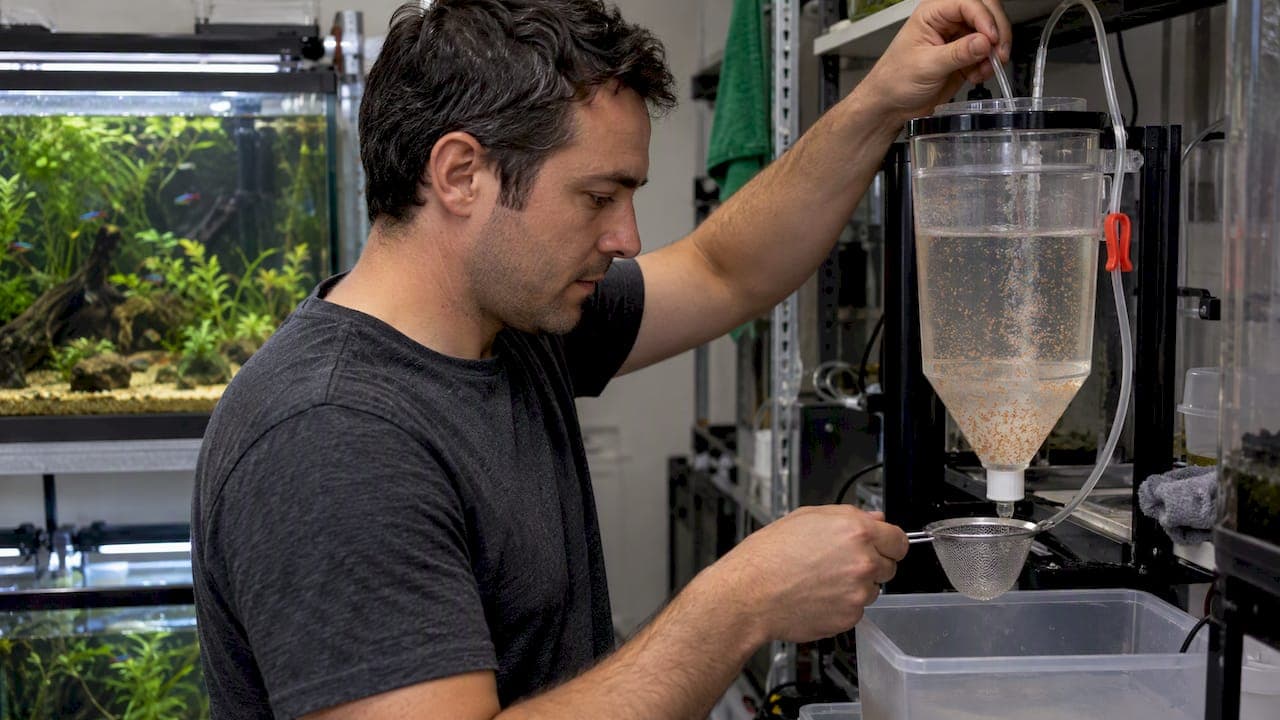
Yes, freshly hatched brine shrimp nauplii make an effective, high-protein live food for most freshwater fish. Hatch the cysts in saltwater following tested parameters, then rinse the nauplii in fresh water before feeding them to your tank. For picky eaters or fry that need extra fatty acids, enrich the nauplii first.
TL;DR:
- A reliable home hatch needs water near 28°C, continuous light and strong aeration, pH 8.0 to 9.0, and 18 to 24 hours.
- Feed only what fish finish within 2 to 3 minutes, give fry several small meals daily, and remove leftovers to protect water quality.
- For fry needing extra fatty acids, feed nauplii microalgae or a fatty acid emulsion for 12 to 24 hours to raise DHA and EPA.
- Aerated cold storage at 2°C to 10°C keeps nauplii viable for 24 to 72 hours, but feed them within 24 hours for best nutrition.
- Home hatching suits occasional batches and lower costs, while farmed shipments favor breeders who need predictability; compare one hatch with a small shipment before choosing.
Table of Contents
- Why hobbyists use brine shrimp for nutrition and growth
- Hatching basics: temperature, salinity, aeration, and timing
- Setting up your own hatch and harvest at home
- Decapsulation and enrichment: do you need either step?
- Feeding freshwater fish: rinsing, portions, and water quality
- Holding nauplii: short-term storage before feeding
- Demeter Biosciences: farmed brine shrimp fed on microalgae
- Hatch your own or buy farmed: how to decide
- Where to get reliable live brine shrimp and subscriptions
- FAQ
- Sources
Why hobbyists use brine shrimp for nutrition and growth
Newly hatched Artemia carry concentrated yolk reserves that make them one of the most practical live foods for fry and selective feeders. Adult brine shrimp provide roughly 60% protein and 10% fat by dry weight, according to Artemia production research from SRAC and Texas A&M, which is why breeders reach for them when conditioning adults or raising fry.
Freshwater species that benefit most include:
- Fry and small-mouthed juveniles that need bite-sized, nutrient-dense food.
- Selective adult feeders that refuse flake or pellet food.
- Breeding pairs being conditioned for spawning.
Fresh nauplii alone cover most nutritional needs. Enrichment matters more when you are targeting specific fatty acids like DHA and EPA for sensitive or slow-growing fry.
Hatching basics: temperature, salinity, aeration, and timing
Hatch success comes down to a handful of controllable variables, and getting them close to the tested ranges makes the difference between a reliable hatch and a disappointing one.
- Temperature: around 28°C (82°F) produces the fastest, most consistent hatch, per the SRAC/TAMU fact sheet.
- Hatch window: most cysts hatch within 18 to 24 hours under continuous light and heavy aeration.
- Salinity: a hobby-relevant saltwater mix supports hatching; cyst strain also affects nauplii size and HUFA content, per SRAC/TAMU.
- Density: standard stocking is about a couple of grams of cysts per liter; going higher requires supplemental oxygen, per Virginia Tech Extension.
- pH: keep it between 8.0 and 9.0, buffering with sodium bicarbonate if your tap water runs low in alkalinity.
For a deeper dive into exact temperature targets for hatching versus holding, see our guide to brine shrimp temperature ranges.
Setting up your own hatch and harvest at home
A clean, repeatable setup turns brine shrimp hatching into a routine rather than a guessing game. Here is the sequence that works for most hobbyists:
- Pick a container. A cone-shaped hatchery vessel or an inverted two-liter bottle both work well for small-batch hatching.
- Mix the saltwater. Prepare your water to the target salinity before adding cysts, and set aside an 18 to 24 hour window for the hatch.
- Add cysts and start aeration. Stock at roughly 2 grams per liter, keep a strong air stone running so cysts stay suspended, and hold the water near 28°C when you can.
- Keep the light on. Continuous light during the hatch window improves hatch rates and keeps nauplii cycling through the water column.
- Harvest by phototaxis. Turn off aeration, let the nauplii swim toward a light source at the bottom of the container, and siphon them out while leaving unhatched shells and debris behind.
- Rinse before feeding. Pour the harvested nauplii through a fine brine shrimp sieve and rinse with fresh water to strip out residual salt.
Pro Tip: Do not overstock your hatch container; crowding cysts past the recommended density starves the batch of oxygen and lowers the quality of the nauplii that do hatch.
For a tighter, lab-style timeline used by small-scale breeders, our zebrafish brine shrimp protocol walks through the same hatch window with more precise handling notes.
Decapsulation and enrichment: do you need either step?
Decapsulation removes the outer shell from brine shrimp cysts before hatching, mainly for sanitation and to eliminate empty shells that fry can mistake for food. It is a chemical process best approached with a tested protocol rather than improvised measurements. Virginia Tech Extension's hatchery guide outlines the standard hygienic stages hobbyists and breeders follow.
Enrichment is a separate step that happens after hatching:
- Feed newly hatched nauplii a microalgae or HUFA-rich emulsion for 12 to 24 hours before offering them to fish.
- This raises DHA, EPA, and phospholipid content in the nauplii's gut, which a 2023 review in PMC ties to better larval growth and survival across several cultured species.
- Instar I nauplii, the freshest stage, carry the richest yolk reserves on their own.
Pro Tip: Enrichment adds a full day to your feeding schedule, so plan it only when you are targeting fussy fry or trying to boost a specific fatty acid profile.
Feeding freshwater fish: rinsing, portions, and water quality
Rinsing is not optional. Brine shrimp hatch in saltwater, and introducing that salt directly into a freshwater tank stresses fish and throws off water chemistry. Sieve the nauplii and rinse them under fresh running water, a step confirmed by IFAS's brine shrimp guide, which also notes that brine shrimp survive briefly in fresh water, so rinsed nauplii remain safe to feed.
- Portion size: offer only what fry or fish consume within 2 to 3 minutes; adults typically clear a portion faster than fry.
- Frequency: fry do well with several small feedings a day, while adults usually need live brine shrimp just once or twice daily as a supplement.
- Water quality: siphon out uneaten nauplii promptly, and never pour concentrated hatch water into a small tank, since clouding or an ammonia spike can follow.
Our feeding amount guide breaks portioning down further by tank size and fish type, and our fry-stage feeding guide covers how live food needs shift as young fish grow.
Holding nauplii: short-term storage before feeding
If you hatch in batches or receive a live shipment, cold storage buys you time without sacrificing much nutrition. Keeping nauplii at 2°C to 10°C with gentle aeration slows their metabolism and extends viability, according to Virginia Tech's Artemia culture guide.
- Cold storage with aeration typically holds nauplii for 24 to 72 hours.
- Feed immediately after hatching when possible, since nutritional value declines the longer nauplii sit.
- Use within 24 hours for the highest nutritional payoff, and keep storage containers clean to limit disease risk.
For step-by-step cold storage setup, see our guide on storing live brine shrimp for 48 to 72 hours.
Demeter Biosciences: farmed brine shrimp fed on microalgae
Because our production happens indoors under controlled conditions, we provide breeders with a more predictable source of nutrition and hatchability.
- Single orders suit hobbyists who want to try live shrimp without committing to a schedule.
- Monthly membership fits breeders who need recurring shipments.
- Bulk orders serve local fish stores, museums, and research institutions.
When your shipment arrives, feed or refrigerate the live shrimp promptly to preserve freshness. Read more about our approach on our farmed brine shrimp production page.
Hatch your own or buy farmed: how to decide

Hatching at home makes sense if you want to learn the process, keep unit costs low, or you are only running small, occasional fry batches. Buying farmed live shrimp makes more sense once predictability matters more than price, particularly for breeders who cannot afford a failed hatch during a critical feeding window.
My suggestion: run one home hatch and order one small live shipment, then compare hatch rates, nauplii size, and how your fish respond before settling into a routine.
— Demeter
Where to get reliable live brine shrimp and subscriptions
Once you know whether you prefer hatching or buying, picking the right supply path is straightforward. We offer three ways to get live brine shrimp depending on how often you need it and how much you need at once.
- Single live shipment: best for hobbyists testing live food for the first time, available through our live brine shrimp product page.
- Demeter Biosciences membership: a monthly plan for breeders who want recurring shipments without reordering each time, detailed on our membership page.
- Bulk orders: suited to fish stores, museums, and research institutions needing larger volumes, through our bulk order page.
Time your delivery to land a day or two before a planned feeding event, and refrigerate shrimp on arrival if you are not feeding immediately. Visit our live brine shrimp page to get started.
FAQ
Can you grow brine shrimp at home?
Yes, hobbyists routinely hatch brine shrimp cysts at home using a saltwater solution, aeration, and light, with most cysts hatching within 18 to 24 hours. Beyond hatching nauplii for immediate feeding, growing shrimp to adult size at home requires more space and ongoing water management than most hobby setups provide.
What eats brine shrimp in the wild?
In their native salt lake habitats, brine shrimp are eaten by wading birds and other wildlife adapted to hypersaline environments. In the aquarium hobby, freshly hatched nauplii are fed to freshwater and marine fish fry, as well as many adult fish that respond well to live food.
Do brine shrimp need saltwater to hatch?
Yes, brine shrimp cysts require a saltwater solution to hatch successfully, since they are adapted to hypersaline lake environments. Once hatched, the nauplii should be rinsed in fresh water, as recommended by IFAS, before being fed to freshwater fish to avoid introducing excess salt into the tank.
Are brine shrimp healthy for fish?
Yes, brine shrimp are a high-protein, high-fat live food, with adult brine shrimp containing up to 60% protein by dry weight. Enriching nauplii with microalgae or HUFA-rich emulsions before feeding further improves their fatty acid profile, which research reviews link to better growth and survival in young fish.
Sources
- Artemia production for marine larval fish culture (SRAC / TAMU)
- Artemia culture for intensive finfish and crustacean larviculture (VT Extension)
- Development of enriched Artemia and Moina in larviculture of fish and crustaceans: a review (PMC)