
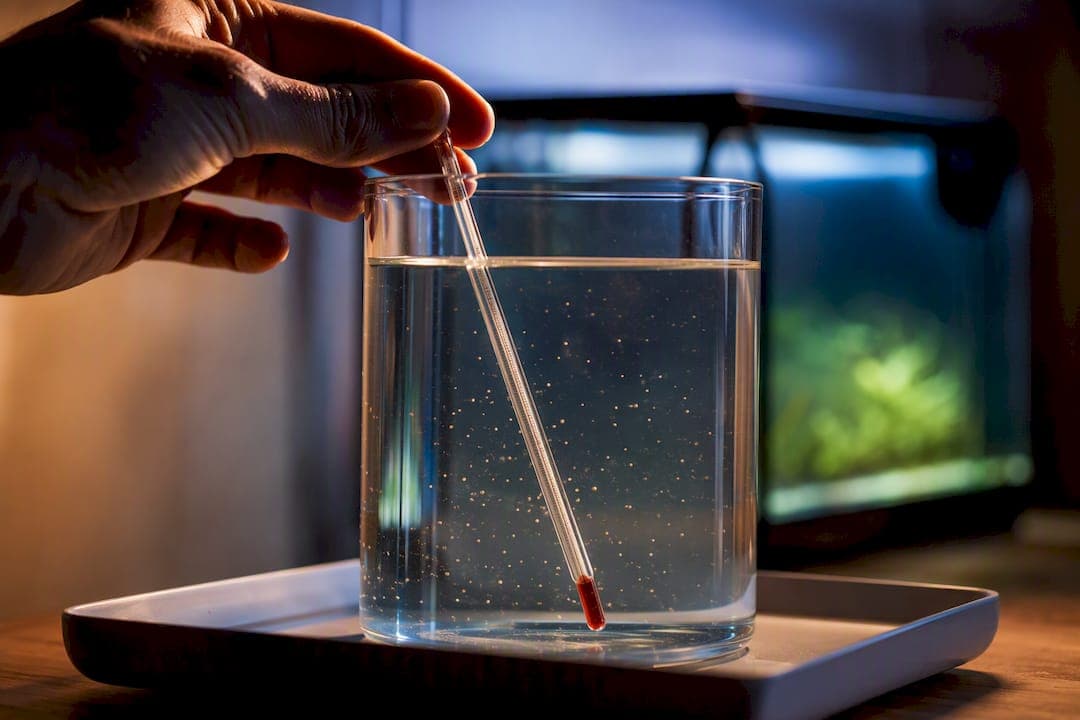
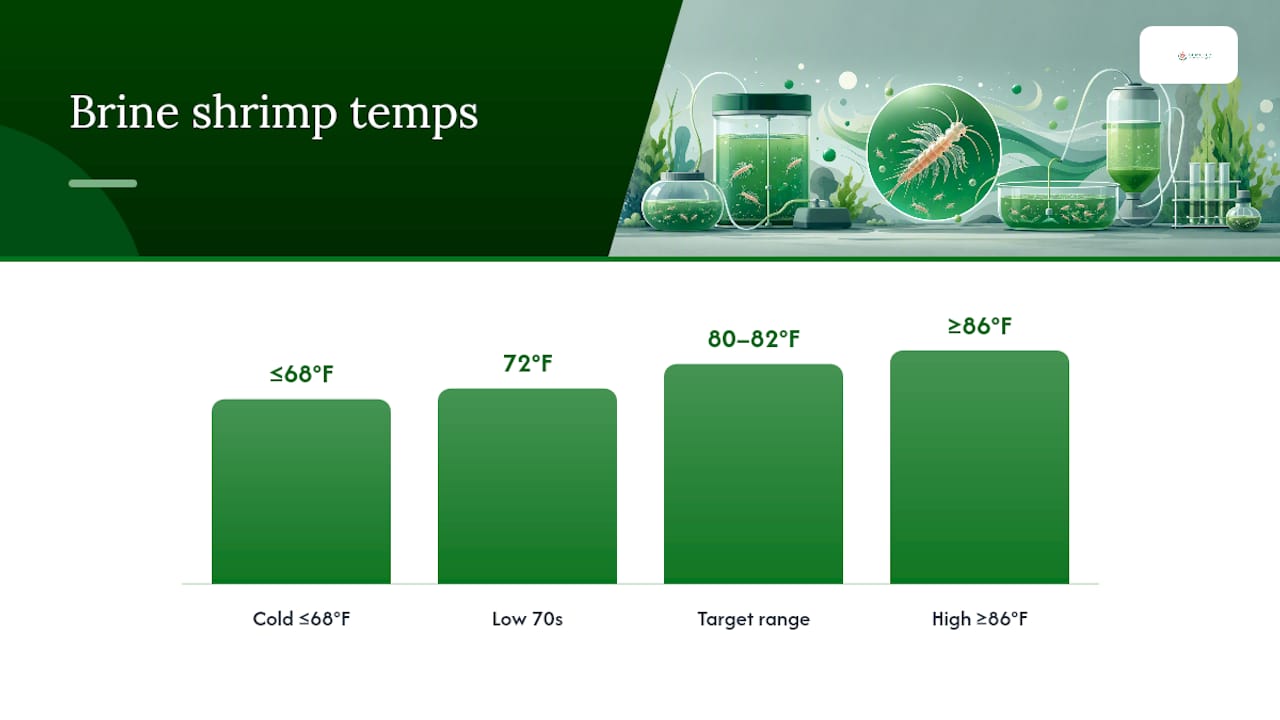
Hatch brine shrimp cysts at 80–82°F (26–28°C) for the best results, with a safe working band of roughly 77–86°F (25–30°C). For ongoing care of nauplii and adults, keep water anywhere from 68–82°F (20–28°C), leaning warmer for faster growth and cooler for longer survival. At the optimal hatch setpoint, expect nauplii within 18–24 hours. Push much past 86°F for long, and you trade a faster hatch for a shorter life.
TL;DR:
- Maintaining water temperature between 80–82°F (26–28°C) ensures the fastest and most reliable brine shrimp hatch within 18–24 hours.
- Temperatures above 86°F (30°C) speed up hatching but reduce cyst viability and increase mortality, making high temperatures detrimental over time.
- During rearing, nauplii thrive at 78–82°F (25–28°C), while cooler water of 68–74°F (20–23°C) extends adult culture lifespan and promotes long-term health.
- Precise temperature measurement with a proper aquarium thermometer and gradual adjustments are essential to prevent hatch failures caused by cold shocks or overheating.
- Consistent temperature control throughout the culture is more important than rapid hatching, as stability improves nutritional quality and helps maintain healthy, thriving cultures.
Table of Contents
- Optimal Brine Shrimp Water Temperature for Hatching Cysts
- Ideal Temperature Ranges for Raising Nauplii, Juveniles, and Adults
- What the Research Says About Temperature, Hatch Rate, and Survival
- How to Measure and Control Temperature Without Guessing
- Troubleshooting Temperature Problems in a Hatch or Culture
- Why Consistent Temperature Control Matters More Than It Gets Credit For
- Get Consistent Live Brine Shrimp Without Running Your Own Hatch
- Sources
Optimal Brine Shrimp Water Temperature for Hatching Cysts
Cysts are dormant capsules waiting for the right trigger, and temperature is the single biggest lever you control. The sweet spot sits at 80–82°F (26–28°C), a range confirmed by both classroom protocols and commercial hatchery guidance. At that setpoint, most viable cysts break dormancy, rehydrate, and release swimming nauplii within about a day.
A University of Utah classroom guide built specifically for teaching hatching biology reports reliable hatches across a broader 25–32°C (77–90°F) span, but flags the 25–28°C band as the one that produces the most consistent, highest-quality results. That distinction matters for anyone deciding between speed and reliability.
Temperature and hatch time move in opposite directions, and the relationship isn't subtle:
- At 80–82°F (26–28°C): expect nauplii in roughly 18–24 hours, per vendor hatching protocols.
- In the low 70s°F (low 20s°C): hatching stretches to 24–36 hours, sometimes longer if the batch of cysts is older or lower quality.
- Below 68°F (20°C): hatching slows dramatically and can stall out entirely for weaker cyst batches.
- Above 86°F (30°C): hatching speeds up further, but you start trading quality for speed.
That upper limit deserves its own warning. Vendor guidance is consistent that you should not routinely push past 86°F (30°C) even for a quick hatch, because hobby aquaculture sources report reduced hatch quality and higher later-stage mortality once cysts spend real time at that ceiling. A mechanistic study using microfluidic observation found optimal hatching performance clustered closer to 25–30°C, with metabolic rate rising sharply as temperature climbs. That's the biological engine speeding up. It also means oxygen demand spikes right when your incubation water is least equipped to supply it, according to the Scientific Reports analysis on abiotic hatching factors.
The practical rule: treat 80–82°F as your target, not your ceiling. A degree or two either side is fine. Sustained time above 86°F is where things start going wrong even if the hatch itself looks fast and successful.
Ideal Temperature Ranges for Raising Nauplii, Juveniles, and Adults
Hatching is a one-time event. Rearing is where most hobbyists actually lose their culture, usually because they assume the hatching temperature should stay locked in for the shrimp's whole life. It shouldn't.
Once nauplii emerge, the goal shifts from "trigger the hatch" to "balance growth against longevity." Freshly hatched nauplii tolerate warmer water well and grow fastest near the hatching temperature, since their metabolism is already running hot from the hatch itself. As they mature into juveniles and adults, cooler water becomes the better long-term strategy if your priority is keeping a culture alive and productive rather than growing shrimp as fast as possible.
A Carolina care guide for brine shrimp puts the full maintenance band at 68–82°F (20–28°C), and that range covers nearly every home and small-scale setup:
- Nauplii (0 to about 2 days old): keep near 78–82°F (25–28°C) to sustain the growth momentum from hatching.
- Juveniles: 72–78°F (22–26°C) balances decent growth with manageable oxygen demand.
- Adults, especially for longer-term holding: 68–74°F (20–23°C) slows metabolism and extends how long the population stays healthy.
Warmer water always means higher oxygen consumption, which is the part hobbyists most often underestimate. If you raise the temperature to speed up growth without adding aeration, you can trigger a die-off that has nothing to do with feed or water quality. Adjust feeding rates alongside temperature too. Faster growth means faster hunger, and understanding what nauplii need to eat at each stage keeps a warm culture from starving itself even as it grows.
What the Research Says About Temperature, Hatch Rate, and Survival
The biology behind these numbers isn't guesswork. It's measured, and the measurements explain why "hotter equals better" is the wrong instinct.
Artemia hatching happens in four recognizable stages: cyst rehydration, metabolic reactivation, embryo emergence from the shell, and finally the nauplius breaking free to swim. Temperature compresses or stretches every one of those stages. The Scientific Reports study on abiotic hatching factors tracked this directly with microfluidic observation and found hatching performance peaking around 25–30°C, with each stage shortening as temperature rose and oxygen consumption climbing right along with it.
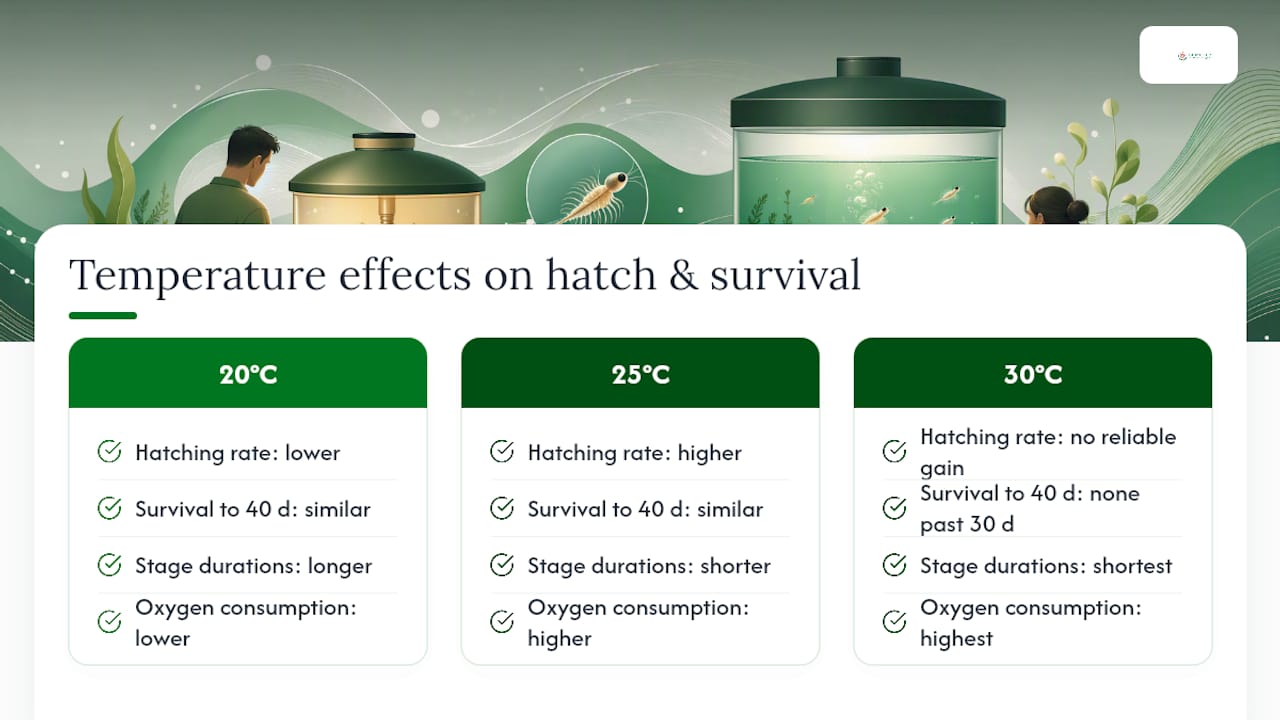
A 30-day warning worth remembering: according to an FAO technical resource on Artemia biology, survival to 40 days post-hatch was similar at both 20°C and 25°C in one analysis. At 30°C, no individuals survived past 30 days post-hatch at all.
That's the clearest evidence available that "faster" and "healthier" are not the same goal. Laboratory work on incubation temperature backs this up from a different angle: hatching rate jumps substantially as temperature rises from 20°C to 25°C, but pushing temperature even higher doesn't reliably improve hatchability, and it can quietly erode later survival, according to a FASEB experimental abstract on incubation temperature. Optimal conditions also shift depending on salinity and where the cysts originated, which is why two batches can behave differently at the exact same temperature.
The takeaway for anyone running a hatch: resist the urge to crank the heater to shave a few hours off. The middle of the range does more for your shrimp than the edge of it ever will.
How to Measure and Control Temperature Without Guessing
Precision here doesn't require lab equipment, but it does require better habits than "the room feels warm enough."
- Use a submersible aquarium thermometer, not a stick-on strip. Strips read the outside of the container, which lags behind actual water temperature by a wide margin during a heater cycle.
- Place the thermometer probe away from the heater and the airstone. Both create localized hot or cold spots that give you a false reading if the probe sits too close.
- Use a small adjustable aquarium heater with a built-in thermostat for anything beyond a one-off hatch. Manual light-bulb or ambient-room setups work but drift more, especially overnight.
- Acclimate cysts slowly if they've been refrigerated. Cold storage keeps cysts viable longer, but dropping them straight into 80°F water from a refrigerator shocks the rehydration process. Let the container sit at room temperature for 15 to 20 minutes first.
- Match replacement water temperature to the culture, not the tap. Cold tap water added straight into a warm hatching container is one of the most common causes of a stalled hatch. Check the numbers on water parameters that actually matter before you top off or do a partial change.
- Check the thermometer at the same two times daily (morning and evening) to catch drift before it becomes a crash.
Pro Tip: Keep a small notebook or phone note logging temperature and hatch time for every batch. After four or five hatches, you'll know your own equipment's real-world range better than any guide can tell you, because heaters, room drafts, and container size all shift the numbers slightly.
Troubleshooting Temperature Problems in a Hatch or Culture
A failed hatch almost always shows symptoms before you give up on it. Water that's too cold produces cysts still floating and unhatched well past 36 hours, often clumped together at the surface with no visible movement. Water that's run too hot for too long gives you the opposite problem: a fast, seemingly successful hatch followed by nauplii that die off within a day or two instead of reaching juvenile stage.
To check viability quickly, take a small sample under bright light. Live nauplii show constant, jerky swimming movement. Dead ones sink and stay still.
- Too cold: raise the temperature gradually, no more than 2 to 3°F per hour, and wait the full 36 hours before declaring a batch dead.
- Too hot: pull the heater immediately, add cooler replacement water in small increments, and increase aeration to offset the oxygen debt.
- Cloudy or foul-smelling water: this usually means bacterial bloom from overheating combined with uneaten cyst shells, not a temperature problem alone. Start a fresh batch rather than trying to rescue it.
- When to restart instead of salvage: if you're past 40 hours with no nauplii and water has tested within range the whole time, the cysts themselves were likely nonviable. Discard and start clean rather than troubleshooting further.
Why Consistent Temperature Control Matters More Than It Gets Credit For
Most of the temperature advice in this space treats hatching as the finish line. It isn't. The real test of a good temperature strategy is whether the shrimp you produce are actually worth feeding to something, and that depends on what happened to them long before they hatched.
Some cultivation systems are built around the idea that temperature control isn't a hatching trick. It's a nutrition strategy. Shrimp grown in a stable, land-based system fed exclusively on Dunaliella algae don't experience the seasonal swings or starvation stress that wild-harvested Artemia go through in natural salt flats. That consistency in growing conditions can support predictable protein content and nutritional quality shipment to shipment, instead of varying with the weather in whatever bay the shrimp came from.
The lesson for hobbyists running their own hatches is the same one we apply at scale: stable conditions beat fast conditions almost every time.
— Demeter
Get Consistent Live Brine Shrimp Without Running Your Own Hatch
Running a precise hatch every week is a real time commitment, and even a well-managed setup can have an off batch. Some companies solve that by shipping farmed, microalgae-fed live brine shrimp raised in controlled environments, so customers can get consistent nutrition without babysitting a heater and thermometer every day.
Order a one-time batch of live brine shrimp if you need feed now, or set up a recurring monthly membership shipment so your tank never runs short. Fish stores, museums, and research institutions can check the bulk ordering page for larger volumes. If you're not sure which option fits your setup, reach out through our contact page and we'll point you to the right plan.
Sources
- The impact of selected abiotic factors on Artemia hatching process (Scientific Reports preview)
- FAO technical resource on Artemia / brine shrimp biology
- Hatch-A-Cyst classroom guide (University of Utah)
- How to hatch brine shrimp (practical vendor PDF)