
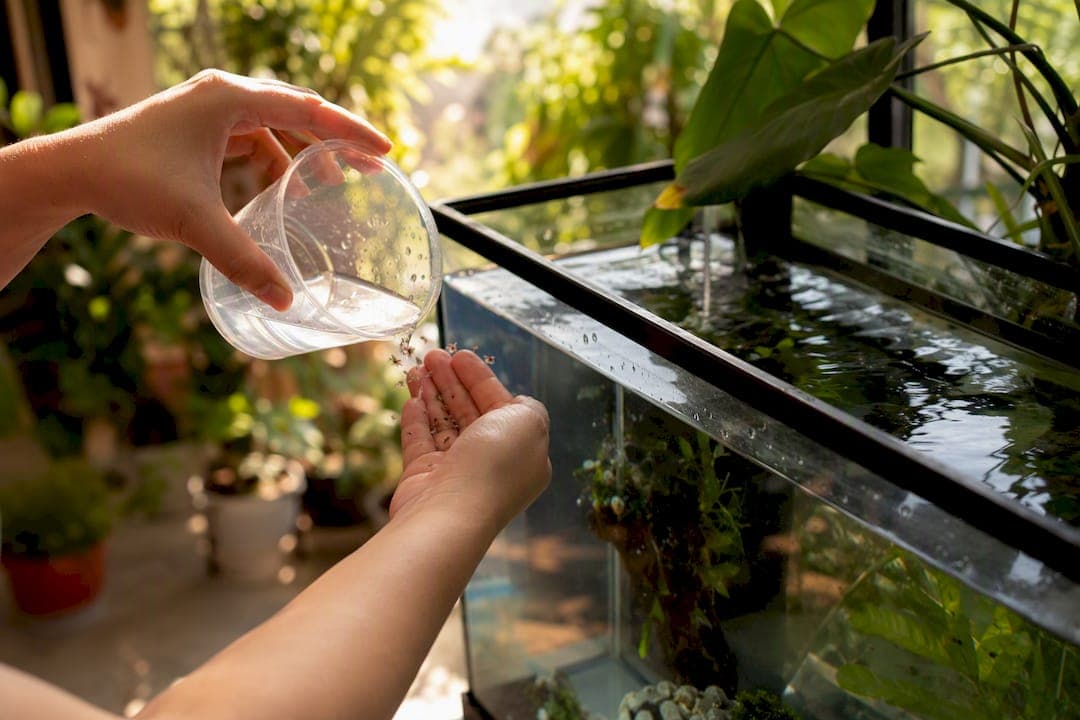
Brine shrimp meal and newly hatched Artemia nauplii are used primarily as a high-protein feed or supplement for fry, breeders, and as an ingredient in formulated feeds. Hobbyists hatch live nauplii to trigger feeding responses in fish larvae that won't touch flake food. Breeders use freeze-dried or powdered meal to push protein and carotenoid intake for growth and color. Commercial operators fold it into gel feeds, pellets, and even non-aquatic animal diets as a protein source that skips the bone and feather content found in some rendered meals.
Here's where it fits in a working feeding plan:
- Fry rearing: live nauplii for the first few weeks of life, when movement and size matter more than anything else
- Breeder conditioning: freeze-dried or meal-based supplements to support egg quality and vibrant color
- Formulated feed ingredient: dried meal blended into gels, flakes, and pellets for juveniles and adults
The sections below walk through preparation, enrichment timing, and dosing so you can put this into practice today.
Key Takeaways
Brine shrimp meal and live nauplii work because they combine high digestibility protein with a feeding response that triggers even reluctant fry, provided enrichment closes the EPA/DHA gap.
| Point | Details |
|---|---|
| Match form to life stage | Use live nauplii for fry, freeze-dried or meal for breeder conditioning and formulated feeds. |
| Enrich on a 12-hour window | Lipid content peaks near 12 hours of enrichment and can decline by 24 hours. |
| Check protein and particle size | Look for spec sheets showing protein percentage, lipid content, and grade before buying. |
| Separate shells before feeding | Rinse and remove unhatched cyst shells to avoid contamination in fry tanks. |
| Source consistency matters | Farmed, microalgae-fed Artemia reduces the batch variability common in wild-harvested supply. |
Table of Contents
- What Nutrients Does Brine Shrimp Meal Actually Provide?
- What Forms Does Brine Shrimp Meal Come In, and How Is It Made?
- Common Uses: Matching the Product Form to the Job
- How to Prepare and Dose Brine Shrimp Meal Step by Step
- What Should You Look for in a Brine Shrimp Meal Supplier?
- Storing Brine Shrimp Meal and Live Nauplii Safely
- Three Quick DIY Feed Recipes to Try
- Frequently Asked Questions
- Sources
What Nutrients Does Brine Shrimp Meal Actually Provide?
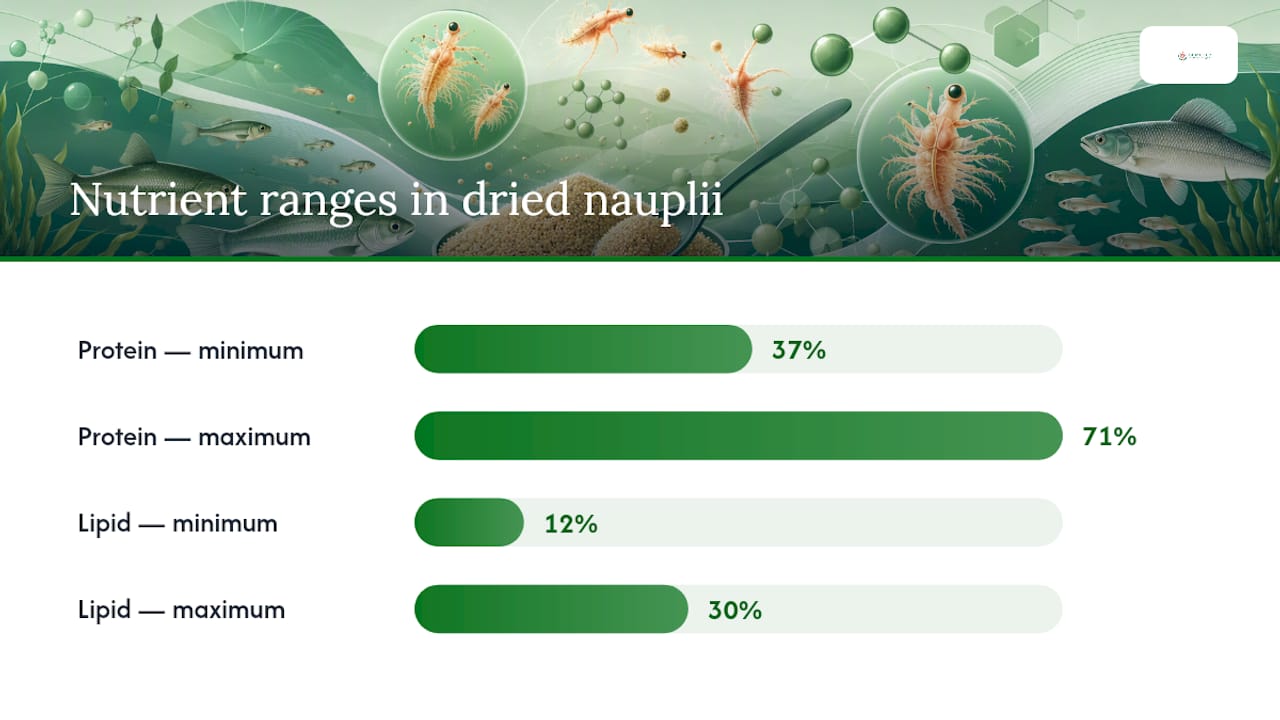
Dried brine shrimp nauplii run a wide nutritional range, with protein content between 37% and 71% and lipid content between 12% and 30%, depending on harvest stage, diet, and processing. That's a big spread, and it explains why two bags labeled "brine shrimp meal" can perform very differently in a feeding trial.
The catch is fatty acid quality, not just quantity. Freshly hatched nauplii are naturally low in EPA and DHA, the long-chain omega-3s that larval fish and shrimp need for nervous system and eye development. This is the single biggest limitation of using brine shrimp as a standalone diet for early-stage larvae, and it's why enrichment protocols exist at all. Feed nauplii straight out of the hatching cone to a batch of fussy marine fish larvae, and you'll get survival, but not the growth curve you'd get from an enriched batch.
Protein digestibility is where brine shrimp meal earns its reputation. Artemia biomass can serve as a high-digestibility animal protein ingredient in poultry and aquaculture diets because it lacks the feather, bone, and gut material that shows up in some rendered meals. That absence of low-value byproduct means more of what's on the label is usable protein, not filler.
A few things worth knowing before you buy or hatch:
- Nauplii (live, freshly hatched) carry the highest moisture and the lowest shelf stability, but the most natural amino acid profile
- Freeze-dried meal retains nutrients closest to the live form because the process avoids high heat
- Oven-dried or heat-processed meal loses more heat-sensitive amino acids, which matters if you're formulating for larval stages
- Ash and carbohydrate content are usually minor components, but they vary with processing method and cyst source
If you're feeding adult fish that aren't picky, these differences matter less. If you're raising larvae through a critical development window, they matter quite a lot.
What Forms Does Brine Shrimp Meal Come In, and How Is It Made?
Production starts one of two ways: hatching live nauplii from dormant cysts, or processing harvested Artemia biomass into a shelf-stable meal. Live nauplii come from hydrating cysts in aerated, salted water, usually at controlled temperature and light, until they hatch within 24 to 36 hours. Meal production takes a different path: biomass gets harvested, then dried (freeze-dried or low-heat oven-dried) and milled into a powder or granule.
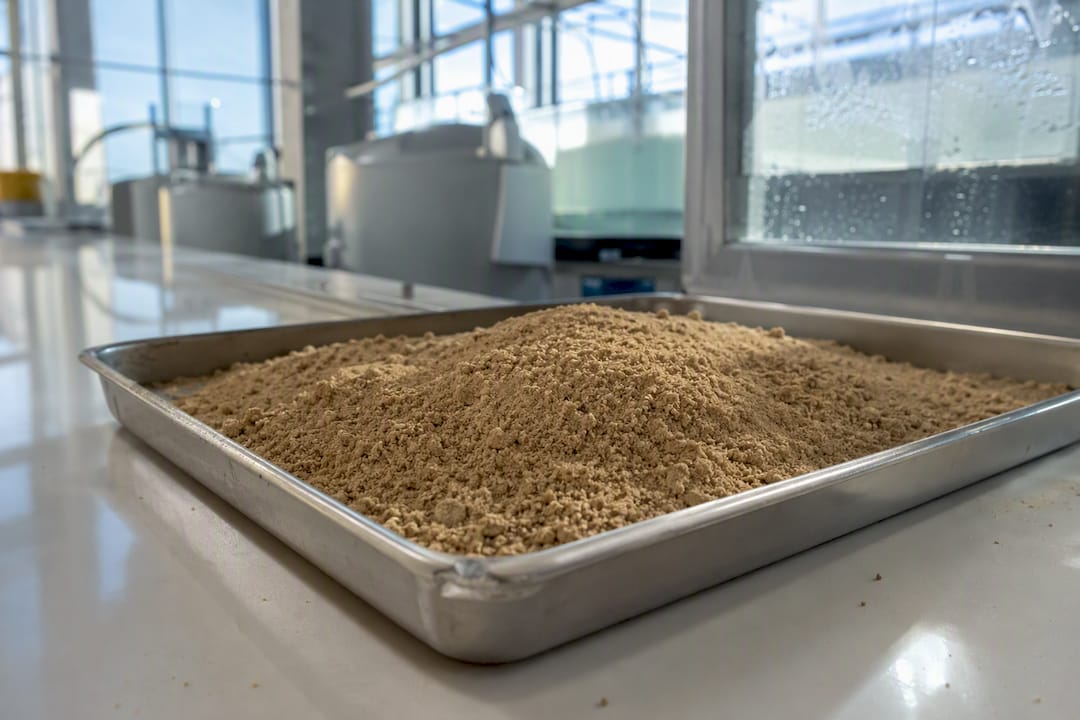
The drying method changes the end product more than most buyers realize. Low-heat drying preserves amino acids better than the high-heat rendering used for many terrestrial animal meals, which is one reason freeze-dried brine shrimp meal commands a premium over cheaper heat-processed versions. If a product page doesn't mention its drying method, that's worth asking about before you buy in bulk.
Particle size is the other variable that decides whether a product works for your setup:
- Ultra-fine grades (under 0.2 mm) target the smallest fry with narrow mouth gapes, and commercial sellers market this grade specifically for DIY fry feed formulation
- Standard powder or flake grades work for juveniles and adults where particle size is less of a bottleneck
- Coarse granules suit larger fish or inclusion in pelletized feeds where the meal gets bound with other ingredients anyway
When you're comparing products, check the label for protein percentage, lipid percentage, particle size grade, and whether the supplier tests for pathogens. A spec sheet that skips these details is usually a spec sheet worth skipping.
Common Uses: Matching the Product Form to the Job
Brine shrimp meal and live nauplii do different jobs depending on the life stage and species you're feeding. Here's how the main use cases break down.
-
Live nauplii for newly hatched fry. This is the classic use, and for good reason. Newly hatched nauplii (instar I and II stages) are nutrient-rich and small enough for larval mouths, and their movement triggers a feeding response that static food often doesn't. Yolk reserves in the youngest nauplii give an added nutritional boost right when fry need it most.
-
Freeze-dried and meal supplements for breeder conditioning. Adult fish being conditioned for spawning benefit from a protein and carotenoid boost that freeze-dried Artemia or meal-based supplements provide. This isn't the main diet, it's the addition that pushes egg quality and coloration higher than a maintenance diet alone would.
-
An ingredient in gel feeds, flakes, and pellets. Commercial and serious hobbyist feed formulations often include brine shrimp meal as a protein source rather than the sole ingredient. Use it as the backbone of a homemade gel feed, or as a smaller inclusion percentage in a pellet formula. Treat it as a treat and topper for adults that already eat a balanced diet; treat it as a core ingredient for growth-phase juveniles that need the protein density.
-
Commercial animal protein supplement beyond aquaculture. Artemia biomass has been tested as a protein ingredient in poultry diets, since it offers digestibility advantages over some rendered meals without the bone and feather content. If you're considering this kind of substitution in a formulated feed outside aquaculture, get a lab analysis of protein and amino acid content first. Nutrient variability between batches is real, and you don't want to formulate blind.
How to Prepare and Dose Brine Shrimp Meal Step by Step
Getting good results from brine shrimp meal or live nauplii comes down to process, not luck. Here's the routine that works for most home and small commercial setups.
-
Hydrate and hatch cysts properly. Add cysts to aerated saltwater (typically around 25 to 35 parts per thousand salinity) under light and a temperature near 77 to 82°F. Most cysts hatch within 24 to 36 hours. Strong aeration keeps cysts suspended and oxygenated throughout.
-
Separate nauplii from shells and unhatched cysts. Once hatching finishes, switch off aeration and let cyst shells float to the surface while nauplii concentrate lower in the water column. Siphon or net the nauplii out, rinse them in clean saltwater, and discard the shell layer. Skipping this step is a common way to introduce contamination into a fry tank.
-
Enrich for EPA/DHA if you're feeding larval fish. Add a marine lipid emulsion or commercial HUFA enrichment product to the nauplii in a separate container. Enrichment effects on protein accumulation are measurable from around 12 hours, and lipid content tends to peak near that same 12-hour mark before declining if held to 24 hours. A practical schedule: enrich for 12 hours, then feed, rather than stretching the window overnight.
-
Rehydrate meal or build a gel feed for juveniles and adults. Mix powdered brine shrimp meal with a small amount of water or gelatin base to rehydrate before feeding, especially for fish that struggle with dry, dusty food. For gel feeds, brine shrimp meal typically makes up a meaningful share of the protein fraction, blended alongside other proteins and a binder.
-
Dose by life stage and watch the response. Fry generally do well fed small amounts multiple times a day, given their limited gut capacity. Juveniles and adults can handle fewer, larger feedings. A rough starting point many operators use is feeding to satiation within a few minutes, then adjusting frequency based on growth and waste buildup. Uneaten food clouding the water or ammonia spikes are both signs you're overfeeding.
Pro Tip: Schedule your enrichment step to finish right before your main feeding event of the day, not hours in advance. That short window keeps the lipid boost near its peak instead of letting it drift back down.
Watch water quality closely during hatching and enrichment. Both live nauplii production and enrichment tanks can foul quickly if aeration weakens or leftover cyst shells decompose in the tank. A basic troubleshooting checklist: confirm salinity and temperature before each hatch, always separate shells before feeding, and rinse enrichment containers between batches to avoid bacterial buildup.
What Should You Look for in a Brine Shrimp Meal Supplier?
A land-based system that feeds Artemia exclusively on cultivated microalgae removes the seasonal variability and starvation stress that wild-harvested brine shrimp go through in natural salt lakes. That consistency shows up directly in protein content batch after batch.
Not every product labeled "brine shrimp meal" is equal, and the differences usually trace back to how the Artemia were raised and processed. Before buying in bulk, check for:
- A nutrition spec sheet listing protein and lipid percentages, not just marketing language
- Particle size grade appropriate for your target species and life stage
- Pathogen testing and harvest documentation
- Whether the product has been enriched and, if so, with what and for how long
Demeter Biosciences cultivates Artemia in a land-based system where the only feed input is Dunaliella microalgae, which the company states supports at least 40% protein content with far less batch-to-batch variation than brine shrimp pulled from wild salt lake harvests. That's the practical benefit of controlled cultivation: you're not competing with whatever nutrient swings a wild population went through that season.
If you're planning to use Artemia meal in a commercial feed formulation, ask your supplier for a current lab analysis covering protein percentage and lipid profile, including EPA/DHA levels, before you lock in an inclusion rate.
Storing Brine Shrimp Meal and Live Nauplii Safely
Freeze-dried and dried meal should stay in a sealed, airtight container in a cool, dry place; refrigeration extends shelf life further. Live nauplii need to be used within hours to a day or two, kept cool and lightly aerated. Frozen brine shrimp belongs in the freezer and gets used promptly once thawed.
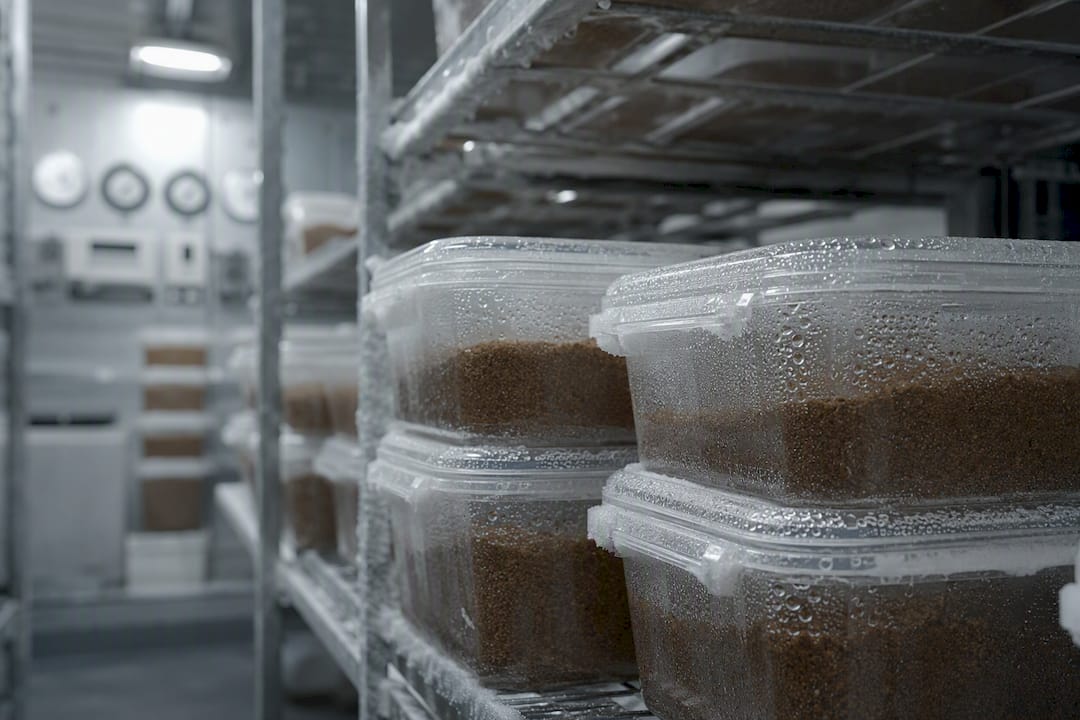
Dried meal produces fine dust, so handle it with basic care and note that it's not intended for human consumption. Watch for a sour or rancid odor, discoloration, or clumping in stored meal. Any of those signs mean it's time to toss the batch rather than risk feeding degraded protein to your fish.
Three Quick DIY Feed Recipes to Try
- Basic gel feed: Combine powdered brine shrimp meal as your main protein with a small amount of gelatin, a vegetable binder, and water, then chill until firm and cut into feeding-sized cubes.
- Rehydrated fry feed: Mix a pinch of ultra-fine brine shrimp meal with a few drops of water into a paste, then hand-feed small amounts directly to fry several times a day.
- Enriched nauplii batch: Hatch nauplii, separate from shells, add a lipid emulsion for 12 hours, then feed immediately to capture the peak fatty acid boost.
A Practical Note From the Field
Live nauplii win for larval and fry stages every time; meal earns its place once fish are past that fragile window. Don't expect meal alone to transform coloration overnight. It's a steady contributor, not a magic switch.
Frequently Asked Questions
What is brine shrimp meal used for? It's used mainly as a high-protein feed for fry, a supplement for breeder conditioning, and an ingredient in gel feeds, flakes, and pellets, with some commercial applications in poultry and other animal diets.
Is brine shrimp meal better than fish meal? Brine shrimp meal tends to offer higher digestibility because it lacks bone and feather content found in some rendered fish and animal meals, though nutrient content varies by processing and source, so checking a spec sheet still matters.
How much brine shrimp meal should I feed my fish? Feeding to satiation within a few minutes, multiple times a day for fry and less often for adults, is a common starting point; adjust based on growth, waste, and water clarity.
Do I need to enrich brine shrimp before feeding it to larval fish? Yes, if larval EPA/DHA intake matters for your species. Newly hatched nauplii are naturally low in these fatty acids, and a short enrichment window of around 12 hours addresses that gap effectively.
How long does brine shrimp meal stay fresh? Sealed, dry, cool storage extends shelf life significantly for freeze-dried or dried meal; watch for rancid odor, discoloration, or clumping as signs it's time to discard a batch.
Ready to feed your fry and breeders a more consistent product? Explore live brine shrimp shipments or set up a monthly subscription for recurring deliveries straight to your door.
Sources
Claims in this article draw on the IntechOpen chapter on Artemia as a poultry protein source, the Wikipedia entry on brine shrimp aquaculture, and enrichment protocol research from Instituto de Pesca. For purchasing, see Demeter Biosciences' brine shrimp products or bulk ordering options.
- Artemia, a New Source of Animal Protein Ingredient in Poultry Nutrition | IntechOpen
- Aquaculture of brine shrimp — Wikipedia
- Study on Artemia enrichment protocols — Instituto de Pesca (2024)