
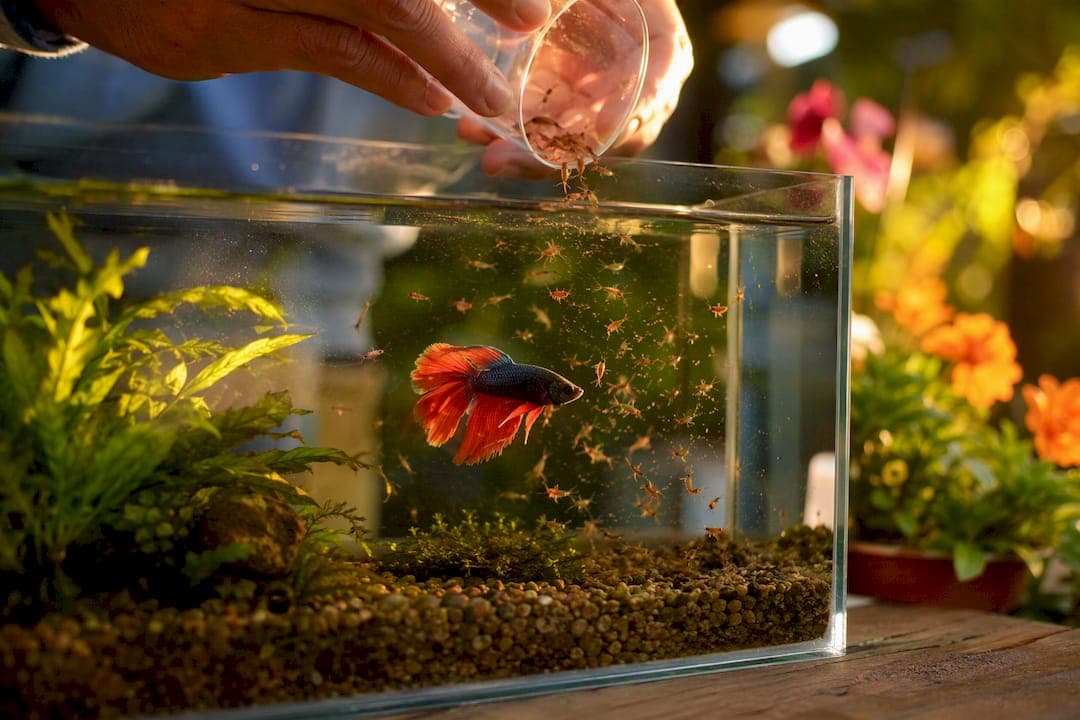
Yes, bettas eat brine shrimp, and most attack them the moment they hit the water. Live brine shrimp deliver the most stimulation and the richest nutrition, frozen shrimp offer a nearly equal nutritional payoff with far less hassle, and freeze-dried shrimp work as a shelf-stable backup if you rehydrate them first.
- Live: best for enrichment and hunting behavior
- Frozen: best balance of convenience and safety
- Freeze-dried: shelf-stable, but soak before feeding and use sparingly
- Feed brine shrimp as a treat, not a staple, and follow the 2 to 3 minute rule every time
Key Takeaways
Brine shrimp work best for bettas as a high-protein supplemental treat fed 1 to 3 times weekly, with portion size governed by the 2 to 3 minute rule rather than a fixed amount.
| Point | Details |
|---|---|
| Choose the right form | Live for enrichment, frozen for convenience and safety, freeze-dried only after rehydrating. |
| Follow the time rule | Feed only what your betta clears in 2 to 3 minutes to prevent overfeeding. |
| Stick to the schedule | Offer brine shrimp as a treat 1 to 3 times per week alongside a pellet-based staple diet. |
| Clean up fast | Remove uneaten shrimp within a few hours to protect water quality. |
| Source matters | Demeterbioscience's farmed, Dunaliella-fed shrimp offer consistent protein and traceable sourcing versus wild-caught shrimp. |
Table of Contents
- Live vs Frozen vs Freeze-Dried Brine Shrimp for Bettas
- What Brine Shrimp Add to a Betta's Diet
- How to Prepare and Acclimate Live Brine Shrimp
- Preparing Frozen and Freeze-Dried Brine Shrimp
- Portioning and Schedule: The 2 to 3 Minute Rule
- Risks and How to Manage Them
- Hatching Your Own Brine Shrimp at Home
- Why Farmed, Algae-Fed Brine Shrimp Beat Wild-Caught Options
- Sources
Live vs Frozen vs Freeze-Dried Brine Shrimp for Bettas
Live brine shrimp win on behavior. The wriggling motion triggers a betta's predatory instincts, turning feeding time into an actual hunt rather than a passive slurp. That matters more than most owners realize. A betta that chases live prey gets mental stimulation a static meal simply can't replicate.
Frozen shrimp trade a bit of that excitement for reliability. They retain most of their nutritional value while carrying a much lower contamination risk than live shrimp from an unverified source, since freezing kills off many parasites and pathogens that live shrimp can carry. Freeze-dried versions store the longest and require zero refrigeration, but they can expand in a betta's stomach if fed dry, so rehydration isn't optional.
When to use each:
- Live: weekend enrichment, conditioning fish before breeding, picky eaters
- Frozen: your everyday go-to treat, especially with multiple tanks
- Freeze-dried: travel, backup supply, emergencies when frozen stock runs out
What Brine Shrimp Add to a Betta's Diet
Brine shrimp pack a protein punch that supports color saturation and lean muscle, which is why so many breeders condition show bettas with them before events. But protein content varies wildly depending on how the shrimp were raised. Farmed shrimp fed exclusively on Dunaliella microalgae can reach 40% protein or higher, a consistency wild-harvested shrimp rarely match since natural salt lake populations swing with season and food availability.
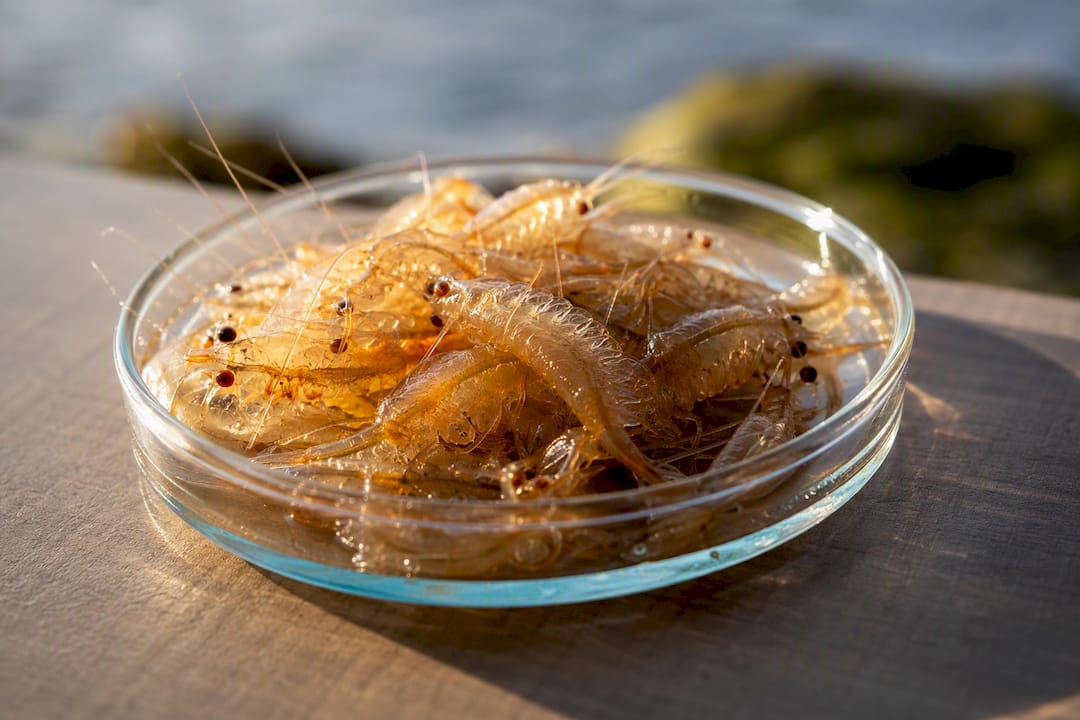
Brine shrimp should stay supplemental. A high-quality pellet or flake still needs to anchor the betta fish diet, with brine shrimp filling roughly 15 to 20% of the weekly intake as protein variety, not the main course.
How to Prepare and Acclimate Live Brine Shrimp
Dumping live shrimp straight into the tank shocks both the shrimp and your betta's water chemistry. Slow down and acclimate properly.
- Float the sealed bag or cup of shrimp in your tank water for 15 to 20 minutes to equalize temperature and salinity.
- Release the shrimp in small batches instead of all at once, so every fish gets a fair shot at feeding.
- Watch the clock. Bettas should clear the portion within 2 to 3 minutes.
- Net out anything uneaten immediately and scan the substrate for stragglers.
Pro Tip: Keep a small dedicated net just for live food removal. Cross-contaminating it with your regular cleaning net can spread bacteria between feedings.
Source verification matters here more than most hobbyists think. Farmed shrimp with a documented, traceable origin cut down on the disease risk that comes with scooping shrimp from an unknown wild source.
Preparing Frozen and Freeze-Dried Brine Shrimp
Frozen and freeze-dried shrimp need their own prep routine, separate from live shrimp handling.
- Drop a frozen cube into a small cup of tank water and let it sit until the pieces separate and reach tank temperature.
- For freeze-dried shrimp, soak the portion in tank water until it's fully rehydrated. Never drop dry pieces straight into the tank.
- Feed the prepped portion right away, then discard any leftover thawed or soaked shrimp rather than saving it.
- Rinse any cup or utensil you used before it touches anything else.
Skipping the soak step on freeze-dried shrimp is one of the most common mistakes new betta owners make, and it's the fastest route to a bloated, constipated fish.
Portioning and Schedule: The 2 to 3 Minute Rule
Portion size isn't measured in a spoon or a pinch. It's measured in time. If your betta hasn't cleared the food within 2 to 3 minutes, you fed too much, full stop.
For adult bettas, brine shrimp treats 1 to 3 times per week hit the sweet spot between variety and overfeeding. Juveniles or fish kept alone in smaller tanks should get smaller portions on the lower end of that range.
- Watch for a swollen belly or stringy white waste after feeding. That's your cue to back off treats for a few days.
- If leftover shrimp keep showing up at the bottom of the tank, cut the portion in half next time.
- Skip a treat feeding entirely if your betta seems sluggish or has recently been ill.
Risks and How to Manage Them
Brine shrimp bring real benefits, but they also bring real risk if you get sloppy with cleanup.
- Uneaten shrimp decompose fast. Pull them out within a few hours, sooner if your tank runs warm.
- Quarantine live shrimp separately when you can, and lean toward farmed shrimp with a traceable source to reduce pathogen exposure.
- Plan a partial water change on treat days, or at minimum check your parameters closely, since even a small protein boost can nudge ammonia upward in a smaller tank.
None of this is complicated. It just requires you to treat brine shrimp days differently than your regular pellet feedings.
Hatching Your Own Brine Shrimp at Home
Some hobbyists hatch their own supply for the freshest possible nauplii, and the process is more approachable than it sounds.
- Mix a saltwater solution in a hatching container, add the brine shrimp eggs, and keep it aerated with an air stone.
- Add a light source nearby. Nauplii are drawn toward it, which makes harvesting easier.
- Harvest within 24 to 36 hours of hatching, when nauplii are at their most nutrient-dense.
- Rinse the nauplii through fine mesh to strip away every trace of saltwater before it ever touches your freshwater tank.
The upside is enrichment value you can't beat and total control over freshness. The downside is the extra equipment, the salt handling, and the hygiene discipline it demands. Not every hobbyist wants a second tank setup just for shrimp eggs, and that's a fair call. It's why farmed live shipments and frozen cubes remain the more practical path for most betta owners.
Why Farmed, Algae-Fed Brine Shrimp Beat Wild-Caught Options
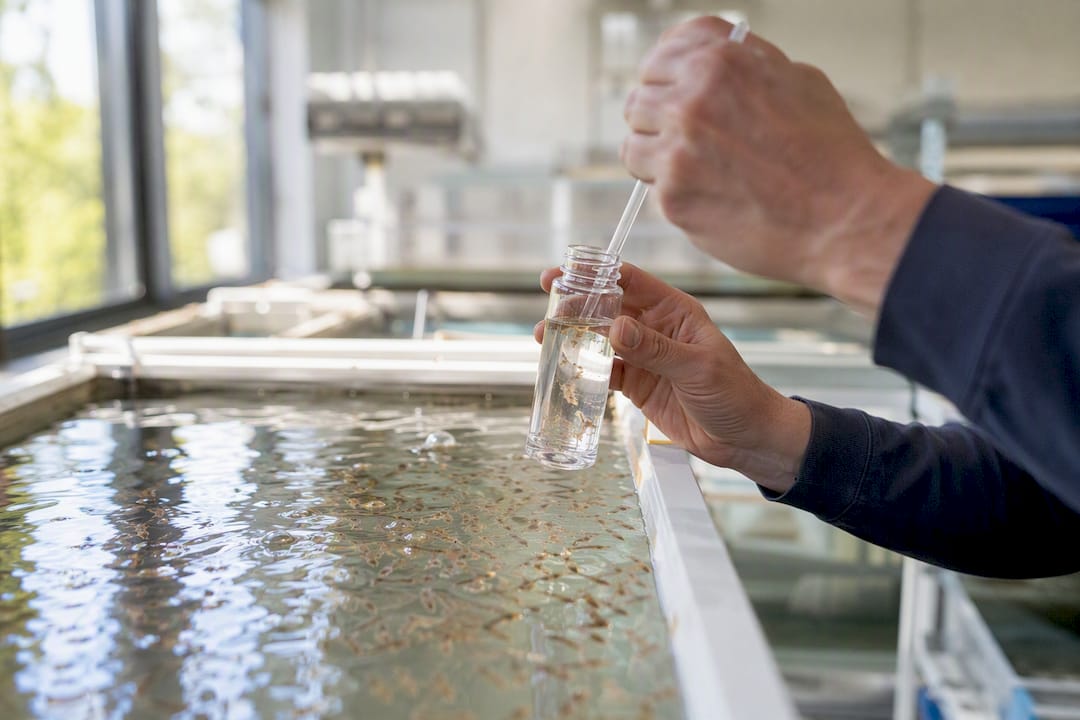
Wild-harvested brine shrimp come from salt lakes where food supply swings with the season, and shrimp that go through starvation cycles before harvest bring inconsistent nutrition to your tank. Farmed shrimp raised in a controlled, land-based system on a steady diet of Dunaliella microalgae don't carry that variability.
- Consistent protein content batch to batch, rather than a guess based on harvest timing
- Ordering flexibility: single live shipments, recurring subscriptions, or bulk orders for stores and institutions
- Before ordering from any vendor, check for a stated protein guarantee and clear shipping and handling instructions
Traceable, farmed sourcing removes a lot of the guesswork that comes with wild-caught shrimp of unknown origin.
A Note From Demeter
We've watched bettas turn noticeably more vibrant and active after a few weeks of occasional live brine shrimp treats, on top of a solid pellet diet. That's not a claim we take lightly, and it's part of why Demeterbioscience raises brine shrimp the way we do. We're transparent about that affiliation here. Check our product pages for the specific handling and shipping guidance before your first order.
Get Consistent, Farmed Live Brine Shrimp Delivered
Sourcing live brine shrimp used to mean rolling the dice on a bag from an unknown supplier. Demeterbioscience skips that gamble by raising shrimp on a controlled diet of Dunaliella microalgae in a land-based system, which keeps protein content steady batch after batch instead of swinging with wild harvest conditions.
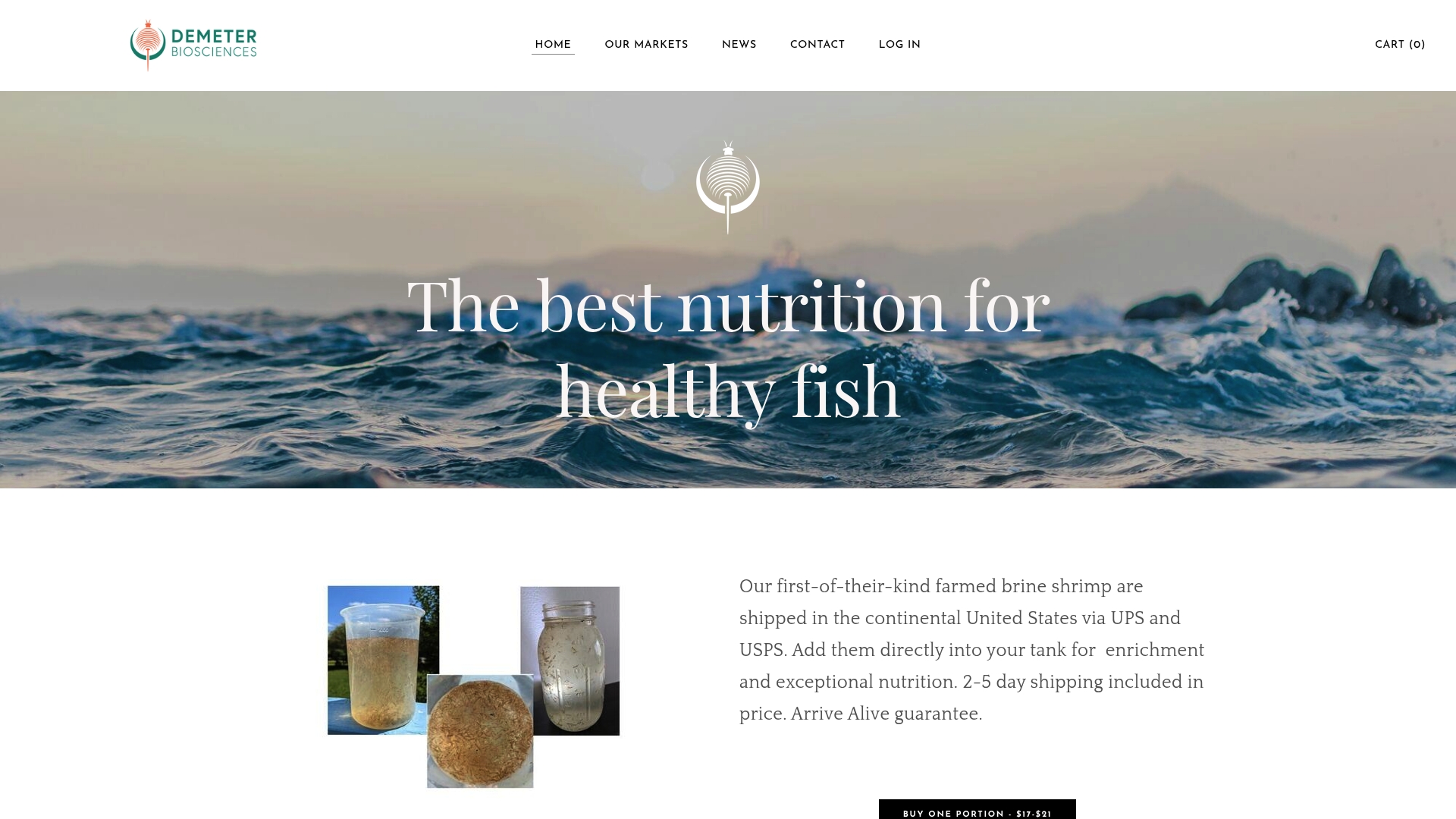
Ordering is built around how hobbyists actually feed. Grab a single live shipment when you need a one-time restock, set up a recurring subscription if brine shrimp are now a regular part of your rotation, or go with a bulk order if you're stocking multiple tanks or a retail counter. Every shipment ships with handling instructions so acclimation goes smoothly the moment it arrives. Head to the live brine shrimp product page to check current availability and pick the option that fits your feeding schedule.
Sources
- Feeding a Betta Fish: What Betta Fish Eat & How Often to Feed Them — WebMD
- Bettas Eat Brine Shrimp? Safety & Diet Guide — AquaWorldHub
- Brine Shrimp For Betta | The Goldfish Tank