
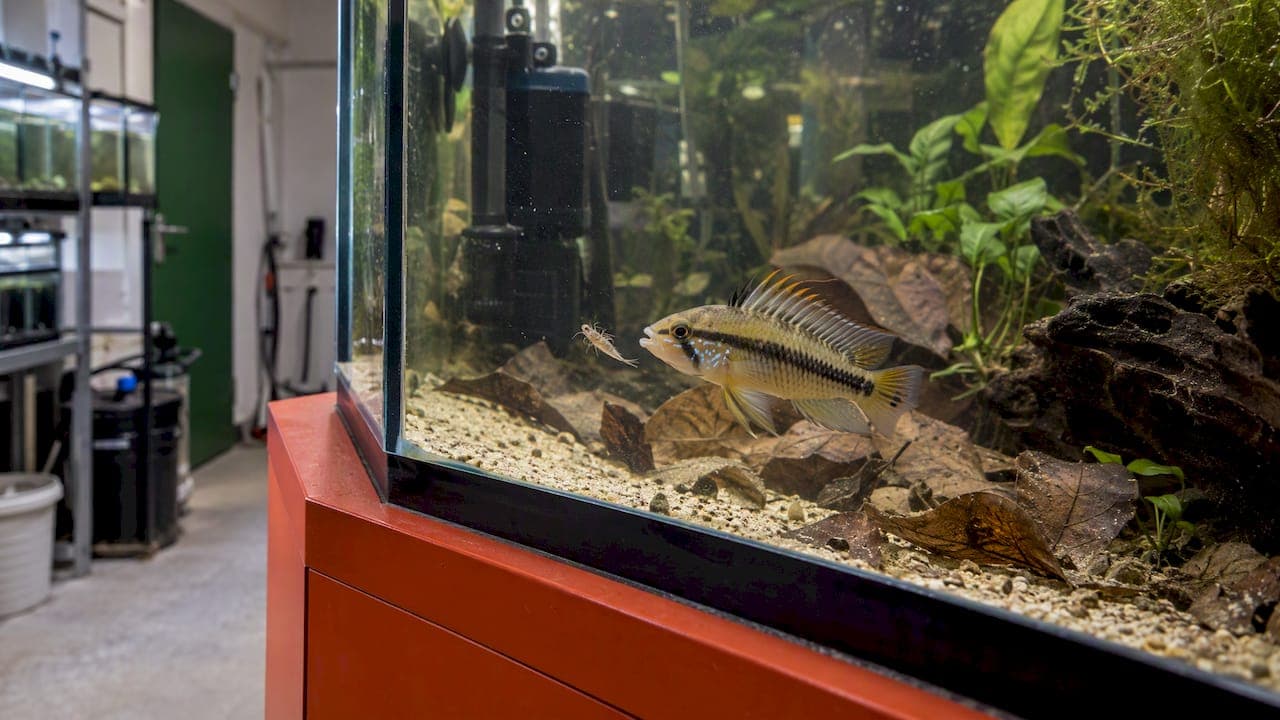
Yes, dwarf cichlids eat brine shrimp, and most of them love it. Adults take live or thawed frozen shrimp as a protein-rich part of a varied diet, and fry do best on freshly hatched baby brine shrimp (nauplii) eaten within hours of hatching. Feed only what the fish clear in a couple of minutes, and treat brine shrimp as one part of the menu, not the whole menu.
This guide covers which form to choose, how to prepare it, how much to give and how to avoid the usual problems, for Apistogramma, rams, kribs and other small cichlids.
TL;DR
- Dwarf cichlids are omnivores that do well on small live or frozen foods such as brine shrimp.
- Fry should get newly hatched nauplii, ideally within 24 hours of hatching, and the fresher the better.
- Feed what the fish eat in two to three minutes, and thaw frozen shrimp fully first.
- Pair brine shrimp with a quality staple such as flakes or pellets, plus other foods for variety.
- Farmed live brine shrimp skip the hatching step for keepers who want ready-to-feed live food.
Table of Contents
- Can dwarf cichlids eat brine shrimp?
- Which dwarf cichlids benefit most?
- Live, frozen or freeze-dried: which form to choose
- Baby brine shrimp for dwarf cichlid fry
- How much and how often
- Staple or part of a varied diet?
- Precautions that keep fish healthy
- Farmed live brine shrimp from Demeter
- FAQ
- Sources
Can dwarf cichlids eat brine shrimp?
They can, and it suits them. Dwarf cichlids come from slow, leaf-littered waters where they pick small crustaceans and insect larvae off the bottom and out of the water column. The Ornamental Aquatic Trade Association describes them as omnivorous and says they benefit from small items of live or frozen food such as brine shrimp. A brine shrimp is the right size for a small cichlid mouth, it moves, and it triggers the hunting behavior that makes these fish fun to watch.
What brine shrimp give your fish
Brine shrimp are mostly protein and fat. One aquarist reference puts protein at 37 to 71 percent, lipids at 12 to 30 percent, carbohydrates at 11 to 23 percent and ash at 4 to 21 percent, plus chitin from the exoskeleton, which acts as roughage. That wide range is the real story: what a brine shrimp contains depends heavily on what it was fed and how old it is.

That is why feeding history matters. Wild-harvested shrimp can vary with the season and the condition of the water they came from. Our farmed shrimp are raised on land and fed only the microalgae Dunaliella, and we design the system to deliver at least 40% protein with consistent quality from batch to batch. You can read more on how our brine shrimp are produced.
Roughage and digestion
Apistogramma keepers often worry about bloat. A well-rounded diet helps, and plant matter along with crustaceans such as brine shrimp or daphnia can supply roughage that helps prevent bloating. The takeaway is variety. Brine shrimp sit well beside a good flake or pellet, a little daphnia and the occasional frozen bloodworm or mysis.
Which dwarf cichlids benefit most?
The advice here applies broadly to the small South American and African cichlids sold as dwarfs:
- Apistogramma species: Natural micro-predators. They respond strongly to live food and often need only what they can eat in two or three minutes of frozen food per feeding.
- Rams and similar small South American cichlids: Enthusiastic feeders that go for food drifting mid-water. Live or well-thawed frozen shrimp suits them.
- Kribs and other West African dwarfs: Take brine shrimp readily, and breeding pairs often get conditioned on live food.
- Shell dwellers and other small African cichlids: Eat nauplii and adult shrimp alike. Small mouths mean fry-sized prey works well.
The OATA suggests you check with your retailer for species-specific requirements. Some species lean more herbivorous or more predatory than others, and your store knows what your particular fish have been eating.
Live, frozen or freeze-dried: which form to choose
Each form has a role. The table sums up how they compare in a dwarf cichlid tank.
| Form | Best for | Preparation | Notes |
|---|---|---|---|
| Live adult brine shrimp | Conditioning breeders, picky eaters, enrichment | Rinse lightly, offer in small pinches | Triggers natural hunting; shrimp stay alive in freshwater for a while, so feed in portions |
| Baby brine shrimp (nauplii) | Fry and juveniles, small species | Hatch, separate from shells, feed fresh | Most nutritious soon after hatching |
| Frozen | Everyday variety | Thaw fully in tank water | Convenient; rinse if the thaw liquid is cloudy |
| Freeze-dried | Occasional treat, travel feeding | Soak briefly in tank water before feeding | Dry pieces can swell after eating, so soaking helps |
Live brine shrimp
Live is the form dwarf cichlids respond to most. The shrimp swim in the open, the fish hunt them and nothing is processed out of them. A little goes a long way in a small tank: a pinch or a few milliliters of water with shrimp, delivered with a pipette or turkey baster near the fish, is plenty.
The usual obstacle for hobbyists is supply. You can hatch cysts yourself, or you can buy farmed shrimp already grown. Our guide to hatching at home or sourcing farmed brine shrimp for freshwater fish walks through both options.
Frozen brine shrimp
Frozen shrimp are the easy daily option. Thaw them properly before they go in, as the advice for Apistogramma puts it, and offer only what the fish will eat in two or three minutes. Thaw a small cube portion in a cup of tank water, then pour or pipette it in. Never drop a frozen cube straight into the tank, since it can foul the water and cold chunks are hard on small fish.
Freeze-dried brine shrimp
Freeze-dried is convenient but it is the least natural. We would use it as a treat rather than a staple. Soaking the pieces in a little tank water for a few minutes before feeding softens them so they do not expand in the gut. Keep a high-quality flake or pellet as the base of the diet.
Baby brine shrimp for dwarf cichlid fry
Dwarf cichlid fry are small enough that baby brine shrimp are one of the classic first foods. Once free-swimming, they will pick nauplii out of the water for the first weeks of life.

Why freshness matters
Freshly hatched Artemia nauplii are a high-value feed for fish larvae and fry, but they lose dry weight and calorie content, by up to 25 percent within 24 hours at 25°C as they live off their yolk reserves. In practice, the sooner you feed them after hatching, the more nutrition reaches the fry. Another aquarium text agrees: feed them to fry within 24 hours of hatching. For a closer look at the window, see our piece on brine shrimp life stages and the feed window.
A simple hatching routine
- Mix saltwater in a jar or hatching cone. Aquarium sources commonly cite roughly 35 grams of marine salt per liter of dechlorinated water.
- Add a small amount of cysts and aerate strongly so they stay suspended.
- Keep the container warm, in the mid-70s °F or a bit higher. Eggs can hatch in about 24 hours in a jar of aerated saltwater.
- Turn off the air, let empty shells float and the nauplii gather at the bottom or toward a light, then siphon the orange shrimp out.
- Rinse them in freshwater through a fine net and feed.
Experienced breeders on forums often run several jars at staggered times, restarting one each day so that a fresh batch is always ready. That is a sensible habit if you have a spawn on the way.
Enrichment
Nauplii can be enriched with fatty acids including EPA and DHA, which improves their nutritional profile for larvae. If you raise fry seriously, our live feed enrichment protocol shows how it is done, and our Artemia nauplii guide covers the biology behind it.
Skipping the shells
A common beginner mistake is pouring the whole hatch, empty shells and all, into the fry tank. Shells and unhatched cysts can be swallowed and cause problems, and they foul the water. Separate before feeding, every time.
How much and how often
The rule of thumb for dwarf cichlids is simple. Feed what they can eat within a few minutes, once a day, and avoid overfeeding. Brine shrimp are one option in that rotation.
A practical weekly pattern for adults:
- Most days: A quality flake or pellet, sized for small mouths.
- Two to four days a week: Live or thawed frozen brine shrimp, or another small live or frozen food, in place of the staple.
- Now and then: A soaked freeze-dried treat, or daphnia and mysis for variety.
For fry, feed small amounts of nauplii two or three times a day, and aim to leave a faint orange tint in the belly of each fry. A rounded orange belly means they have eaten well. Remove what is not eaten after an hour or so on a bare-bottom tank, because dead shrimp foul water quickly.
If you are choosing between small live foods for very small mouths, our comparison of daphnia and brine shrimp by gape size helps you match prey to fish.
Staple or part of a varied diet?
Not a staple. Brine shrimp are, in one Apistogramma care guide's words, an excellent supplement to a varied diet that includes high-quality flakes or pellets and other live or frozen foods. Think of them as the protein-rich, high-appeal item that gets shy fish eating, brings females into condition and gives males a reason to show off.
Perspective
We raise brine shrimp for a living, so we have strong opinions about what goes into a dwarf cichlid tank. The first is that the quality of the shrimp matters as much as the form. A brine shrimp is only as nutritious as its own diet, and wild-harvested shrimp can swing with the season and with how well fed they were when collected.
That is why we grow ours on land, in controlled systems, on a single feed: the microalgae Dunaliella. Our design target is at least 40% protein and the same quality from one shipment to the next. For a keeper with a pair of Apistogramma guarding a clutch, that predictability means fewer variables when fry are at their most fragile.
The second is that live food solves the problem hobbyists complain about most: fish that turn up their noses at pellets. A small portion of live shrimp each week keeps natural feeding behavior alive and makes it much easier to condition a pair for spawning. We would rather you feed less, more often and with fresher food than pour in more.
Our advice is to keep a quality staple for everyday feeding and use farmed live brine shrimp as the weekly highlight.
Demeter
Precautions that keep fish healthy
- Do not overfeed. Uneaten shrimp die and foul the water, and small tanks react fast. Siphon leftovers.
- Thaw frozen food completely. Do it in tank water and never feed cold blocks.
- Rotate foods. A diet of brine shrimp alone lacks plant matter. Mix with vegetable-rich flakes, daphnia and other foods to cover roughage needs.
- Watch for bloat. If a fish looks swollen, stop feeding rich foods for a day or two and offer a varied diet afterward. If it persists, consult an aquatic veterinarian or your fish retailer.
- Check species needs. Ask your retailer about the particular fish you keep.
- Keep live shrimp portions small. Adult brine shrimp in freshwater only live for a time, so offer what the fish can chase down.
If you keep fish in a planted tank with a refugium, our note on hatching for food, not a colony may help with how much to hold back.
Farmed live brine shrimp from Demeter
Hatching is a rewarding routine, but it does not suit everyone, especially when you want to feed adult-sized live shrimp with consistent nutrition. We ship farmed live brine shrimp raised on microalgae, direct to your door.
Our live brine shrimp run $17-$35 per order. If your tank goes through them every week, the Demeter Biosciences membership delivers a monthly live shipment for $25 per month. We also offer live phytoplankton at $20, and gift cards from $10 to $50 for a fellow hobbyist. Stores and institutions can use our bulk store order.
FAQ
Can I feed my dwarf cichlids only brine shrimp?
No. Brine shrimp are a good protein source, but a diet of one food leaves gaps. Use a quality flake or pellet as the base and add live or frozen brine shrimp as a regular supplement, along with other small foods for variety.
Are baby brine shrimp good for dwarf cichlid fry?
Yes, newly hatched nauplii are a classic first food for free-swimming fry. Feed them as soon as possible after hatching, since their nutritional value falls within about a day. Separate them from the shells before feeding.
How often should I feed brine shrimp to adult dwarf cichlids?
Give adults only what they can eat in two or three minutes, no more than once a day overall. Brine shrimp can replace the staple on a few days each week, with a quality prepared food on the others.
Do I need to thaw frozen brine shrimp?
Yes. Thaw it fully in a little tank water and feed only the portion the fish will finish quickly. Freeze-dried pieces should also be soaked briefly before they go in.
Is farmed brine shrimp different from wild-caught?
The difference is what the shrimp ate. Our shrimp are raised on land and fed only Dunaliella microalgae, which is designed to give consistent protein of at least 40%. Wild shrimp can vary with season and conditions.
Sources
- How to look after dwarf cichlids, OATA
- Brine Shrimp Aquarium Guide: Setup, Feeding, and Care Tips
- Best Foods For Apistogrammas, Practical Aquariums
- Enrichment of Artemia for use in freshwater ornamental fish, CTSA
- Mastering Freshwater Aquarium Ecosystems: Fish Food and Feeding
- Care Guide for Apistogramma Dwarf Cichlids