
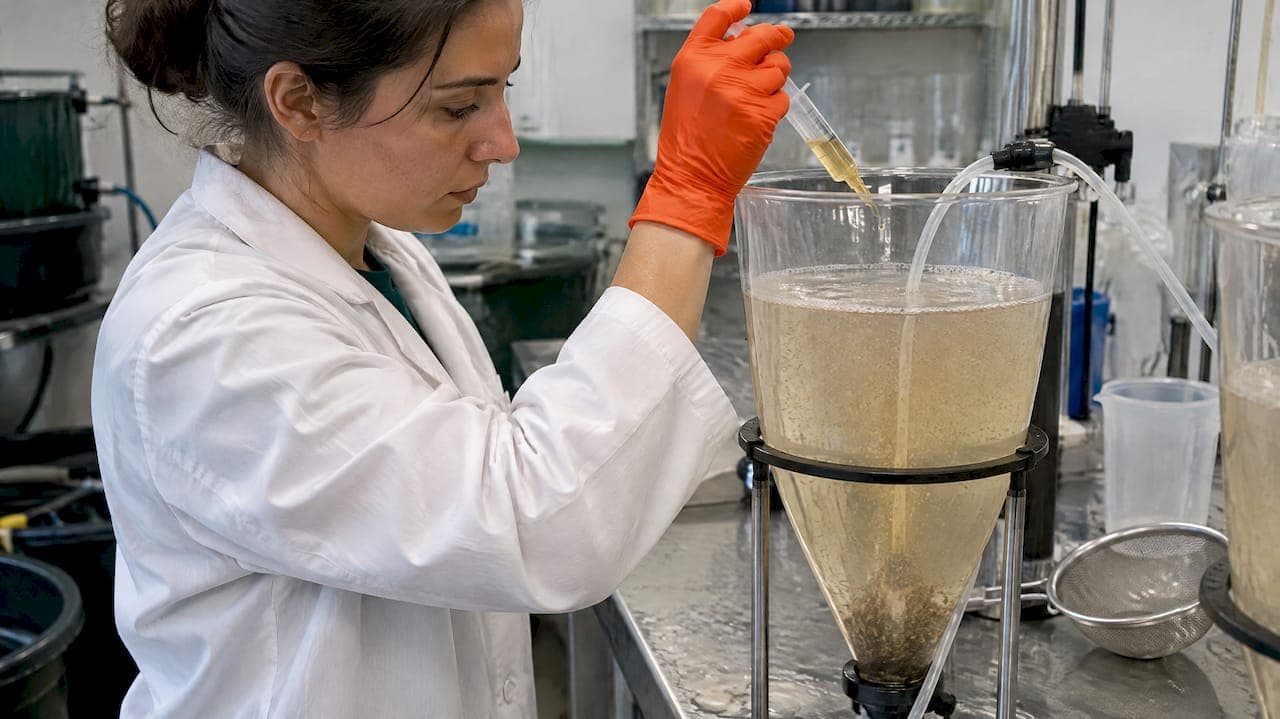
Yes, enrich most live foods used for larval or brood nutrition. Target HUFA enrichment with a DHA:EPA ratio of roughly 2:1, follow enrichment windows of 8 to 24 hours, and keep dissolved oxygen above 4 mg/L throughout the process. Copepods are often nutritionally complete on their own, but rotifers and Artemia need a boost. Treat every live feed culture as a potential biosecurity risk and source it accordingly.
TL;DR:
- Enrichment adds essential fatty acids like DHA and EPA to live feeds, significantly improving larval survival, growth, and deformity rates in marine fish.
- Rotifers require enrichment to boost DHA and EPA levels, especially for small-mouthed marine larvae, while copepods are naturally higher in these nutrients and often do not need additional enrichment.
- Proper timing, oxygen levels, and thorough rinsing are critical for successful enrichment protocols, with a typical window of 8 to 24 hours for full fatty acid loading.
- Most enrichment failures stem from issues like incorrect timing, oxygen management, or residual oil, and must be carefully monitored to prevent nutrient leaching or bacterial growth.
- Consistent sourcing of live feeds, such as land-farmed microalgae-fed Artemia, can reduce variability and improve the reliability of enrichment routines for hobbyists and hatcheries alike.
Table of Contents
- Why fish enrichment live food improves survival, growth, and stress resistance
- Which live feeds actually need enrichment
- What nutrients to target when enriching live food
- Rotifer and Artemia enrichment protocols you can actually run
- Biosecurity risks from live feeds and how to manage them
- Storage and timing to protect enrichment gains
- Applied example: microalgae-fed brine shrimp as a baseline supply
- Enrichment versus diet transition: a decision framework
- Where Demeter Biosciences fits into your enrichment routine
- FAQ
- Sources
Why fish enrichment live food improves survival, growth, and stress resistance
A fish larva's gut does not care where its food came from, only what is in it. That is the entire logic behind fish enrichment live food: rotifers and Artemia are essentially hollow vessels, and their nutritional value depends almost entirely on what they ate before you fed them to your fish. An unenriched rotifer is mostly water, protein, and carbohydrate with very little of the long-chain fatty acid content a developing larva actually needs.
Review literature on larval nutrition consistently links enrichment with essential fatty acids, vitamins, and trace elements to better growth, higher survival, and improved disease resistance across species. The mechanism is straightforward: DHA and EPA are structural components of cell membranes, especially in neural and visual tissue, and larvae that do not get enough of them tend to show more skeletal deformities and poorer pigmentation.
What should you actually expect to see change after switching to enriched feed:
- Survival rate through the first feeding window, often the single most sensitive indicator of nutritional adequacy.
- Growth rate, measured as length or weight gain over standard intervals rather than a single endpoint.
- Stress tolerance, typically assessed through handling or salinity challenge tests at the hatchery level.
- Deformity incidence, particularly in skeletal and fin development, which tracks closely with fatty acid status.
Bioencapsulation significantly raises the HUFA content of live feeds, and standardized Artemia enrichment protocols use this principle to convert a nutritionally thin organism into a functional nutrient delivery system. The feed is the same animal. Only its cargo changes.
For hobbyists raising fry at home, the benchmark is simpler: watch clutch survival and growth uniformity. A tank where enriched feeding produces visibly larger, more even fry within the first two to three weeks is a tank where enrichment is doing its job.
Which live feeds actually need enrichment
Not every live food requires the same treatment, and knowing which ones do saves time and money. The three workhorses of larviculture, rotifers, Artemia, and copepods, sit at very different starting points nutritionally.
- Rotifers (commonly Brachionus species) are easy to culture at high density but are naturally low in DHA and EPA, which makes enrichment close to mandatory for marine larvae with small mouth gapes.
- Artemia nauplii carry more lipid reserve than rotifers but still need HUFA loading before use with most marine species, since newly hatched nauplii run on their own yolk reserves rather than a HUFA-rich diet.
- Copepods naturally carry higher EPA and DHA levels and more phospholipid-bound HUFAs than unenriched rotifers or Artemia, which is why live diets for larval fish and shrimp often treat copepods as nutritionally complete without additional enrichment. The tradeoff is that copepod culture is more labor intensive and harder to scale.
- Ciliates such as Euplotes fill the gap for larvae with mouth gapes too small for rotifers, mainly in early marine finfish larviculture, and are generally fed algal diets rather than oil-based enrichments.
- Microalgae serve double duty: a direct feed for some filter feeders and the base diet that gives rotifers, copepods, and Artemia their own nutritional profile in the first place.
Mouth-gape size drives the sequencing. The smallest larvae start on rotifers or ciliates, then graduate to Artemia as their gape widens, which means enrichment quality has to be dialed in earliest for rotifers since that is the first and most nutritionally fragile link in the chain. Hobbyists raising freshwater fry at home can often simplify this ladder considerably, since many freshwater species tolerate a less rigid enrichment schedule than marine larvae with narrow developmental windows. Hatcheries running multiple marine species in parallel generally cannot afford that flexibility and standardize protocols across batches instead.
What nutrients to target when enriching live food
Enrichment is not just "add oil and hope." Specific nutrients do specific jobs, and getting the ratios wrong can cost you as much as skipping enrichment altogether.
- DHA (docosahexaenoic acid) supports neural and visual development and is consistently the most limiting fatty acid in unenriched rotifers and Artemia.
- EPA (eicosapentaenoic acid) plays a role in membrane fluidity and stress response, and works alongside DHA rather than substituting for it.
- ARA (arachidonic acid) influences eicosanoid production, which affects stress hormone regulation and immune response, generally needed in smaller amounts than DHA or EPA.
- Vitamin C and vitamin A support collagen formation, skeletal development, and immune function, and are added through enrichment emulsions or algal pastes.
- Iodine and selenium support thyroid and antioxidant function respectively, and published trials show enrichment with iodine and selenium increased larval survival in certain species. Rotifer culture protocols commonly fold these trace elements into formulated enrichment products rather than dosing them separately.
An optimal DHA:EPA ratio of about 2:1 is recommended for many marine larvae, according to Virginia Tech's Artemia enrichment guidance, and deviating far from that balance in either direction tends to show up in survival data within the first few days of feeding.
Delivery form matters almost as much as the nutrient itself. Phospholipid-bound fatty acids are absorbed more efficiently by larval guts than fatty acids delivered as triacylglycerols, which leach out of the live feed into the water faster and get metabolized by the feed organism rather than passed on to the larva. This is one reason copepods, which carry more of their HUFA load as phospholipids, often outperform enriched rotifers or Artemia on a nutrient-for-nutrient basis, even when the total fatty acid numbers look similar on paper.
Rotifer and Artemia enrichment protocols you can actually run
The theory is simple. The execution has more moving parts, and most enrichment failures trace back to one of a handful of variables: timing, oxygen, or rinse technique.
Rotifer workflow:
- Maintain a healthy base culture before enrichment even starts: rotifer production protocols recommend feeding roughly 1 to 1.5 mL of algal paste per million rotifers per day and watching for at least 30% of the population carrying eggs as a sign of a thriving culture.
- Transfer rotifers to a dedicated enrichment vessel and dose with a commercial HUFA enrichment emulsion or concentrated algal paste.
- Hold the enrichment period long enough for uptake, generally in the same 8 to 24 hour window used for Artemia, though many hatcheries run shorter 4 to 6 hour pulses for rotifers specifically to limit bacterial buildup in the enrichment water.
- Harvest, rinse thoroughly on a fine mesh screen, and feed promptly or cold-hold briefly before use.
- Track egg-bearing percentage regularly: a drop below 15% signals a stressed culture and a likely dip in nutritional output, even before mortality shows up.
Artemia workflow:
- Decapsulate or hatch cysts in clean, aerated seawater, then rinse hatched nauplii well to remove residual antifoam or hatching aids, which otherwise interfere with enrichment uptake.
- Stock nauplii into the enrichment tank at a density of roughly 30 nauplii per milliliter or lower, per Virginia Tech's standard protocol.
- Set water parameters before adding enrichment product: temperature near 25°C, pH 8.0 to 8.5, salinity 20 to 30 parts per thousand, and dissolved oxygen above 4 mg/L maintained through vigorous bottom aeration or supplemental oxygen.
- Dose the enrichment emulsion (commercial products such as DHA-rich Selco-type formulations are commonly used in standard examples) and run the enrichment period for 20 to 24 hours for full HUFA loading, or as little as 8 hours for a lighter boost.
- Harvest on a screen, rinse thoroughly to remove residual oil and bacteria, and feed immediately or cold-store at 2 to 10°C with light aeration for up to roughly 24 hours before the nutritional profile starts to decline.
Pro Tip: If larvae are turning away from freshly enriched Artemia, check your rinse step first: residual enrichment oil in the water often fouls the tank faster than it feeds the fish.
Common troubleshooting issues include foaming during aeration, usually from excess enrichment emulsion and solved with a gentler dosing rate, and poor uptake, which is often a temperature or density problem rather than a product failure. Running enrichment tanks too cold slows nauplii metabolism and reduces how much HUFA they actually absorb, while overcrowding nauplii beyond the recommended density drops oxygen levels fast enough to stall feeding altogether. For a closer look at timing specifically, enrichment windows from 12 to 24 hours scale differently depending on whether you are running a single home tank or a hatchery battery, and matching your schedule to your setup matters more than chasing the longest possible enrichment time.

Biosecurity risks from live feeds and how to manage them
Live feed is not sterile, and pretending otherwise is one of the more common mistakes in both hobbyist and hatchery settings. Experimental work has demonstrated transmission of Mycobacterium chelonae and Mycobacterium marinum through Paramecium, Artemia, and rotifers, which means a culture that looks healthy can still carry pathogens capable of infecting the fish you are trying to raise.
Treating live feed as a biosecurity input rather than a neutral ingredient changes how you set up your workflow:
- Keep a dedicated preparation area for live feed cultures, separate from display or grow-out tanks, with its own nets, buckets, and siphons.
- Quarantine new culture stock before introducing it alongside established cultures, especially when sourcing cysts or starter cultures from a new supplier.
- Monitor cultures routinely for signs of contamination: cloudy water, unusual odor, or sudden die-off in the culture itself, not just in the fish being fed.
- Favor suppliers who document health-management protocols for their production systems rather than relying on price alone as a selection criterion.
- Reserve UV or ozone treatment for enrichment or rinse water as part of a controlled system rather than a standalone fix, since neither replaces good hygiene upstream.
None of this requires lab-grade sterility at hobbyist scale. It does require treating the culture jar the same way you would treat a new fish: something to observe before you commit it to your main system.
Storage and timing to protect enrichment gains
Enrichment is not permanent. Once feed organisms leave the enrichment tank, their nutrient load starts to decline, through leaching, metabolism, or simple starvation if they sit too long before feeding.
- Hold freshly enriched Artemia at 2 to 10°C with light aeration, which slows metabolism and preserves nutrient stores for up to roughly 24 hours, per standard Artemia handling guidance.
- Cold-holding rotifers near 10°C similarly slows their metabolic rate and extends the window before nutritional decline sets in, which matters most for hatcheries batching enrichment ahead of multiple feeding events.
- During transport or transfer between tanks, keep enriched feed cool and oxygenated, since warm, stagnant water accelerates both nutrient loss and bacterial growth in the same water that is about to go into a larval tank.
- Schedule enrichment cycles to finish close to your actual feeding windows rather than hours in advance, since the gap between harvest and feeding is exactly when leaching losses add up.
The tighter you can run the gap between enrichment and feeding, the less of that nutritional investment gets wasted in the water column instead of the fish.
Applied example: microalgae-fed brine shrimp as a baseline supply
Enrichment protocols solve one problem: getting HUFAs into a feed organism before it reaches the fish. They do not solve a separate, upstream problem, which is that wild-harvested Artemia cysts vary by season, by harvest lake, and by year, and that variability shows up as inconsistent baseline nutrition even before enrichment starts.
Demeter Biosciences addresses that upstream problem directly by farming live brine shrimp in land-based, controlled systems and feeding them exclusively on the microalgae Dunaliella, which the company states results in at least 40% protein content with consistent quality shipment to shipment. Because the shrimp are farmed rather than wild-harvested, the operation avoids the seasonal scarcity and starvation conditions that commonly degrade cyst quality from natural salt lake harvests, a point Demeter also makes about why microalgae-fed Artemia nutrition differs from wild-harvested supply. The appeal here is less about replacing your enrichment protocol and more about starting that protocol from a more predictable baseline.
This model fits a specific set of use cases well:
- Hobbyists who want a consistent fry-rearing feed without managing their own Artemia culture tanks.
- Local fish stores and small retailers needing a reliable live feed product for resale.
- Research institutions and museums that need documented, low-variability nutrition for experimental consistency.
Demeter Biosciences offers this supply through several channels: single live brine shrimp orders, a recurring monthly membership shipment, and bulk orders sized for institutional buyers. None of these replace the enrichment step described above for feeds destined for larval marine fish, but they do remove one major source of baseline variability from the equation.
Enrichment versus diet transition: a decision framework
Enrichment earns its place whenever larvae have narrow mouth gapes and short developmental windows, which is most marine finfish and many ornamental species in their first weeks. Once fish graduate to formulated diets or copepod-dominant feeding, the labor cost of enrichment often outweighs the marginal nutritional gain, especially for hobbyists without hatchery-scale throughput.
The practical rule: enrich while gape size and gut capacity limit feed options, transition to formulated feed or copepods once fish can handle them, and track survival and growth after any protocol change rather than assuming it worked.
— Demeter
Where Demeter Biosciences fits into your enrichment routine
If your enrichment protocol is solid but your Artemia supply is inconsistent, the problem is not your dosing schedule, it is your starting material. Demeter Biosciences raises live brine shrimp on a diet of the microalgae Dunaliella in land-based, controlled systems, which the company states delivers at least 40% protein content with consistent quality on every shipment, rather than the seasonal swings typical of wild-harvested cysts.
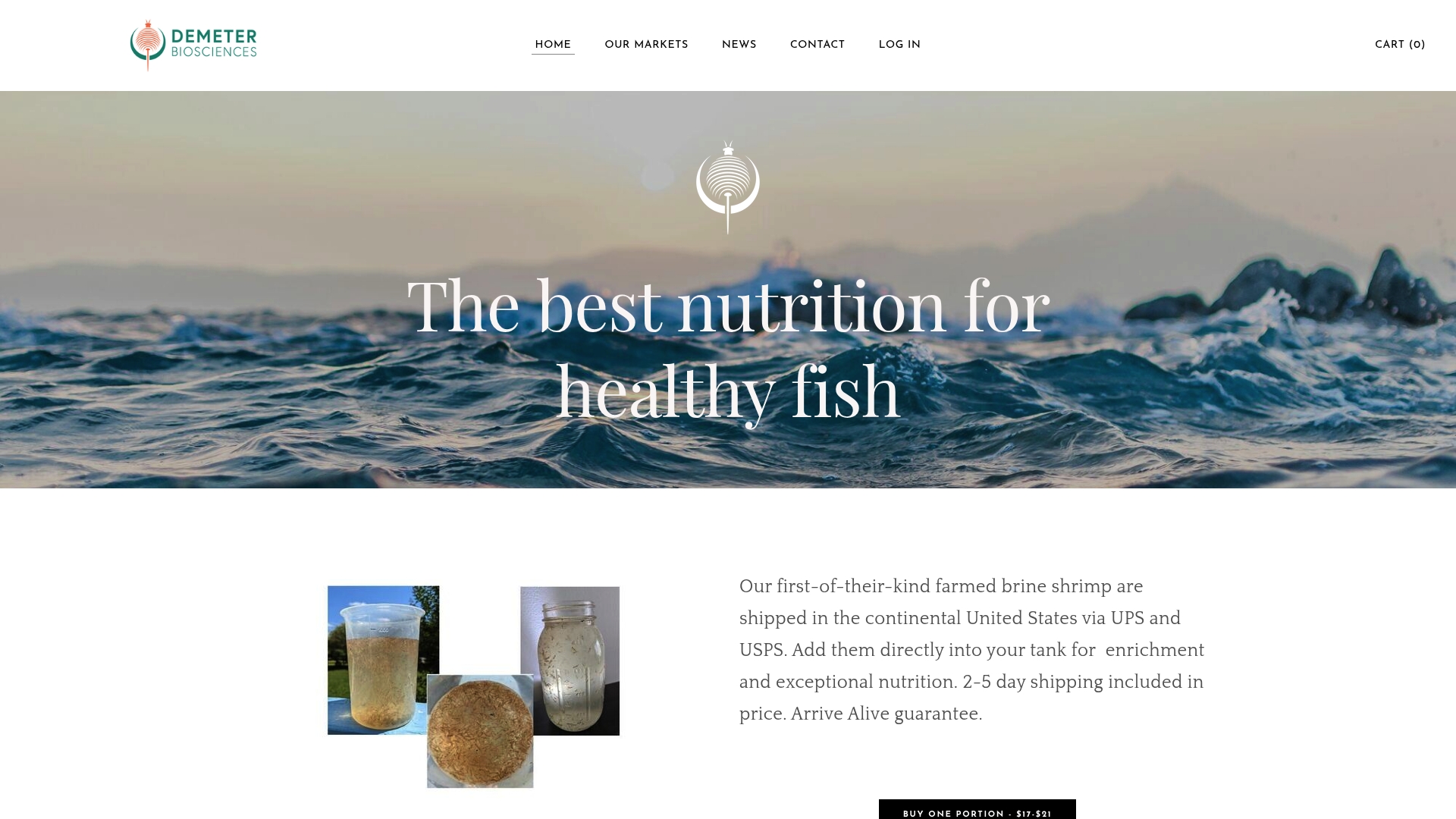
For hobbyists, that means one less variable to manage before enrichment even starts. For hatcheries and research institutions, it means a documented baseline you can build a protocol around instead of adjusting for every time supply changes. Demeter offers single live brine shrimp orders for occasional restocking, a monthly membership for hobbyists who want recurring shipments without reordering each time, and bulk packages for stores, museums, and labs that need volume.
If a steadier starting point for your enrichment protocol sounds useful, check live brine shrimp availability and see which order size fits your feeding schedule.
FAQ
What is good enrichment for fish?
Good enrichment for fish larvae means loading live feed organisms like rotifers and Artemia with DHA, EPA, and ARA, plus micronutrients such as vitamin C, vitamin A, iodine, and selenium, before feeding them to the fish. The target balance for many marine larvae is a DHA:EPA ratio of about 2:1, delivered through an 8 to 24 hour enrichment window.
What is the easiest live food to culture for fish?
Rotifers are generally considered the easiest live food to culture at high density for first-feeding larvae, since they reproduce quickly on algal paste diets and tolerate a range of conditions. Artemia are a close second and are easier to hatch on demand, though both still need separate enrichment before feeding to most marine species, as outlined in standard rotifer culture protocols.
Can fish survive 3 days without food?
Most healthy adult fish can go several days without food without lasting harm, since they rely on stored energy reserves during short gaps. Larval fish are far more fragile and typically cannot tolerate extended gaps during their first feeding window, which is why timing live feed delivery closely to hatching is critical.
Do fish remember who feeds them?
Fish can learn to associate certain cues, including a person's presence or movement near the tank, with feeding time, which looks like recognition even though it is closer to a learned response. This has no bearing on enrichment practices themselves, but it does explain why fish often gather at the same spot or time once a feeding routine is established.
Sources
- Artemia culture for intensive finfish and crustacean larviculture (VT Extension CNRE-60)
- Rotifer production as a first feed item for intensive finfish larviculture (VT Extension CNRE-61)
- Live diets for larval fish, shrimp: production, enrichment, feeding strategies (IFAS/extension)