
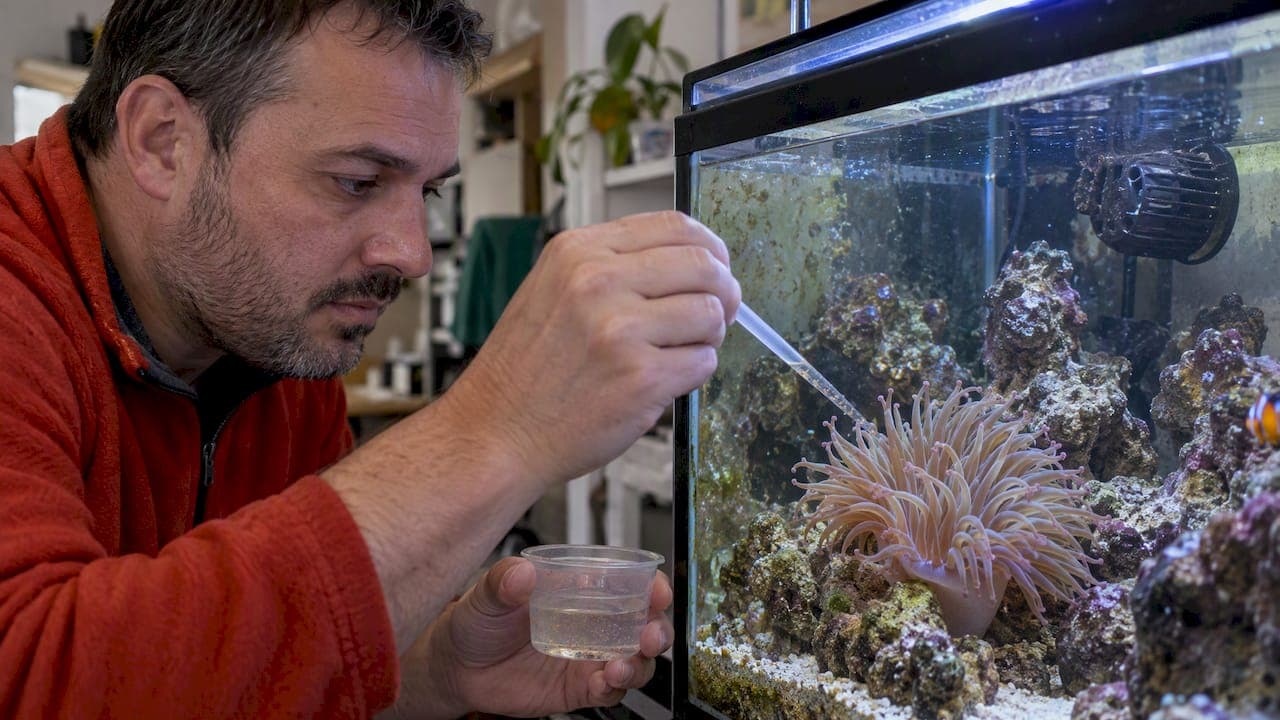
Yes, anemones eat brine shrimp, and many keepers use them. But plain adult brine shrimp are a supporting food, not a complete diet. They work best when they are well fed before they reach the tank, offered straight to the tentacles, and rotated with meatier foods. Below you will find how often to feed, how to deliver the food, and what separates a useful brine shrimp from an empty one.
TL;DR
- Anemones accept brine shrimp (Artemia), and a university lab protocol lists them as a standard supplemental food.
- Nutrition depends on what the shrimp ate. Research on enrichment shows microalgae such as Dunaliella salina can raise protein, lipid and mineral content.
- Target feed with tongs or a pipette, shut off flow briefly, and stop if the anemone refuses. Overfeeding fouls water faster than underfeeding starves a lit anemone.
- Rotate brine shrimp with mysis, krill or chopped seafood. Do not rely on one food.
Table of Contents
- Do anemones actually eat brine shrimp?
- Why the quality of the brine shrimp matters
- How often to feed an anemone brine shrimp
- How to feed brine shrimp to an anemone, step by step
- Live, frozen or hatched: which form suits an anemone
- What to feed alongside brine shrimp
- Feeding is not a substitute for light and water quality
- Our perspective: why we grow brine shrimp on Dunaliella
- Where to get algae-fed live brine shrimp
- Common mistakes with brine shrimp and anemones
- FAQ
- Sources
Do anemones actually eat brine shrimp?
Anemones are carnivores. They catch food with their tentacles, and the stinging cells hold prey while the tentacles move it to the mouth. Brine shrimp are small, soft and easy to swallow, which is why they show up in so many hobby and lab husbandry notes.
The Google results for this keyword show the pattern. Keepers on forums say that almost any meaty marine food works, and they name brine shrimp next to mysis, krill and silversides. Others are blunter. One long-running thread on feeding an anemone has a poster saying brine is not such a good food and that mysis, krill or squid are healthier.
Both views are right, and the gap between them comes down to the shrimp. Brine shrimp are a living package whose contents depend on what they have eaten. A shrimp grown on a poor diet, or one starved while waiting to be sold, gives an anemone little. A shrimp grown on algae gives it much more.
Why the quality of the brine shrimp matters
A review of aquaculture nutrition, hosted on PubMed Central, describes Artemia as a live capsule of nutrition that can be improved by enrichment. It reports that enriching Artemia with microalgae such as Dunaliella salina and Chlorella vulgaris for 24 hours can increase protein, lipid and mineral content. It also notes that standard Artemia nauplii can fall short of copepods, the natural benchmark for many marine animals, which is why enrichment is treated as the professional standard.
A recent paper in Scientific Reports tested Chlorella and Dunaliella enriched Artemia in goldfish diets, measuring growth, pigmentation, gut structure and immune-related pathways. Goldfish are not anemones, so we do not claim the same results carry over. What it shows is that the algae a brine shrimp eats is a variable worth caring about.
There are three common situations:
| Brine shrimp type | What you get | Fit for anemones |
|---|---|---|
| Wild-harvested, shipped or stored without feeding | Variable, and often starved in transit | Acceptable as a treat, weak as nutrition |
| Hatched baby brine shrimp, fed right away | Yolk-rich nauplii, small enough for small anemones | Good for tiny anemones and as a tank-wide plankton boost |
| Farmed on microalgae and shipped live | Shrimp that have eaten algae throughout growth | Strong supplement for most species |
We go deeper on the enrichment timeline in our guide to the 12 to 24 hour enrichment rule, and on why a controlled algae diet gives steadier results in consistent brine shrimp nutrition.
How often to feed an anemone brine shrimp
There is no single schedule that fits every species, and the sources you will find disagree on purpose. The UMass lab protocol for the small anemone Exaptasia lists brine shrimp as a supplemental feed, and the lab's anemone page describes turning off water flow for about an hour so the food is not carried away. Its husbandry notes for light-exposed animals suggest a lighter schedule, down to monthly feeding or feeding when the animals seem to be shrinking. In a lab setting, a twice-weekly plan is also described for anemones that need extra food.
For a home reef, a practical frame looks like this:
- Anemones under strong light with healthy color: feed lightly, one or two times a week at most. Anemones that host symbiotic algae (zooxanthellae) get a lot of their energy from light, and experienced aquarists on forums point out that many species can go weeks without direct feeding if lighting is sufficient.
- Shrinking, pale or recently imported anemones: feed more carefully and more often, but only after checking light, flow and water quality first.
- Small anemones in nano tanks: use small portions. A thumb-sized chunk is far too large, and brine shrimp are naturally the right scale.
The better test is the animal's reaction. The host anemone guide from aquacalculator says feeding is less about frequency and more about whether the anemone grasps what you offer. If it keeps rejecting food, it may be full or stressed, and forcing it risks rotting food and toxic water.
How to feed brine shrimp to an anemone, step by step
- Check the anemone. Tentacles should be extended and responsive. If it is closed up or deflated, wait and look at water parameters first.
- Prepare the food. With live shrimp, scoop a small amount into a cup of tank water. With frozen cubes, thaw in tank water and rinse, because the thawing liquid is a water quality hazard.
- Slow the flow. Turn off powerheads for roughly an hour, as the lab protocol suggests, so the food stays within reach. Keep the skimmer off and the return pumps on only if your tank needs oxygen exchange, and turn everything back on when you finish.
- Deliver it to the tentacles. Use feeding tongs, a long pipette or a turkey baster. Practitioners suggest offering small pieces to the tentacles rather than the mouth, as the aquacalculator guide explains.
- Protect the meal. If shrimp or crabs steal the food, a perforated cup or net placed over the anemone during feeding is a standard fix, according to the same guide.
- Remove leftovers. What the anemone drops after the meal has to come out of the tank.
For the delivery techniques that work with live feed, our post on target feeding brine shrimp walks through the details.
Live, frozen or hatched: which form suits an anemone
Live adult brine shrimp move, which triggers the grabbing response and makes them easy to place on tentacles in small quantities. Their nutrition tracks their diet, so what they ate matters.
Frozen brine shrimp are convenient and store well, but they lose some of the movement cue and sometimes shed liquid into the tank. We compare the two in live vs frozen brine shrimp.
Hatched baby brine shrimp are tiny. They suit small anemones and feed the whole system, since fish and corals will take what the anemone ignores. If you hatch your own, the UMass hatchery dish page describes a shallow dish that lets you hatch and harvest without an air pump, using the nauplii's attraction to light to separate them from the shells. That answers a common question for people without aeration gear. Hatched nauplii still carry little beyond their yolk, so feeding them to your anemone straight from the dish is a snack, not a staple.

What to feed alongside brine shrimp
No serious keeper uses brine shrimp alone. The forum source above recommends mysis, krill and squid as meatier foods, and the same thread's author fed thawed table shrimp in a piece about the size of a pinky fingertip. A varied rotation covers more fatty acids and gives you a backup if one food is out of stock.
- Mysis shrimp: a common core food for most anemones.
- Krill or chopped squid: larger pieces for larger anemones.
- Small pieces of fish or shrimp flesh: used occasionally.
- Algae-fed live brine shrimp: a lighter, living supplement that also benefits fish and corals in the same tank.
- Phytoplankton: not for the anemone itself, but it supports the tank's filter feeders and the small organisms in the system.
If you also keep corals, the same logic applies. Our piece on brine shrimp for corals explains why plain adults are not the best choice there either.
Feeding is not a substitute for light and water quality
Most anemone trouble starts somewhere other than the food bowl. The aquacalculator guide cautions that anemones wandering or detaching are often linked to poor water quality, flow or lighting. Experienced aquarists add that feeding does not replace proper lighting, and that overfeeding is a common pitfall that degrades water quickly, particularly if the anemone rejects the meal.
The Ornamental Aquatic Trade Association publishes a care sheet for anemones with general water chemistry guidance. It also tells you to check species-specific needs with your retailer before buying. Do that before you work on a feeding schedule.
Signs that you are overfeeding:
- Uneaten food left on or around the anemone after a couple of hours.
- Nitrate or phosphate creeping up between water changes.
- Cloudy water or film on the surface after feeding days.
- Algae blooms that appear after you raise feeding frequency.
Signs that an anemone needs more food: visible shrinking over several weeks despite good light, loss of color, or a stretched, thin body.
Our perspective: why we grow brine shrimp on Dunaliella
We farm live brine shrimp in land-based systems and feed them only the microalgae Dunaliella. We do that because the question aquarists ask, whether brine shrimp are good food, has no single answer. It depends on what the shrimp ate. A wild-harvested shrimp can have lived through seasonal swings and starvation before it reaches you. A farmed shrimp raised on a steady algae diet is a different product.

Our target is a protein content of at least 40%, and consistency matters as much as the number. When you feed an anemone, you want each meal to be like the last, so you can judge the animal's response without wondering whether the food changed. You can read more about how we think about that in why a 40% protein target pays off and in our algae and brine shrimp diet guide.
We also do not pretend brine shrimp are a full anemone diet. Use ours as a living, nutrient-dense part of a rotation that also includes meaty foods, and let the anemone's reaction tell you how much it wants.
— Demeter
Where to get algae-fed live brine shrimp
We ship live brine shrimp at $17 to $35 depending on the option you choose. If you feed anemones, corals or fish every week, the Demeter Biosciences membership is $25 per month for a monthly live shipment. Our live phytoplankton is $20 and supports the filter feeders in your tank. Local fish stores, museums and research institutions can look at the bulk store order. You can see how we raise the shrimp on the product page.
Common mistakes with brine shrimp and anemones
- Feeding from a cube straight into the tank. Thawing liquid pollutes the water. Thaw and rinse first.
- Feeding every day. A lit anemone does not need it, and the extra waste adds up.
- Forcing food into the mouth. Offer it to the tentacles and let the anemone decide.
- Ignoring tank mates. Crabs and shrimp will take the meal if you do not shield it.
- Using brine shrimp as the only food. Rotate with mysis, krill or squid.
- Blaming the food for a wandering anemone. Check light, flow and water quality first.
FAQ
What is the best food for anemones?
There is no single best food. Most keepers rotate meaty items such as mysis, krill, squid and small pieces of seafood, and add brine shrimp as a supplement. Light and water quality matter at least as much as what you put on the tentacles.
Can brine shrimp hatch without an air pump?
Yes. A shallow hatchery dish can hatch and harvest nauplii passively, using their attraction to light to separate them from the shells, as described by the UMass lab. Many hobby guides still use airline and an air pump because it is the traditional setup, but it is not the only way.
How much brine shrimp should I feed my anemone?
Start with a small portion that the anemone can fully grasp, and watch it. If it takes the food and closes around it, that was enough. If it rejects or drops the food repeatedly, it may be full or stressed, and you should stop and remove what is left.
Is baby brine shrimp or adult brine shrimp better for anemones?
Baby brine shrimp suit small anemones and feed the whole tank, but they are mostly yolk and small in size. Adult brine shrimp that have eaten microalgae are bigger, carry more nutrition per bite and are easier to place on tentacles. Many keepers use both.
Do anemones need to be fed at all?
Many anemones that host symbiotic algae get a lot of energy from light, and some species can go weeks without feeding if lighting is sufficient. Supplemental feeding still helps shrinking or pale animals, as long as water quality is good. If your anemone is declining, check light, flow and water chemistry before changing the food.
Sources
- UMass Better Labs: Exaptasia anemone husbandry
- UMass Better Labs: Brine Shrimp for Anemones hatchery dish
- PubMed Central: Artemia enrichment and nutrition review
- Scientific Reports: Chlorella and Dunaliella enriched Artemia in goldfish
- Host anemones in marine aquariums (aquacalculator)
- Saltwaterfish.com forum: Feeding my anemone
- OATA: How to look after anemones