
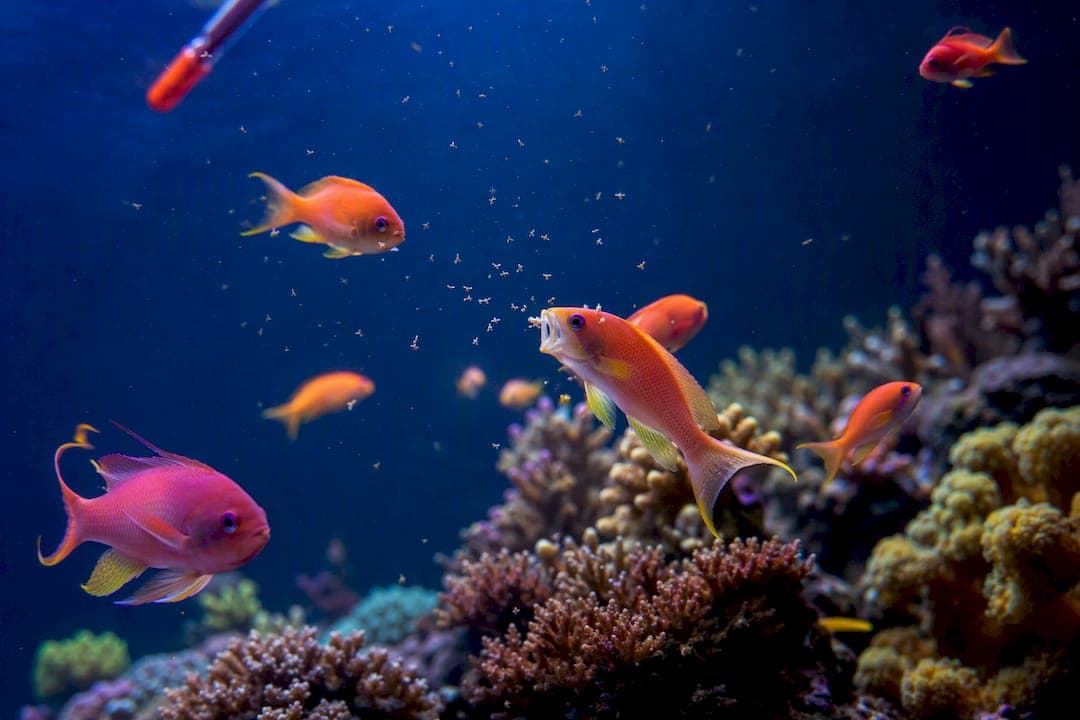
Yes, brine shrimp are appropriate for anthias, and freshly hatched nauplii or enriched brine shrimp work best. Feed small amounts three to six times daily rather than one large meal, since anthias graze on plankton constantly in the wild. A 2025 study in the Journal of Tropical Agriculture and Science (JTAS) backs the timing details below, and farmed options from Demeterbioscience remove much of the guesswork around hatch quality.
TL;DR:
- Freshly hatched or enriched brine shrimp nauplii are most nutritious within 22 hours of hatching, with early instar II nauplii being ideal for feeding anthias.
- Feeding three to six small portions daily simulates wild grazing behavior and prevents water quality issues caused by overfeeding.
- Rinsing nauplii before feeding reduces ammonia and hatch debris, helping to maintain optimal tank conditions.
- Farmed, algae-fed brine shrimp provide consistent hatch quality and nutritional content, unlike wild-caught cysts with variable quality.
- High flow, stable temperatures between 76 and 80°F, and salinity from 1.023 to 1.026 specific gravity support nauplii survival and hunting efficiency.
Table of Contents
- Quick Feeding Checklist for Brine Shrimp and Anthias
- Why Brine Shrimp Work for Anthias: Nutrition and Behavior
- Best Brine Shrimp Stage and Timing to Feed Anthias
- How to Hatch, Prepare, and Rinse Brine Shrimp for a Reef Tank
- Feeding Frequency, Amounts, and Schedule for Anthias
- Troubleshooting: If Your Anthias Won't Take Brine Shrimp
- Why Microalgae-Fed, Farmed Brine Shrimp Help
- Recommended Tank Water Conditions for Feeding Live Brine Shrimp Safely
- Alternatives to Brine Shrimp for Anthias Diet Diversification
- A Hobbyist's Honest Take on Feeding Anthias
- Get Live Brine Shrimp Timed to This Feeding Plan
- Sources
- FAQ
Quick Feeding Checklist for Brine Shrimp and Anthias
Here's the fast version, before we get into the reasoning behind each step.
- Measure a starting dose. Broadcast a small pinch of nauplii per feeding and watch the water. Anthias should pick off most of it within 30 to 60 seconds. If food is still drifting after a minute, you overshot.
- Rinse before serving. Whether you hatched your own or thawed a frozen enriched product, rinse briefly in saltwater to knock down ammonia and residual hatch debris before it hits the display.
- Schedule three to six small feedings a day. Anthias don't do well on one or two big meals. An automatic feeder loaded with frozen enriched brine shrimp can cover the gaps when you're not home.
- Choose plain nauplii or enriched, depending on the goal. Fresh nauplii within a day of hatch carry strong natural nutrition on their own. Enriched nauplii or enriched frozen brine shrimp make sense when you're conditioning fish for spawning or trying to boost coloration.
Once this becomes routine, most of it takes under ten minutes a day, split across feedings.
Why Brine Shrimp Work for Anthias: Nutrition and Behavior
Anthias are planktivores. In the wild, they hover in the water column picking off copepods and other zooplankton drifting past on the current, and they do this almost continuously through daylight hours. That behavior is why a single large feeding never satisfies them the way it might a grouper or a wrasse. Moving prey triggers their strike response, and brine shrimp nauplii, with their jerky swimming pattern, mimic that trigger closely enough to work as a staple.
The nutritional case is strong but not unconditional. Newly hatched brine shrimp carry:
- High digestibility for small-mouthed fish, since nauplii are tiny and thin-shelled
- A natural lipid reserve from the cyst that fuels the first day or two of life
- Reasonable protein content, though it varies with the source and feed of the parent population
Freshly hatched brine shrimp lose nutritional value fast. The JTAS 2025 research measured HUFA (highly unsaturated fatty acid) and carotenoid levels in nauplii harvested between 22- and 36 hours post hatch, and found both peaked around the 22-hour mark before declining.upm.edu.my/resources/files/Pertanika%20PAPERS/JTAS%20Vol.%2048%20(4)%20Jun.%202025/10%20JTAS-3271-2024.pdf). Digestibility follows the same downward slope. That's why enrichment matters. Brine shrimp on their own are thin on HUFAs and carotenoids compared to copepods, and a fish fed nothing but unenriched shrimp for months will eventually show it in dull coloration and slower growth.
Best Brine Shrimp Stage and Timing to Feed Anthias
Brine shrimp cysts hatch into instar I nauplii, still carrying their yolk sac and unable to feed externally. Within roughly 12 hours they molt into instar II, developing a functioning digestive tract and gaining the ability to take in outside nutrition, including enrichment products. After that they grow into juvenile and adult brine shrimp, which are larger, tougher, and lower in fatty acid content relative to their size.
For anthias, instar I and early instar II nauplii are the better choice most of the time.
- Feed within 24 hours of hatch when possible. The JTAS research found nutrient content and digestibility both favor early harvest, with the 22-hour window standing out as the sweet spot.
- Use enriched instar II when timing doesn't allow same day feeding, or when you want an extra HUFA boost for conditioning fish before spawning attempts.
- Reach for enriched frozen brine shrimp on days when hatching isn't practical. Enrichment measurably improves the fatty acid profile of both live and frozen products, closing much of the nutritional gap with fresh nauplii.
Adult brine shrimp aren't off limits, but they're a poor primary food for anthias given their smaller mouths and preference for prey that moves erratically in the water column.
How to Hatch, Prepare, and Rinse Brine Shrimp for a Reef Tank
A basic hatchery setup doesn't need to be elaborate: a cone-bottomed container, an air stone for constant circulation, saltwater at roughly 1.018 to 1.025 specific gravity, and a light source nearby, since cysts hatch faster with steady illumination.
- Add cysts to the hatch water and keep aeration strong enough to keep them suspended the whole time.
- Wait 15 to 24 hours. Hobbyist setups with good aeration and a 12:12 light cycle typically see hatch onset in that window, though standard references cite a broader 24 to 48 hour range depending on temperature and cyst quality.
- Turn off aeration and let the water settle for 10 to 15 minutes. Unhatched cysts sink, empty shells float, and live nauplii concentrate in the middle layer, making separation straightforward.
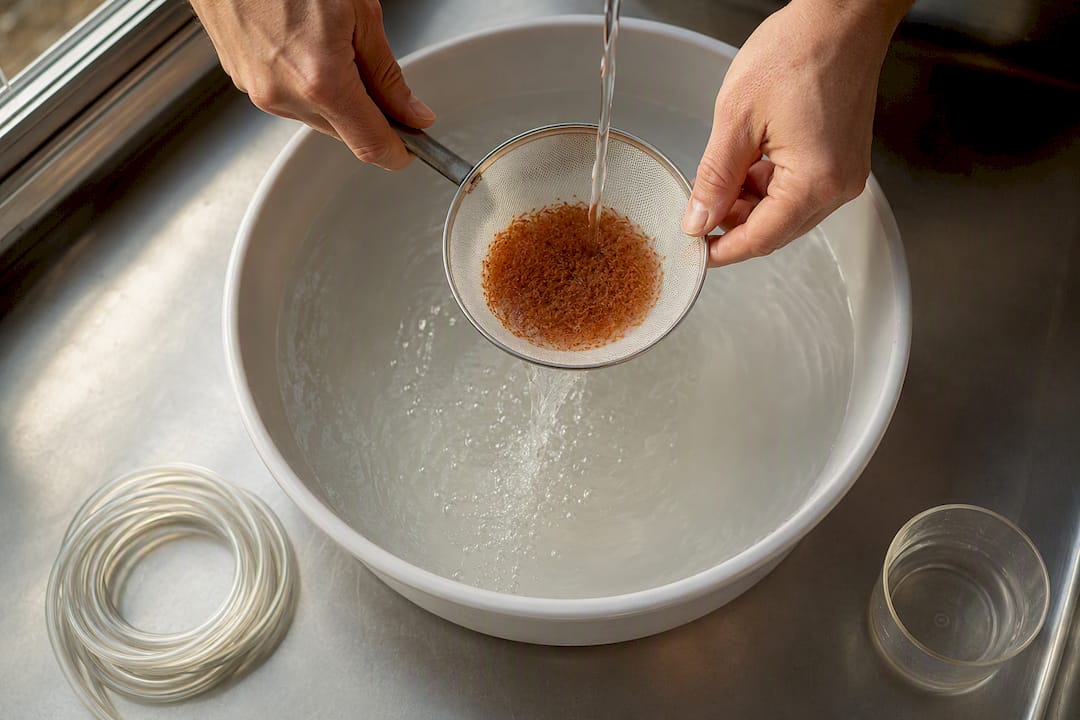
- Siphon the nauplii into a fine mesh net and rinse with clean saltwater to strip out ammonia, shell fragments, and hatch fluid before they ever reach the display.
- Enrich only after nauplii reach instar II, once the digestive tract is functional enough to take in enrichment products. Enriching too early wastes product, since instar I nauplii aren't feeding externally yet.
- Broadcast feed with the display lights on low or off to reduce stress and let anthias hunt without competition from more aggressive tankmates.
Pro Tip: Feed right before lights out on the reef and you'll often see the boldest pickup of the day. Anthias seem to sense the light change is coming and get more aggressive about grabbing food in that window.
For the rinsing step specifically, a dedicated rinse protocol keeps nutrient load low enough that it won't spike nitrates in a small reef system.
Feeding Frequency, Amounts, and Schedule for Anthias
Three to six small feedings daily is the range that matches how anthias actually eat, and care guides consistently point to frequent, modest portions rather than one or two large ones. A single anthias colony of five or six fish in a 50 gallon tank typically does well on:
- About one teaspoon of hatched, rinsed nauplii per feeding, spread across three to four feedings
- A slightly smaller dose if frozen enriched brine shrimp is mixed in on alternating feedings
- An increase in feeding frequency, not volume, if you notice fish looking thin or subordinate members of the group aren't getting enough
Larger anthias groups or bigger systems scale the amount up proportionally, but the frequency stays the same. Cramming more food into fewer feedings defeats the purpose, since anthias are wired to graze rather than gorge.
An automatic feeder loaded with frozen cubes covers midday gaps when you can't be there to broadcast live nauplii, and a simple kitchen timer works fine for reminding you to hit that third or fourth feeding of the day.
Troubleshooting: If Your Anthias Won't Take Brine Shrimp
Refusal usually traces back to one of three causes, and each has a specific fix.
- Competition and aggression. Faster or more dominant tankmates can block subordinate anthias from ever reaching the food. Target feed with a turkey baster near the shy fish, or feed in two spots at once.
- New or stressed fish. Recently introduced anthias sometimes ignore food for the first several days. Live nauplii tend to break that standoff faster than frozen food, since the movement triggers a feeding response even in stressed fish.
- Transitioning from live to frozen. Hobbyist experience backs using live brine shrimp as a bridge food, gradually mixing in thawed enriched brine shrimp until the fish accepts it without hesitation.
If water clouds or nitrates spike after a feeding, you likely overshot the dose. Cut the amount by a third and skip live feedings for a day to let the system recover.
Why Microalgae-Fed, Farmed Brine Shrimp Help
Wild-harvested brine shrimp cysts come from a handful of natural sources, and hatch quality swings with seasonal conditions at those sites. That variability shows up as inconsistent hatch rates and unpredictable nutrient content from batch to batch, since cyst quality depends heavily on what the parent brine shrimp population was eating and how much environmental stress it was under before harvest.
Demeterbioscience raises its brine shrimp on land in controlled systems, feeding them exclusively on the microalgae Dunaliella to reach a consistent protein content of at least 40%. That consistency matters more than it sounds. A hobbyist who's been feeding wild-harvested cysts and seeing hit-or-miss hatch rates or dull coloration in their anthias often traces the problem straight back to inconsistent cyst quality. Farmed, algae-fed brine shrimp sidestep that problem by controlling the input the whole way through production.
Recommended Tank Water Conditions for Feeding Live Brine Shrimp Safely
Live brine shrimp are euryhaline, meaning they tolerate a wide salinity range, which makes them forgiving to introduce into a typical reef system running 1.023 to 1.026 specific gravity. That's well within their comfort zone, so you don't need to acclimate nauplii to your display's exact parameters before broadcasting them.
Temperature matters more for how long they survive in the tank than salinity does. Reef temperatures in the 76 to 80°F range keep nauplii active and swimming for several minutes, which gives anthias a real window to hunt them down before they settle or die off. Colder water slows the nauplii, which can actually help slower fish catch them, but it also means any uneaten shrimp linger longer before they decompose.
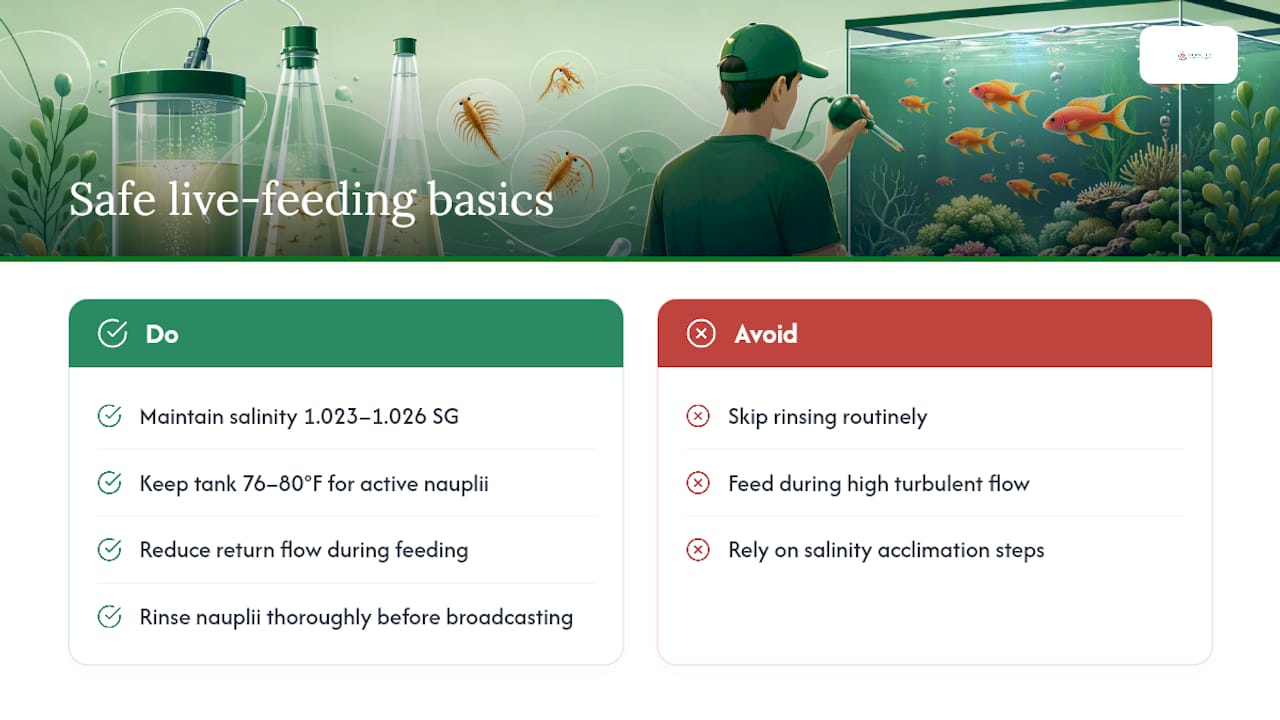
Water flow deserves attention too. High flow scatters nauplii into rockwork and overflow boxes before fish can reach them, wasting food and adding to the bioload as it decomposes unseen. Feeding during a lull in the flow, or turning down return pumps for a few minutes during the feeding, keeps more food in the water column where anthias are actually looking.
Dissolved oxygen and ammonia are the two water quality factors most affected by live feeding itself. Freshly hatched nauplii bring some hatch water with them no matter how well you rinse, and that water carries traces of ammonia from the hatching process. Rinsing thoroughly before feeding, as covered above, keeps that contribution minimal. Skipping the rinse step on a regular basis is one of the more common ways hobbyists end up chasing a nitrate problem they can't otherwise explain.
Alternatives to Brine Shrimp for Anthias Diet Diversification
Brine shrimp shouldn't be the only thing in an anthias diet, even when it's the high quality, enriched kind. Variety matters for both nutrition and behavior, since anthias in the wild encounter dozens of different plankton species rather than a single food source.
Frozen mysis shrimp is the most common rotation partner. It's larger than brine shrimp nauplii, which makes it a good option for adult anthias once they're established feeders, and trade sources point to enriched frozen mysis as a practical staple alongside brine shrimp rather than a replacement for it.
Copepods, when available, come closest to matching what anthias eat in the wild. They're smaller and more nutrient-dense in HUFAs than brine shrimp, though they're harder to culture in volume and pricier to buy commercially, which is why most hobbyists use them as a supplement rather than a foundation.
Rotifers work well for very small or newly settled anthias whose mouths haven't grown enough to handle brine shrimp nauplii comfortably. Prepared pellet and flake foods formulated for marine carnivores round things out and add stability to the rotation, since they don't carry the same risk of introducing pathogens or excess nutrients that live foods can.
A rotation of brine shrimp, mysis, and an occasional copepod or prepared food feeding covers more nutritional ground than any single food, brine shrimp included, can manage alone.
A Hobbyist's Honest Take on Feeding Anthias
Expect some trial and error the first few weeks. Every tank's flow, lighting, and anthias temperament are different, and the schedule that works for one setup needs tweaking in another.
Start with small batches, watch pickup times closely, and write down what you see. A fish that ignores nauplii on day one might be eagerly chasing them by day four, once it settles in and other tankmates stop crowding it out.
— Demeter
Get Live Brine Shrimp Timed to This Feeding Plan
Hatching your own cysts works, but it eats time most hobbyists don't have on a Tuesday night. Live nauplii already hatched from farmed, Dunaliella-fed stock are available to skip the hatch cycle and jump straight to feeding within the 24 hour nutrition window this article covers.
Before ordering, decide on three things: nauplii size for your anthias' mouth size, how often you want shipments to arrive, and how that lines up with the three to six feeding schedule outlined above. Frequent feeders running larger anthias colonies often do better on a recurring monthly subscription rather than one-off orders, since it keeps fresh nauplii arriving on a predictable cycle. Check out the live brine shrimp product page to see current sizing and shipping options, and get your next batch scheduled around a feeding day rather than waiting until your current supply runs out.
Sources
- Optimal Time to Harvest Brine Shrimp (Artemia salina) Nauplii as Live Food for Aquatic Animals
- Anthias care — ThatPetPlace
- Aquaculture of brine shrimp — Wikipedia
- Live foods part one: brine shrimp — Tropical Fish Hobbyist (TFH)
FAQ
How often should I feed brine shrimp to anthias?
Three to six small feedings a day works best, matching how anthias graze continuously on plankton in the wild rather than eating one or two large meals.
How long does it take brine shrimp to reach full size?
Cysts hatch into instar I nauplii in about 24 to 48 hours, then molt into instar II within roughly 12 hours after that, growing to full adult size over the following one to two weeks depending on water temperature and feed.
What fish will eat brine shrimp?
Most marine planktivores take brine shrimp readily, including anthias, dartfish, damselfish, and many wrasses, since the shrimp's erratic swimming pattern triggers a natural strike response.
Will brine shrimp survive in a reef tank?
Live nauplii typically survive several minutes to a few hours in a reef tank, depending on temperature and salinity, which is the enough time for anthias to hunt them down before they settle into rockwork.