
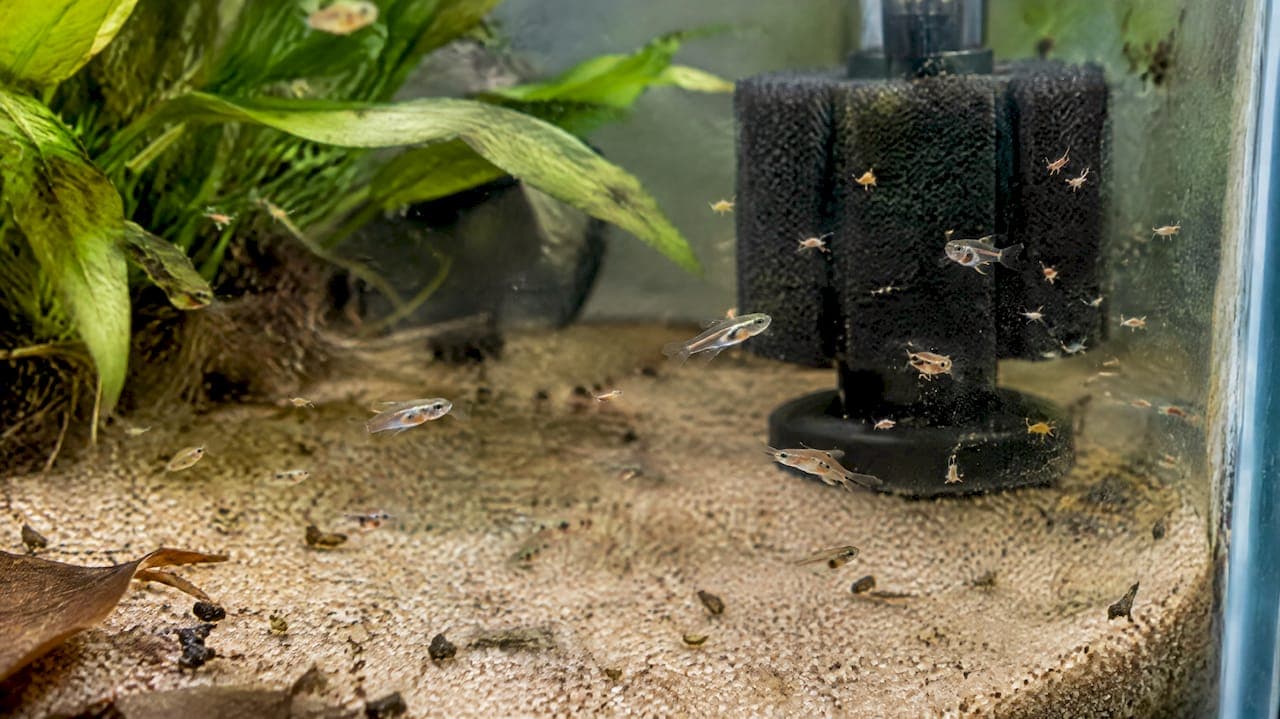
Freshly hatched baby brine shrimp (Artemia nauplii) are the best first food for most Apistogramma fry; use microworms or vinegar eels when fry are exceptionally tiny. Have a hatch or culture running before the fry go free-swimming, and plan several small feedings a day from hour one. If you cannot keep staggered hatches going, we at Demeter Biosciences ship farmed live brine shrimp.
TL;DR:
- Hatch nauplii at Instar I, roughly 18 to 24 hours after starting the culture; older shrimp lose yolk reserves and may outgrow the smallest fry.
- For fry that ignore baby brine shrimp, offer microworms or vinegar eels for several days, then retry once they actively chase nauplii.
- Feed four to six small meals daily, spread prey across multiple spots, and siphon leftovers while making frequent small water changes to limit toxic buildup.
- Begin dry food only when fry strike prey reliably, pick at particles, and keep bellies full; cofeed crushed flakes or micro pellets alongside live food.
- Start and stagger cultures before fry begin swimming; keep culture tools separate from tank equipment and discard any batch with mold or an off smell.
Table of Contents
- Why live foods matter for Apistogramma fry
- Which live food fits which fry size?
- How do you hatch or culture the essentials?
- How often should you feed, and how do you keep the water clean?
- When can you wean fry onto crushed flakes and micro-pellets?
- What goes wrong, and how do you fix it?
- Why consistent, farmed Artemia matters
- Where can you get reliable farmed baby brine shrimp?
- FAQ
- Sources
Why live foods matter for Apistogramma fry
Newly free-swimming fry are hunters, not grazers. They respond to motion, and a drifting pinch of powder looks like debris to them. Live prey wiggles, hangs in the water column, and triggers the strike response that gets food into small mouths in the first critical days. Hobbyist breeders report that live food speeds up survival in the first weeks, and one breeder describes zero losses on a strict routine of microworms and powdered flake.
Nutrition is the second reason. Here is what live food gives your fry:
- Movement: prey that swims keeps fry hunting and raises how much they actually eat.
- Right size: live organisms come in natural size classes, so you can match prey to mouth size.
- Fatty acids: HUFA content links to larval growth, survival and stress resistance, and the quality of Artemia depends on what the parent shrimp ate.
- Yolk reserves: freshly hatched nauplii still carry their yolk sac, which makes them nutrient-dense.
- Digestible protein: soft-bodied prey is easy for tiny digestive tracts to process.
A review of live feeds in ornamental culture lists infusoria, rotifers, copepods and Artemia nauplii, and stresses that each must be matched to the fry's size and HUFA needs.
Live brine shrimp lifted growth in a 60-day trial: ornamental fish fed live Artemia showed higher specific growth rates than fish fed prepared feeds. The trial used a different ornamental species, so treat it as supporting evidence rather than an Apistogramma result, but it matches what breeders see in their own tanks.
Timing is the catch. Instar I nauplii are at their best right after hatching. As Artemia age they burn through yolk, grow larger, and become less nutritious and sometimes too big for the smallest fry. Our guide to the brine shrimp feed window explains the life stages in more detail.
Which live food fits which fry size?
Match the food to the mouth. Work down this list as your fry grow:
- Infusoria or green water: for microscopic first feeders when fry are barely free-swimming.
- Vinegar eels: very thin and long-lived in the water, a good bridge for the tiniest fry.
- Microworms: effective, easy-to-culture first foods that stay suspended in the water column longer than many other foods, and a reliable option in ornamental aquaculture for over 50 years.
- Baby brine shrimp (BBS): the workhorse for most Apistogramma fry. Small, nutritious, simple to hatch, but harvest timing matters.
- Daphnia and frozen foods: for older juveniles. Frozen food works as a backup, but it tends to be less attractive than live food to fry that just started swimming. When juveniles outgrow nauplii, our comparison of Daphnia and brine shrimp by gape size helps you time the switch.
Most hobbyists get through a spawn with two essentials: baby brine shrimp plus microworms. Forum consensus agrees that BBS is usually the most reliable first food for Apisto fry, with microworms a useful substitute when BBS is not on hand, though many keepers report better growth on BBS.
Pro Tip: If you are unsure whether your fry can handle BBS, put a drop of the hatch water in a white dish and watch whether the fry in the tank chase nauplii. Fry that ignore them need microworms or vinegar eels for a few more days.

How do you hatch or culture the essentials?
Set these up before the eggs hatch, not after. Each takes only a few minutes of daily attention once running.
- Start a baby brine shrimp hatch. Use a clean container with saltwater, brine shrimp cysts, steady aeration and a light source nearby. Hatching takes roughly a day, so plan your harvest for the point when nauplii are Instar I, in about the 18–24 hour window.
- Harvest on time. Siphon or pour through a fine net and rinse the nauplii. Waiting too long means larger, less nutritious shrimp, as the SRAC publication warns.
- Consider enrichment only for older shrimp. If you hold nauplii longer than a day, enrichment can restore some of the lost value. Our enrichment timing rules explain how to enrich nauplii.
- Culture microworms. Use a shallow container with an oat-based substrate, a bit of yeast, and room temperature. Scrape the worms from the walls with a finger or card and rinse them into the tank.
- Stagger batches. Keep several cultures started at different times so a crashed culture never leaves you empty-handed.
- Start vinegar eels as a backup. A simple vinegar-and-water culture with a small piece of apple or similar fruit keeps going for months and suits the tiniest fry.
Pro Tip: Keep cultures on a separate bench from rearing tanks, use dedicated tools, and throw out any batch that smells off or shows mold. Never pour old culture water into a fry tank.
If you want a hands-on workflow, our guide to setting up a brine shrimp feeding station shows a simple layout.
How often should you feed, and how do you keep the water clean?
Several small meals beat one big one. Aim for four to six small feedings per day, or maintain a low-density cloud of food through the day. Fry have tiny stomachs and burn through food fast, so a single heavy meal either goes uneaten or gets eaten by the strongest fry only.
- Spread the food: use two or three feeding points, or drop moss clumps and leaf litter so weaker fry can find prey without competing.
- Watch bellies: orange or pink tummies on a fry in good light show it is eating. Hollow bellies mean more food or smaller prey.
- Clean up after feedings: siphon dead shrimp and uneaten food before it fouls the tank.
- Match water changes to feeding: frequent small changes keep ammonia and nitrite from spiking when you feed high-protein live food, as forum breeders note.
Feed 4–6 small meals daily or maintain a continuous low-density food field: that is the practical rule The Aqua Guide gives hobbyist breeders. Start at the high end of the range while fry are small, then taper as they grow.
When can you wean fry onto crushed flakes and micro-pellets?
Keep live food going until fry forage with confidence. Signs that weaning can begin:
- Fry strike at prey cleanly and rarely miss.
- Mouths visibly widen, and fry pick at floating particles.
- Bellies stay full between feedings.
- Growth is steady and fairly even across the brood.
Once those boxes are checked, start co-feeding. Place a tiny pinch of crushed flake or micro-pellet right next to the live food so fry learn to treat inert particles as food. Breeders on Apistogramma.com describe gradually introducing high-quality crushed dry foods once fry forage reliably. Apistogramma are omnivores that accept live, frozen and dry foods, though live food improves survival and spawn outcomes.
Go slowly. Pulling live food too early stalls growth, and slower fry get left behind. Keep some live food in the rotation until your juveniles are robust.
What goes wrong, and how do you fix it?
- Mass losses after free-swimming: usually no appropriately sized live food or toxic water. Test ammonia and nitrite, then confirm that BBS or microworms are actually in the tank. Hobbyists in the first food thread point to BBS as the reliable fix.
- Uneven growth: spread food across more spots, increase feeding frequency, or split the brood into separate rearing areas so larger fry stop dominating.
- Fouled water after meals: shrink the portion, change water more often, and siphon more frequently.
Why consistent, farmed Artemia matters
Hatch results swing with the quality of the Artemia you start from. We focus on brine shrimp raised on microalgae, because what the parent shrimp eat shapes the nutrition passed to the nauplii. A steady, farmed supply lowers the variation you see in fry outcomes compared with wild-harvested cysts, and it lets hobbyists get the benefit of fresh BBS without the bench space for continuous culture.
— Demeter
Where can you get reliable farmed baby brine shrimp?
If staggered hatches are not practical for you, we offer farmed, algae-fed live brine shrimp, with current prices on our site.
- Single order: for an immediate need when a spawn goes free-swimming.
- Monthly membership: $25 per month for a recurring supply.
- Bulk orders: for stores that need consistent feed quality.
Check availability and place your order at our live brine shrimp page. Our guide to freshwater fish and brine shrimp covers when to hatch and when to buy.
FAQ
What is the best food to feed fish fry?
Live foods sized to the fry's mouth are the best start, and baby brine shrimp are the most common choice for larger fry. Very tiny fry do better on infusoria, vinegar eels or microworms first. Matching prey to size matters; the live feeds review describes feeds suited to different fry stages.
What should I feed cichlid fry?
Most cichlid fry, including Apistogramma, do well on freshly hatched baby brine shrimp from the first free-swimming day. Microworms work for smaller fry or as a supplement. Add crushed micro-pellets later, once the fry forage confidently.
What do apistogrammas eat?
Apistogramma are omnivores that accept live, frozen and dry foods, though live foods improve survival and spawn outcomes. Adults take frozen foods and quality pellets readily. Fry need appropriately sized live prey in the first weeks.
How often should I feed Apistogramma fry?
Feed several small meals a day or keep a low-density food field in the tank through the day. Siphon leftovers and change water often so fouling does not cancel the benefit of frequent feeding.
Sources
- Artemia Production for Marine Larval Fish Culture
- FA214/FA214: Microworm Culture for Use in Freshwater Ornamental Aquaculture
- Live & Cultured Foods for Fry | The Aqua Guide
- Evaluating the Effect of Live Brine Shrimp (Artemia franciscana) on Growth Performance in Ornamental Fish, Cyprinus rubrofuscus (Lacepede, 1803)
- A comprehensive review on the role of live feeds in ornamental fish and aquarium culture