
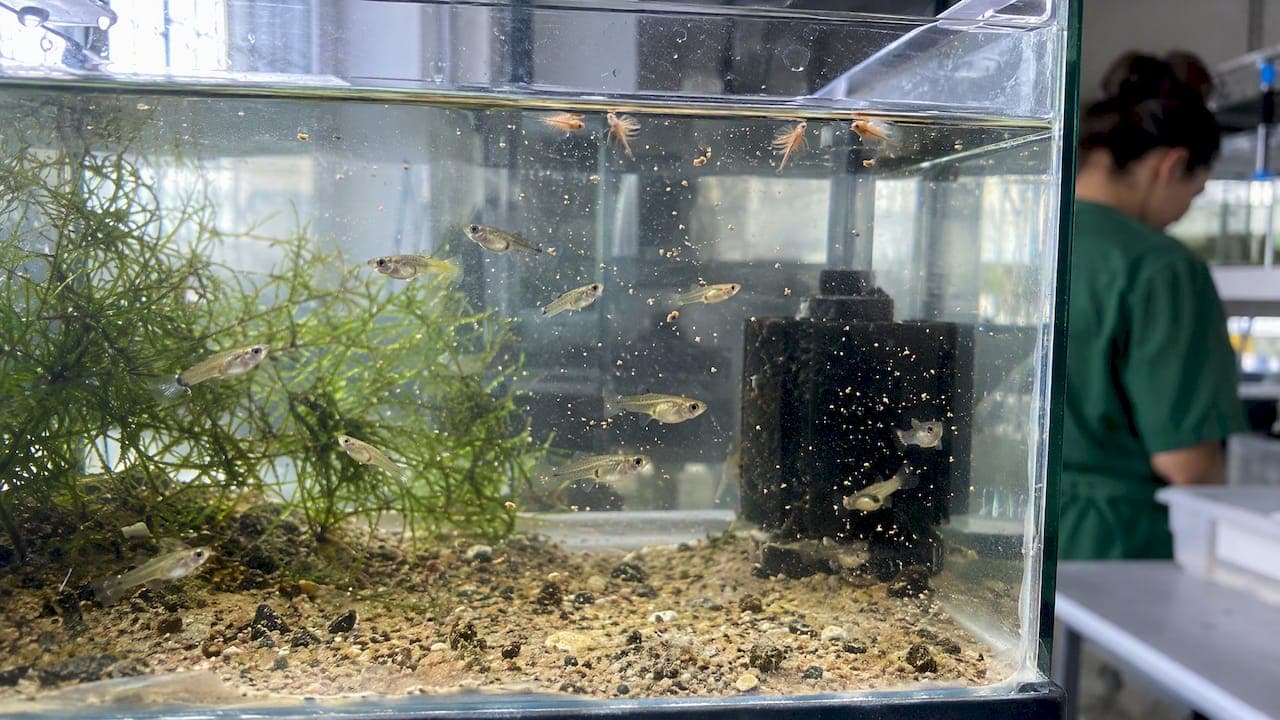
Feed newborn molly fry finely crushed flakes or a fry powder alongside newly hatched Artemia nauplii when you have them, offered in tiny amounts three to six times a day. Each meal should disappear within two to three minutes, since leftover food fouls the water fast. Add floating plants or a breeder box so fry have somewhere to hide from hungry adults while they eat.
TL;DR:
- Feeding fry three to six times daily in small amounts prevents water fouling and supports rapid growth in the first month.
- Newly hatched Artemia nauplii provide essential nutrition but should be offered within an hour due to their short lifespan in freshwater.
- Transitioning from live feed to formulated microdiets should be gradual, with over two to four weeks to ensure proper digestion and long-term growth.
- Use dense plants or breeder boxes to protect fry from adult mollies while feeding and establish a regular cleaning schedule to maintain water quality.
- Consistent supply of farmed Artemia and proper staged weaning significantly improve fry survival and development.
Table of Contents
- A feeding schedule and portion plan from birth to juvenile
- Which foods work best at each fry stage
- How to wean fry from live food to a prepared diet
- Setting up the tank to keep more fry alive
- How farmed Artemia fits into a molly fry feeding plan
- What actually goes wrong with molly fry feeding
- Where to get reliable live feed for your fry
- FAQ
- Sources
A feeding schedule and portion plan from birth to juvenile
Fry grow fast in the first month, and their stomachs are tiny, so small, frequent meals beat one or two big ones. Here is a practical calendar to follow.
- Days 0-7 (newborn): feed three to six times daily, offering only what the group clears in about two minutes each time.
- Weeks 1-2: add newly hatched Artemia nauplii or Moina alongside crushed flakes, watching for a rounder belly and steady growth.
- Weeks 2-4 and beyond: shift the balance toward formulated microdiets, cutting back on live feed as fry handle larger particles.
Water quality tracks feeding intensity. Siphon uneaten food out within an hour or two of each meal, run small partial water changes more often than you would for adults, and check for ammonia or nitrite spikes, especially in a tank crowded with fry.
Pro Tip: Feed less than you think you need. A thin film of food eaten in seconds beats a visible cloud sitting on the substrate.

Which foods work best at each fry stage
Food choice depends mostly on particle size and how much prep time you have. Crushed flakes and dedicated fry powders are the easiest starting point: grind flakes between your fingers or in a small mortar, then sieve out the coarsest bits so what's left is fine enough for a mouth smaller than a grain of rice. For many home setups, a well-sieved flake or microdiet is already fine enough for the smallest molly fry, which means you don't need live cultures to get started.
Newly hatched Artemia nauplii measure about 500 micrometers, small enough for nearly any fry mouth, and their movement triggers a feeding response that static flakes don't. The catch is that Artemia don't survive long once they hit freshwater, so offer only what will be eaten within an hour.
- Moina are a freshwater-friendly alternative: adults run 700 to 1,000 micrometers while young Moina under 400 micrometers can rival or beat Artemia nauplii in size, and UF/IFAS describes culture setups built on yeast, alfalfa, and bran that hobbyists can replicate at small scale.
- Rotifers suit only the very earliest, smallest fry and are rarely necessary for mollies, which hatch larger than many egg-laying species.
- Formulated microdiets can be introduced once fry accept crushed flake, and they fill nutritional gaps that live feed alone leaves open.
Enrichment matters more than most hobbyists realize. Live-food enrichment with HUFAs and vitamins improves larval growth, survival, and disease resistance, which is why enriched Artemia routinely outperforms unenriched batches in hatchery and aquaculture settings. For more on live-food categories and how to culture them at home, our guide to live fish food types covers the basics, and our enrichment protocol walks through a practical DHA:EPA ratio for anyone culturing live feed regularly.
How to wean fry from live food to a prepared diet
Weaning works best as an overlap, not a switch. Start folding in a formulated microdiet during the second week while Artemia or Moina still make up part of the diet, then lean harder on the microdiet as fry approach three to four weeks old.
- Week 1: live feed (Artemia or Moina) dominates, with crushed flake offered once a day to build familiarity.
- Week 2: alternate feedings, live food in the morning, microdiet in the evening, so fry learn to recognize both as food.
- Weeks 3-4: microdiet becomes the main feed, with live food as an occasional boost rather than a daily staple.
Aquaculture trials show Artemia gives larvae a strong start, but co-feeding and completing the weaning process by roughly 12 to 20 days tends to produce better long-term growth, likely because digestive enzymes mature during this window. A common mistake is switching diets abruptly, which can trigger a feeding slump; another is waiting too long to introduce solids, which can leave fry dependent on live cultures that are not always available. Our stage-by-stage live food guide breaks this transition down further.
Setting up the tank to keep more fry alive
Feeding only works if fry survive long enough to eat. Dense plants like java moss or hornwort, a spawning mop, or a dedicated breeder box all reduce how often adult mollies reach newborns before you do.
- Move fry to a grow-out tank once they're large enough to avoid being mistaken for food, keeping stocking loose enough that waste doesn't accumulate faster than you can manage it.
- Gentle filtration, like a sponge filter, keeps flow low enough that fry aren't pulled into intakes while still processing the extra waste from frequent feeding.
- Check your maintenance checklist daily during the first month: siphon leftover food, run small water changes on a set schedule, and test ammonia and nitrite rather than guessing.
Pro Tip: A bare-bottom grow-out tank makes leftover food and waste far easier to spot and remove than a heavily substrated one.
Mollies themselves lean toward plant material as they mature, so as fry grow past the first few weeks, a diet that includes some plant-based content fits their natural feeding pattern better than a protein-only menu.

How farmed Artemia fits into a molly fry feeding plan
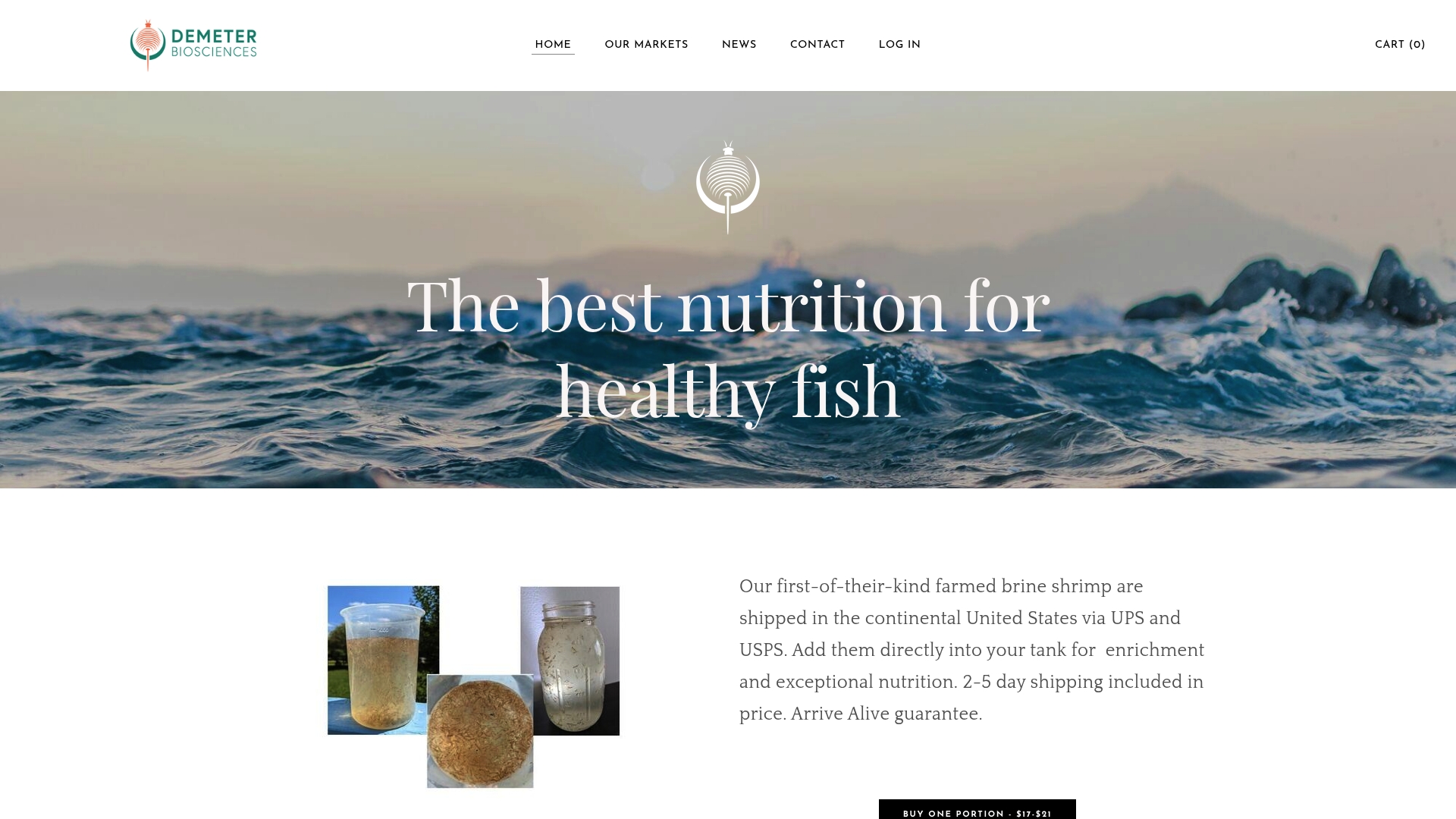
Live Artemia nauplii earn their place in a fry diet because of how fry respond to them, not just their nutrition. Hatching a small batch, rinsing off the hatching brine, and offering nauplii immediately keeps them at peak nutritional value before they start starving in your tank.
- Our Artemia are raised on a sustained diet of microalgae in controlled, land-based systems designed to deliver consistent protein levels, rather than the variable nutrition of wild-harvested shrimp.
- Farmed, consistently fed Artemia are most valuable right in the first one to two weeks, when fry need a reliable, nutrient-dense live food before they're ready for microdiets.
- Live brine shrimp are available as single orders or via monthly membership plans, allowing delivery timing to match expected spawns.
For more on nauplii biology and handling, see our Artemia hatching and feeding guide.
What actually goes wrong with molly fry feeding
The three mistakes I see most: overfeeding until the tank clouds, switching diets cold instead of overlapping them, and skimping on hiding cover so adults pick off fry before they ever reach the food. The single habit that fixes most of this is staged co-feeding with a strict portion window, feed small, time it, and stop. Track which feeding patterns produce the strongest broods, and adjust the next round accordingly.
— Demeter
Where to get reliable live feed for your fry
Consistency is the hardest part of live feed, since wild-harvested brine shrimp vary with the season and sometimes arrive already nutrient-depleted. Our brine shrimp are farmed on microalgae in land-based systems built to maintain steady protein content, ensuring consistent nutritional value throughout the year.
- Order live brine shrimp as a one-time shipment timed to an expected spawn, or set up our monthly membership so fresh Artemia arrives on a predictable schedule.
- Match your hatch size to what fry will eat within a 24 to 48 hour window rather than hatching more than you can use.
- Bulk orders are available for stores or institutions that need larger, recurring volumes.
Check current availability and place an order through our live brine shrimp page whenever your next brood is on the way.
FAQ
What's the best food for newborn molly fry?
Finely crushed flakes or a fry powder sized fine enough to fit tiny mouths, paired with newly hatched Artemia nauplii when available, works best in the first week. Artemia nauplii measure about 500 micrometers, small enough for nearly any molly fry to eat right after hatching.
Can mollies eat brine shrimp, and is it safe for fry?
Yes, newly hatched Artemia nauplii are a standard live feed for molly fry and support strong early growth. They die quickly once they hit freshwater, so offer only small amounts your fry will finish within an hour to avoid fouling the tank.
What should I feed baby molly fry as they grow past the first week?
Start layering in Moina or a formulated microdiet alongside Artemia during the second week, since young Moina under 400 micrometers match the size fry already handle. By three to four weeks, most fry can transition mostly onto a prepared microdiet.
How many fry do mollies have per brood?
Molly broods vary widely, ranging from about 10 to 140 fry per spawn, with gestation lasting roughly three to four weeks. Larger, well-fed females tend toward bigger broods, though tank conditions and genetics both play a role.
What are good tank mates for molly fish?
Peaceful community fish that share similar water parameters, such as platies or small tetras, generally coexist well with adult mollies. For fry specifically, the bigger concern is protection from the adult mollies themselves, so separate nursery space matters more than tank mate choice in the first few weeks.
Sources
- CIR1054/FA024: Culture techniques of Moina
- Enhancement of live food nutritional status with essential nutrients
- Poecilia sphenops (Common molly) species profile