
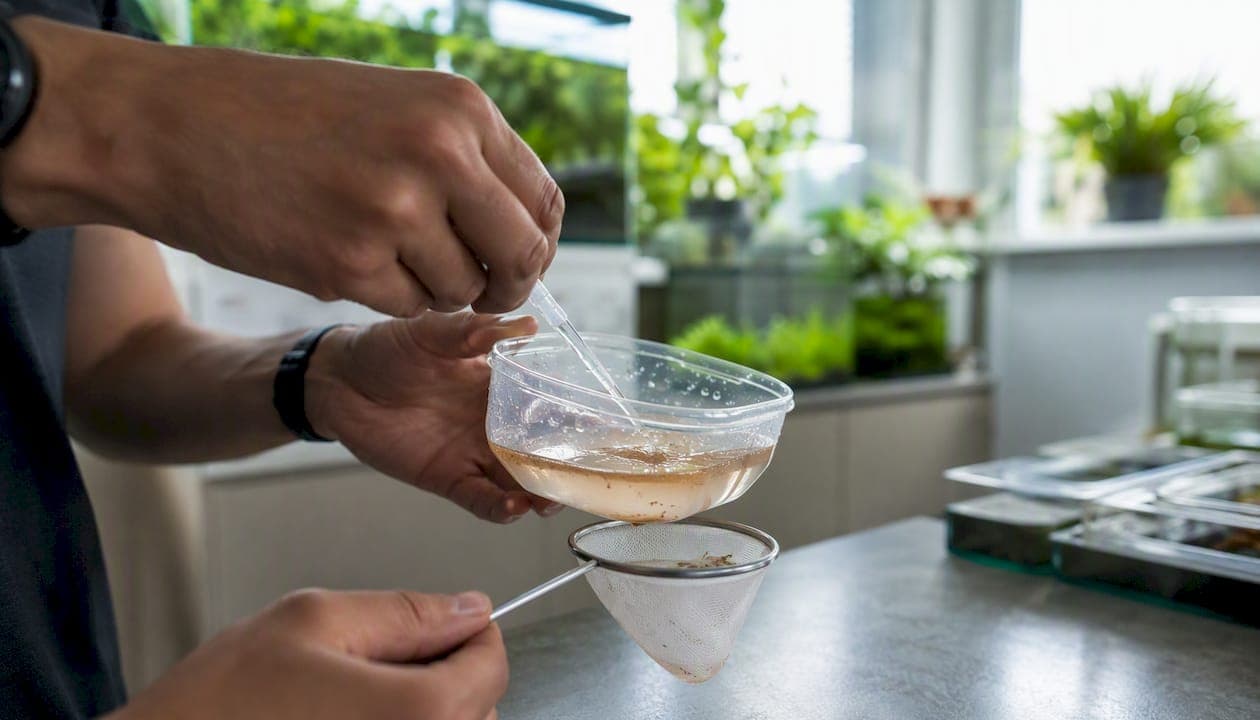
For aquarium hobbyists and aquaculture professionals, the best sustainable live feed approach is land-based, closed-loop production with published certificates of analysis (CoAs) and lot-level traceability. Three reasons drive that verdict:
- Verified nutrition: A CoA confirms crude protein, DHA/EPA ratios, and amino acid profiles batch by batch, so you know what your animals actually receive.
- Closed-loop production reduces ecosystem impact: Land-based systems avoid the seasonal variability, contaminant exposure, and overfishing pressure tied to wild-harvest methods, as comparative LCA research confirms.
- Lot-level traceability prevents greenwashing: Without a lot number linking a shipment to a specific production record, "sustainable" is a marketing claim, not an audited fact.
Demeterbioscience, based in the United States, raises brine shrimp in land-based systems fed exclusively on the microalgae Dunaliella, guaranteeing at least 40% protein per batch. Their direct-to-consumer shipments, subscription plans, and bulk institutional orders each ship with lot documentation, making them a strong reference point for any sustainable live feed brands retail comparison.
Pro Tip: Before ordering from any supplier, ask for the CoA from the most recent three shipments. Batch-to-batch variance above 5% in crude protein is a red flag for inconsistent feedstock management.
Key Takeaways
Land-based, lot-traceable live feeds with published CoAs are the only category of sustainable live feed where the nutrition claim and the sustainability claim can both be independently verified.
| Point | Details |
|---|---|
| CoA is non-negotiable | Request batch-specific CoAs covering crude protein, DHA/EPA, and amino acids before every order. |
| Lot-level traceability | A lot number linking your shipment to a production record is the minimum standard for audited sustainability. |
| Closed-loop production | Land-based systems deliver more consistent bioactive compound levels and lower ecosystem risk than wild-harvest alternatives. |
| Functional nutrition matters | Current research favors feeds that deliver both macronutrients and bioactives (antioxidants, EFAs), not just crude protein. |
| Demeterbioscience | Dunaliella-fed, land-based brine shrimp with lot documentation and U.S. shipping; available in single, subscription, and bulk formats. |
Table of Contents
- How does production method affect sustainability and nutrition?
- What nutritional attributes should you compare across live feed brands?
- How do you verify sustainability claims before buying?
- What are your buying options in the U.S., and what do they cost?
- What should you do the moment live feed arrives?
- Which live feed should you buy, and when should you choose something else?
- Which third-party certifications actually mean something for live feed?
- How do brand reputation and customer service affect your buying decision?
- Does price reflect value in the sustainable live feed market?
- Does packaging sustainability matter, and what should you look for?
- Why verification-first is the only defensible approach to live feed sourcing
- Demeterbioscience delivers on every criterion in this comparison
- Sources
How does production method affect sustainability and nutrition?
Production method is where most sustainable live feed claims either hold up or fall apart. The five main approaches each carry distinct tradeoffs.
Wild-harvest vs. land-based closed-loop
Wild-harvested brine shrimp and other live feeds are subject to seasonal population swings, variable water chemistry, and contamination from agricultural runoff. Nutritional content fluctuates because wild organisms feed opportunistically. Land-based closed-loop systems, by contrast, control feedstock, water temperature, salinity, and stocking density, producing more consistent bioactive compound levels. LCA studies also flag wild-harvest systems for hidden ecological burdens, including overfishing pressure and biodiversity disruption that many published LCAs omit entirely.
Insect meal
Insect meal, particularly from black soldier fly (Hermetia illucens) and mealworms, delivers competitive crude protein. Mealworm protein runs around 51.93 g per 100 g with a promising essential amino acid (EAA) profile versus soy. LCA comparisons show insect meal can reduce several environmental impact categories relative to soybean meal, though crop-derived rearing substrates remain a significant global warming potential (GWP) driver. Scaling, cost, and U.S. regulatory constraints still limit commercial availability for live-feed applications.
Microalgae
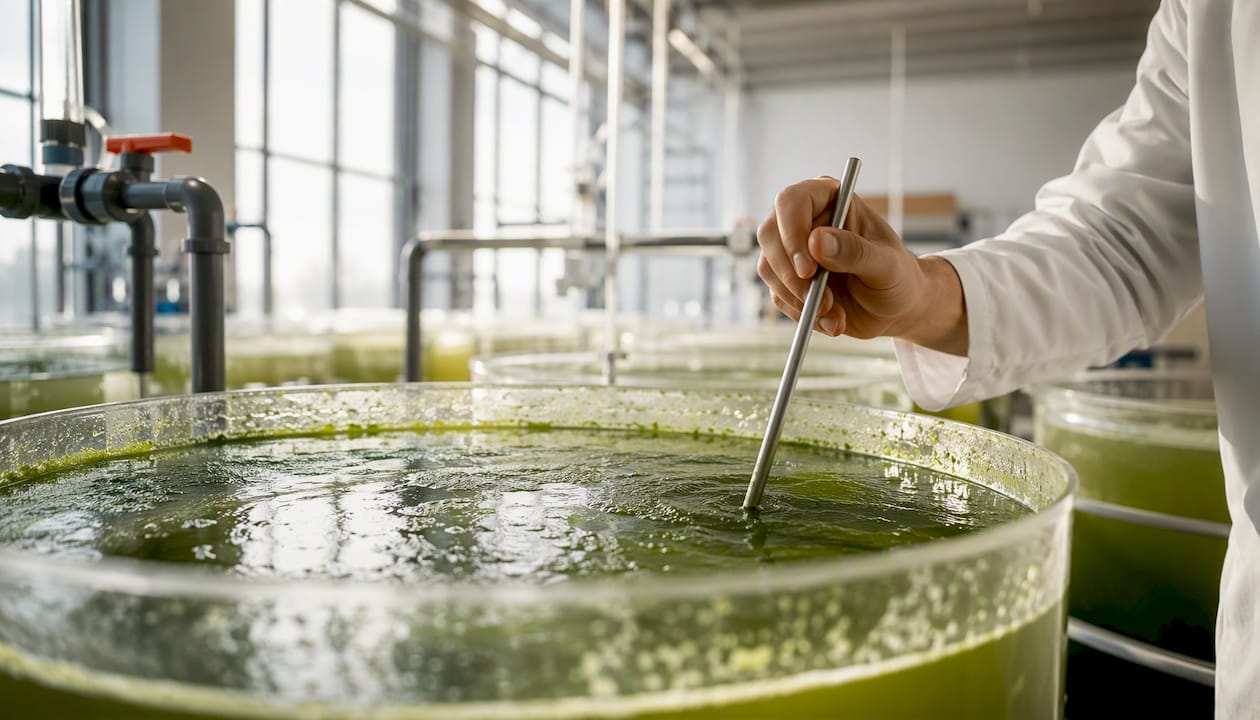
Microalgae such as Chlorella and Spirulina enrich fatty acids and antioxidants in animals that consume them. Roughly 30% of global microalgae production is directed to feed industries, though inclusion rates stay low because of cost and species-specific responses. When used as the primary feedstock for farmed brine shrimp, as Demeterbioscience does with Dunaliella, the result is predictable DHA/EPA enrichment without the contamination risks of wild-caught organisms.
Agro-industrial by-products (DDGS, brewery spent grains)
These circular inputs are low-cost but show high compositional variability. Processing steps such as dehulling, heat treatment, and fermentation improve digestibility and reduce antinutritional factors, but they add cost and complexity. For live-feed applications, by-product feeds are rarely used directly; they matter more as upstream rearing substrates.
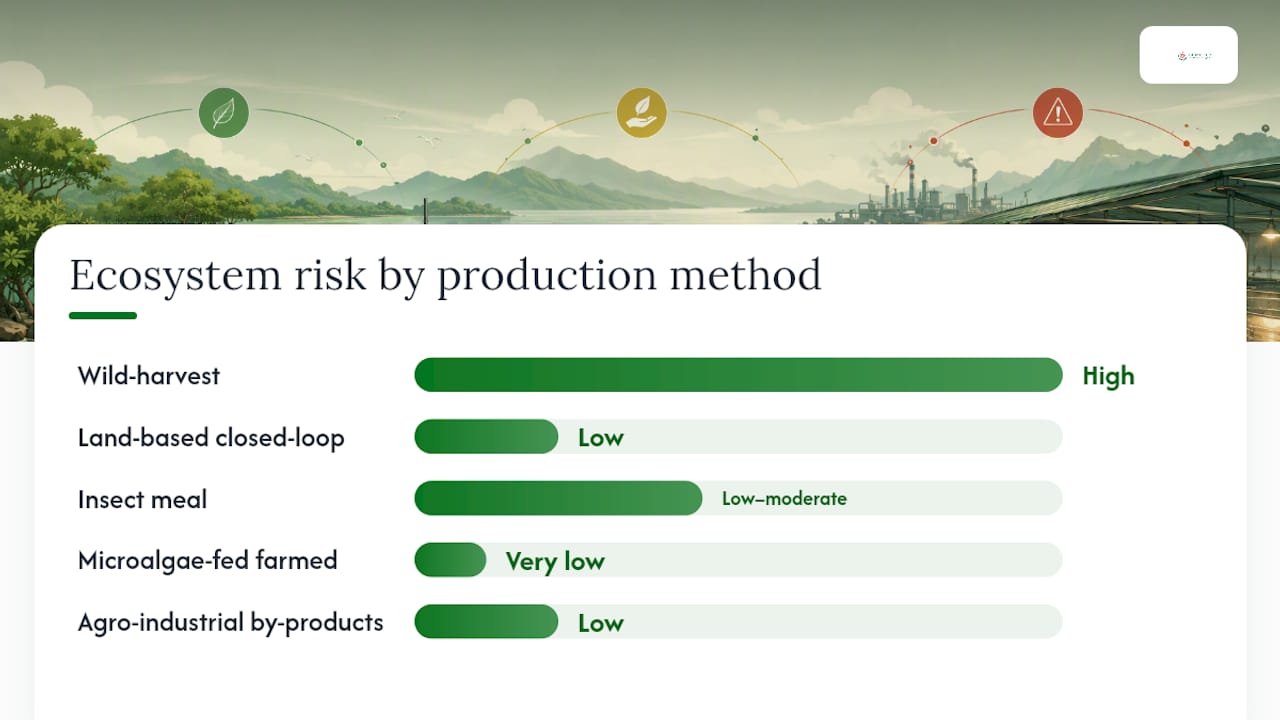
| Production method | Nutritional consistency | Ecosystem risk | U.S. availability |
|---|---|---|---|
| Wild-harvest | Low (seasonal variability) | High (overfishing, runoff) | Widely available |
| Land-based closed-loop | High (controlled feedstock) | Low | Growing |
| Insect meal | Moderate (batch variance) | Low to moderate | Limited for live feed |
| Microalgae-fed farmed | High | Very low | Specialist suppliers |
| Agro-industrial by-products | Low to moderate | Low | Widely available |
Pro Tip: Ask suppliers for their production flow diagram. A genuine closed-loop system will show water recirculation, feedstock sourcing, and waste management in one document. If that document doesn't exist, the claim is unverified.
What nutritional attributes should you compare across live feed brands?
A systematic review covering 177 articles found that microalgae, insects, and single-cell proteins can match soybean meal for crude protein and often deliver superior EAAs and bioactive compounds. That finding underpins the current "functional hybridisation" approach: selecting live feeds not just for macronutrients but for antioxidants, omega-3 fatty acids, and other bioactives that improve animal vitality.
Essential analytes to request on every CoA:
- Crude protein (minimum 40% on a dry-matter basis for quality brine shrimp)
- Crude lipid with DHA and EPA reported separately (not just total omega-3)
- Amino acid profile, specifically lysine and methionine, which are the first-limiting EAAs in most aquatic diets
- Ash and moisture (high ash can indicate poor water quality during rearing; moisture above 80% in live product is normal but should be consistent)
- Antioxidant markers such as astaxanthin when microalgae-fed organisms are involved
Batch-to-batch variance matters as much as the absolute values. For professional buyers, a variance of more than 5% in crude protein or DHA across consecutive lots signals feedstock instability. Request CoAs from at least three consecutive shipments before committing to a supplier. Nutrient variability remains a top adoption barrier across alternative protein sources, and live feeds are no exception.
Microalgae-fed farmed brine shrimp, like those from Demeterbioscience, sidestep much of this variability because the feedstock (Dunaliella) is cultivated under controlled conditions rather than sourced from fluctuating agricultural streams. For a deeper look at interpreting CoA fields, the live fish food benefits guide from Demeterbioscience walks through what each analyte means in practice.
How do you verify sustainability claims before buying?
Expert reviews consistently recommend lot-level traceability and audited supply-chain transparency as the primary verification tools, because most "sustainable" product claims are marketing-led without public audit data behind them.
Step-by-step verification checklist:
- Request the CoA for the specific lot you are purchasing, not a generic product spec sheet.
- Confirm lot-level traceability: the lot number on your shipment should link to a production record the supplier can provide on request.
- Ask for third-party certification or audit reports: relevant standards include USDA Organic, NSF, or aquaculture-specific schemes such as Best Aquaculture Practices (BAP).
- Request published LCA data or a carbon footprint summary. For live feeds, the impact categories that matter most are global warming potential (GWP), land use, and eutrophication potential.
- Review the production method description. A credible supplier describes feedstock sourcing, water management, and waste handling in plain language, not just marketing copy.
Red flags to watch for:
- Vague "sustainable" or "eco-friendly" wording with no supporting documentation
- No lot numbers on shipments
- CoAs that show only a single analyte (e.g., crude protein only, no lipid panel)
- Feedstock described as "natural" without specifying origin or testing frequency
For a practical sourcing framework, how to source sustainable aquatic feed products covers the qualification questions worth asking any U.S. supplier.
What are your buying options in the U.S., and what do they cost?
U.S. buyers can access sustainable live feeds through three main formats, each suited to a different scale and cadence.
Retail single-serve orders work for hobbyists testing a new supplier or running a single tank system. Expect to pay a premium per unit for the convenience of small-batch shipping with live-viability guarantees.
Subscription plans lower the per-shipment cost and give suppliers enough lead time to schedule production runs, which tends to improve consistency. For aquarium hobbyists feeding weekly, a monthly subscription is usually the most cost-effective route.
Bulk and institutional orders serve local fish stores, museums, research institutions, and aquaculture farms. Per-unit costs drop significantly at volume, but minimum order quantities and cold-chain logistics become the primary planning variables.
Shipping considerations that affect live viability:
- Transit time under 48 hours is the practical ceiling for most live brine shrimp shipments.
- Temperature-controlled packaging (insulated boxes with cold packs or oxygen-enriched bags) is non-negotiable in summer months.
- Arrival mortality above 10% on a first shipment is a signal to discuss packing protocols with the supplier before reordering.
For retail stocking considerations, why stock live fish food products outlines the commercial case for carrying live feeds alongside dry and frozen options.
What should you do the moment live feed arrives?
Arrival handling determines whether the nutritional investment you made actually reaches your animals.
- Check the lot number against the CoA before opening the bag. If they don't match, contact the supplier immediately.
- Measure water quality (temperature, salinity, dissolved oxygen) in the shipping container before transferring animals.
- Acclimate gradually: float the sealed bag in your tank or holding vessel for 15–20 minutes to equalize temperature, then add small amounts of system water over 10 minutes before releasing.
- Run a 24-hour quarantine for any live feed going into a system with high-value broodstock or sensitive species. Feed a small test portion and observe for behavioral changes.
- Log the lot number, arrival date, mortality count, and CoA reference in your records. This links feed quality to stock performance over time.
Biosecurity best practices:
- Never share nets, siphons, or feeding tools between a live-feed holding vessel and display tanks without rinsing with a dilute saltwater solution.
- Maintain a separate holding tank for live feed, not the display system.
- Dispose of unused live feed after 48 hours rather than returning it to the holding vessel.
Pro Tip: When feeding multiple tanks or species, feed the most sensitive or highest-value system first, using a dedicated pipette or turkey baster. Cross-contamination risk drops to near zero when each tank has its own dedicated feeding tool.
For detailed mortality-reduction protocols, the reduce fish mortality with live nutrition guide covers step-by-step handling from arrival through feeding.
Which live feed should you buy, and when should you choose something else?
For most U.S. hobbyists and aquaculture professionals, Demeterbioscience's farmed brine shrimp is the strongest starting point in any live feed comparison: land-based production, Dunaliella-fed for consistent DHA/EPA, at least 40% protein per CoA, and lot-level traceability on every shipment.
- Hobbyists feeding ornamental fish or marine invertebrates get consistent nutrition without the variability of wild-caught alternatives.
- Aquaculture farms running larval or juvenile rearing benefit from the predictable amino acid profile and documented production records.
- Retailers and institutions (fish stores, museums, research labs) can order bulk SKUs with institutional pricing and scheduled delivery.
When to consider insect-based or algae-based alternatives instead: if your target species requires a specific particle size or feedstock that brine shrimp cannot provide, or if you are running a research protocol that specifically tests insect meal inclusion, those categories have merit. The tradeoff is greater batch variance and more limited U.S. live-feed availability for those formats today.
Immediate next steps: request a CoA from your current or prospective supplier, confirm lot-traceability on the next shipment, and run a small trial order before committing to bulk volume.
Pro Tip: A trial shipment of one to three units tells you more about a supplier's packing quality and live-viability rate than any product description. Always trial before scaling.
Which third-party certifications actually mean something for live feed?
Third-party certification is the clearest way to separate audited sustainability from self-reported claims. For live feed suppliers operating in the United States, the most relevant verification frameworks are:
USDA Organic certification covers feedstock sourcing and prohibits synthetic inputs in the rearing environment. For microalgae-fed brine shrimp, this means the algae cultivation itself must meet organic standards, not just the final animal.
Best Aquaculture Practices (BAP), administered by the Global Seafood Alliance, covers environmental responsibility, social accountability, food safety, and traceability across four supply-chain tiers. BAP four-star certification covers the full chain from feed mill to farm to processing to retail.
NSF/ANSI standards apply to water treatment and some aquaculture inputs, providing a process-level audit rather than a product-level one.
ISO 14040/14044 governs LCA methodology. A supplier citing an LCA conducted under these standards has used a defensible, peer-reviewed framework rather than an internal estimate.
For live feed specifically, ask whether the certification covers the feedstock (what the brine shrimp eat) as well as the rearing environment. A certification that only covers the final product misses the upstream inputs where most environmental impact originates.
How do brand reputation and customer service affect your buying decision?
For live feed, customer service is a functional requirement, not a bonus. Live animals can arrive stressed or with elevated mortality through no fault of the buyer, and a supplier's response to that situation tells you everything about their reliability.
Key reputation signals worth checking before committing to a supplier:
- Documented live-arrival guarantee: does the supplier replace or credit shipments with arrival mortality above a stated threshold?
- Response time: for live feed, a 24-hour response window on order issues is the practical minimum. Longer than that and a mortality event becomes a loss.
- Published production information: suppliers confident in their methods publish them. Vague production descriptions are a proxy for vague quality control.
- Institutional track record: suppliers serving research institutions, public aquariums, or universities have been through procurement vetting that hobbyist-only suppliers have not.
Demeterbioscience's model, selling directly to consumers, retailers, and institutions from a single U.S.-based operation, means the same production standards apply across all order types. That consistency matters when you are comparing a supplier's hobbyist reviews against their institutional performance.
Does price reflect value in the sustainable live feed market?
Price in the sustainable live feed market tracks closely with production method and documentation overhead. Wild-harvested live feeds tend to be cheapest per unit but carry the highest variability and the lowest documentation. Land-based farmed feeds with full CoA and lot-traceability cost more, and that premium is the cost of verified quality.
For hobbyists, the relevant comparison is price per viable animal delivered, not price per bag. A cheaper shipment with 20% arrival mortality costs more per usable organism than a premium shipment with under 5% mortality.
For institutional buyers, the value calculation shifts to consistency and documentation. A supplier who provides CoAs, lot records, and a live-arrival guarantee reduces the administrative burden of internal quality checks. That reduction in internal labor often offsets the per-unit price premium of a verified supplier.
The functional hybridisation research framing reinforces this: feeds that deliver both macronutrients and bioactive compounds (antioxidants, DHA/EPA) in documented quantities produce measurably better animal outcomes. Paying for that documentation is paying for the outcome, not just the product.
Does packaging sustainability matter, and what should you look for?
Packaging is a meaningful but often overlooked dimension of a live feed brand's environmental footprint. For live brine shrimp, the primary packaging challenge is keeping animals alive in transit, which requires oxygen-enriched bags, insulated boxes, and cold packs. Each of those materials carries its own environmental cost.
What to look for:
- Recyclable or compostable outer packaging: corrugated cardboard insulated boxes are more recyclable than expanded polystyrene (EPS) foam, which most U.S. municipal programs do not accept.
- Reusable cold packs: gel packs that can be refrozen and returned or reused reduce single-use plastic waste per shipment.
- Minimal void fill: excess packaging material inflates shipping weight and material waste without improving live viability.
- Supplier transparency on packaging materials: a supplier who lists packaging components and their disposal instructions is applying the same documentation discipline to packaging that they apply to the product itself.
Packaging sustainability does not override live-viability requirements. An animal that arrives dead because of inadequate packing is a net negative for both the buyer and the environment. The goal is the least-impact packaging that still delivers a live product.
Why verification-first is the only defensible approach to live feed sourcing
The sustainable live feed market has a documentation problem. Most products carry sustainability language, but a fraction carry audited evidence. After reviewing the research on production methods, LCA frameworks, and nutritional variability, the pattern is consistent: the gap between a supplier's claims and their documented performance is widest where traceability is weakest.
Closed-loop, land-based production is not just an environmental preference. It is a quality-control architecture. When feedstock, water chemistry, and stocking density are controlled and recorded, the CoA reflects what actually happened in that production run. When they are not, the CoA is an average of conditions that may have varied significantly.
The functional hybridisation framing from current research makes this concrete: if you are buying live feed specifically for its DHA/EPA content or its antioxidant contribution, you need batch-level data to know whether that batch delivered. A product-level average from a wild-harvest operation cannot give you that. A lot-traceable CoA from a land-based system can.
Demeterbioscience's Dunaliella-fed production model maps directly onto this verification framework. The algae feedstock is controlled, the rearing environment is documented, and the CoA reflects that specific lot's actual composition. That is the standard every buyer should hold their supplier to, regardless of which brand they ultimately choose.
Demeterbioscience delivers on every criterion in this comparison
If you have worked through this comparison and want a U.S. supplier who checks every box, Demeterbioscience is the direct answer. Their brine shrimp are raised in land-based closed-loop systems, fed exclusively on Dunaliella microalgae, and ship with lot-level documentation and CoAs confirming at least 40% protein per batch.
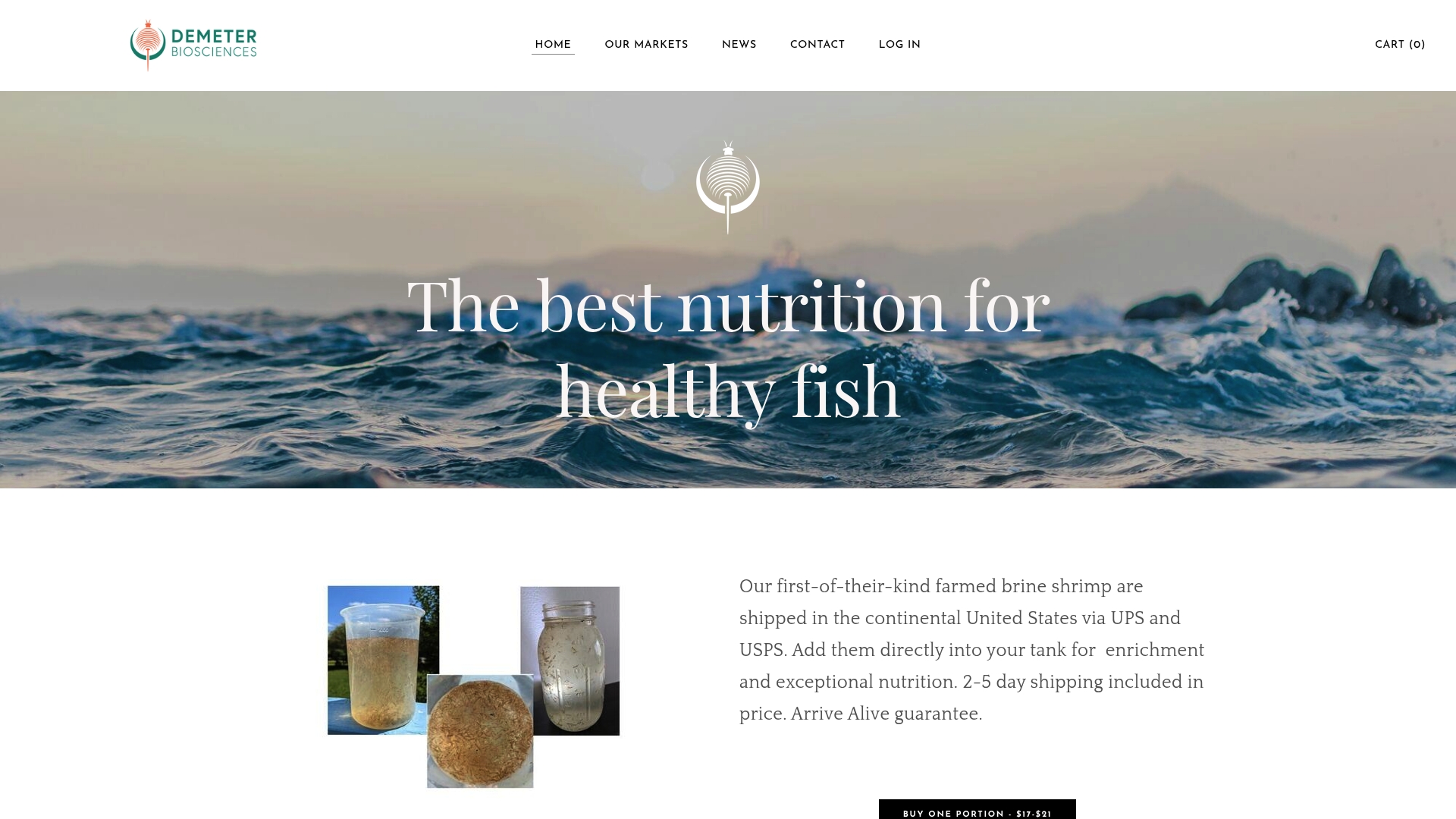
Buying options cover every scale: single-serve live brine shrimp orders for hobbyists, monthly subscriptions for consistent delivery, and bulk institutional orders for fish stores, museums, and research facilities. Every format ships from a single U.S.-based operation with temperature-controlled packaging and a live-arrival commitment. To request trial shipment pricing or institutional rates, contact Demeterbioscience directly before committing to volume.
Sources
- Future Directions for Sustainable Poultry Feeding and Product Quality: Alternatives from Insects, Algae and Agro-Industrial Fermented By-Products
- Replacement of soy by mealworms for livestock feed - A comparative review between soy and mealworms considering environmental aspects | Environment, Development and Sustainability | Springer Nature Link
- Sustainability of Animal Production Chains: Alternative Protein Sources as an Ecological Driver in Animal Feeding: A Review
For procurement decisions, always consult CoAs and supplier LCAs directly rather than relying on product descriptions alone.