

Aquatic nutrition is defined as the applied science of providing aquatic animals with the precise balance of nutrients they need for growth, health, and efficient production. It sits at the intersection of animal physiology, feed chemistry, and environmental management. Aquaculture is the world's fastest-growing food production sector, supplying over 50% of fish consumed globally. That scale makes aquatic animal nutrition science one of the most consequential fields in modern food production. Whether you manage a commercial fish farm, run an aquarium program, or care for ornamental species, understanding how aquatic animals eat and metabolize nutrients is the foundation of everything else.
What is aquatic nutrition and why does it matter?
Aquatic nutrition is the discipline of designing and delivering diets that convert feed ingredients into healthy animal biomass with minimal waste. The industry term used by researchers and feed manufacturers is "aquaculture nutrition," though the broader concept covers all aquatic species, including ornamental fish, marine invertebrates, and freshwater animals in managed systems.
The field matters because feed is not just fuel. A poorly formulated diet produces slow growth, weak immunity, and excess waste that degrades water quality. A well-designed diet does the opposite: it supports consistent growth, disease resistance, and a smaller environmental footprint. Aquatic nutrition balances physiological needs with farming realities to convert nutrients into biomass without unnecessary loss.

For anyone involved in captive fish nutrition, the stakes are immediate. Underfeeding stunts growth. Overfeeding pollutes water. Getting the balance right requires knowing what each species needs at each life stage, and then sourcing ingredients that actually deliver those nutrients in a digestible form.
What are the nutritional needs of fish and aquatic animals?
The nutritional needs of fish and aquatic animals fall into five core categories: proteins, lipids, carbohydrates, vitamins, and minerals. Each plays a distinct role, and deficiencies in any one category produce measurable problems.
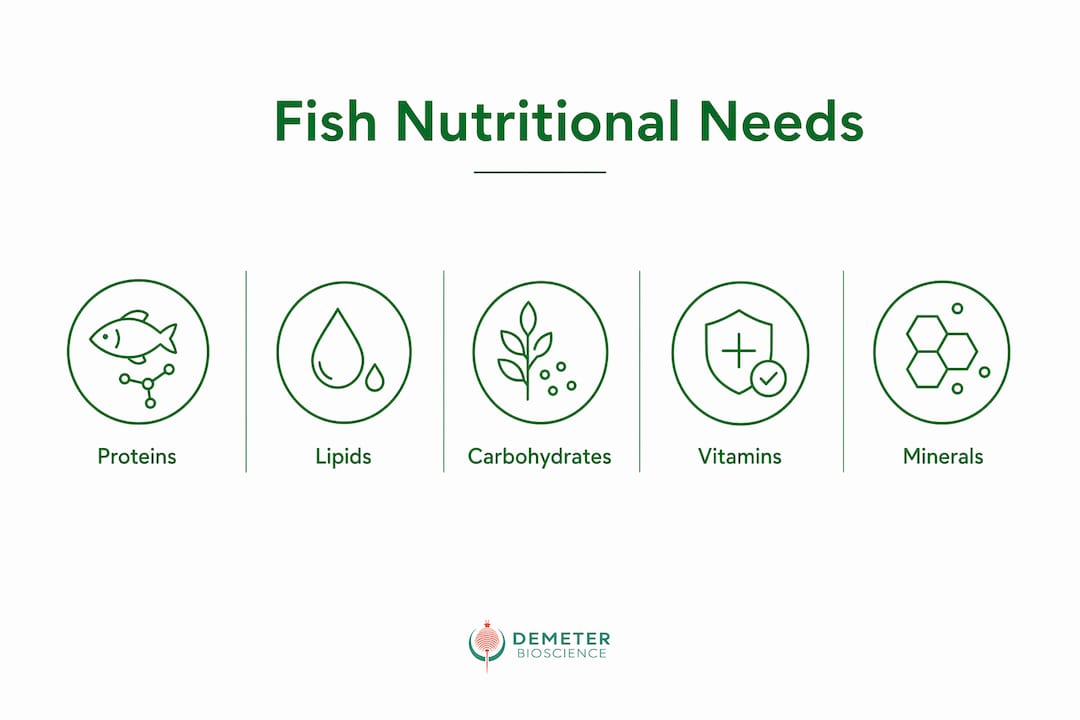
Proteins and amino acids are the most critical macronutrient for fish. Unlike mammals, fish use protein as both a structural material and an energy source. Essential amino acids such as lysine, methionine, and threonine must come from the diet because the animal cannot synthesize them. The specific amino acid profile required varies significantly by species.
Lipids and fatty acids serve as concentrated energy sources and carry fat-soluble vitamins. Omega-3 fatty acids, particularly EPA and DHA, are critical for marine species and support brain development, immune function, and reproduction. Freshwater species have different fatty acid requirements, which is why a single feed formula cannot serve all aquatic species equally.
Carbohydrates are the least well-utilized macronutrient in most fish diets. Carnivorous species like salmon have limited ability to digest starch, so high-carbohydrate feeds produce fat deposition rather than muscle growth. Omnivorous species like tilapia tolerate carbohydrates much better.
Key micronutrient considerations include:
- Vitamins C and E: antioxidants that support immune response and reduce oxidative stress during disease challenges
- Calcium and phosphorus: structural minerals for bone development, with ratios mattering as much as absolute amounts
- Trace minerals (zinc, selenium, manganese): cofactors in enzyme systems that regulate metabolism and immunity
Diseases and stressors affect intestinal morphology and immunity, which means feed quality and palatability directly influence how well an animal withstands environmental pressure. A fish under thermal stress, for example, needs higher antioxidant levels than one in stable conditions.
Pro Tip: When evaluating an aquatic animal diet, look beyond the crude protein percentage on the label. The amino acid profile and digestibility coefficient tell you far more about actual nutritional value.
Species-specific and life-stage differences are significant. Larval fish require smaller particle sizes and higher protein concentrations than juveniles. Broodstock need elevated lipid and vitamin levels to support egg quality. Matching diet to life stage is not optional. It is the difference between a productive system and a failing one.
How is aquatic nutrition science evolving?
The biggest shift in aquatic animal nutrition science over the past decade is the move from crude nutrient specifications toward precision nutrition. Precision nutrition involves moving from crude nutrient specifications to digestible and net nutrient targets tailored by species, size, health status, and environment. That shift changes how nutritionists think about every ingredient in a formula.
The practical steps in applying precision nutrition look like this:
- Define digestible nutrient targets: replace crude protein and fat percentages with digestible amino acid and net energy values that reflect what the animal actually absorbs.
- Profile each ingredient: measure the digestibility of each raw material for the target species, not just its chemical composition.
- Account for environment: adjust targets based on water temperature, stocking density, and disease pressure, all of which alter metabolic demand.
- Monitor and refine: use growth data and feed conversion ratios to validate the formula and adjust in real time.
Omics technologies, including genomics, metabolomics, and microbiomics, enable a detailed understanding of nutritional mechanisms at the molecular level. That understanding lets formulators design feeds that do more than provide calories. They can support gut barrier integrity, modulate immune gene expression, and shift the microbiome toward populations that improve nutrient absorption.
Functional genomics and metabolomics reveal nutrient interactions, enabling feeds that support gut health and disease resistance beyond simple caloric provision. This is a meaningful departure from how feed was designed even ten years ago.
Pro Tip: Over-reliance on crude protein and fat percentages to formulate feed misrepresents actual nutrient availability. Digestible and net energy bases yield better performance and less waste in every production system.
The precision nutrition paradigm also opens the door to digital feed design tools that model nutrient flows across an entire production cycle. These tools are still emerging, but early adopters report measurable improvements in feed conversion efficiency and reduced nitrogen excretion into the water column.
What practical factors influence feed formulation and management?
Feed formulation does not happen in a laboratory vacuum. Real-world aquaculture systems impose constraints that shape every decision a nutritionist makes.
Feed costs commonly represent 40–70% of production expenses. That single fact drives most of the tradeoffs in commercial feed design. A nutritionist who ignores ingredient cost produces a biologically perfect diet that no producer can afford to use.
Key practical factors include:
- Feed stability in water: physical feed stability is critical to prevent nutrient leaching and water quality degradation. A pellet that dissolves in 10 minutes releases soluble nutrients into the water column before the fish can eat them, raising ammonia and phosphorus levels.
- Palatability: fish that reject a feed consume nothing, regardless of its nutritional profile. Palatability is especially critical in larval and juvenile stages when feeding behavior is still developing.
- Farming system intensity: extensive pond systems rely partly on natural food sources like phytoplankton and zooplankton. Intensive recirculating systems depend entirely on formulated feed. The same formula performs differently across these contexts.
- Gut health and immunity: feed design must account for the gut as an immune organ, not just a digestive one. Ingredients like prebiotics, probiotics, and functional additives support the gut microbiome and reduce susceptibility to pathogens.
- Environmental waste management: uneaten feed and fecal matter are the primary sources of nitrogen and phosphorus pollution in aquaculture systems. Precision feeding schedules and high-digestibility ingredients reduce both.
The table below shows how farming system type shapes feed management priorities:
| Farming system | Primary feed source | Key management focus |
|---|---|---|
| Extensive pond | Natural productivity + supplemental feed | Fertilization, stocking density |
| Semi-intensive | Formulated feed + natural food | Feed rate, water quality monitoring |
| Intensive recirculating | 100% formulated feed | Digestibility, waste minimization |
For anyone sourcing feed for managed systems, understanding sustainable aquatic feed products is increasingly non-negotiable. Regulatory pressure and consumer expectations are both pushing producers toward lower-impact ingredient choices.
How does aquatic nutrition support sustainable aquaculture?
Aquatic nutrition is the primary lever for making aquaculture more sustainable. Global demand for aquatic animal production is projected to increase 10% over the next decade. Meeting that demand without expanding the ecological footprint of fish farming requires feeding animals more efficiently, not just feeding more of them.
The most significant sustainability challenge in aquatic nutrition is reducing dependence on wild-caught fish meal and fish oil. These ingredients have historically provided the amino acid and fatty acid profiles that farmed fish need, but their supply is finite. The field is actively replacing them with alternatives including insect meal, single-cell proteins, algae-derived oils, and fermented plant proteins.
Aquatic nutrition is not just about feeding fish. It is about designing food systems that can feed people sustainably for the next century. Every improvement in feed conversion efficiency reduces the pressure on wild fisheries and aquatic ecosystems.
Education and training are accelerating this transition. Programs like the USSEC Aquaculture Nutrition Executive Program provide industry professionals with formal training that bridges research and commercial feed manufacturing. That knowledge transfer is how laboratory advances reach working farms.
Consistent nutrition for aquatic specimens also supports animal welfare, which is gaining regulatory attention in several markets. Healthy, well-nourished fish show better stress responses, lower mortality rates, and higher flesh quality at harvest. All three outcomes benefit producers, consumers, and the environment simultaneously.
Key Takeaways
Aquatic nutrition is the applied science of matching digestible, species-specific nutrients to the physiological needs of aquatic animals, making it the foundation of both productive and sustainable aquaculture.
| Point | Details |
|---|---|
| Core definition | Aquatic nutrition is the science of designing diets that convert feed into healthy biomass with minimal waste. |
| Nutritional needs vary by species | Proteins, fatty acids, vitamins, and minerals must be matched to species, life stage, and environment. |
| Precision nutrition is the standard | Moving from crude protein to digestible nutrient targets improves growth, health, and environmental outcomes. |
| Feed costs drive formulation | Feed represents 40–70% of production costs, making ingredient efficiency a financial and ecological priority. |
| Sustainability depends on nutrition | Reducing fish meal reliance and minimizing feed waste are the two most direct paths to sustainable aquaculture. |
What I've learned from watching precision nutrition take hold
The most common mistake I see in aquatic nutrition is treating feed as a commodity rather than a biological tool. Producers compare price per kilogram and stop there. They miss the fact that a cheaper feed with lower digestibility can cost more in waste treatment, slower growth cycles, and disease events than a higher-quality option would have.
Precision nutrition sounds technical, but its core principle is simple: give the animal exactly what it needs, in a form it can actually use, at the moment it needs it. The omics tools that support this approach are powerful, but they are only useful if the underlying feed quality is consistent. Variable ingredient quality undermines even the most sophisticated formulation model.
What I find genuinely encouraging is the growing interest in live and minimally processed feeds as part of a broader nutritional strategy. Brine shrimp, for example, are not just a larval feed convenience. When cultivated under controlled conditions on high-quality algae like Dunaliella, they deliver a protein profile and fatty acid composition that formulated pellets struggle to replicate at early life stages. Demeterbioscience has built its entire model around this principle: control the feed, control the nutrition.
The field is moving fast. Producers who invest in understanding aquatic animal nutrition science now, rather than waiting for it to become standard practice, will have a measurable advantage in both performance and regulatory compliance over the next decade.
— Demeter
Demeterbioscience's live brine shrimp for aquatic nutrition
Demeterbioscience produces farmed live brine shrimp cultivated in land-based systems on the microalgae Dunaliella, delivering a guaranteed minimum of 40% protein content with consistent nutritional quality in every shipment.
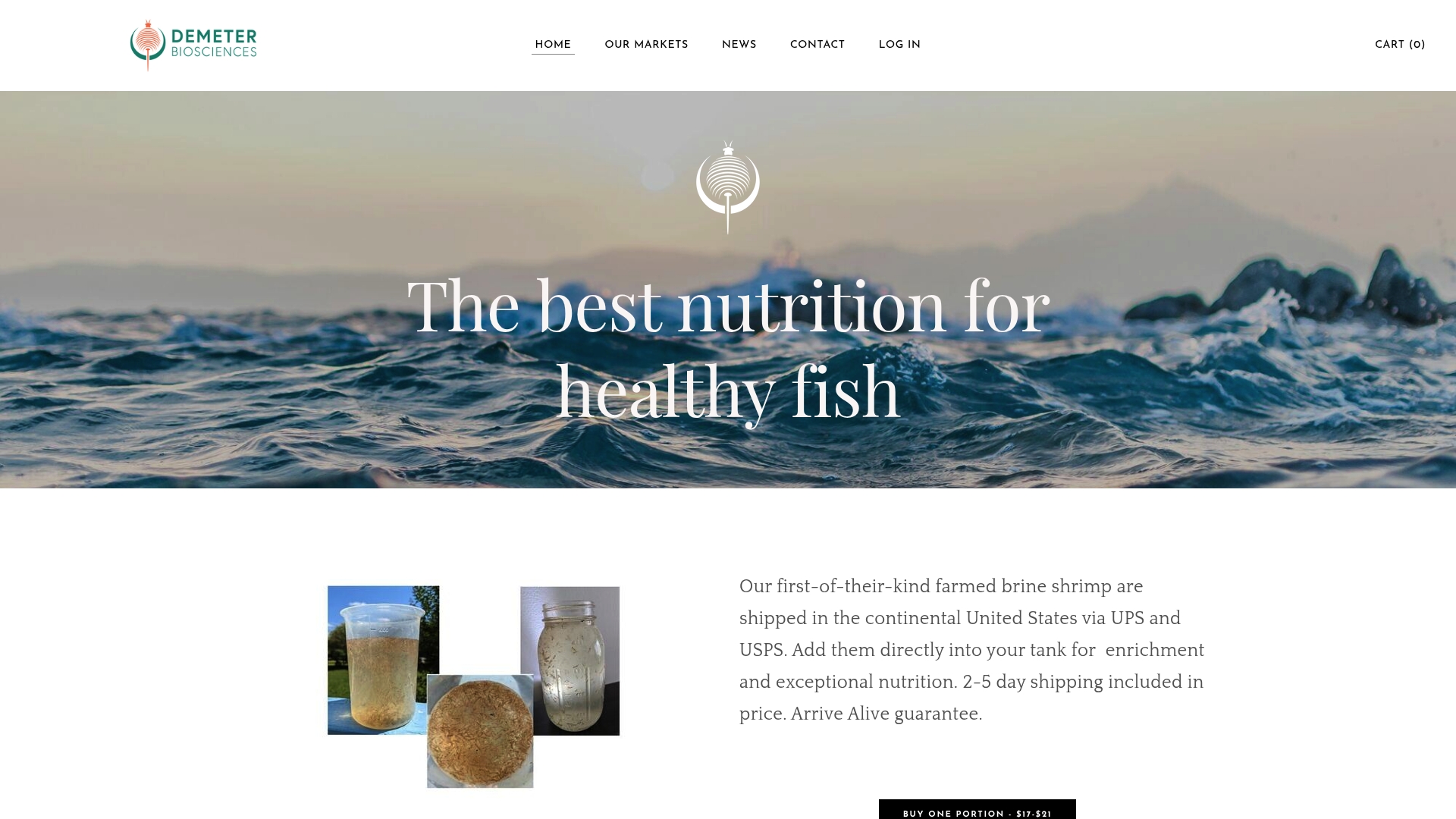
Wild-harvested brine shrimp suffer from seasonal variability and starvation conditions that degrade their nutritional value before they reach your animals. Demeterbioscience's controlled cultivation eliminates that variability. The result is a live feed that supports immune health, growth, and feeding behavior in ornamental fish, aquarium specimens, and aquaculture larvae. Options include direct-to-consumer shipments, monthly subscription plans, and bulk orders for museums and local fish stores. Contact Demeterbioscience to find the right supply format for your operation.
FAQ
What is aquatic nutrition in simple terms?
Aquatic nutrition is the science of feeding fish and other aquatic animals the right nutrients for growth, health, and reproduction. It covers diet formulation, ingredient selection, and feeding management across all types of aquatic production systems.
What is aquatic nutrition certification?
Aquatic nutrition certification refers to formal training programs, such as the USSEC Aquaculture Nutrition Executive Program, that credential professionals in feed science, ingredient evaluation, and commercial diet formulation for aquatic species.
What are the most important nutritional needs of fish?
Fish require dietary protein with specific essential amino acids, omega-3 fatty acids like EPA and DHA, fat-soluble vitamins, and minerals including calcium and phosphorus. Requirements vary significantly by species, life stage, and environmental conditions.
How does aquatic nutrition affect water quality?
Poor feed formulation leads to nutrient leaching and excess waste, raising ammonia and phosphorus levels in the water. High-digestibility diets and precision feeding schedules reduce this waste and protect water quality in both pond and recirculating systems.
Why is live feed used in aquatic nutrition?
Live feeds like brine shrimp provide highly digestible protein, essential fatty acids, and natural feeding stimulants that formulated pellets cannot always replicate, particularly for larval fish and sensitive ornamental species.