

Nutrition labels on aquarium fish food are the primary tool aquarium customers use to make evidence-based feeding decisions. The Guaranteed Analysis standard, recognized by the Association of American Feed Control Officials (AAFCO) and referenced by the FDA, normalizes critical nutritional content across every brand on the shelf. That standardization is why nutrition labels matter: they replace guesswork with measurable data on protein, fat, fiber, and moisture. Aquarium customers who read labels correctly stop buying based on packaging art and start buying based on what their fish actually need. This shift from marketing-driven to label-driven purchasing is the defining trait of today's informed aquarium owner.
Why aquarium customers value nutrition labels on fish food
Aquarium customers value nutrition labels because labels provide the only regulated, objective data available at the point of purchase. Every other element on a package, from photos of vibrant fish to claims like "complete nutrition," is marketing. The Guaranteed Analysis is not.
The Guaranteed Analysis is legally required to display minimum crude protein, minimum crude fat, maximum crude fiber, and maximum moisture. Those four numbers let you compare two products side by side without trusting a single word of the brand's copy. That is a significant advantage when the aquarium fish food market spans hundreds of formulas with wildly different ingredient quality.
Aquarium customers increasingly act as biological caretakers, demanding evidence-based transparency rather than accepting packaging hype. This shift reflects a broader trend: fish keepers who understand nutrition labels treat feeding as a health management practice, not a daily chore. The label is their primary diagnostic tool.
What information do nutrition labels provide on aquarium fish food?
A well-constructed fish food label contains three layers of information: the Guaranteed Analysis, the ingredient list, and any supplemental transparency documents like a Certificate of Analysis (COA).
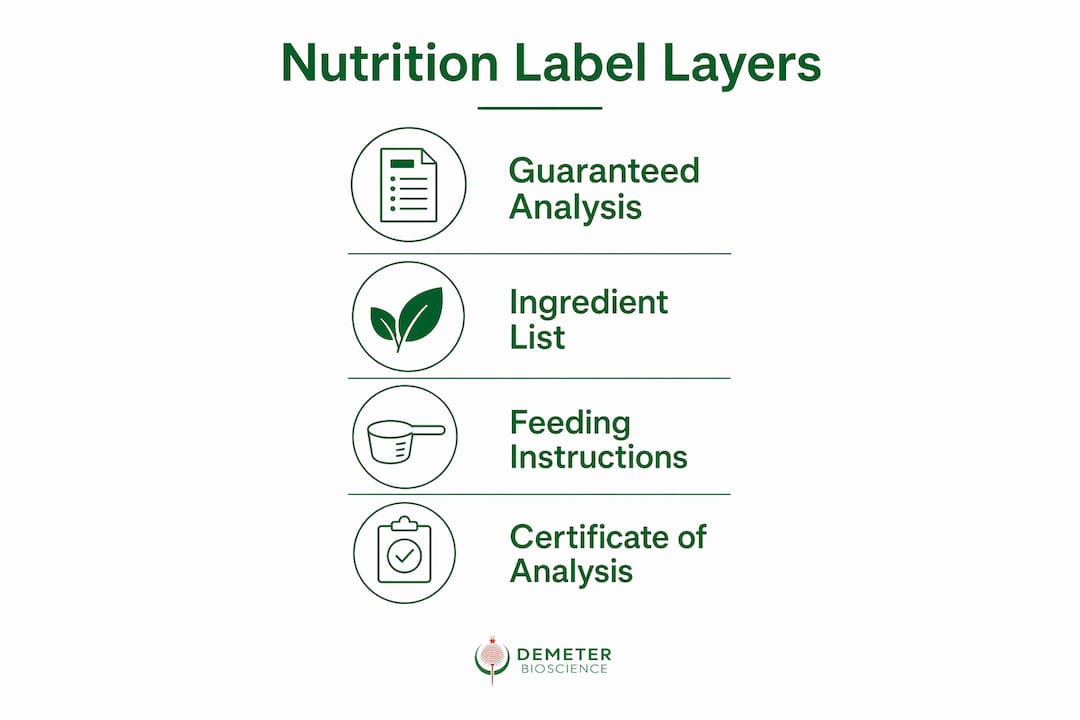
The Guaranteed Analysis
The Guaranteed Analysis gives you four core numbers. Crude protein tells you the minimum protein content by weight. Crude fat tells you the minimum fat. Crude fiber and moisture are listed as maximums, since high fiber and high moisture both dilute nutritional density. A label showing 45% crude protein and 8% crude fat tells a very different story than one showing 28% protein and 3% fat.
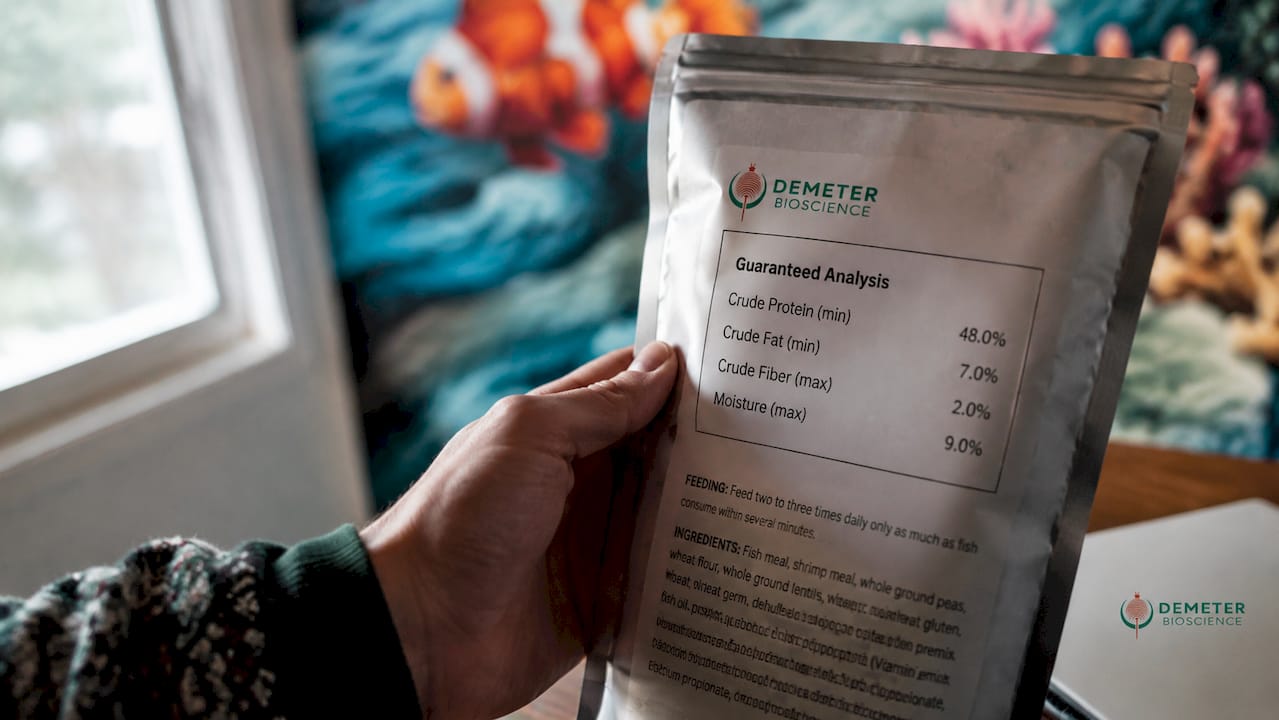
Pro Tip: Compare Guaranteed Analysis values across products on a dry-matter basis. Moisture content skews raw percentages, so a food with 10% moisture and 40% protein delivers more protein per gram than one with 20% moisture and 42% protein.
The ingredient list
Ingredient lists must show components in descending order by weight. The first five ingredients form the core nutritional profile of the food. If the first ingredient is a named marine protein like salmon meal or krill meal, the product leads with quality. If the first ingredient is wheat flour or corn gluten, the product leads with filler.
Key label components to check:
- Crude protein percentage: Look for a minimum above 40% for carnivorous species.
- Named protein sources: Krill meal, fish meal, and shrimp meal are specific and verifiable.
- Fat sources: Fish oil signals quality omega-3 content; soybean oil signals a cheaper substitute.
- Fiber content: High fiber in a carnivore formula indicates excessive plant filler.
- Moisture ceiling: Lower moisture means higher nutrient density per gram fed.
Certificates of Analysis go one step further than the label itself. A COA provides batch-specific testing data, confirming that what the label claims matches what the product actually contains. Aquarium customers who prioritize transparency increasingly request COAs before committing to a brand, treating them the same way a pharmacist treats a drug purity report.
How do nutrition labels help customers identify quality fish food?
Labels help customers identify quality by exposing the gap between marketing language and actual ingredient composition. That gap is often wide.
- Check the protein source first. Vague terms like "animal protein" are a red flag. Explicit marine proteins such as krill meal, fish meal, and squid meal indicate better nutrition quality and are appropriate for most aquarium species.
- Evaluate fat type, not just fat percentage. Fat content typically ranges 5–12% in quality formulas. The source matters as much as the number. Fish oil delivers EPA and DHA, the omega-3 fatty acids that support immune function and color. Vegetable oils deliver neither.
- Scrutinize vitamin claims. "Enriched with vitamins" claims are often marketing when the label does not specify the form or dosage. Vitamin C as ascorbyl phosphate is stable in water; ascorbic acid degrades before fish can absorb it. The label should name the form.
- Look for what is absent. Labels that identify excluded ingredients, such as artificial preservatives or excessive plant fillers, provide as much decision value as those listing included nutrients.
- Cross-reference with species diet. A label showing 30% protein and high carbohydrate content is acceptable for herbivorous cichlids but harmful for obligate carnivores like lionfish or arowana.
Pro Tip: When evaluating a new product, check the premium fish food criteria used by experienced aquarists. Named marine proteins in the top three ingredients, combined with a COA, are the clearest indicators of a trustworthy formula.
Bioavailability varies even when Guaranteed Analysis numbers look identical across two products. The quality of ingredient sources and the processing method used during manufacturing both affect how much of the labeled nutrient a fish actually absorbs. A food processed at excessive heat loses vitamin stability. A food using hydrolyzed proteins increases digestibility. The label gives you the starting point; ingredient quality determines the outcome.
In what ways do nutrition labels influence fish health and aquarium environment?
The practical effects of label-informed feeding show up in three measurable areas: fish coloration, immune function, and water quality.
| Nutritional Factor | Effect on Fish | Effect on Aquarium |
|---|---|---|
| Marine-based protein (krill, fish meal) | Supports muscle development and growth | Produces less ammonia waste than plant protein |
| Omega-3 fatty acids (EPA/DHA) | Strengthens immune response | Minimal water quality impact |
| Carotenoids and astaxanthin | Produces vivid, stable coloration | No direct water quality effect |
| Excessive plant fillers | Causes faded color and poor growth | Increases undigested waste and ammonia load |
| Balanced fiber levels | Supports digestive health | Reduces particulate waste in the water column |
Poor-quality fish food causes faded colors and weakened immune systems. This is not a gradual or subtle effect. Fish fed diets low in carotenoids and astaxanthin lose color within weeks. Fish fed diets high in plant filler show reduced disease resistance within months.
The water quality connection is equally direct. A food high in undigestible plant protein produces more ammonia waste per gram fed. That waste load stresses biological filtration, raises nitrate levels faster, and shortens the time between water changes. Choosing a food with named marine proteins and balanced fiber is not just a fish health decision. It is an aquarium stability decision.
Aquarium customers who read ingredient lists carefully before purchasing report fewer disease outbreaks and more consistent water parameters. The label is the first line of defense against both poor fish health and poor water chemistry.
What are the best practices for reading and using aquarium fish food labels?
Reading a label well takes about 90 seconds. Using that information consistently is what separates fish that thrive from fish that merely survive.
- Start with the first three to five ingredients. If you cannot identify each one as a named protein, named fat source, or named whole ingredient, treat the product with skepticism.
- Match the protein percentage to your species. Carnivorous species need 40% or higher. Omnivores do well at 30–40%. Herbivores can thrive at 20–30% with high vegetable content.
- Rotate between complementary foods. Feeding multiple quality foods in rotation ensures comprehensive nutrition and counters the limitations of any single formula. No processed food covers every micronutrient gap.
- Avoid foods where the label uses generic descriptors. Marine proteins such as krill meal, fish meal, and shrimp meal are preferred over vague "marine protein blend" language. Specificity signals accountability.
- Use the Guaranteed Analysis guide as a comparison baseline. When two products list similar protein percentages, the ingredient list reveals which one delivers bioavailable nutrition and which one inflates numbers with low-quality sources.
- Supplement processed foods with live or fresh options. Live foods carry nutrients that no dried formula fully replicates, including natural enzymes and intact fatty acid profiles.
The goal is not to find one perfect food. The goal is to build a feeding rotation where every product you choose has earned its place through label verification, not packaging appeal.
Key Takeaways
Aquarium customers who read nutrition labels consistently make better feeding decisions, reduce water quality problems, and keep fish healthier for longer.
| Point | Details |
|---|---|
| Guaranteed Analysis is the baseline | Check crude protein, fat, fiber, and moisture to compare products objectively. |
| Ingredient order reveals quality | Named marine proteins in the top five ingredients signal a trustworthy formula. |
| Vague terms are red flags | "Animal protein" without a named source indicates lower-quality ingredients. |
| Labels affect water quality too | High plant filler increases ammonia waste and stresses biological filtration. |
| Rotation covers nutritional gaps | Feeding multiple verified foods prevents deficiencies no single formula addresses. |
What I have learned from years of watching labels matter
The aquarium hobby has a packaging problem. Bright colors, photos of healthy fish, and words like "complete" and "premium" fill every label. Most of it means nothing without the ingredient list to back it up.
What I have seen, working in aquatic nutrition, is that the customers who get the best results are the ones who flip the package over immediately. They do not read the front. They read the back. They check the first ingredient, the protein percentage, and whether the fat source is fish oil or soybean oil. That habit alone separates the fish keepers whose tanks thrive from those who cycle through sick fish and wonder why.
The market is moving toward transparency because customers are demanding it. Brands that publish COAs, name every protein source, and list specific vitamin forms are gaining trust. Brands that rely on vague claims are losing it. That trend will accelerate. My advice: treat every label as a contract. If the brand will not tell you exactly what is in the food, they are not a brand worth trusting with your fish's health.
— Demeter
Demeterbioscience: nutrition transparency you can verify
Demeterbioscience produces live brine shrimp fed exclusively on the microalgae Dunaliella, delivering a guaranteed minimum of 40% protein with a consistent, verifiable nutritional profile. That is the kind of label-backed claim that label-literate aquarium customers recognize immediately.
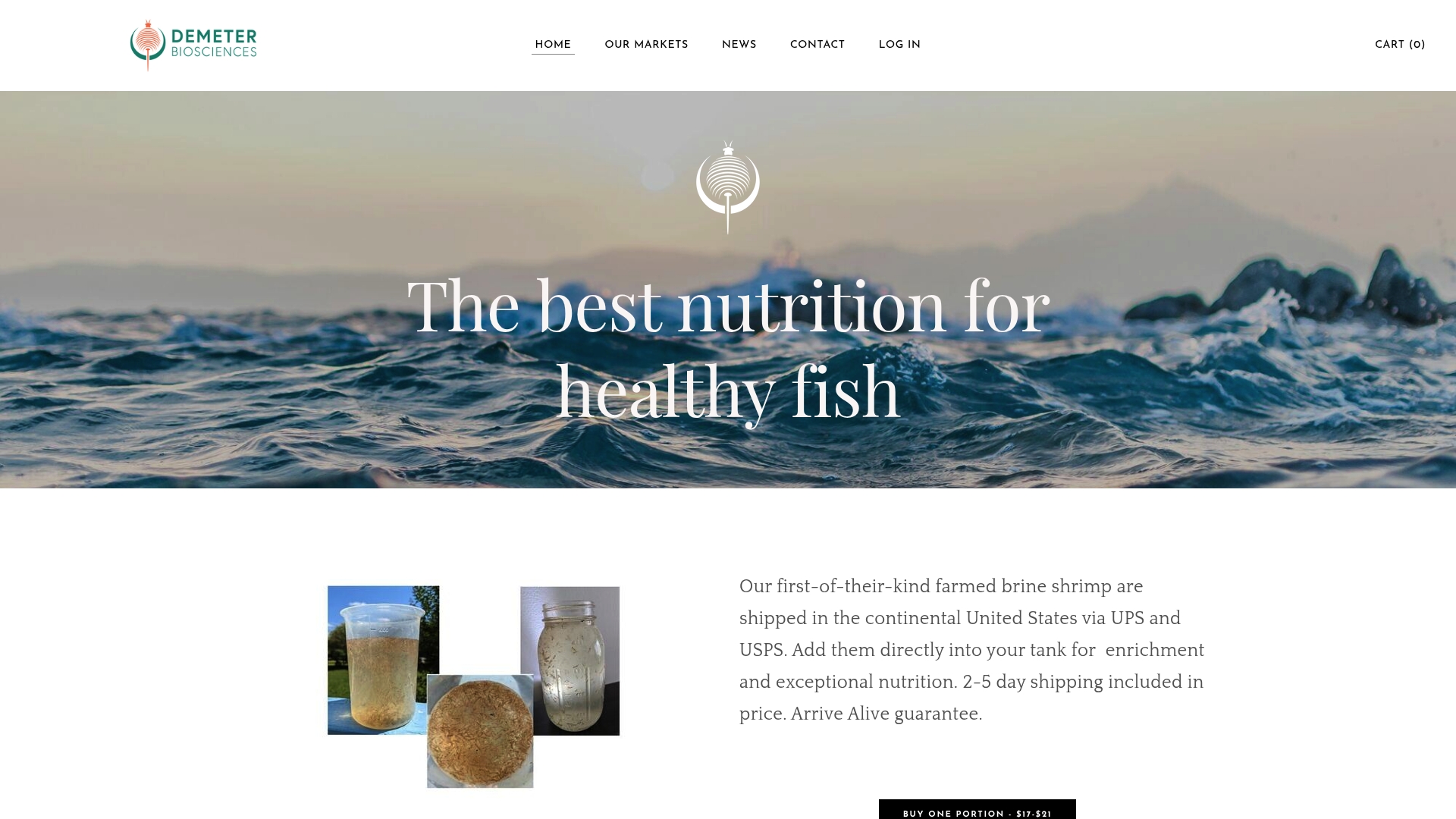
Wild-harvested brine shrimp carry unpredictable nutrition because their gut content varies by season and location. Demeterbioscience's land-based cultivation eliminates that variability. Every batch reflects the same controlled diet, the same protein floor, and the same fatty acid profile. For customers who have learned to read labels and demand specificity, Demeterbioscience offers bulk purchasing options for local fish stores and museums alongside direct-to-consumer subscriptions. The product transparency that label-informed customers expect is built into how Demeterbioscience operates.
FAQ
What does the Guaranteed Analysis on fish food labels tell you?
The Guaranteed Analysis lists minimum crude protein, minimum crude fat, maximum crude fiber, and maximum moisture, giving you objective data to compare products without relying on marketing claims.
Why do aquarium customers prefer named protein sources on labels?
Named marine proteins like krill meal and fish meal confirm the ingredient's origin and quality. Vague terms like "animal protein" offer no such verification and often signal lower-quality inputs.
How do nutrition labels affect aquarium water quality?
Foods high in plant fillers and undigestible protein produce more ammonia waste, increasing the load on biological filtration and raising nitrate levels faster between water changes.
What is a Certificate of Analysis and why does it matter?
A Certificate of Analysis is a batch-specific lab report confirming that a product's actual nutrient content matches its label claims. It is the strongest transparency signal a fish food brand can provide.
How often should aquarium customers rotate fish foods?
Rotating between two or three complementary, label-verified foods covers nutritional gaps that any single formula leaves open, supporting more consistent fish health over time.