

Fish food supplier evaluation is the process of systematically assessing vendors across nutritional quality, ingredient transparency, sustainability credentials, and documentation standards before committing to a purchase or long-term supply relationship. Knowing how to evaluate fish food suppliers separates aquarists and aquaculture professionals who get consistent results from those who chase marketing claims. The core framework covers seven measurable factors: species and origin transparency, crude protein and Total Volatile Nitrogen (TVN) specifications, regulatory compliance, third-party sustainability certification, supply consistency, pricing structure, and documentation quality. Applying this framework protects your aquatic animals and your budget.
How to evaluate fish food suppliers: the 7 critical factors
A reliable supplier evaluation framework covers seven distinct criteria, each of which reveals something the others cannot. Skipping even one creates a blind spot that shows up later as poor fish health, supply disruptions, or regulatory problems.
- Species and origin transparency. Every supplier must declare the exact species and geographic origin of raw materials. This is a regulatory requirement in many markets and a baseline for traceability. Vague labels like "ocean fish" are a red flag.
- Crude protein and TVN specifications. High-quality fish meal delivers a minimum of 65% crude protein and a TVN below 100 mg N/100g. TVN measures raw material freshness. A supplier who cannot state their TVN figure is selling you guesswork.
- Regulatory compliance. Import health certificates, Category 3 compliance for animal byproducts, and species declarations are non-negotiable for professional buyers. Hobbyists sourcing live or frozen feeds should verify that products meet domestic import and labeling rules.
- Third-party sustainability certifications. Marine Stewardship Council (MSC) and Aquaculture Stewardship Council (ASC) certifications are audited standards, not marketing badges. Demand the certificate ID, not just the logo.
- Supply consistency. A supplier who delivers on time 90% of the year but fails during peak demand is a liability. Ask for lead time guarantees and references from existing customers.
- Transparent pricing. Total cost of ownership includes freight, minimum order quantities, and price adjustment clauses. A supplier who hides these terms will surprise you at the worst moment.
- Documentation quality. Certificates of Analysis (COAs), batch origin declarations, and import permits should arrive complete and on time. Incomplete or delayed paperwork correlates directly with poor operational controls.
Pro Tip: Ask every new supplier for a sample COA before placing any order. A supplier who hesitates or sends an internal document instead of a third-party lab report is telling you something important.
What does ingredient quality actually look like on a label?

The ingredient list on a fish food package is ranked by weight before processing. That single fact makes the first five ingredients the most important information on the package. Identifiable protein sources like whole fish, shrimp meal, and krill appearing in the top positions signal genuine nutritional density.
Grain-based fillers such as wheat flour and corn starch add bulk without meaningful amino acid profiles for carnivorous fish. Their presence near the top of the list is a reliable indicator of a lower-quality product. The guaranteed analysis panel on the back of the package is more objective than any front-label claim. It reports crude protein, fat, fiber, and moisture as percentages, giving you a direct comparison tool across products.
Here is a step-by-step process for reading a fish food label:
- Read the first five ingredients. Confirm that at least two are named animal proteins. "Fish meal" is acceptable; "fish and fish derivatives" is not specific enough.
- Check the guaranteed analysis. Compare crude protein percentages across products you are considering. For carnivorous species, look for protein above 45%.
- Look for moisture content. High moisture in a dry food inflates the apparent protein percentage. Adjust your comparison to a dry-matter basis by dividing the stated protein by (100 minus the moisture percentage).
- Identify any red flags. Artificial preservatives like ethoxyquin, unnamed "animal digest," and the absence of any named fish species are all warning signs.
- Cross-reference with fatty acid data. For reef fish and marine species, omega-3 fatty acid content matters as much as protein.
Pro Tip: Marketing terms like "natural," "premium," and "ocean-fresh" carry no regulatory definition. Ignore them entirely and go straight to the ingredient list and guaranteed analysis.
Why supplier documentation is your strongest quality signal
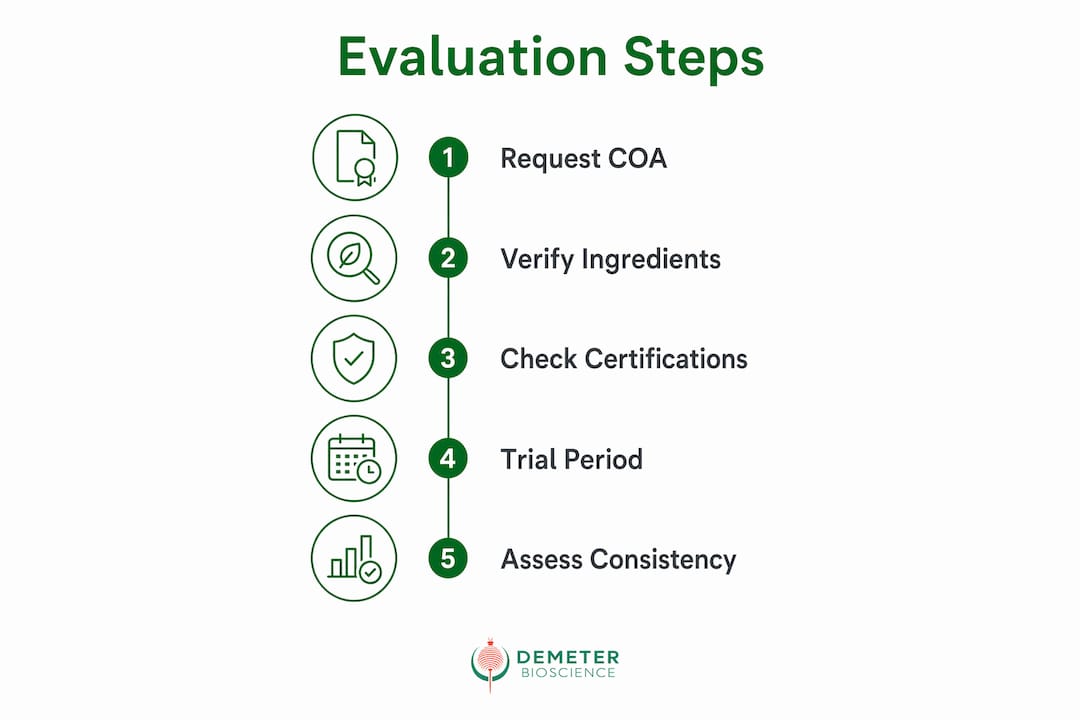
Documentation quality is a direct proxy for a supplier's reliability across every operational dimension. A supplier who delivers accurate, complete paperwork on time runs a tight operation. One who sends incomplete or generic documents almost certainly has loose quality controls elsewhere.
COAs from ISO/IEC 17025-accredited labs are the gold standard. These labs operate under internationally recognized quality management systems, which means their test results are reproducible and defensible. A supplier's internal analysis document is not a substitute. For live and frozen food suppliers, batch-specific harvest and pack dates are the equivalent of a COA. They tell you exactly when the product was harvested and how long it has been in the cold chain.
Key documents to request before placing a first order:
- Batch-specific COA from an ISO/IEC 17025-accredited lab covering crude protein, TVN, moisture, and contaminant levels
- Origin and species declaration for each raw material used
- Import health certificate or equivalent regulatory clearance document
- Sustainability certification with a verifiable certificate ID
- Cold chain integrity records for frozen or live products
Run a 6-week supplier trial for any new frozen or live food source. During that period, verify pack and harvest dates on every delivery and track your fish's feeding response and condition. A supplier who cannot provide these documents is not ready for a professional relationship.
How do you verify sustainability certifications?
True sustainability requires audited certifications, not marketing language. MSC and ASC certificates are publicly searchable on each organization's website using the supplier's certificate ID. If a supplier claims MSC certification but cannot provide a certificate number, the claim is unverified.
The difference between a marketing buzzword and an audited standard is accountability. MSC and ASC audits assess fishing or farming practices against published criteria, and certificates are renewed annually. A supplier with a current, verifiable certificate has passed an independent review. One using words like "sustainably sourced" without a certificate has not. For plant-based ingredients in fish food, organic certification from a recognized body like the USDA National Organic Program provides a parallel level of assurance.
Practical steps for verifying sustainability claims:
- Ask the supplier for the certificate ID and the certifying body's name.
- Search the certifying body's public database using that ID.
- Confirm the certificate covers the specific product and species you are buying.
- Ask for the harvest location and cross-reference it with the certified fishery or farm on record.
- Request the most recent audit summary if available.
Understanding what sustainable fish food actually means at a supply chain level helps you ask better questions. Suppliers who welcome those questions are the ones worth working with.
How do supply consistency and pricing affect long-term supplier value?
Supply consistency is the factor most hobbyists underweight and most aquaculture professionals have learned to prioritize after at least one painful disruption. A nutritionally excellent product that arrives late or in variable quantities forces you to substitute feeds mid-program, which stresses fish and skews your results.
Evaluate a supplier's consistency by asking three direct questions. First, what is the standard lead time and what happens during peak season? Second, what is the minimum order quantity and does it fit your consumption rate? Third, how does the supplier handle a batch that fails quality checks? A supplier with clear answers to all three has thought through their operations. One who deflects or gives vague answers has not.
Transparent pricing means more than a quoted price per kilogram. Consider these steps when assessing total cost:
- Calculate the delivered cost. Add freight, handling, and any import duties to the unit price before comparing suppliers.
- Review price adjustment clauses. Commodity-linked feeds fluctuate with raw material markets. Know how and when your supplier adjusts prices.
- Track performance over time. Keep records of fish condition, feeding response, and water quality during trial periods. These records tell you whether the feed is worth its price.
- Set a review threshold. Decide in advance what performance decline or supply failure rate triggers a supplier review. Consistent nutrition records make that decision objective rather than reactive.
Key Takeaways
Evaluating fish food suppliers requires a systematic framework covering nutritional specifications, documentation standards, sustainability verification, and supply reliability before any long-term commitment.
| Point | Details |
|---|---|
| Lead with documentation | Request COAs from ISO/IEC 17025-accredited labs before placing any order. |
| Read the ingredient list first | Confirm named animal proteins appear in the top five ingredients by weight. |
| Verify certifications directly | Search MSC or ASC databases using the supplier's certificate ID, not their logo. |
| Run a structured trial | Use a 6-week trial period with pack date verification before scaling any order. |
| Calculate total delivered cost | Add freight, duties, and adjustment clauses to the unit price for a real comparison. |
What I've learned from applying this framework in practice
Most buyers, hobbyists and professionals alike, start with the wrong question. They ask "Is this a good product?" when they should ask "Can this supplier prove it?" The proof is in the paperwork, the certification database, and the trial period results. Not in the packaging.
The most common mistake I see is relying on brand reputation instead of current documentation. A supplier who earned a strong reputation five years ago may have changed raw material sources, outsourced production, or let certifications lapse. Reputation is a starting point for a conversation, not a substitute for verification.
Small-scale hobbyists sometimes feel that professional-grade evaluation is overkill for a single tank. It is not. The same logic applies at any scale. Start with one question: can the supplier show me a COA and a verifiable sustainability certificate? If the answer is no, the product is not worth the risk, regardless of price or packaging. Independent lot-level testing on samples, as recommended for bulk buyers, scales down to simply purchasing a small quantity and observing your fish's response over six weeks before committing to a larger order. That approach consistently leads to healthier fish and fewer wasted purchases.
— Demeter
Demeterbioscience's approach to supplier transparency
Demeterbioscience produces farmed live brine shrimp in land-based, controlled systems where every animal is fed exclusively on the microalgae Dunaliella. That controlled environment delivers a guaranteed minimum of 40% protein content and eliminates the nutritional variability common in wild-harvested alternatives.
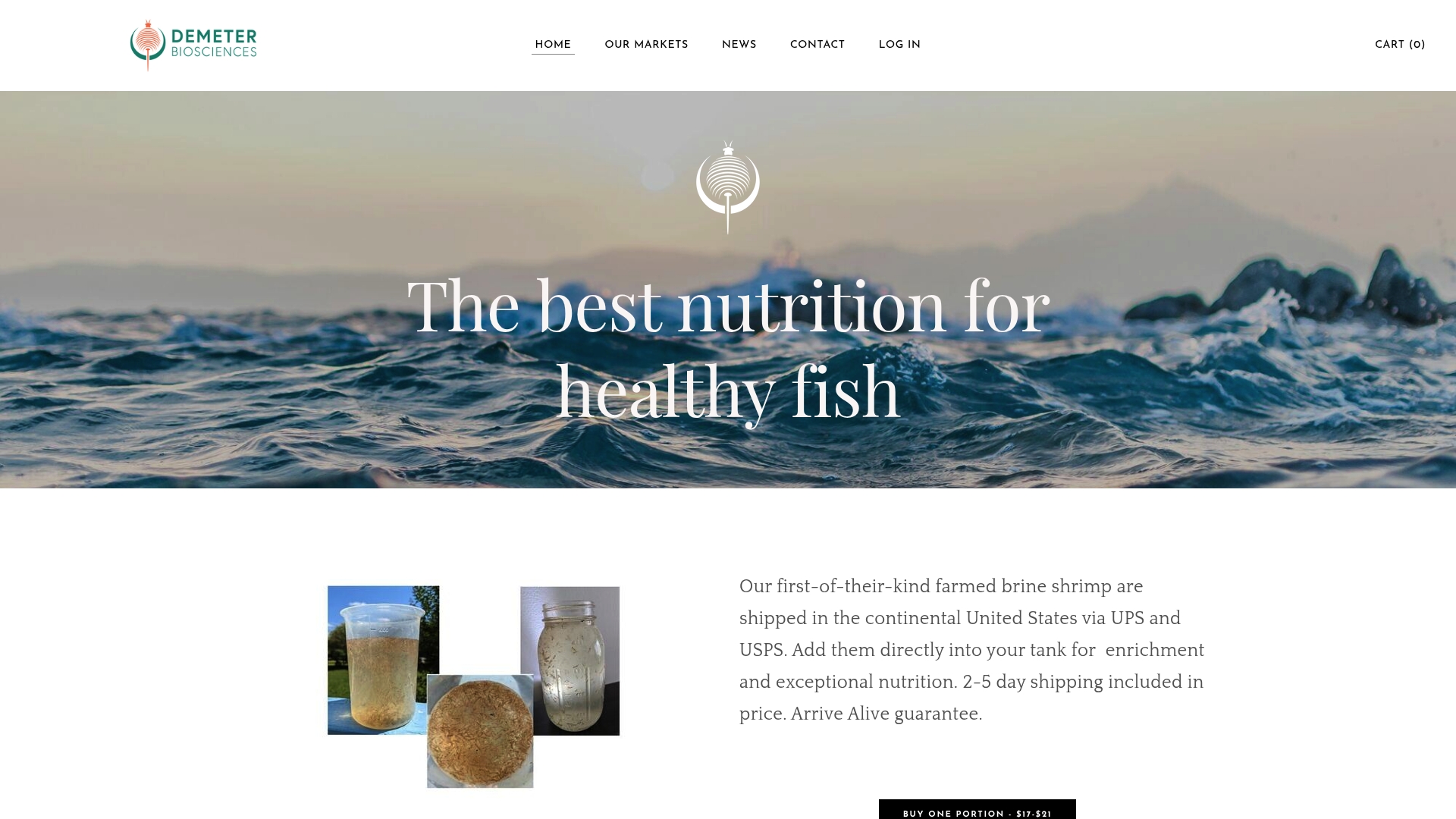
Every batch from Demeterbioscience carries full traceability from cultivation to shipment, with nutritional documentation available for professional buyers. Whether you need a direct-to-consumer brine shrimp shipment, a monthly subscription, or a bulk retail package for a museum or local fish store, the product specifications and sourcing details are available before you commit. For aquaculture professionals with specific nutritional requirements or volume needs, the contact page connects you directly with the team. Transparency is not a marketing claim at Demeterbioscience. It is the operating standard.
FAQ
What is TVN and why does it matter for fish food quality?
TVN stands for Total Volatile Nitrogen, a chemical measure of raw material freshness in fish-based feeds. High-quality fish meal suppliers maintain TVN below 100 mg N/100g; values above that threshold indicate protein degradation that reduces nutritional value and palatability.
How do I verify an MSC or ASC sustainability certificate?
Search the certifying body's public online database using the certificate ID provided by your supplier. Confirm the certificate covers the specific species and product you are purchasing, and check the expiration date.
What should a Certificate of Analysis include?
A COA from an ISO/IEC 17025-accredited lab should report crude protein, fat, moisture, fiber, TVN, and any relevant contaminant levels for the specific batch. Supplier-issued internal documents are not a substitute for third-party lab results.
How long should I trial a new live or frozen food supplier?
A 6-week trial period is the standard recommendation for frozen and live food suppliers. During that period, verify pack and harvest dates on every delivery and monitor your fish's feeding response and physical condition before scaling the order.
What is the fastest way to spot a low-quality fish food?
Check the first five ingredients on the label. If grain-based fillers like wheat flour or corn starch appear before any named animal protein, the product prioritizes cost over nutrition. The guaranteed analysis panel confirms the pattern with objective numbers.