

Fatty acid content in fish food is defined as the total measure of specific dietary fats, particularly long-chain polyunsaturated fatty acids (LC-PUFAs) like EPA (eicosapentaenoic acid) and DHA (docosahexaenoic acid), that fish require for survival, growth, and immune function. Understanding what is fatty acid content in fish food goes far beyond reading a crude fat percentage on a label. Essential dietary fat for ornamental fish ranges from 5% to 12% by dry weight, varying by species and life stage. The type of fat matters as much as the amount, and getting that balance right is the difference between fish that merely survive and fish that genuinely thrive.
What are the main types of fatty acids in fish food?
Fish food contains three broad categories of fatty acids, and each plays a different role in your fish's body. Saturated fatty acids (SFAs) provide energy and, importantly, spare LC-PUFAs for critical physiological functions rather than burning them as fuel. Monounsaturated fatty acids (MUFAs) support cell membrane flexibility. Polyunsaturated fatty acids (PUFAs), especially the long-chain n-3 types, are the ones your fish cannot live without.
EPA and DHA are the two most critical PUFAs in any fish diet. Fish cannot synthesize LC-PUFAs efficiently on their own, which means the diet must supply them directly. Without adequate EPA and DHA, fish show weakened immunity, poor reproduction, and compromised fin and skin condition. No amount of total fat can compensate for a deficiency in these specific fatty acids.

The n-6 to n-3 ratio also matters. A diet too heavy in n-6 fatty acids, common in plant-based ingredients, can suppress the benefits of n-3s. Common sources of high-quality n-3 LC-PUFAs in fish foods include fish oil, krill, and microalgae like Dunaliella.
Here is a quick breakdown of fatty acid types and their primary functions:
- EPA (n-3 LC-PUFA): Supports immune response, reduces inflammation, and promotes healthy skin and fins
- DHA (n-3 LC-PUFA): Critical for brain development, eye health, and reproductive success
- ARA (n-6 PUFA): Involved in growth signaling and inflammatory response; must stay in balance with EPA
- SFAs (saturated): Provide energy and protect LC-PUFAs from being burned as fuel
- MUFAs (monounsaturated): Support membrane fluidity and general metabolic function
Pro Tip: When reading ingredient lists, look for krill oil, algae meal, or whole fish meal near the top. These signal a genuinely high-quality n-3 fatty acid source, not just generic "fish fat."
How is fatty acid content measured and labeled on fish food?
The guaranteed analysis panel on most commercial fish foods lists only crude fat as a percentage. That number tells you how much total fat is present, but nothing about which fats are included. A food with 10% crude fat from low-grade vegetable oil is nutritionally very different from one with 10% crude fat from krill oil and algae.
Ingredient lists reveal lipid quality far more effectively than crude fat numbers. When krill oil, algae, or whole fish meal appear early in the ingredient list, the food delivers bioavailable EPA and DHA. When generic "animal fat" or unnamed plant oils appear instead, the fatty acid profile is likely poor regardless of the total fat percentage.
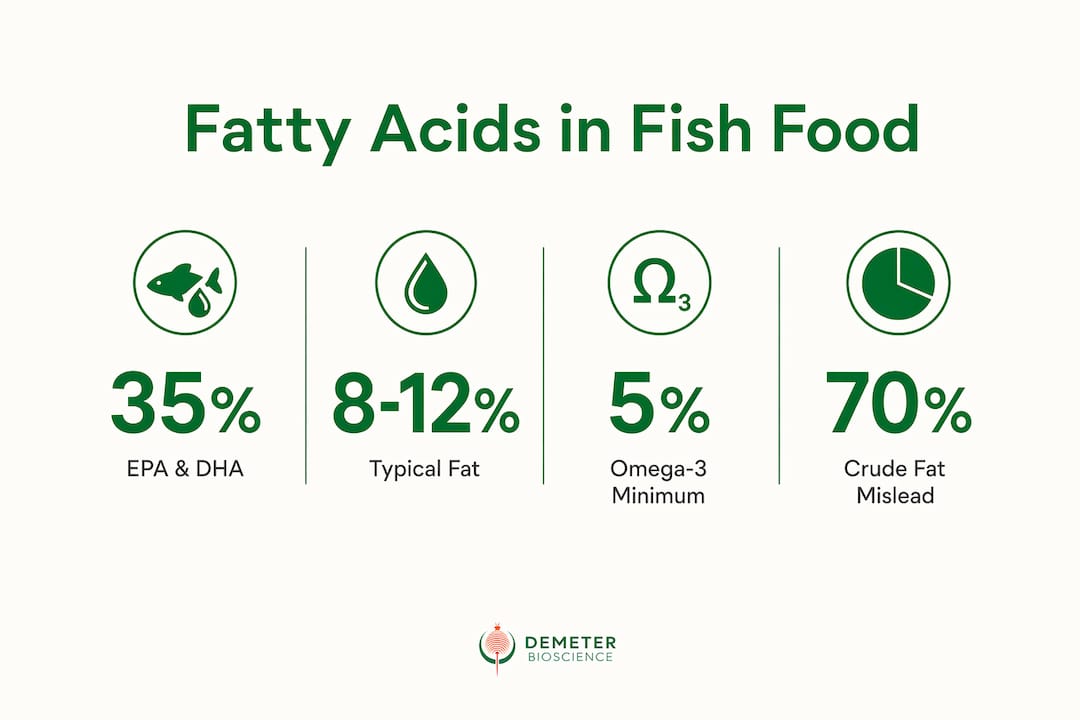
Moisture content also distorts fat comparisons across food types. Commercial pellets typically contain 8–12% fat at around 10% moisture, while frozen foods show only 1–2% fat because they carry 70–80% water. On a dry-weight basis, frozen foods often match or exceed pellets in fat content. Always convert to dry-weight comparisons before drawing conclusions.
| Food Type | Typical Fat % (as-fed) | Moisture | Primary Fatty Acid Sources |
|---|---|---|---|
| Dry pellets | 8–12% | ~10% | Fish meal, fish oil, krill |
| Flake food | 5–10% | ~8% | Fish meal, algae, plant oils |
| Frozen food | 1–2% | 70–80% | Whole prey, krill, algae |
| Live food (brine shrimp) | Variable | ~80% | Algae, microorganisms |
| Freeze-dried food | 5–10% | ~5% | Fish meal, krill |
Pro Tip: Divide the as-fed fat percentage by the dry matter percentage (100 minus moisture) to get a true dry-weight fat figure. This makes frozen and dry foods directly comparable.
How does fatty acid content affect fish health, growth, and coloration?
Fatty acid balance drives fish health in ways that go well beyond basic energy supply. The right lipid profile affects immunity, reproduction, pigmentation, and organ development. Getting it wrong shows up fast, often as faded color, slow growth, or increased disease susceptibility.
Research on juvenile fish shows that an ARA/EPA ratio between 0.47 and 1.01 optimizes nutrient absorption and antioxidant capacity. That ratio is more predictive of health outcomes than total fat intake. A fish eating a high-fat food with a poor ARA/EPA ratio will underperform compared to one eating a moderate-fat food with a well-balanced profile.
The progression of fatty acid effects on fish development follows a clear pattern:
- Cell membrane integrity: EPA and DHA are incorporated into cell membranes first, supporting flexibility and signal transmission across all tissues.
- Immune system priming: n-3 fatty acids regulate inflammatory pathways, reducing the severity of bacterial and parasitic infections.
- Reproductive readiness: DHA accumulates in eggs and sperm; deficiency leads to poor spawn rates and low fry survival.
- Pigmentation and skin health: ARA and EPA together support the production of pigment cells and maintain fin tissue, directly affecting color vibrancy.
- Growth rate and feed conversion: Balanced fatty acid profiles improve how efficiently fish convert food into body mass, reducing the amount you need to feed.
"Sustainable aquafeeds focus on essential fatty acids EPA and DHA rather than total fat. These support immune function, reproduction, and skin health." — Lipids and fatty acids in fish nutrition
The n-6/n-3 balance also affects how fish respond to stress. Fish fed diets skewed toward n-6 fatty acids show higher cortisol responses and slower recovery after handling. For aquarium hobbyists, this means a well-formulated diet directly reduces the visible stress your fish experience during water changes, tank moves, or new introductions.
How do different fish foods vary in fatty acid content?
Not all fish foods deliver the same fatty acid profile, and the format matters as much as the brand. Fish muscle fatty acid profiles reflect diet composition, which means the food you choose literally becomes your fish's tissue over time. Choosing the right format for your species and tank setup is a practical decision with measurable outcomes.
Live foods like brine shrimp carry highly bioavailable fatty acids, especially when the shrimp are raised on microalgae. Brine shrimp gut-loaded with Dunaliella algae, as Demeterbioscience produces, deliver a consistent EPA and DHA profile that wild-harvested shrimp cannot match due to seasonal variability and starvation conditions in natural ecosystems. You can learn more about live food fatty acid options across different food categories.
Here is how common fish food formats compare in fatty acid delivery:
- Frozen whole prey (mysis, krill): High in n-3 LC-PUFAs; excellent EPA and DHA when sourced from marine organisms
- High-quality dry pellets: Good fatty acid profiles when fish oil and krill oil appear early in the ingredient list; convenient for daily feeding
- Standard flake food: Highly variable; many rely on plant oils with poor n-3 profiles; check ingredients carefully
- Live brine shrimp (algae-fed): Consistent, bioavailable EPA and DHA; gut content delivers additional micronutrients
- Freeze-dried foods: Fatty acid content depends on source; some oxidation of PUFAs occurs during processing
Rotating between two or three food types gives your fish the broadest fatty acid coverage. A pellet as a base, supplemented with live or frozen food two to three times per week, covers both convenience and nutritional depth. For species with high DHA demands, like marine fish and many cichlids, microalgae as fish feed offers a direct and reliable source of n-3 LC-PUFAs without relying on fish oil supply chains.
Dietary fish oil and fish meal remain the gold standard for n-3 LC-PUFA delivery in commercial feeds, with fish oil containing 4–20% lipids rich in DHA and EPA. When a food substitutes rapeseed or palm oil for fish oil, the n-6/n-3 ratio shifts unfavorably unless the formula is carefully corrected with algae or krill. Always check whether a reformulated food compensates for that shift.
Key Takeaways
Fatty acid quality, not total fat percentage, determines whether your fish food actually supports fish health, immunity, and growth.
| Point | Details |
|---|---|
| EPA and DHA are non-negotiable | Fish cannot synthesize LC-PUFAs efficiently, so the diet must supply them directly. |
| Crude fat labels are incomplete | Ingredient lists reveal lipid quality far better than guaranteed analysis panels. |
| ARA/EPA ratio drives outcomes | A ratio between 0.47 and 1.01 optimizes antioxidant capacity and nutrient absorption in juvenile fish. |
| Moisture distorts fat comparisons | Convert all food types to dry-weight fat percentages before comparing pellets to frozen foods. |
| Diet rotation fills fatty acid gaps | Combining pellets with live or frozen foods provides broader EPA, DHA, and ARA coverage. |
Why fatty acid quality beats quantity every time
Most hobbyists I talk to fixate on the crude fat percentage when they pick a fish food. I understand the instinct. It is the number printed right on the label, and it feels like a concrete measure of nutrition. But after years of working with microalgae-fed brine shrimp and watching what actually changes fish health, I am convinced that chasing a high fat percentage is the wrong game entirely.
The fish that look the best, breed the most reliably, and resist disease longest are almost always the ones eating foods with a well-balanced fatty acid profile, not the highest fat content. A food with 6% fat from krill oil and Dunaliella algae will outperform a 14% fat food built on generic animal fats every single time. The biology is clear: fish tissues reflect what they eat, and EPA and DHA from quality sources build fundamentally different tissue than saturated fats from low-grade ingredients.
One thing I have learned the hard way is that abrupt diet changes stress fish metabolism. When you switch fatty acid sources suddenly, fish can show temporary lethargy or color loss while their metabolism adjusts. A gradual transition over one to two weeks prevents that. Mix the new food in at 25%, then 50%, then 75% over successive weeks. Your fish will adapt without the stress spike.
The other mistake I see constantly is treating supplements as a shortcut. Fatty acid soaks and enrichment products have their place, but they cannot fix a fundamentally poor base diet. Start with a food that lists krill oil, whole fish meal, or algae near the top of the ingredient list. Build from there. Supplements are a finishing touch, not a foundation.
— Demeter
Demeterbioscience's approach to fatty acid nutrition
Demeterbioscience raises brine shrimp exclusively on Dunaliella algae in land-based, controlled systems. That feeding protocol produces shrimp with at least 40% protein content and a consistent, predictable fatty acid profile, something wild-harvested brine shrimp cannot deliver due to seasonal diet variation and starvation in natural salt lakes.
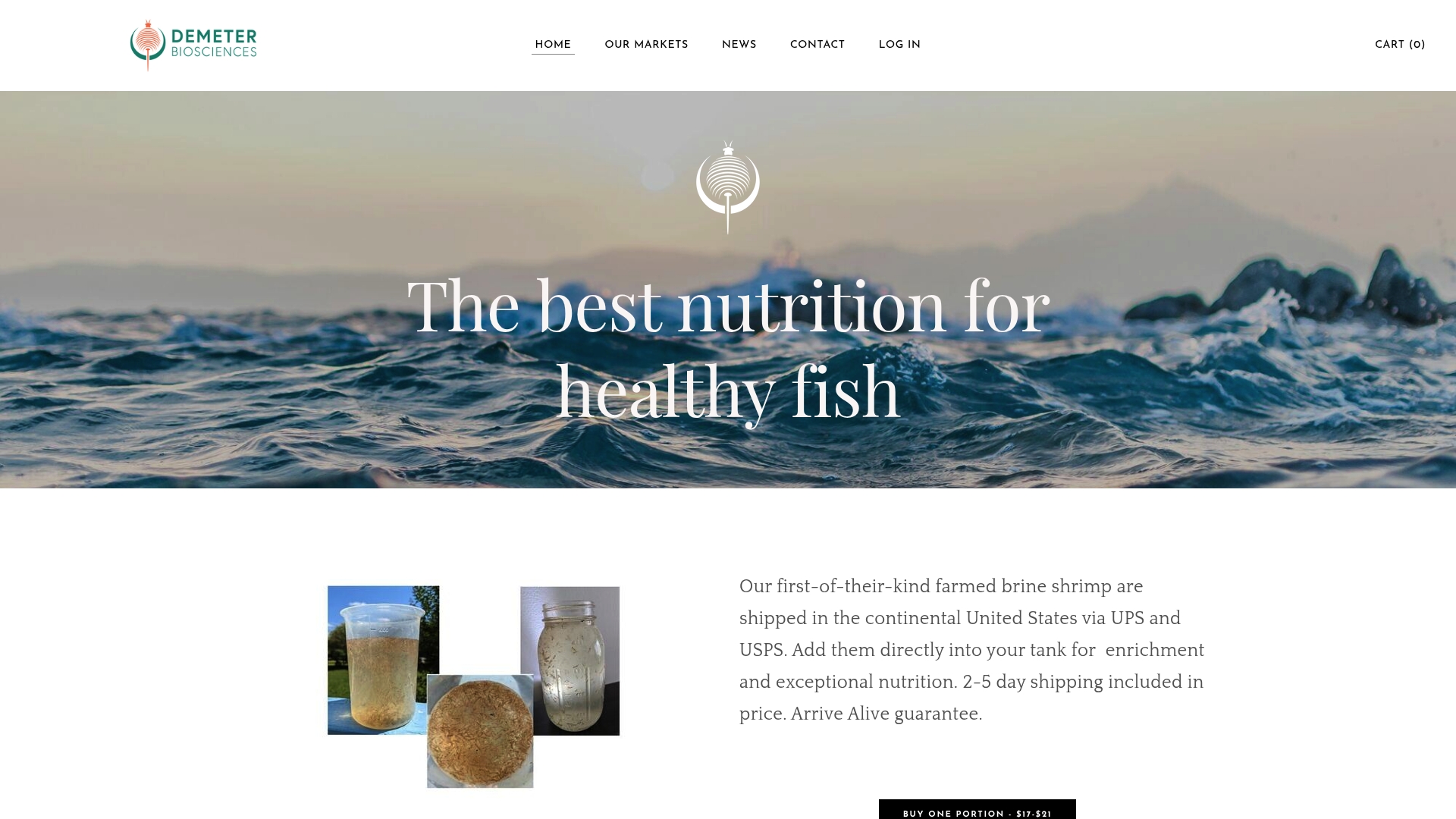
For aquarium hobbyists who want a reliable source of EPA and DHA without depending on fish oil supply chains, Demeterbioscience's live brine shrimp offer a direct, bioavailable lipid source that supports immune function, coloration, and breeding success. Monthly subscription plans and bulk retail packages make it practical for both individual hobbyists and local fish stores. Explore the full brine shrimp product range to find the format that fits your tank and feeding schedule.
FAQ
What is fatty acid content in fish food?
Fatty acid content in fish food refers to the types and amounts of dietary fats present, with the most critical being long-chain polyunsaturated fatty acids EPA and DHA. These fats support immune function, reproduction, and growth in aquarium fish.
How much fat should fish food contain?
Essential dietary fat for ornamental fish ranges from 5% to 12% by dry weight, depending on species and life stage. Commercial pellets typically fall in the 8–12% range, while frozen foods appear lower due to high moisture content.
Why are EPA and DHA more important than total fat?
Fish cannot synthesize EPA and DHA efficiently on their own, making dietary supply critical. Total fat percentage does not indicate whether these specific fatty acids are present in useful amounts.
How do I read a fish food label for fatty acid quality?
The guaranteed analysis panel shows only crude fat. Check the ingredient list instead: krill oil, algae, or whole fish meal near the top signal a high-quality n-3 fatty acid source.
Does live food provide better fatty acids than dry food?
Live brine shrimp raised on microalgae deliver highly bioavailable EPA and DHA with a consistent profile. Dry foods vary widely depending on their lipid sources, making ingredient quality the deciding factor in both formats.