

High-protein fish food is defined as any formulation delivering protein levels at or above a species' core metabolic requirements, typically 40% or more crude protein by dry weight. Understanding what does high-protein fish food mean goes beyond reading a single number on a label. Protein drives muscle development, fin repair, immune function, and the vivid coloration that makes ornamental fish worth keeping. Get it right and your fish thrive. Get it wrong and your tank pays the price through ammonia spikes, stressed fish, and cloudy water. This guide breaks down every variable that matters.
What does high-protein fish food mean in practical terms?
High-protein fish food is a formulation where protein content is calibrated above baseline maintenance needs to support active growth, reproduction, or recovery. The industry term for the measurement on every label is crude protein, expressed as a minimum percentage of dry matter. A food labeled 45% crude protein delivers 45 grams of protein per 100 grams of dry feed.
The critical word is calibrated. Species-dependent protein needs follow defined ranges: carnivores typically require 45–60% crude protein, while herbivores function best at 25–35%. Juveniles of any species need protein at the higher end of their range because growth demands more amino acids than maintenance. A food that qualifies as "high-protein" for a goldfish would be dangerously low for a young Oscar.

Protein also plays a direct role in aquarium ecology, not just fish biology. Every gram of protein a fish cannot absorb exits as ammonia. That ammonia loads your biological filter and, if unchecked, becomes toxic. Choosing the right protein level for your specific fish is therefore both a health decision and a water quality decision.
Why protein quality matters more than protein quantity
The crude protein percentage on a label tells you how much protein is present. It tells you nothing about whether your fish can actually use it. Protein source determines digestibility, and digestibility determines real nutritional value.
Animal-sourced proteins, specifically whole fish meal, krill, and shrimp, carry a biological value that plant-based proteins cannot match. Fish absorb amino acids from these sources efficiently because the amino acid profiles closely mirror their own tissue composition. Plant proteins from soy, wheat gluten, or corn introduce anti-nutritional factors that reduce absorption and push more undigested material into the water column.
What to look for on the ingredient label
Ingredients are listed by weight before processing. The first three ingredients define the nutritional character of the food. Prioritize foods where the first ingredient is a named animal protein: whole fish meal, herring meal, krill meal, or shrimp meal. Avoid foods where the first protein source is a plant derivative or a vague term like "fish by-products."
Here is what a strong ingredient list looks like versus a weak one:
- Strong: Whole herring meal, krill meal, squid meal, fish oil, spirulina
- Weak: Wheat flour, soy protein concentrate, fish meal (unnamed), corn starch, artificial color
A 60% protein food from plant fillers is nutritionally inferior to a 45% protein food built on whole fish and krill. The higher number means nothing if absorption is poor. Poor-quality protein also produces more ammonia waste, which directly degrades water clarity and stresses your biological filter.
Pro Tip: Ignore the guaranteed analysis until you have checked the ingredient list. If the first two ingredients are not named animal proteins, the crude protein percentage is misleading regardless of how high it reads.
How species and life stage define "high-protein"
The phrase "high-protein" only has meaning relative to a specific fish's needs. A food that is high-protein for a pleco is standard fare for a betta. Matching protein levels to species metabolism is the single most important variable in fish nutrition, and most hobbyists underestimate it.
Here is a practical breakdown by feeding category:
-
Obligate carnivores (oscars, arowana, discus, predatory cichlids): require 45–60% crude protein from animal sources. These fish have short digestive tracts optimized for dense animal tissue and cannot efficiently process plant carbohydrates.
-
Omnivores (bettas, tetras, most community fish): perform well at 35–45% crude protein with a mix of animal and plant ingredients. Variety matters more for this group than for strict carnivores.
-
Herbivores (plecos, mbuna cichlids, silver dollars): thrive at 25–35% crude protein with plant-based ingredients dominating the formula. Feeding these fish a carnivore diet causes kidney stress and accelerates organ damage over time.
-
Juvenile fish of any species: require protein at the upper end of their species range. Growth is metabolically expensive. A juvenile discus needs closer to 55–60% protein, while an adult of the same species does well at 45–50%.
Overfeeding high-protein food to herbivores is a common and costly mistake. The excess protein cannot be stored as protein. It converts to energy inefficiently and the nitrogen waste floods the tank. You will see it first in your ammonia readings, then in your fish's behavior.
Pro Tip: When you set up a new tank or add a new species, look up the natural diet of that fish in the wild. A fish that grazes on algae in Lake Tanganyika does not need the same food as a fish that hunts invertebrates in the Amazon basin. Natural diet is the most reliable guide to protein requirements.
What are the real benefits of a high-protein fish diet?
The essential amino acids lysine, methionine, and arginine do specific jobs inside a fish's body. Lysine builds muscle tissue. Methionine supports liver function and fat metabolism. Arginine drives immune response. A deficiency in any one of these causes measurable decline: stunted growth, muscle wasting, faded color, and higher susceptibility to disease.
The benefits of a correctly matched high-protein diet include:
- Muscle development and body condition: Fish fed adequate animal protein maintain full, rounded body profiles. Protein-deficient fish look pinched and thin even when fed frequently.
- Fin repair: Damaged fins regenerate faster when amino acid availability is high. This matters especially in community tanks where fin nipping occurs.
- Color intensity: Protein helps fish deposit carotenoid pigments like astaxanthin and canthaxanthin into skin and scales. A fish eating low-quality protein will look washed out regardless of its genetics.
- Immune strength: Antibody production depends on protein. Fish on high-quality protein diets show stronger resistance to bacterial and parasitic infections.
"A diet lacking adequate protein causes washed-out colors even in genetically vibrant fish. Protein is not optional for coloration. It is the delivery mechanism for every pigment your fish carries."
Higher-quality protein also produces less ammonia waste per gram consumed. This means your biological filter works less hard, your water stays clearer, and your fish experience less chronic stress from dissolved toxins. The water quality benefit alone justifies the investment in premium ingredients. For more on how diet affects color and vitality, see this guide on live food and fish color.
High-protein fish food types compared: which format works best?
Not all high-protein fish foods deliver protein the same way. Format affects moisture content, digestibility, and how precisely you can control intake.
| Food type | Typical protein % (dry matter) | Moisture | Best use case |
|---|---|---|---|
| Dry pellets | 40–60% | Low (8–10%) | Daily staple; precise portion control |
| Flakes | 35–50% | Low (8–10%) | Surface feeders; smaller fish |
| Frozen foods (bloodworms, brine shrimp) | 50–70% (dry matter basis) | High (75–85%) | Supplemental feeding; color enhancement |
| Live foods (brine shrimp, daphnia) | 40–60% (dry matter basis) | Very high | Conditioning, breeding triggers, enrichment |
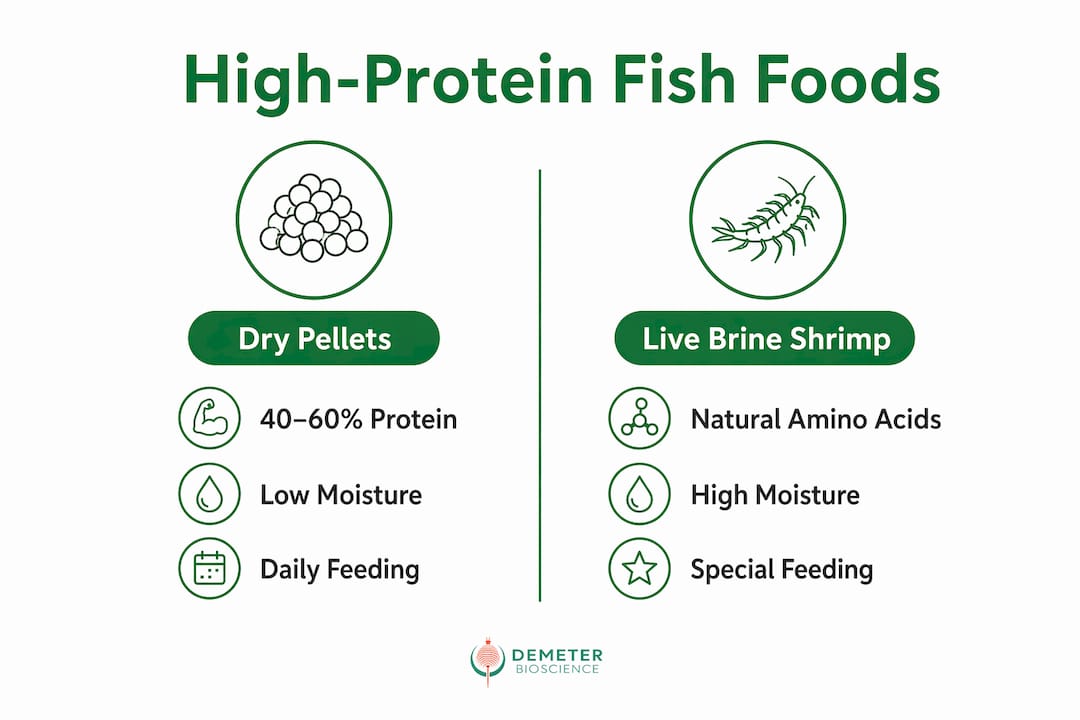
Pellets typically deliver 40–60% protein and are the most practical format for daily feeding because portion size is consistent and measurable. Frozen and live foods have high moisture content, which means the actual protein per gram fed is lower than the label suggests. You need more volume to deliver the same amino acid load.
Live brine shrimp occupy a unique position in this comparison. They are a whole-animal food with a natural amino acid profile, and they trigger feeding responses in fish that refuse processed foods. The nutritional value of fish food in live form also includes enzymes and micronutrients that processing destroys.
Feeding volume should adapt to water temperature because fish metabolism slows in cooler water. A fish that eats enthusiastically at 78°F will eat far less at 68°F. Protein requirements stay constant, but the amount of food needed to meet them drops. Overfeeding in cold water sends undigested protein directly into the water column.
Pro Tip: Feed only what your fish consume within two minutes. Remove any uneaten food immediately. This single habit prevents more ammonia problems than any filter upgrade.
For a deeper look at which high-protein food formats suit specific species and growth goals, Demeterbioscience has a practical breakdown worth bookmarking.
Key Takeaways
High-protein fish food works only when protein level, source quality, and feeding volume are matched precisely to the species and life stage being fed.
| Point | Details |
|---|---|
| Definition is species-relative | "High-protein" means different crude protein percentages for carnivores (45–60%) versus herbivores (25–35%). |
| Source quality outweighs percentage | Whole fish meal and krill at 45% protein outperform plant-based formulas at 60% protein. |
| Juveniles need more protein | Young fish require protein at the upper end of their species range to support active growth. |
| Protein affects water quality | Higher digestibility means less ammonia waste and cleaner, more stable tank conditions. |
| Feed by the two-minute rule | Remove uneaten food after two minutes to prevent ammonia spikes from protein decomposition. |
The protein trap most hobbyists fall into
I have watched hobbyists spend real money on premium fish food and still end up with dull, slow-growing fish and chronic ammonia problems. The mistake is almost always the same: they chase the highest protein percentage on the label without checking what that protein is made from or whether it matches their fish's actual needs.
A 60% protein pellet built on soy concentrate and wheat gluten is not a high-protein food in any meaningful sense. It is a high-number food. The fish cannot absorb most of it, and the rest becomes your ammonia problem. Meanwhile, a well-formulated 45% pellet built on herring meal and krill will outperform it on every measurable outcome: growth rate, color, immunity, and water clarity.
The other trap is assuming that more protein is always better. Feeding a pleco or a silver dollar a carnivore diet because "protein is good" causes organ stress that shows up months later as unexplained deaths. Fish do not show kidney damage until it is advanced. By the time you notice something is wrong, the damage is done.
My honest advice: read the ingredient list before you read the guaranteed analysis. Match the food to the fish, not to your instinct that higher numbers mean better results. Then observe your fish weekly. Color, body condition, and feeding enthusiasm tell you more than any label ever will. The nutritional quality and growth rate connection is direct and visible if you know what to look for.
— Demeter
Feed your fish what they were built to eat
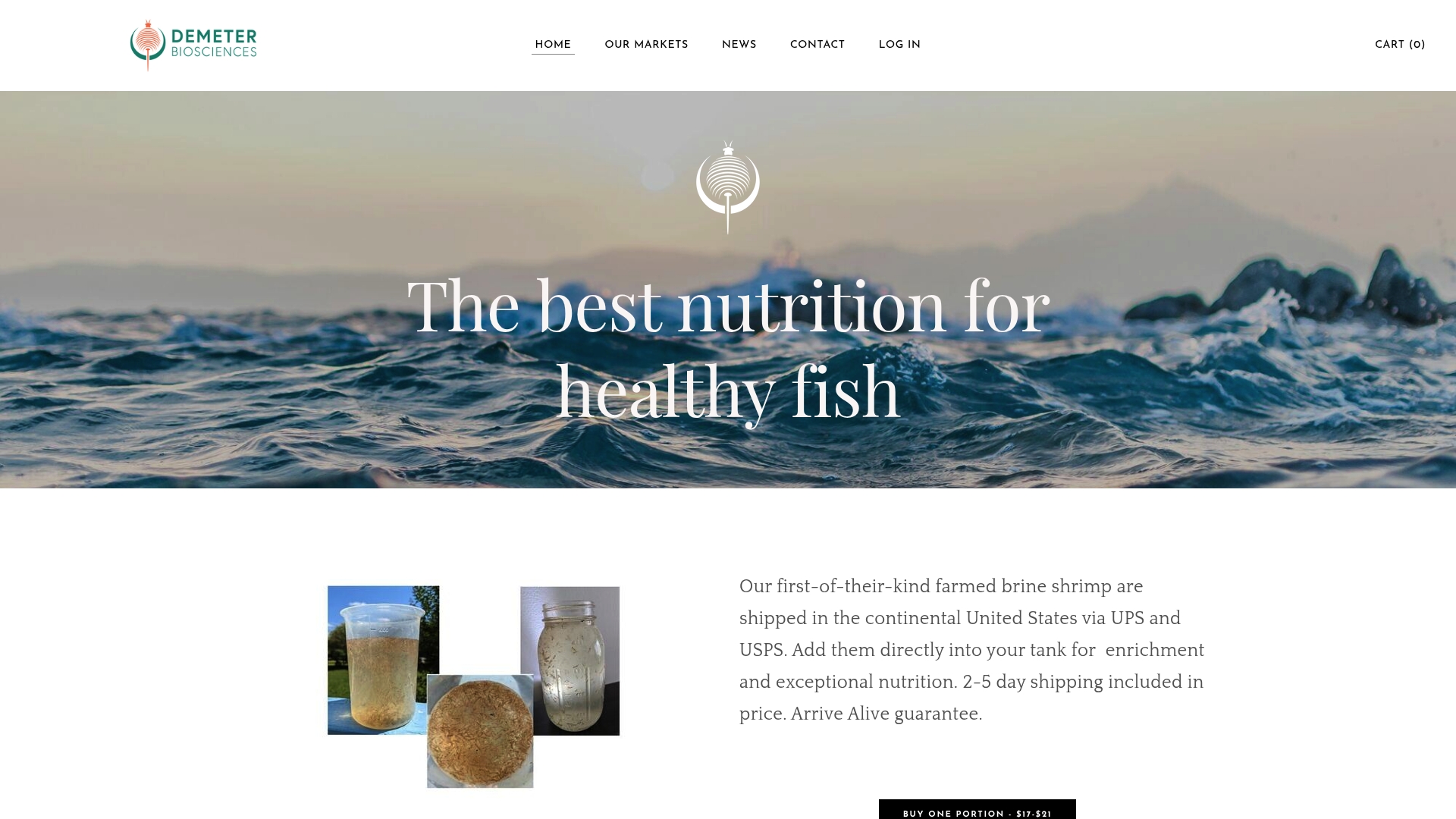
Demeterbioscience produces live brine shrimp fed exclusively on Dunaliella microalgae in a controlled, land-based system. The result is a live feed with guaranteed minimum 40% protein content and a consistent amino acid profile that wild-harvested brine shrimp cannot match due to seasonal starvation in natural ecosystems. For hobbyists who want to supplement dry pellets with a live, whole-animal protein source, Demeterbioscience's brine shrimp products ship directly to your door on a schedule that works for your tank. If you want to discuss your specific fish's nutritional needs or explore bulk options for a local fish store, the team at Demeterbioscience is available through their contact page.
FAQ
What is the minimum protein percentage for high-protein fish food?
High-protein fish food generally starts at 40% crude protein, though carnivorous species require 45–60% and herbivores function best at 25–35%. The threshold depends entirely on the species being fed.
Does a higher protein percentage always mean better fish food?
No. Protein source determines digestibility more than the crude protein number. A 45% protein food built on whole fish meal outperforms a 60% food built on plant proteins in growth outcomes and water quality.
How does high-protein fish food affect aquarium water quality?
Higher-quality protein produces less ammonia waste because more of it is absorbed by the fish. Overfeeding any protein source, however, causes ammonia spikes that stress fish and strain biological filtration.
Can I feed high-protein food to all my fish?
No. Herbivorous fish fed excess protein experience organ stress and shortened lifespans. Always match protein level and source to the natural diet of each species in your tank.
How often should I feed high-protein fish food?
Feed only what fish consume within two minutes, once or twice daily for most species. Adjust feeding volume seasonally based on water temperature, since cooler water slows metabolism and reduces how much food fish can process.