

Not all fish food labeled "premium" actually earns that title. Walk down any aquarium supply aisle or scroll through an online catalog and you'll find dozens of products claiming superior nutrition, enhanced color, and cleaner water. Most of them are making noise. Understanding what differentiates premium fish food from ordinary alternatives requires looking past the marketing and into the ingredient list, manufacturing process, and real-world tank performance. This article breaks down the specific characteristics that matter, so you can make informed choices that genuinely benefit your fish.
Table of Contents
- Key takeaways
- What differentiates premium fish food: ingredients first
- Nutrient density and how manufacturing makes a difference
- Natural color enhancement: what actually works
- Digestibility and what it means for your tank
- How to identify and use premium fish food effectively
- My take: what premium food actually does for your fish
- Demeterbioscience: premium nutrition from the source
- FAQ
Key takeaways
| Point | Details |
|---|---|
| Ingredient transparency matters | Premium fish foods list marine proteins first and skip vague fillers like corn or soy. |
| Manufacturing sets the ceiling | Post-extrusion coating preserves vitamins and oils that high heat would otherwise destroy. |
| Digestibility drives tank health | Higher protein digestibility means less ammonia and slower nitrate buildup in your aquarium. |
| Color enhancement takes time | Carotenoids like astaxanthin work through fish metabolism over weeks, not days. |
| Feeding habits still determine outcomes | Even the best food causes water quality problems if you overfeed or skip portion control. |
What differentiates premium fish food: ingredients first
The clearest sign of quality is what appears at the top of the ingredient list. High-quality saltwater foods typically start with fish, shrimp, krill, squid, clam, mussel, algae, vitamins, and minerals rather than fillers like corn or soy. That ordering matters because ingredients are listed by weight, so whatever comes first makes up the largest proportion of the food.
Cheaper products often lead with wheat flour, corn gluten, or soy protein isolate. These ingredients are inexpensive to source and provide some protein, but they do not reflect the natural diet of most aquarium fish. Marine-based proteins are more bioavailable and better matched to the biology of carnivorous and omnivorous species.
Here is what to look for when reading an ingredient panel:
- Marine proteins listed first: Fish meal, whole krill, squid meal, or whole herring indicate a food built around species-relevant nutrition.
- Recognizable additives: Premium foods specify vitamins by name, such as vitamin C (ascorbic acid) or vitamin E (tocopherol), rather than listing vague "vitamin premixes."
- Minimal plant fillers: Some starch is acceptable as a binder, but corn, soy, and wheat should never dominate the list.
- Algae inclusions: Spirulina, Dunaliella, and kelp provide natural carotenoids and trace minerals that processed ingredients cannot replicate.
- No artificial colors in the base formula: Dyes can mask poor ingredient quality and add nothing to fish health.
Pro Tip: Flip the bag before you buy. If the first two ingredients are not marine-sourced proteins or whole organisms, put it back. Ingredient order is the fastest quality filter available to you.
Natural pet nutrition advocates make the same argument for companion animals. A natural diet approach prioritizes whole, recognizable ingredients for better absorption and fewer health issues over time. The same logic applies to your fish.
Nutrient density and how manufacturing makes a difference
Getting quality ingredients into the bag is only half the challenge. What happens during manufacturing determines how much of that nutrition actually reaches your fish.
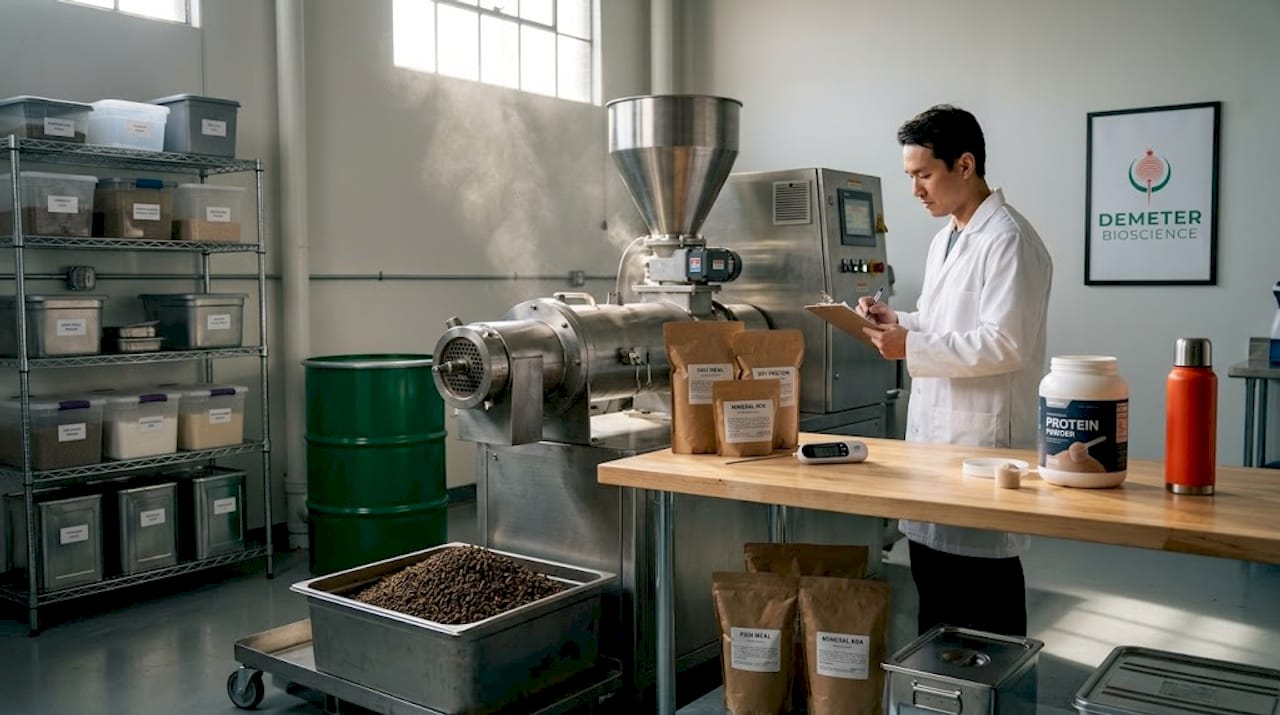
Most commercial fish food goes through an extrusion process, where raw ingredients are mixed, heated under pressure, and pushed through a die to form pellets or sticks. Extrusion temperatures can exceed 120°C, which destroys heat-sensitive vitamins, essential fatty acids, and natural pigments. Premium manufacturers solve this with post-extrusion coating, applying vitamins, oils, and pigments to the outside of the pellet after heat processing. The result is a food that actually delivers what the label promises.
Beyond coating, premium pellets differ most in water stability, float or sink behavior, and post-processing vitamin and oil application. These are not minor details. A pellet that dissolves in 30 seconds is leaching nutrients into the water column before your fish can eat it. That is nutrient pollution, not nutrition.
Here is how advanced manufacturing translates to real tank benefits:
- Water stability: Premium pellets hold their shape for at least 30 to 60 minutes, giving slow-eating or shy fish adequate time to feed without the food breaking down.
- Sink rate control: Foods designed for bottom feeders are engineered to sink quickly without losing structure, while surface feeders get floating pellets that stay buoyant through the feeding window.
- Nutrient retention: Post-extrusion vitamin coating means the omega-3 levels stated on the label are actually present in the food your fish consume.
- Portion efficiency: High nutrient density means smaller portions deliver adequate nutrition, which reduces total feeding volume and limits organic waste entering the water.
- Reduced ammonia load: Less indigestible material entering the water translates directly to slower ammonia spikes between water changes.
Pro Tip: Test a new premium food by dropping a single pellet into a glass of tank water and timing how long it holds its shape. Cheap foods cloud the water in under two minutes. A well-made pellet should remain intact well beyond that point.
Learning about nutritional quality and fish growth makes it clear that the relationship between food quality and tank water chemistry is direct and measurable. Nutrient density is not just a marketing claim. It shows up in your test kit readings.
Natural color enhancement: what actually works
Color-enhancing fish foods are one of the most marketed and most misunderstood categories in the hobby. The honest truth is that astaxanthin is common for reds and pinks, while spirulina provides green-blue pigments, and both natural and synthetic sources are often combined in effective formulas.
What separates premium color foods from gimmicks is how the pigments are delivered and whether the fish can actually use them. Color improvements arise from pigment chemistry more than dye presence. Fish must metabolize carotenoids and deposit them into scales, skin, and fins. That process takes weeks of consistent feeding, not a single serving.
Key facts about premium color enhancement:
- Astaxanthin is the gold standard: This carotenoid is responsible for the vivid reds in salmon and many reef fish. When it appears high on the ingredient list, the color results are usually real and lasting.
- Spirulina is more than color: It also provides protein, gamma-linolenic acid, and chlorophyll. Foods that list spirulina are typically offering genuine nutrition alongside the pigment benefits.
- Synthetic carotenoids are not automatically inferior: When combined with natural sources, they can provide consistent dosing that varies less batch to batch than whole-organism ingredients.
- Protein quality determines pigment absorption: A food high in carotenoids but low in digestible protein will underperform because the fish lacks the metabolic resources to process and deposit pigments efficiently.
- Species limits apply: No food will produce colors outside a fish's genetic potential. Premium foods maximize what is already there. They do not override biology.
Digestibility and what it means for your tank
Digestibility is the feature most hobbyists overlook and the one that matters most for day-to-day tank management. Apparent digestibility coefficients for fishmeal and squid meal range from 81 to 93 percent, compared to significantly lower rates for many plant-based protein alternatives. That gap has consequences.
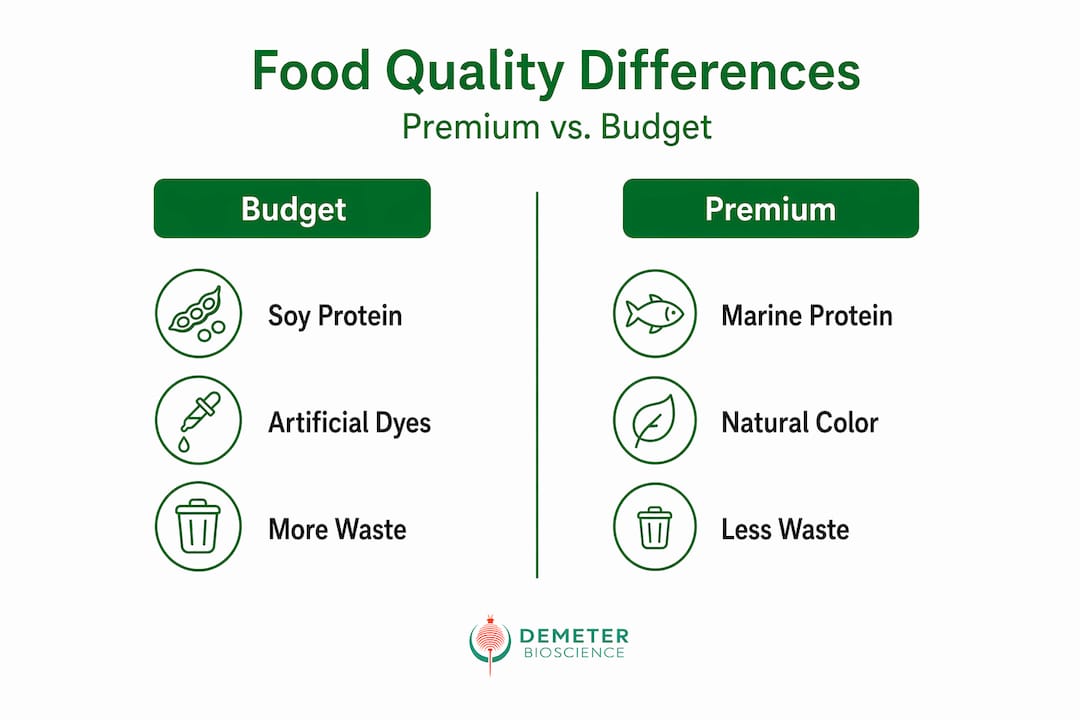
When fish cannot fully digest a protein source, the undigested portion enters the water as organic waste. Bacteria break it down into ammonia, which your biological filter converts to nitrite and then nitrate. Every water change you do is partly a consequence of feeding. Premium foods with high digestibility slow that cycle down.
| Feature | Budget fish food | Premium fish food |
|---|---|---|
| Primary protein source | Soy, corn, wheat gluten | Fishmeal, squid meal, krill |
| Protein digestibility | 60 to 75% | 81 to 93% |
| Water stability | Dissolves under 30 seconds | Holds shape 30 to 60+ minutes |
| Ammonia load per feeding | High | Significantly lower |
| Color enhancement | Artificial dyes | Natural carotenoids |
| Vitamin delivery | Baked in during extrusion | Post-extrusion coating |
Premium food claims correlate with improved bioavailability, supporting better fish growth and less waste. That is not marketing speak. It reflects measurable biochemistry. A practical test: measure your tank's nitrate level before switching foods, then again two weeks after switching at identical feeding volumes. The rate of nitrate increase is one of the most reliable real-world indicators of whether a food is actually premium or just priced that way.
Consistent nutrition for aquatic specimens also plays a role here. Switching between low-quality foods disrupts digestive microbial communities in fish guts. Staying with a consistently high-quality diet supports stable gut health and more predictable water chemistry.
How to identify and use premium fish food effectively
Knowing what to look for on a label is one skill. Knowing how to evaluate a food once it is in your system is another. Here is how to approach both:
- Read the complete nutritional claim: Foods designed as a sole diet, without requiring supplementation, typically state this clearly on the packaging. Foods that can be fed as a sole diet one to two times daily without supplementation are formulated to a higher nutritional standard than those that require rotation by design.
- Observe fish behavior within the first week: Active feeding response, improved coloration at the fin edges, and increased swimming activity during feeding time are early positive signs.
- Monitor tank parameters at consistent intervals: Stable nitrate and phosphate levels over one to two weeks after switching foods often confirm that the new food is genuinely reducing waste output.
- Rotate food types strategically: Premium pellets should anchor the diet, but supplementing with live or frozen foods like brine shrimp adds variety that prevents nutritional gaps and stimulates natural feeding behaviors.
- Maintain strict portion control: Premium feeds marketed to reduce waste still cause nitrate and phosphate spikes if overfed. The food quality does not override the consequences of excess.
- Check packaging for ingredient transparency: Brands that genuinely invest in quality tend to list specific ingredient sources rather than generic categories. "Pacific herring meal" tells you more than "fish meal."
Pro Tip: Use the nitrate rise rate test as your personal quality benchmark. Feed the same volume of new food for two weeks and compare how fast nitrate climbs versus your old food. A slower rise means better digestibility. No marketing claim is more honest than your own test kit.
My take: what premium food actually does for your fish
I've watched a lot of hobbyists buy premium food and then feed it incorrectly, and the results are predictably disappointing. They blame the food. The food is not the problem. What I've learned from years of working with aquatic nutrition is that premium food does not rescue a poorly managed tank. It rewards a well-managed one.
The hobbyists who see the most dramatic improvements after switching foods are the ones already doing regular water changes, running appropriate filtration, and feeding conservatively. For them, moving to a food with genuine marine proteins, post-extrusion vitamin coating, and high digestibility pushes results noticeably forward. Colors deepen. Growth accelerates. Nitrate climbs more slowly.
What I've also noticed is that ingredient transparency is the single most reliable proxy for overall quality. Brands that are honest about their ingredient sources tend to be honest about everything else too. Vague labels are almost always hiding something, usually cheap fillers or compromised manufacturing. The features of premium fish food are not hidden. Genuine quality does not need to obscure itself.
My honest recommendation: buy the food with the cleanest, most specific ingredient list you can find, test your tank parameters before and after switching, and do not expect the food to compensate for overfeeding. Premium food is a multiplier for good husbandry, not a substitute for it.
— Demeter
Demeterbioscience: premium nutrition from the source
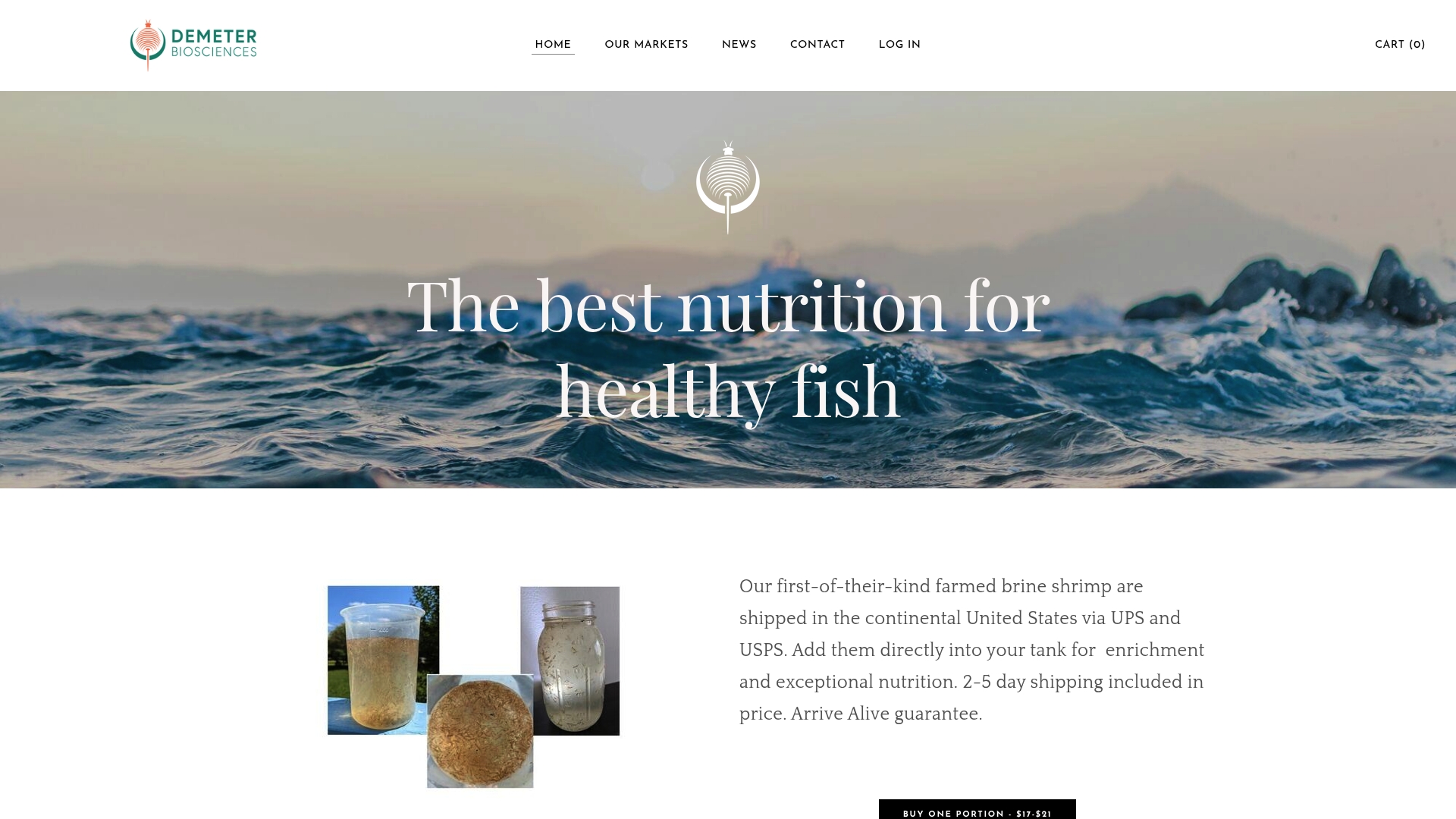
At Demeterbioscience, we build premium nutrition from the ground up, starting with what fish actually eat in a thriving environment. Our farmed live brine shrimp are cultivated in land-based, controlled systems and fed exclusively on Dunaliella microalgae, delivering a minimum of 40% protein content with consistent nutritional quality in every shipment. Unlike wild-harvested alternatives that arrive nutritionally depleted, our live brine shrimp reflect exactly what premium marine nutrition looks like: transparent sourcing, species-relevant ingredients, and zero seasonal variability. We also offer fish meal products and microalgae-based feeds for hobbyists who want the full picture of what high-quality fish nutrition can do. Explore our product range or reach out directly for personalized recommendations.
FAQ
What makes fish food genuinely premium vs. just expensive?
Genuine premium fish food features marine-based proteins listed first in the ingredient panel, post-extrusion vitamin coating, high water stability, and digestibility coefficients above 80 percent. Price alone does not confirm quality. Ingredient transparency and measurable tank performance do.
How long does it take to see results from premium fish food?
Most hobbyists notice improved feeding behavior within the first week and visible color enhancement within two to four weeks of consistent feeding. Water chemistry improvements, measured as slower nitrate rise, typically become clear within one to two weeks at the same feeding volume.
Does premium fish food really reduce aquarium maintenance?
Higher digestibility means less organic waste entering the water, which slows ammonia and nitrate accumulation. This can extend the interval between water changes, but it does not eliminate them. Overfeeding any food, premium or not, still degrades water quality.
Are natural carotenoids better than synthetic ones for fish color?
Natural carotenoids like astaxanthin and spirulina provide color enhancement alongside additional nutritional benefits. Synthetic carotenoids can be effective and are often more consistent in dosing across batches. Many premium foods combine both. What matters most is that carotenoids appear high on the ingredient list and are paired with high-quality digestible protein.
Can I use premium fish food as the only food in my aquarium?
Some premium foods are formulated as complete diets and can serve as a sole food source. However, rotating with live or frozen foods like brine shrimp adds variety that supports natural feeding behaviors and fills potential nutritional gaps that any single formula might leave.