
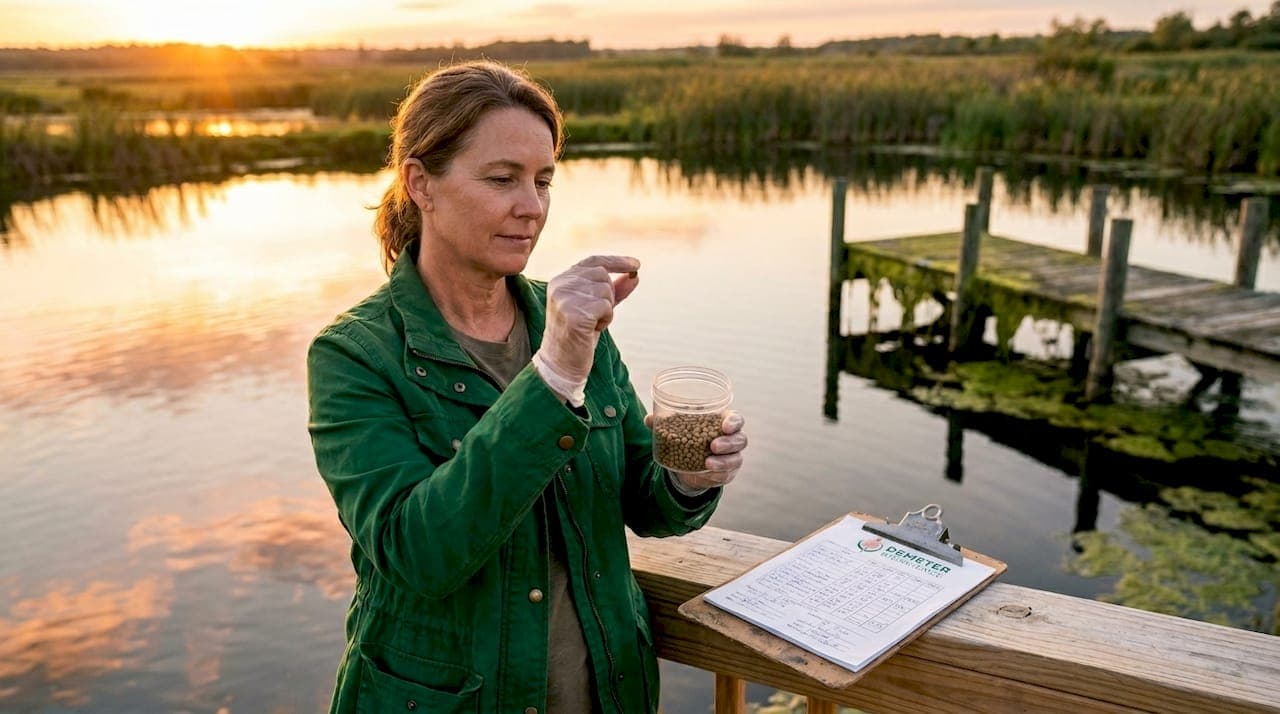
Sustainable fish food is formulated aquatic feed designed to minimize environmental damage by replacing wild-caught fishmeal and fish oil with alternative protein and lipid sources while maintaining fish health and performance. The global aquaculture industry now produces more than half of all seafood consumed worldwide, and the feed that drives that production is under intense scrutiny. Algae, black soldier fly larvae, plant proteins, and microbial biomass are the ingredients reshaping what goes into a fish's diet. Consumer demand for sustainable seafood and feeds is rising sharply, and that pressure is forcing producers, retailers, and hobbyists alike to rethink what "good fish food" actually means.
What is sustainable fish food made of?
The core challenge in sustainable aquaculture feed is replacing fishmeal and fish oil without sacrificing nutrition. Wild-caught anchovies, herring, and menhaden have historically supplied the amino acid profiles and omega-3 fatty acids that farmed fish need. Those stocks are finite, and formulated feed alternatives can now maintain comparable nutrition and health outcomes while lowering environmental damage.
The main alternative ingredient categories are:
- Plant proteins (soy, pea, rapeseed): High in protein but contain anti-nutritional factors like phytates and trypsin inhibitors. Fermentation and enzymatic hydrolysis break down these compounds and improve nutrient bioavailability, making plant proteins viable at meaningful inclusion rates.
- Algal proteins: Micro- and macroalgae supply essential omega-3 fatty acids, specifically DHA and EPA, that plant proteins cannot. Cell wall disruption through enzymatic hydrolysis is necessary for carnivorous fish to digest algal cells effectively. Demeterbioscience's work with Dunaliella algae demonstrates how controlled cultivation produces consistent nutritional profiles that wild-harvested sources cannot match.
- Insect meal: Black soldier fly (Hermetia illucens) larvae convert organic waste into high-quality protein, making them a circular economy ingredient. Nutrient quality varies with rearing substrate and processing, so sustainable sourcing controls are critical to consistent performance.
- Microbial proteins: Single-cell proteins derived from bacteria or yeast fermentation offer high digestibility when properly processed. They are still scaling commercially but represent one of the most land-efficient protein sources available.
- By-products and trimmings: Fish processing waste, shrimp shells, and poultry by-products apply circular economy principles to feed formulation, reducing waste while supplying usable nutrients.
Pro Tip: Never evaluate a sustainable ingredient on protein percentage alone. The processing method, whether fermentation, hydrolysis, or mechanical disruption, determines how much of that protein a fish can actually absorb and use.
How is the sustainability of fish food measured and certified?
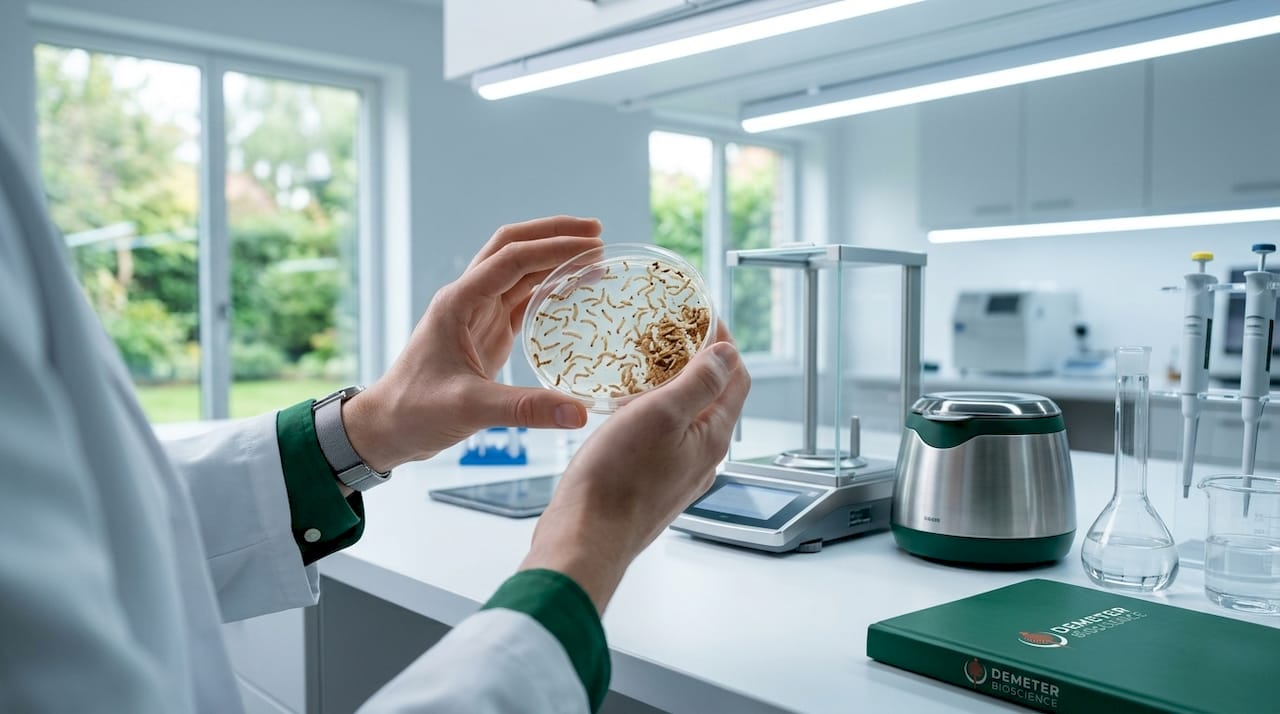
Sustainability claims in the feed industry range from rigorous to meaningless, and the difference lies in the measurement framework behind them. Life Cycle Assessment (LCA) is the systematic method for quantifying the environmental impact of feed from raw material extraction through production. The GMP+ International MI 5.7 standard establishes a formal LCA framework for fish feed, covering 16 impact categories and aligning with the European Commission's Product Environmental Footprint (PEF) methodology.
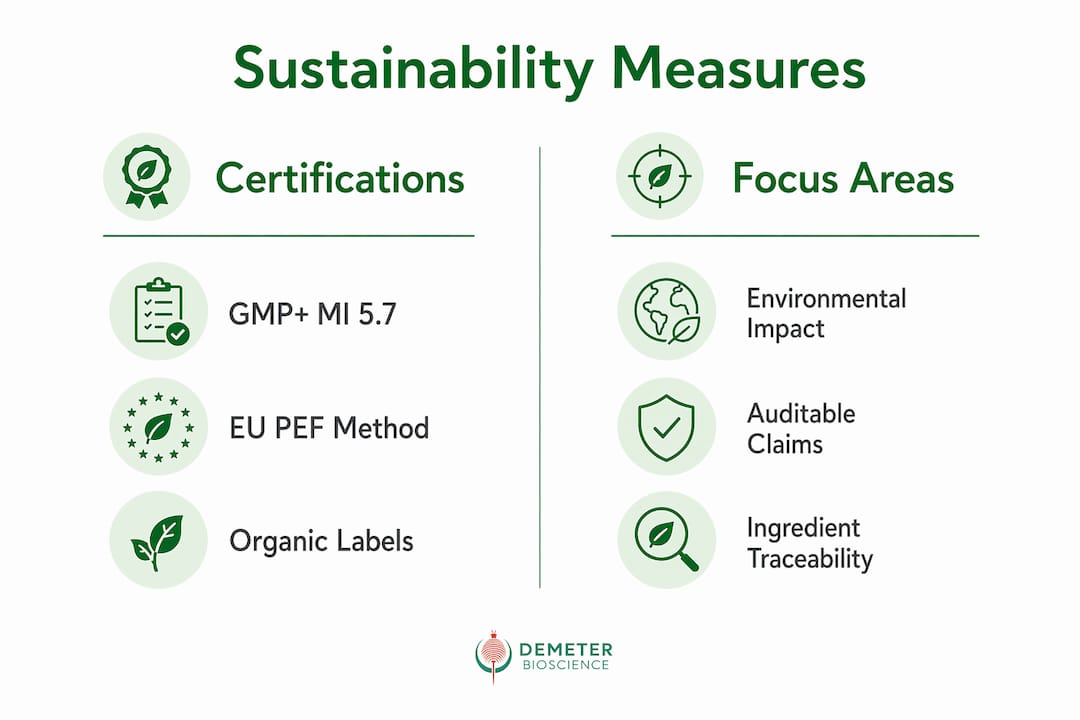
That alignment matters because PEF rules make sustainability claims auditable. A feed producer cannot simply label a product "eco-friendly" and expect it to pass procurement scrutiny from a major retailer or aquaculture operation. The MI 5.7 standard requires transparent methods, traceable data, and third-party verification across categories including carbon footprint, land use, water consumption, and eutrophication potential.
LCA results for insect-based ingredients illustrate why nuance matters. Reviews highlight knowledge gaps and variability in environmental sustainability claims for insect farming, urging evidence-based evaluation rather than blanket acceptance of "insect = sustainable." The energy used to heat rearing facilities, the substrate sourced for larvae, and the drying method all shift the carbon footprint significantly.
| Certification / Standard | Primary focus | Scope |
|---|---|---|
| GMP+ MI 5.7 (LCA) | Multi-category environmental footprint | Feed ingredients and production |
| Aquaculture Stewardship Council (ASC) | Farm-level environmental and social standards | Farmed seafood operations |
| Marine Stewardship Council (MSC) | Wild-capture fishery sustainability | Fishmeal and fish oil sourcing |
| Global G.A.P. | Good agricultural practice across supply chain | Feed and farm inputs |
Pro Tip: When reviewing a feed supplier's sustainability credentials, ask specifically which LCA impact categories they report. Carbon footprint alone is insufficient. A feed with a low carbon score can still carry high land-use or eutrophication impacts.
How do sustainable ingredients affect fish health and growth?
Growth rate is the metric most producers track first, but it tells only part of the story. A 65-day feeding trial with gilthead seabream found that oilseed-based diets at 30% inclusion maintained stable growth performance while producing measurable differences in digestive enzyme activity and liver metabolism depending on the oilseed type used. The fish grew at the same rate, but their physiology responded differently to each formulation.
Insect meal results are similarly encouraging. A controlled study with Nile tilapia showed that insect meal diets produced growth and feed utilization comparable to traditional fishmeal, with microbiologically safe human consumption profiles. That combination of nutritional performance and food safety is what moves insect meal from experimental to commercially viable.
The physiological endpoints that matter beyond weight gain include:
- Appetite regulation: Some plant proteins suppress feed intake through palatability issues or anti-nutritional residues, reducing voluntary consumption even when the diet is nutritionally complete.
- Liver metabolism: Oilseed and high-fat alternative ingredients can alter hepatic lipid deposition, which affects fillet quality and long-term organ health.
- Digestive enzyme activity: Ingredient changes shift the activity of proteases, lipases, and amylases in the gut, indicating how well the fish is actually processing the feed.
- Gut integrity: Certain plant proteins, particularly raw soy, cause enteritis in salmonids. Processing and inclusion limits are the primary controls.
For aquarium fish, these nuances translate directly to visible health outcomes. A fish fed a diet that disrupts gut integrity will show reduced color, lower activity, and increased susceptibility to disease. The high-protein fish foods that perform best in aquarium settings are those where protein quality and digestibility have been validated, not just protein percentage.
Pro Tip: When switching to a sustainable feed, track at least three metrics: growth rate, feed conversion ratio, and visible health indicators like coloration and behavior. Weight gain alone will not reveal early signs of metabolic stress.
Why sustainable fish food is gaining market share
Consumer demand is the clearest driver. Surveys and shopping data show a significant increase in sustainable-focused purchasing across seafood categories, with buyers connecting feed sourcing to the overall sustainability of the fish they eat. The logic is direct: a farmed salmon fed on wild-caught anchovies is not a net gain for ocean conservation. Feed is where that calculation starts.
Farmed fish feed that reduces wild fishery pressure is gaining traction not just with environmentally motivated consumers but with food safety-focused buyers who associate sustainable sourcing with lower contamination risk. Heavy metals, microplastics, and persistent organic pollutants concentrate in wild-caught marine ingredients. Alternative proteins sourced from controlled environments carry lower contamination profiles by design.
Key trends shaping the market right now:
- Retailers and foodservice operators are requiring sustainability certification from aquaculture suppliers, pushing demand upstream to feed producers.
- The ornamental fish and aquarium sector, including pet stores and hobbyists, is increasingly asking for eco-friendly fish feed options, a trend visible in specialty retailers like Nikoleta Sereti Pet Shop and similar outlets.
- Regulatory pressure in the European Union, particularly through the Farm to Fork Strategy, is accelerating the shift away from wild-caught marine ingredients in feed formulations.
- Price parity between conventional and alternative protein ingredients is narrowing as insect farming and algae cultivation scale up, removing the cost premium that previously limited adoption.
- Transparency tools, including blockchain traceability and third-party LCA audits, are giving buyers the data they need to verify claims rather than accept marketing language.
The market opportunity is real, but so is the risk of greenwashing. Producers who invest in certified, auditable sustainability standards will capture the premium segment. Those who rely on vague labeling will face increasing scrutiny from both regulators and informed buyers.
Key takeaways
Sustainable fish food replaces wild-caught marine ingredients with certified alternative proteins and lipids, and its credibility depends entirely on the processing methods and LCA-based standards behind each ingredient claim.
| Point | Details |
|---|---|
| Definition of sustainable fish food | Feed that substitutes fishmeal and fish oil with algae, insects, plants, or microbes while maintaining fish health. |
| Processing is non-negotiable | Fermentation and enzymatic hydrolysis unlock nutrient bioavailability in plant and algal proteins. |
| Certification requires LCA | GMP+ MI 5.7 and PEF-aligned standards measure 16 environmental impact categories, not just carbon. |
| Growth metrics are insufficient | Digestive enzyme activity, liver metabolism, and gut integrity must be evaluated alongside weight gain. |
| Consumer demand is structural | Retailer requirements, regulatory pressure, and food safety concerns are driving long-term market growth. |
Why I think the industry is still underestimating processing
Most conversations about sustainable fish food focus on which ingredient to substitute. The harder question is how that ingredient was processed before it entered the bag or pellet. At Demeterbioscience, we have built our entire production model around a controlled cultivation environment where brine shrimp are fed exclusively on Dunaliella algae. That specificity is not incidental. It is what produces a consistent 40% protein content and a predictable fatty acid profile, batch after batch.
The industry's current enthusiasm for alternative proteins is warranted, but the gap between a promising ingredient and a reliable feed component is almost always a processing problem. Algal cell walls block digestion in carnivorous fish unless disrupted. Plant proteins carry anti-nutritional factors that fermentation must neutralize. Insect meal quality shifts with the rearing substrate in ways that are invisible on a standard certificate of analysis. These are not edge cases. They are the central challenge.
What I find encouraging is that certification standards are finally catching up to this complexity. Multi-category LCA frameworks force producers to account for the full environmental cost of processing, not just the raw ingredient. That rigor benefits everyone in the supply chain, including the fish. The buyers and hobbyists who push for that level of transparency are not being difficult. They are doing the work that moves the whole sector forward.
— Demeter
Sustainable fish food from Demeterbioscience
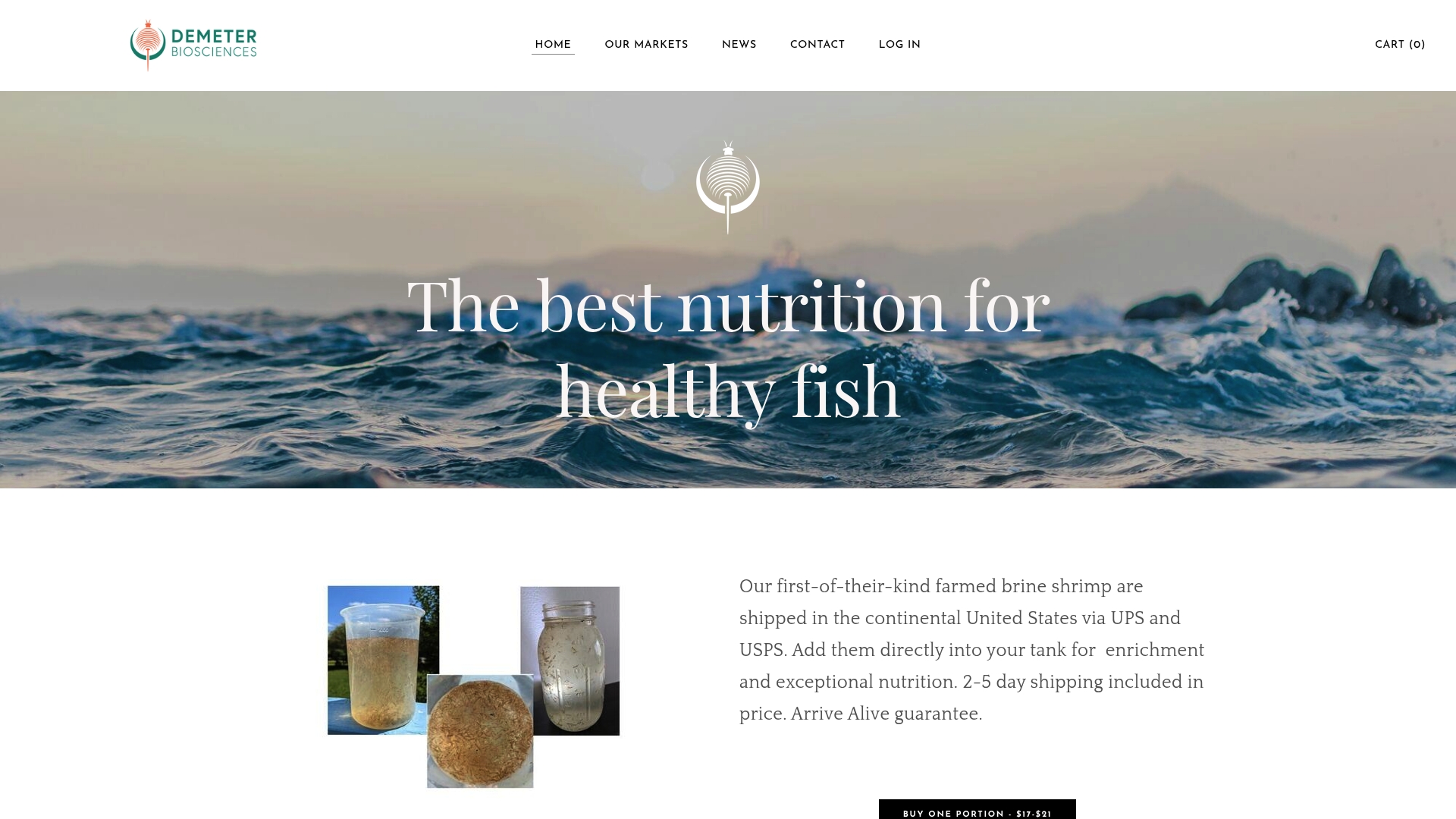
Demeterbioscience produces live brine shrimp cultivated in land-based, controlled systems and fed exclusively on Dunaliella algae, delivering a guaranteed minimum of 40% protein with a consistent fatty acid profile. Unlike wild-harvested brine shrimp, which suffer from seasonal variability and starvation-related nutritional depletion, Demeterbioscience's farmed product removes that uncertainty entirely. Whether you manage an aquaculture operation, run a local fish store, or keep ornamental fish at home, the nutritional quality of your fish's diet starts with what that feed was raised on. Explore our brine shrimp product or learn how microalgae as fish feed supports both fish health and environmental responsibility.
FAQ
What is sustainable fish food in simple terms?
Sustainable fish food is aquatic feed formulated to reduce reliance on wild-caught marine ingredients by using alternative proteins like algae, insects, and plant proteins while maintaining fish health and nutritional performance.
Is algae a good replacement for fishmeal?
Algae supply essential omega-3 fatty acids including DHA and EPA that plant proteins cannot provide, but cell wall disruption through enzymatic hydrolysis is required for carnivorous fish to digest algal proteins effectively.
How do I know if a fish food is genuinely sustainable?
Look for feeds certified under frameworks like GMP+ MI 5.7 or aligned with the EU Product Environmental Footprint methodology, which require auditable life cycle assessments across multiple environmental impact categories, not just carbon footprint.
Can sustainable fish food support the same growth rates as conventional feed?
Yes. Studies with Nile tilapia and gilthead seabream show that insect meal and oilseed-based diets at appropriate inclusion rates produce growth comparable to traditional fishmeal, though physiological endpoints like liver metabolism and digestive enzyme activity can differ by formulation.
Why is consumer demand for sustainable fish food growing?
Retailers are requiring sustainability certification from aquaculture suppliers, regulatory frameworks like the EU Farm to Fork Strategy are reducing wild-caught ingredient use, and buyers are connecting feed sourcing directly to seafood safety and environmental impact.