
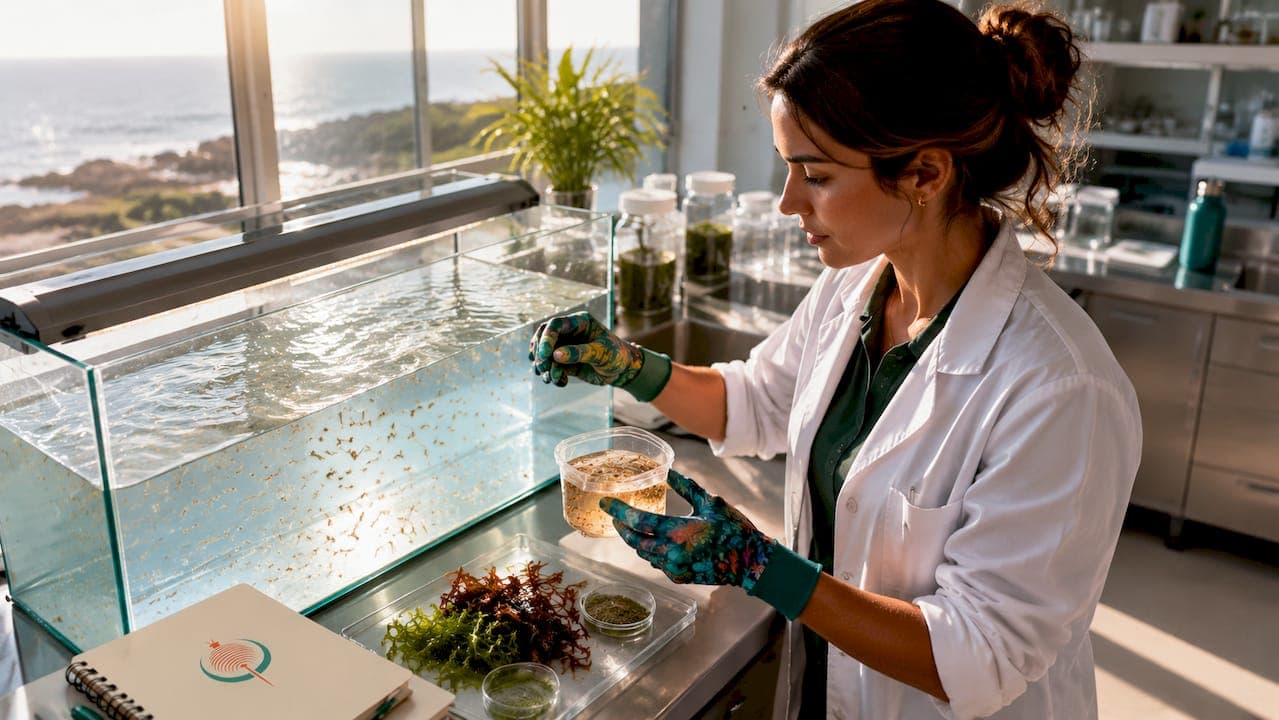
Live aquatic exhibit nutrition is the science-based provision of live and prepared foods, combined with targeted feeding protocols, to sustain optimal health and natural behavior in captive aquatic species. The term covers everything from macronutrient ratios and live prey selection to feeding schedules and contamination control. Aquarium professionals increasingly recognize that frozen foods lose significant nutritional value, including omega-3 fatty acids, vitamins B and C, and digestive enzymes, making live food supplementation a clinical necessity rather than a preference. Demeterbioscience addresses this gap directly through farmed live brine shrimp cultivated on Dunaliella algae, delivering at least 40% protein content with consistent quality.
What is live aquatic exhibit nutrition, and why does it matter?
Live aquatic exhibit nutrition is the structured management of dietary inputs for captive aquatic animals to meet species-specific physiological requirements and support natural behavioral expression. The industry standard term is captive aquatic animal nutrition, and both phrases describe the same practice. The core challenge is that commercial diets, while convenient, cannot fully replicate the biochemical complexity of wild prey. Nutrition is the primary defense against health decline in captive aquatic systems, according to the Merck Veterinary Manual. That means a poorly designed diet does not just slow growth. It suppresses immune function, disrupts reproduction, and shortens lifespan.
Live foods supply nutrients that processing destroys. Freezing degrades lipid structures, oxidizes vitamins, and inactivates the digestive enzymes that fish rely on to absorb nutrients efficiently. A captive fish nutritional protocol that incorporates live prey closes those gaps in ways that pellets and frozen diets cannot. For exhibit managers, this distinction directly affects animal longevity, breeding success, and the behavioral richness that visitors observe.
What are the key nutritional components required for live aquatic exhibits?
Five nutrient categories govern aquatic animal health: proteins, lipids, carbohydrates, vitamins, and minerals. Proteins supply amino acids for tissue repair and enzyme synthesis. Lipids, particularly omega-3 fatty acids like EPA and DHA, regulate inflammation, cell membrane integrity, and reproductive function. Carbohydrates provide metabolic energy, though most carnivorous fish use them inefficiently compared to proteins and fats.
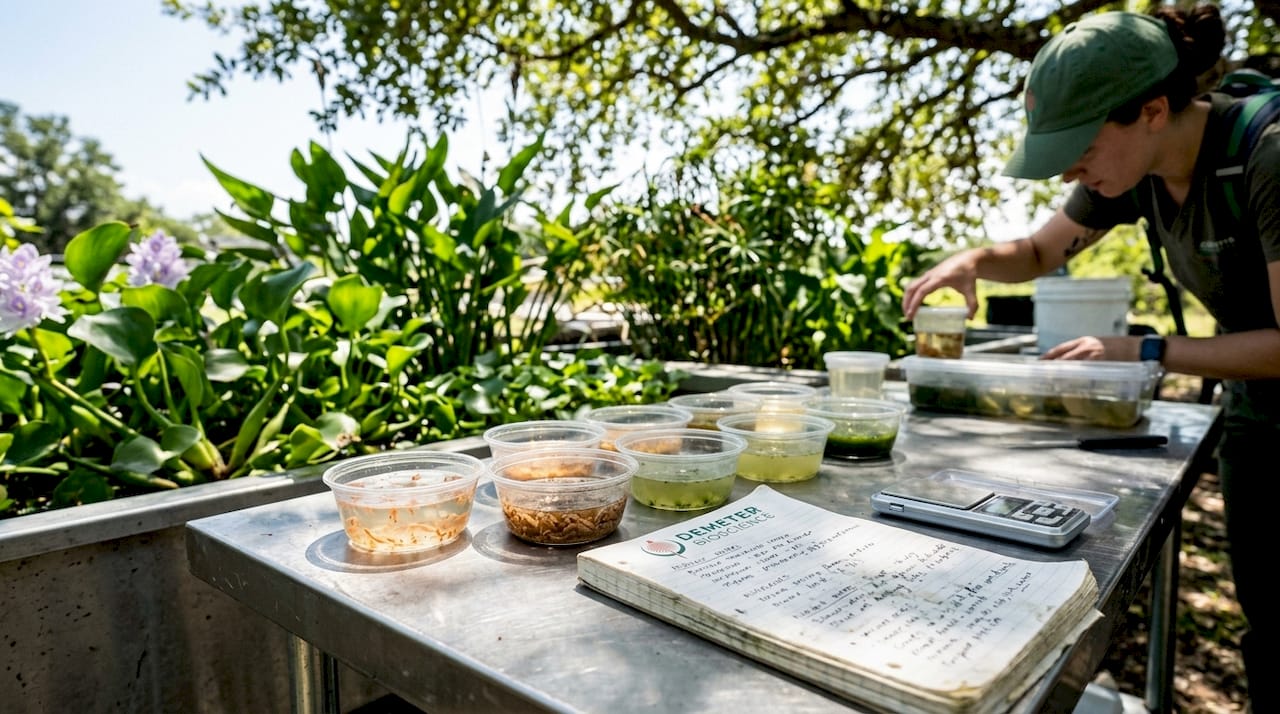
Live foods deliver these nutrients in biologically active forms. Gut-loaded copepods fed phytoplankton provide concentrated plant nutrition wrapped in animal protein, a combination no frozen product replicates. Rotifers, phytoplankton, and copepods each occupy distinct roles in the food chain. Phytoplankton is the foundational nutritional base for sustaining rotifer and copepod populations, which in turn feed larval fish and reef invertebrates. Remove phytoplankton from the system and the entire live food chain collapses.
| Nutrient | Role in aquatic health | Best live source |
|---|---|---|
| Omega-3 fatty acids (EPA, DHA) | Cell membrane integrity, reproduction | Copepods, phytoplankton-fed brine shrimp |
| Vitamin C | Immune function, wound healing | Fresh phytoplankton, live rotifers |
| Vitamin B complex | Metabolic enzyme activity | Live brine shrimp, copepods |
| Digestive enzymes | Nutrient absorption efficiency | Any live prey (inactivated by freezing) |
| High-quality protein | Tissue repair, growth | Live brine shrimp with 40%+ protein content |
Pro Tip: Gut-load live prey for 12–24 hours before feeding. Brine shrimp fed on Dunaliella algae accumulate carotenoids and fatty acids that transfer directly to the fish consuming them, amplifying the nutritional return of every feeding.
How do feeding strategies and protocols optimize nutrition and behavior in aquatic exhibits?
Feeding strategy is as important as feed composition. The method of delivery determines whether animals receive adequate nutrition, whether subordinate individuals compete successfully, and whether natural foraging behaviors remain active. Two primary approaches define professional practice: target feeding and broadcast feeding.
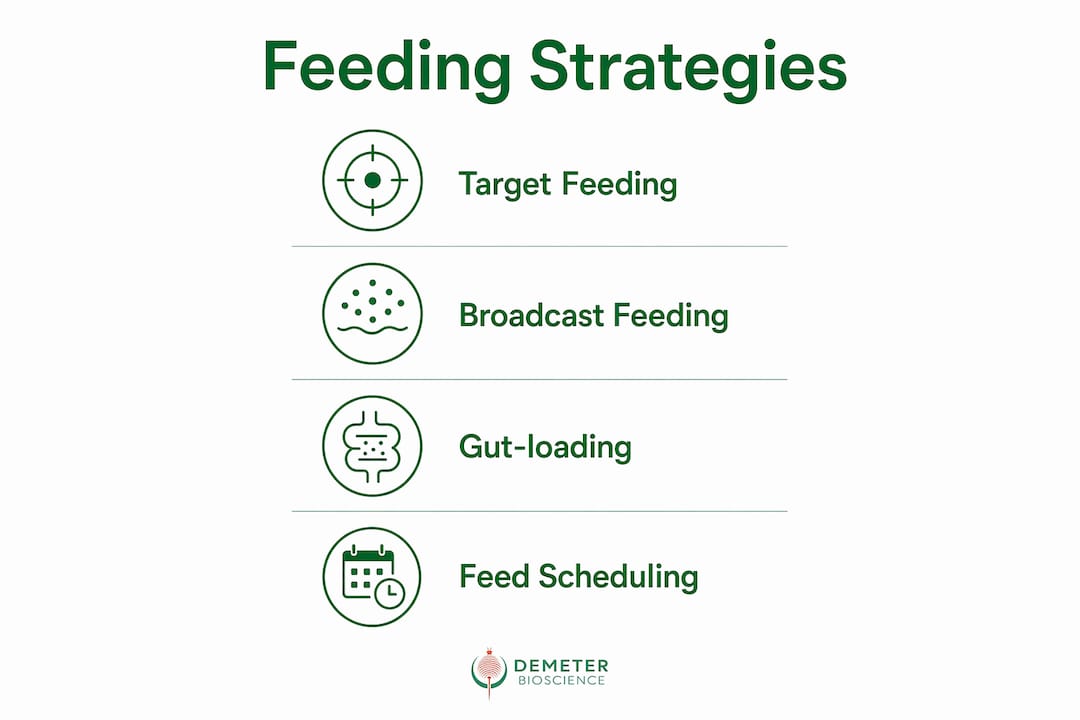
Target feeding delivers food directly to individual animals using physical, visual, or audio cues. New England Aquarium staff use audio cues to feed Retread, a near-blind turtle, ensuring accurate caloric intake without competition from faster tank mates. The same exhibit requires staff to prepare approximately 30 pounds of food daily for the Giant Ocean Tank alone. That scale demands species-specific protocols, not generalized feeding schedules.
Broadcast feeding works for schooling species and filter feeders that naturally intercept suspended particles. The method suits phytoplankton and rotifer delivery to reef tanks but fails for larger carnivores that require weight-based portions. Mixing both methods within a single exhibit is standard practice in large public aquariums managing complex, mixed-species communities.
Enrichment feeding adds a behavioral dimension that pure nutrition cannot address. Slow-dissolving baked feed structures that supply approximately 640g of protein and 90g of fat sustain fish over hours, simulating the extended foraging intervals of wild reef environments. That extended feeding time supports dental health, digestive efficiency, and psychological wellbeing. Grazing protocols that extend feeding time encourage social interaction and natural movement patterns, reducing the stereotypic behaviors that signal chronic stress.
Key principles for effective aquatic exhibit feeding protocols:
- Match feeding frequency to species metabolism. Ectotherms have lower caloric demands than endotherms, and overfeeding degrades water quality faster than underfeeding harms most adult fish.
- Separate feeding zones for dominant and subordinate species to prevent caloric monopolization.
- Use live food feeding responses to assess appetite and health. A fish that ignores live prey is signaling a clinical problem.
- Rotate food types weekly to prevent nutritional monotony and reduce the risk of single-nutrient deficiency.
- Document feeding observations. Behavioral changes at feeding time are the earliest detectable indicator of disease or environmental stress.
Pro Tip: For exhibits with mixed aggression levels, feed dominant species first at one end of the tank, then introduce live prey at the opposite end for subordinate animals. This simple spatial separation reduces competition injuries without structural modifications.
What practical considerations ensure the safety and sustainability of live aquatic exhibit nutrition?
Sourcing is the most underestimated risk in live food programs. Wild-harvested live prey can carry pathogens, parasites, and environmental contaminants including PCBs and heavy metals. Aquarium veterinary guidance stresses that high-quality protein and fats are necessary, but environmental contamination in sourced prey makes supplier vetting a clinical responsibility, not an administrative one.
Farmed live prey eliminates most wild-sourcing risks. Controlled cultivation environments prevent exposure to agricultural runoff, industrial pollutants, and seasonal variability that depletes wild prey nutritional content. Demeterbioscience's land-based systems cultivate brine shrimp exclusively on Dunaliella algae, removing the starvation conditions common in natural ecosystems that strip wild-harvested brine shrimp of their nutritional value before they reach the exhibit.
| Live feed type | Preparation requirement | Primary safety consideration |
|---|---|---|
| Brine shrimp (farmed) | Gut-load on phytoplankton 12–24 hours | Verify algae feed source is contaminant-free |
| Copepods | Culture on phytoplankton; maintain density | Monitor for culture crashes and bacterial blooms |
| Rotifers | Feed Nannochloropsis or similar; harvest at peak | Avoid overculturing; rotifers degrade water quality rapidly |
| Phytoplankton | Maintain under controlled light and temperature | Prevent contamination from competing algae species |
| Wild-caught live prey | Quarantine minimum 2 weeks before use | Screen for parasites, pathogens, and chemical residues |
Integrating live food cultivation within the aquarium facility reduces supply chain risk and improves nutritional consistency. On-site phytoplankton reactors feed rotifer and copepod cultures, which in turn supply exhibit tanks on a predictable schedule. This closed-loop approach also reduces the carbon footprint of live food logistics, aligning with institutional sustainability commitments.
Which aquatic species and life stages benefit most from live aquatic exhibit nutrition?
Not all species benefit equally from live food supplementation. The clearest cases are obligate live prey feeders and early life stage animals where live nutrition determines survival, not just growth rate.
Species with the highest live food dependency include:
- Seahorses and pipefish. These species do not recognize static food as prey. Live moving prey is required for feeding responses to trigger. Pellets and frozen mysids fail unless the animal is conditioned over weeks through painstaking behavioral training.
- Larval and juvenile fish. Fry of nearly all marine species require live zooplankton, typically rotifers and copepods, during the first weeks of life. Mouth gape limits particle size, and live prey movement stimulates the strike response that frozen particles cannot elicit.
- Obligate carnivores. Species like lionfish, moray eels, and large groupers perform best on live or freshly killed prey that retains intact lipid profiles.
- Reef invertebrates. Corals, feather duster worms, and bivalves are suspension feeders that depend on live phytoplankton and zooplankton delivered in the water column.
- Herbivores and grazers. Tangs, rabbitfish, and surgeonfish require continuous access to algae-based foods. Consistent nutrition for aquatic specimens that includes fresh macroalgae and live phytoplankton supports gut microbiome stability in these species.
Life stage matters as much as species identity. A juvenile clownfish needs live rotifers. An adult clownfish thrives on a mixed diet of prepared and live foods. An aging broodstock pair requires elevated omega-3 and vitamin E levels to sustain egg quality. Nutrition protocols that treat all life stages identically produce suboptimal outcomes across the board. Exhibit fish require specialized nutrition tailored to both species identity and developmental stage.
Key Takeaways
Live aquatic exhibit nutrition requires species-specific live food programs, targeted feeding protocols, and contamination-free sourcing to sustain animal health, natural behavior, and breeding success in captive environments.
| Point | Details |
|---|---|
| Live food fills nutritional gaps | Freezing destroys omega-3s, vitamins B and C, and digestive enzymes that live prey preserves. |
| Gut-loading multiplies nutritional value | Feeding brine shrimp or copepods on phytoplankton before use transfers concentrated fatty acids and vitamins to exhibit animals. |
| Feeding method shapes behavior | Target feeding reduces competition stress; enrichment structures extend foraging time and support psychological health. |
| Sourcing determines safety | Farmed live prey from controlled systems eliminates contamination risks that wild-harvested sources carry. |
| Life stage drives diet design | Larvae need live zooplankton to survive; broodstock need elevated omega-3s to reproduce; adult protocols differ from juvenile ones. |
The case for treating live nutrition as infrastructure, not supplement
Most aquarium nutrition programs treat live food as an optional enhancement layered on top of a pellet-based foundation. That framing is wrong, and the animal health data shows it. Live food is not a supplement. For sensitive species, larvae, and broodstock, it is the foundation. Pellets are the supplement.
What I have observed working in this field is that institutions underinvest in live food programs because the logistics feel complex and the benefits are slow to appear. A fish that receives inadequate omega-3s does not collapse immediately. It declines over months, showing reduced color, slower healing, and failed spawning attempts. By the time the connection to diet is made, the animal has already lost significant health reserve.
The gut-loading step is where most programs leave the most value on the table. Brine shrimp harvested from a starvation-condition wild source and fed directly to exhibit fish deliver almost no nutritional benefit beyond crude protein. The same brine shrimp gut-loaded on Dunaliella for 24 hours become a genuinely enriched food source. That difference is not marginal. It is the difference between a diet that maintains and a diet that builds.
Staff education is the other underrated variable. Feeding observation is a clinical skill. A trained feeder notices the fish that hesitates, the one that spits food, the one that is being displaced. Those observations, documented consistently, give veterinary staff early warning that no blood panel can match for timeliness. Nutrition science in aquatic exhibits evolves faster than most training programs update. Continuous education is not optional for teams managing complex live exhibits.
— Demeter
Demeterbioscience's live brine shrimp for aquatic exhibit nutrition
Aquarium professionals who have built live food programs know the hardest part is consistency. Wild-harvested sources fluctuate with seasons, and in-house cultures demand constant management. Demeterbioscience solves both problems with farmed live brine shrimp cultivated in land-based, organic systems fed exclusively on Dunaliella algae.
Every batch delivers a minimum of 40% protein content with a stable fatty acid profile, removing the nutritional variability that undermines exhibit health programs. Demeterbioscience offers live brine shrimp products in direct-to-consumer shipments, monthly subscription plans, and bulk retail packages designed for museums and public aquariums. For institutions exploring microalgae as fish feed, Demeterbioscience's algal cultivation expertise supports both live prey enrichment and direct supplementation programs. Contact Demeterbioscience to discuss a sourcing plan matched to your exhibit's species profile and feeding schedule.
FAQ
What is the difference between live and frozen aquatic exhibit food?
Live food retains intact omega-3 fatty acids, vitamins B and C, and active digestive enzymes that freezing destroys. These nutrients directly affect immune resilience, reproductive success, and growth rates in captive aquatic species.
How do you gut-load live prey for aquatic exhibits?
Gut-loading involves feeding live prey such as brine shrimp or copepods on nutrient-dense phytoplankton for 12–24 hours before use. This process transfers concentrated fatty acids and vitamins from the algae into the prey, which then deliver those nutrients to exhibit animals upon consumption.
Which species require live food in aquatic exhibits?
Seahorses, pipefish, larval fish of most marine species, and obligate carnivores like lionfish have the highest live food dependency. These animals either do not recognize static food as prey or require nutrients that only live, biochemically intact food provides.
How often should aquatic exhibit animals be fed?
Feeding frequency depends on species metabolism, life stage, and exhibit design. Larval fish require multiple feedings daily, while adult ectotherms in large exhibits may feed adequately every 1–2 days. Overfeeding degrades water quality faster than it benefits most adult fish.
What contamination risks apply to live aquatic exhibit food?
Wild-harvested live prey can carry PCBs, heavy metals, parasites, and bacterial pathogens. Farmed live prey from controlled, land-based systems eliminates most of these risks by removing exposure to agricultural runoff, industrial pollutants, and wild pathogen loads.