
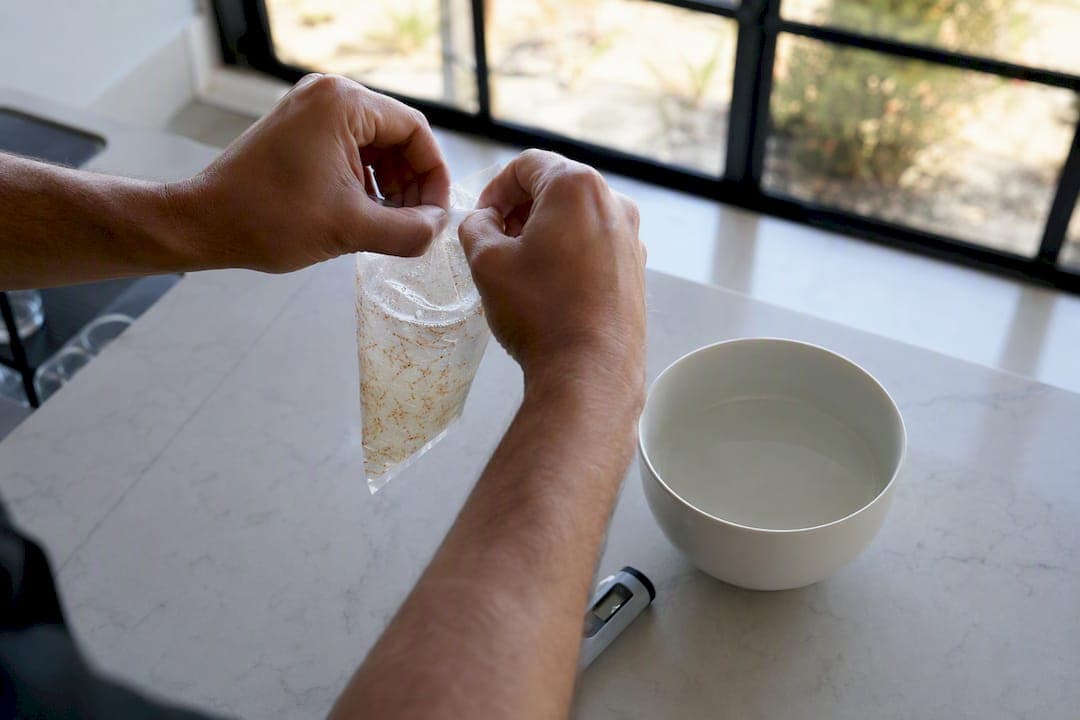
Open the box, check the water temperature and bag seal, and decide within minutes whether to feed, refrigerate, or acclimate. If shrimp are active and you'll feed within a few hours, rinse and acclimate them straight into the tank; if not, move them to cold, low-density holding fast. Log the shipment details before anything else gets tossed.
TL;DR:
- Shipping live brine shrimp quickly indoors away from heat and sunlight minimizes stress and helps accurately assess the condition before feeding or holding.
- Active swimming adults and a visible orange nauplii cloud indicate a healthy shipment, while ammonia or sulfur odors signal potential problems.
- Proper acclimation involves gentle temperature equalization, slow transfer into prepared saltwater, and avoiding turbulence that could damage fragile nauplii.
- Refrigeration at around 4°C can preserve nauplii for up to 48 hours with minimal weight loss, but adult shrimp require shallow containers and active aeration for longer storage.
- Always treat shipping water as waste, avoid adding it directly to tanks, and log shipment details for effective management and troubleshooting.
Table of Contents
- How Do You Unpack Live Fish Food Safely?
- What Should You Check Before Acclimating Brine Shrimp?
- How Do You Acclimate Adult Brine Shrimp and Nauplii?
- How Long Can You Store Live Brine Shrimp Before Feeding?
- How Do You Rinse and Enrich Brine Shrimp Before Feeding?
- How Should You Handle Shipping Water and Recordkeeping?
- Why Farmed, Microalgae-Fed Brine Shrimp Change the Equation
- Where to Order Farmed Brine Shrimp for Your Tank or Facility
- Sources
How Do You Unpack Live Fish Food Safely?
Speed matters more than most people think in the first half hour. Brine shrimp shipped as live fish food arrive stressed from transit, and every extra minute in a hot car or direct sun compounds that stress before you've even opened the bag.
Here's the sequence that actually protects the shipment:
- Open the box indoors, away from direct sunlight, and keep bags upright the whole time.
- Never leave bags in a hot car, near a heater, or on a sunbaked windowsill, even for "just a minute."
- Check the timestamp and any supplier notes taped to the box or included in the shipping confirmation.
- Inspect the bag seal for leaks, then check the water. Green water usually means the shrimp were fed live algae before shipping. Cloudy water with a sour odor is a warning sign, not a nutrition signal.
- Take the bag's temperature with a quick strip thermometer or by feel against your wrist before deciding what's next.
Once you've done that, you're choosing between three paths: feed shortly, refrigerate short term, or acclimate now. Live, Dunaliella-fed shrimp tend to arrive in a distinct green tint, and that's a good sign, not something to rinse away in a panic.
What Should You Check Before Acclimating Brine Shrimp?
A healthy shipment looks alive, not just present. Adults should be swimming, not sitting motionless at the bottom of the bag. Nauplii shipments often show up as a fine orange cloud suspended in the water, a sign they hatched recently and are still viable.
Before you do anything else, look for these signals:
- Active swimming among adults, with minimal die off visible at the bottom of the bag.
- A visible orange cloud of nauplii rather than a settled, still layer.
- No strong ammonia or sulfur smell when you open the bag.
- Intact seals with no salt crust or leakage along the seams.
Once the shipment checks out, prepare your holding water before the shrimp go anywhere. Brine shrimp tolerate a fairly wide salinity range, but holding water works best mixed to match the salinity noted in your water parameter guide, with pH kept close to neutral to slightly alkaline. Mix marine salt into fresh, dechlorinated water and treat it with an aquarium conditioner. Conditioners that chelate heavy metals add a real layer of protection during hatch and holding, since trace metal toxicity is a quiet killer in home mixed saltwater.
Statistic Callout: Refrigerated nauplii held at roughly 4°C for 24 to 48 hours lose only about 2.5% of their dry weight after the first day, compared to much steeper losses at room temperature.
One mistake shows up constantly: topping off evaporated water with more saltwater. Salt doesn't evaporate, only water does, so repeated saltwater top offs push salinity higher every time until it becomes lethal. Replace evaporation with fresh water only.
How Do You Acclimate Adult Brine Shrimp and Nauplii?
Adults and nauplii need different handling once the bag is confirmed healthy. Adults can tolerate a bit more turbulence; nauplii cannot.
For adult brine shrimp:
- Float the sealed bag in your holding tank or container for 10 to 15 minutes to equalize temperature.
- Open the bag and either siphon shrimp gently into the prepared holding water or pour small amounts in gradually over 10 to 20 minutes.
- Run gentle aeration in the holding container once shrimp are transferred, since oxygen demand climbs fast in a crowded container.
For nauplii:
- Float the bag for a shorter period, generally 5 to 10 minutes, since nauplii are more temperature-sensitive per volume of water.
- Transfer in smaller, slower pours rather than one dump, avoiding any strong current from a powerhead or air stone pointed directly at them.
- Skip aggressive stirring or siphoning. Nauplii bodies are fragile enough that turbulence alone can cause damage.
Pro Tip: If you're feeding within the hour, you can often skip a full acclimation and just do a fast temperature equalization instead. Save the slow drip method for shrimp headed into a delicate display tank or a breeding setup where every individual counts.
The tradeoff between rinsing before feeding and transferring with shipping water comes down to timing. Shipping water carries some residual nutrition from pre-shipment feeding but also carries waste and bacterial load. For feeding within the hour, a quick rinse is usually the better call. For holding longer than that, always transfer to fresh holding water regardless.
How Long Can You Store Live Brine Shrimp Before Feeding?
Cold storage buys you time without sacrificing much nutrition. Nauplii refrigerated near 4°C hold up well for 24 to 48 hours, with practitioner reports putting safe densities somewhere in the 2,000 to 8,000 per milliliter range without aeration. Push past that density and you'll need aeration to avoid a hypoxic crash overnight.
Adults are a different story. They need shallow, wide containers with active aeration.
- Keep adult containers shallow rather than deep, since surface area drives oxygen exchange more than volume does.
- With aeration running, a one gallon container can reasonably hold 500 to 1,000 adults.
- Watch for the most common failure mode: oxygen depletion, which shows up as shrimp gathering at the surface gasping before a mass die off.
Statistic Callout: Adult shrimp held in their original shipping bag without added aeration typically survive only one to two days before oxygen levels crash.
If you're holding shrimp longer than a day, a light dose of live phytoplankton or powdered feed keeps them fed and reduces cannibalism in denser adult populations, as explained in How Fish Shop Stock Control Works: A Manager's Guide.
How Do You Rinse and Enrich Brine Shrimp Before Feeding?
Rinsing removes shipping residue and shells before shrimp hit your display tank, and it takes less time than most people assume.
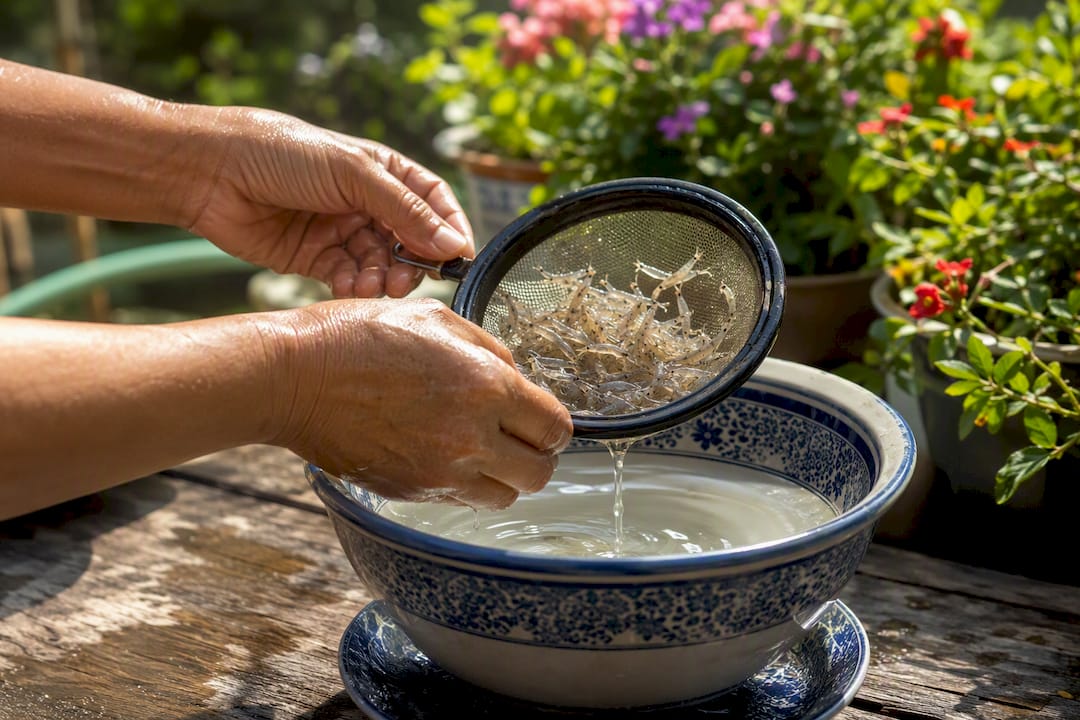
- Pour the shrimp through a fine mesh net or brine shrimp net over a bowl, letting shipping water drain through.
- Let shells settle at the bottom of a tall cylinder for a minute or two, then siphon shrimp from the upper layer, a technique straight out of standard hatching and harvesting protocols.
- Rinse briefly with conditioned fresh water if the shrimp are headed into a freshwater tank, since this cuts down on salt introduction.
For an extra nutritional boost, hold shrimp for a few hours in water dosed with live phytoplankton like Tetraselmis or Nannochloropsis, or a commercial enrichment product. This gut loads the shrimp with lipids and pigments right before feeding, a trick detailed further in our rinsing before feeding guide.
Pro Tip: Turn off powerheads and filter intakes for five to ten minutes before feeding live shrimp, then distribute them across several spots in the tank instead of dumping them in one place. Fish spread out to hunt, and your filter doesn't inhale half the meal.
How Should You Handle Shipping Water and Recordkeeping?
Shipping water and shells carry bacterial load you don't want in a display system, so treat them as waste, not bonus water.
- Never pour shipping water directly into a display tank, no matter how tempting it looks with visible algae still in it.
- Neutralize or freeze shipping water before pouring it down a drain, and rinse nets, cylinders, and any tools used with shrimp before reusing them elsewhere.
- Keep separate equipment for culture work and display tank maintenance to avoid cross-contamination.
- Log the date and time received, the supplier lot number, any observed mortality, and what you did with the shipment. This ten-second habit saves real headaches when a batch behaves differently than expected.
Why Farmed, Microalgae-Fed Brine Shrimp Change the Equation
Wild-harvested brine shrimp come from a feast-or-famine environment, and their nutritional content swings with whatever algae bloom happened to be available that season. Farmed, Dunaliella-fed shrimp sidestep that variability entirely, arriving with a consistent, predictable protein and lipid profile instead of a nutritional guessing game.
That consistency matters most once shrimp are in transit. Shrimp that were well fed and healthy going into the box hold their nutritional value better through cold storage and acclimation than shrimp already running on nutritional reserves. For local fish stores and museums ordering in volume, a subscription or bulk arrangement smooths out ordering schedules and keeps holding tanks consistently stocked without last minute scrambling.
— Demeter
Where to Order Farmed Brine Shrimp for Your Tank or Facility
Once you know how to unpack, acclimate, and hold live brine shrimp correctly, the next decision is simple: who you're ordering from actually determines how much of this work pays off. Shrimp that arrive already stressed from a starvation diet or inconsistent farming conditions won't hold up through even a well-run acclimation process. Demeterbioscience's land-based, Dunaliella-fed cultivation is built specifically to arrive in better condition and hold its nutritional value longer once it's in your hands.
Hobbyists feeding a single display tank can order live brine shrimp as a one-time shipment or set up a recurring subscription so shrimp show up on a predictable schedule. Local fish stores, museums, and aquaculture operators managing higher volume can move straight to bulk ordering, and institutional buyers with specific volume or delivery needs can reach out directly through Demeterbioscience's contact page to work out a plan that fits their tank count and feeding schedule.
Sources
- HATCHING and GROWING BRINE SHRIMP (Artemia) — Diana Walstad
- Care Guide: Brine Shrimp | Carolina Biological Supply