
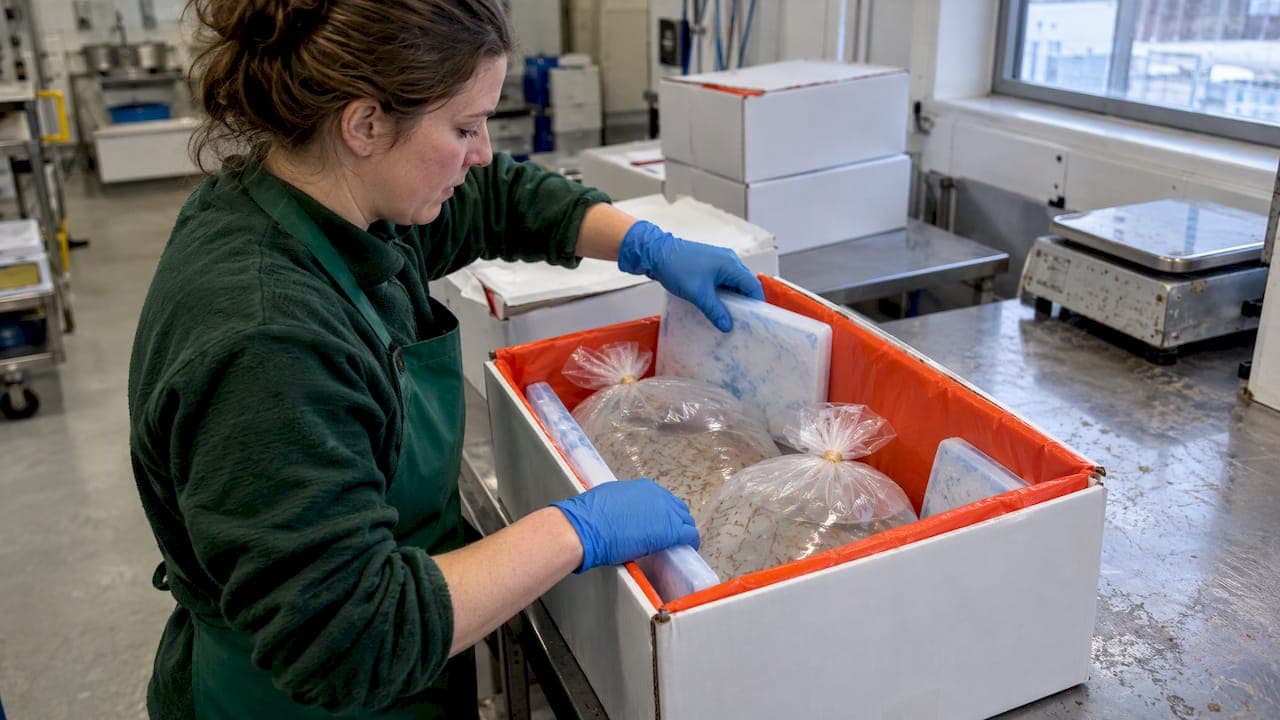
Yes, you can ship live brine shrimp through summer heat if you control two things: transit temperature and dissolved oxygen. Keep the water between 2°C and 10°C and dissolved oxygen above 4 ppm, and prioritize insulated, oxygen-enriched packaging with the shortest possible transit time.
TL;DR:
- Maintaining water temperatures between 2°C and 10°C is essential for summer shipping, with colder water slowing metabolism and preserving viability.
- Oxygen levels must stay above 4 ppm, which can be achieved by inflating bags with pure oxygen or oxygen-flushing coolers before sealing.
- Using insulated packaging with appropriately sized cold packs prevents temperature spikes and cold shock during transit, especially in delivery vans or on hot docks.
- Shipping early in the week and using next-day service minimizes heat exposure and oxygen depletion risks during summer transport.
- Proper post-arrival practices, such as immediate inspection, gradual acclimation, and avoiding over-crowding, significantly improve survival rates of live brine shrimp.
Table of Contents
- Priority checklist before you order or ship in summer
- Why summer shipping is harder on brine shrimp
- Packaging and temperature control for summer transit
- Keeping dissolved oxygen above 4 ppm in concentrated shipments
- Timing and carrier choices that cut heat exposure
- Receiving and acclimation: the first 30 to 60 minutes
- Troubleshooting dead-on-arrival shipments
- Why farmed, microalgae-fed Artemia lowers summer shipping risk
- Ordering for reliable summer delivery
- FAQ
- Sources
Priority checklist before you order or ship in summer
Summer shipments fail or succeed based on decisions made before the box ever leaves the building. A short list of priorities, followed in order, prevents most warm-weather losses.
- Schedule harvest and packing as close to carrier pickup as possible, and avoid weekend transit windows entirely.
- Build an insulated box with phase-change or gel cold packs sized for the expected transit window, never letting ice touch the water bag directly.
- Use oxygen-enriched bags or low-density water packing, and keep nauplii concentration below crowding thresholds.
- Confirm expedited routing with your carrier, add insurance, and label the package with explicit handling instructions.
- Set up the receiving tank and acclimation plan before the shipment arrives, not after.
Each of these steps addresses a specific failure mode, whether it is a delayed flight, a hot loading dock, or a receiving tank that is not ready when the box shows up.
Why summer shipping is harder on brine shrimp
Heat changes brine shrimp biology in ways that work against you the moment a package leaves cold storage. Warmer water raises metabolic rate, which burns through the animals' energy reserves faster and leaves less in the tank by the time they arrive. Research from Virginia Tech's extension program found that Artemia held at 2°C to 10°C retained high viability for many strains for 48 hours, a window that shrinks considerably once temperatures climb into summer ambient ranges.
Warm water also holds less dissolved oxygen to begin with, so a shipment that would be stable in winter can slide below the safe threshold in summer unless you actively manage it. On top of the biology, summer brings its own logistics problems: seasonal harvest timing can get inconsistent for wild-sourced supply, which is part of why farmed production on a fixed schedule tends to produce steadier quality than harvest-dependent sourcing.
Packaging and temperature control for summer transit
The research-backed target for brine shrimp in transit is 2°C to 10°C, a range cold enough to slow metabolism and preserve nutritional stores without shocking the animals. Staying inside that window in a hot delivery van or on a sun-baked loading dock takes deliberate packaging choices, not luck.
Three packaging approaches cover most summer scenarios, each with trade-offs documented in extension guidance on waterless shrimp shipping:
- An insulated box with an inflated oxygen bag inside holds temperature well and is the standard choice for most hobbyist and retail orders.
- A sealed cooler flushed with oxygen before closing extends survival time for larger or higher-density shipments.
- A waterless, moist-bedding method reduces freight weight and can lower metabolic stress for species that tolerate it, though it demands tighter humidity and temperature control.
Cold-pack sizing matters as much as packaging style. Gel or phase-change packs sized to the shipment's thermal load avoid the temperature spikes that loose ice can cause, and ice should never sit directly against the water bag since the resulting cold shock can be as damaging as overheating. Pack cold packs along the box walls rather than the center, so a cold spot never forms next to the animals, and build in a buffer for delays: a box that holds its temperature for 18 hours when the shipment is scheduled for 14 gives you margin if a flight gets rerouted.
Pro Tip: Freeze cold packs flat and rotate two to three times the number you need for one shipment so a fresh set is always ready for back-to-back summer orders.
For holding stock short-term before it ships, our guidance on storing live brine shrimp for 48 to 72 hours covers the same cold and aeration principles in more depth.

Keeping dissolved oxygen above 4 ppm in concentrated shipments
Dissolved oxygen is the variable most likely to collapse quietly during a summer shipment, since warm water sheds oxygen faster than cold water even before you factor in the animals consuming it. The 4 ppm threshold is the point below which survivability and nutritional enrichment both start to suffer, so every packing decision should protect that number.
- Inflate shipping bags with pure oxygen rather than air, which buys substantially more time before levels drop critically.
- For coolers rather than bags, flush the sealed container with oxygen immediately before closing it.
- Keep nauplii density low enough that collective oxygen consumption does not outpace what the enriched headspace can supply.
- Mechanical aeration works for short local transfers but is impractical for shipped packages, so oxygen enrichment does the job instead.
- Choose a waterless, moist-bedding method over a water-filled bag when ambient temperatures are extreme and the species tolerates it, since less water means less weight and less thermal mass to manage.
Higher density shipments deplete oxygen faster in direct proportion to the number of animals sharing the same water, which is why density limits matter as much as the oxygen fill itself.
Timing and carrier choices that cut heat exposure
The single biggest lever you control is how much total time the animals spend outside cold storage. Shipping early in the week and early in the day avoids weekend layovers in hot sorting hubs, where packages can sit for a full day before the next transit leg. Overnight or next-day-air services are worth the added cost in summer, since every extra hour in a warm truck or warehouse works against the temperature and oxygen targets you just built into the box.

Confirm with your carrier how they handle live-animal or perishable shipments in hot climates, and ask whether expedited sorting is available so the package avoids general freight queues. Insure the shipment and label it clearly with handling instructions, since a driver who knows to keep a box out of direct sun is far less likely to leave it on a dashboard. Coordinate the pickup window tightly with your harvest and packing schedule so there is no gap between a finished package and the carrier's arrival. For a companion look at the same logistics from the cold end of the calendar, see our notes on winter shipping and order holds below 45°F.
Receiving and acclimation: the first 30 to 60 minutes
What happens in the minutes after a box arrives often decides whether a marginal shipment survives.
- Open the box immediately and check water temperature, note any packaging damage, and photograph the contents before doing anything else.
- Measure dissolved oxygen and temperature if you have the equipment, since those readings tell you how much time you have before transferring.
- Acclimate gradually by matching temperature and salinity to your receiving tank over 15 to 20 minutes rather than dumping the bag directly in.
- If feeding is delayed, hold the shrimp cold and aerated rather than at room temperature.
- Start with enriched adults for immediate feeding, and reserve newly hatched nauplii for batches you plan to grow out.
Our guide to unpacking live fish food walks through preserving nutritional quality during this same window, and our notes on how long live brine shrimp stay fresh cover what to expect if you cannot feed immediately.
Troubleshooting dead-on-arrival shipments
Most DOA shipments trace back to one of four causes: temperature abuse in transit, oxygen depletion, overcrowding in the bag, or contamination introduced during packaging. Hygienic processing such as rinsing and separating shells before packing reduces the contamination risk specifically.
If a shipment arrives compromised, photograph the box and contents immediately, retain the packaging and a water sample, and contact the seller or carrier with whatever temperature or oxygen readings you managed to capture. Ask for specific packaging or routing changes on the next order rather than a generic apology. Our first-half-hour triage guide covers the documentation steps in more detail.
Why farmed, microalgae-fed Artemia lowers summer shipping risk
That predictability lets us schedule harvest and packing around carrier pickup instead of around wild availability, and it's why subscription and bulk ordering smooth out summer supply for buyers who need a dependable feeding schedule.
— Demeter
Ordering for reliable summer delivery
Every shipment is packed with temperature and oxygen targets designed to maintain quality, based on farmed, Dunaliella-fed supply rather than wild harvest that varies with the season. Hobbyists can order live brine shrimp directly, while local fish stores, museums, and research institutions needing steadier volume can use our bulk order page to lock in consistent summer supply.
A Demeter Biosciences membership at $25 per month adds recurring shipments to your schedule so you are not placing a fresh order every time a heat wave rolls in. Check availability and place an order through our live brine shrimp page today.
FAQ
What temperature should live brine shrimp stay at during shipping?
Keep brine shrimp between 2°C and 10°C during transit, a range that slows metabolism enough to preserve energy reserves without shocking the animals. Temperatures above this range accelerate oxygen depletion and shorten the safe transit window.
How much dissolved oxygen do brine shrimp need in a shipping bag?
Dissolved oxygen should stay above 4 ppm throughout transit to support survival and nutritional enrichment. Oxygen-enriched bags or sealed, oxygen-flushed coolers are the standard ways to hold levels above that threshold in warm weather.
Is waterless shipping safe for brine shrimp in summer?
A waterless, moist-bedding method can work for species that tolerate it and reduces freight weight and thermal mass compared to a water-filled bag. It demands tighter humidity and temperature control, so it suits experienced shippers more than first-time senders.
How long can brine shrimp survive in cold storage before feeding?
Cold storage at 2°C to 4°C with adequate aeration can preserve nauplii for 24 to 48 hours without losing nutritional value for many strains, though strain differences exist. Holding shrimp cold and aerated, rather than at room temperature, is the safest option when feeding is delayed after arrival.
What should I do if my brine shrimp shipment arrives dead?
Photograph the box and contents immediately, retain the packaging and a water sample, and contact the seller or carrier with any temperature or oxygen readings you captured. Common causes include temperature abuse, oxygen depletion, overcrowding, or contamination during packing, so requesting specific changes for the next shipment helps prevent a repeat.
Sources
- Artemia Culture for Intensive Finfish and Crustacean Larviculture | VCE Publications | Virginia Tech
- Waterless Shipment of Warm-Water Shrimp | FST-245, Virginia Tech
- International study on cold storage of live Artemia nauplii (VLIZ)
- Artemia production for marine larval fish culture | SRAC Publication No. 702, TAMU extension