
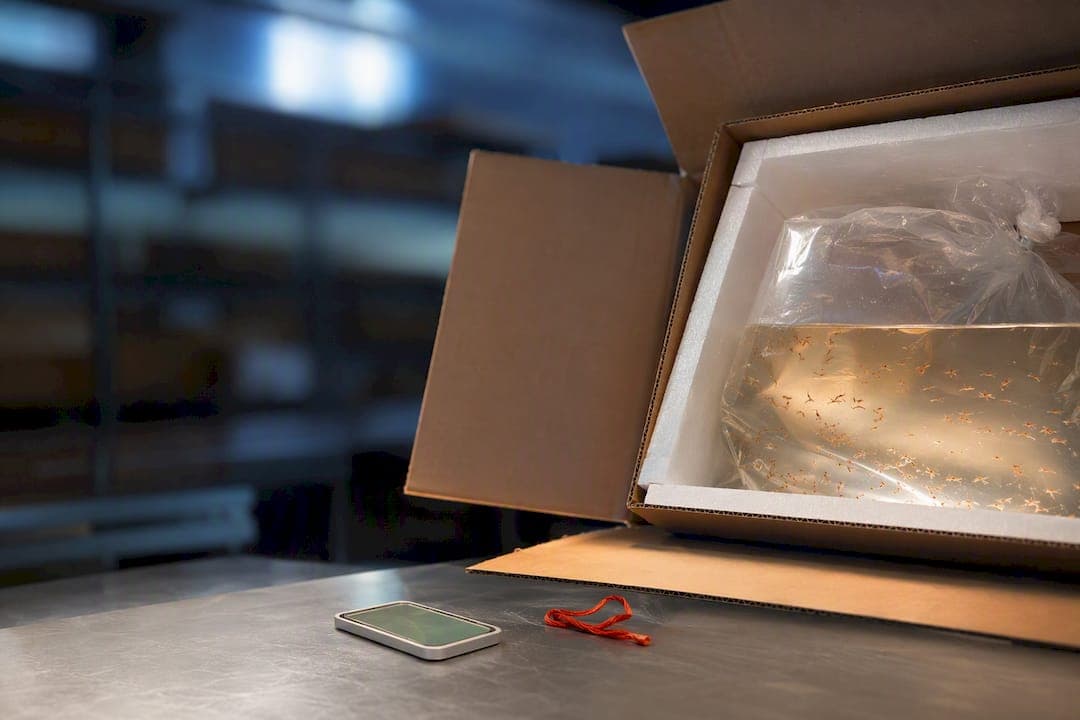
Yes, you can get brine shrimp overnight, but the product form dictates your odds. Frozen brine shrimp ship overnight most reliably with dry ice and insulated coolers, typically early in the week. Live eggs and nauplii can arrive overnight too, but only within limited windows tied to aeration limits and seller ship-day rules. Expect to pay a premium either way, and always confirm cutoff times and an arrive-by guarantee before you check out.
TL;DR:
- Shipping during Monday to Wednesday minimizes weekend delays that can kill live or frozen brine shrimp, especially for shipments arriving after Friday.
- Live eggs are the most reliable option for overnight transit because they hatch in transit and can survive dormant periods longer than live nauplii.
- Proper packaging with insulation and dry ice adds significant weight and cost but is essential to keep frozen shrimp viable, especially when shipping on back-to-back days.
- Ordering before the seller's cutoff time and confirming the carrier and service level in writing is crucial to ensure overnight delivery and receipt in good condition.
- Regular bulk or monthly shipments from controlled systems providers like Demeter Biosciences offer more consistent, schedule-friendly options than rushing individual orders on short notice.
Table of Contents
- Shipping Timelines and Cutoffs for Fast Brine Shrimp Delivery
- Live Eggs, Live Nauplii, or Frozen: What Changes in Transit
- Packaging Standards That Make or Break an Overnight Order
- How to Order Brine Shrimp So It Actually Arrives Overnight
- Demeter Biosciences' Approach to Fast Live Shrimp Delivery
- Getting Brine Shrimp Ready to Travel
- What to Do the Moment Your Shipment Arrives
- Why Overnight Brine Shrimp Shipments Fail
- The Real Bottleneck Isn't the Carrier, It's the Calendar
- Order Live Brine Shrimp That Actually Survives the Trip
- Sources
- FAQ
Shipping Timelines and Cutoffs for Fast Brine Shrimp Delivery
Suppliers don't ship temperature-sensitive orders whenever a customer clicks "buy." Most schedule frozen and live brine shrimp shipments in a Monday through Wednesday window, sometimes stretching to Thursday, specifically so packages never sit in a warehouse or delivery truck over a weekend. A cooler that ships Thursday afternoon and stalls at a regional hub through Saturday and Sunday is likely to contain shrimp that do not survive by Monday. That single scheduling rule shapes almost every other policy you'll run into when you try to buy brine shrimp online.
Carrier choice matters just as much as ship day. Overnight seafood shipping typically runs through one of three tiers:
- FedEx Priority Overnight or UPS Next Day Air, the fastest and most expensive option, usually reserved for live product or urgent frozen orders
- 2-day air service, a middle ground that costs less but adds a full day of transit risk for live goods
- Standard ground or 3-day, rarely used for live shrimp, sometimes acceptable for well-insulated frozen packs in cooler weather
Cutoff times drive whether your order actually leaves that day or slides to the next shipping window. A vendor might state "order by 1 p.m. local time to receive it tomorrow," and missing that window by even ten minutes can push your delivery back an entire cycle, according to product listings that advertise next-day cutoffs. Always check the cutoff in the seller's time zone, not your own, since a lot of hobbyists lose a shipping day simply by assuming Eastern and Pacific cutoffs match.
Live Eggs, Live Nauplii, or Frozen: What Changes in Transit
Not every brine shrimp product travels the same way, and picking the wrong form for your timeline is the most common mistake first-time buyers make.
- Live eggs (often decapsulated). These are frequently packaged to hatch in transit, arriving as nutritious live nauplii roughly 24 to 48 hours after shipment, according to live-food product documentation. Decapsulation strips the hard outer shell, which lowers parasite risk and lets any unhatched eggs still serve as feed enrichment. This is often the most forgiving option for overnight or two-day transit because the eggs are dormant cargo until they start hatching.
- Live nauplii. Once hatched, brine shrimp become far more fragile. They need aerated bags, stable temperatures, and minimal jostling, which is why most vendors restrict live nauplii shipments to early-week pickups and only guarantee live arrival under specific handling conditions.
- Frozen brine shrimp. These require dry ice and rigid insulated packaging, and while they can technically ship any day the carrier operates, most sellers stick to a Monday through Wednesday cutoff to avoid a Friday shipment thawing over a weekend. Expect a dry-ice surcharge layered on top of the shipping cost.
Live eggs hatch fastest under warm, salty conditions, typically within 24 to 36 hours at 80 to 82°F, based on hatching guidance from egg suppliers. If your tank setup can't hit those temperatures immediately, factor that lag into your feeding schedule.
Packaging Standards That Make or Break an Overnight Order
Packaging isn't a minor detail tucked into the fine print. It's the single biggest reason overnight brine shrimp shipping costs more than shipping almost anything dry.
For frozen brine shrimp, that means an insulated cooler packed with dry ice, and the weight of that dry ice counts against the shipment for carrier classification purposes. Heavier dry-ice loads can push a package into a pricier rate bracket, and freight guidance on frozen goods confirms that insulation and dry ice add real weight and cost that buyers often don't anticipate until checkout.
Live shipments use a different toolkit entirely:
- Aerated poly bags, sometimes with an oxygen tablet or pocket of pooled oxygen
- A rigid insulated outer box to buffer against temperature swings
- Packing timed so the box leaves the warehouse and reaches a truck or plane with minimal ground handling
Pro Tip: Ask the seller directly whether their live-arrival guarantee requires you to be home for delivery. Some guarantees void automatically if a package sits on a porch for more than an hour in extreme heat or cold.
Carriers also restrict how much dry ice a single package can legally carry and often won't guarantee weekend delivery for anything requiring refrigeration. That combination of rules is exactly why Monday through Wednesday shipping has become the informal industry standard, not a marketing gimmick. One vendor's live brine shrimp shipping page spells out weather-dependent scheduling and conditional live-arrival guarantees as standard practice.
How to Order Brine Shrimp So It Actually Arrives Overnight
Getting a reliable overnight shipment comes down to asking the right questions before you pay, not hoping for the best after you do.
- Check the product page for ship-day restrictions. Look for language like "ships Monday through Wednesday" and note any minimum order size tied to free or discounted shipping.
- Confirm the cutoff time in the seller's time zone. Call or message if it's not posted clearly, and ask specifically whether ordering by that time guarantees next-day arrival or simply next available ship date.
- Get the carrier and service level in writing. "Overnight" from one vendor might mean FedEx Priority Overnight; from another, it might mean 2-day air with a generous buffer. Those are not the same promise.
- Ask about dry-ice or handling surcharges upfront. A flat frozen-shipping fee, sometimes charged separately at checkout, can add a noticeable amount to smaller orders.
- Photograph the package on arrival. If a live-arrival guarantee exists, most sellers require documentation within a short window to process a refund or replacement.
Pro Tip: If you're ordering frozen brine shrimp regularly, batch your orders into fewer, larger shipments. The dry-ice surcharge barely changes whether you ship one pound or ten, so consolidating cuts your cost per unit dramatically.
Demeter Biosciences' Approach to Fast Live Shrimp Delivery
Demeter Biosciences raises live brine shrimp on a diet exclusively of Dunaliella microalgae in controlled, land-based systems, which avoids the seasonal starvation swings that hit wild-harvested product and helps keep protein content at 40% or higher year-round. That consistency matters most when you're depending on a single overnight shipment to feed a tank on a schedule.
Fast fulfillment still follows the same physics every live shipment does: orders need to go out early in the week, packaging needs aeration and insulation to protect viability, and order size affects how efficiently the shipping cost gets spread out. Buyers who want predictable timing without re-ordering every week often do better with a monthly membership shipment than with one-off rush orders. If your tank or hatchery runs on a strict feeding calendar, that predictability tends to matter more than shaving a day off any single delivery.
Getting Brine Shrimp Ready to Travel
A shipment's survival odds are set well before it ever reaches a carrier. Sellers who ship reliably usually condition their brine shrimp for a day or two ahead of packing, holding them in clean, well-oxygenated water at a stable temperature and withholding heavy feeding right before shipment. Overfed shrimp foul their own water faster in a sealed bag, and that ammonia buildup is one of the quieter reasons live orders fail before they even leave the warehouse.
Water quality at the moment of packing matters as much as the box itself. Shrimp packed in water that's too warm, too cold, or carrying leftover waste start a shipment already stressed, and stress compounds fast in a sealed, low-oxygen environment. That's part of why serious suppliers cut off orders early in the week: it lets them pack shrimp in freshly prepared water rather than water that's been sitting since Friday.
For live eggs specifically, conditioning looks different. Decapsulation itself is a preparation step, stripping the shell to reduce contamination risk before the eggs ever go in the box, exactly the process referenced in supplier documentation on nano brine shrimp products. Eggs prepared this way are more forgiving of the trip because they're not yet metabolically active in the same way live nauplii are, which is a big part of why they tolerate a slightly longer or rougher transit.
What to Do the Moment Your Shipment Arrives
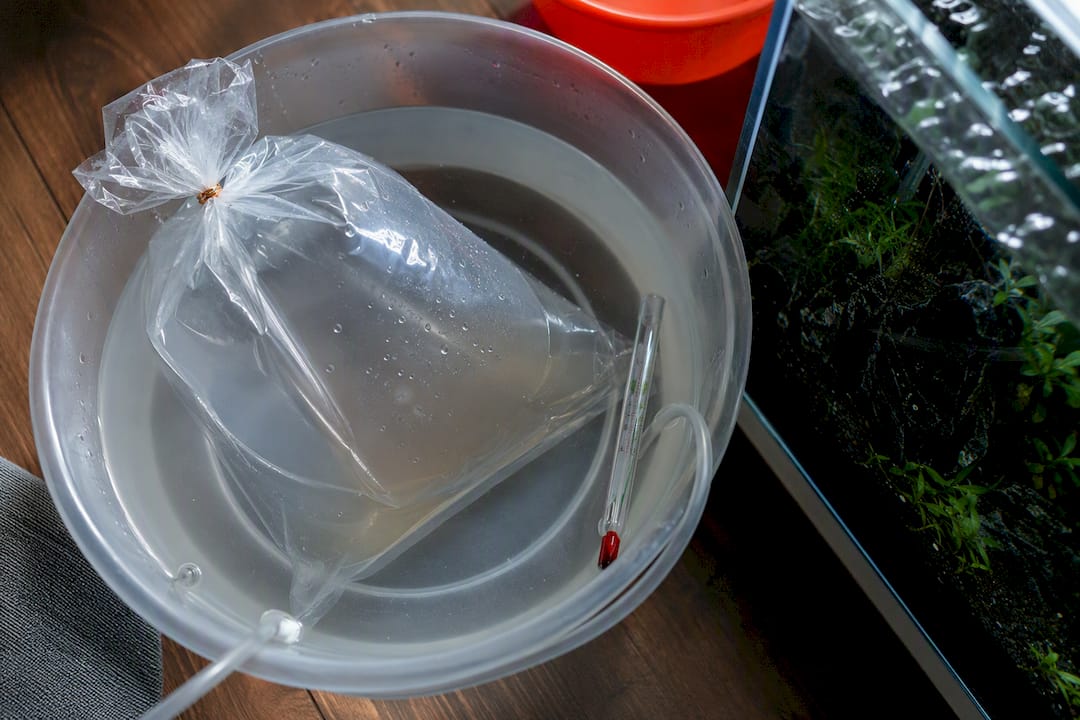
Don't dump a bag of live brine shrimp straight into your tank or hatchery water the second the box shows up. Temperature and salinity differences between the shipping water and your tank can shock shrimp that survived the trip just fine, only to die within minutes of a careless release.
Float the sealed bag in your tank or a separate acclimation container for 15 to 20 minutes so the temperature equalizes gradually. After that, add small amounts of your tank water to the bag every five minutes or so over the next half hour, letting the shrimp adjust to your water chemistry in stages rather than all at once. Check the water for a foul or ammonia-like smell before you do any of this. If it's there, acclimation still helps, but expect a lower survival rate and don't be surprised if you need to feed sooner than planned.
For frozen brine shrimp, handling is far simpler: transfer to a freezer immediately, and only thaw the portion you're feeding that day. Refreezing thawed portions degrades nutritional quality and increases bacterial risk, so portion your cubes or flat-pack sections in advance rather than thawing more than you need.
Why Overnight Brine Shrimp Shipments Fail
Most failed shipments trace back to one of three culprits: a weekend layover, a temperature swing, or overcrowded packaging. A box that gets rerouted through an extra sorting facility can add unplanned hours in a truck, and that delay is often invisible until you open a bag of dead or sluggish shrimp.
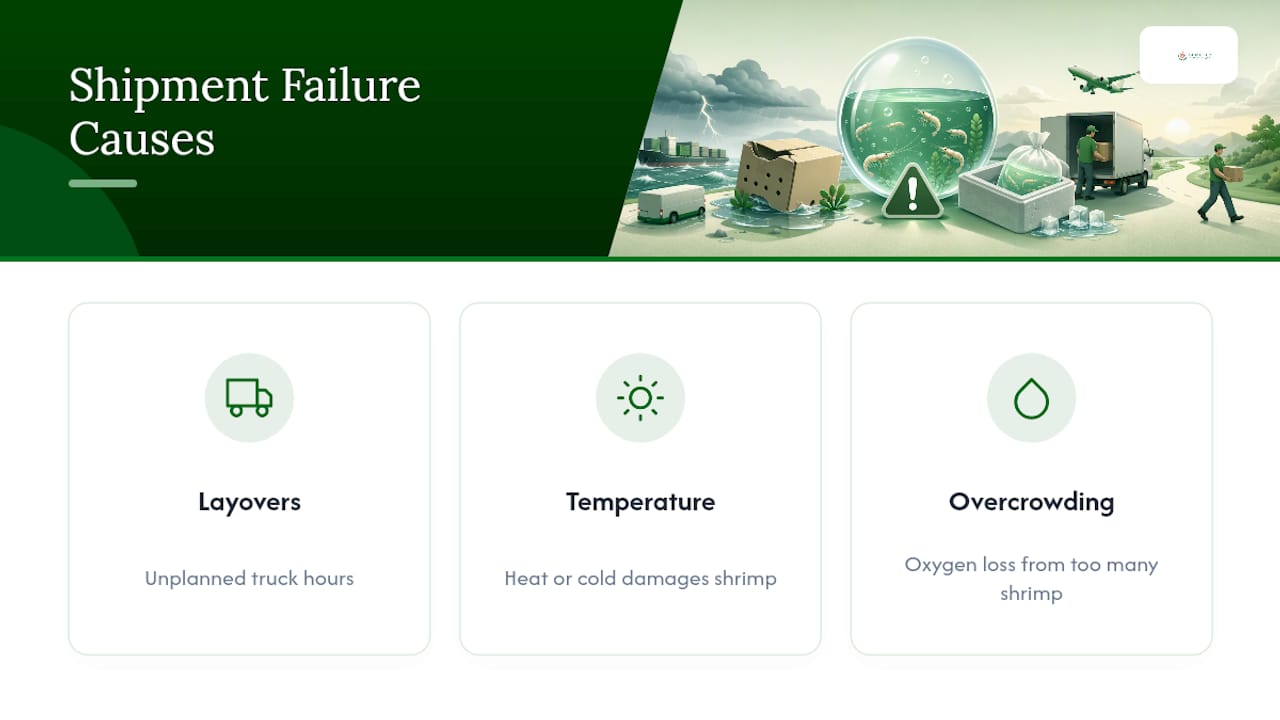
Overcrowding is the quieter problem. A seller trying to save on shipping costs by cramming too many live shrimp into too little water sets up an oxygen crisis before the box even leaves the building. If you're getting weak survival rates from a particular vendor, ask directly how many shrimp they pack per bag and per gallon of water. It's a fair question, and a seller confident in their process will answer it without hesitation.
Temperature is the other recurring failure point. Extreme heat or cold at any point in transit, whether on a loading dock or a delivery truck sitting in direct sun, can undo good packaging fast. If you consistently receive weak or dead shipments during summer or winter extremes, ask about seasonal packaging adjustments; reputable sellers add extra insulation or gel packs depending on the forecast, similar to the weather-dependent scheduling described in supplier shipping guidance.
Finally, check your own timing. Ordering on a Thursday and expecting a live shipment before the weekend is one of the most common self-inflicted failures, simply because it fights against the Monday through Wednesday shipping window nearly every vendor uses.
The Real Bottleneck Isn't the Carrier, It's the Calendar
Most advice on this topic focuses on which carrier is fastest, as though FedEx Priority Overnight is the variable that decides whether your shrimp survive. It isn't. The real constraint is the weekly calendar. A live or frozen order shipped on a Wednesday with standard ground service often arrives in better condition than the same order rushed out on a Thursday with next-day air, simply because the Thursday shipment risks a weekend layover regardless of speed.
That's the piece conventional buying guides skip. They treat "overnight" as a service tier you purchase rather than a scheduling puzzle you solve by ordering early in the week. If we had to name the single highest-leverage habit for anyone buying live or frozen brine shrimp, it's this: place your order Monday or Tuesday, ask your seller point-blank what happens if a package misses its transit window, and get that answer before you pay, not after a bag of dead shrimp shows up on your porch.
— Demeter
Order Live Brine Shrimp That Actually Survives the Trip
Demeterbioscience solves the calendar problem differently than most sellers: instead of chasing rush shipping to compensate for wild-harvested shrimp's inconsistent supply, we raise a steady, microalgae-fed stock in controlled systems so fulfillment doesn't depend on what's available in a bay that week.

That consistency matters most for buyers who feed on a strict schedule, whether that's a home aquarium, a hatchery, or a retail tank that can't afford a gap. If you order regularly, a monthly membership shipment removes the guesswork of re-timing every purchase around Monday through Wednesday ship windows. If you need volume for a store, museum, or research setup, the bulk order option spreads shipping costs across a larger shrimp count instead of penalizing you for ordering small. Ready to place an order or check current live-shrimp availability? Visit the live brine shrimp product page to see current options and get shipping questions answered before you buy.
Sources
FAQ
How long can brine shrimp survive being shipped?
Live brine shrimp typically survive 24 to 48 hours in properly aerated, insulated packaging, though vendors generally recommend acclimating and feeding them as soon as possible after arrival for the best results.
How long can brine shrimp last in fresh water?
Brine shrimp are saltwater organisms and won't survive long in fresh water; they need to be acclimated into an appropriately salted tank rather than plain fresh water at any point after delivery.
Can brine shrimp eggs hatch in 12 hours?
Not typically. Most hatching guidance points to a 24 to 36 hour window at around 80 to 82°F, so hatching generally requires at least 24 hours to complete.
Where can I buy frozen brine shrimp?
Frozen brine shrimp is widely available from aquatic supply retailers that ship with dry ice and insulated packaging, usually on a Monday through Wednesday schedule to avoid weekend transit delays.