
Most live brine shrimp vendors ship Monday through Wednesday. Orders placed after the weekly cutoff go out the following Monday, so timing your purchase around that window is the single most important scheduling decision you'll make.
Here's what to expect when you order live or freshly hatched nauplii:
- Processing lead time: Orders typically require a processing window before dispatch so nauplii can be hatched, harvested, and packaged. Plan for this before your first delivery.
- Common ship days: Monday, Tuesday, or Wednesday. Vendors avoid Thursday and Friday dispatches to prevent shipments from sitting in a carrier facility over the weekend.
- Transit window: Standard ground or economy services generally run 2–5 business days. Overnight and 2-day air options exist but add cost.
- Expedited options: Available from most suppliers, though they carry surcharges and don't eliminate the processing window.
- Weather and holiday holds: Extreme temperatures or carrier holiday schedules can delay or cancel a dispatch entirely.
Demeterbioscience follows these same midweek dispatch practices, shipping live brine shrimp farmed in land-based, algae-fed systems with consistent protein content and predictable harvest timing.
Key Takeaways
Live brine shrimp ship Monday through Wednesday because hatch-to-order processing and weekend transit risk make any other schedule a liability for arrival survival.
| Point | Details |
|---|---|
| Ship days are Mon–Wed | Vendors dispatch early in the week to avoid weekend transit; orders after the cutoff wait for the next cycle. |
| Processing adds lead time | Hatch, harvest, and packaging happen before dispatch, so factor that window into your order timing. |
| Transit runs 2–5 business days | Standard services cover most distances; overnight air is available for long hauls or time-sensitive needs. |
| Be present at delivery | Open the package immediately, photograph any issues with a timestamp, and submit replacement claims within the vendor's window. |
| Demeterbioscience ships algae-fed nauplii | Hatch-to-order production with Dunaliella feeding supports consistent protein levels and predictable dispatch timing. |
Table of Contents
- How brine shrimp delivery days are actually scheduled
- What transit times and carrier options actually look like
- How to plan your order and prepare for arrival
- What cutoff times, packaging, and guarantees cover
- Why hatch-to-order systems produce better shipments
- What Demeter Biosciences recommends for scheduling your order
- Demeterbioscience ships live brine shrimp to match your feeding schedule
- What the midweek shipping window gets wrong about live goods
- Sources
How brine shrimp delivery days are actually scheduled
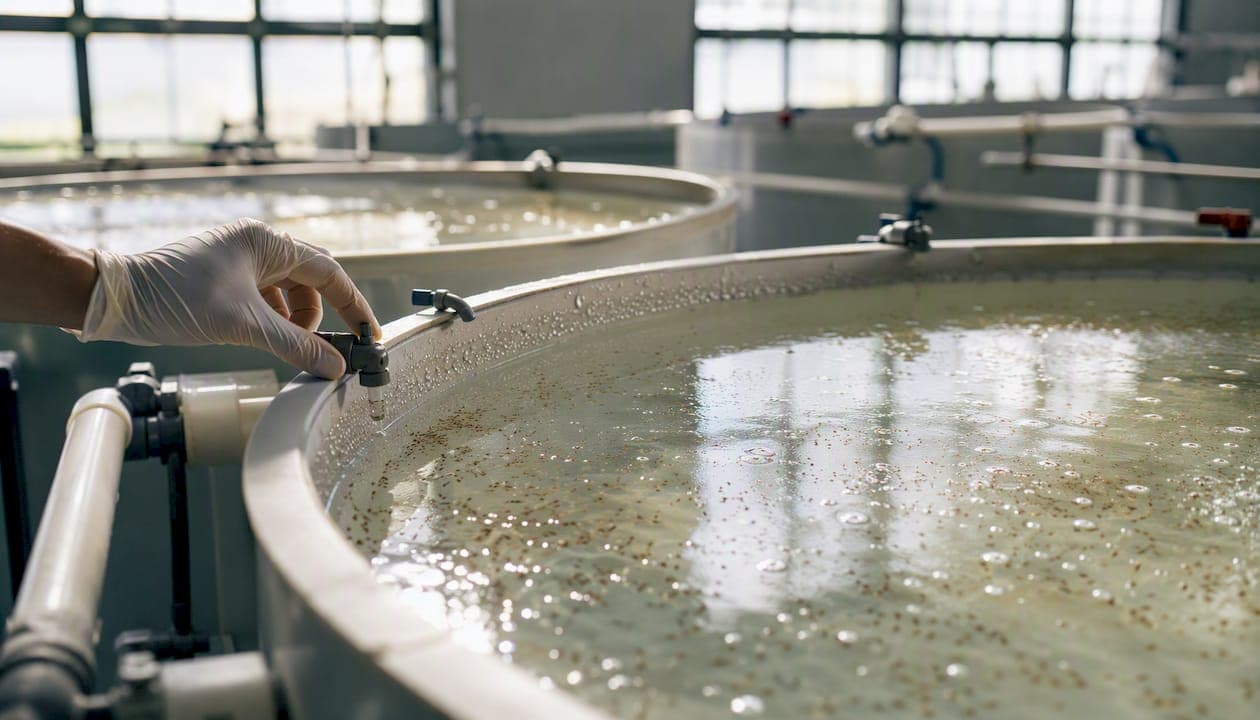
The phrase "hatch-to-order" explains almost everything about why brine shrimp shipping times look the way they do. Suppliers don't keep a standing inventory of live nauplii the way a warehouse keeps canned goods. Instead, they trigger a hatch cycle after your order arrives, wait for the eggs to develop into first-instar nauplii, harvest them at peak nutritional value, package them, and then hand them to a carrier. That sequence takes time, and it has to end on a day that gives the shipment a clean run through the carrier network before the weekend.
The result is a predictable but narrow dispatch calendar. Most vendors build their week around a Monday-through-Wednesday ship window. An order placed Thursday afternoon misses that window and waits until the following Monday to enter the hatch cycle. That's not a policy failure; it's the biology driving the schedule.
A few operational rules drive this further:
- Carrier cutoffs: Overnight and 2-day air services have daily pickup deadlines, often mid-afternoon. Miss the pickup and the shipment sits until the next business day.
- Weekend transit risk: A package dispatched Thursday or Friday can spend two or three days in a distribution hub with no temperature control and no delivery attempt.
- Harvest window: Nauplii are most nutritious in the hours immediately after hatching. Vendors time the hatch to align with their packaging and pickup schedule, not the other way around.
- Processing vs. transit time: These are two separate clocks. Processing ends when the package leaves the supplier. Transit begins when the carrier scans it. Both need to fit inside a Mon–Wed dispatch window to reach you before the weekend.
Pro Tip: When reading a vendor's shipping policy, look for phrases like "ships Monday–Wednesday," "hatch-to-order," "dispatch days," or "processing window." Any of those signals a live-goods operation that coordinates biology with carrier schedules. A policy that just says "ships within 24 hours" without specifying days is a yellow flag for live nauplii.
What transit times and carrier options actually look like
Distance and service level together determine when your shipment arrives. A hobbyist in the same state as the supplier might see next-day delivery on a Monday dispatch. Someone across the country on a standard ground service could be looking at the far end of a 5-business-day window, which means Friday arrival if everything goes smoothly.
Here's how the main service tiers compare for live brine shrimp shipments:
| Service tier | Typical transit | Best for | Key risk |
|---|---|---|---|
| Economy/ground | 3–5 business days | Short distances, lower cost | Temperature exposure over multiple days |
| 2-day air | 2 business days | Mid-distance, moderate cost | Still requires Mon–Tue dispatch to avoid weekend |
| Overnight air | 1 business day | Long distances, fragile stock | Highest cost; dispatch cutoffs are strict |
A few practical notes on carrier behavior:
- Ground services route packages through regional hubs. Temperature inside those hubs is uncontrolled, which matters when the outside temperature is above 85°F or below 40°F.
- Overnight air is the safest option for long-haul shipments, but it only works if the vendor dispatches before the carrier's daily pickup cutoff, typically early-to-mid afternoon.
- "2-day" services are business days, not calendar days. A Tuesday dispatch arrives Thursday. A Wednesday dispatch arrives Friday, which is the practical limit before weekend risk kicks in.
For dry or shelf-stable aquarium foods, like dried gammarus shrimp or staple fish flakes, none of this applies. Dry goods ship any day of the week with no temperature concern. Live nauplii are a different category entirely.
How to plan your order and prepare for arrival
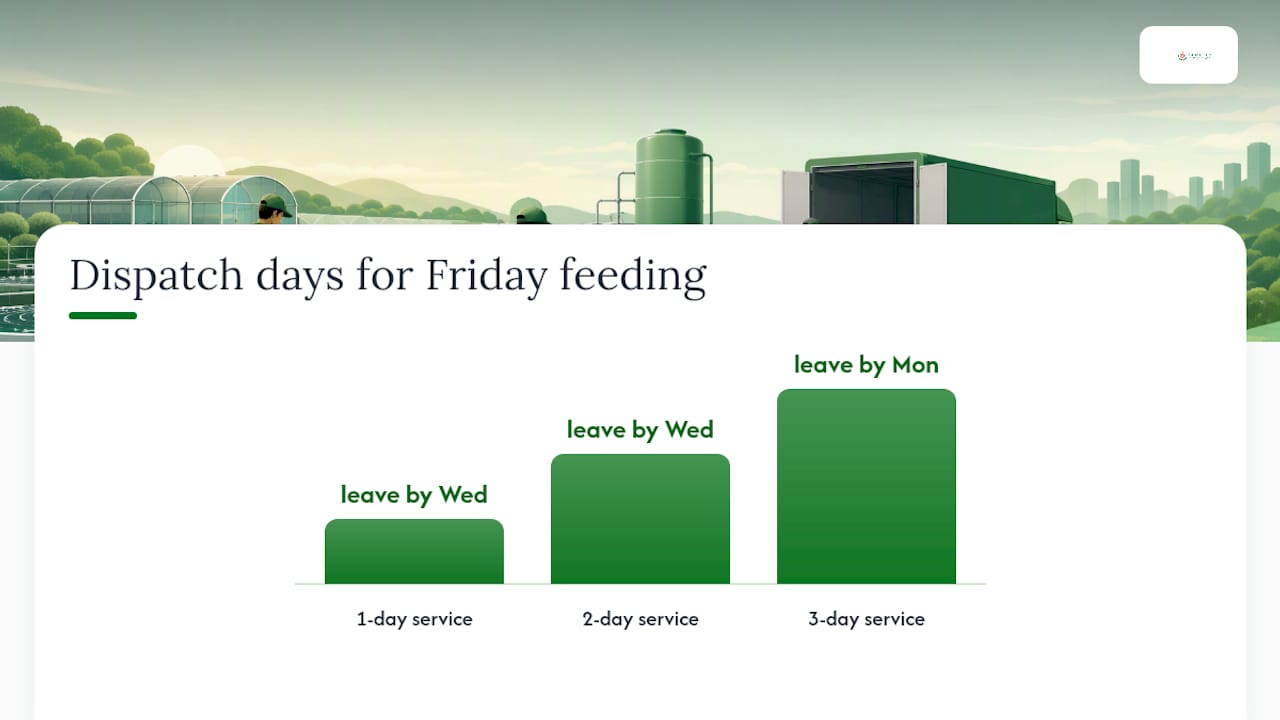
Getting the timing right is mostly a matter of working backward from your feeding day. If you feed fry or nano fish on Friday, you want the shipment in your hands Thursday at the latest, which means it needs to leave the supplier no later than Wednesday on a 1-day service, or Monday on a 3-day service.
Here's a practical order-and-receive checklist:
- Identify your feeding day. Pick the specific day of the week you plan to feed live nauplii. That's your target arrival date.
- Count back by transit days. Use the service tier table above to determine which dispatch day gets the package to you in time.
- Check the vendor's ship days. Confirm the supplier dispatches on a day that matches your backward count. If not, adjust your feeding day or upgrade the service tier.
- Place the order before the cutoff. Most vendors have a day-of-week and time-of-day cutoff. Orders placed after the cutoff go out the following dispatch cycle.
- Add delivery instructions. If you won't be home, specify a shaded drop location or ask a neighbor to bring the package inside immediately. Live shipments left in direct sun or a hot mailbox lose viability fast.
- Request a specific ship day if the vendor allows it. Some suppliers accommodate this for subscription customers or bulk orders.
- Open the package immediately on arrival. Check the nauplii for movement. If the shipment looks compromised, photograph it with a timestamp before doing anything else. That documentation is what most vendors require for a replacement claim.
For recurring feeding schedules, a monthly subscription removes most of this manual planning. The cadence is set once, and the supplier handles dispatch timing.
Pro Tip: Sync your subscription or recurring order with the day you normally feed fry or nano fish. If you feed Fridays, set your subscription to dispatch on Wednesdays via 2-day air. You'll receive live nauplii Thursday, feed Friday, and never hold a live shipment overnight.
What cutoff times, packaging, and guarantees cover
Missing a cutoff by an hour means waiting a full week for the next dispatch cycle. That's the part most hobbyists learn the hard way. Vendor cutoffs usually combine a day-of-week rule ("orders must be placed by Tuesday noon to ship Wednesday") with a time-of-day rule tied to the carrier pickup schedule. Both have to be met.
What to expect inside the package:
- Oxygenated or vacuum-sealed containers that maintain dissolved oxygen during transit
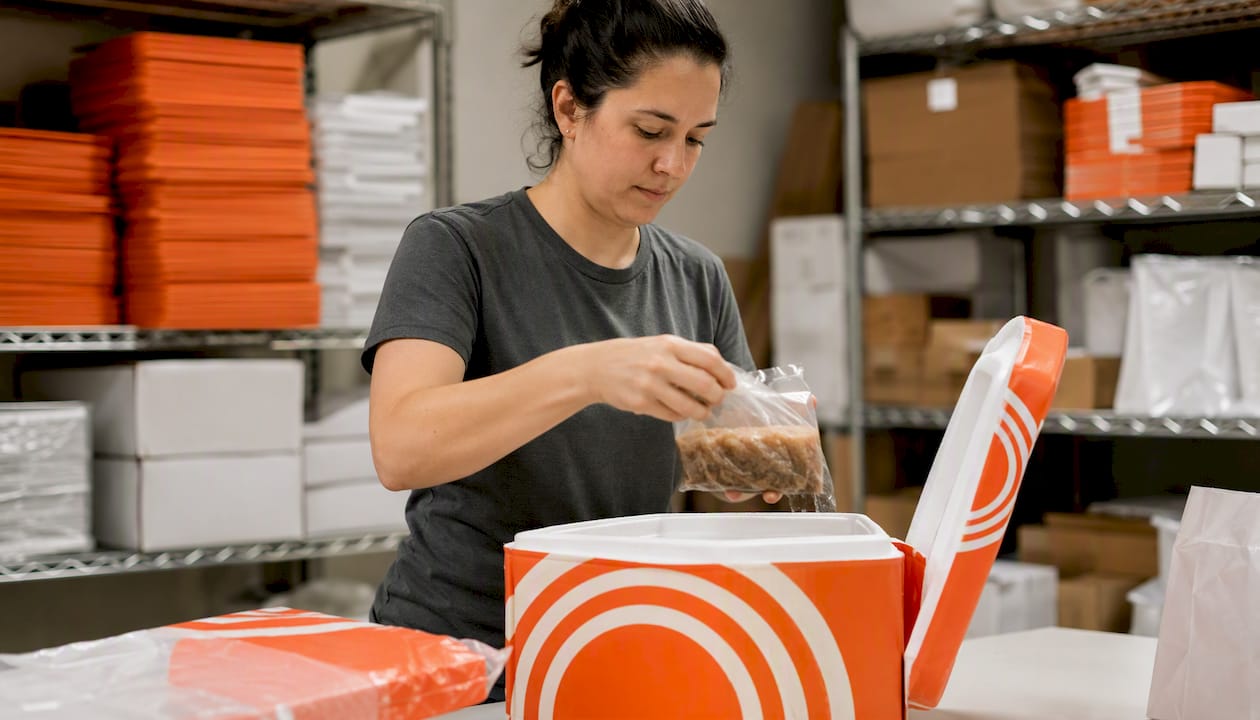
- Thermal insulation (foam liners, gel packs, or both) sized to the expected transit duration
- A small amount of algae or nutrient solution to keep nauplii viable during shipping
- Packing slips or QR codes that link to tracking information
Arrive-alive and replacement policies typically work like this:
- The vendor guarantees live arrival if you follow their receiving instructions (being present, opening immediately, not leaving the package in heat or cold).
- Claims usually require a photo of the unopened or just-opened package with a visible timestamp, submitted within a defined window, often 1–2 hours of delivery.
- Replacements are typically a reshipped order, not a refund, and they go out on the next available dispatch day.
Before ordering, check the fine print for Alaska, Hawaii, and U.S. territories. Many live-goods vendors either don't ship to those destinations or charge significant surcharges for overnight air. Weather holds are also common during summer heat waves and winter cold snaps. USARK documents why suppliers refuse to dispatch live animals under unsafe temperature conditions — it's animal welfare, not policy bureaucracy.
Policy details to confirm before you buy:
- Exact cutoff day and time for the current week's dispatch
- Whether the vendor ships to your zip code (some rural routes have carrier limitations)
- Surcharge amounts for expedited services or remote destinations
- The replacement claim window and required documentation
Why hatch-to-order systems produce better shipments
The nutritional case for freshly hatched nauplii is straightforward. A newly hatched brine shrimp nauplius still carries its yolk sac and, when raised on microalgae, has a gut full of live algal cells. That combination gives fry and nano fish a dense, bioavailable meal. An older nauplius that has been sitting in water for 24 hours has already burned through most of its yolk reserves and passed most of its gut contents.
Wild-harvested brine shrimp add another layer of variability. Seasonal population shifts, starvation periods in natural salt lakes, and inconsistent harvesting conditions all affect nutritional content in ways a buyer can't predict or control. Hatch-to-order production eliminates that variability by controlling the entire cycle from egg to packaging.
Demeterbioscience's approach goes further. That's not a marketing claim; it's a function of controlling what the shrimp eat from hatch to harvest, as described on their brine shrimp product page.
Hatch-to-order also creates scheduling predictability that benefits the buyer. When a supplier knows exactly when a batch will be ready, they can coordinate dispatch with carrier pickup windows and give customers accurate ship-day estimates. That's the operational logic behind midweek shipping, and it's why suppliers who skip it tend to have higher mortality rates on arrival.
Why this matters for your shipment specifically:
- Nauplii harvested at peak vitality survive transit better than older or nutritionally depleted stock.
- Consistent algae feeding means the product you receive in January performs the same as the product you receive in July.
- Predictable hatch timing lets the supplier commit to a dispatch day rather than shipping whenever stock happens to be available.
What Demeter Biosciences recommends for scheduling your order
Timing a live brine shrimp order well is mostly about respecting two constraints: the biology of the hatch cycle and the carrier's weekend gap. At Demeterbioscience, shipments go out early in the week so nauplii arrive at their nutritional peak and don't spend a weekend in a carrier hub.
The practical reminders that matter most: place your order before the weekly cutoff, provide a complete and accurate delivery address, and include instructions for where to leave the package if you won't be home. Weather holds are real. During periods of extreme heat or cold, a dispatch may be delayed to protect the animals. That's not a failure of service; it's the right call. If a delay happens, contact support directly. Replacement windows are defined and the team can walk you through the documentation process.
Demeterbioscience ships live brine shrimp to match your feeding schedule
Demeterbioscience produces live brine shrimp in land-based, algae-fed systems and ships direct to hobbyists, aquaculture operations, local fish stores, and research institutions. The production model, hatch-to-order with Dunaliella feeding, means every shipment goes out at peak nutritional value rather than whenever inventory happens to be available.
For hobbyists who feed on a regular schedule, the monthly subscription removes the weekly planning burden entirely. Set your cadence once, and shipments align with your feeding cycle automatically. Retailers and institutions can request bulk fulfillment with custom scheduling. Every order comes with packaging designed for live transit and an arrive-alive policy. To place an order or ask about custom dispatch timing, visit the product page or reach out through the contact page.
What the midweek shipping window gets wrong about live goods
The Mon–Wed dispatch rule is correct, but it's often explained as a logistics convenience when the real reason is biological. A nauplius that hatches Monday morning and ships Monday afternoon arrives Tuesday or Wednesday with its yolk sac still largely intact and its gut loaded with algae. That same nauplius, if it hatched Monday and shipped Thursday, arrives nutritionally depleted regardless of how well it was packaged.
Most shipping guides focus on the carrier side of the equation: weekend transit risk, temperature exposure, hub delays. Those are real concerns. But the more important constraint is on the supplier side. The hatch cycle is not adjustable. You can't rush it by 12 hours because a customer placed a late order, and you can't hold nauplii in a tank for three days waiting for a better shipping window without sacrificing the nutritional value that made them worth ordering in the first place.
The practical implication for hobbyists: don't treat the Mon–Wed window as an arbitrary vendor policy you can negotiate around. It's a biological constraint dressed up as a shipping rule. Work with it, not against it. Order early in the week, sync your feeding schedule to your delivery day, and use expedited shipping only when distance genuinely requires it, not as a workaround for a late order.
Wild-harvested brine shrimp sidestep some of this scheduling complexity, but they introduce nutritional variability that hatch-to-order production eliminates. The tradeoff is real. For fry and nano fish where feeding value matters most, the scheduling discipline of a hatch-to-order supplier is worth the planning effort.
Sources
- USARK